The first thing that hits you when you look at a Kansai train map isn’t the geography. It’s the chaos. A tangled web of colored lines, a jumble of company logos. There’s the familiar JR symbol, sure, but it’s crowded out by a dozen others. You came from Tokyo, perhaps, where the green JR Yamanote Line was your compass, a simple loop that defined the city’s heart. Here in Osaka, that simple logic vanishes. Instead, you’re faced with names like Hankyu, Kintetsu, Hanshin, Keihan, and Nankai. These are the shitetsu, the private railway companies, and in Kansai, they aren’t just a way to get around. They are the way of life. Understanding them, particularly the titans Hankyu and Kintetsu, is the first real step from being a visitor in Osaka to truly living here. Forget the tourist guides for a moment. The secret to unlocking the rhythm of this city, to understanding why your neighbors disappear on Saturdays and come back with specialty cakes from Kobe or persimmon leaf sushi from Nara, lies in knowing which platform to stand on in the morning. These lines aren’t just steel tracks; they are arteries pumping life into distinct cultural corridors, each with its own identity, its own vibe, and its own weekend playbook. Mastering them means you’re not just traveling through Kansai; you’re tapping into its very soul.
Embrace the vibrant pulse of Kansai by exploring a carefully crafted sento-hopping itinerary that unveils Osaka’s retro weekend charm.
The Railway Empires: Why Hankyu and Kintetsu Aren’t Just Train Lines
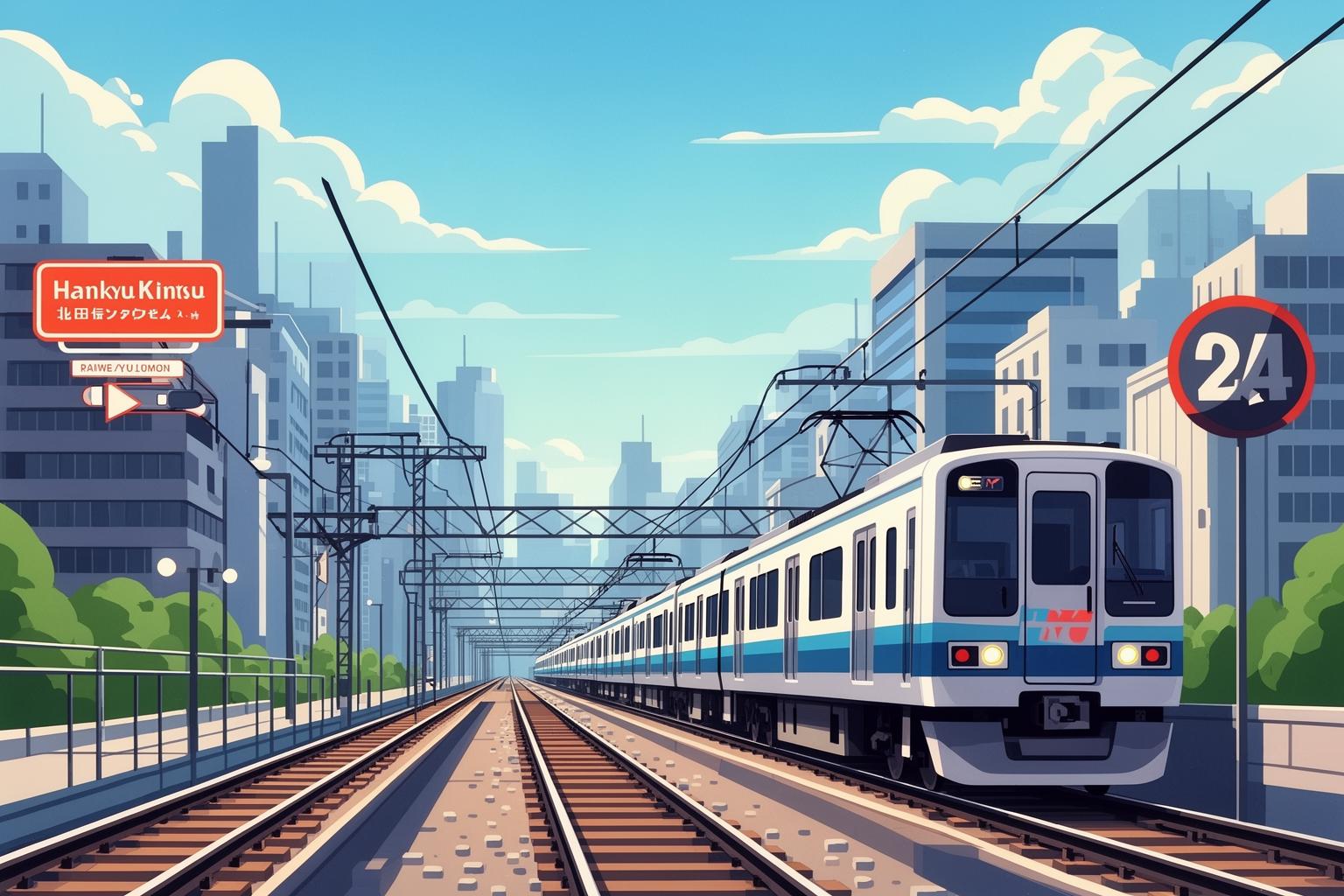
In most cities, railways function as a public utility, a service layered onto an existing map. In Kansai, however, private railways created the map. They were more than just transportation companies; they were visionary real estate developers, entertainment magnates, and retail powerhouses who shaped entire lifestyles from the ground up. This fundamental idea distinguishes the Kansai experience from Tokyo’s. You don’t merely ride a Hankyu train; you inhabit a Hankyu world. You don’t just take Kintetsu to Nara; you engage with a regional network it single-handedly forged. This is the story of two empires, built on steel rails, that continue to influence the identity, aspirations, and weekend routines of millions of Osaka residents.
Hankyu: The Brand of Bourgeois Aspiration
You recognize a Hankyu train even before reading the sign. Its color—a deep, polished maroon—seems to absorb the station lights. It’s a hue that conveys quiet confidence and old money. Step inside, and you’ll find plush, olive-green velvet seats. It feels less like a commuter car and more like a rolling lounge. This is no coincidence. This is the Hankyu brand, a carefully crafted image of sophistication dating back to its founder, Ichizo Kobayashi. He was a genius not just of transportation, but of lifestyle. He didn’t simply build a line from Osaka to the quiet towns of Ikeda and Takarazuka; he created the reasons for people to travel there.
He offered housing loans to salaried workers to build homes along his new railway, forming some of the region’s most desirable suburbs. At the Umeda terminus, he didn’t just establish a station; he built the magnificent Hankyu Department Store, ensuring passengers had a world-class shopping destination. At the other end, he created the Takarazuka Revue, an all-female musical theater troupe that became a national sensation. He constructed an entire ecosystem. To live on the Hankyu line is to embrace this legacy, implying a certain level of taste and appreciation for quality. Residents of Ashiya or Nishinomiya, affluent neighborhoods along the Hankyu Kobe Line, may not voice it openly, but there’s a subtle pride linked to their maroon train. This contrasts sharply with the functional, anonymous atmosphere of many Tokyo lines. In Osaka, your railway is a community, and the Hankyu community regards itself as a cut above, valuing quiet elegance and carefully curated experiences.
Kintetsu: The Sprawling Giant Connecting Urban Life to Ancient History
If Hankyu is a boutique brand, Kintetsu is a vast, pragmatic conglomerate. It’s Japan’s largest private railway, and its extensive network exemplifies sheer ambition. Kintetsu’s route map is not a tidy, curated corridor; it’s an expansive web connecting Osaka to Japan’s cultural and spiritual heartlands: Kyoto, Nara, Yoshino, Ise-Shima, and even Nagoya. It is the workhorse, the enabler, the powerful engine moving the masses. The trains prioritize efficient, no-nonsense travel over plush comfort. You ride Kintetsu to reach your destination, not just for the journey.
Kintetsu’s identity is rooted in sheer utility and vast reach. It links the neon-lit, bustling streets of Namba directly to the tranquil grounds of Nara Park, where deer roam freely among ancient temples. It carries passengers deep into the mountainous Yoshino, renowned for thousands of cherry trees, and transports pilgrims to the sacred Ise Grand Shrine in Mie Prefecture. The culture along the Kintetsu line is as varied as its destinations. It serves the vibrant, gritty neighborhoods of East Osaka—such as Tsuruhashi with its famous Koreatown—before extending into expansive farmland and historic towns. While Hankyu cultivated a uniform suburban ideal, Kintetsu embraced the region’s lively, wonderful diversity. It is the people’s railway, a practical tool for commerce, commuting, and, importantly, connecting modern urban life with Japan’s ancient heritage.
Reading the Unspoken Rules: Riding the Rails Like You Belong Here
Watching locals navigate the train system is like witnessing a flawlessly choreographed dance. They smoothly pass through the ticket gates, know exactly which car to board for the easiest transfer, and instinctively grasp the cryptic hierarchy of train types flashing on the departure board. For a newcomer, it can feel overwhelming. But these aren’t complicated skills; they are the unspoken rules of Osaka life—a shared knowledge that distinguishes insiders from outsiders. Mastering them is your key to moving through the city with effortless confidence.
The Umeda vs. Namba Divide: Your Starting Point Shapes Your Journey
Osaka is a city with two centers: Kita (North), focused on Umeda, and Minami (South), centered on Namba. These aren’t just geographic locations; they represent cultural hubs each with its own unique energy, and the private railways serve as their staunch supporters. Umeda belongs to Hankyu and its counterpart, Hanshin. It’s sleek, corporate, and polished. The underground shopping malls are extensive and sophisticated, department stores are iconic, and the crowds tend to be office workers and selective shoppers. Umeda serves as the gateway to the north and west: the refined streets of Kobe and the cultural treasures of Kyoto. If you live along a Hankyu line, Umeda naturally becomes your hub. A spontaneous coffee trip to Kyoto is just another casual Tuesday.
Namba, in contrast, is the core of Minami and the stronghold of Kintetsu and Nankai. It’s loud, chaotic, and vibrantly unapologetic. This is Osaka’s world of flickering neon, street food stalls, and lively nightlife. Namba is the gateway to the south and east: historic Nara, the spiritual mountains of Wakayama, and the pathway to the globe via Kansai International Airport. Locals feel this divide deeply. When looking for an apartment, the crucial question often isn’t just the neighborhood, but the railway line. Your railway choice shapes your daily commute, shopping routines, and the character of your weekend retreats. It decides whether your go-to day trip features riverside cafes in Arashiyama or ancient temples in Asuka.
Understanding the Train Types: More Than Just ‘Local’ and ‘Express’
Standing on the platform, you’ll see a bewildering variety of train types on the screen: Local (普通), Semi-Express (準急), Express (急行), Rapid Express (快速急行), and the prestigious Limited Express (特急). In Tokyo, these differences might save you just a few minutes. In Kansai, picking the right one is a core test of local know-how. The Local, stopping at every station, is the last resort. Boarding a Local for a long trip when a Rapid Express follows shortly after is a classic beginner’s error, leaving you frustrated as faster trains zoom past.
This system highlights a key Osaka trait: a passion for efficiency and value, or what locals call ‘cost performance’. The Rapid Express is the choice for anyone who knows the ropes; it costs the same as the Local but speeds past smaller stops, saving you valuable time. It’s the smart, efficient option. The Limited Express is a different category, requiring an extra fee for a reserved seat and signaling clear intent. You don’t take a Limited Express for a quick hop to the next town. It’s reserved for special occasions: a family holiday to the Ise-Shima coast, a romantic trip to see cherry blossoms in Yoshino, or a business journey to Nagoya. It’s a commitment that transforms the journey from a routine commute into a planned event. Understanding this hierarchy is not just about reading a timetable—it’s about reading the social signals and priorities of those around you.
Crafting Your Weekend: The Hankyu and Kintetsu Playbooks
So, how does this all translate into everyday life? It means that on a Friday afternoon, when the idea of a weekend getaway starts to take shape, an Osaka resident’s imagination is already influenced by the color of their home railway line. The map of possibilities isn’t a blank canvas; it’s a thoughtfully curated menu of options, effortlessly accessible thanks to their trusted shitetsu. The question isn’t “Where should I go?”; it’s usually “What does my line have to offer today?” This isn’t limiting—it’s freeing. It makes adventure attainable, turning the entire Kansai region into a backyard ready to be explored.
The Hankyu Weekend: Coffee Shops, Hot Springs, and Riverside Strolls
A weekend powered by Hankyu often embodies understated elegance and refined leisure. The destinations feel like natural continuations of the polished, comfortable journey itself.
A classic choice is taking the Hankyu Kyoto Line from Osaka-Umeda Station. Locals know this is often a better option than JR or the Shinkansen. Why? Because Hankyu drops you not at the massive, somewhat isolated Kyoto Station, but right in the city’s commercial and cultural core at Karasuma or Kyoto-Kawaramachi. You step off the train and are immediately immersed in the beautiful covered shopping streets of Teramachi and Shinkyogoku, or just a short walk from the atmospheric Gion district. The trip itself feels like a gradual decrescendo from Osaka’s vibrant energy to Kyoto’s refined elegance.
Another favorite is the quick hop to Kobe on the Hankyu Kobe Line. The 30-minute ride passes through some of Japan’s most desirable residential neighborhoods, setting a tone of quiet affluence. An Osaka local might make this trip just for an afternoon, browsing stylish boutiques in Motomachi or enjoying a slice of cheesecake from a renowned patisserie. It’s not a grand tour; it’s a casual, almost seamless extension of their social routine.
For a touch of nature without the hassle, there’s the Hankyu Minoh Line. A very short branch leads to Minoh Park, a beautiful forested valley with a picturesque waterfall. This is the ideal spot for an easy, refreshing hike. It perfectly exemplifies the Hankyu lifestyle: convenient, accessible nature, thoughtfully packaged for a pleasant Sunday afternoon, complete with charming cafes near the station for a post-walk treat.
The Kintetsu Weekend: Ancient Capitals, Mountain Hikes, and Coastal Pilgrimages
A Kintetsu-fueled weekend often feels broader, more adventurous, and steeped in history. It’s about using the railway’s extensive network to reach destinations that seem worlds away from downtown Osaka.
The quintessential Kintetsu trip is, naturally, to Nara. From Osaka-Namba or Tsuruhashi, the Kintetsu Nara Line reigns supreme. It’s faster than JR and, more importantly, Kintetsu Nara Station is significantly closer to key sites like Todai-ji Temple and the deer-filled Nara Park. Locals know this intuitively. The journey itself is transformative, taking you from Osaka’s dense urban landscape, through suburban sprawl, and into the peaceful, green expanse of Japan’s first permanent capital. It’s a trip every Osaka family has taken countless times.
For a deeper experience, there’s the pilgrimage to Ise Grand Shrine in Mie. This is where the Kintetsu Limited Express, such as the ‘Shimakaze’ or ‘Hinotori’, truly shines. The journey is an event in itself—a comfortable and scenic ride that builds anticipation. This trip connects Osaka residents not only to a destination but to the very heart of Japan’s Shinto traditions. It’s a spiritually significant journey, made easy and accessible by Kintetsu’s extensive network.
Kintetsu is also the gateway to rugged adventures. It provides direct access to the mountainous interior of the Kii Peninsula, like Mount Yoshino, famed for its breathtaking cherry blossoms that cover the slopes in spring. Or there’s Mount Ikoma on the border of Osaka and Nara, with its charming retro cable car and panoramic city views. These trips appeal to those eager to stretch their legs and breathe fresh mountain air, revealing the wilder, more untamed side of the Kansai region that Kintetsu so effectively serves.
Your Train Pass is Your Passport to Kansai Culture
Living in Osaka, you quickly realize that the multi-colored spaghetti of the train map isn’t a puzzle to be solved but a menu of possibilities to be enjoyed. Unlike Tokyo’s concentric loops drawing everything inward, Osaka’s private railways spread outward, forming distinct corridors of culture, commerce, and community. They shape the regional identity.
Choosing where to live here is about more than just square footage or station proximity. It’s about aligning with a particular lifestyle. Are you a Hankyu person, attracted to the refined charm of the Kobe and Kyoto corridors? Or a Kintetsu person, energized by the vast, diverse network connecting you to history, nature, and the vibrant chaos of the south? Your train line becomes your compass, your go-to for adventure, and a subtle badge of identity.
So next time you’re standing in the vast Umeda station or the vibrant maze of Namba, pause for a moment. Look at the departure boards. See names like Arashiyama, Takarazuka, Nara, and Ise. These aren’t just destinations—they’re the weekends, memories, and lifestyles of the people around you. Your IC card isn’t merely a ticket; it’s your key to unlocking the authentic, living culture of Kansai, one weekend at a time.