You’ve seen the pictures. The Glico Running Man, the giant crab, the endless rivers of neon flowing through Dotonbori. It’s electric, it’s iconic, and it can feel like the only version of Osaka nightlife that exists. You see the crowds, the polished storefronts, the tourist-focused menus, and you might think that a night out in this city means dropping a considerable amount of cash. But that’s the marquee, the highlight reel. That’s not the daily rhythm of the city. To understand how Osaka truly unwinds, you have to look away from the main stage and into the wings, into the places built not for visitors, but for the millions of people who call this city home. You have to understand the philosophy of ‘Senbero’. It’s a word you’ll hear whispered with a certain pride: one thousand yen, a single bill, is all you need to get pleasantly drunk. This isn’t just about being cheap; that’s a common misunderstanding. Senbero is a mindset. It’s a challenge, a game, and a declaration of independence from expensive, formal nights out. It’s the embodiment of Osaka’s obsession with kospa—cost performance. And its spiritual home, its bustling, unfiltered, glorious temple, is Kyobashi. Forget what you think you know about Japanese nightlife. Kyobashi isn’t sleek or curated. It’s a chaotic, beautiful tangle of train lines, smoky alleys, and glowing red lanterns, a place where the real heart of working-class Osaka beats loud and clear. This is where the city sheds its tie, loosens its collar, and gets real.
As you navigate the lively, cost-conscious alleys of Kyobashi, consider exploring how fried guts embody another raw, authentic slice of Osaka’s soul.
What ‘Senbero’ Really Means to an Osaka Local
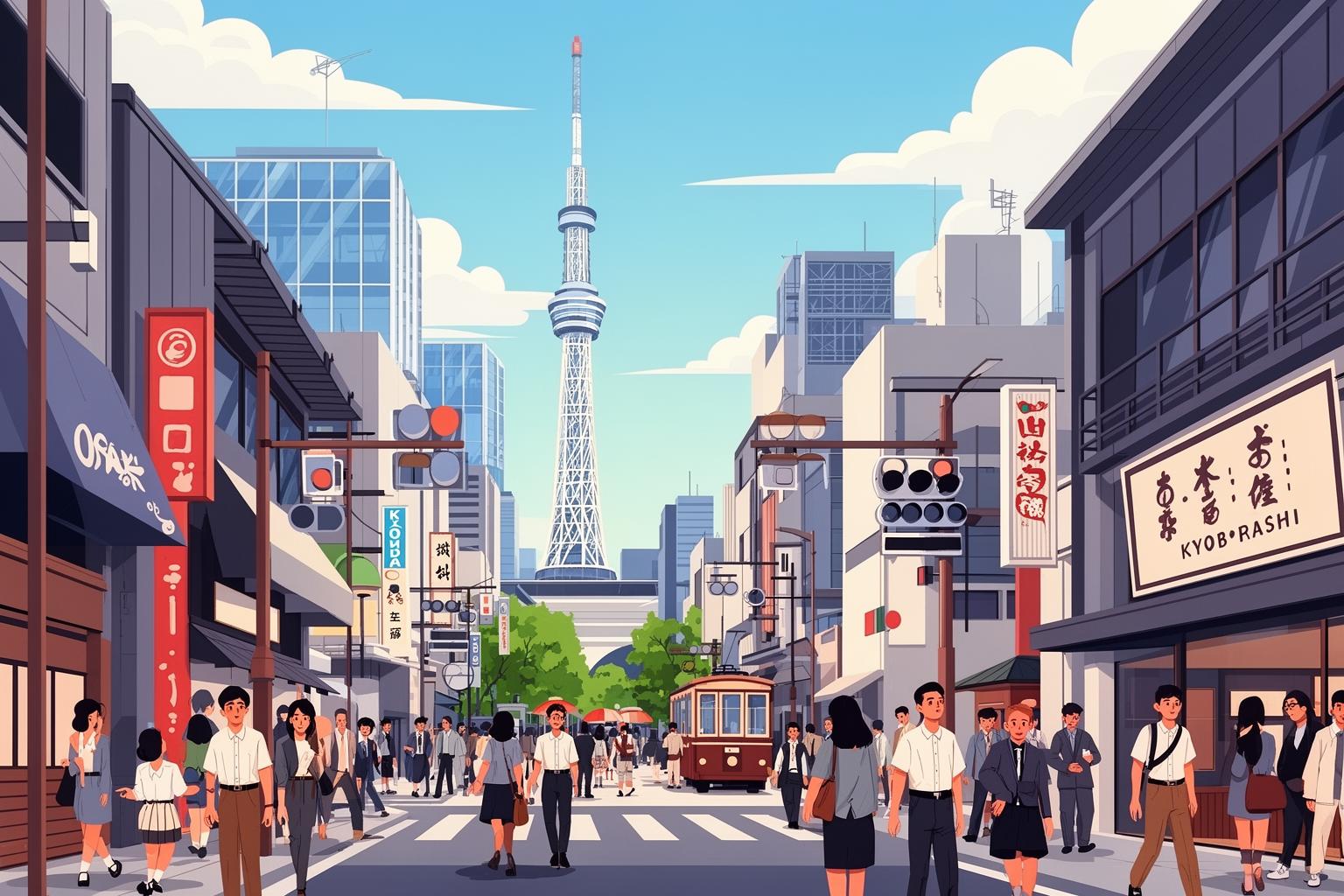
To outsiders, especially those from Tokyo, the idea of Senbero might appear somewhat crude. Isn’t the goal merely to get drunk cheaply? Not quite. That completely misses the essence. In Osaka, a city shaped by merchants who truly understand the value of a yen, Senbero is considered an art form. It’s about maximizing enjoyment while keeping costs low. It reflects the city’s practical, straightforward approach to life. A thousand yen is more than just money; it serves as a benchmark for a successful, efficient, and gratifying break from everyday life. It means you can go out tonight, tomorrow, and maybe the night after, all without a hint of financial guilt. It turns a night out from a rare event into an ordinary, accessible part of daily routine. This philosophy is ingrained in the city’s DNA.
More Than Just Cheap Drinks: The Philosophy of ‘Kospa’
At the heart of Senbero is kospa, or cost performance. This is not mere frugality. In Tokyo, you might pay a premium for atmosphere, a particular brand, or the feeling of exclusivity. In Osaka, value is the main criterion. A local will proudly share tips about a spot where the beer is 50 yen cheaper or where the skewers come with a little extra cabbage at no cost. It’s not about the 50 yen; it’s about the principle. It’s about feeling smart about your choice. This embodies the merchant spirit that built the city. Why pay more for the same product? It makes no sense. This mindset turns hunting for the best deal into a city-wide game, with Kyobashi as the championship venue. A successful Senbero isn’t just about feeling the alcohol buzz; it’s the quiet pride of knowing you did it wisely. You leave with a full stomach, a light head, and your wallet mostly untouched. To an Osaka native, that feeling is invaluable.
The Unspoken Rules of a Tachinomi (Standing Bar)
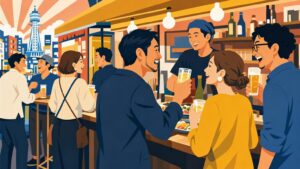
Kyobashi is the realm of the tachinomi, the standing bar. These aren’t places for leisurely dinners. They’re fast-paced, efficient social spots that operate under a set of unspoken rules everyone seems to naturally grasp. First, there’s the rhythm. You don’t settle in. You find a spot at the counter, order your drink and a small plate or two, and consume them promptly. The goal is turnover. The business depends on a constant stream of customers, each enjoying a small, affordable portion of the night. Lingering for an hour over a single highball disrupts this flow—a cardinal sin in the world of kospa. Second, the payment system. Often, it’s cash on delivery. You place your money in a small tray on the counter, and staff take the exact amount with each order. It’s ruthlessly efficient. No waiting for a check, no splitting bills. Just you, your cash, and the bar. Lastly, there’s the social contract. The cramped space of a tachinomi naturally breaks down barriers. You’ll literally be shoulder to shoulder with the next person. This closeness creates a unique temporary community. Conversations flow easily with regulars, salarymen, and students alike. But it’s equally fine to stand quietly, lost in your thoughts, simply absorbing the atmosphere. The rule is to gauge the vibe. Be open, be aware, but don’t force interaction. Here, you see the raw character of the city. It’s direct, unpretentious, and unexpectedly welcoming.
Navigating the Labyrinth: A Guide to Kyobashi’s Zones
Kyobashi isn’t a single, uniform entity. It’s a sprawling, delightfully complex district shaped by a major intersection of train lines—the JR Loop Line, the Katamachi Line, the Tozai Line, and the Keihan Main Line all meet here. The steady stream of people from every part of the Kansai region is the lifeblood of this area. Each side of the station offers its own unique character and ecosystem of bars and eateries, all connected by the common theme of Senbero.
The East Side: Beneath the Tracks and Amid the Arcades
Exit from the east side of the JR station, and you enter the heart of traditional Kyobashi. Here, covered shopping arcades, or shotengai, fan out from the station like a web. The air is filled with the aroma of grilled chicken from yakitori stands, savory dashi from simmering oden pots, and the faint, sweet scent of takoyaki batter. The soundtrack is a blend of pachinko parlor jingles, the rumbling trains above, and lively laughter spilling from numerous tiny bars. This is home to the famed Senbero spots, some with decades of history. Watch for hand-painted signs, weathered red lanterns, and counters polished smooth by generations of drinkers. Menus are often simple strips of paper pasted to the walls, written entirely in Japanese. Don’t be put off. A simple point and a hopeful “Kore, kudasai” (This, please) will serve you well. Here, you can assemble an ideal Senbero: a 300-yen draft beer, a 150-yen skewer of grilled pork, and a 400-yen bowl of doteyaki, a rich miso-flavored beef sinew stew that’s quintessential Osaka comfort food. You’ve had a drink and two dishes and still have change from a 1,000-yen bill.
The West Side: A Slightly More Contemporary Feel
Cross beneath the tracks to the west side, near the Keihan Mall, and the vibe shifts subtly. The alleys remain, but they mix with newer buildings. The standing bars might feature sleeker counters, a more modern style, and perhaps a younger crowd. This isn’t a betrayal of the Senbero spirit but rather an evolution. It shows that the philosophy of affordable, social drinking is thriving, adapted for a new generation. You’ll find wine bars offering a glass and a small cheese plate for 500 yen, or craft beer venues with tasting sets. The core principle stays the same: great value, quick turnover, and a lively, unpretentious atmosphere. The diverse crowd is also key to Kyobashi’s charm. As a major transit hub, you see everyone: powerful executives from Osaka Business Park standing beside construction workers, university students laughing with elderly pensioners. It’s a true cross-section of the city, a demographic melting pot you rarely find in more curated entertainment districts.
A Foreigner’s Misconception: Seedy or Authentic?
It’s important to address a common initial impression. For those used to the polished, pristine settings of many global cities, Kyobashi can seem intimidating. The narrow, dimly lit alleys, steam and smoke spilling from unmarked doors, and the dense cluster of tiny, crowded bars might appear seedy or unsafe. This is one of the biggest misconceptions about everyday life in Osaka. What a foreign eye might see as grit is what a local sees as authenticity. These places aren’t designed to be tourist-friendly or visually polished. They’re highly functional spaces with one aim: serving good, cheap food and drinks to locals. The lack of decoration is intentional; it means the focus is on the product, not the presentation. Despite the rough-around-the-edges look, Kyobashi is remarkably safe. The community is close-knit, and bar owners know their regular customers. The atmosphere centers on camaraderie, not conflict. What may look like seediness is actually the genuine, unfiltered texture of a real, working neighborhood.
The Social Code of Kyobashi Drinking
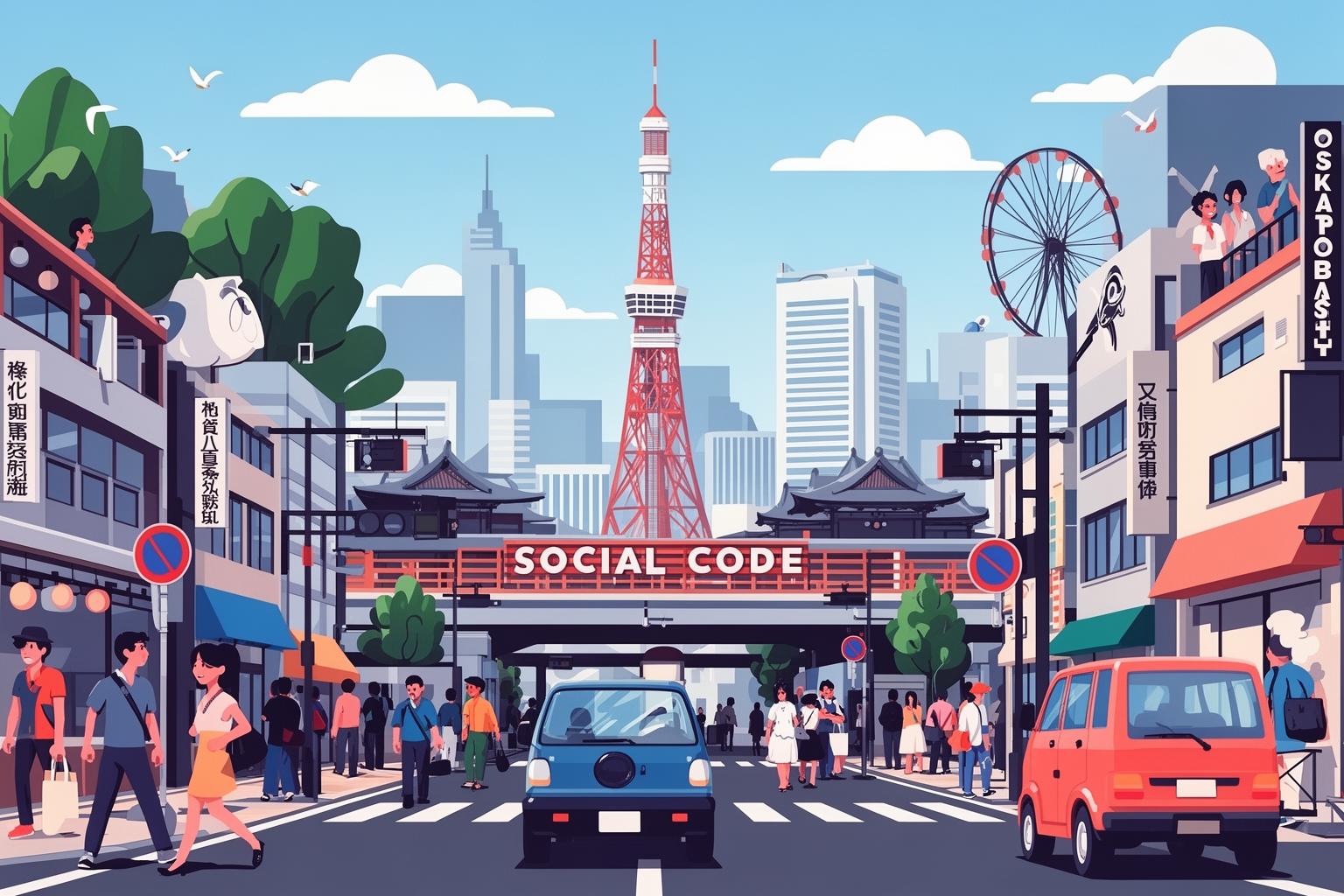
To truly appreciate Kyobashi, you need to grasp the social dynamics operating just beneath the surface. It’s a lively, ever-changing environment with its own distinct etiquette and style of communication. It moves faster, is more straightforward, and feels more communal than other places in Japan. Mastering, or at least understanding, this is essential to experiencing the best the area has to offer.
The Art of the ‘Hashigozake’ (Bar Hopping)
Senbero culture isn’t about settling into one bar for the entire night—that’s a Western idea. The real art lies in hashigozake—literally “ladder drinking,” which we’d call bar hopping. The idea is to climb the ladder by moving from one venue to another. This approach is pure Osaka logic. Why devote all your time and money to a single place? You can enjoy a quick drink and a specialty skewer at a legendary yakitori spot, then head to a different tachinomi known for fresh sashimi, finishing at a third spot with a strong, affordable highball. In one evening, spending around 2,000 yen, you experience three distinct atmospheres, sample diverse dishes, and soak in multiple vibes. It’s a restless, exploratory way to drink that values variety and discovery, keeping the night lively and fresh. A night out in Kyobashi is a journey, not a destination.
“Maikai Arigato!” – The Currency of Regulars
In the vast, anonymous bars of major entertainment districts, you’re just a transaction. But in the small, owner-run bars of Kyobashi, you’re a person. This is where the cliché of “friendly Osaka” really takes shape. It’s not exaggerated or superficial friendliness—it’s a straightforward, meaningful form of mutual recognition. The first time you visit, you’re a new face. By the second visit, the taisho (owner) might nod at you in recognition. By the third, you’ll likely hear a warm “maido” or “maikai arigato”—local expressions meaning “welcome” or “thank you for coming regularly.” This simple acknowledgment changes everything. It makes you feel like you belong. It’s an unspoken agreement: you support their small, local business, and in return, they provide a welcoming, comfortable space. This small bond is the glue holding the community together. It’s a deeply human connection you won’t find in more commercialized environments.
Decoding the Kyobashi Banter
The communication style inside a Kyobashi tachinomi is a world apart from the polite, formal Japanese you might be learning. It’s quick, direct, and filled with playful, teasing humor. Don’t be surprised if the old man beside you kicks off a conversation by bluntly asking where you’re from or what you’re doing. It’s not meant to interrogate; it’s a straightforward way to break the ice. The bar owner might joke if you order a second drink too quickly. This is Osaka banter—a kind of entertainment and a way to build rapport fast. If you’re used to Tokyo’s more reserved interactions, where strangers rarely chat, this can feel abrupt. But in Osaka, especially in a crowded Kyobashi bar, silence is wasted space. The aim is to connect, share a laugh, and make the brief moments at the counter more enjoyable. Embracing this directness is key to having a memorable time.
Your First Senbero Mission: A Practical Blueprint
Alright, you’re convinced and ready to plunge into the vibrant chaos of Kyobashi. But where should you begin? The overwhelming number of choices can be intimidating. Here’s a straightforward, practical guide for your first outing. The aim isn’t to find the single “best” spot, but to confidently jump into the rhythm and start exploring.
What to Order, What to Expect
Keep things simple. Your first drink should be a classic: a nama biiru (draft beer) or a haibōru (whisky highball). These are the essential fuels of the Senbero scene—affordable, refreshing, and quick to arrive. For food, glance at the counter or the wall to spot the staples. Doteyaki (beef sinew stew) is a must-try. Kushikatsu (deep-fried skewers of meat and vegetables) are perfect for a quick snack. A small dish of edamame or karaage (Japanese fried chicken) is always a safe choice. Don’t worry if you can’t read the menu. See something appealing? Just point. The staff are used to it. Have a 1,000-yen bill ready. Embrace the slight awkwardness—it’s part of the authentic experience. Your goal is to get in, get served, and enjoy the moment without overthinking it. This is fast-paced, casual dining at its finest.
Solo or With Friends? The Kyobashi Dynamic
Kyobashi is especially welcoming to solo visitors. The standing bar format suits this perfectly. You can slide into a small spot at the counter without feeling like you’re occupying an entire table. You can quietly observe, watching the bar’s lively theater unfold, or join conversations if the mood strikes. There’s absolutely no stigma around drinking alone here; in fact, it’s quite common. With friends, the vibe shifts a bit. Most venues are small, so a group of four might have to squeeze together. This adds to the fun. You become a lively part of the bar’s larger chaotic energy. The key is to be flexible. Be ready to stand close, shout your order over the noise, and go with the flow. Whether solo or with company, the core idea remains: you are a temporary participant in a nightly ritual, a guest in the living room of working-class Osaka. Approach it with curiosity and an open heart, and Kyobashi will offer you an experience far more memorable than any polished tourist bar ever could.