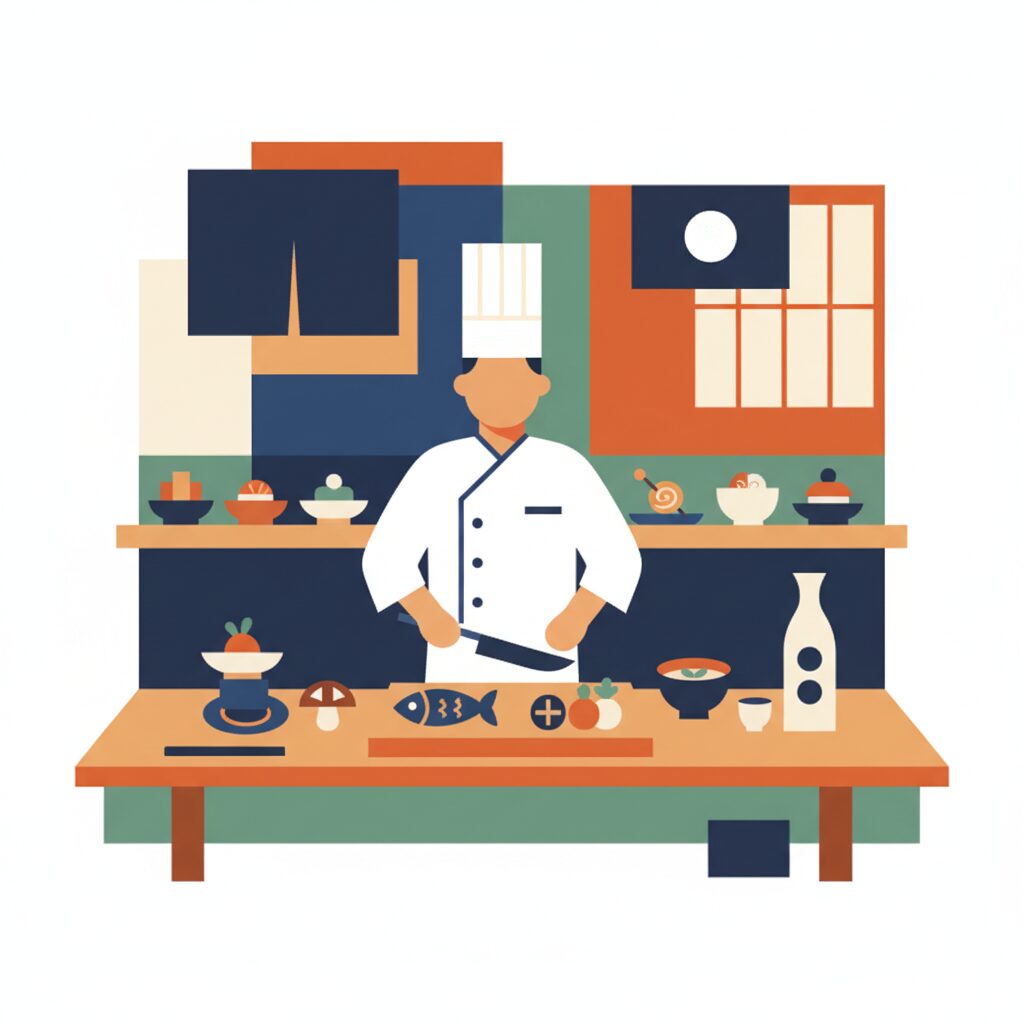
You push open the sliding wooden door and the city’s electric hum vanishes. Inside, there is silence, save for the gentle hiss of something steaming and the soft clink of ceramic on wood. There are no tables. There is only a single, immaculate counter, a stage of polished hinoki cypress. Behind it stands a man in crisp white, his movements a blur of precision and focus. He is the master, the taisho. And for the next two hours, this intimate space is his theater. This isn’t your average weeknight dinner. This is kappo, and you’ve just stepped into one of the most revealing cultural classrooms in Osaka. For many foreigners, the immediate feeling is a mix of awe and low-grade panic. What are the rules here? Do I talk? Do I stay silent? How do I order when there’s no menu? It feels a world away from the boisterous, anything-goes vibe of a packed izakaya. But understanding this experience, this intimate dance between chef and guest, is to understand the very heart of Osaka. It’s about more than just food; it’s a lesson in trust, communication, and the art of the relationship, Osaka-style. This is where the city’s soul is plated up, one deliberate course at a time.
Those intrigued by the delicate balance between tradition and indulgence might also enjoy our kuidaore crossroads guide for a deeper look into Osaka’s vibrant dining culture.
The Stage is Set: More Than Just a Counter
First, let’s break down the word. Kappo (割烹) is strikingly literal. The first character, katsu (割), means ‘to cut’ with a knife, while the second, pou (烹), means ‘to simmer or cook’. Cut and cook. It’s a promise of transparency. Everything served to you is prepared—from slicing to searing—right before your eyes. The counter is not a mere serving station; it’s a workbench. It acts as a bridge connecting you directly to the process, the ingredients, and the artist. The immaculate stage, the gleaming knives, the focused energy of the taisho—all of it is part of the experience. The intimacy is the very point.
Here a subtle but important difference between Osaka and Tokyo often becomes apparent. While Tokyo is home to some of the world’s most revered counter dining, especially in sushi, the atmosphere can often feel temple-like. It can be a hushed, almost sacred experience where the chef serves as a high priest of fish and rice, and conversation is minimal and reverent. Osaka has serene spots too, but the city’s distinct personality frequently surfaces. An Osaka kappo experience can be less of a silent meditation and more like a one-man show. The taisho is not just a chef; they are the host, the entertainer, the storyteller. The counter is their personal domain, and you are a guest invited to witness their craft and share their passion. The invisible barrier between creator and consumer feels noticeably lower, more permeable. You’re not just there to eat; you’re there to engage with the master themselves.
The Opening Act: Unwritten Rules of Arrival and Ordering
Before a single bite is served, the performance has already begun. Your role as a guest starts the moment you make your reservation. These intimate establishments often have only eight to ten seats. Your presence, along with your punctuality, is incredibly important. Arriving late isn’t just a minor slip; it disrupts a carefully orchestrated service. The chef usually times courses so they arrive simultaneously for all guests. A late arrival disrupts this flow and shows disrespect for both the chef and your fellow diners. In a city that values punctuality, this is strike one.
Reading the Room
When you enter, take a moment to absorb the atmosphere. Is conversation lively, led by an outgoing chef? Or is there a quiet focus as guests savor the first dishes? Your job is to attune yourself to this vibe. The initial silence may feel uneasy, but it’s not awkwardness. It’s a shared focus, an appreciation for the moment the curtain rises. Don’t feel pressured to break the silence with nervous small talk. Settle in, order a drink, and watch the chef at work. Notice their precise, practiced movements. This initial observation is the opening part of the conversation—a silent acknowledgment of their skill.
The Art of ‘Omakase’
In most kappo restaurants, you won’t find a menu. The guiding principle is omakase, which means ‘I leave it up to you.’ This can be the biggest mental challenge for Western diners used to choice and control. But omakase is not a passive act. It’s an active gesture of trust. You’re not merely ordering food; you’re entrusting your experience to an expert who has spent the morning at the market selecting the finest seasonal ingredients. You are telling the chef, ‘I trust your knowledge, your taste, and your vision.’
This trust is essential to understanding Osaka’s business and social culture. Relationships here are founded on this mutual respect. So how do you navigate this? If you have serious allergies or dietary restrictions, the best time to mention them is when you make your reservation or quietly and politely as you sit down. This isn’t a request for a customized menu; it’s simply providing the chef with the information needed to ensure your safety and enjoyment. Price is also part of this trust. It’s perfectly acceptable to ask about the price range when booking, but discussing money at the counter is seen as poor manners. You trust the chef to deliver an experience worthy of the price, and they trust you to honor the payment. It’s a straightforward, meaningful agreement.
The Main Performance: The Conversation with the Chef
As the courses start to arrive, the genuine dialogue begins. This is often where many foreigners freeze, unsure of how to respond. The key is to realize that this isn’t an interview or a test. It’s a dance of curiosity and appreciation. The chef is observing you just as much as you are observing them. Your expression upon taking the first bite, your focused attention on the dish—these are all part of the communication.
It’s Not an Interview, It’s a Dance
Your questions should stem from genuine interest. The aim is to show that you are engaged with what’s before you. Safe and deeply appreciated topics are the ingredients themselves. Simple questions open the door. ‘This fish is incredible, what is it called?’ ‘Are these vegetables from the Osaka region?’ ‘I’ve never tasted a broth this deep, is it a dashi base?’ These questions respect the chef’s choices and the effort they put into sourcing the best produce.
On the other hand, there are conversational dead ends. Avoid asking for modifications. Requesting ‘Can you make this without wasabi?’ after the dish has been served suggests the chef’s judgment is flawed. The dish has been presented in its ideal form. Don’t ask for the ‘secret recipe.’ A chef’s techniques represent their life’s work. And as mentioned, steer clear of any talk about cost. The conversation should focus on the art, not the transaction.
The Osaka Factor: From Reserved to Raucous
This is where the magic of Osaka truly stands out. While a Kyoto or Tokyo master might respond with reserved, precise answers, an Osaka taisho might take your simple question about a vegetable and turn it into a passionate five-minute monologue. He might tell you about the farmer who grows it, the specific microclimate that makes it so sweet, and how he outbid another chef at the market that morning to secure the best of the batch. He might use grand gestures, a booming laugh, and a dialect rich with local pride.
This is the Osaka spirit in its purest form: direct, passionate, and unpretentious. There is no rigid wall of formality. The chef might tease a regular customer, pour a fellow diner a bit of their own sake, or good-naturedly complain about the local baseball team, the Hanshin Tigers. Suddenly, the entire counter becomes part of a shared moment, a communal experience bound by laughter and a love of good food. The interaction feels less hierarchical and more horizontal. You feel less like a customer and more like a guest at a fantastic dinner party, hosted by the most talented cook you’ve ever met.
The Supporting Cast: Interacting with Other Guests
The physical design of the counter naturally fosters a sense of community. You sit shoulder-to-shoulder with strangers, all experiencing the same unique, multi-sensory moment. This shared focus acts as a strong social catalyst. While it’s important to respect privacy and personal boundaries, don’t be surprised if conversations spark with those around you.
Often, the food itself serves as the connection. A simple remark like, “The aroma of that is amazing,” to the person beside you when their dish arrives can easily ignite a conversation. You might end up talking about where you’re from, favorite restaurants, or simply exchanging a knowing nod of shared delight. This is a characteristic feature of Osaka’s social culture. People here tend to be more open to spontaneous interactions. In Tokyo’s more formal and socially hierarchical atmosphere, striking up a chat with a stranger in a high-end restaurant is far less typical. In Osaka, everyone shares the experience, and the joy of an exceptional meal can effortlessly turn strangers into temporary friends. Just be mindful of the vibe. If someone is clearly engaged in a private discussion or deep in thought, honor their space. But when the chance for a friendly exchange comes along, welcome it.
The Finale: The Unwritten Rules of a Graceful Exit
How you conclude the meal is just as significant as how you start it. As the last course is cleared and green tea is brought out, your role in the experience reaches its end. The payment should be managed discreetly. Yet, the final words you exchange with the chef are your standing ovation.
Expressing Gratitude
The standard phrase ‘Gochisousama deshita’ (‘Thank you for the meal’) is fundamental, but at a kappo counter, it is merely the baseline. The true expression of your gratitude lies in specificity. This is your opportunity to demonstrate to the chef that you were attentive, that you didn’t just eat the food but genuinely experienced it. Reflect on the meal and choose one or two highlights. ‘The smokiness of the grilled nodoguro was perfect.’ ‘I’ve never had chawanmushi with such a silky texture.’ ‘The combination of the uni and yuba was a revelation.’
This level of detailed praise is the highest compliment you can offer. It shows the chef that their effort, subtle techniques, and thoughtful choices did not go unnoticed. You observed the details. At that moment, you are no longer just a customer; you are a connoisseur who values their craft. This acknowledgment is deeply meaningful and is what the chef will remember.
Becoming a Regular (‘Jouren’)
From both the guest’s and the chef’s perspective, the ultimate aim of a successful kappo experience is to cultivate a relationship that encourages a return visit. This is how you truly uncover the heart of Osaka life. If you sincerely enjoyed the meal and the experience, be sure to express it. ‘Everything was wonderful; I would love to come back again.’
Becoming a jouren, or a regular, changes the experience. On your next visit, you will be welcomed not as a stranger but as a familiar friend. The taisho might recall your favorite type of sake or have reserved a special seasonal ingredient just for you. The conversation will resume where it left off. This is the essence of community in Osaka. It’s not about anonymous transactions; it’s about loyalty and nurturing personal connections over time. For many local businesspeople and residents, their favorite kappo spot becomes like a second home—a place where they are known and appreciated.
Why This Matters for Living in Osaka
At first glance, the exclusive world of kappo dining might seem disconnected from the everyday realities of life for a foreign resident. However, it actually serves as an ideal microcosm of how Osaka functions. The principles you absorb at the counter mirror those that govern business, friendships, and community life throughout the city.
This experience reveals that in Osaka, relationships are of utmost importance. People prioritize direct, honest communication over stiff, indirect formality. Whether they are a world-class chef or a neighborhood takoyaki vendor, they take great pride in their craft and brighten when you show sincere interest. Trust is built through consistent, respectful interaction. Becoming a regular at a local café, bar, or restaurant is the way to transition from being an anonymous foreigner to becoming part of the local community. It’s how you cultivate your network and find your place.
The Osaka mindset rejects the impersonal consumerism that dominates much of modern life. Here, people often prefer to buy from “someone they know.” They want to see the face and hear the story behind the product. The reputation of the taisho, passed along by word-of-mouth, holds more weight than any online review. Grasping this will help you navigate your life here. You’ll understand why your boss values after-work drinks as a method for building team trust, why the woman at the fruit stand offers you a free orange after a few friendly conversations, and why investing time in establishing personal connections is the most valuable endeavor you can undertake. The kappo counter is more than just a place for an extraordinary meal; it’s a masterclass in the human-centered rhythm of life in Osaka.