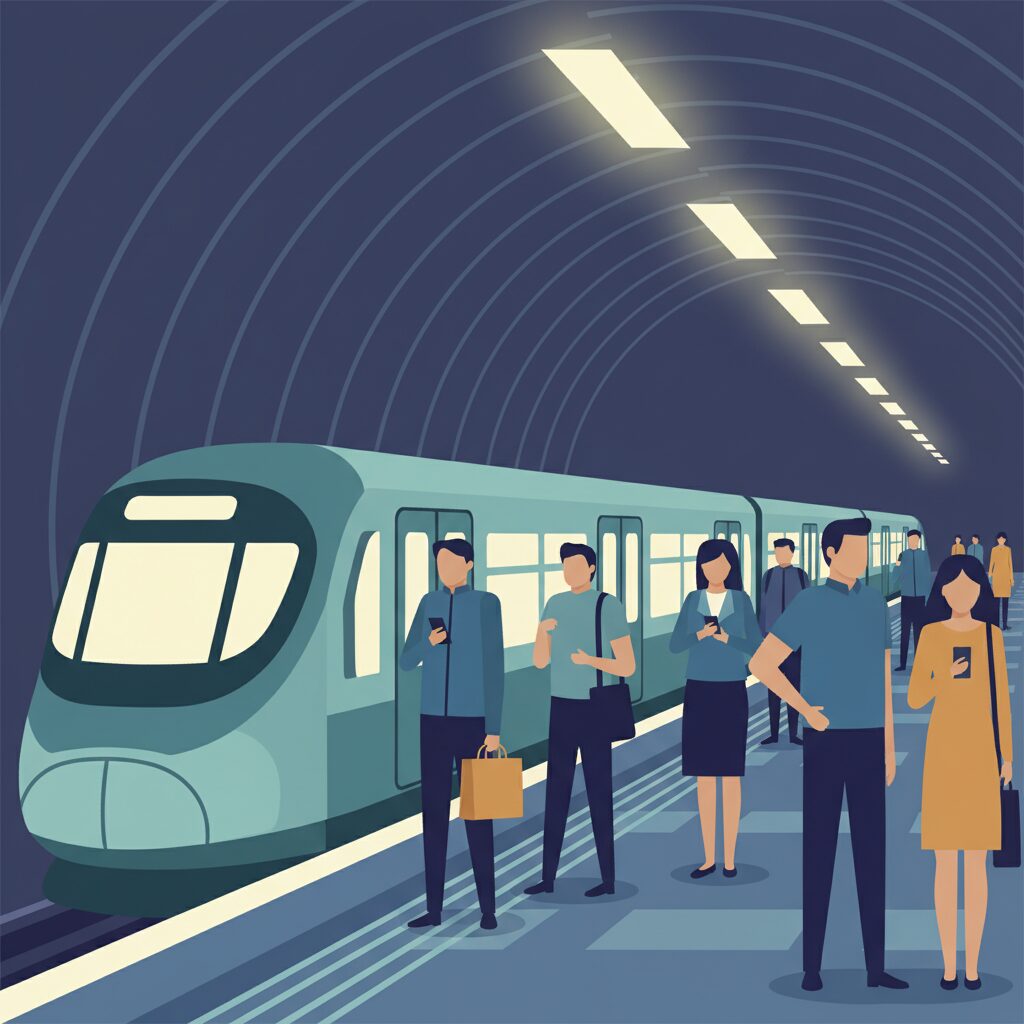
Welcome to the belly of the beast. Forget what you’ve seen in travel guides about serene temples and orderly lines. The real test of your mettle, the place where you truly earn your stripes as an Osaka resident, is down here, in the sprawling, chaotic, and utterly bewildering labyrinth known as the Umeda underground. It’s not just a collection of train stations; it’s a subterranean city, a sprawling organism of concrete and commerce that connects half a dozen railway lines and countless department stores. For the uninitiated, it’s a nightmare. For the daily commuter, it’s a high-speed ballet of organized chaos. This isn’t a guide to the best shops or tastiest takoyaki stands you can find down here. This is a survival manual. It’s about understanding the unspoken rules, the hidden logic, and the very particular mindset that governs this human river. Because if you can understand how to navigate Umeda, you’re well on your way to understanding the soul of Osaka itself. It’s a city that values efficiency over elegance, directness over deliberation, and forward momentum above all else. Prepare to recalibrate your sense of personal space and learn the art of the urban weave. Your daily commute is about to become your master class in Osakan culture.
While deciphering the intricate maze of the Umeda underground, honing your skills with the Osaka Station Shuffle can also prepare you for the brisk tempo of the city’s morning hustle.
The Labyrinth’s Logic: Organized Chaos
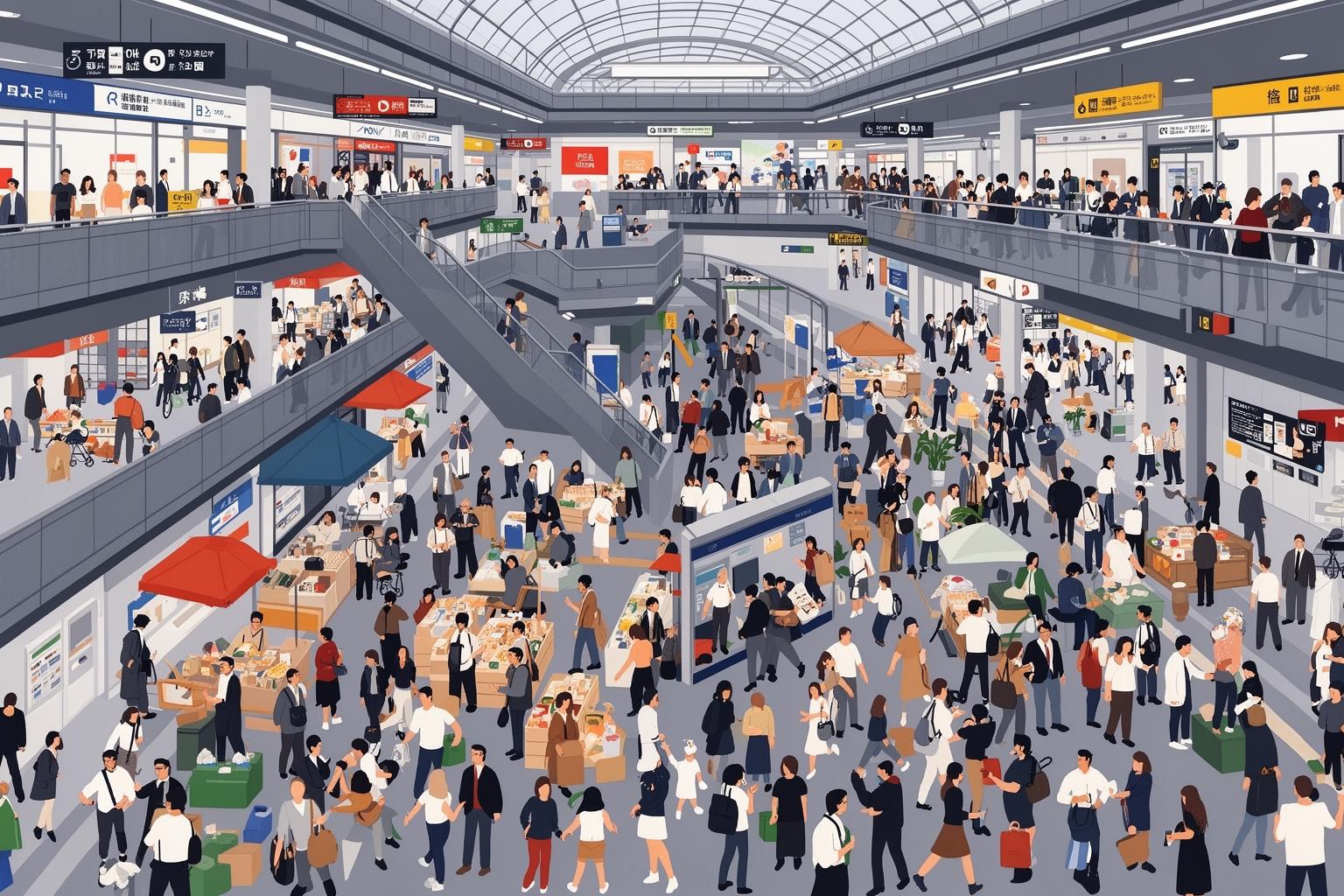
The first thing that stands out about the Umeda underground is not just its vast size, but its apparent lack of a cohesive design. It feels less like a carefully planned structure and more like it simply… evolved. One tunnel was dug to connect the new subway line, then a shopping arcade branched off, followed by a department store basement connection, and so on for decades. This contrasts sharply with Tokyo’s mega-stations like Shinjuku or Tokyo Station, which—despite their scale—often feel more unified, as if a single, ambitious architect envisioned the entire complex. Umeda, conversely, resembles a multi-generational patchwork quilt of urban development. This is quintessential Osaka: a city built on pragmatism. If there’s a need, it’s met. If a new connection can boost foot traffic, it’s dug. The result is an expansive, multi-level maze that defies simple categorization and mocks straightforward, two-dimensional maps. It epitomizes Osaka’s merchant spirit: opportunistic, relentlessly practical, and indifferent to aesthetics as long as the job gets done.
More Than a Station, It’s a Mindset
Calling Umeda a “station” vastly understates its role. It’s the junction where JR Osaka Station, Hankyu Umeda Station, Hanshin Umeda Station, and three subway lines—the Midosuji, Tanimachi, and Yotsubashi—converge. Interwoven among these transport arteries are vast underground shopping malls like Whity Umeda, Diamor Osaka, and the labyrinthine Hankyu Sanbangai. This blending of transit and commerce is essential to understanding its character. The entire system is designed to keep you moving, either toward a train platform or into a store. It physically embodies a city defined by the flow of goods and people. Idle moments are scarce. Benches are rare and valuable. Low ceilings in older sections, narrow corridors, and the constant directional crowd flow combine to create a perpetual motion. Living here means embracing this rhythm—you don’t resist the current; you learn to navigate with it.
The Unspoken Rules of the Human River
Navigating this space demands internalizing a set of unwritten rules silently enforced by thousands of rushing commuters. The foremost rule is to maintain momentum. The greatest offense you can commit in the Umeda underground is stopping suddenly in a busy walkway. This is more than a simple mistake; it’s a serious disruption of the entire system. Behind you, dozens have already calculated their paths assuming your continued movement. Your sudden halt triggers a domino effect of swerves and stumbles, drawing quiet disdain. Foreigners often mistake the resulting jostling for rudeness, but it’s a response to breaking a social contract. The contract is clear: everyone is trying to get somewhere, and your obligation is not to obstruct collective progress. If you need to check your phone, consult a map, or have a moment of hesitation, you must first step aside, clinging to a wall or pillar like urban driftwood.
This brings us to the second rule: mastering the “Osaka Weave.” Tokyo commuters tend to form orderly lines and walk predictable routes; in Osaka, movement is more fluid and unpredictable. People don’t follow the person in front directly; instead, they constantly scan for gaps, calculate the easiest path, and execute subtle, flowing maneuvers to weave through the crowd. It’s a graceful, instinctive dance of mutual avoidance. To succeed, you learn to anticipate others’ moves—not through eye contact, which rarely occurs, but by reading body language: a slight shoulder shift, a glance in a direction, the angle of a briefcase—all signals in this rapid communication. It’s not aggressive; it’s a highly efficient system for moving large crowds through tight spaces. Joining this dance is essential to becoming a true local.
Finally, there’s the inconvenient reality of staircase etiquette. In much of Japan—and especially Tokyo—there’s a strict “stand on one side, walk on the other” escalator rule. This convention gets more flexible during Umeda’s rush hours. While the general rule remains (in Osaka, you stand on the right), when crowds swell, all bets are off. Every available step on the escalator is fair game for anyone trying to gain a few seconds. This isn’t chaos; it’s situational pragmatism. The unspoken rule shifts from “orderly procession” to “maximum throughput.” If there’s an open step, someone will take it. Outsiders may see this as a breakdown of social norms; Osakan commuters see it as practical common sense. Why let a good escalator step go unused?
Reading the Signs, Both Real and Imagined
The official signage in the Umeda underground presents a confusing whirlwind of arrows, pictograms, and station names in multiple languages. For newcomers, trying to navigate these signs often results in analysis paralysis. You’ll find yourself at a crossroads, staring at a signpost pointing in five different directions, each indicating a differently colored line or a cryptically named shopping arcade. Experienced commuters seldom pause to read these signs, instead relying on a more intuitive system based on landmarks, sensory cues, and a nearly instinctual understanding of the space.
Navigating by Landmarks Rather Than Maps
Forget about the map on your phone—it can’t grasp the three-dimensional, overlapping complexity of this area. GPS signals are virtually useless here. The printed maps displayed on the walls are often so stylized and intricate that they cause more confusion than clarity. True navigation hinges on landmarks. You don’t think, “I need to walk 200 meters east and then take the third corridor on the left.” Instead, you think, “I’ll pass the fancy Tully’s Coffee with its gold trim, head toward the sound of the fountain at Whity, and when I start to smell the sweet steam from the 551 Horai pork bun stand, I know I’m near the Midosuji Line entrance.” Each section of the underground exudes its own character. Hankyu Sanbangai features distinctive reddish-brown floor tiles and a more relaxed, shopping-oriented vibe. The corridors leading to the JR lines are wider, utilitarian, and echo with the relentless clatter of rolling suitcases. You come to recognize the textures of the floors, the specific lighting quality, and the unique mix of scents—stale air conditioning, expensive perfume wafting from department store entrances, fresh bread from bakeries, and the faint, constant smell of cleaning solutions. This sensory map is far more dependable than any official guide.
The Color Code: Your One True Guide
Amid the chaos, there is one element of official guidance that serves as your absolute lifeline: the color coding of the subway lines. This is the crucial piece of information you must hold onto. The Midosuji Line shines in bold red. The Yotsubashi Line is a deep blue. The Tanimachi Line boasts a royal purple. These colors act as your North Star. They are painted as thick, continuous lines on the floor throughout many areas and are prominently displayed on overhead signs. When confusion and panic begin to take hold, stop fixating on names and numbers and instead focus on your color. Following that colored stripe on the ground will, without fail, lead you straight to the correct ticket gates. It’s the labyrinth’s sole concession to the lost and desperate. Learning to trust the color over your own imperfect sense of direction is a vital step toward commuting independence.
Understanding Commuter Behavior
Another advanced way to navigate is by learning to interpret the crowd itself. The human flow is not a uniform mass; it moves in distinct currents. People heading toward the JR lines move with a different urgency and carry different types of bags than those casually strolling toward the Hankyu department store. If you’re bound for the Hankyu Railway platforms, for example, you can often spot a “pilot fish”—an experienced commuter moving with the steady, confident pace of someone who has traveled this route countless times. Their stride is purposeful, their gaze fixed ahead, and they execute the “Osaka Weave” with effortless skill. By subtly following behind them, you can let them navigate through the crowds on your behalf. You can also pick up cues from collective movements. If you notice a large group suddenly veer into a seemingly insignificant side passage, it’s often a well-known shortcut. The desire lines—paths worn into the floor tiles that deviate from the official walkway—reveal the true story of how people move through this space.
Why Umeda Explains the Osaka Character
The daily experience of the Umeda underground goes beyond a simple commute; it offers a deep insight into the Osakan mindset. The way people maneuver through this demanding environment uncovers key traits of the local character that often stand in stark contrast to the rest of Japan, especially Tokyo. Here, you witness the city’s renowned pragmatism, its commercial vitality, and its distinctive kind of impatience.
“Sekkachi” as Rational Efficiency
There is a Japanese term, sekkachi, frequently used to describe the people of Osaka. It roughly means “impatient” or “hurried.” From an outsider’s viewpoint, particularly from Tokyo where public behavior tends to be more reserved and deliberate, the Umeda commuter might appear aggressive or brusque. People don’t wait for a clear opening in the crowd; they make one. They won’t patiently queue if a quicker option is available. However, seeing this as mere rudeness misses the essence of the local ethos. In Osaka, this sekkachi attitude is understood as a form of rational efficiency. The underlying belief is that everyone is busy, everyone has somewhere to be, and the politest act is to get out of their way—and expect the same in return. Time is a precious commodity, and wasting it is the real offense. The fast pace, weaving movements, and minimal politeness all reflect a shared, unspoken commitment to keeping the flow moving. In Tokyo, social harmony (wa) might come from patient queuing and rule-following. In Osaka, harmony is achieved when everyone reaches their destination as quickly as possible. It’s a different kind of politeness, focused on results rather than process.
A City Built for Commerce, Not Contemplation
Umeda’s underground city is the fullest expression of Osaka’s legacy as a merchant hub. The whole complex functions as a commercial engine. The train lines act as arteries that transport people—the customers—into the core of the system, while the underground passages serve as capillaries distributing them throughout department stores and shopping arcades. It isn’t a public space in the usual sense. Rather, it’s a commercial space you simply pass through. This explains why it can feel overwhelming. Its design discourages lingering. There are few comfortable seating areas or quiet spots for a moment of rest. Everything is optimized to support movement and transactions. This can be unsettling for visitors used to public spaces that allow for more leisure. But it honestly reflects the city’s values. Osaka has always been about making, selling, and moving. The Umeda Labyrinth is just the modern, underground iteration of the vibrant merchant districts that have shaped the city for centuries. It’s a place defined by purpose, and that purpose is overwhelmingly economic.
Practical Survival Tips for the Uninitiated
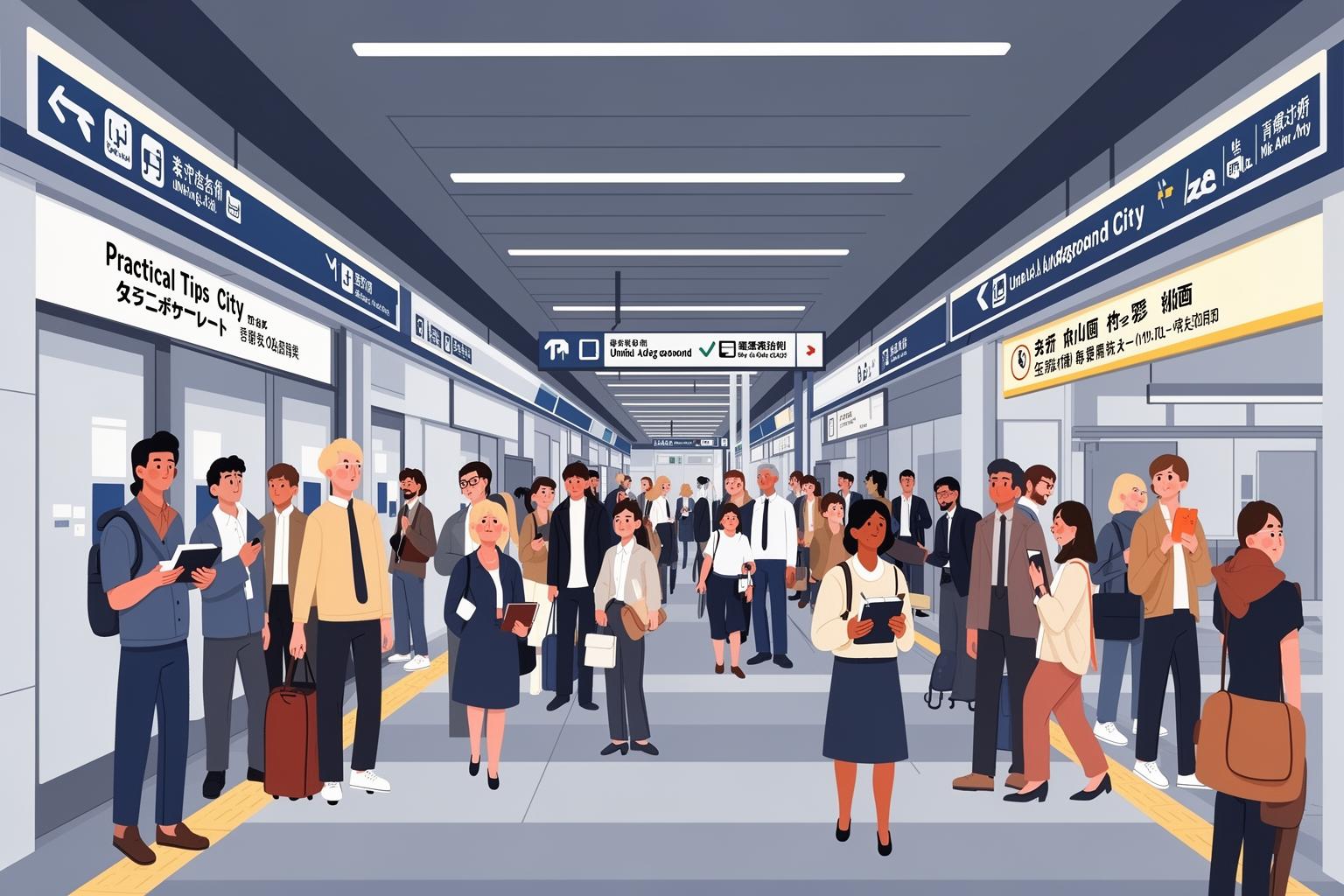
Understanding the cultural context is one thing, but making it through your first few months of commuting around Umeda demands some hard-earned practical knowledge. Mastering a few simple strategies can mean the difference between a stressful, confusing journey and a smooth, efficient one.
Pre-planning Your Exit
This is arguably the most important advice. The Umeda station complex has dozens of numbered exits. Coming out of the wrong one can leave you with a ten to fifteen-minute walk to your destination, feeling completely lost on the surface. Before you board the train, use an app like Google Maps to identify the exact exit number you need for your final destination. For example, if you’re heading to the Umeda Sky Building, you need to follow the route towards the north side of the JR tracks. If your destination is a specific office in the Nishi-Umeda area, be sure to follow signs for the Yotsubashi line. Don’t assume you can just “get outside” and figure things out. The area above ground around the station is just as complex, with wide roads and elevated highways that are tricky to cross. Your mission is to know your exit number inside and out. Memorize it, write it on your hand, and prioritize finding the signs for it above all else.
The Art of the Apologetic “Sumimasen”
Despite the fast-paced, crowded nature of the commute, intentional physical contact is rare. Everyone is engaged in a mutual dance of avoidance. However, accidental bumps do happen. You might misjudge a weave or someone might suddenly stop. When this occurs, the etiquette is quick and straightforward. A sharp, brisk “Sumimasen!” will suffice. This single word covers “Excuse me,” “Sorry,” and “My apologies” all at once. There’s no need for lengthy apologies or dramatic gestures. The typical Osakan response is a brief nod or even a grunt of acknowledgment as you both keep moving without missing a beat. The apology is simply a practical token to smooth over a brief disruption in the flow. Brevity is essential. Lingering on it wastes time, which—as we’ve established—is the ultimate sin.
Finding Your Bearings Above Ground
There will be moments when, no matter how hard you try, you become completely lost. The signs may contradict each other, your sense of direction may fail, and you might find yourself in an unfamiliar part of the underground. In those moments, don’t panic, and don’t keep wandering deeper into the maze. The best approach is to perform an emergency egress. Look for the nearest sign that says「地上へ」(chijō e – to the surface) and head straight out. Take the closest staircase into the daylight. Once above ground, the world begins to make sense again. You can spot the giant red HEP FIVE ferris wheel, the twin towers of the Umeda Sky Building, or the imposing facades of the Hankyu and Hanshin department stores. These huge, unmistakable landmarks serve as your compass. You can reorient yourself, check your phone’s GPS (which will now work), and figure out where you are in relation to your destination. Sometimes, the best way to solve the underground maze is simply to leave it behind.
Mastering Umeda is Mastering Osaka
Learning to navigate the Umeda underground is a rite of passage for any non-native living in this city. It begins with fear and confusion, moves through a phase of frustrating trial and error, and eventually, one day, unfolds into a quiet confidence. You’ll find yourself striding purposefully from the JR Loop Line to the Hanshin platforms, not by relying on signs, but by a sixth sense. You’ll weave through the thickest rush hour crowds with an intuitive grace you never knew you had. You’ll recognize, just from the echo of your own footsteps, which corridor you’re in. That is the moment you’ve truly arrived. That is the moment you’ve internalized the city’s rhythm. The Umeda underground is a microcosm of Osaka itself: it’s a bit rough around the edges, can be overwhelming and loud, and it absolutely does not prioritize your comfort. But it is also incredibly dynamic, brutally efficient, and governed by a hidden, chaotic logic. It’s a system that rewards those who are direct, adaptable, and always moving forward. When you can navigate its depths without hesitation, you’re no longer just a resident living in Osaka. You’re part of its relentless, energetic, and wonderfully pragmatic flow.