You’ve seen the pictures, right? The giant crab, the flashing lights, the Glico Running Man striking his victory pose over the Dotonbori canal. This is Osaka’s global handshake, the loud, chaotic, and delicious image beamed across the world. It’s a city that wears its heart on its sleeve, a place where the food is serious business and the people are, supposedly, friendlier than anywhere else in Japan. But when you live here, you start to feel a disconnect between that postcard image and the quiet rhythm of your own street. You walk home past silent apartment blocks and darkened shotengai arcades, and you wonder, where is that famous Osaka energy? Is the entire city just a performance piece happening in two downtown districts?
The truth is, the city’s real identity, its genuine, unfiltered soul, doesn’t live under the neon glow of Namba or in the corporate canyons of Umeda. It’s tucked away, hiding in plain sight. You find it on a hot summer evening, when you turn a corner in a perfectly average residential neighborhood and walk straight into a wall of sound and light. It’s the local matsuri, the neighborhood festival, held on the grounds of a shrine so small you never even knew it was there. This isn’t the famous Tenjin Matsuri with its river parades and massive crowds. This is something else entirely. This is the city talking to itself, and if you stop and listen, you can learn everything you need to know about what it really means to live in Osaka. It’s in these moments you realize Osaka isn’t one massive, sprawling metropolis; it’s a thousand tiny villages, each with its own customs, its own protectors, and its own annual party.
Dive deeper into the city’s unique charm by exploring how Osaka’s tsukkomi humor reveals the playful, intimate side of everyday interactions beyond the typical downtown spectacle.
The Festival You Won’t Find in a Guidebook
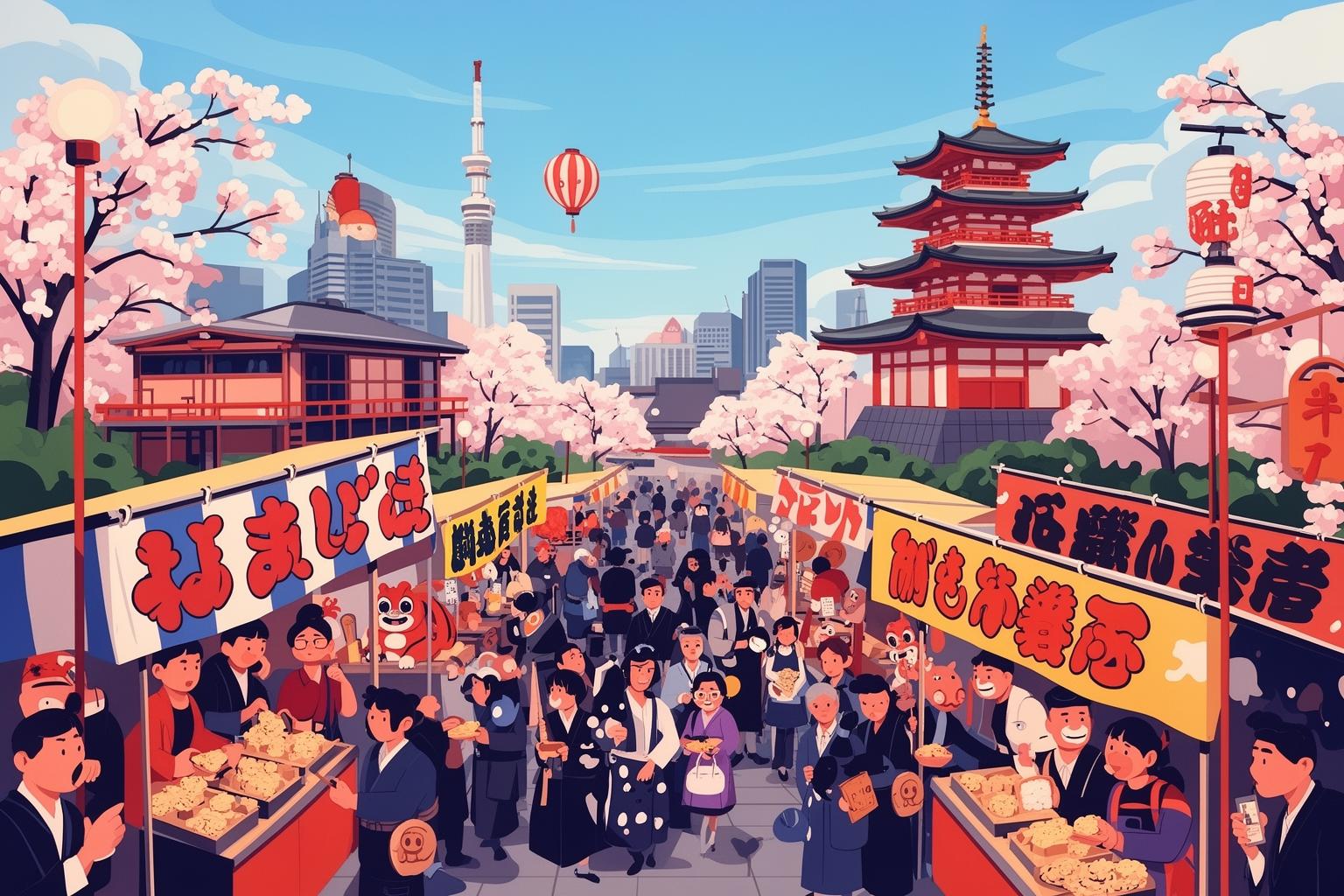
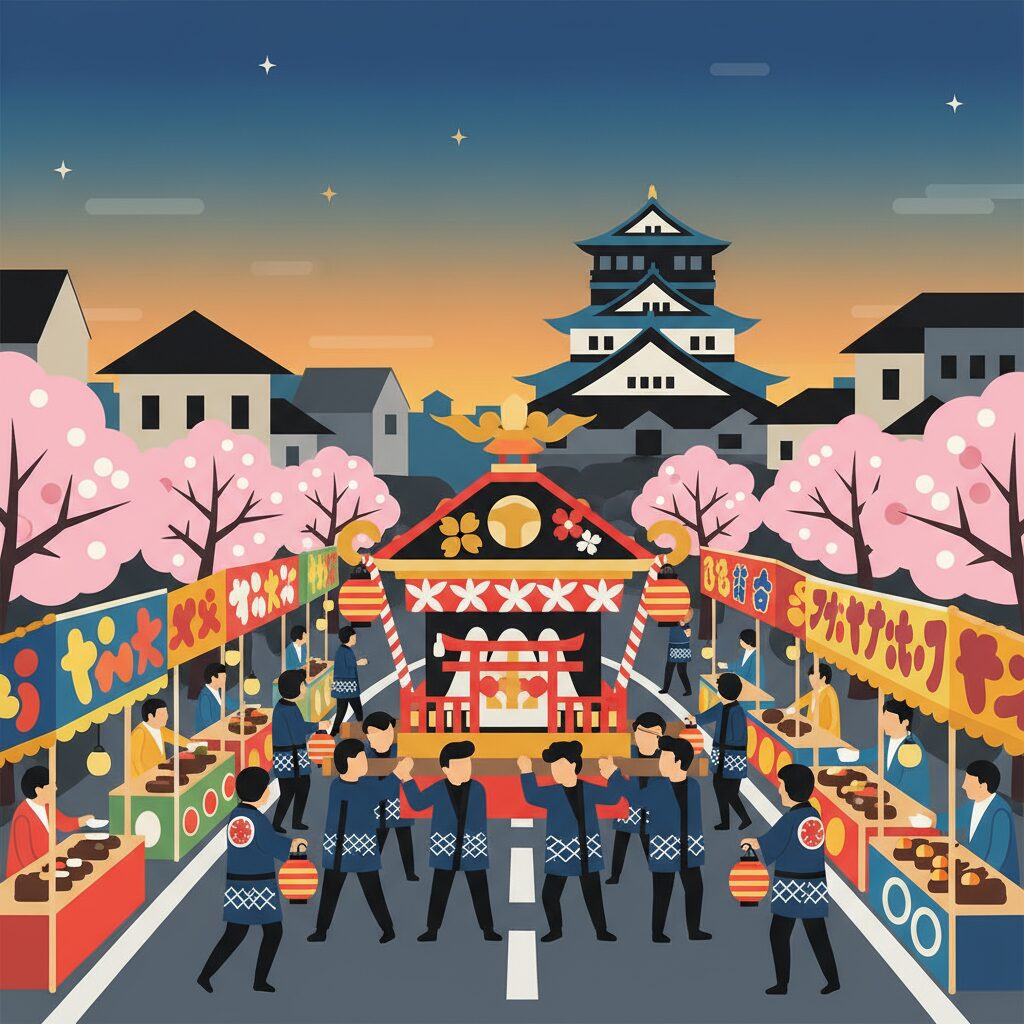
Forget the scheduled, ticketed, and heavily promoted events. The matsuri I’m referring to announces itself not through posters, but with a sudden burst of red and white paper lanterns hung between telephone poles. You sense it before you see it: a subtle change in the neighborhood’s energy. The air thickens with the aroma of grilled squid and the sweet, smoky scent of yakisoba sizzling on a huge iron griddle. The soundscape shifts from the distant drone of traffic to the close, rhythmic pop of a single taiko drum, played not by a professional group but by a rotating lineup of dads from the local community association, the chonaikai.
This is where the contrast with other cities, especially Tokyo, becomes strikingly clear. A large Tokyo festival often feels like a carefully curated exhibition. It’s organized, efficient, and everyone has a defined role. There are performers, vendors, and spectators. You attend to experience it. In Osaka, at a street-corner matsuri, those distinctions blur into a chaotic, sweaty, wonderful jumble. The man grilling sausages might be the same person who runs the local butcher shop you pass every day. The woman handing out inexpensive plastic toys for the ring-toss game? She’s your downstairs neighbor. The event isn’t a performance for an audience; it’s a living, breathing community collaboration. It’s the neighborhood’s annual shareholder meeting, where the only agenda is to strengthen the ties that keep the place united.
A Different Kind of ‘Friendly’: The Unspoken Social Contract
Everyone repeats the phrase: “Osaka people are so friendly.” It’s a cliché that rings true yet can also be quite misleading. It’s not about strangers trying to become your closest friends. Rather, it’s about a deeply rooted sense of shared space and mutual, unspoken responsibility. This hyper-local matsuri perfectly embodies that principle. The “friendliness” is actually the community’s social contract unfolding in real time.
Look closer. Notice the stern-faced elderly men in matching happi coats, waving glowing sticks to guide the sparse foot traffic. They’re not hired security; they’re the neighborhood elders, the custodians of local order. Observe the group of mothers effortlessly managing the super-ball scooping game, laughing as they handle a dozen noisy children. This is their territory. Even the surly teenagers, drafted to help at the drink stand, are playing their part, absorbing the rhythm of community duty through a kind of reluctant osmosis. In Tokyo, these roles might be handled by perfectly uniformed part-time staff. But here, it’s just people. It’s messy, imperfect, and deeply human.
This is what Osakan friendliness truly means. It’s not about overly sweet politeness. It’s a practical acknowledgment that “we’re all in this together.” It’s a gruff, sleeves-rolled-up style of camaraderie. It rests on a foundation of mutual reliance. People might not bow as deeply, and the language is definitely more direct, but there’s a basic trust that when something needs to be done, someone will step up. The festival serves as a rehearsal for this social muscle. It’s the community looking at itself and saying, “Yep, we still got it.”
Decoding the Local Economy and Power Structure
That string of paper lanterns serves more than just decoration. It acts as a map of the neighborhood’s soul. Each lantern displays a name, boldly written in calligraphy. It’s not Sony or Panasonic, but Tanaka Plumbing, Sato Real Estate, the local izakaya, the corner dry cleaner, and the family-run bicycle shop. These are the sponsors, the patrons. This is a visual representation of the hyper-local economy sustaining the neighborhood, an ecosystem functioning almost entirely independently of the global brands competing for billboard space a few train stations away.
This marks a key difference in the fabric of daily life. In many parts of Tokyo, the local high street is a replica of the next, dominated by the same national chains for banking, coffee, and fast food. In Osaka’s residential areas, these small, independent businesses still hold significant influence. Their sponsorship of the matsuri is both a sincere donation and a smart marketing strategy. It reinforces their role as pillars of the community. It’s their way of saying, “We’re not just a shop. We are part of this place. We live here, too.”
The food stalls tell a similar tale. While some may be operated by professional festival vendors, many are simply local restaurants bringing their business to the street. The yakitori shop owner sets up a charcoal grill right on the pavement. The okonomiyaki place brings out a portable griddle. This isn’t merely about earning extra income; it’s a proud display of culinary skill. It’s a direct challenge, a delicious showcase of what their neighborhood offers. The entire event celebrates fierce localism, a reminder that the most important parts of life often lie within a few square blocks.
The Sound and Feel of a True Osaka Neighborhood
Close your eyes briefly at one of these festivals. What do you hear? You hear the raw sound of Osaka. It’s not just the distinctive Kansai-ben dialect; it’s the volume, the rhythm, the unabashed loudness of it all. It’s a chorus of overlapping conversations, interrupted by sudden bursts of laughter. It’s the sound of haggling, not as a serious negotiation, but as a form of social interaction, a game played for mutual enjoyment. A mix of performance and banter. It’s communication turned into a contact sport.
There’s a straightforward pragmatism to everything. The prizes for the games are simple and cheerful. The seating is a patchwork of plastic crates and shaky folding chairs. No one cares about refined aesthetics or minimalist design. The main questions are: Is it fun? Is it worth the price? Does it work? This is the essence of Osaka’s merchant culture condensed into one evening. Substance over style. Function over form. Get to the point, have fun, and don’t pay more than necessary.
This can be surprising for those used to the more reserved and polished atmosphere of other Japanese cities. A similar community event in a Tokyo suburb might feel more orderly, more peaceful, more… polite. The Osaka version is a controlled burst of energy. It’s interactive, chaotic, and draws you in. There’s no place for a passive observer. The sheer density of sound and activity compels you to engage and become part of the flow. It’s a city that demands your participation, not just your presence.
What This Means for Living in Osaka
So, why does any of this matter if you’re simply searching for a place to live? Because grasping this dynamic is essential to understanding your position within the city. When you rent an apartment in Osaka, you aren’t just acquiring a set of rooms. You are, in effect, joining a chonaikai, a neighborhood association, a village. You might not notice it at first, but this invisible network of relationships surrounds you.
The local matsuri serves as your orientation. The first time you attend, you’re an anonymous face in the crowd. Yet, you are being noticed. The woman from the bakery, the man from the liquor store, your neighbors—they take note of your presence. Come back the following year. Perhaps you buy a beer from the same stand. A flicker of recognition. A nod. By the third year, you’re no longer a stranger. You become “the foreigner from the third floor of the Tanaka building.” You’ve crossed a threshold. You are becoming part of the neighborhood’s collective memory.
This is how life is constructed here. It’s not through networking events or formal greetings. It’s through quiet, steady participation in shared community rituals. It’s about showing up. For anyone asking, “Is Osaka a good place to live?” the answer depends on how you respond to this concept. If you prefer the anonymity of a vast city where you can live without connection, Tokyo might suit you better. Osaka, despite its size, can feel surprisingly small. Its neighborhoods exert a strong gravitational pull. They require a low level of social involvement, an acknowledgment that your life is intertwined with those who share your patch of concrete.
To discover the true Osaka, you must look beyond the dazzling lights of the city center. You need to stroll down the quiet side streets and listen for the faint beat of a drum. That’s where the city’s heart pulses. It’s found in the hundreds of small, fiercely proud urban villages, each celebrating its unique identity with cheap beer, grilled squid, and a sky full of paper lanterns.