So, you’ve settled into Osaka, you’ve got your apartment sorted, you know which train line gets you home, and you’ve mastered the art of dodging bicycles on the sidewalk. You’re past the tourist phase. Now the real question bubbles up, the one you ask a friend in a low voice after your second highball: “Where do people actually go?” You’ve seen the glittering Glico sign in Dotonbori, you’ve walked the covered arcades of Shinsaibashi. But it feels like a stage set, a brilliant and dazzling one, but a stage nonetheless. You sense there’s another layer, a backstage world where the real life of the city unfolds after dark. You’re looking for the pulse, the raw, unfiltered rhythm of Osaka nightlife. And when you ask that question, the answer you’ll often get from a local, delivered with a knowing grin, is a simple one: “You gotta go to Ura-Namba.”
Now, don’t pull out your phone and search for “Ura-Namba Station.” It doesn’t exist. Ura-Namba, which literally means “Back-of-Namba,” isn’t an official district. It’s a feeling, a sprawling, chaotic network of narrow alleys and hidden courtyards tucked away behind the massive Nankai Namba Station. It’s the city’s vibrant, beating heart, shielded from the main thoroughfares. While Tokyo nightlife can often feel like a sleek, curated experience presented in polished high-rises, Ura-Namba is the complete opposite. It’s grounded, gritty, and profoundly human-scaled. It’s a sensory overload in the best possible way: the air thick with the smell of grilled meat and savory dashi, the sound of sizzling grills, the clatter of plates, and waves of booming, unrestrained Osaka laughter spilling out from behind clouded glass doors and flapping noren curtains. This isn’t a place you go with a fixed itinerary. It’s a place you surrender to. You’re not here to find one perfect bar; you’re here to embrace the glorious, spontaneous ritual of the bar hop. This is your primer on that ritual, a guide not just to the geography, but to the mindset that makes Ura-Namba the truest expression of Osaka’s soul.
As you delve deeper into Osaka’s after-dark experiences, discovering the dynamic heartbeat of Osaka’s local economy in its storied shotengai provides another authentic glimpse into the city’s soul.
The Unspoken Rules of the Ura-Namba Shuffle
Before you explore the maze of lantern-lit alleys, it’s important to understand that bar hopping here is more than just a fun pastime; it’s a cultural ritual with its own rhythm and etiquette. It’s a dance, and mastering the steps will turn your experience from that of a spectator into an active participant. The entire scene is grounded in a few key principles that embody the broader Osaka mindset.
“Saku-nomi”: The Art of the Quick Drink
One of the first things you’ll notice is the physical setup of the bars. Many are tachinomi, or standing bars, with space for maybe eight to ten people packed shoulder-to-shoulder. There are no cozy booths to settle into for a long, contemplative evening. This is intentional. The culture revolves around saku-nomi, which roughly means a quick, light drink. The idea is to drop in, have one or two drinks and a small dish, then move on to the next place. You’re like a stone skipping across the surface of a pond, not an anchor sinking to the bottom.
This practice is quintessentially Osaka. People here are famously sekkachi, a term meaning impatient or always in a hurry, but it’s more nuanced than that. It’s about efficiency and getting maximum value, both in time and money. Why spend your entire night and budget at one spot when you can sample the distinct atmosphere, specialties, and clientele of four or five different bars? It’s a portfolio approach to an evening out. The environment supports this perfectly. Service is lightning-fast, food comes out quickly, and the standing setup keeps you light on your feet, ready for the next stop. Lingering isn’t the goal; the experience is.
The Currency of Banter: How to Talk to Strangers
Here, we must confront the biggest cliché about Osaka: “The people are so friendly.” It’s true, but it’s not the passive, polite friendliness you might find elsewhere. It’s an active, engaging, often loud friendliness. In a quiet, minimalist Tokyo bar, striking up a conversation with the stranger beside you might be considered an intrusion on their personal space. In Ura-Namba, it’s often the entire point. The cramped spaces and flowing alcohol act as social lubricants, breaking down the usual Japanese reserve.
The real currency here is banter. It’s a performance, and everyone is invited to join in. Don’t be surprised if the salaryman on your left leans over and asks, “What’re you drinking there, friend? Is it good?” or if the shopkeeper on your right throws in a recommendation. The key is to engage. A simple smile and nod work, but if you want to truly connect, play along. The conversations are rarely serious; they’re lighthearted, teasing, and follow the classic Osaka comedic pattern of boke (the silly fool) and tsukkomi (the sharp retort). As a foreigner, you’re not expected to be a master of Japanese comedy, but showing appreciation for the humor and willingness to join in will earn you instant acceptance. Simply asking “Oishii desu ka?” (Is it delicious?) about their food can spark a fifteen-minute chat. This shared moment over shared plates forms the foundation of Osaka’s community, where the invisible walls between strangers become incredibly thin.
Reading the Room: When to Stay and When to Go
Because the bars are so small, you become acutely aware of the space and the people in it. This creates an unspoken social contract. If you arrive and see a line waiting outside a popular bar, you know those inside are on a clock. There’s a mutual understanding that you don’t hog a coveted counter spot. You have your drink, eat your skewers, enjoy the buzz, then politely make way for the next group.
This isn’t enforced by strict bouncers; it’s maintained by social pressure and a shared sense of fairness. It’s the urban equivalent of a community potluck. This practical consideration for others is a cornerstone of everyday life in Osaka. It’s less about abstract politeness and more about a pragmatic system letting everyone have their turn. The flow must continue. So if you’ve finished your drink and are just scrolling on your phone, you might catch a few gentle but expectant looks. It’s the room’s way of saying, “Time for the next chapter.” This fluidity makes the Ura-Namba experience possible. It’s a living, breathing ecosystem dependent on the constant movement of its patrons.
What Ura-Namba Teaches You About Osaka’s Soul
If you pay attention, an evening spent in Ura-Namba feels like an intense introduction to Osaka’s culture. The food, the architecture, the interactions—they all reveal something essential about the city’s character, shaped by its mercantile roots and a spirited rivalry with the capital.
“Kona-mon Culture” on a Bar Stool
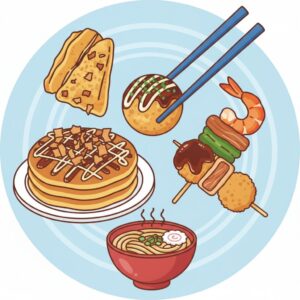
Osaka is famously known as “the nation’s kitchen,” yet its culinary soul lies not in upscale kaiseki restaurants but in kona-mon (flour-based dishes) such as takoyaki and okonomiyaki, along with affordable, satisfying meals made quickly and enjoyed communally. Ura-Namba represents this philosophy in its bar scene. The food is straightforward and unpretentious, focusing on flavor and satisfaction rather than elaborate presentation. You’ll encounter stalls selling generous portions of fresh sashimi at a fraction of formal restaurant prices, small shops dedicated to kushi-katsu (deep-fried skewers with a strict no-double-dipping rule), and simmering pots of doteyaki (slow-cooked beef sinew in a sweet miso broth).
This is closely tied to Osaka’s history as a merchant city. For centuries, its residents have developed a keen sense of kosupa, or cost performance. They have a natural aversion to being overcharged. While willing to pay for quality, they reject unnecessary frills, elegant decor, or prestigious names. A delicious bowl of noodles from a modest stall always holds more value than a mediocre dish served in an elegant setting. Ura-Namba embodies the ultimate temple of kosupa. Here you can enjoy a fantastic meal and several drinks for the price of one cocktail in a stylish Tokyo neighborhood. It’s a celebration of accessible, high-quality indulgence.
The Anti-Tokyo Aesthetic: Raw, Real, and a Little Grimy
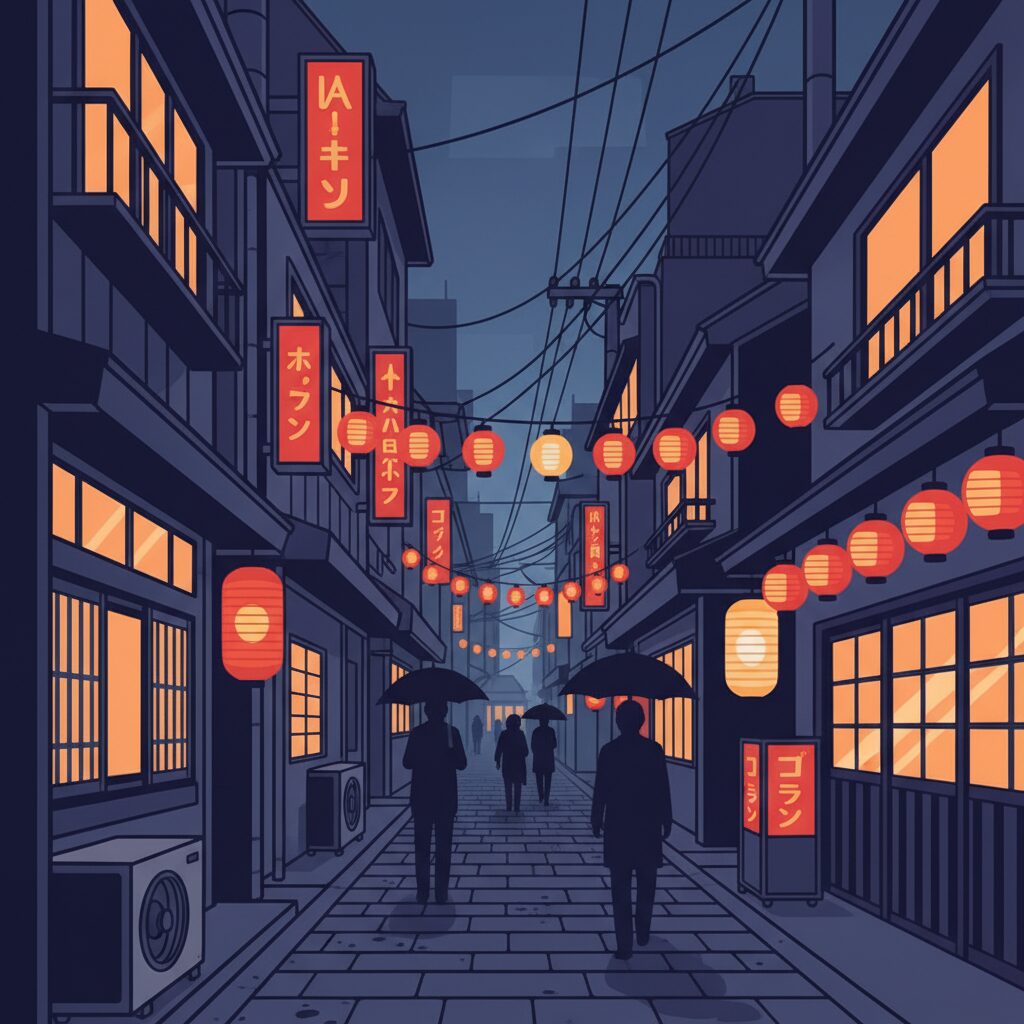
A typical misconception for foreigners arriving in Japan is that the entire country shares the sleek, minimalist, ultra-modern aesthetic often depicted in media. A visit to Ura-Namba dispels that notion. The visual environment is a chaotic, layered, and beautifully imperfect collage accumulated over decades of use. You’ll notice hand-painted signs with fading characters, exposed wiring along wooden beams, walls plastered with stickers and old posters, and mismatched stools smoothed by countless patrons.
This isn’t a sign of neglect but a badge of pride. It’s an aesthetic that prioritizes authenticity over polish. In Osaka, there is a deep-rooted suspicion of anything that appears too slick or pristine. A touch of grime is comforting; it signals a place with history, one that’s cherished and focused on what truly matters—the food, the drink, and the company. Where a Tokyo designer may aim for the serene emptiness of wabi-sabi, the Ura-Namba proprietor embraces a philosophy of lively clutter. This visual distinction reflects a deeper cultural contrast. It’s a rejection of pretense in favor of the raw, the real, and the unapologetically human.
The Human-Sized City
Perhaps the most striking difference is the scale. The alleys are so narrow you can often touch both sides at once. The bars are so small that you are in constant, unavoidable proximity to others. This physical closeness acts as a powerful social catalyst. It’s impossible to remain anonymous in spaces where you must excuse yourself to pass the person next to you and can overhear every word of the chef’s conversation with a regular.
This enforced intimacy breaks down the barriers modern urban life often erects. Compare this with navigating Shinjuku Station in Tokyo—a vast sea of people flowing past each other in mutual, anonymous oblivion. One can feel utterly alone in a Tokyo crowd. In Ura-Namba, even briefly, you become part of a small, temporary village. You share space, sounds, and experience. This is the magic of Osaka. It’s a megacity of millions that, at its best, feels like a mosaic of small, interconnected neighborhoods. Ura-Namba is the most vivid example of this—a place where the sprawling metropolis contracts into the warmth of a single welcoming room.
Navigating the Maze: A Practical Guide for the Foreign Resident
Feeling ready to jump in? While Ura-Namba thrives on spontaneity, a few practical tips can help you navigate its vibrant chaos with the confidence of a local. Think of these less as strict rules and more as tools to unlock a deeper experience.
Letting Go of the Plan
This is the key piece of advice: avoid over-planning your night in Ura-Namba. Although you might be tempted to research the “top ten bars” or craft a detailed itinerary, that misses the essence. The true joy of Ura-Namba lies in discovery. The best way is to wander freely. Stroll down an alley, peek behind a curtain, listen to the sounds coming from inside. Does it catch your interest? Does the vibe feel right? If yes, open the door and step in. If the atmosphere isn’t for you, or it’s packed, no worries. Finish your first drink and move on. There’s no stigma in a brief visit.
This mindset can be freeing, especially for foreigners used to Japan’s more structured, reservation-based culture. It’s a practice in letting go and embracing serendipity. The most memorable spots are often those you find by chance—the ones without English signs and a gruff-looking owner who turns out to be unexpectedly kind. Stay open, stay curious, and let the alleys lead you.
Cash Reigns, but Cards Are Gaining Ground
Though Japan is rapidly shifting toward cashless payments, the backstreets of Osaka remain one of the last holdouts. Many small, authentic, family-run spots still operate on cash only. This helps keep their costs down and prices reasonable. Trying to pay a 400-yen beer and a 200-yen skewer with a credit card will easily mark you as a tourist.
That said, the area is evolving. More of the slightly larger or newer venues now accept credit cards or QR code payments. The best plan is to be ready for both. Start your night with a good amount of cash, especially small bills and coins. It’s a practical reminder that, despite its modern image, Osaka still values simple, tactile transactions. It keeps things real.
Cracking the Menu Code
You’ll likely end up somewhere where the menu is a single, handwritten vertical sheet taped to the wall, with no pictures and no English. Don’t be intimidated. This isn’t a barrier; it’s a chance to interact. Your smartphone’s camera translation tool is invaluable here. But an even better resource is genuine human connection.
Observe what the person next to you is eating. If it looks appealing, catch the chef’s eye, point, and smile, saying “Sumimasen, onaji no, onegaishimasu.” (Excuse me, the same, please.) This almost never fails and often sparks a great conversation. The person you’re copying will likely appreciate it, and the staff will value your effort to engage. Osakans love sharing their food culture, and showing sincere interest quickly wins them over. Asking for the osusume (recommendation) is another excellent move. It demonstrates trust and a spirit of adventure, qualities highly valued in Ura-Namba’s social scene.
Ura-Namba Isn’t Just a Place, It’s an Attitude
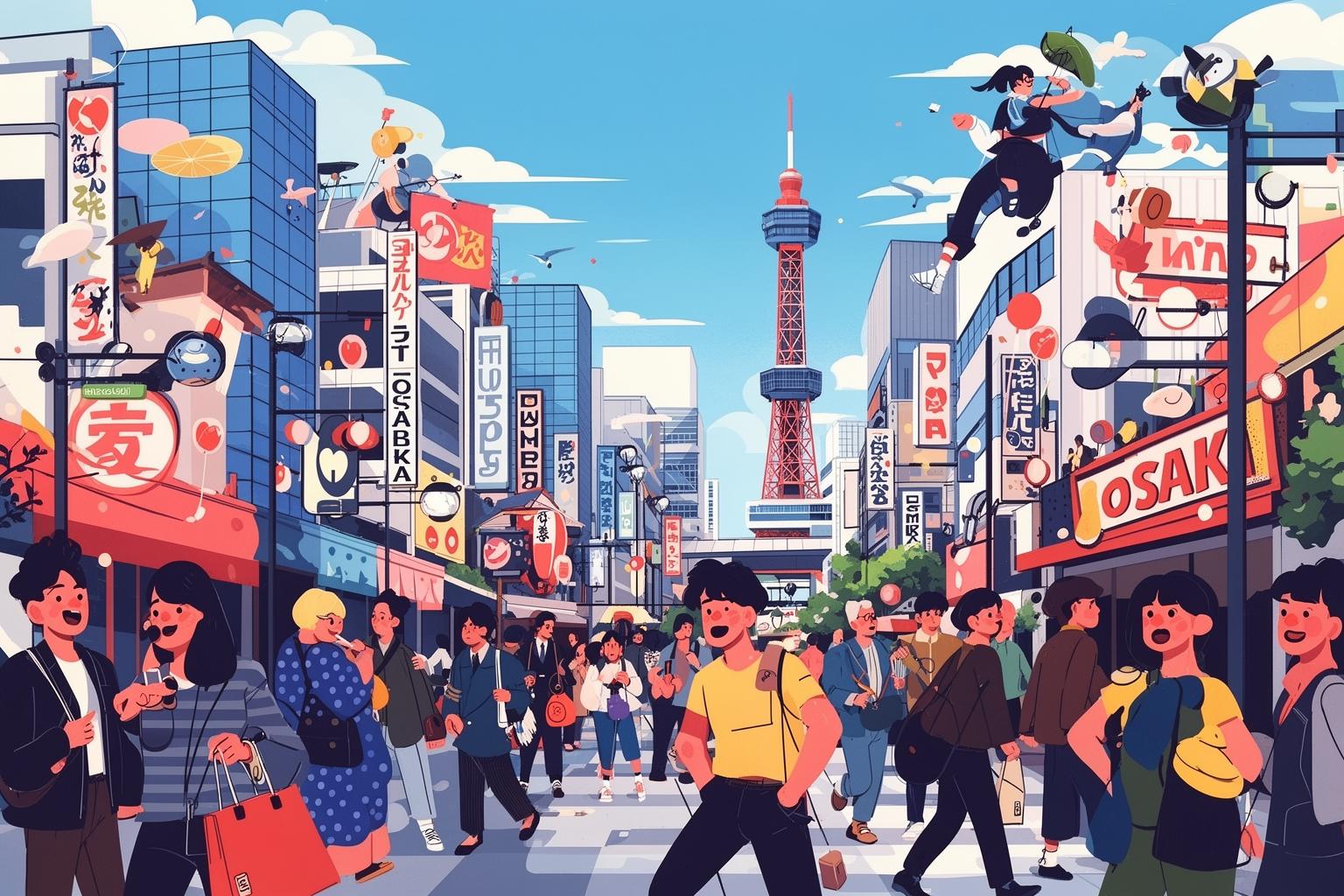
After a few hours of weaving through the alleys, sipping sake in one spot and beer in another, and sharing a plate of grilled squid with a stranger who becomes your friend for twenty minutes, you begin to realize something. Ura-Namba is more than just a collection of bars and restaurants. It is the living, breathing essence of the Osaka spirit.
It’s where the city’s merchant soul is fully on display—not in corporate boardrooms, but in the relentless pursuit of good value and the cheerful, straightforward exchanges over a wooden counter. It’s where the love of good food and lively conversation outweighs any concern for appearances or decorum. It’s where the city’s chaotic energy is concentrated into its most potent, enjoyable form. Spending an evening here is like participating in a nightly festival, a ritual of connection that makes this vast city feel intimate.
So next time you wonder where the real Osaka is, skip the polished tourist spots. Head for the warm, chaotic glow behind Namba station. Dive into the maze without a map. Let your senses lead the way. Because understanding Ura-Namba isn’t just about finding a good place to drink; it’s a shortcut to grasping the heart of Osaka itself. You’ll leave not only with a full stomach but also with a much deeper appreciation for the city you’ve chosen to call home. You’ll stop being just a resident and start, even if only a little, to feel like a local.