My first real business meeting in Osaka was a disaster. I came prepared, armed with a crisp suit and a mindset forged by every “Doing Business in Japan” guide I’d ever read. I expected quiet reverence, subtle nods, and a marathon of polite ambiguity. I was ready for the Tokyo playbook: formal, hierarchical, and painstakingly methodical. What I got instead was a rapid-fire interrogation about costs, a joke about my slightly-too-formal tie, and a decision made in about twelve minutes flat. The boss, a man with a booming laugh and eyes that sized up the profit margin of my very soul, clapped me on the back and said, “Alright, let’s do it. Send the paperwork later.” I walked out into the humid Osaka air, my head spinning. I hadn’t followed a single rule I’d memorized. And yet, I’d apparently succeeded. That was my first lesson in shobai.
To live in Osaka is to live in a city that runs on a different operating system. It’s not just about the dialect, the food, or the neon glow of Dotonbori. It’s about a fundamental mindset that dictates the rhythm of daily life, from negotiating a multi-million yen contract to haggling for a discount on takoyaki. This mindset is called shobai (商売), a word that translates simply as “business” or “trade,” but carries the cultural weight of centuries. It’s the merchant’s spirit, a philosophy of pragmatism, value, and human connection that defines this city and sets it apart from the stately, bureaucratic energy of Tokyo. Forget the stereotypes of bowing, silent businessmen. To understand Osaka, you need to understand the art of the deal, even when you’re just buying groceries.
A glimpse into Osaka’s dynamic lifestyle continues beyond boardrooms, so if you’re eager to uncover the city’s vibrant nighttime pulse, check out the back-alley bar scene in Ura-Namba for an authentic local perspective.
What Exactly is ‘Shobai’? More Than Just Business

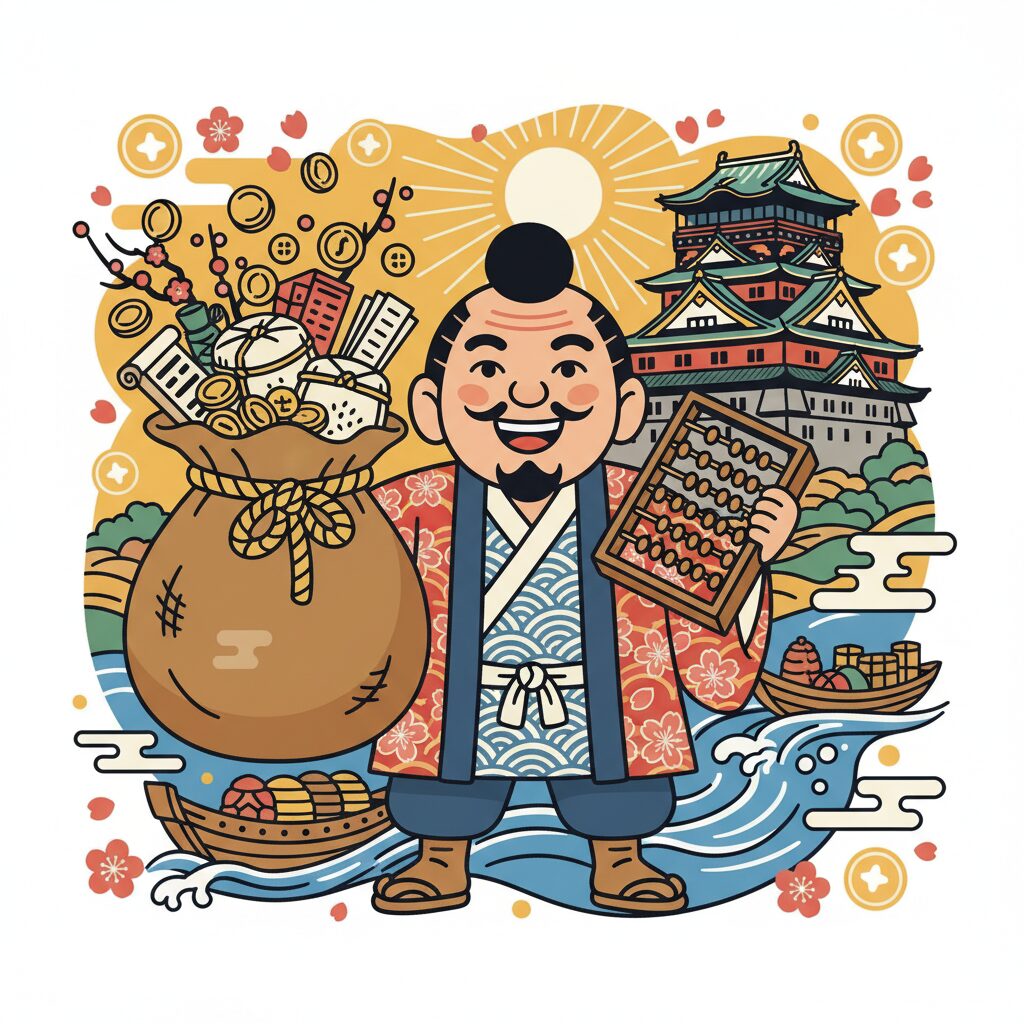
To understand Osaka, you must first understand its history. Tokyo was the city of the shogun, the samurai, and the government—built on rules, hierarchy, and power. Osaka, on the other hand, was, and in many ways still remains, the city of merchants. During the Edo Period, it earned the nickname Tenka no Daidokoro—the Nation’s Kitchen. Rice, sake, and goods from across Japan passed through its ports and were traded in its markets. This was not a city of warriors, but of shopkeepers, artisans, and financiers. Their status was determined not by bloodline, but by their ingenuity, reputation, and ability to profit while keeping customers satisfied.
This history ingrained the shobai spirit into the city’s very DNA. It’s a worldview founded on several core principles. First, pragmatism: the aim is to accomplish tasks efficiently and effectively, with results prioritized over process. Second, value: Osakans are famously cost-conscious, often caricatured as “cheap,” though it’s far more subtle. It’s an obsession with kosupa (cost performance). The goal isn’t just to pay less, but to get the highest quality and service for the price. An Osakan will gladly share the amazing deal they scored on a high-quality item—not just that they bought something cheaply. Third, speed: time is money, and endless deliberation wastes both. Osakans prefer to decide quickly, seal the deal, and move forward. Finally, and most importantly, human connection: a deal is not a cold transaction, but the start or continuation of a relationship. Trust and rapport are the ultimate currency.
The Osaka Office: Where Honesty Trumps Harmony
Step into a typical Tokyo office, and you might sense a quiet, focused orderliness. The atmosphere is filled with unspoken rules, and communication often takes the form of a subtle dance of hints and suggestions. Now, enter an office in Osaka. The vibe changes. It’s livelier. There’s more laughter. And communication is strikingly straightforward. This is the shobai mindset in action, which can be both a relief and a shock for a foreigner.
Straight Talk, No Chaser
The most noticeable difference is the directness. The well-known Japanese practice of maintaining surface harmony (tatemae) while concealing true feelings (honne) is far less evident here. In an Osaka workplace, if an idea is poor, someone will likely tell you plainly and explain why. It’s not personal; it’s practical.
Picture a project meeting. In Tokyo, a manager unhappy with a subordinate’s proposal might say, “Thank you for your hard work. Perhaps we should reconsider the budget from another perspective and investigate some alternative synergies.” This is a polite, indirect way of saying to rethink the plan. In Osaka, that same manager would probably lean forward and say, “This is way too expensive. It won’t get approved. We need to cut costs by 30% or come up with a completely different approach. What else do you have?”
For those used to subtlety, this can feel like a blow. But it’s wrong to see it as rudeness. In the shobai world, ambiguity is inefficient—it wastes time and money. Clear, direct feedback shows respect. It honors your time by not making you guess and respects the project’s objectives by focusing on what matters. It’s a culture that values clarity over comfort and progress over politeness.
Humor as Corporate Currency
To balance all that blunt honesty, humor plays a key role. Osaka is Japan’s comedy capital, home to the major Yoshimoto Kogyo entertainment empire and the birthplace of the manzai (stand-up comedy) tradition. This love of laughter extends beyond the stage; it’s a vital part of business and everyday life.
At work, humor helps build rapport, soften criticism, and foster camaraderie. Meetings might open with playful teasing. Tough negotiations might be lightened by self-deprecating jokes. This reflects the boke (funny fool) and tsukkomi (straight man) dynamic playing out in a corporate context. It signals that you’re human, don’t take yourself too seriously, and are part of the team. For a foreigner, learning to enjoy—or even join in—this lighthearted banter accelerates acceptance. A serious, stone-faced attitude will get you nowhere, as it’s seen as cold and untrustworthy.
“Is It Making Money?” The Ultimate Question
There’s a classic Osaka greeting you’ll hear, sometimes sincerely and sometimes jokingly: “Mokarimakka?” which means “Are you making a profit?” The usual reply is “Bochibochi denna,” a wonderfully flexible phrase meaning “So-so, can’t complain.” This exchange isn’t a literal check on your company’s finances—it’s a cultural handshake, a way of saying, “We’re in this together. We both understand the importance of earning a living.”
This mindset influences every decision. Every project, initiative, and expense is evaluated against a simple yet powerful question: is it worth it? Does it offer good value? This unrelenting focus on cost-performance leaves little room for vanity projects or bureaucratic fluff. Ideas are judged by practical and financial merit. If you can demonstrate your plan will be profitable, efficient, or valuable to the customer, you’ll be heard regardless of your rank. This creates a surprisingly meritocratic environment, where a solid, practical idea from a junior employee can gain more traction than a vague, lofty concept from a senior executive.
Cutting a Deal, Osaka-Style
Nowhere is the shobai spirit more apparent than in the art of the deal. Whether it’s a corporate acquisition or purchasing a used television in Den Den Town, the process is distinctly Osakan. It’s a dynamic, personal, and often theatrical experience that sharply contrasts with the formal, by-the-book negotiations found elsewhere.
The Art of the Haggle
In many parts of Japan, especially in formal retail environments, haggling simply doesn’t happen. The price on the tag is the price you pay. In Osaka, however, that rule is far more flexible. Negotiation isn’t seen as an affront; it’s a form of engagement. It’s a game, a conversation, a dance.
When you ask for a discount (chotto makete), you’re not challenging the product’s value. You’re opening a dialogue. You’re showing that you’re a savvy customer who appreciates a good deal. The seller, in turn, gets to demonstrate their goodwill and flexibility. This back-and-forth creates a fleeting but genuine human connection. The goal is to reach a price where both parties feel they’ve won. The buyer gets a deal, and the seller closes a sale while gaining a satisfied customer likely to return.
This extends to receiving a little extra, or omake. It’s common for a shopkeeper to include a small freebie to sweeten the deal—an extra piece of fruit, a small accessory. This gesture embodies pure shobai. It costs the seller almost nothing but makes the customer feel valued and clever, ensuring they leave with a positive impression of the transaction and relationship.
Your Word is Your Bond
For foreigners used to ironclad contracts reviewed by teams of lawyers, Osaka’s approach to agreements can feel alarmingly casual. In the shobai world, a deal is often based on relationships, sealed with a handshake, and upheld by mutual trust. The paperwork is merely a formality that comes afterward.
This is because business is viewed as a long-term endeavor. Your reputation (shinyo) means everything. If you cheat someone or break your word, word spreads quickly, making future dealings very difficult. Conversely, if you prove yourself reliable, honest, and fair, opportunities will open up. Business partners will become true friends. They’ll introduce you to their networks, assist you in tight situations, and prioritize your business because they trust you personally, not just as a signature on a contract.
This relationship-first mindset means the early stages of business partnerships focus less on the deal itself and more on getting acquainted. It involves dinners, drinks, and conversations about family and hobbies. The aim is to answer a fundamental question: Can I trust this person? Is this someone I want to work with for the next decade? Once trust is built, the business details often fall into place surprisingly smoothly.
Common Stumbles for Foreigners
Navigating this unique culture is rewarding, but it’s easy to make mistakes. The shobai mindset comes with its own set of unspoken rules, and misunderstanding them can lead to awkwardness or frustration. Being aware of common pitfalls is half the challenge.
Mistaking Directness for Aggression
This is the biggest challenge. When your Osaka colleague bluntly tells you that your report “makes no sense,” your first reaction might be to get defensive, feeling personally attacked. However, you need to consciously reframe this. They aren’t saying you make no sense; they’re pointing out that the logic in the report is flawed and needs improvement. It’s a critique of the problem, not the person. The best response isn’t an apology or argument, but a practical question: “Okay, which part is unclear? How can we improve it?” Matching their practical, problem-solving attitude will earn you respect.
The Awkward Silence After a Joke
An Osaka business partner makes a joke at their own expense, and you respond with a polite, professional smile and a quiet nod. While you may think you’re being respectful, they might perceive it as cold, arrogant, or simply not understanding the humor. You don’t need to deliver a punchline, but you do need to engage warmly. A laugh, a simple comeback, or even a more expressive, engaged reaction shows that you’re on the same wavelength. Silence or stiff formality can create a barrier that prevents a relationship from developing.
Fearing the Negotiation
Many foreigners, especially those from cultures where haggling is uncommon, feel very uncomfortable asking for a better price, thinking it rude or cheap. In Osaka, particularly in smaller shops, markets, or when dealing with salespeople, failing to politely inquire about a better deal can be a missed opportunity. You can do so respectfully. A simple, “Is this the best price?” or “Could you give me a small discount if I buy two?” often suffices. The worst they can do is smile and say no. By asking, you demonstrate your understanding of the local culture, and that alone can be a positive step.
Seeing ‘Shobai’ in the Wild: From the Market to the Meeting Room
To truly grasp the shobai mindset, visit the Tenjinbashisuji Shopping Street, the longest shotengai in Japan. Spend ten minutes simply observing. You’ll experience it all—the vendors’ rhythmic calls, a performance meant to engage and entertain. You’ll witness a shopkeeper and customer sharing a laugh while haggling over the price of fish. You’ll see an elderly woman receive an extra potato tossed into her bag with a wink—a classic omake. It’s a symphony of commerce that feels warm, human, and personal.
Now, imagine a sleek boardroom in Umeda. A team pitches a new logistics plan. The executive listening isn’t just focusing on the polished PowerPoint slides; she’s reading the room, assessing the presenters’ confidence, and constantly weighing cost against benefit. The junior member of the team, noticing a skeptical glance, might crack a small self-deprecating joke to ease the tension before diving into the cost-saving specifics. The executive, satisfied, might conclude the meeting with a quick “Okay, let’s try it,” approving a multi-million yen decision with the same decisive, human touch as the fishmonger in the market.
Though the setting differs, the underlying system remains the same. It’s the shobai code. Living and working in Osaka means learning to decode it. It means recognizing that directness is a sign of respect, that humor serves as a business tool, and that every transaction is a chance to build a relationship. It’s a city that reminds you that beneath all the spreadsheets, contracts, and presentations, business has always been fundamentally human.