
Step off the train anywhere in Namba, Umeda, or Tennoji, and the first thing that hits you isn’t a sight, it’s a smell. A warm, savory, slightly sweet cloud of grilling batter and dashi, punctuated by the sharp tang of Worcestershire-style sauce. That, my friend, is the scent of ‘konamon’—Osaka’s soul food. It’s the sound of sizzling okonomiyaki hot plates, the rhythmic clack of takoyaki picks, the collective, satisfied sigh of a city that runs on flour, water, and a whole lot of heart. For a newcomer, it’s intoxicating. It’s the city’s welcome mat. But for a vegan, that welcome mat can feel like a tripwire. The question that hangs in the air, thicker than the steam from a street vendor’s stall, is a heavy one: How do you find your place at the table in a city whose love language is written in bonito flakes and pork belly?
Coming from Tokyo, I was used to a certain culinary discretion. Food in the capital often feels like an art form to be admired, a perfect bowl of ramen enjoyed in contemplative silence, a bento box where every component sits in its own respectful space. Osaka throws that rulebook out the window. Here, food is a conversation. It’s loud, messy, and communal. Konamon—a catch-all term for flour-based dishes like takoyaki (octopus balls), okonomiyaki (savory pancakes), and kushikatsu (deep-fried skewers)—isn’t meant to be eaten alone. It’s a social lubricant, a reason to gather, a cheap and cheerful excuse to share a moment. This isn’t just about finding a vegan-friendly restaurant; it’s about learning to navigate the very heart of Osaka’s social fabric. This guide isn’t a list of eateries. It’s a roadmap to understanding the Osakan mindset through its most beloved cuisine, and how to thrive within it, plant-based diet and all.
For a deeper dive into Osaka’s buzzing culinary landscape, consider exploring how to navigate the vibrant tachinomi scene to experience more of the city’s unique communal spirit.
Konamon Isn’t Just Food, It’s Communication
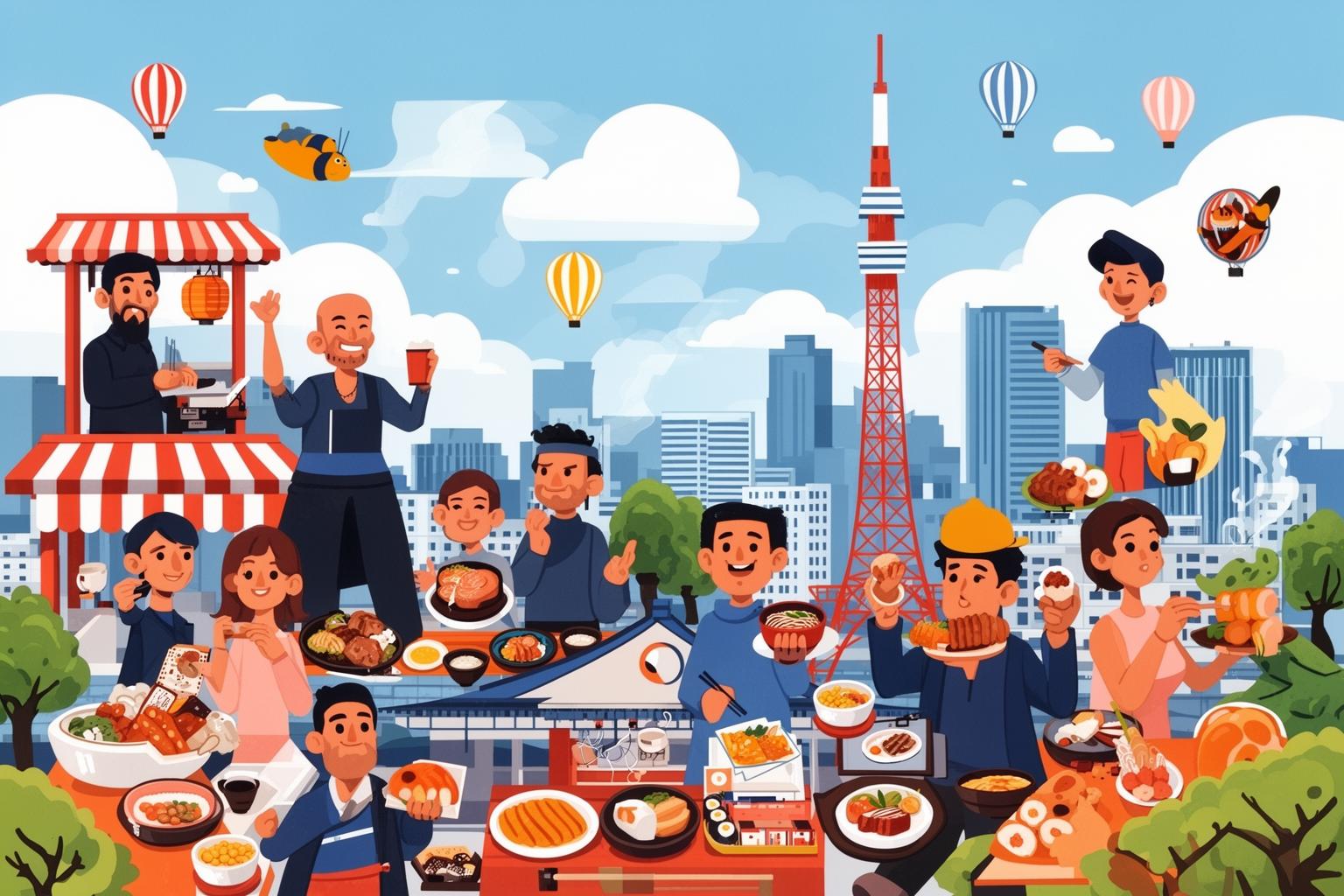
First things first, let’s break down the word. ‘Konamon’ (粉もん) literally translates to “flour things.” It’s a beautifully straightforward and humble name that perfectly embodies the Osaka spirit. There’s no elaborate culinary jargon, no borrowed French term. It’s flour. We make food with it. It’s delicious. End of story. This practicality contrasts sharply with the often intricate world of Tokyo dining, where reservation etiquette and seasonal omakase menus dominate. In Osaka, the best food is frequently found in a tiny stall beneath a railway arch, cooked by an elderly woman who has been flipping the same pancake for fifty years.
But the true meaning of konamon goes beyond its ingredients. It’s the heart of casual social interaction. In Tokyo, a colleague might invite you to a formal dinner at an izakaya, a planned occasion. In Osaka, the invitation is a spontaneous, “Hey, wanna grab some takoyaki?” shouted across the office as you’re packing up. It’s not about a gourmet experience. It’s about unwinding. It’s about standing shoulder-to-shoulder with strangers and friends, pointing at a sizzling plate, and sharing a laugh. This is the root of the famous “Osaka is friendly” cliché. That friendliness isn’t some vague trait; it’s ingrained in the city’s daily rituals. Sharing cheap, hot, tasty food on a street corner breaks down social barriers. It’s an equalizer. And that’s why simply saying “No, thanks” can be so tricky for a vegan.
The Unspoken Ingredients: Dashi, Tenkasu, and Social Pressure
For anyone following a plant-based diet, the biggest challenge in Japan often lies in the hidden ingredients. And when it comes to konamon, the dish is practically centered around them. It’s a culinary minefield where the most innocent-looking pancake conceals a dozen secrets.
Deconstructing the “Vegetable” Okonomiyaki
Step into any traditional okonomiyaki shop, and you’ll find ‘yasai-ten’ (vegetable version) on the menu. A hopeful sign! You order it confidently, imagining a simple pancake made of flour and cabbage. What arrives is a perfect example of the gap between Japanese and Western interpretations of “vegetable.”
The batter is the first obstacle. The deep, savory umami flavor that makes it so addictive comes from dashi, a soup stock fundamental to most Japanese cuisine. In Osaka, dashi almost always means a blend of kombu (kelp) and katsuobushi (dried, fermented bonito fish flakes). It’s not an optional seasoning; it’s the base essence of the dish. To an Osakan chef, batter without dashi is merely bland, flavorless flour and water.
Next is the binder. The batter needs something to hold it together as it cooks into a fluffy pancake. That something is almost always an egg. It’s not really considered a separate ingredient but an essential part of the batter’s structure. Then there’s the ‘tenkasu’—crunchy bits of fried tempura batter—sprinkled in for texture. These are rarely vegan, often fried in shared oil, and made from an egg-based batter.
Lastly, the cooking surface itself. That large ‘teppan’ grill is a communal space. Your “vegetable” okonomiyaki will be cooked right alongside one loaded with pork belly and another with squid. The spatulas used for flipping and chopping are shared. The idea of cross-contamination doesn’t really exist here because the blending of flavors is part of the experience. Asking for a separate, sanitized cooking area would be like asking a painter to use only one color—it misses the entire point of the medium.
The Social Minefield of “Let’s Grab Takoyaki!”
Now, picture this scenario. Your friendly Osakan coworker, Tanaka-san, pats you on the shoulder. “Hara-san! Takoyaki! My treat!” This isn’t just an offer of food; it’s an invitation to belong. It’s a small, friendly test of whether you want to join the group, to take part in the simple, unpretentious culture of the city.
A polite Tokyo-style refusal—“Oh, I’m afraid I have other plans, maybe another time?”—can sound cold or evasive here. It creates distance. Tanaka-san isn’t asking for a commitment next week; he’s inviting you to share a fun five minutes with him right now. A blunt “I don’t eat takoyaki” can end the conversation and unintentionally close off the friendship.
This is the real challenge. You need to accept the social invitation while declining the food. It requires some conversational finesse. The best approach is to match the enthusiasm and redirect it. Saying something like, “Tanaka-san, awesome! I can’t have takoyaki, but I’d love a highball! I’ll keep you company while you eat,” is a home run. You’ve affirmed the social bond, expressed your desire to hang out, and clearly set your boundary without making a fuss. You’ve accepted the social gesture, even if you can’t accept the octopus. This skill—separating the social interaction from the act of eating—is lesson number one for thriving in Osaka.
Cracking the Code: How to Find Vegan Konamon and What It Reveals
So, traditional spots are off the menu. Does that mean life without savory pancakes? Absolutely not. In fact, how Osaka adjusts to modern dietary needs reveals even more about its true spirit. At its core, this city is all about merchants—practical, entrepreneurial, and surprisingly adaptable when a new market appears.
The Rise of the Vegan Specialist
In the past decade, something remarkable has emerged. Vegan restaurants have started appearing, and they’re not just serving salads. They boldly confront the iconic dishes of Osaka cuisine. Step into places like OKO – Fun Okonomiyaki Bar or Megumi, and you’ll see menus that look familiar but are founded on entirely different principles. Here, dashi is crafted from kelp and shiitake mushrooms, providing a rich, earthy umami that honors the flavor profile without fish. The batter is held together with nagaimo (mountain yam), a starchy tuber that, when grated, creates a wonderfully sticky binder, resulting in a pancake even fluffier than the traditional version.
This reflects the core Osakan business mindset: ‘akinai’ (商い), the art of commerce. Osakans are innovators. When faced with a challenge (vegans can’t eat our food) and a demand (vegans want to eat it), Osakan entrepreneurs find a solution and market it. They don’t cling to tradition so rigidly that they become stagnant. The tradition lives in the experience—the sizzling hot plate, the social sharing—not necessarily the exact 1955 ingredient list. This flexibility sets Osaka apart from more tradition-bound cities. Its culture is alive and evolving.
Hacking the System: Supermarkets and Cooking at Home
Living here isn’t only about dining out. True immersion happens when you bring the culture into your own kitchen. This is where you transition from tourist to resident. Your challenge, if you accept it, is to create a konamon night at home. This starts with a supermarket trip, which is a cultural lesson in itself.
You’ll learn to navigate the aisles, bypassing the typical okonomiyaki flour mixes (loaded with dashi powder) to choose plain flour instead. You’ll pick up kombu and dried shiitake to make your own dashi. You’ll realize many thick, dark okonomiyaki sauces are, by chance, vegan—Otafuku being a classic example—plus vegan mayonnaise can be found in specialty sections or international markets like Gyomu Super. You become a culinary detective, crafting your own take on the classic.
The last step is getting a small, portable takoyaki or okonomiyaki grill for your apartment. These are cheap and everywhere. Invite friends—Japanese and foreign, vegan and omnivore—to a ‘takopa’ (takoyaki party). This is the ultimate move. You become a host, offering the social ritual you once felt excluded from. You participate in the culture on your terms. Your friends won’t just be impressed by the food, but by your effort and insight. You’ve shown you truly “get” it. A takopa isn’t just about eating octopus; it’s about laughing, drinking, and venting about your boss while trying not to burn the batter. When you’re the host, you’ve officially hacked Osaka life.
Beyond Konamon: The Vegan Mindset in a Meat-and-Fish City
The lessons learned from attempting to eat a simple pancake in Osaka apply to nearly every aspect of life here. It pushes you to develop communication skills and cultural understanding that extend well beyond food.
Honesty Over Politeness: The Osaka Communication Style
In Tokyo, ambiguity often serves as a form of politeness. People avoid giving a direct “no” to prevent causing trouble or offense. In Osaka, however, honesty and clarity are valued, and people tend to be more direct. A vague, indecisive explanation for why you can’t eat something can be more confusing than a straightforward answer.
When you tell a restaurant owner, “Sumimasen, bīgan nanode, katsuo-dashi to tamago wa chotto…” (“Excuse me, because I’m vegan, the bonito stock and egg are a little…”), their initial reaction might be a puzzled frown. But rather than annoyance, it’s a frown of concentration. They’re processing new information and working through the problem. More often than not, the response won’t be a dismissive wave but a curious “Jā, nani yattara taberen no?” (“Well, what can you eat then?”). It becomes a collaborative challenge. They might point to other menu items or even offer to prepare something with soy sauce and vegetables. This direct, problem-solving style is distinctly Osaka. They’d rather understand your needs and accommodate them than have you silently unhappy.
It’s Not a Judgment, It’s Just Food
Perhaps the biggest mental barrier for a foreigner with dietary restrictions is the fear of being seen as difficult, picky, or judgmental. We worry our choices might be taken as a critique of their cherished food culture. In reality, for most Osakans, your veganism is simply a fact about you, much like your hair color or hometown. It’s a curiosity, not a moral judgment.
Osaka has a highly pragmatic approach to food. Food is fuel, food is business, food is fun. It’s rarely treated as a quasi-religious experience. They aren’t personally offended if you don’t want to eat their okonomiyaki. What they would take personally is if you refuse their offer of friendship and a good time. The social fabric of Osaka is built on shared experiences. As long as you’re present, laughing, and joining in the atmosphere, you’re fulfilling your part of the social contract. The food itself is almost secondary to the sense of togetherness. Master this, and you’ll find Osaka one of the most welcoming places on earth, regardless of what’s on your plate.
Ultimately, being vegan in Osaka is an enlightening crash course in the city’s culture. The quest for konamon compels you to see beyond the surface and grasp the unspoken rules of communication and community. You come to understand that the city’s essence isn’t in any single ingredient, but in the generosity of sharing a hot plate, the loud laughter echoing down crowded alleys, and the pragmatic, can-do spirit of people who know the most important thing isn’t what you eat, but who you eat with. It’s a challenge, certainly. But overcoming it earns you not just a good meal, but the true status of a local, fluent in the authentic language of this vibrant, unapologetic, and wonderfully complex city.