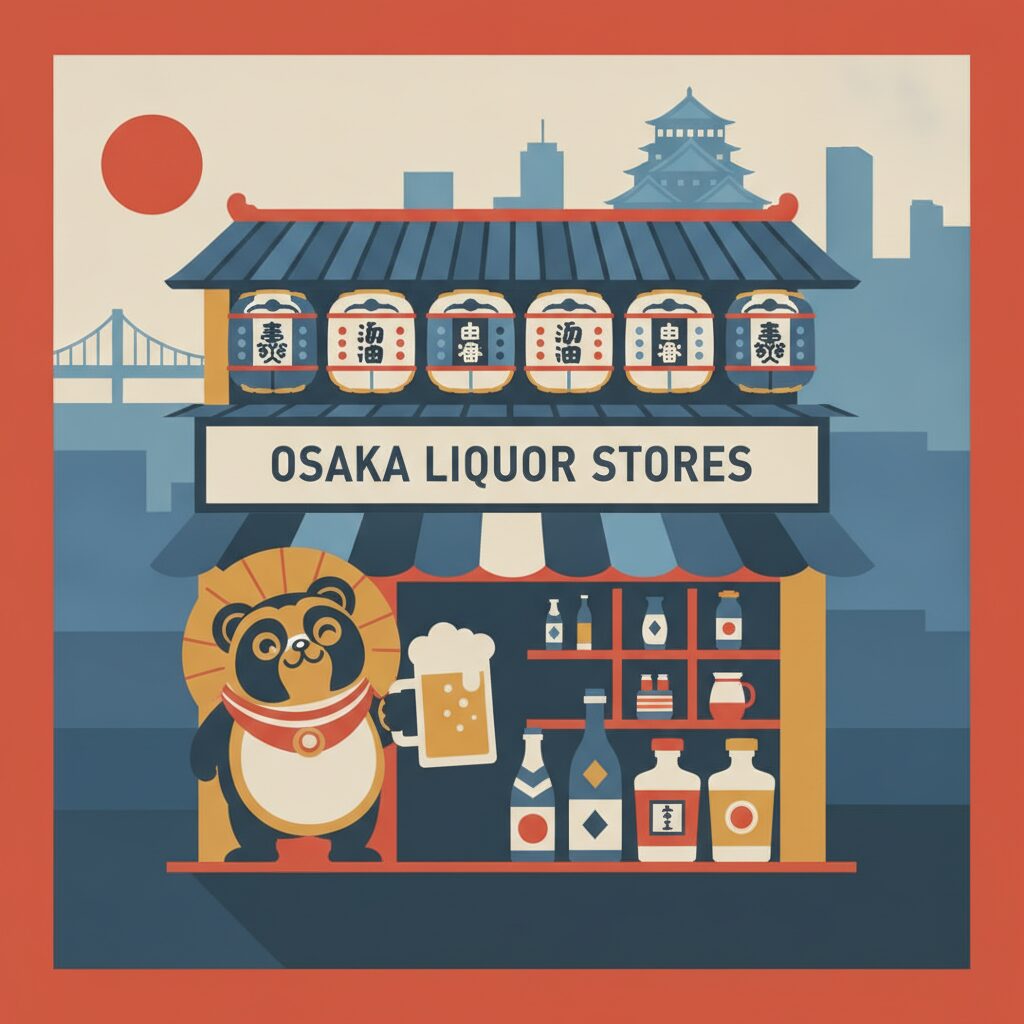
When I first moved to Osaka, I kept seeing something that made my Spanish sensibilities do a double-take. Tucked away in sleepy shotengai arcades and hiding in plain sight on busy commuter streets, I’d see groups of older men, salarymen with their ties loosened, and even the occasional young couple, all standing around drinking beer. But here’s the twist: they weren’t in a bar. They were inside brightly lit, no-frills liquor stores, leaning against makeshift counters placed right beside towering shelves of sake and shochu. My mind was buzzing with questions. Is this allowed? Is it a private party? Is this some secret club I hadn’t heard about? It looked so casual, so brilliantly simple, yet it felt like I was peeking into a hidden corner of Japanese life. This, my friends, was my first encounter with the wonderful world of kaku-uchi. It’s more than just a place for a cheap drink; it’s a living, breathing cultural institution and one of the best ways to truly understand the pragmatic, community-oriented, and refreshingly unpretentious heart of Osaka. Forget the grand castles and glittering skylines for a moment. If you want to know what makes this city tick, you need to understand the magic happening inside its liquor stores.
Exploring further into Osaka’s unique community vibe, you might also appreciate the city’s subtle art of haggling in shotengai that perfectly mirrors its casual, yet deeply social, lifestyle.
What Exactly Is Kaku-uchi? The Unspoken Rules of the Standing Bar
The term kaku-uchi (角打ち) itself provides a hint. It literally means “corner strike,” a name thought to come from the old days when sake was sold directly from large casks. Customers would buy a masu, a square wooden box, and the shop owner would pour sake into it, filling it to the brim. The customer would then sip from the corner. Although those casks are mostly gone now, the spirit of straightforward, simple consumption endures. A kaku-uchi is not simply a bar that sells liquor; it’s a liquor store where you can drink what you purchase on the spot, right there and then. This distinction is crucial. It shapes the atmosphere, the etiquette, and the entire experience. It’s the difference between a carefully staged show and a spontaneous gathering. One aims to impress you, the other just invites you to be.
It’s a Liquor Store, Not a Bar
Step into a traditional kaku-uchi and your senses immediately grasp the difference. The lighting is often the flat, blunt glare of fluorescent tubes, lighting up aisles packed with products. There’s no moody vibe, no carefully selected playlist, no bartender polishing a shaker. The decor is practical: stacks of beer crates, dusty bottles of premium sake on a top shelf, and hand-written signs displaying the price of canned fish. The focus is entirely on the merchandise. The drinking area feels like an afterthought, something improvised. It could be a single wooden plank nailed to a wall, a small Formica counter, or even just a designated corner where people gather. This total lack of pretense is pure Osaka. In Tokyo, you often pay extra for atmosphere, for a certain kind of cool. In Osaka, the smartest thing you can do is be savvy with your money. Why pay for dim lighting when you can enjoy the same drink for half the price under the honest glow of fluorescent light? It’s a philosophy that values substance over style, quietly rejecting the unnecessary frills that drive up the cost of a good time.
The Art of Ordering and Paying
There’s a lovely, rhythmic efficiency to how a kaku-uchi runs. No menus to mull over, no waitstaff to flag down. The process is wonderfully straightforward and self-directed. You become an active participant in getting your drink. You head over to the large refrigerators along the wall, a treasure chest of Japanese beers, chuhai, and one-cup sakes. You pick your choice, feeling the satisfying chill of the cold can in your hand. Then, you bring it to the counter where the owner, often a reserved but watchful older man or woman, presides. The transaction is quick and clear. You place your item on the counter and pay right away. This system, called kyasshu on (cash on), is the norm. There are no running tabs or complicated bills to split later. You pay as you go. You set your money in a small plastic tray, a common feature in Japanese shops, and the owner gives you change. It’s clean, simple, and totally transparent. This method keeps things moving smoothly and underscores the transient nature of the visit. You’re just dropping by, having a quick drink, and moving on. The snacks, or otsumami, follow the same principle. Forget fancy appetizers. Here, you’ll find sealed bags of peanuts, strips of dried squid, or canned mackerel. You grab what you want, pay for it, and open it yourself. It’s all part of the charm—it’s honest, practical, and puts control firmly in your hands.
Kaku-uchi and the Osaka Mindset: More Than Just Cheap Drinks
To dismiss kaku-uchi as merely a spot for a cheap drink overlooks its true significance. It embodies the Osaka spirit—a cultural landmark that reveals much about the city’s values. Here, the renowned merchant mindset, the distinctive sense of community, and the subtle social norms of the city unfold in real time. It is less a venue and more a philosophy—a lifestyle that emphasizes value, efficiency, and human connection without any need for elaborate rituals. By simply drinking a beer in a liquor store, you are engaging in a tradition that deeply reflects what it means to be from Osaka.
The Philosophy of “Mokkari-makka?”: Value and Pragmatism
An old Osaka merchant greeting known throughout Japan goes: “Mokkari-makka?”, which means “Are you making a profit?” The typical response is “Bochi-bochi denna,” or “So-so.” This exchange transcends money; it represents a profound cultural respect for value, good deals, and practical savvy. Kaku-uchi embodies this spirit in liquid form. Why pay 600 yen for a draft beer at a stylish bar when you can get the identical can from the fridge for 250 yen and drink it right there? To Osakans, paying for the markup—fancy glassware, coasters, moody lighting—makes no sense. It’s not stinginess; it’s smartness. This pragmatism defines the city. Historically, Osaka was Japan’s merchant capital—a city of trade and commerce, unlike the aristocratic and bureaucratic Kyoto or Tokyo. This legacy has shaped a down-to-earth, realistic population always seeking a good deal. The kaku-uchi serves as their refuge, celebrating this mindset. It’s a place that declares, “We value the product, not the packaging.”
The Third Place: A Community Hub Without Pretense
Sociologists describe the “third place” as a setting outside home and work where people can unwind, connect, and build community. In many societies, this might be a coffee shop, pub, or park. In Osaka, kaku-uchi often fills this role uniquely. It’s a social crossroads. On any evening, you might find a salaryman in a sharp suit standing beside a construction worker in dusty clothes. A retired grandfather sipping sake shares the counter with a young couple experimenting with something new. Here, social status, job titles, and wealth dissolve. Everyone is equal in their quest for an affordable, simple drink to end the day. Conversations are situational and brief—you might discuss the Hanshin Tigers game on the corner TV, grumble about the humidity, or remark on a new beer brand. It’s a low-pressure social space where neighbors connect for a short, pleasant moment, without expectations of lasting friendship or future ties. This captures the essence of Osaka’s famous friendliness: not an invitation to lifelong friendship, but an openness to instant, momentary connection. It’s an accessible, easygoing sociability that asks for nothing in return and remains one of the city’s most refreshing qualities.
The “Ichi-gen-san” Welcome: Are Foreigners Allowed?
For a non-Japanese person, walking past a kaku-uchi for the first time can feel intimidating. The crowd is almost always local, conversations flow in thick Kansai dialect, and the atmosphere can seem like a private club. It’s natural to feel like an outsider—an ichi-gen-san (first-time customer) who might be unwelcome. However, this is often a misconception. While undeniably local, these places operate on a simple principle of respect. They are not exclusive; they are just unpretentious. Approach with a friendly attitude and follow the informal rules, and you will almost certainly be accepted—if not warmly welcomed. Your presence may spark curiosity. The gruff owner might relax and point you to the refrigerators. The person beside you might try out their English and ask where you’re from. The key is humility. Don’t be the loud foreigner treating it like a tourist attraction or party spot. Observe others’ behavior, order quietly, pay promptly, and enjoy your drink respectfully. By doing so, you become more than a customer—you become a temporary part of the community, and that respect is almost always reciprocated.
Navigating Your First Kaku-uchi Adventure: A Practical Guide
So, you’re ready to jump in. The idea of a genuine, no-frills drinking experience appeals to you. But where should you begin? How do you pick a spot, and what should you do once you’re inside? While the charm of kaku-uchi lies in its straightforwardness, a bit of knowledge can make your first visit less intimidating and more like the enjoyable cultural immersion it truly is. Think of it as a small performance where knowing your cues makes everything run smoother. From identifying the right kind of shop to grasping the subtle counter manners, a few simple tips will unlock one of Osaka’s best-kept secrets.
Spotting a Kaku-uchi in the Wild
Kaku-uchi don’t announce themselves with flashy signs or English menus. You need to learn how to spot the subtle hints. First, look for a sakaya, or liquor store. The kanji character for sake, 酒, is your main clue. These stores are everywhere, but not all have a drinking corner. The next step is to take a peek inside. Do you see a dedicated standing counter? Are there people already there, drinking and chatting? Often, there will be a simple noren (a short, split curtain) hanging in the entrance, hinting at the activity inside. Some classic indicators of a kaku-uchi include red plastic crates from beer brands like Asahi or Kirin flipped upside down to serve as makeshift tables. Certain neighborhoods thrive on kaku-uchi culture. Areas with a rich working-class heritage and a strong local community vibe, like Kyobashi, Tenma, or the gritty-but-charming Shinsekai, are excellent places to explore. Even in Umeda, the bustling commercial hub, you can find legendary spots tucked away in back alleys, offering a quiet refuge from the city’s hectic pace.
The Etiquette of the Counter
Once inside, the key is to blend in by respecting the space and the people around you. Kaku-uchi etiquette is straightforward and grounded in common sense and consideration for others.
First, know that this isn’t a place to linger all evening. The culture is one of chotto ippai, or “just one quick drink.” People drop by for 15 to 30 minutes on their way home from work. Enjoy your beer, have a snack, and then move on. The quick turnover is part of the system, allowing more people to enjoy the limited space.
Second, be conscious of your personal space. Counters are often small and crowded. Keep your bag off the counter and on the floor. Don’t spread out or lean into your neighbor’s area. It’s a shared space, and everyone is there for the same reason.
Third, tidy up after yourself. When you finish your can or bottle, ask the owner where to dispose of it. There’s usually a crate or bin for empties. Don’t leave your trash on the counter. This simple gesture shows respect for the place.
Finally, read the atmosphere. Some kaku-uchi are lively and filled with conversation, while others are quiet spots for solitary reflection. Match your energy to the mood. If everyone is quietly watching the news on TV, it’s not the time for a loud phone call or a boisterous chat with a friend.
What to Drink and Eat
For your first visit, keep it straightforward. You can’t go wrong with grabbing a can of a popular Japanese beer like Asahi Super Dry, Kirin Lager, or Sapporo Black Label. It’s familiar, easy, and what most regulars are drinking. If you’re feeling more adventurous, try the one-cup sakes. These are single servings of sake in a glass jar with a peel-off lid, a symbol of convenient drinking in Japan. When it comes to snacks, embrace simplicity. The selection focuses on shelf-stable items that require no preparation. These are called kawakimono (dried things). Try a small bag of assorted nuts and rice crackers (otsumami mix), some smoked cheese, or a can of high-quality mackerel in miso sauce. Opening a can of fish and eating it with chopsticks while standing at the counter is a uniquely satisfying kaku-uchi experience. It’s not haute cuisine, but it’s tasty, practical, and perfectly suited to the setting.
Kaku-uchi as a Cultural Barometer: Why It Could Only Thrive in Osaka
When you spend enough time in Japan, you begin to notice the regional variations and the subtle cultural undercurrents that make Osaka feel distinctly different from, say, Tokyo. Kaku-uchi stands out as one of the clearest examples of this divergence. It’s a phenomenon that fits seamlessly into Osaka’s ecosystem but would struggle to thrive in the more formal, brand-conscious capital. It serves as a microcosm of the city itself—slightly rough around the edges, intensely practical, and deeply human. It represents a different way of life, a cultural space resisting the pressures of homogenization and trend-driven consumption.
A Rebellion Against Formality
Japanese society is often defined by its intricate layers of formality, hierarchies, and strict social codes, particularly in the corporate and political sectors centered in Tokyo. In contrast, Osaka has long fostered a more egalitarian and straightforward culture. The kaku-uchi perfectly exemplifies this spirit. Within its four walls, the rigid structures of the outside world fade away. The company president might be drinking alongside a new hire, but at the counter, they are simply two people enjoying a beer. Formal greetings or business card exchanges (meishi) are unnecessary. This temporary suspension of hierarchy is liberating and a core part of its charm. It reflects the broader Osaka style of communication, known for being more direct, humorous, and less concerned with saving face than other parts of Japan. The kaku-uchi provides a space where you can be yourself, free from the social pressures of everyday life.
Preserving the Showa Vibe
Many kaku-uchi feel like stepping into a time capsule. The wood-paneled walls, vintage beer posters, the old cash register, and the soft crackle of the radio all evoke the atmosphere of the Showa Era (1926-1989), a period of rapid post-war growth and economic boom in Japan. This isn’t a modern bar with a “retro theme” for Instagram; this is the genuine article. Many of these establishments have been family-run for generations. They haven’t been renovated or updated simply because it hasn’t been necessary. The business model works, the customers remain loyal, and the philosophy is timeless. This reflects a certain Osakan conservatism—not politically, but in the sense of preserving what is functional and cherished. While Tokyo is constantly reinventing itself, tearing down the old to build the new and shiny, Osaka clings to its history with quiet determination. It preserves these spaces not from nostalgia, but out of a practical belief in their enduring value.
The Future of Kaku-uchi
Like many traditional businesses in Japan, the classic kaku-uchi faces an uncertain future. Owners are aging, their children often pursue different careers, and competition from 24-hour convenience stores—which also sell inexpensive alcohol—is intense. The culture of a quick after-work drink is also evolving as younger generations adopt different lifestyles. Yet, there is hope. A new wave of entrepreneurs, recognizing the unique cultural value of the kaku-uchi model, has begun opening “neo-kaku-uchi.” These venues might feature slightly more modern designs, curated selections of craft beer or natural wine, and perhaps a more ambitious food menu. They honor the spirit of the original—low prices, standing counters, casual atmosphere—but adapt it for a new generation. While these new takes are exciting and vital, the old-school, Showa-era kaku-uchi remains the true heart and soul of this Osaka tradition. They are more than just liquor shops; they are community hubs, historical artifacts, and the most authentic bars in the city. To have a drink in one is to share a drink with Osaka itself.