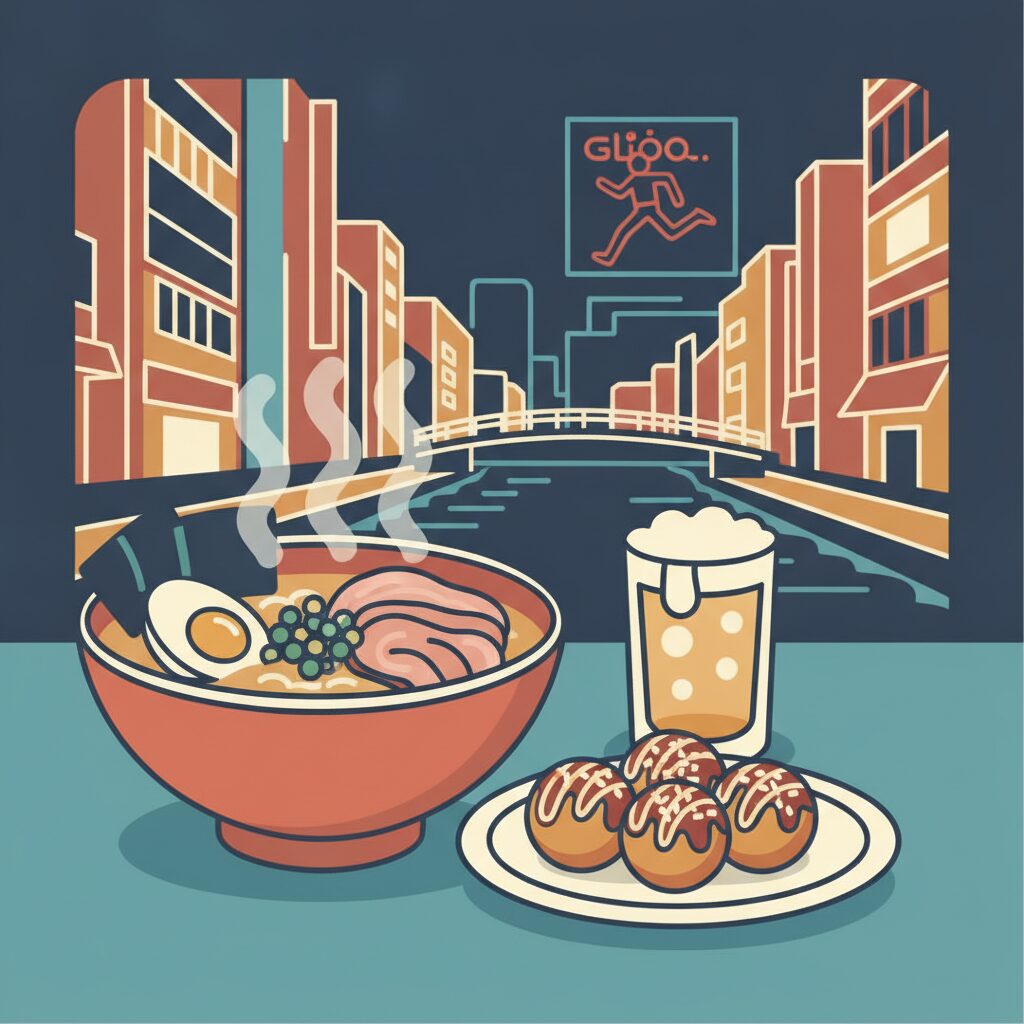
The last train has rattled away, leaving the city’s electric hum a little softer. The neon lights of Dotonbori are still painting the canal in streaks of vibrant color. You’re with a group of friends, the warm buzz of highballs and laughter still lingering in the air. The night feels complete, yet incomplete. Then, your Osakan colleague turns to the group, a decisive gleam in their eye, and says the magic words: “Saa, shime iko ka?”—”Alright, shall we go for the ‘shime’?” This isn’t just a suggestion for a late-night snack. This is a ritual. This is the final act. In a city that lives by the creed of kuidaore, or eating until you drop, the meal that closes out the night is as important as the main event. ‘Shime’ (締め) literally means “to close” or “to tie up,” and that’s precisely its function. It’s the culinary punctuation mark at the end of a long, rambling, wonderful sentence of a night out. Forget the greasy slice of pizza or the sad, lukewarm kebab you might grab back home. The ‘shime’ is a deliberate, communal, and deeply cultural experience. And here in Osaka, the city of flour, broth, and fearless flavor, reducing the ‘shime’ experience to a simple bowl of ramen is like saying the entire Louvre is just the Mona Lisa. It’s the most famous part, sure, but you’re missing the vast, fascinating gallery that truly defines the place. The world of Osaka’s ‘shime’ is a delicious, steaming exploration of the city’s soul—its practicality, its resourcefulness, and its unwavering belief that there’s always, always room for one more perfect bite.
The night’s lingering energy finds a perfect echo in the bustling shotengai, where exploring Osaka shotengai life further unveils the city’s dynamic after-dark pulse.
The Unspoken Rules of the ‘Shime’ Ritual

Before we even discuss food, you need to grasp the ceremony. The ‘shime’ is governed by a set of invisible yet universally understood social codes. First and foremost, this is not a solo mission. It’s the evening’s final bonding exercise. Leaving before the ‘shime’ is like walking out on a concert before the encore—it feels sudden and incomplete. The journey from the izakaya to the noodle shop, the shared anticipation, the collective sigh of satisfaction—it’s all part of the experience. It’s about achieving closure as a group, making sure everyone gets home with a warm stomach and the feeling of a night well spent.
Next comes the negotiation, a small drama unfolding on street corners across the city every night. “What’s the move?” Ramen is usually the default, the easiest choice. But someone will inevitably say, “I’m not really in a tonkotsu mood… How about something lighter? Udon?” Another might suggest, “You know what would be perfect? Ochazuke.” This friendly discussion isn’t indecision; it’s a way to gauge the group’s collective mood. Is the energy still high, calling for a rich, heavy flavor bomb? Or is it winding down, craving something gentle and restorative? This negotiation serves as the final check-in—a moment of shared decision-making that strengthens the group’s bond.
At the heart of this ritual lies the glorious Osakan philosophy of bekkobara (別腹), meaning “separate stomach.” Originally used to justify dessert after a huge meal, in Osaka it has been extended to all forms of ‘shime’. No matter how many plates of kushikatsu or okonomiyaki you’ve eaten, no matter how many beers you’ve had, the ‘shime’ stomach remains a separate entity—clean and ready for action. This isn’t mere gluttony; it’s deeply rooted in the kuidaore mindset. To refuse ‘shime’ because you’re “full” is to fundamentally misunderstand Osaka’s devotion to its culinary culture.
This is where Osaka’s rhythm sharply diverges from Tokyo’s. In the capital, the night is a frantic race against the clock, governed by the unforgiving schedule of the last train on the Yamanote Line. Groups break apart as people rush to different platforms, social gatherings fragmented by logistical necessity. Communal ‘shime’ is a luxury many can’t afford. But Osaka, especially within the sprawling, 24-hour playground of the Minami district, runs on a different pace. The city’s geography—with more people living near central entertainment hubs—and a greater willingness to grab a cheap taxi means the night ends when people decide—not when the train schedule dictates. The emphasis is on finishing the night properly, with a satisfying communal meal, rather than simply finishing it efficiently.
Beyond the Obvious: Why Osaka’s ‘Shime’ Isn’t Just Ramen
Let’s be clear: ramen is a spectacular ‘shime’. It’s a warm, salty, fatty embrace in a bowl, carefully crafted to satisfy late-night cravings and absorb alcohol. Throughout Japan, it holds the crown. But in Osaka, relying solely on ramen is a rookie mistake. It overlooks the core of the city’s culinary identity, rooted in the twin pillars of konamon (flour-based culture) and the revered art of dashi (broth). To truly understand Osaka, you must understand its broth. The city’s palate favors the subtle, umami-rich nuances of a well-prepared dashi, a flavor profile that contrasts sharply with the often heavier, pork-bone-based broths prevalent in ramen culture elsewhere.
This preference is about more than just taste; it embodies the quintessential Osakan character: pragmatism. Osakans excel at what they call kosupa, or cost performance. This applies not only to money but also to well-being. A heavy, oily bowl of tonkotsu ramen might feel satisfying at 2 AM, but the price is a sluggish, bloated morning after. Conversely, an elegant bowl of udon in a clear, nourishing dashi offers maximum comfort with minimal next-day drawbacks. It’s the smarter choice. An Osakan will proudly opt for the “wiser” dish, one that meets immediate cravings without compromising tomorrow’s comfort. This practicality, this drive to find the cleverest, most efficient solution—whether in business or in late-night dining—is pure Osaka.
Choosing a ‘shime’ other than ramen is also a subtle expression of local pride. It signals, “We do things differently here. Our food culture is richer, more varied.” It’s a nod to the city’s history as the “nation’s kitchen,” where a refined culinary tradition was built on humble, high-quality ingredients. In a city where food is the main topic of conversation, your ‘shime’ choice tells a story. It reveals your taste, your mood, and your connection to the city itself.
The Osaka ‘Shime’ Menu: A Guide to Local Identity
So, you’ve navigated the social rituals and now find yourself standing on a street corner, ready to make your choice. What does the menu of Osaka’s soul look like? It’s a delicious map reflecting the city’s history, character, and priorities.
Kasu Udon: The Heart of South Osaka
To taste the essence of working-class Osaka, order kasu udon. This isn’t a dish featured in glossy tourist brochures. It’s a local secret, a gem from the city’s grittier, more soulful neighborhoods. The base is classic Osaka: thick, chewy udon noodles swimming in a clear, richly flavored dashi broth. The magic lies in the topping: aburakasu. This is dehydrated beef offal (horumon), a byproduct of butchering. The small, crispy, crackling-like pieces are scattered over the hot soup, where they slowly rehydrate, releasing a deep, savory beefiness and melting collagen into the dashi. The result is a broth with incredible depth—smoky, rich, and utterly comforting.
This dish embodies the Osakan spirit of mottainai, the principle of wasting nothing. It transforms a humble, overlooked ingredient into something extraordinary through ingenuity and care. It reflects the resourcefulness of the merchant city, the unpretentious brilliance of a place that values flavor over status. Finding a good kasu udon spot often means venturing into neighborhoods like Tsuruhashi or the hidden alleys of Namba, areas rich in history and free of pretension. Eating kasu udon feels like being let in on a secret—it shows you’re not just a visitor skimming the surface; you’re someone who truly appreciates the city’s genuine, unvarnished flavor.
Ochazuke: The Refined Finisher
At the opposite end of the spectrum is ochazuke, a symbol of understated elegance and thoughtful self-care. It is simplicity perfected: leftover rice topped with a few straightforward ingredients like pickled plum (umeboshi), grilled salmon flakes, or strips of nori seaweed, finished with a pour of hot green tea or, more often in restaurants, delicate dashi. The warm liquid gently softens the rice, while the toppings’ flavors infuse the broth, creating a dish that is both soothing, savory, and restorative.
Choosing ochazuke marks the decision of a seasoned veteran. It acknowledges that the night’s revelry has ended, and now gentle recovery is the goal. It acts as a palate cleanser, a reset button. This choice is praised by Osakans for being kashikoi—smart, clever. Why burden your body with another heavy meal when this elegant, simple solution is available? It exemplifies Osakan pragmatism. Often, you don’t even need to leave the izakaya to get it; it’s a regular menu item made exactly for this purpose. The efficiency is impressive. Why brave the cold for a second venue when the perfect ‘shime’ is right where you’re sitting? This choice signals maturity, showing you’re thinking ahead to the next morning and valuing comfort over a final, intense flavor burst. It’s the calm, confident choice of someone who knows their way.
Shime Takoyaki & Ikayaki: The Konamon Finale
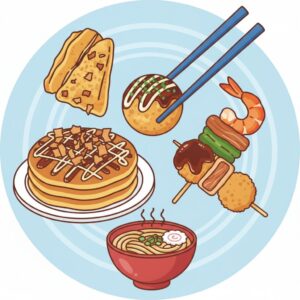
Sometimes, the night calls for one last burst of street-level energy. This is the territory of the konamon ‘shime’. Instead of a formal meal, the group gravitates toward a glowing street stall, surrounded by the aroma of savory batter and sweet sauce. Ordering a boat of takoyaki—molten-hot balls of batter encasing tender octopus, drizzled with sauce and mayonnaise and topped with dancing bonito flakes—is embracing Osaka’s most iconic culinary identity. The same goes for ikayaki, a Hanshin specialty— a simple savory pancake made of squid and batter, grilled and folded.
This ‘shime’ serves more as a final, portable snack than a sit-down meal. The group stands around the stall, toothpicks in hand, sharing food and one last conversation before dispersing into the night. This prolongs the festive, communal atmosphere of the street itself. This stands in sharp contrast to Tokyo, where it’s rare to see suit-clad professionals ending a night of business drinking by gathering around a takoyaki stand. In Tokyo, there are clearer boundaries between snacks and meals, and between street and restaurant food. In Osaka, these lines are delightfully blurred. Good food is good food—the format doesn’t matter. This lack of pretense and focus on simple joy from a well-made, affordable bite captures the city’s essence. Choosing a ‘shime’ of takoyaki says you’re not ready to relinquish the vibrant, chaotic energy of the Osaka night just yet.
The Unexpected Contender: Shime Parfait
While savory ‘shime’ dishes remain king, a new contender has emerged, especially popular among younger crowds and all-female groups: the Shime Parfait. Yes, a towering, elaborate dessert of ice cream, fruit, cake, and cream. Originating in Sapporo, this concept has found its home in Osaka, the city that perfected the idea of bekkobara. It represents a joyful departure from salty, soupy traditions. It’s fun, photogenic, and pure, unapologetic indulgence.
From my perspective, the rise of the Shime Parfait reflects a desire for a different kind of late-night space. Let’s face it: a cramped, steamy ramen shop at 1 AM can be an intense, male-dominated environment, not always the most relaxing spot to end a night with friends. A brightly lit, comfortable café offering beautiful desserts provides a welcome alternative. It’s a setting where conversation can continue in a calmer way. This choice prioritizes atmosphere and aesthetics as much as taste. Opting for a Shime Parfait sends a modern message: you play by your own rules, your ideal ending is sweet rather than savory, and you’re finishing the night on a stylish, joyful note.
The Geography of ‘Shime’: Where You End the Night Matters

The nature of your ‘shime’ experience is deeply influenced by the part of the city you find yourself in. Osaka is not uniform, and its late-night food scenes differ greatly from neighborhood to neighborhood.
In Minami, the bustling area encompassing Namba, Shinsaibashi, and Dotonbori, you’re at the vibrant, chaotic heart. This is the 24-hour hub. The abundance of options is both a blessing and a challenge. Here, the ‘shime’ decision process is most intense because every imaginable choice is available within a few blocks, at any time. You can encounter famous ramen chains, hidden kasu udon spots, countless takoyaki stands, and stylish dessert cafes all on the same street. The atmosphere is democratic, lively, and endlessly engaging. The ‘shime’ in Minami is about the excitement of endless possibilities.
Move north to Kita, the Umeda district, and the mood changes. This is the city’s other major center, but it’s more refined and business-oriented. The area is a maze of department stores, office buildings, and expansive train stations. The ‘shime’ options here are cleaner and more streamlined. You’ll find more upscale, dependable chain restaurants and udon bars located inside or near the station complexes. The choices feel more standardized, catering to businesspeople and commuters. The ‘shime’ here tends to be quicker and more deliberate—a final meal before catching the last train to the northern suburbs.
For a genuine local experience, though, you need to end your night in neighborhoods like Tenma or Kyobashi. These are local-favorite drinking districts, filled with tiny, standing-room-only bars and cozy izakayas. When it’s time for ‘shime’ here, you’re not after endless variety. You’re headed to “the usual place”—a small udon shop run by an elderly couple, or a single takoyaki stall that has stood the test of time. The menu is simple, the choice limited, and the flavor consistent. The ‘shime’ in these areas is about community and familiarity. It’s less about discovering new tastes and more about the comforting ritual of returning to a place where you feel at home.
Practical Tips for Your Osaka ‘Shime’ Adventure
As you set out on your own late-night culinary adventures, keep a few things in mind. Many of the best, most traditional ‘shime’ spots—the small noodle shops and street stalls—are proudly old-school and often cash-only. Make sure to carry some yen to avoid any awkward situations. When unsure, trust the local instinct. If you spot a line of cheerful Osakans waiting outside a nondescript doorway at an odd hour, join that line. Osakans have a remarkable ability to find food that is yasute umai—both cheap and delicious. Their collective judgment is more dependable than any guidebook.
But above all, don’t overthink it. While understanding the cultural context enhances the experience, the true essence of ‘shime’ lies in its spontaneity. The joy comes from the lively conversation with friends as you wander the streets, the friendly debates over the ideal dish, and the simple, profound satisfaction of that final, perfect bite. As a woman, I’d also offer a practical safety note. Although Osaka is one of the safest large cities globally, late-night entertainment areas can be lively. Stay close to your friends, stay aware of your surroundings, and don’t hesitate to speak up if somewhere feels uncomfortable. The goal is a perfect end to the night, which includes feeling safe and relaxed. Your comfort is key.
Conclusion: More Than Just a Meal
Ultimately, the ‘shime’ is far more than just a way to quell late-night hunger. It encapsulates the essence of Osaka itself. When choosing between a rich ramen and a delicate udon, you witness the city’s mix of hearty indulgence and unexpected refinement. In the making of kasu udon from simple leftovers, you see its practicality and straightforward nature. In the gathering around a takoyaki stand, you experience its casual, street-level vibe and strong sense of community.
The nightly ‘shime’ ritual offers a glimpse into the Osakan spirit: pragmatic, unpretentious, endlessly inventive, and united by a deep love for good food and company. It reveals a city that values wise choices as much as tasty ones, and a cozy ending as much as a thrilling beginning. So next time you’re out late in this remarkable city, don’t just settle for the first bowl of ramen you encounter. Tune into the group’s rhythm, engage in the lively ‘shime’ discussion, and let yourself be guided to the dish that truly reflects the mood of the moment. In that final, shared bowl lies one of the most genuine and delicious ways to understand what really makes Osaka tick.