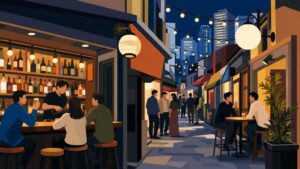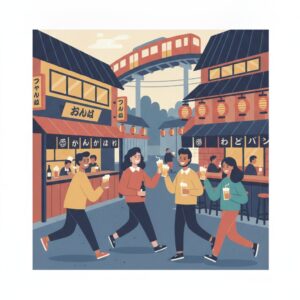
The first time you try to meet a friend at Umeda Station, you’ll understand. You’ll say, “Let’s meet at the main gate,” only to discover there are about five “main” gates, none of which seem to connect in any logical way. You’ll descend an escalator into what you think is the subway, and emerge twenty minutes later in the basement of a department store, clutching a fancy pastry you don’t remember buying, with no idea which direction the sky is. Welcome, my friend, to the Umeda Dungeon. It’s a rite of passage for every new resident, a subterranean beast that humbles even the most confident navigator. It’s not just a station; it’s a sprawling, multi-level, semi-sentient network of train lines, department stores, endless shopping arcades, and restaurants that defy the laws of cartography. For tourists, it’s a challenge. For residents, it’s the heart of the city’s circulatory system. The thing is, Osakans don’t see it as a dungeon to be conquered. They see it as a tool, a massive, climate-controlled shortcut that reflects the city’s soul: pragmatic, a little chaotic, and ruthlessly efficient. Learning to navigate its depths isn’t about memorizing a map; it’s about learning to think like a local. It’s about understanding that the shortest path between two points is rarely a straight line, especially when it’s raining.
Locals don’t just master the twists and turns of the Umeda Dungeon—they also excel at finding ingenious urban shortcuts, as shown by their flair for hashigo-zake bar hopping in Tenma, which offers another glimpse into Osaka’s vibrant soul.
The Dungeon’s Logic: It’s Not Chaos, It’s Layers
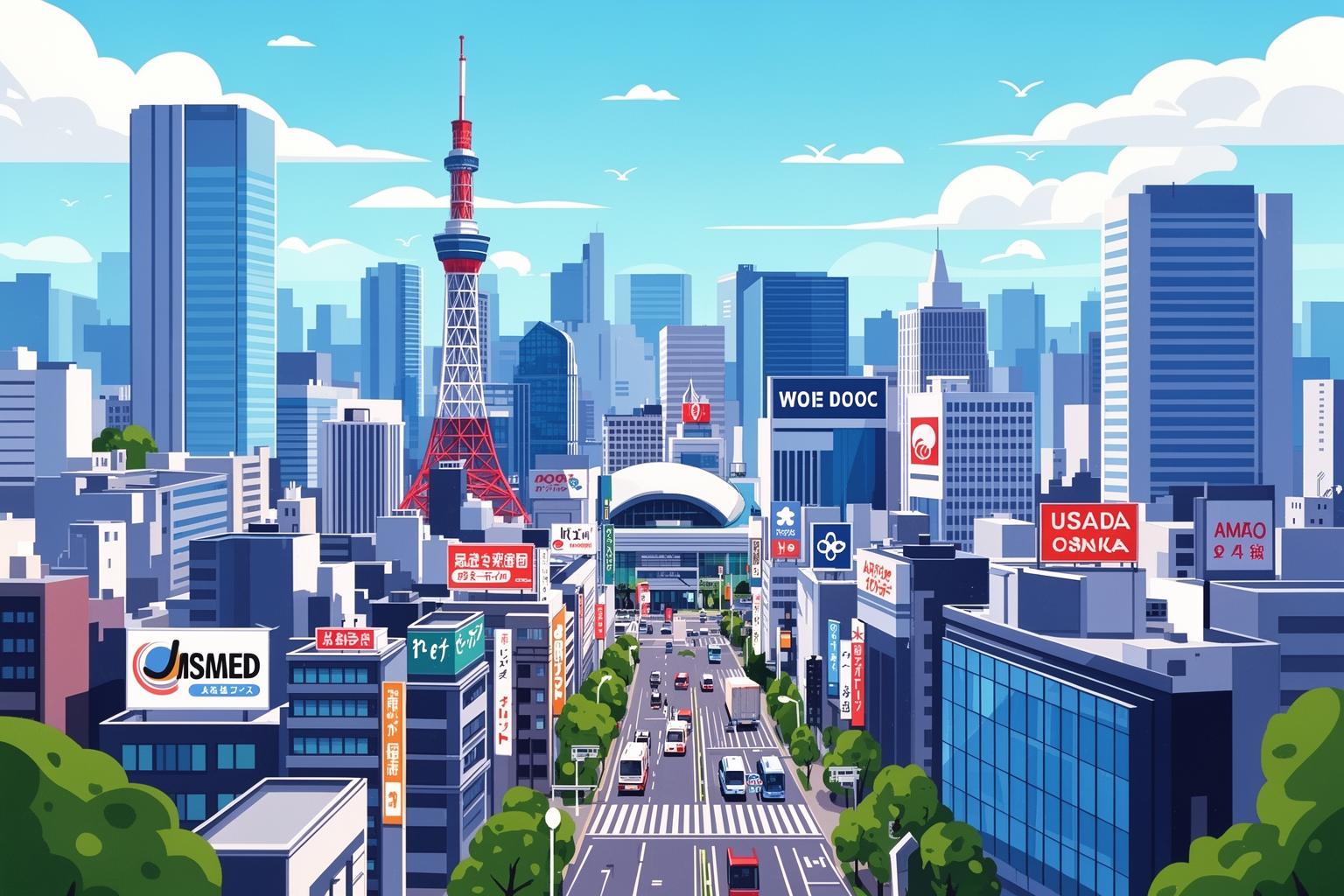
Your first error is assuming that the layout follows a single, consistent logic. It doesn’t. The Umeda complex has evolved over a century as rival train companies carved into the same area. JR West, Hankyu, Hanshin, and the Osaka Metro each established their own domains here, later connected by a maze of underground malls like Whity Umeda, Diamor Osaka, and Dojima Underground Shopping Center. The result resembles less a planned city and more a coral reef—a living structure built layer upon layer, with winding passages and dead-ends whose reasons have been lost to time. Locals don’t resist this; they adapt. They recognize the essential truth of the Dungeon: it functions according to its own internal, landmark-based logic rather than the orderly geometry of street grids or cardinal directions.
Thinking in Landmarks, Not Signs
In Tokyo, you navigate by signs, searching for Exit B12 or the Yamanote Line platform number. The signs are clear, abundant, and generally reliable. In Osaka, signs serve more as polite suggestions. A local giving directions won’t say “take Exit H-57.” Instead, they’ll say, “Go past the Hanshin Tigers store, turn right where it always smells like fresh bread, and head toward the big clock in the round plaza.” This isn’t vagueness; it reflects their navigation of a sensory environment. Their mental map is formed by a collection of distinctive, memorable landmarks. Take Izumi no Hiroba (Fountain Plaza) in Whity Umeda, a legendary meeting place for generations. Even after its recent sleek renovation, locals still refer to the spot by its old name, orienting themselves by a ghost landmark. There are unique clocks, quirky statues, specific storefronts with catchy jingles, and even subtle temperature shifts as you pass from the JR-controlled areas into the slightly older, mustier Hanshin corridors. To master Umeda, you must stop relying on signs and start observing. Notice the floor tiles, ceiling heights, and kinds of shops you’re passing—these are the real signals that tell you which company’s domain you’re in.
The Vertical Dimension: Above, Below, and Way Below
The confusion of Umeda is not just horizontal; it is intensely vertical. You might stand directly above your destination yet be three escalators, two winding corridors, and an entire department store away from it. Locals possess an intuitive sense of this verticality. They think in layers. At the top is the grand, airy concourse of JR Osaka Station City, with its vast, futuristic roof—this is the territory of the Shinkansen and long-distance travel. Just below and beside it are the twin retail giants: the Hankyu and Hanshin department stores. These are more than shops; they are vertical cities unto themselves, each with its own internal logic and gravitational pull. Descend further into the first underground layer of malls—the lively, brightly lit worlds of Whity and Diamor. This level forms the main artery for shoppers and commuters on the Midosuji subway line. Descending even deeper leads to quieter, nearly forgotten corridors connecting to the Yotsubashi and Tanimachi lines. Each level serves a distinct purpose and mood. Locals instinctively know that to reach the Hankyu Sanbangai bus terminal is to go up, while catching the final train on the Yotsubashi line means a deep descent underground. They don’t visualize a 3D map; they sense the altitude shift as they move through the system.
The Osaka Mindset: Efficiency Trumps Everything
Why did Osaka create such a bewildering subterranean world? The answer lies in the local character: a deeply rooted pragmatism and an almost religious commitment to efficiency. The Dungeon isn’t just for transit; it addresses the practical challenges of urban life. It serves as a tool for optimizing time, money, and comfort, and its use reflects the core values of the Osakan mindset.
The Art of the Shortcut
Osaka has two seasons: brutally hot and humid, or damp and chilly. There may be only about four weeks of perfect weather each year. For the remaining forty-eight weeks, being outdoors is a hassle. The Umeda Dungeon is the ultimate solution. When the summer sun beats down with life-threatening intensity, or a sudden typhoon drenches the city, locals simply vanish. They dive underground at one end of the business district and walk nearly two kilometers through a climate-controlled environment, emerging dry and comfortable at their office building or favorite restaurant. This isn’t about leisure; it’s about practicality. Why expend energy battling the elements when a perfect path exists just beneath your feet? This reflects the famous sekkachi (impatient) nature of Osakans. They are always searching for the cleverest, fastest way to get things done. Standing at a crosswalk in the rain is for amateurs. The professional move is knowing the nearest staircase down into the earth and using the city beneath the city.
A City Within a City: More Than Just a Passageway
If the underground were merely a network of sterile tunnels, it wouldn’t be so quintessentially Osaka. But it’s not. It’s a vibrant, chaotic, and intensely commercial ecosystem. The corridors are lined with everything a person might need on the journey from Point A to Point B. There are standing-only udon bars where salarymen slurp down a bowl in under five minutes. There are tiny florists, shoe-shine stalls, high-end bakeries, budget delis, and countless ticket counters for lotteries and concerts. You can get a haircut, buy a gift, pay a bill, and grab dinner without ever seeing the sun. This blend of transit and commerce is essential. An Osakan doesn’t just commute through Umeda; they use Umeda as part of their daily errands. This multitasking is peak efficiency. It’s a place where life happens in the margins of the daily commute, a concept that feels far more integrated and lived-in than the more purely functional transit hubs you might find elsewhere.
Umeda vs. Shinjuku: A Tale of Two Labyrinths
People frequently compare Umeda to Tokyo’s Shinjuku Station, another famously intricate urban maze. While both are vast and confusing, the nature of their chaos is fundamentally distinct, revealing much about the two cities. Shinjuku is bewildering, but it feels intentionally designed that way—a masterpiece of complex, interconnected systems. Umeda, by contrast, feels like it evolved naturally—an organic, somewhat wild entity shaped by commerce and competition.
Organic Growth vs. Planned Complexity
Despite its vastness, Shinjuku feels more cohesive. The signage, though dense, follows a systematic order. The corridors, while lengthy, often adhere to a grid-like pattern. It seems like a single, colossal project built to handle millions of people. Umeda, in contrast, openly displays its history. You can physically sense where the Hanshin Railway’s territory, marked by slightly lower ceilings and older tilework, transitions to the more modern, spacious JR West area. The ramps and staircases connecting these zones often feel awkward, unmistakable afterthoughts created to unite properties never originally intended to connect. This history of fierce private railway rivalry underpins Osaka’s urban development. Umeda stands as a tangible symbol of that competition—a chaotic monument to a century of capitalism. This gives it a rougher, more unpredictable character than Shinjuku. It reflects Osaka’s grassroots, merchant city origins, unlike Tokyo’s centralized, bureaucratic refinement.
The Human Element
The movement of people differs as well. In Shinjuku, crowds flow like a powerful, steady river. There is an unspoken consensus to keep moving and preserve the flow. It’s an impressive display of organized, high-density traffic. Umeda’s crowds resemble an ocean, with eddies, cross-currents, and whirlpools. People stop suddenly to look into shop windows. Groups gather mid-corridor to chat. The pace remains quick—the “Umeda Dash” is well-known—but it’s more like a broken-field run. Here you also witness the famous Osaka directness. If you pause looking confused with a map, it’s much more likely an older woman will approach, grab your arm, and ask, “Doko ikitain?” (“Where are you trying to go?”) before pointing you in the right direction with a rapid-fire explanation. There is less formality, less hesitation to engage. It’s not about being superficially “friendly,” but a practical response to solve the immediate problem—you being lost—and to restore the flow of movement.
Your Survival Guide: How to Think Like a Local
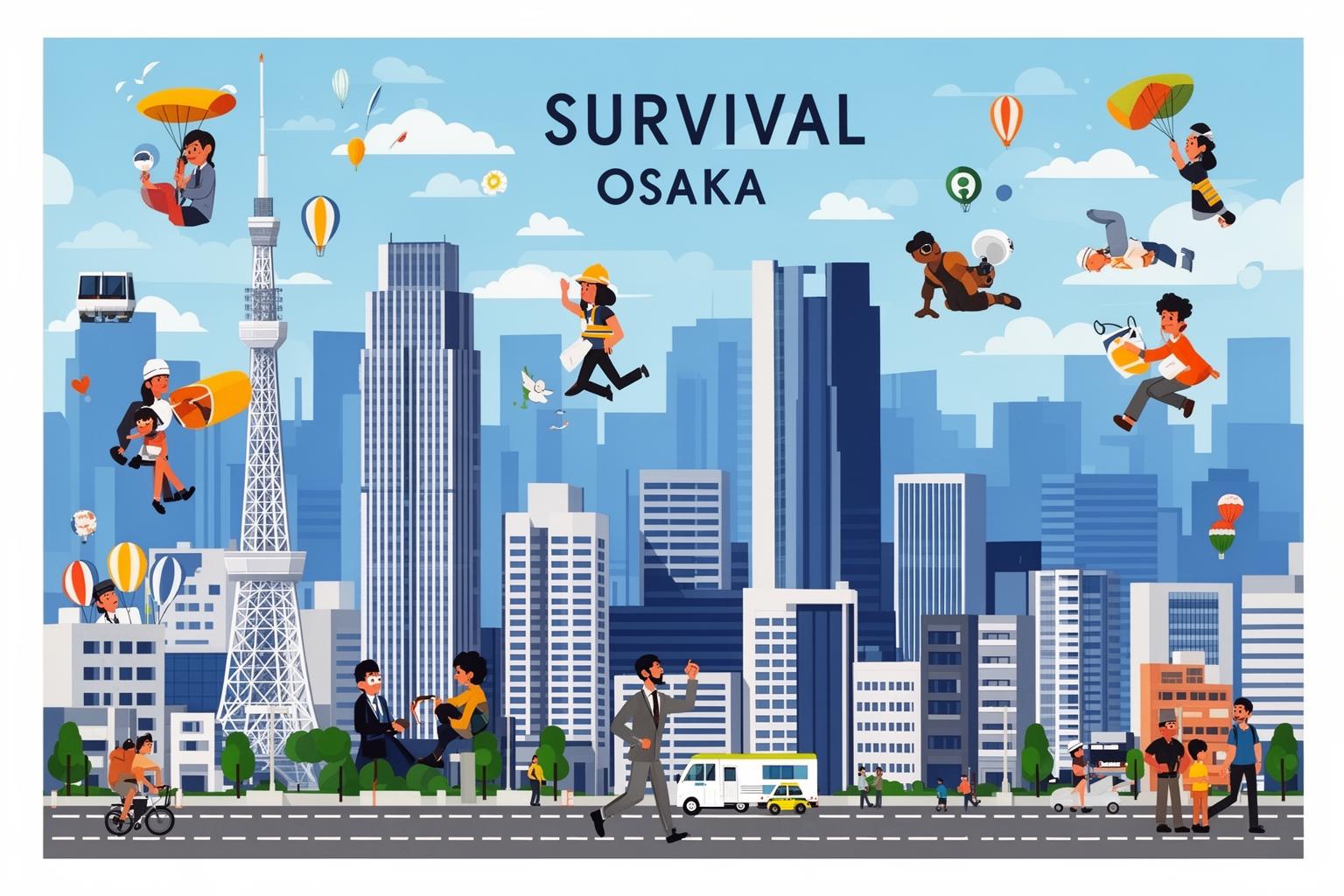
So, how do you stop being a victim of the Dungeon and start navigating it like a pro? You don’t need a perfect map. What you need is a new mindset. Forget about memorizing every turn. Instead, focus on learning the system’s core principles.
Pick Your Anchor
Don’t try to master the entire underground at once—that’s impossible. Instead, pick one or two major, reliable landmarks to serve as your anchors. Good choices include the massive Central Concourse of JR Osaka Station, the main entrance of the Hankyu Department Store, or the Midosuji Line subway gates. Learn how to get from the outside world to your anchor, and from your anchor to your most frequent destinations. Once you’ve secured that basic route in your mind, you can start exploring smaller side passages, knowing you can always return to your safe point. This is how locals build their mental map—not all at once, but route by route, layer by layer.
Follow the River
When uncertain, trust the flow of people. The streams of individuals in Umeda aren’t random; they move with purpose. If you need to reach the Midosuji Line during rush hour, simply find the thickest, fastest-moving flow of people and merge with it. The collective instinct of the crowd usually follows the most efficient path. You can adjust your direction later, but the initial route will almost always be right. Learn to read the density and speed of the crowd: a slower, wandering group likely means shopping in Whity, while a fast-paced, purposeful crowd is heading to a train platform.
Know Your Train Line’s “Territory”
Start associating destinations with their corresponding train line. Each line has its own character and domain. The Hankyu side feels more refined and connects to its upscale department store and the Hankyu Sanbangai shopping arcade. The Hanshin area offers a traditional, down-to-earth vibe, famous for its amazing depachika (basement food hall). The JR zone is a modern, shiny hub connected to newer shopping centers like Grand Front Osaka and Lucua. Thinking, “I’m going to the Hanshin depachika,” immediately places you in the southwest quadrant of the complex, giving you a big navigational advantage.
Embrace Getting Lost
Finally, the most important advice is to relax. You will get lost. Everyone who lives here has gotten lost at some point. But getting lost in the Umeda Dungeon is rarely a serious problem. You’re never more than a few minutes away from food, drink, and civilization. Treat it as an opportunity. Taking a wrong turn might lead you to a fantastic little juice stand, a vintage toy shop, or a standing bar with cheap and tasty tempura. The best way to learn the Dungeon is to explore it without a specific destination. Let the currents guide you. When you’re ready to leave, just follow any sign marked “地上” (chijō – ground level), surface like a diver, find a major landmark to get your bearings, and then dive back in for another try. That resilience—the ability to find small joys amid chaos—is the most Osaka lesson of all.