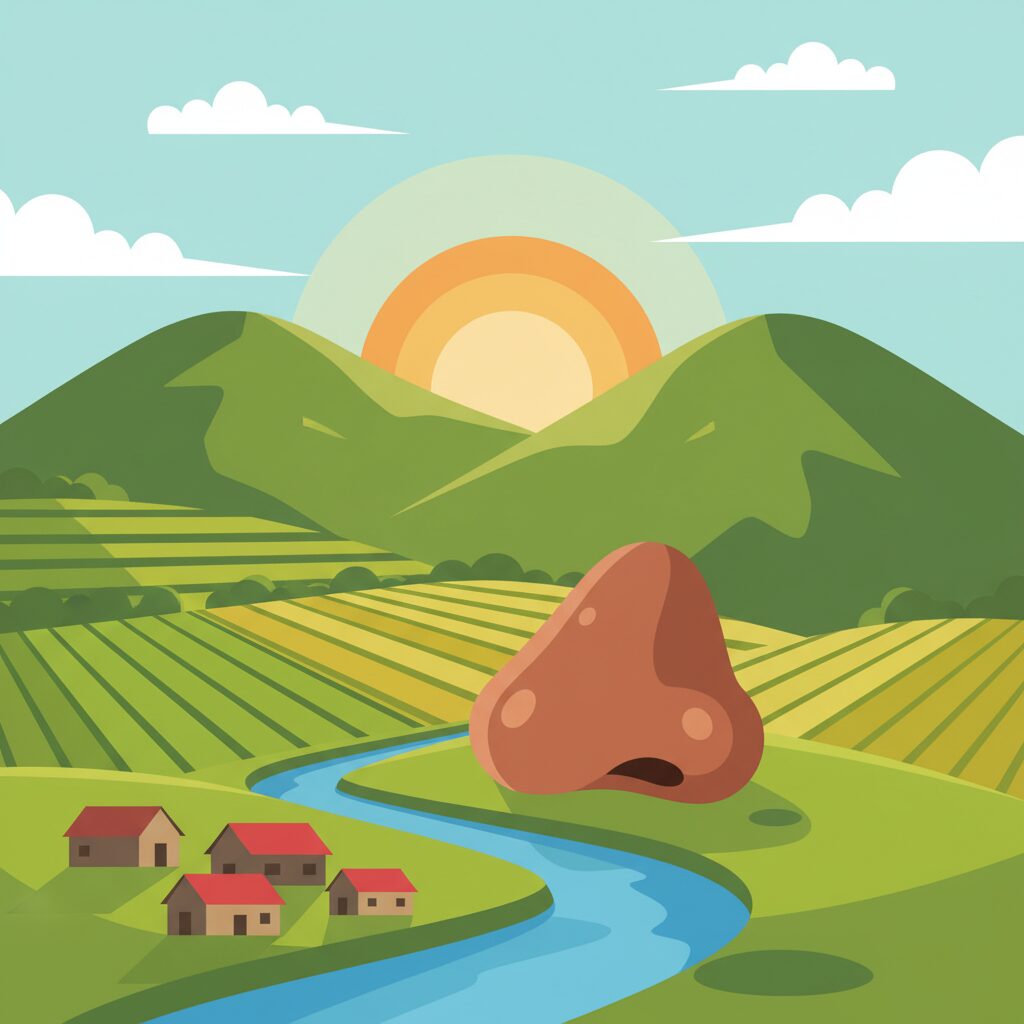
You feel it, don’t you? That subtle hum that never quite disappears. It’s the sound of Osaka. The rumble of the Midosuji line under your feet, the electric sizzle of Dotonbori’s neon signs, the constant chorus of “Irasshaimase!” and laughter spilling out of crowded izakayas. It’s the energy that draws us here, the pulse that makes this city feel so alive. But after weeks, months, or even years, that pulse can start to feel like a jackhammer. Your shoulders tense up. You start craving silence, a canopy of green instead of concrete, a sky full of stars instead of the orange glow of light pollution. The question inevitably arises, whispered to a friend over coffee in a crowded Shinsaibashi cafe: “Where can we go to escape?” The usual suspects pop up. A pricey shinkansen to Nagano? A long drive to the coast of Wakayama? Maybe a quick trip to Kyoto, only to trade one crowd for another, more aesthetically pleasing one? This is the Tokyo way of thinking—that escape requires a journey, a crossing of borders into a different prefecture, a different world. But this is Osaka. And Osaka plays by its own rules. The most startling, most refreshing, most fundamentally Osakan answer is that you don’t have to leave at all. The escape you’re looking for, the deep, restorative breath of the Japanese countryside, is right here, tucked away in the northernmost corner of the prefecture. It’s a place called Nose-chō. This isn’t just a town; it’s a revelation. It’s the key to understanding a side of Osaka that most foreigners—and even many Japanese—completely miss. It’s the city’s green lung, its agricultural heart, and a living testament to the stubborn, pragmatic self-sufficiency that truly defines the Osaka mindset.
Nose-chō may promise a tranquil escape, yet it also echoes the indomitable shotengai rhythm that continues to define Osaka’s vibrant essence.
The Two Faces of Osaka: Deconstructing the Urban Myth
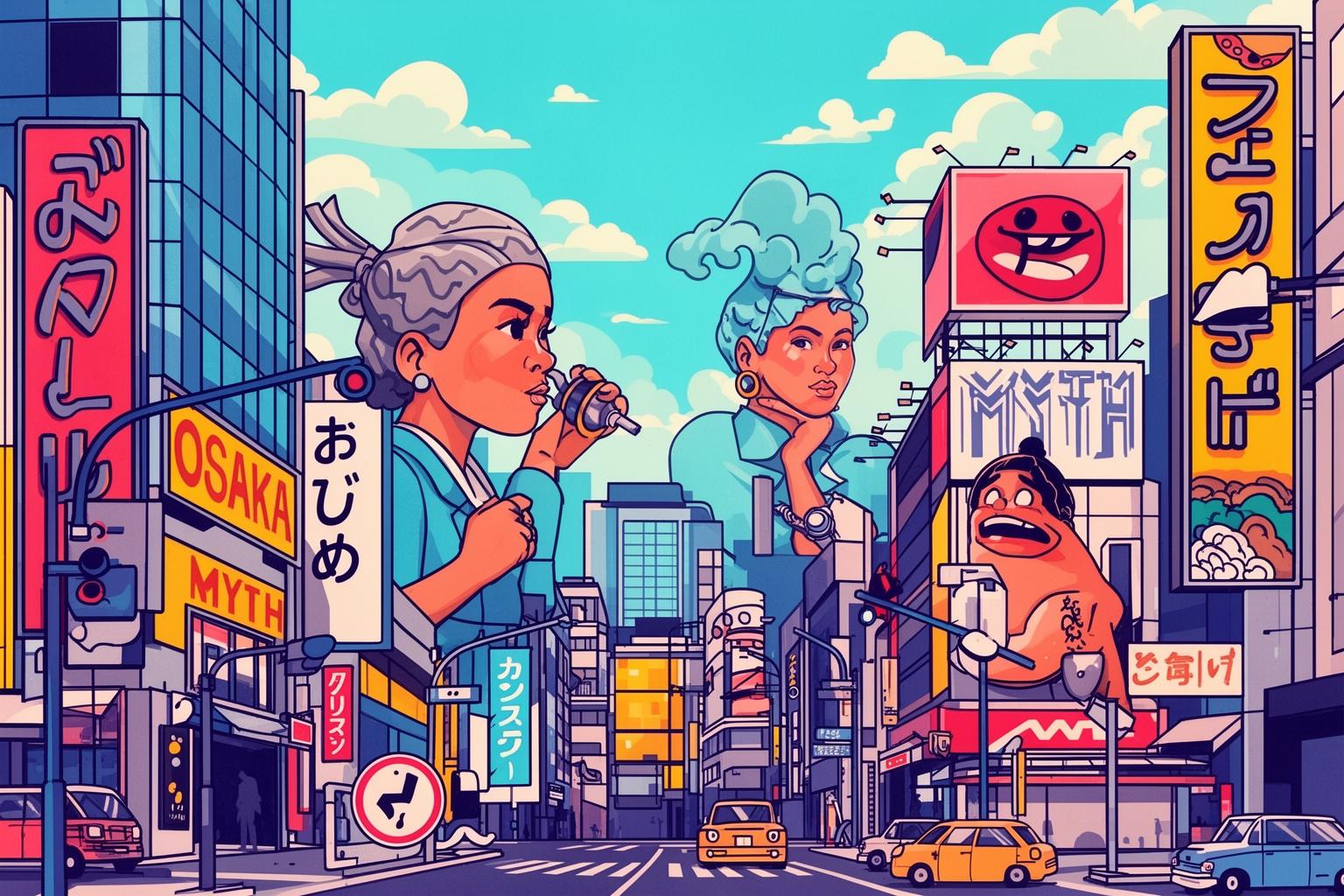
Close your eyes and imagine “Osaka.” What comes to mind? A skyline crowded with skyscrapers in Umeda, the sparkling Tsutenkaku tower, and the bustling, flavorful maze of Kuromon Market. You picture vendors peddling their goods, comedians cracking jokes, and crowds flowing through endless underground shopping arcades. This portrayal isn’t incorrect, but it’s dangerously incomplete. It represents just one chapter of a much larger story. The prevailing narrative, particularly for outsiders, is that Osaka is Japan’s second city—a somewhat rougher, more raucous counterpart to Tokyo’s polished metropolis. It’s seen as a place of commerce, hustle, and artificial spectacle. This view leads to a fundamental misunderstanding of what it truly means to live here. People notice the city but overlook the prefecture.
This is where the comparison with Tokyo becomes especially revealing. For a Tokyo resident, the city feels like an overwhelming whole. The urban sprawl seems endless, merging seamlessly into neighboring Saitama, Chiba, and Kanagawa. To reach genuinely open countryside, you must deliberately plan an escape involving train timetables, highway tolls, and a clear sense of leaving one world behind for another. It reinforces the notion of a sharp urban/rural divide. Osaka, by contrast, encompasses both worlds within its own borders. You can spend a Friday night shouting over the noise in a tachinomi bar in Kyobashi and a Saturday morning listening to the wind rustling cedar trees in Nose, never crossing a prefectural boundary. This is not a mere geographical curiosity—it profoundly shapes local mentality. There is a deep sense of wholeness here. Osakans hold a strong, almost defiant pride in their home because, at a core level, they feel they lack nothing. “Tokyo has what? We have that too,” is a frequent refrain. But it goes beyond mere shopping and entertainment. “Tokyo has crowds and concrete? We have that, plus rice paddies and mountains—and they’re ours.” This concept of Osaka as a self-contained universe, with its own urban center and rural hinterland, nurtures an identity less reliant on the rest of Japan. It’s a quiet confidence that everything needed for a fulfilling life—work, leisure, and rejuvenation—can be found right here, beneath the banner of Osaka.
Nose Isn’t a “Tourist Spot,” It’s Osaka’s Backyard
When foreigners living in Kansai seek a nature fix, their go-to destinations are often outside Osaka. They flock to Arashiyama’s bamboo grove for the perfect Instagram shot, hike the Fushimi Inari shrine in Kyoto, or feed the deer in Nara Park. These are fantastic spots, but at their core, they are tourist attractions—curated experiences polished for visitors. Nose is different. It doesn’t feel curated; it feels lived-in. It’s not performing for tourists; it functions as Osaka’s pantry, playground, and peaceful retreat. Locals don’t visit Nose to sightsee in the usual sense. They come to take part. They come to get their hands dirty, to fill their car trunks with fresh vegetables, and to let their children run freely in fields without a care for traffic. It’s not just a destination; it’s an extension of home—Osaka’s communal backyard.
The “Michi no Eki” as a Social Hub
To grasp the connection between urban Osaka and rural Nose, you need to experience a michi no eki, or roadside station. Forget the bleak, sterile rest stops typical on Western highways. In Nose, places like the Nose (Kuri no Sato) rest stop are lively, vital community hubs. On any weekend morning, the parking lot offers a snapshot of Osaka life: souped-up cars driven by young men from Kishiwada, family minivans from Hirakata, and tiny K-trucks piloted by elderly local farmers. Inside, it’s a delightful, chaotic dance. City visitors, still dressed in their stylish weekend gear, move through the aisles with focused intent. They aren’t after cute souvenirs; they’re on a mission. They buy ten-kilo bags of locally grown rice that’s fresher and more affordable than anything at their neighborhood supermarket. They pick up crooked, imperfect cucumbers whose taste couldn’t be farther from plastic-wrapped versions. They hunt for the best shiitake mushrooms, select local sake bottles, and debate which pickles to bring home. The farmers who grew these products are often right there, replenishing shelves, their sun-weathered faces warm and eager to share cooking tips. This interaction embodies Osaka—direct, unpretentious, centered on the city’s greatest passion: food, or kuidaore (eating oneself into ruin). For Osakans, a love of food isn’t just about fine dining—it’s an obsessive pursuit of quality and value, which leads them straight to the source. The michi no eki in Nose is the tangible link between the city’s refined palate and the earth that sustains it. Here, farm-to-table isn’t a trendy slogan but a straightforward, practical weekend errand.
The Rise of the Weekend Farmer
Venture deeper into Nose’s valleys, and you’ll find rows of meticulously cared-for garden plots known as rental hatake, or rental farms. These represent another facet of the urban-rural relationship. More and more families and individuals from Osaka City, Sakai, and nearby suburbs are renting these plots. They drive out each weekend, swapping office wear for rubber boots and straw hats. This isn’t merely a quaint pastime; it reflects a practical mindset. For many, it’s about education. In a society where children’s lives grow increasingly digital and structured, parents see it as a crucial way to teach something real. Children learn that vegetables don’t just appear in supermarkets; they learn about the seasons, hard work, the disappointment of pest damage, and the joy of harvesting ripe tomatoes. From a Chinese perspective, where ties to agriculture and the land remain strong even for city dwellers, this strikes a deep chord—it’s a way to reclaim part of one’s heritage. At the same time, Osaka’s trademark pragmatism is at work. Why pay a premium for organic vegetables when you can grow your own for a fraction of the cost? It’s a simple effort-versus-reward equation. The reward isn’t solely financial; it’s the profound pleasure of serving meals made with ingredients you planted, watered, and harvested yourself. It’s less about a romanticized return to nature and more about a sensible, grounded choice to enhance quality of life in a very real way.
The “Inaka” Next Door: How Nose Shapes the Urban Mindset
The word inaka (countryside) holds significant meaning in Japan. For many, it represents a distant, almost mythical place—the home of grandparents, a destination for the Obon holiday, and a symbol of a simpler past. It’s often linked to inconvenience, decline, and a world far removed from the opportunities of the city. Yet for Osakans, the inaka is practically next door. Nose isn’t a distant land; it’s just a 90-minute drive away. This closeness fundamentally alters the relationship. The countryside isn’t somewhere you escape to; it’s a place woven into the fabric of your daily life. This easy access to a completely different environment subtly but powerfully influences the urban mindset.
A Different Kind of Conversation
Step into a small soba shop or a local café in Nose, and the social atmosphere immediately contrasts with what you find in the city center. The language softens. The pace slows down. The formal, layered politeness typical of urban Japan—which can sometimes feel like armor—is replaced by a direct, rustic warmth. The person serving you might well be the farmer who grew the buckwheat used in your noodles. The conversation moves beyond pleasantries; it centers on the weather, the quality of this year’s harvest, or where you traveled from. There’s an open, disarming curiosity. This mirrors the broader Osaka communication style, known for being more straightforward and less hierarchical than Tokyo’s. In the city, this can sometimes be misread by outsiders as abrupt or even rude. But seen in the context of Nose, its origins become clear. It’s a style born of a community where people are valued for their actions and contributions, not for polished speech or prestigious connections. It’s a dialogue between equals—the city person and the rural resident, the consumer and the producer—united by shared geography and mutual, unspoken respect. The farmer respects the city-dweller’s choice to journey so far for quality food, and the city-dweller honors the farmer’s skill and labor. Their relationship is built on practicality, not performance.
Redefining “Convenience”: An Osaka Perspective
Ask a Tokyo resident what “convenience” means, and they’ll probably mention the Yamanote Line, the abundance of 24-hour convenience stores, and the vast array of services available around the clock. It’s a convenience defined by access and immediacy. Osaka certainly has all of that. But the presence of Nose offers a different, deeper meaning of convenience: the convenience of escape. It’s the ability, on a whim, to decide on a Saturday morning to completely change your surroundings. It’s the mental freedom that stems from knowing a quiet forest trail, a babbling stream, or a field of cosmos flowers is only a short drive away. There’s no need to book a hotel or plan weeks ahead. This represents a form of life-balance infrastructure that isn’t measured in train lines or fiber-optic cables. It’s a psychic safety valve. This mindset epitomizes Osaka logic. Why spend a fortune on a weekend at a famous hot spring resort when you can enjoy a deeply refreshing experience for the cost of a tank of gas and a sack of fresh vegetables? It’s about maximizing quality of life with the resources at hand. It’s the same reasoning that leads an Osakan to pick a cheap, delicious hole-in-the-wall ramen shop over a trendy, overpriced restaurant. It’s not about being cheap; it’s about being wise. It’s about recognizing true value—whether in a bowl of noodles or a breath of clean mountain air.
What Foreigners Often Get Wrong

Because Nose remains largely off the beaten path for non-Japanese residents, several important misunderstandings about Osaka continue to persist. These misconceptions are not merely trivial mistakes; they hinder a deeper appreciation of the city’s complex and rewarding character.
Mistake 1: “Osaka is Just One Big City.”
This is perhaps the most prevalent and significant misunderstanding. Observing a map, we see the dense urban core and assume that encapsulates the whole story. We spend our time in Namba, Umeda, and Tennoji, believing we have “seen Osaka.” This is akin to visiting Manhattan and claiming to know all of New York State. By overlooking places like Nose, Minoh, or the southern Senshu coast, we simplify our understanding of the local culture. We reinforce the stereotype of the Osakan as merely a fast-talking, money-driven city dweller. In reality, the Osaka identity is a blend of urban and rural elements. The person skillfully navigating the crowded Umeda station on a weekday might be the same individual tending to their vegetable garden in Nose on a Sunday. This duality is vital. It anchors the city’s frenetic energy, providing a source of tradition, sustenance, and calm that balances the commercial chaos. To truly grasp Osaka, you must realize the prefecture functions as a single, integrated ecosystem, where the rice paddies of Nose are as much a part of its essence as the octopus balls of Dotonbori.
Mistake 2: “Rural Japan is All the Same.”
To the untrained eye, one area of Japanese countryside can resemble another. Green mountains, terraced fields, old farmhouses—it’s a beautiful but seemingly uniform landscape. This leads to the assumption that a visit to rural Kyoto, Nara, or Shiga would offer the same experience as a trip to Nose. This is a subtle yet significant error. Each rural area in Japan is deeply linked to the urban center it supports and reflects its character. Rural Kyoto, with its elegant temples, imperial villas, and refined kaiseki cuisine traditions, often feels like an extension of the old capital’s aristocratic culture, carrying the weight of history and high art. Rural Nara feels ancient, marked by burial mounds and sacred sites that testify to the origins of the Japanese state. Nose, however, feels different. It feels like Osaka. Its identity is less about history or artistry and more about agriculture and community. It is, above all, a working landscape. Its beauty lies not in manicured aesthetics but in productive abundance. The shrines and temples are humble, local places, not grand national landmarks. The atmosphere is grounded, unpretentious, and focused on the essentials of life: food, family, and community. It doesn’t put on airs. It doesn’t seek to impress with pedigree. It simply is what it is: the hardworking, honest, and utterly essential countryside of Osaka.
A Weekend in Nose: Experiencing the Other Osaka
To truly understand what this means, you need to experience it with your senses. A description can only convey so much. A weekend visit isn’t about checking off sights from a list; it’s about realigning your body and mind to a different pace.
The Scent of the Air
The first thing you notice when you step out of the car in Nose is the smell. It’s a rich and wonderful aroma that stands in complete contrast to the city. In autumn, there’s the sweet, smoky scent of burning rice husks drifting from the fields. In spring, it’s the damp, earthy smell of freshly turned soil, blended with the subtle fragrance of plum blossoms. There’s the sharp, clean scent of cedar and pine from the surrounding forests, and after rain, the smell of wet asphalt and green leaves. It’s a scent that refreshes your lungs and clears your mind, a reminder of a world governed by natural rhythms, not train schedules.
The Sound of Silence (and Life)
After the constant noise of the city, the quiet of Nose can be almost startling. But it’s not a lifeless silence. It’s a vibrant quiet, filled with delicate sounds you’d never notice in the city. It’s the buzz of a dragonfly, the persistent chirp of cicadas in summer, the rustling of wind through bamboo groves, and the distant call of a hawk circling overhead. You can hear the crunch of your own footsteps on gravel paths. At night, the chorus of frogs and crickets is your only soundtrack. This soundscape affects your brain. It untangles the knots of stress built up from a week of urban noise. It lets you think—or better yet, simply stop thinking.
The Taste of the Land
Ultimately, in Osaka, everything comes back to food. And the food in Nose is a revelation. It’s about savoring things at their absolute peak of freshness. It’s eating soba noodles made from buckwheat harvested just a few hundred meters from the restaurant, their nutty, earthy flavor far removed from the dried variety in a package. It’s buying a sweet potato baked over hot stones by a roadside farmer, its flesh so creamy and sweet it tastes like dessert. In autumn, it’s all about kuri (chestnuts). They’re everywhere—steamed, roasted, or in a magnificent Mont Blanc cake from a local patisserie. Eating in Nose is a direct connection to the land. It’s the ultimate expression of kuidaore, where the luxury lies not in the price, but in the unparalleled quality that comes from eating something at just the right place, at just the right time.
So, What Does Nose Tell Us About Osaka?
A weekend in Nose does more than simply recharge your batteries; it fundamentally transforms your perception of Osaka. It shows that the city’s loud, commercial, and relentlessly urban character is only one side of the story. The other side is found in the fields, forests, and peaceful communities of its rural heartland.
Nose demonstrates that Osaka’s well-known pragmatism isn’t limited to its business mindset; it shapes how the city interacts with nature. Nature isn’t a distant ideal to be admired; it’s a resource to be utilized, enjoyed, and woven into everyday life. It’s the backyard garden, the weekend grocery store, the free therapy session. It’s a practical antidote to the pressures of modern urban living.
Crucially, the presence of this accessible inaka sheds light on the deep self-sufficiency central to Osaka’s character. While Tokyo often seems to look outward—to the rest of Japan and the world—for validation and connection, Osaka feels more self-contained. There’s an impression that everything needed for a fulfilling life can be found within the prefectural boundaries: a vibrant global city for ambition and excitement, alongside a calm, productive countryside for peace and nourishment. This wholeness cultivates a strong sense of place, an unyielding pride, and an identity that is resilient, grounded, and uniquely Osaka. Understanding this city involves more than wandering the bright canyons of Namba and Umeda; it also means exploring the quiet, green hills of Nose.