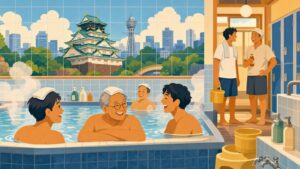
If you live in Osaka long enough, you may notice a small change in how people talk about bathing. A public bath is not always presented as a special cultural experience. For many residents, it is simply part of the week: a place to wash properly, warm up after work, recover from physical fatigue, see familiar faces, and return home feeling reset.
That can be difficult to understand if your image of a Japanese bathhouse comes from travel photography. You may imagine a quiet wooden building, a dramatic hot spring landscape, or a once-in-a-lifetime experience. Osaka’s neighborhood sentō are often much less theatrical. They sit beside apartment buildings, shopping streets, schools, laundromats, and ordinary residential roads. People arrive carrying plastic bags, small towels, shampoo bottles, or a change of clothes. They may be tired, talkative, impatient, shy, or completely focused on their own routine.
The real question for a foreign resident is usually not “Where is the most beautiful bath?” It is more practical: How do I behave when the same local people see me every week? Should I speak to them? Is it strange to go alone? What happens if I have a tattoo? Why does everyone wash before entering the bath when they are going to wash again later?
This article explains sentō as part of everyday Osaka life rather than as a sightseeing activity. It looks at the sequence of a normal visit, the rules that keep the space comfortable, and the social attitudes that make Osaka’s bathhouses feel different from a highly formal public setting. The goal is not to turn you into an expert overnight. It is to help you become a considerate regular.
For a practical sense of where an ordinary Osaka sentō may sit within the city, the map below shows the area around Healthy Onsen Tateba in Sakuragawa, Naniwa Ward. It is included as a neighborhood reference, not as a claim that one bathhouse represents every sentō in Osaka.
Experiencing Osaka’s Authentic Sentō Culture
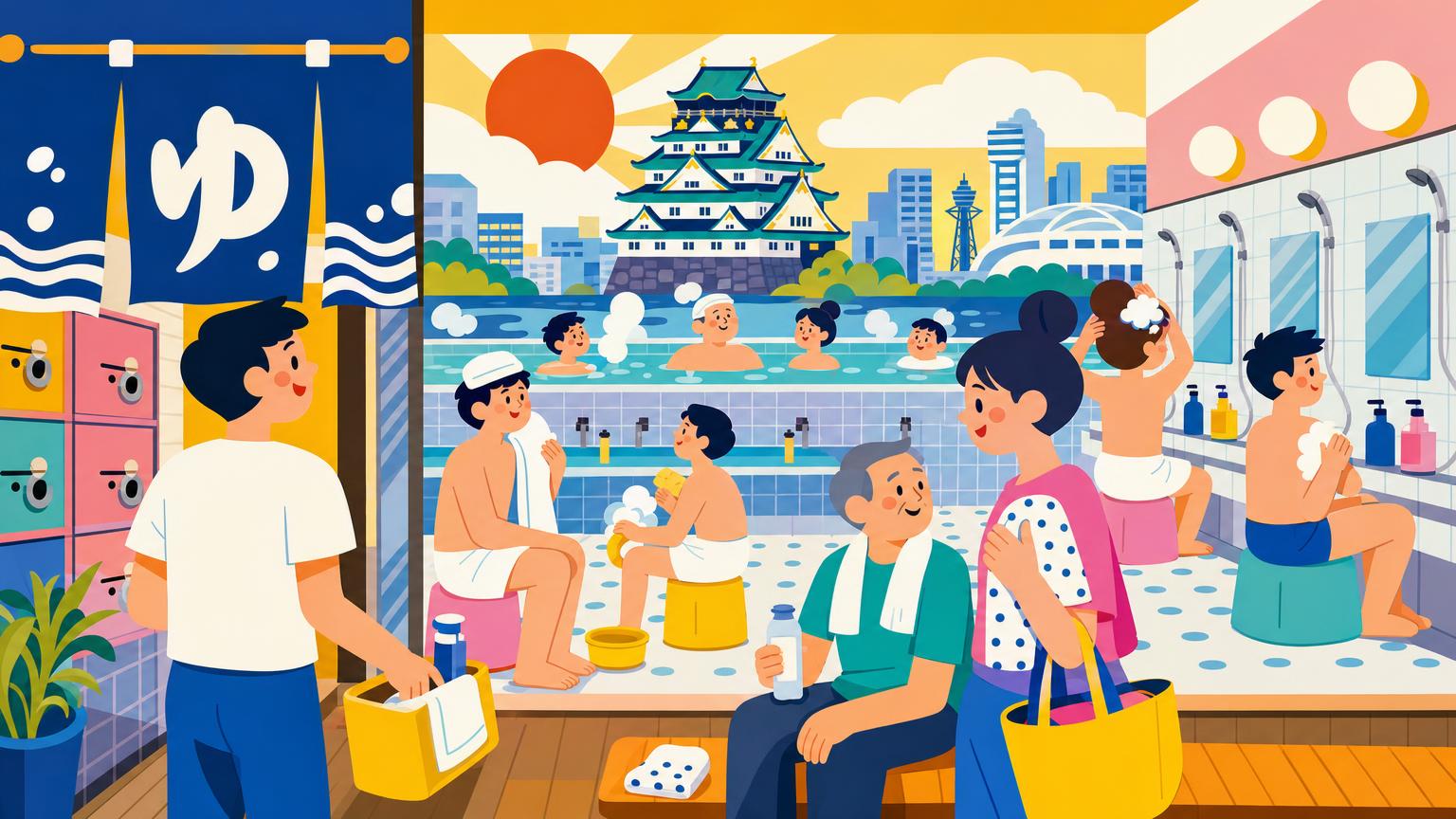
A sentō is a neighborhood public bath. It is not necessarily luxurious, scenic, or associated with a famous natural spring. Its value comes from regular use. The same bath may serve office workers, older residents, families, students, delivery drivers, construction workers, and people whose homes lack a comfortable bathroom.
In Osaka, this everyday character matters. The city has a strong culture of practical convenience. People often value something because it works, is nearby, and becomes part of a reliable routine. A sentō can be warm, social, affordable, and somewhat rough around the edges. The tiles may be old. The hair dryers may require coins. A television may play quietly in the corner of the changing room. None of this necessarily means the facility is poorly maintained. It may simply indicate that the bathhouse is being used as a living neighborhood institution rather than presented as a polished experience.
A weekly visit can also change your understanding of local relationships. At first, you may feel as though everyone is watching you. In reality, people are often just checking the situation briefly before returning to their own routines. After several visits, you may become familiar without becoming close. Someone may recognize your face, move a bucket so you can sit, nod when you enter, or ask a brief question about where you live.
This is one reason a sentō can teach you more about living in Osaka than a busy commercial district can. In a shopping area, you are mainly a customer. In a neighborhood bathhouse, you are temporarily sharing a local rhythm.
Why a weekly habit feels different from a one-time visit
A tourist may focus on avoiding mistakes for one evening. A resident has a different responsibility: behaving in a way that remains comfortable over time.
That means learning a few small patterns:
- Arrive when the bathhouse is open, rather than relying solely on what an online listing says.
- Bring coins or another accepted form of payment.
- Keep your belongings organized.
- Wash before entering a communal tub.
- Avoid occupying a washing space or resting area for too long.
- Pay attention to whether the atmosphere is quiet, conversational, busy, or relaxed.
- Leave the space in a condition that does not create extra work for staff or other bathers.
The goal is not to perform Japanese culture perfectly. It is to avoid making the shared space more difficult for everyone else.
The bathhouse as a local social room
The sentō is not exactly a living room, but it can function as a public extension of one. People may not have long conversations, yet they share a familiar environment. They know which shower has the strongest water pressure, which bath is hottest, and when the room tends to become crowded.
In Osaka, older residents may speak to you more easily than you expect. Someone might ask whether you are from America, Europe, or another part of Japan. They may comment on your height, your Japanese, the weather, or how crowded the bath is. The question may sound direct, but it is not always meant to be invasive. In many cases, it is simply a practical way to begin a brief human exchange.
You do not need to share your entire personal history. A smile, a nod, and a short answer are sufficient. If you understand only part of what was said, try a simple response such as “Sumimasen, mada nihongo ga jouzu janai desu” — “Sorry, my Japanese is not very good yet.” The important thing is not perfect grammar, but showing that you recognized the attempt to communicate.
Sento vs. Onsen: What Residents Need to Know
The words sentō and onsen are often used interchangeably in English, but they refer to different things.
A sentō is a public bathhouse. Traditionally, its purpose is everyday bathing. The water may be heated municipal water, and the facility may include several baths, showers, a sauna, an electric bath, or a cold plunge. Some sentō are old-fashioned neighborhood businesses, while others have been renovated with modern interiors, cafés, relaxation rooms, or more elaborate sauna facilities.
An onsen is a hot spring bath. In legal and geological terms, the water comes from a natural hot spring source that meets established requirements. An onsen may be located inside a hotel, resort, day-use facility, or neighborhood bathhouse. The building may look similar to a sentō, but the source and classification of the water are different.
In daily life, the distinction is useful but not always dramatic. A local sentō can still provide the same basic emotional benefits people seek from an onsen: a slower evening, physical warmth, and a temporary break from work and household pressures.
Why the distinction matters in real life
Foreign residents sometimes assume that all public baths follow the same rules, but they do not. Policies may differ regarding:
- Tattoos
- Children’s entry
- Sauna fees
- Shampoo and body soap
- Payment methods
- Closing times
- Photography and mobile phones
- Whether a towel or rental set is provided
- Whether the facility welcomes non-Japanese speakers
A large hot spring facility may have a polished reception desk and detailed written rules. A small neighborhood sentō may communicate expectations through signs, established habits, and the behavior of regular customers. When in doubt, ask the staff before undressing.
The important difference between a visitor and a regular
At an onsen connected to a hotel, you may be treated as a guest passing through. At a neighborhood sentō, you are using a shared local service, which changes the social expectations.
No one expects you to speak fluent Japanese or know every detail in advance. People do expect you to observe what others are doing, follow hygiene rules, and avoid treating the bathhouse as a private photo opportunity.
This is also why a sentō can feel more approachable than an expensive onsen. You do not need to make the experience special; you only need to use it properly.
Step-by-Step Sento Etiquette: A Guide for First-Time Residents
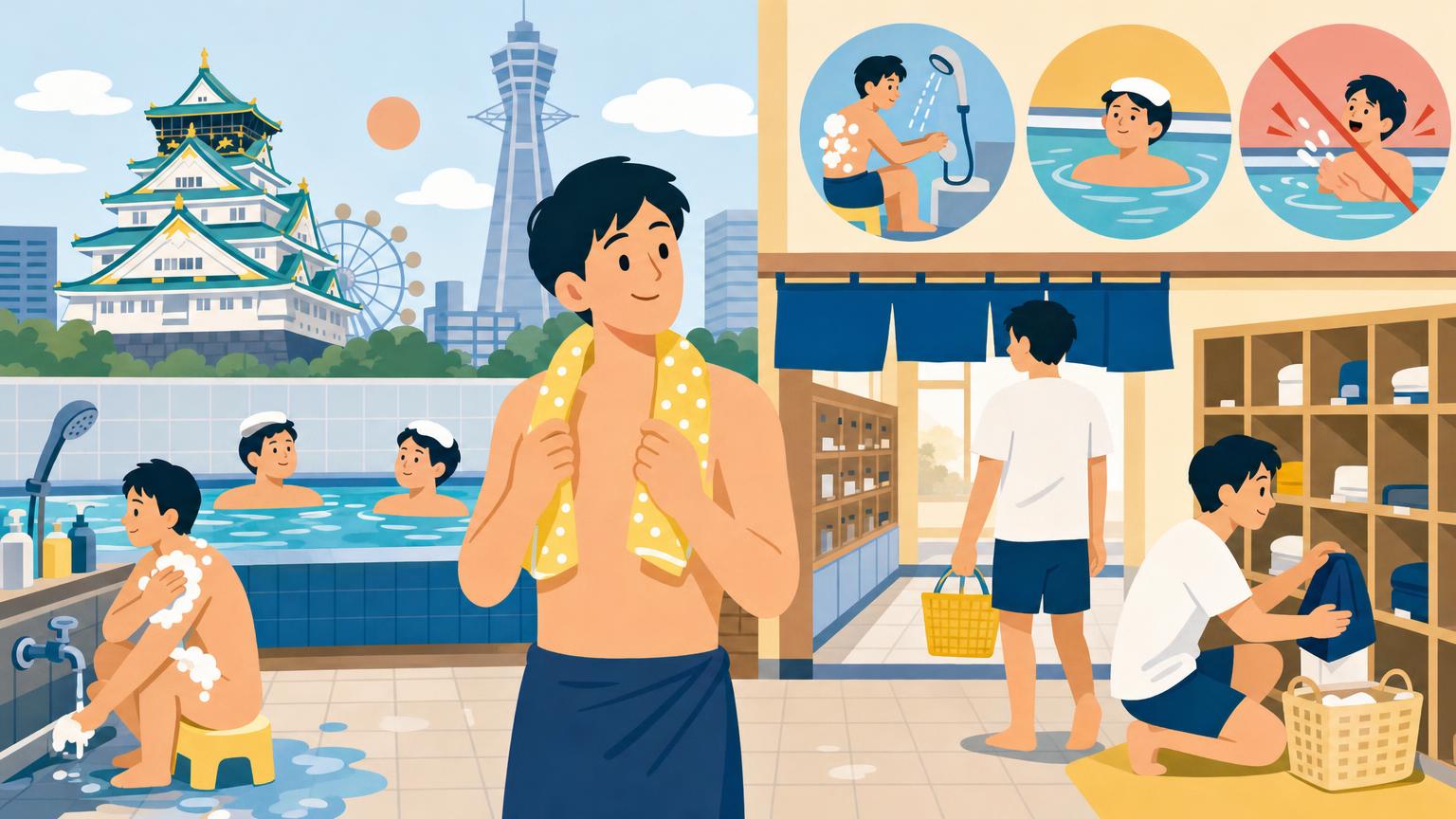
The easiest way to remember sentō etiquette is to think of the visit as a sequence: prepare, enter, undress, wash, soak, dry, dress, and leave. Most mistakes occur when someone skips a stage or applies a rule from a different type of facility.
Before leaving home
Bring fewer things than you think you need, but make sure you have the essentials.
A useful sentō bag may include:
- A small washing towel
- A larger towel for drying afterward
- Shampoo and body soap, if the facility does not provide them
- Coins or a payment method accepted by the bathhouse
- A small plastic bag for wet items
- Clean underwear and clothing
- Hair ties if you have long hair
- A water bottle for after bathing, if permitted
Many bathhouses rent towels or sell basic toiletries, but do not assume that every sentō has the same arrangements. If you are visiting for the first time, check the facility’s current information or ask at the entrance.
Do not arrive heavily intoxicated, and avoid entering if you have a fever, stomach illness, or any condition that could make communal bathing unsafe. A hot bath can also place physical stress on your body. If you are pregnant, have heart or blood pressure concerns, or take medication that affects how you respond to heat, consult a medical professional about safe bathing before making it a weekly habit.
Entering and payment: bandai, front desk, or ticket machine
The traditional counter is called a bandai. In older bathhouses, the attendant may sit at a raised desk near the entrance, with the men’s and women’s changing rooms on either side. Modern facilities may instead have a standard reception counter or a ticket vending machine.
Take a moment to observe before acting. You may see customers remove their shoes first, purchase a ticket, or briefly speak with the attendant. If the process is unclear, ask:
- “Hajimete desu. Dou sureba ii desu ka?” — “It is my first time. What should I do?”
- “Towel wa kariraremasu ka?” — “Can I rent a towel?”
- “Shampoo wa arimasu ka?” — “Is shampoo provided?”
- “Tatou wa daijoubu desu ka?” — “Are tattoos permitted?”
A little Japanese can quickly reduce confusion. You do not need to apologize for being foreign; simply make your question clear and listen to the response.
Remove your shoes before entering the changing room area if the facility requires it. Place them in a shoe locker or on the designated shelf. Wearing outdoor shoes into the changing room is one of the easiest ways to create an obvious problem.
Navigating the changing room: the datsui-jo
The changing room is called the datsui-jo. This is where you remove all your clothing, store your belongings, and prepare to enter the bathing area.
Use a locker if one is available. Some lockers require a coin, which may be returned later, while others use a key attached to a wristband or elastic cord. Keep the key with you while bathing, but do not swing it around or place it somewhere that could scratch another person.
Whenever possible, leave valuables at home. A sentō is not the ideal place to bring expensive jewelry, a large amount of cash, or a laptop. Even if the facility feels secure, simple precautions can reduce anxiety.
Before entering the bathing area:
- Remove all items of clothing.
- Keep your small towel with you.
- Leave your large towel in the locker.
- Tie up long hair.
- Remove watches, rings, and accessories that could be damaged by heat or water.
- Do not bring a phone or camera into the bathing area.
Complete nudity is normal in a sentō. Swimsuits, underwear, sports shorts, and disposable bathing clothes are generally not worn in the communal bathing area. This may feel uncomfortable for people from cultures where public bathing requires swimwear, but wearing a swimsuit is usually more conspicuous than being naked.
You are not expected to stare at other people. Look toward your locker, your washing station, or the floor as you move around. The usual attitude is matter-of-fact rather than dramatic.
The washing area: the golden rule of cleaning first
The main rule of sentō etiquette is simple: wash your body thoroughly before entering any communal bath.
This is not merely a quick symbolic rinse. Use soap and water to clean your body, face, hands, and feet. Wash your hair if it is dirty or if you have used styling products. Rinse away all soap and shampoo completely before standing up.
Sit on the small stool while washing, and use the bucket or handheld shower carefully. Avoid spraying the person next to you, flooding the floor, or leaving foam around the station. When you are finished, rinse the stool and bucket so they are ready for the next person.
The washing area is often where foreign residents accidentally misunderstand the order of things. They may assume that the bath is for washing and that the shower is optional. In a sentō, the communal bath is for soaking after you have cleaned yourself. Because everyone shares the water, entering with an unwashed body is considered unhygienic.
A good washing routine looks like this:
- Sit down before turning on the shower.
- Rinse your body first.
- Apply soap and wash carefully.
- Shampoo your hair if necessary.
- Rinse your hair and body thoroughly.
- Keep your used towel and toiletries under control.
- Rinse the stool and the area around you.
- Stand only when you are ready to leave the washing space.
If you are unsure how much washing is sufficient, wash more thoroughly than you think is necessary. In a communal bath, consideration is more important than speed.
Soaking in the bath: towel rules and temperature
After washing, enter the bath slowly. Japanese baths may feel hotter than you expect, especially if you are accustomed to swimming pools or cooler showers. Lower yourself gradually, and leave the bath if you feel dizzy, nauseated, or short of breath.
The small modesty towel must remain out of the bathwater. This is a strict hygiene rule, not a suggestion. You can place it on the edge of the bath, on your head, or beside your belongings somewhere it will not fall into the water. Do not wash the towel in the bath, wring it over the bath, or use it to scrub your body while soaking.
Keep your hair out of the water as well. Tie it up or place it on top of your head. Do not swim, splash, shout, or stretch across a crowded tub. If someone is already using a quiet section of the bath, give them comfortable space.
You do not have to use the hottest tub. A brief soak is perfectly acceptable. Many regulars move between different baths, rinse with water, sit quietly, and repeat the process. You can simply choose one comfortable bath and leave when you are ready.
Moving between baths and using the sauna
If the facility has several baths, rinse lightly before moving to another tub if you have been sweating or using a sauna. Follow the same basic principle: keep shared water clean and avoid making your movements disruptive.
A sauna may require an additional fee or a separate wristband, so check before entering. Sauna etiquette may include sitting on a towel, rinsing before entering a cold bath, and avoiding long conversations in a small room.
Do not copy a regular’s exact routine if you are uncomfortable. Some people remain in very hot water for a long time, while others use electric baths or cold plunges that may not be suitable for you. Osaka’s practical culture does not require you to prove your toughness.
Drying before returning to the changing room
When you finish bathing, use your small towel to wipe off excess water before entering the changing room. This helps keep the floor dry and prevents people from slipping.
Do not walk through the changing room while dripping wet. It may seem like a minor issue, but a dry floor contributes to everyone’s comfort in the shared space. This is one of the habits that shows you understand a sentō as a community facility rather than a private bathroom.
Return rented items as instructed, and place trash in the appropriate bin. Use the hair dryer without monopolizing it during busy periods. If you need to apply skincare or take your time getting dressed, keep your belongings close and leave room for others.
The Unspoken Social Code of Osaka Bathhouses
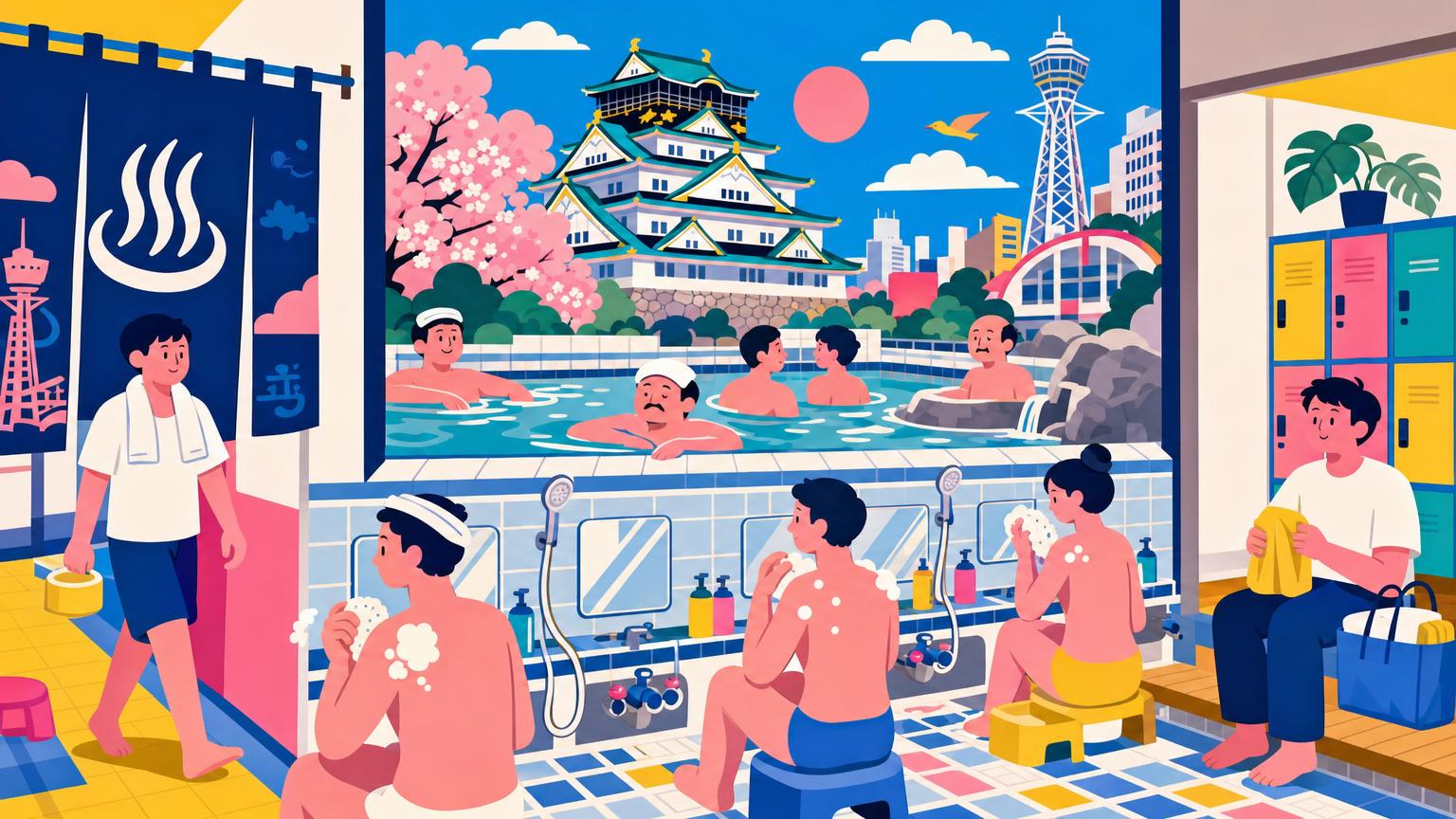
The written rules explain hygiene. The unspoken rules explain the atmosphere.
Osaka is often described as friendly, but that word is too vague to be especially useful. In everyday situations, Osaka friendliness may involve direct comments, casual jokes, quick questions, practical assistance, or a willingness to speak before a formal relationship has been established.
That style may feel warm one day and intrusive the next. Context matters. Someone who asks you a personal question may simply be trying to make conversation. Someone who laughs at your Japanese may be encouraging you, teasing you, or doing both at the same time. You do not need to interpret every comment as a formal invitation to friendship.
Friendly Kansai vibes and local greetings
You may hear “ookini,” a Kansai expression associated with “thank you,” although its usage varies depending on the person and situation. You may also hear short greetings, comments about the weather, or casual phrases that sound less formal than the Japanese taught in textbooks.
A polite response can remain simple:
- Smile and nod.
- Say “konbanwa” when entering in the evening.
- Say “arigatou gozaimasu” to staff.
- Use “sumimasen” when you need to pass or ask a question.
- Answer briefly if you do not want to continue the conversation.
- Say “mata ne” or give a small nod when leaving if you have become familiar with someone.
You are not expected to imitate a strong Osaka dialect. Forced dialect can sound strange, especially if you do not understand its tone. Clear standard Japanese, combined with a relaxed attitude, is better.
When older locals start talking to you
Older residents may ask where you work, where you live, how long you have been in Japan, or whether you like Osaka. Their manner of speaking may be direct. They may also repeat a question if your answer is difficult to hear over the bathhouse noise.
Possible responses include:
- “Osaka ni sunde imasu” — “I live in Osaka.”
- “Ninen gurai desu” — “About two years.”
- “Nihongo wa benkyou-chuu desu” — “I am still studying Japanese.”
- “Osaka wa omoshiroi desu” — “Osaka is interesting.”
- “Kyou wa atsui desu ne” — “It is hot today.”
If the conversation becomes too personal, you can smile and say, “Chotto himitsu desu” — “That is a little private.” You can also return your attention to washing or bathing without making a dramatic exit.
The important thing is to distinguish directness from aggression. Osaka’s conversational style can be fast and expressive, but a loud voice or animated facial expression does not automatically indicate anger. At the same time, do not assume that every blunt comment is harmless. You are allowed to maintain your boundaries.
How Osaka differs from Tokyo in small daily interactions
Comparisons between Osaka and Tokyo are always generalizations, but they can help explain the feeling many foreign residents notice.
Tokyo often rewards controlled distance. In crowded public spaces, people may avoid unnecessary conversation, maintain a neutral expression, and protect personal boundaries through quiet behavior. Osaka also has crowded trains and private people, but casual contact may begin more quickly in neighborhood settings.
In Osaka, someone may comment on an ordinary situation simply because it is there. A cashier may make a joke. A neighbor may ask a question. A bathhouse regular may tell you that one tub is hotter than another. The interaction may last thirty seconds and never develop further.
This does not mean Osaka people are universally more welcoming, nor does it mean Tokyo people are cold. The difference is often one of conversational temperature. Osaka may make the first move more often, especially in places where people come into repeated contact.
For a foreign resident, this can lead to two misunderstandings:
- You may mistake casual conversation for a close friendship.
- You may mistake direct conversation for criticism or hostility.
Try to wait before deciding what the interaction means. Notice whether the person respects your answer, your space, and your silence. That will tell you more than the opening sentence.
The bathhouse as a place where social status softens
At work, people may be separated by job title, language ability, age, and income. In the bathing area, those categories become less visible. People still know who they are, of course, but the setting encourages a more ordinary form of interaction.
This can be especially meaningful for foreigners who work in international companies. In the office, Japanese colleagues may use careful English or formal Japanese. In the bathhouse, someone may simply ask whether you are cold. The conversation may be less polished but more immediate.
Do not romanticize this. A sentō is not a perfect community. People can be impatient, territorial, noisy, or inconsiderate. The value of the space is that ordinary people share it nonetheless, guided by practical rules rather than constant ceremony.
Essential Rules for Foreign Visitors
The following issues cause the most anxiety for foreign residents. Policies may differ by facility, so confirm directly when necessary. Never assume that a rule at one bathhouse applies to every sentō in Osaka.
Navigating tattoo policies in local sentō
Tattoo policies in Japan are not uniform. Some hotels, resort onsen, gyms, and large bathing facilities prohibit tattoos, while others allow them if they are covered. Some neighborhood sentō are more accommodating, and some are completely tolerant of body art.
Traditional local sentō in Osaka are often more practical about tattoos than highly commercial, tourist-oriented facilities, but “often” does not mean “always.” A small neighborhood bathhouse may permit tattoos because it serves the local community. Another may have its own policy based on the owner, customer expectations, insurance concerns, or building rules.
If you have tattoos, ask before entering. You can show a photograph or use a translation app if explaining the design is difficult. Do not assume that a small tattoo is automatically acceptable, and do not hide a large tattoo under a towel after staff have told you it is not permitted.
Useful questions include:
- “Tatou ga arimasu. Haitte mo ii desu ka?” — “I have tattoos. May I enter?”
- “Kakusu hitsuyou ga arimasu ka?” — “Do I need to cover them?”
- “Kono shisetsu wa tatou OK desu ka?” — “Are tattoos allowed at this facility?”
Some facilities may ask you to cover a tattoo even if they do not prohibit entry. If you agree to those conditions, follow them carefully. If the answer is no, accept it without arguing in the changing room or bathing area. Ask whether staff can recommend another facility.
For residents with visible tattoos, finding a sentō that welcomes you can make weekly bathing much easier. Once you have confirmed the policy, you can return with confidence instead of facing the same uncertainty every time.
The strict nudity rule: no swimsuits in the communal bath
Most ordinary sentō require full nudity. Do not wear a swimsuit, underwear, athletic shorts, or a rash guard into the bathing area unless staff specifically tell you that the facility has a different rule.
This rule is connected to hygiene, space, and the traditional design of the bathhouse. Communal bathing assumes that everyone washes their body before entering and that no fabric from outside enters the shared water.
If you feel nervous about being naked, remember that most people are not studying you. Keep your small towel in front of you while walking if it helps, but do not use it to cover yourself in a way that blocks others or causes you to drop it into the water. Move calmly, follow the sequence, and the awkwardness will usually fade quickly.
Keep phones and cameras away
Do not bring a phone into the bathing area. Photography is generally unacceptable, even if you intend to photograph only the architecture or your own belongings. The possibility of capturing someone who is naked creates a serious privacy concern.
If you want to remember the bathhouse, photograph the exterior only when permitted, or write down your impressions afterward. A sentō is one of the places where putting your phone away is part of participating properly.
Do not wash laundry or personal items
A sentō is not a place to wash clothes, shoes, food containers, or large personal items. The bathhouse may have a laundry area nearby, but the washing stations and baths are for bathing.
Likewise, do not bring food into the bathing area. Drink water in the designated area, and keep bottles or drinks away from the communal tubs unless the facility clearly permits them.
Consider noise, space, and time
A neighborhood sentō is not always silent. Osaka people may talk, children may be energetic, and a group of regulars may discuss local news. The appropriate volume depends on the facility and the time of day.
Avoid becoming the loudest person in the room. Do not make a phone call, play music aloud, or turn a small bath into a group conversation. If you are with friends, remember that other bathers may be using the space to rest.
During busy times, do not leave your belongings spread across several seats or occupy a washing station while chatting. Finish your routine and make space for the next person.
Building a Weekly Ritual Without Making It Complicated
A sentō becomes useful when it fits into your real life. You do not need to create an elaborate wellness program. Start with one evening a week and observe how your body and schedule respond.
Choose a realistic time
The best time is not necessarily the quietest one. It is the time you can return consistently.
Some residents prefer to go after work, before dinner. Others visit late at night, after the children have gone home and the bathhouse has become quieter. Morning or daytime bathing may suit people who work unusual hours, study from home, or want to avoid the evening rush.
Observe your local pattern over several visits. A bathhouse may be quiet on one weekday and crowded on another. Holidays, rainy evenings, winter weather, and neighborhood events can all change the atmosphere.
Decide how long to stay
A weekly sentō ritual can last anywhere from thirty minutes to two hours. Both are perfectly normal.
A short visit might look like this:
- Pay and undress.
- Wash thoroughly.
- Soak for several minutes.
- Rinse lightly if necessary.
- Dry off and leave.
A longer visit may include several baths, a sauna, some rest in the changing room, water afterward, and a brief conversation with regulars. Do not force yourself into the longer version. The value lies in leaving refreshed, not in making the most of every facility.
Learn the bathhouse’s personality
Every sentō has its own culture. One may feel quiet and formal, while another is bright, busy, and conversational. One may attract older residents, while another draws younger sauna users, families, or people from nearby apartments.
Pay attention to details:
- Do people greet the attendant?
- Do regulars speak loudly or quietly?
- Are children present?
- Is the sauna central to the facility or more secondary?
- Do people sit in the changing room after bathing?
- Are there signs about towels, tattoos, or time limits?
- Does the staff correct behavior directly, or rely on signs?
You are learning about a social environment, not just a set of physical instructions.
Becoming a regular without forcing relationships
Being a regular does not mean becoming popular. It simply means that your presence becomes familiar.
Return on a similar day or around a similar time. Greet the staff. Keep your routine consistent. Notice people without staring, and respond politely when someone speaks to you. Over time, recognition may develop naturally.
You may never learn everyone’s name, and that is fine. In many Japanese communities, familiarity can exist without close friendship. A nod across the changing room may be enough.
For foreigners living in Osaka, this low-pressure familiarity can be valuable. It provides a sense of belonging without requiring you to adopt a new personality or explain your entire background.
What Foreign Residents Often Misunderstand About Osaka Sentō
“If people talk to me, they want to become close friends”
Not necessarily. Conversations in Osaka often serve as social lubrication. A brief question can make a shared space feel less stiff, even if the relationship ends there.
Enjoy the exchange, but do not assume a personal obligation. You can be friendly without sharing private information or arranging a future meeting.
“If someone laughs, they are making fun of me”
Sometimes they may be teasing, but they may also simply be reacting to an unexpected phrase or enjoying the situation. Osaka humor can involve laughter, exaggeration, and playful directness.
Pay attention to what happens next. If the person helps you, explains something, or continues speaking respectfully, the laughter may be part of a friendly interaction. If they continue after you show discomfort, move away or speak to a staff member.
“A public bath should be silent and perfectly orderly”
The basic rules are strict, but the atmosphere is not always quiet. Some sentō feel lively, while others feel meditative. Do not judge a facility as incorrect simply because it does not resemble a luxury spa.
The essential standards are hygiene, privacy, and consideration. The atmosphere may vary.
“Older customers will expect perfect Japanese”
Most people understand that a foreign resident may not speak fluent Japanese. They may speak more slowly, repeat themselves, or use gestures. You can help the conversation by answering simply and asking them to repeat a phrase.
Perfect language is less important than a cooperative attitude. Someone who tries to communicate politely is usually easier to welcome than someone who speaks fluent Japanese but ignores the rules.
“Osaka is casual, so rules are flexible”
Osaka’s conversational style may be casual, but hygiene rules are not. Do not mistake a joke for permission to skip washing, enter with a swimsuit, place a towel in the bath, or ignore a tattoo policy.
The city’s warmth works best when paired with awareness. Be relaxed with people, but disciplined in shared spaces.
How Sentō Fits into Life in Osaka
A weekly bath can reveal Osaka’s practical structure. The city is dense, yet neighborhood life remains visible. People live near shops, train lines, schools, small restaurants, clinics, and public facilities. A sentō is part of this network of ordinary places.
It may not be the most affordable option for everyone. Some modern apartments have excellent bathrooms, while some residents prefer showers, gyms, or private spas. However, a sentō offers something a home bathroom cannot: shared time without a formal appointment.
You can arrive alone and still be surrounded by people. You can talk or remain quiet. You can care for your body without buying a meal, attending an event, or presenting yourself as a customer seeking entertainment.
That is why a bathhouse can be important for people who feel socially disconnected after moving to Osaka. You may work remotely, live in a small apartment, or struggle with Japanese at work. A sentō does not solve loneliness, but it provides repeated, low-pressure contact with the place where you live.
The contrast with apartment life
Modern apartment living can be comfortable yet isolating. Doors close, elevators are quiet, and neighbors may avoid conversation. A sentō briefly reverses that pattern. People share a room, a water source, a set of practical rules, and a regular schedule.
The experience is not intimate in the same way as visiting someone’s home. It is more public and anonymous. That balance is part of its appeal.
The contrast with workplace culture
Japanese workplaces can be highly formal, especially for foreigners who are still learning professional expectations. A sentō may feel less filtered. People are not introducing themselves through job titles or business cards; they are simply tired after the day.
This does not erase social differences. Age, gender, physical ability, and economic circumstances still matter. However, the setting can make conversation feel more ordinary. A manager, a student, and a shop worker may all be focused on the same hot bath and the same lack of space near the shower.
The contrast with Tokyo-style anonymity
Osaka is not the opposite of Tokyo. Both cities include private people, busy commuters, international residents, and quiet neighborhoods. The difference is often expressed through small acts rather than dramatic cultural boundaries.
In Osaka, the local atmosphere may invite slightly more visible reaction. Someone may notice that you are new, comment on a practical problem, or joke before asking your name. In a sentō, these moments can occur because the space is regular, local, and shared.
If you are deciding whether Osaka is a good place to live, this kind of daily contact may matter more than famous landmarks. Some residents appreciate the openness, while others prefer stronger privacy and may need time to adjust. Neither response is wrong. The important question is what level of casual interaction helps you feel at home.
A Practical Do-and-Don’t List for Regular Use
Do
- Check the facility’s current rules before your first visit.
- Ask about tattoos before entering.
- Remove your shoes where instructed.
- Pay attention to the changing-room system.
- Bring a small towel and a drying towel, unless rentals are available.
- Wash your entire body before entering the communal bath.
- Keep your small towel out of the water.
- Keep your hair out of the water.
- Rinse the stool and washing area after use.
- Dry your body before entering the changing room.
- Greet the staff simply and politely.
- Make room for other bathers during busy periods.
- Leave your phone and camera outside the bathing area.
- Drink water and leave if you feel unwell.
- Return regularly if you want the bathhouse to become part of your life.
Don’t
- Do not enter the communal bath without washing first.
- Do not wear a swimsuit unless staff explicitly permit it.
- Do not place your towel in the bathwater.
- Do not splash, swim, or shout in a crowded tub.
- Do not stare at other people.
- Do not photograph or film anyone.
- Do not assume that every sentō has the same tattoo policy.
- Do not bring valuables unnecessarily.
- Do not occupy multiple seats or washing stations.
- Do not use the bathhouse to wash clothes or personal equipment.
- Do not argue loudly if staff explain a rule.
- Do not interpret every direct Osaka comment as hostility.
- Do not assume that every friendly conversation indicates a close friendship.
- Do not copy an intense sauna or hot-bath routine if your body feels uncomfortable.
What to Say When You Need Help
A few phrases can make the experience easier, so you do not need to memorize a long script.
- “Sumimasen, kore wa dou sureba ii desu ka?” — “Excuse me, what should I do with this?”
- “Hajimete tsukaimasu” — “This is my first time using this.”
- “Towel wa arimasu ka?” — “Are towels available?”
- “Shampoo wa tsuiteimasu ka?” — “Is shampoo provided?”
- “Tatou ga arimasu. Daijoubu desu ka?” — “I have tattoos. Is that okay?”
- “Atsui desu ne” — “It is hot, isn’t it?”
- “Arigatou gozaimasu” — “Thank you very much.”
If you cannot understand the response, say “Mou ichido onegaishimasu” — “Please say it one more time.” You can also use a translation app at the front desk, but avoid using your phone in the bathing area.
Post-Bath Traditions: Milk, Water, and Going Home
After bathing, many people enjoy a cold drink. Milk is the classic choice, but water, coffee milk, fruit drinks, sports drinks, and tea are also common, depending on the facility.
The drink is not a sacred rule, and you do not have to buy one. It is simply part of the rhythm: finish the bath, cool down, sit briefly, and return to the outside world.
The changing room may be where you notice the social atmosphere most clearly. People dry their hair, check messages, have a drink, and rest. Some leave immediately, while others sit silently for several minutes.
Do not rush to leave if you feel light-headed. Sit down, drink some water, and cool off. A hot bath can leave you feeling relaxed but temporarily weak, especially in summer or after using a sauna.
Once dressed, thank the staff if appropriate and collect your shoes. The transition from warm, humid air to the street can feel surprisingly sharp in winter. In summer, your body may continue to sweat as you walk home. Carrying a small towel in your bag remains useful, even after you become experienced.
Making the Ritual Yours
The first visit may feel like a test, while the fifth usually feels more ordinary. That change is the point.
You learn where to place your shoes. You understand how to use the locker. You know which soap to choose. You recognize the regular who always uses the same washing station. You discover that the hottest bath is not necessarily the best one for you. You begin to understand when Osaka conversation is an invitation, when it is a joke, and when it is simply background noise.
A sentō does not require you to become Japanese. It asks you to participate respectfully in a system that already belongs to many different people. You can keep your own habits, language, body, religion, and personality while adjusting your behavior enough to protect the shared space.
For foreigners living in Osaka, that is one of the most useful lessons. Belonging is not always created through a dramatic friendship or a perfect command of the local dialect. Sometimes it comes from repeating small actions correctly: removing your shoes, washing before soaking, keeping your towel out of the water, answering a neighbor’s question, and returning the following week.
Osaka’s sentō culture is not a performance of local charm. It is daily life in a warm, crowded, imperfect, practical room. People may be direct, humorous, tired, private, or unexpectedly kind. The rules give everyone enough structure to share the space, while the local atmosphere fills in the rest.
If you approach a sentō with curiosity, modesty, and attention, the bathhouse can become more than a place to get clean. It can become one of the clearest ways to understand how Osaka works: informal but not careless, social but not always intimate, and welcoming in a style usually expressed through ordinary behavior rather than grand declarations.