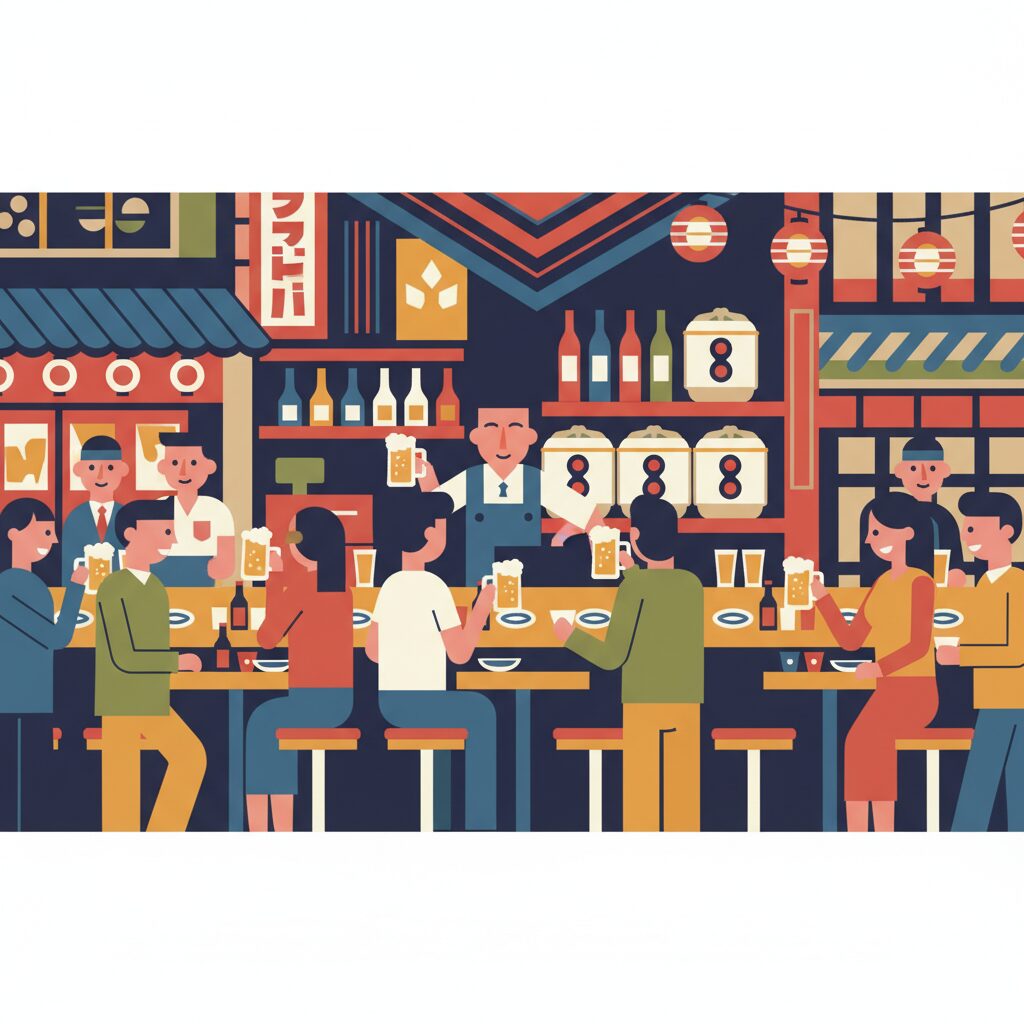
So you’ve moved to Osaka. You’ve navigated the ward office, figured out the maddeningly complex trash separation schedule, and even learned which side of the escalator to stand on (the right, always the right). You’re settling in. But then a quiet Saturday night rolls around, and a familiar silence creeps in. The city is buzzing outside your window, a symphony of bicycle bells, train announcements, and distant laughter, yet your own social circle feels… well, small. You’ve heard the cliché a thousand times: “Osaka people are so friendly!” But friendliness doesn’t automatically translate into friends. It’s easy to feel like you’re watching a great party from across the street, unsure how to get past the doorman. How do you bridge the gap between polite nods with your neighbors and genuine, spontaneous human connection? The answer isn’t in a language exchange cafe or a formal international meetup. It’s standing under a set of train tracks, nursing a 300-yen highball, elbow-to-elbow with a construction worker and an office clerk. Welcome to the world of tachinomi, Osaka’s standing bars. These are not just places to grab a cheap drink; they are the city’s pulsating social heart, the unofficial community centers where the true character of Osaka reveals itself, one frothy beer at a time. Forget everything you think you know about Japanese social etiquette. Here, the rules are different, the conversations are direct, and the barriers to entry are as low as the prices on the menu. This is your crash course in the sociology of the standing bar, the key to unlocking the city’s real social code.
To build on this introduction, newcomers can benefit from exploring Osaka tachinomi etiquette to better understand the social cues that make these bars so uniquely inviting.
The Unspoken Rules of the Standing Counter
Your first time visiting a tachinomi can feel intimidating. The space is cramped, the menus are handwritten scribbles on the wall, and the regulars all appear to know each other. It’s like stepping into a private club. Yet the secret is that anyone willing to hold their ground and order a drink is welcome. The whole system is founded on a philosophy of beautiful, efficient simplicity, a concept Osakans call sakutto. It’s a culture that removes formalities and gets straight to the point.
More Than Just Cheap Drinks: The Philosophy of “Sakutto”
In Tokyo, going out for drinks often means a commitment. You make a reservation, sit at a table, and settle in for the evening. In Osaka, the guiding principle is often sakutto nomu, or “to have a quick drink.” A tachinomi is a spot you pop into on your way home from work. You’re not planning your entire night around it; it’s a brief stop. You stand, have one or two drinks, maybe a plate of doteyaki (beef sinew stewed in miso), and leave in thirty or forty minutes. This low-commitment approach is refreshing for newcomers. There’s no pressure to perform or keep up sparkling conversation for hours. You’re simply sharing a small moment in time and space with the people around you. This attitude reflects Osaka’s merchant spirit. Time is money, as is social energy. Why waste either on elaborate rituals when you can achieve the same result—a moment of relaxation and connection—with maximum efficiency? This isn’t rudeness; it’s a deeply cultural respect for everyone’s time. The bar serves good, cheap food and drinks, and you, the customer, enjoy them and move on, making room for the next guest. It’s a perfect, unwritten agreement.
The Counter is a Conversation Starter, Not a Barrier
At a typical sit-down izakaya, people tend to isolate themselves at their tables, creating invisible barriers around their groups. The layout of a tachinomi is fundamentally different. Usually, there’s just one long counter, a shared plank of wood where everyone stands shoulder to shoulder. Your personal space shrinks to the width of your shoulders. This isn’t a design flaw; it’s the entire point. The close proximity intentionally breaks down social barriers. You can’t help but overhear the conversation next to you. You can’t help but notice what the person to your left is eating. And in Osaka, noticing is an invitation to comment. The classic icebreaker is a question posed to no one in particular: “Sore, nani? Oishisou ya na.” (What’s that? Looks tasty.) Suddenly, you’re no longer a stranger. You become part of a city-wide conversation about what’s good to eat and drink. In Tokyo, starting a conversation with a stranger at a bar often draws a nervous glance or a polite but firm turn away. It can feel intrusive. In an Osaka tachinomi, keeping to yourself can feel like the stranger. The shared counter is a stage where everyone is implicitly invited to join in.
Why “Friendly” is the Wrong Word for Osaka
Tourist brochures often describe Osaka as “friendly.” It’s a simple and easy-to-grasp word, but also somewhat lazy. It doesn’t capture the texture, rhythm, and history behind how people in Osaka interact socially. The behavior you see in a tachinomi isn’t driven by a boundless, unconditional love for humanity. It’s something more nuanced, more intriguing, and much more pragmatic. It’s the result of a city built on trade, banter, and a solid dose of practicality. To truly understand the tachinomi, you need to realize that you’re not just making friends; you’re engaging in a social marketplace.
From Merchant City to Social Marketplace
For centuries, Osaka was tenka no daidokoro—the nation’s kitchen. It was a city of merchants, not samurai. Status wasn’t about lineage but about your ability to close deals, read a room, and connect with a stranger within minutes. Survival relied on quick, effective communication. You had to be direct, have a sense of humor, and not be overly concerned with formalities. This history is woven into the city’s DNA. What’s called “friendliness” is actually a highly refined social skill. It’s a pragmatic openness, a readiness to engage because connection is currency. The tachinomi is the modern-day marketplace. The goods traded aren’t rice or textiles, but stories, jokes, and information. The old man next to you isn’t just being nosy when he asks where you’re from; he’s initiating a transaction. He offers local knowledge—the best ramen shop nearby, a gripe about the Hanshin Tigers—and you return the favor with a piece of your story. This rapid exchange builds a temporary, but genuine, sense of community.
The Art of the “Tsukkomi”: Joking Your Way into a Conversation
One of the biggest culture shocks for foreigners in Osaka is the communication style. It’s a world apart from the subtle, indirect speech common elsewhere in Japan. Osakan conversation is a full-contact sport, and its trademark move is the tsukkomi. This is the role of the straight man in a comedy duo, who points out the absurdity of what the other (boke) just said. In daily life, it shows up as playful teasing or light criticism. If you order a beer and fumble with your change, someone might chime in, “Niichan, daijoubu ka?” (You alright there, buddy?). This isn’t an insult. It’s a conversational hook. They’re gently teasing you, inviting you to join in. A foreigner might mistake this for rudeness or aggression, but it’s actually affection—a sign that they see you not as a fragile outsider but as one of them, someone who can take a joke. The proper response isn’t to get offended, but to laugh and respond playfully. Mastering this rhythm is essential to understanding Osaka. The tachinomi is the ideal training ground, a dojo for social banter where the stakes are low and the reward is a shared laugh with a new acquaintance.
A Practical Guide to Your First Tachinomi Adventure
Theory is one thing, but jumping into the action is another. The charm of the tachinomi lies in its accessibility. You don’t need a special invite or deep knowledge of Japanese culture. All it takes is a bit of courage and a few hundred yen in your pocket. Understanding the basic rules can help ease your entry and transform a potentially awkward moment into a memorable experience.
Finding Your Spot: From Gritty Showa-era Joints to Modern Stand-ups
Tachinomi vary widely, each with its own distinct vibe. Beneath the train tracks in neighborhoods like Kyobashi or Tenma, you’ll find classic Showa-era spots. These places tend to be dimly lit, somewhat grimy, and filled with the tasty scent of grilled food and lingering cigarette smoke. The crowd is usually older—men in work uniforms grabbing a drink before heading home. These are the pure, unfiltered heart of tachinomi culture. On the other hand, you have the newer, stylish standing bars in areas like Umeda or Fukushima. These often focus on craft beer, natural wine, or Italian-style small plates. They’re brighter, cleaner, and attract a younger, more mixed crowd, including more women and couples. Don’t let the modern look fool you; the social dynamic often remains the same. Your choice depends on your mood. Are you after a raw, old-school Osaka experience, or a slightly polished but equally social outing? The city offers a standing bar for every preference.
The Transaction: How to Order and Pay
The payment process is a crucial part of the tachinomi’s streamlined system. Many spots use a cash-on-delivery method, known as kyasshu on. You put your money in a small tray on the counter, and when you order, the staff takes the correct amount and hands you your drink and change. It’s genius—no waiting for a bill, no hassle splitting checks. Each exchange is quick and straightforward. Other bars run a tab, keeping track of your orders on paper or mentally by the bar master. When you’re ready to go, just say, “Okanjo, onegaishimasu” (Check, please). When ordering, keep it simple and clear. Pointing works just fine. A loud, confident “Nama hitotsu!” (One draft beer!) or “Kore, kudasai” (This one, please) does the trick. Overly formal Japanese (keigo) can feel out of place here. Gauge the atmosphere. The language is as direct and unpretentious as the surroundings.
Breaking the Ice Without Being Awkward
So, you’re standing at the counter, drink in hand. What next? The key is to relax and maintain an open posture. Don’t bury yourself in your phone. Look around. Catch the bartender’s eye and give a nod. If someone nearby orders something that looks interesting, a simple comment is your best approach. “Sore, oishisou desu ne. Nan desu ka?” (That looks delicious. What is it?). This low-risk move often leads to a friendly explanation, and maybe even a small taste offer. Remember, people here don’t expect you to master Japanese etiquette. They’re often more curious about you than you are about them. Being a foreigner is an instant conversation starter. Be ready for the usual questions: “Where are you from?” “How long have you been in Japan?” “Can you use chopsticks?” Smile and feel free to ask questions in return. The golden rule of tachinomi is to stay open to the moment. Conversations, like drinks, are meant to be enjoyed and then let go. Don’t try to force a lifelong friendship—just aim for a pleasant ten-minute chat.
The Real Takeaway: Community in a Glass
After a few visits, it becomes clear. A tachinomi is not just a bar. It’s a living, breathing entity. It serves as the city’s circulatory system, where people from all backgrounds flow in and out, sharing a common space for brief moments. It’s a daily ritual that strengthens the social fabric of the neighborhood. For newcomers to Osaka, trying to navigate its lively and often inscrutable culture, the standing bar is a grounding point. It’s a dependable spot to find a friendly face, practice your Japanese without fear of judgment, and feel, even if only for half an hour, like you belong to something. You’ll learn more about the real Osaka by hearing the rants of an old baseball fan at a tachinomi in Tenma than any guidebook can offer. You’ll grasp the city’s obsession with value by watching an office worker carefully select the most cost-effective combination of food and drink. And you’ll experience the city’s warmth not in a polished, formal setting, but in the genuine, spontaneous kindness of a stranger sliding a dish of edamame your way and saying, “Kore, tabe.” (Here, eat this). So next time you feel lost in this magnificent, chaotic city, don’t stay inside. Find the nearest red lantern, push aside the plastic curtain, and take your spot at the counter. Order a highball, and simply wait. You’re not just going for a drink. You’re attending class. This is Osaka 101, and the lesson shows how a city of millions can feel like a village, all through the simple magic of drinking while standing.