
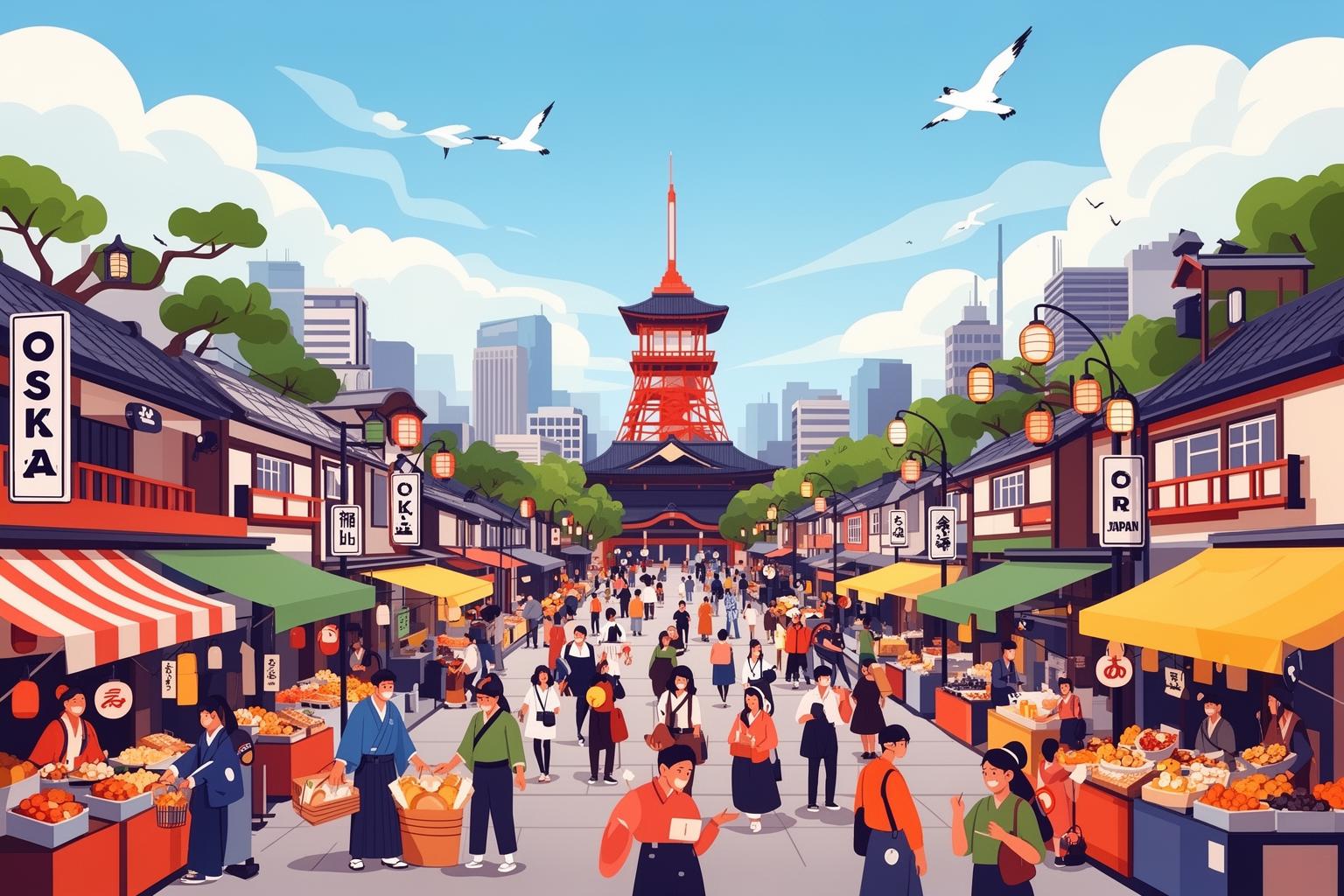
Walk through Osaka for more than a day, and you’ll feel it. It’s not just the neon glare of Dotonbori or the sheer density of people in Umeda. It’s a certain frequency, an energetic hum that runs under the city’s concrete skin. You’ll hear it in the gravelly laugh of a takoyaki vendor, see it in the swift, no-nonsense gestures of a shopkeeper, and feel it in the direct, almost shockingly personal questions a stranger might ask you on the subway. The first time it happened to me, I was caught completely off guard. A woman about my mother’s age, standing next to me in a crowded supermarket aisle, tapped my arm, pointed at the brand of soy sauce in my basket and said, with zero preamble, “Ah, that one’s too salty. This one over here is cheaper and much better for stir-fry.” In Tokyo, this kind of unsolicited advice would be a social anomaly. In Osaka, it’s just Tuesday.
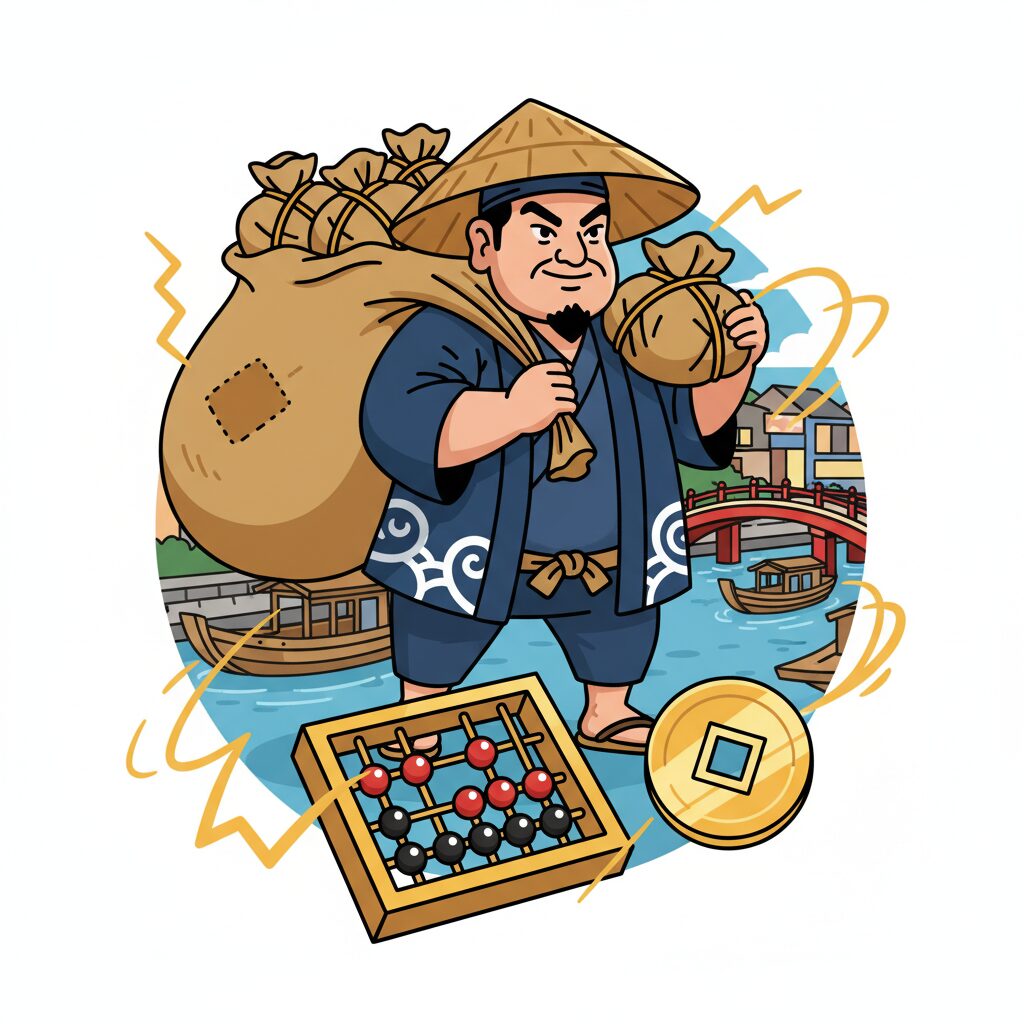
To understand this city, to truly live here and not just exist in it, you have to forget the standard Japan guidebook narrative of reserved politeness and quiet harmony. Osaka doesn’t run on the silent, stoic code of the samurai that subtly informs so much of Tokyo’s social etiquette. This city was built by merchants. Its lifeblood is commerce, its language is the deal, and its core philosophy is that of the ‘Akindo’ (商人) – the merchant, the trader, the entrepreneur. This Akindo spirit is the master key that unlocks everything about daily life here: the way people talk, the way they build relationships, and the very rhythm of the streets. It’s a mindset rooted in pragmatism, a deep understanding of human nature, and the belief that a good relationship is the most valuable currency of all. This isn’t just about business; it’s a worldview that shapes every interaction, turning the entire city into a dynamic, human-powered marketplace. Forget what you think you know about Japan; Osaka plays by its own rules, and they’re written in the ledger of the Akindo.
Osaka’s vibrant blend of commerce and character is further illuminated by the daily habits of its influential local matriarchs who quietly shape the city’s unique social codes.
More Than a Merchant: Decoding the Akindo Mindset
So, what exactly does ‘Akindo’ mean? Literally, it translates to ‘merchant,’ but that term hardly captures its full significance. In Osaka, ‘Akindo’ represents a cultural archetype, a historical identity ingrained in the city’s very essence. For centuries, while Edo (modern-day Tokyo) was the center of the shogun’s political power, marked by rigid hierarchies and samurai bureaucracy, Osaka was known as the ‘Tenka no Daidokoro’ – the Nation’s Kitchen. It served as Japan’s commercial hub, a vast distribution center where rice, sake, and goods from every corner of the country were collected, stored, and traded. This was not a city of warriors; it was a city of wholesalers, brokers, and shopkeepers. Their success relied not on loyalty to a lord or swordsmanship but on their intelligence, people-reading skills, negotiation prowess, and reputation.
This history shaped a fundamentally different value system. While the samurai code emphasized honor, duty, and stoicism, the Akindo code valued rationality, adaptability, and profit—not only financial gain but also the benefit of strong relationships, good reputation, and long-term security. An Akindo is intensely pragmatic. Waste—whether of money, time, or opportunity—is the greatest sin. This efficiency-driven attitude explains why communication in Osaka can feel so straightforward. There’s little patience for the intricate, multi-layered dance of ‘tatemae’ (public face) and ‘honne’ (true feelings) that often defines exchanges in other parts of Japan. An Osaka merchant needs to know quickly if you intend to buy, what the issue is, and how to resolve it. This legacy remains vibrant today. It’s reflected in the rapid-fire speech, the expectation of clear ‘yes’ or ‘no’ answers, and the belief that being direct is a sign of respect rather than rudeness. It’s a culture that prioritizes clever results over perfect processes.
The Art of the Haggle: A Conversation Disguised as a Transaction
Nothing captures the Akindo spirit quite like the culture of bargaining, or ‘negiri’ (値切り). For many foreigners—and even for many Japanese from other regions—the idea of haggling in a country as famously polite and price-fixed as Japan can seem intimidating, if not downright offensive. However, in Osaka, in the right setting, it’s not only accepted but expected as a part of the social fabric. It is a performance, a game, and an essential form of communication.
The Stage and the Players: Where and When to Engage
First, let’s be clear. You don’t stroll into a Takashimaya department store or a Uniqlo and start negotiating the price of a sweater. You don’t attempt to get a discount at a 7-Eleven. Bargaining is reserved for particular venues: the sprawling covered shopping arcades known as ‘shotengai,’ independent electronics shops in places such as Den Den Town, and flea markets. These are places where the owner is often the person behind the counter. You’re not dealing with a corporate employee reading from a script; you’re engaging with a fellow Akindo, an individual whose livelihood depends on their skill in this very interaction.
Reading the room is the crucial first step. Look for handwritten price signs, a slightly chaotic display of goods, and an owner who is actively interacting with customers. The key is the human element. Your goal when haggling isn’t to disrespect their business but to open a channel of communication with them as a person. The classic opening line, delivered with a smile, is a friendly “Chotto makete?” (“Can you give a little discount?”). It’s casual, non-confrontational, and signals your willingness to engage in the ritual.
More Than Money: The Real Goal of ‘Negiri’
What newcomers often miss is that the primary aim of bargaining in Osaka is not to save a large sum of money. The true reward is the interaction itself. When you ask for a discount, you’re telling the shopkeeper several things: “I see you,” “I recognize your autonomy as the owner,” and “I’m a discerning customer who understands the local culture.” In response, the shopkeeper gets to perform their role. They might sigh theatrically, suck air through their teeth, and punch numbers into a large calculator. They might explain how thin their profit margins are. This is all part of the act.
When they offer you a small discount—perhaps rounding down the price or including a small extra item (‘omake’)—they’re closing the loop. They have demonstrated their skill, authority, and generosity. You, in turn, have shown your appreciation. A successful haggle creates a brief, shared bond. It’s a moment of playful conflict and resolution. Both parties walk away feeling a little wiser and more connected. That sense of connection is the true ‘profit.’ It’s why a shop owner might give a regular customer a better price without being asked. They aren’t merely selling a product; they are nurturing a relationship. This is the Akindo long game.
Calculated Kindness: The Pragmatic Logic of Osaka Friendliness
Osaka is known nationwide for being friendly, open, and humorous. However, it’s important to understand the reasoning behind this friendliness. It is not some abstract, altruistic kindness. Rather, it is largely a logical extension of the Akindo mindset—a form of social investment that yields returns.
The ‘Ame-chan’ and the Impact of Small Gestures
There’s a common joke that every older woman in Osaka, or ‘obachan,’ carries candy in her purse to offer to strangers. This candy is called ‘ame-chan’ (the ‘-chan’ suffix adds a note of affection). While it may seem like a stereotype, it reflects a genuine social practice. Offering candy to a stranger exemplifies the Akindo philosophy at its core. A piece of candy costs very little, but by giving it, the obachan breaks down social barriers. She instantly creates a small connection, turning a stranger into a brief acquaintance. This can ease the discomfort of a crowded train ride, spark a friendly conversation, or earn a small favor later. It’s a low-cost, high-return investment in social capital.
This idea applies broadly. The chef who adds a little extra appetizer, the bartender who remembers your name and favorite drink, the shop clerk who tells a joke—they are all engaging in this practice. They are cultivating goodwill. In a city built on reputation and repeat business, every positive interaction is a deposit in the bank of social trust. This is why conversations with Osakans can feel so personal so quickly. They are gathering information, seeking a point of connection, and building rapport. It’s a deliberate friendliness, but that does not make it any less sincere.
The Strength of Bluntness: Direct Communication as a Service
For those used to the subtlety of typical Japanese communication, this can be a major culture shock. An Osakan will tell you exactly what they think. If your shirt looks washed out, they’ll say so. If your business idea has flaws, they’ll point them out. From a Tokyo viewpoint, this might seem rude. But from an Akindo perspective, it’s a form of service. Why would they allow you to waste money on something unsuitable? Why let you waste time on a flawed plan? Keeping a practical, honest opinion to oneself is considered unkind and inefficient.
This directness cuts through ambiguity. In both business and everyday life, it saves time and avoids misunderstandings. There’s a strong belief that clear, even harsh, truth is more valuable than polite fiction. This attitude extends to humor as well. Osaka’s comedy is renowned throughout Japan—fast, witty, and often self-deprecating. Humor acts as the ultimate social lubricant. It alleviates tension, builds rapport, and makes even blunt criticism easier to accept. A well-timed joke can close deals or make new friends. It’s another tool in the Akindo toolbox, used to navigate the complex terrain of human relationships with effectiveness and style.
The City as a Network: Thriving in Your Local Ecosystem

In Osaka, your daily life is far from being an anonymous passage through a concrete jungle. Instead, it involves finding your place within a network of overlapping local ecosystems, each operating like a small marketplace. Your neighborhood, favorite shotengai, and everyday train station are all territories where your reputation and relationships carry weight.
The Power of Being a ‘Kao-najimi’
A key concept in Japan is ‘kao-najimi,’ meaning a familiar face or regular customer. In Osaka, becoming a ‘kao-najimi’ brings tangible benefits. It embodies the Akindo principle of customer loyalty in practice. When you become a regular at the local butcher, you’re more than just a transaction—you’re part of their business ecosystem. They’ll recognize you, greet you by name, and might reserve an especially good cut of meat or offer cooking tips. The vegetable vendor might toss in an extra onion, and the owner of the local izakaya will know your story and introduce you to other regulars.
This is not merely about receiving free extras; it’s about becoming woven into the fabric of the community, gaining a sense of belonging and security. In a city of millions, you are recognized. This status is earned through consistency and active participation—you have to show up, engage in small talk, and support local businesses. In return, the community invests in you. This reciprocal relationship forms the foundation of neighborhood life in Osaka, turning simple acts like grocery shopping into ongoing affirmations of community bonds.
Inside vs. Outside: Becoming Part of the ‘Uchi’
This community-centered lifestyle also highlights another aspect of the Osaka mindset: a sharp division between ‘uchi’ (inside/us) and ‘soto’ (outside/them). People in Osaka demonstrate fierce loyalty to their local sports teams, neighborhoods, and city. While this may sometimes seem cliquey, it reflects a strong preference for trusted relationships. To an Akindo, the familiar is always preferable to the unknown. They are warm and welcoming, but you must make the effort to move from ‘soto’ to ‘uchi.’
How can you do this? By participating—by becoming that ‘kao-najimi,’ learning the names of local shopkeepers, attempting a few words of the distinctive, lively Osaka dialect, and sharing in the humor without fear of making some jokes yourself. When you show a willingness to engage on their terms and play by Akindo rules, the doors open wide. The initial bluntness and spirited energy might feel like a test to see if you belong. Pass it, and you will find unparalleled warmth, loyalty, and community support.
Living the Akindo Life
Living in Osaka means adjusting your social instincts. It means recognizing that a loud conversation signals engagement, not anger. It means viewing a discount not as merely a financial gain, but as a social one. It means appreciating that direct advice is a gift of efficiency, and that a piece of candy from a stranger is an initial move in a game of connection. Life here is a constant negotiation, an ongoing series of small, human-scale exchanges that form the foundation of community.
In contrast to the polished, predictable order of Tokyo, Osaka can seem messy, loud, and wonderfully unpredictable. It’s a city that invites participation rather than passive observation. It requires a certain level of social energy but rewards you far more in return. My advice to anyone moving here is simple: lean in. Explore the local shotengai instead of the large supermarkets. Find a favorite coffee shop and become a regular. Don’t hesitate to ask for a small discount on a vintage jacket. Laugh heartily. Accept the ‘ame-chan.’ Release the need for polite distance and embrace the beautiful, practical, and deeply human logic of the Akindo. Once you unlock that code, you’ll realize you’re not just living in a city; you’re part of a vibrant, living marketplace of relationships, and that is truly a priceless place to be.








