
You see them everywhere in Osaka. Long, covered corridors cutting through residential blocks, a chaotic symphony of colorful signs, dangling banners, and the hum of a thousand daily errands. They’re called shotengai—shopping arcades. If you’ve just arrived from Tokyo, you might dismiss them as relics, gritty and worn-down cousins of the gleaming, sterile underground malls you’re used to. You might walk through one, notice the mix of dusty old shops and bright new drugstores, and think you understand it. You’d be wrong. In most of Japan, the shotengai is a fading memory, a nostalgic symbol of a bygone era. But in Osaka, it is the city’s circulatory system. It’s the messy, vibrant, and fiercely beating heart of local life. These are not just places to buy groceries; they are the stages where the daily drama of Osaka culture unfolds. They are the concrete rivers that carry the flow of community, commerce, and connection through the city’s neighborhoods. To understand Osaka, you must understand its shotengai.
To fully grasp how diverse urban experiences shape Osaka’s vibrant identity, consider exploring the cultural contrast between Kita and Minami for further insights into the city’s unique neighborhoods.
The Shotengai as a Social Thermostat
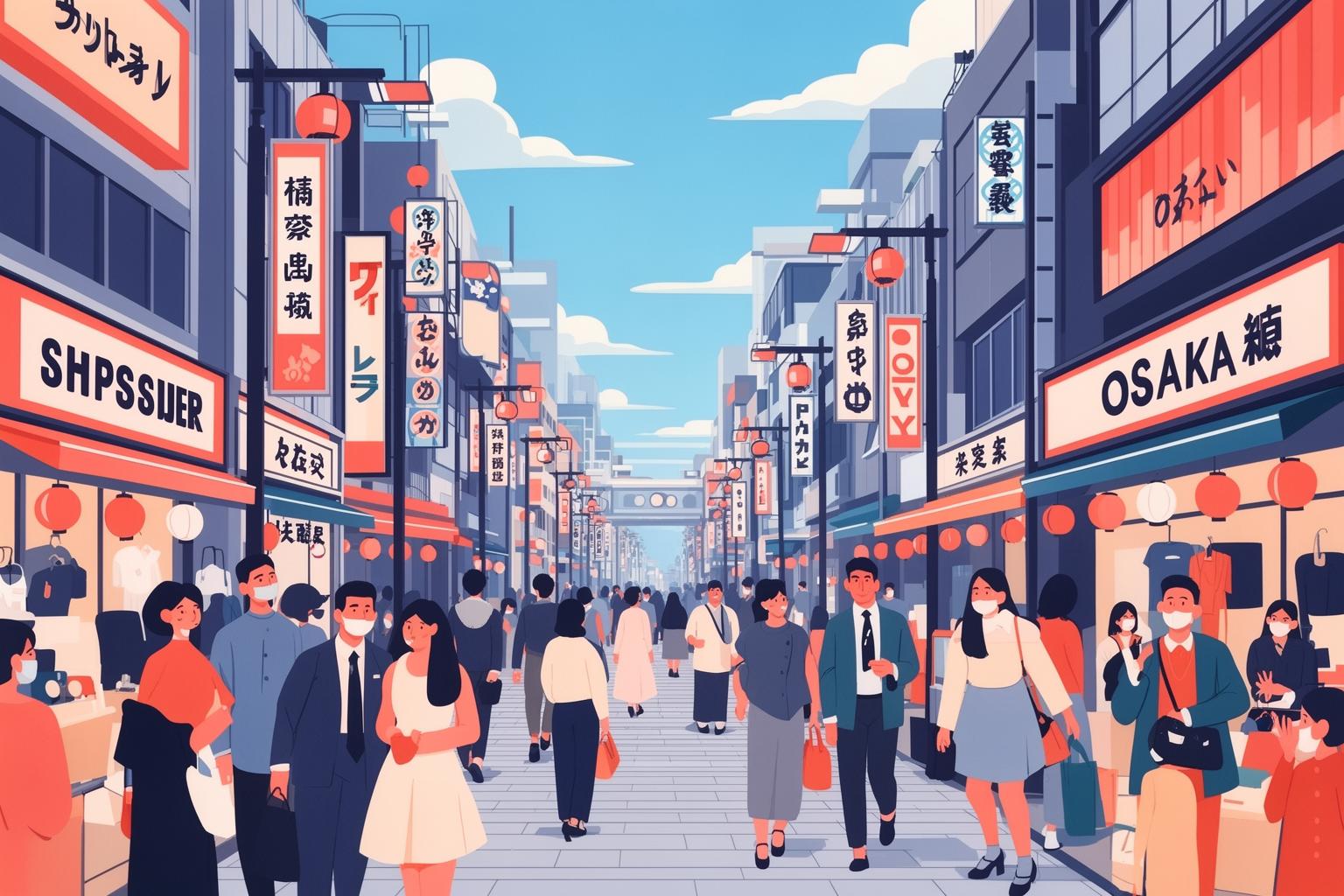
Step into a major supermarket in Tokyo, and you’re welcomed by a polite, pre-recorded message. The experience is designed to maximize efficiency and minimize human interaction. You pick up your items, pay at a self-checkout, and leave. The entire process could take place without saying a single word. Now, enter a shotengai in the Tenma or Namba districts of Osaka. What strikes you first isn’t the sight, but the sound. It’s a wall of layered, organic noise. There’s the gravelly-voiced butcher shouting about his specials on korokke. There’s the high-pitched call of the fruit vendor, “Yasui de! Oishii de!” (“It’s cheap! It’s delicious!”). There’s the ongoing chatter of neighbors who have run into each other, the squeak of bicycle brakes, children laughing on their way home from school, and the clatter of a shop’s metal shutter being raised or lowered. This isn’t mere background noise; it’s the neighborhood’s vital signs, broadcast live. The shotengai functions as a social thermostat. You can sense the community’s energy simply by walking through it. You know when it’s a busy shopping day, a local festival is near, or a quiet, rainy afternoon has set in. The arcade pulses with the rhythm of the people who inhabit it. This represents a fundamental difference in urban philosophy. The Tokyo model emphasizes smooth, anonymous convenience. The Osaka model, as embodied by the shotengai, emphasizes visible, audible, and tangible human connection. Here, you are not merely a consumer completing a transaction. You are a participant in a communal space. The elderly woman selling pickles isn’t just a vendor; she’s a neighborhood watch post. She knows who is new to the area, whose children are ill, and who is going through a difficult time. Her casual questions are not just small talk; they are a form of community care, gently weaving the social safety net, one pickled radish at a time.
The Unspoken Language of Commerce
In Osaka, commerce takes the form of a conversation rather than a command. The interactions within the shotengai are guided by a set of unwritten rules and rituals that reflect the city’s merchant spirit. Foreigners often overlook these subtleties, seeing only the buying and selling. Yet the true transaction is relational, conducted in a language that extends far beyond yen.
“Maido!” – More Than Just a Greeting
As you stroll through the arcade and catch the eye of a shopkeeper, you’ll hear a quick, cheerful call: “Maido!” On the surface, it means something like “Welcome!” or “Thanks for your business!” But it carries much deeper meaning. The word is a shortened form of “maido arigatou gozaimasu,” which translates to “Thank you for your patronage each and every time.” It acknowledges an ongoing relationship. It’s not a greeting for a first-time, anonymous visitor. It’s a verbal handshake among regulars, community members, the people who make up the backbone of the business. When a shopkeeper says “Maido!” to you, they are essentially saying, “I see you. I recognize you. You belong here.” This small, two-syllable word affirms your place within the neighborhood ecosystem. The banter that often follows is another important element. An Osakan might playfully grumble about the price of mackerel, and the fishmonger will respond with a theatrical sigh about his own rising costs. This isn’t a real dispute. It’s a performance, a social lubricant. It transforms a simple purchase into a shared human moment. This playful, direct, and occasionally argumentative style of communication is quintessentially Osaka. It’s worlds apart from the reserved, formal politeness you would find in a Kyoto market or a Tokyo department store.
The “Omake” Culture: The Art of the Little Extra
Another cornerstone of shotengai commerce is the culture of omake, the practice of adding a little something extra for free. This aspect of Osaka life is often misunderstood by outsiders. An omake is not a calculated discount nor part of a “buy ten, get one free” deal. It is a spontaneous, personal gesture of goodwill. You buy a bag of oranges, and as the vendor rings you up, he tosses in one more. “Kore, omake,” he says with a nod. “This one’s extra.” It might be slightly bruised or misshapen, but it’s still a perfectly good orange. What just happened? He didn’t simply give you an extra piece of fruit. He strengthened a bond. He communicated that your loyalty is worth more than the 100 yen the orange is priced at. It’s a gesture that says, “We’re in this together.” This practice stems from a merchant’s practical mindset—better to give away a slightly imperfect item to a loyal customer than to let it go to waste—but it has grown into a fundamental aspect of the social economy. It fosters relationships in a way that loyalty points and digital coupons never could. In Tokyo, where precision and adhering strictly to the price are paramount, the system is rigid. You receive exactly what you pay for. In Osaka’s shotengai, you often receive just a little bit more, and that little bit makes all the difference.
A Living Museum of Osaka’s Practicality
The physical look of a shotengai directly mirrors Osaka’s core values: pragmatism, functionality, and a total absence of pretense. These spaces exude a raw, unrefined energy that can feel overwhelming if you’re used to the carefully curated aesthetics of other Japanese cities.
Function Over Form: The Beauty of “As Is”
Kyoto is a city of refined elegance, where every detail is deliberate. Tokyo showcases sleek, futuristic design. Osaka simply wants to get things done. This mindset is evident throughout the shotengai. The architecture is a chaotic mix of different eras: a pre-war wooden storefront might be nestled between a concrete building from the 70s and a modern drugstore with a glaringly bright facade. The signage isn’t sophisticated; it’s loud, designed to catch your eye and deliver one clear message: we have what you need, and it’s a great deal. There’s no emphasis on a unified color scheme or minimalist design principles. Instead, there’s the boisterous, competitive noise of commerce. Goods aren’t displayed artfully; they’re piled high, spilling onto the walkway, daring you to look away. Locals don’t see this as messy or unattractive; they view it as energetic and plentiful—visual proof of a bustling marketplace. This “as is” aesthetic is a powerful cultural statement: the quality and price of the product matter most, not fancy packaging or designer storefronts. It’s an honest, stripped-down approach to life, quintessentially Osaka.
The Entrepreneurial Spirit in Miniature
Every stall in the shotengai reflects Osaka’s legacy as a city of merchants and entrepreneurs. These aren’t impersonal franchises; they’re predominantly small, family-run businesses, often handed down through generations. The owner is the one behind the counter, trimming fish, arranging vegetables, and welcoming customers. This creates a deep sense of accountability and pride. It also makes the shotengai a lively incubator for new ideas. The entry barrier is much lower than in high-rent commercial districts. A young entrepreneur can rent an affordable, compact space to open a specialty coffee roaster, a vegan deli, or a handmade accessories shop. They can test their business concept with a steady stream of local foot traffic. This enables the shotengai to evolve. It’s not merely a place for traditional businesses but a space where old and new coexist, producing a vibrant, eclectic mix. You’ll find a century-old seaweed shop sitting comfortably beside a trendy bubble tea stand. This blend of tradition and innovation, fueled by a gritty, independent spirit, is what keeps the shotengai thriving.
Navigating the Social Maze: A Guide for the Outsider
For a non-Japanese resident, the shotengai can feel both warmly inviting and somewhat intimidating. The social customs differ, and the straightforwardness of Osaka locals can be easily misunderstood. However, understanding this unwritten code is essential to truly feeling at home in the city.
Misunderstanding the “Nosiness”
One of the first things you’ll notice as a foreigner is the curiosity of the shopkeepers. They will ask you questions like, “Where are you from?” “How long have you been in Japan?” “What do you do for work?” “Are you married?” To a Westerner, this may come across as an interrogation or an invasion of privacy. But it’s important to recognize the intention behind these questions. This isn’t nosiness for gossip’s sake; it’s an effort to place you within the community’s social map. In a relationship-focused culture, knowing who you are is the first step toward building a connection. They are seeking common ground and trying to understand your context so they can engage with you appropriately. It’s their way of saying, “You’re in our space, and we want to get to know you.” It’s an inclusive gesture, even if it feels blunt. The best response is openness combined with a sense of humor. Answer their questions, then return one: “How has business been today?” This simple exchange can instantly turn the interaction from an interview into a conversation.
Breaking the Barrier: How to Become a “Regular”
Strolling through a shotengai is one thing; becoming part of it is another. Moving from an anonymous shopper to a “regular” (jouren-san) is a rewarding experience that reveals a deeper layer of life in Osaka. The key is straightforward: consistency and engagement. Select a few shops for your everyday or weekly needs—a tofu shop, a butcher, a greengrocer—and stick to those. Initially, you’ll just be another customer, but after several visits, the owner will begin to recognize you. This is your cue to engage: make eye contact, greet them with a cheerful “Konnichiwa” upon arrival, and express a sincere “Ookini!” (Osaka dialect for “Thank you!”) when you leave. Comment on the weather or ask what’s fresh today. These small, repeated interactions form the foundation of your shotengai relationship. Before long, the tofu maker will start setting aside your usual firm tofu without being asked, the butcher might offer your dog a little scrap of meat, and the fruit vendor may share tips on picking the sweetest melon. That’s when you realize you’ve truly arrived: no longer just a customer, but a neighbor who has found your place in the community’s daily rhythm.
The Future of the Past: Are Shotengai Dying?
The challenges facing shotengai throughout Japan are impossible to overlook. The growth of large, convenient supermarkets and online shopping, along with an aging population of both shopkeepers and customers, has caused many arcades to decline. In numerous regional towns, you can find “shutter-gai,” where more than half the shops remain permanently closed. However, while Osaka is not exempt from these pressures, its shotengai have shown remarkable resilience. Why? Because their role has always been as much social as commercial. A supermarket can efficiently sell you a carrot, but it cannot provide a space for elderly residents to meet and chat, for children to play safely, or for new businesses to find a supportive community. Osaka’s shotengai are evolving to survive. A new generation of owners is taking over their parents’ businesses, refurbishing storefronts, and using social media to attract younger customers. Community associations organize events like night markets, beer festivals, and art installations to bring people into the arcade. Immigrant communities are revitalizing older arcades by opening restaurants and grocery stores that reflect their cultures, further enriching the neighborhood’s diversity. The shotengai is not a static relic; it is a living entity, continuously adapting to the needs of the community it serves. Its survival relies not on competing with big-box stores on price, but on focusing on what it does best: fostering human connection.
Why It All Matters: Shotengai as the DNA of Osaka
Ultimately, the shotengai represents a microcosm of everything that defines Osaka’s uniqueness. It is the tangible expression of the city’s spirit. It reflects the Osakan preference for practicality over polish, straightforward communication over subtle formality, and strong community connections over anonymous individualism. It’s a place where the city’s renowned friendliness and humor are more than just stereotypes—they are part of everyday life. Living in Osaka without embracing the local shotengai is like trying to understand a river by merely looking at a map. You miss the current, the vitality, the ever-changing flow of it all. The true education in Osaka culture doesn’t come from a museum or language class. It happens over a counter at a butcher shop, when you share a laugh with the vegetable vendor about the unpredictable weather, or when the bakery owner knows your name and asks how your week has been. Here, you stop being a foreigner just residing in a city and start becoming a resident who belongs to a neighborhood. So, set aside the tourist spots for a moment. Discover your local shotengai. Walk its length. Listen to its sounds. Choose a shop, buy something small, and try a simple “Maido!”. It’s in that small, simple exchange that you’ll find the genuine, pulsating heart of Osaka.