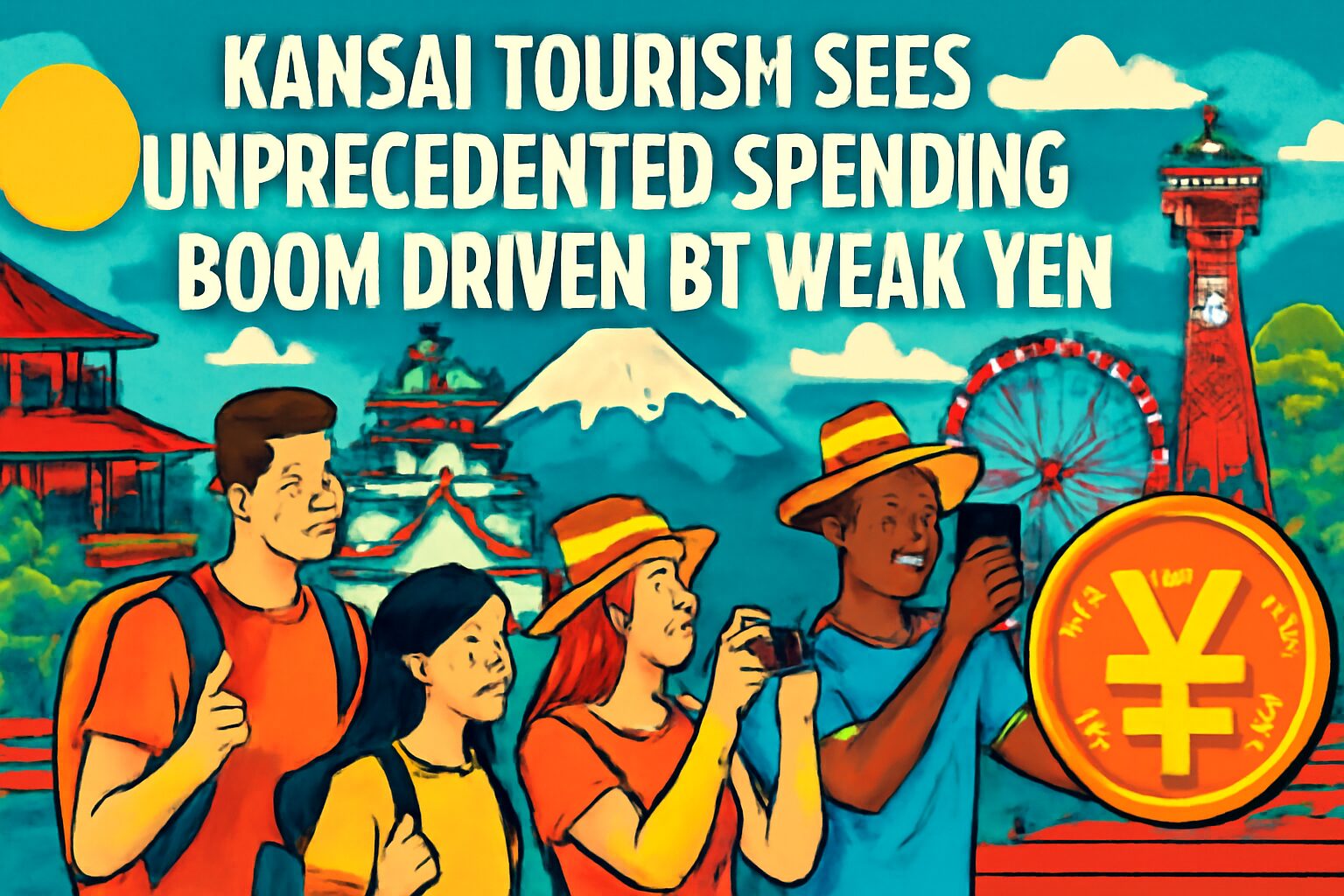
A Historic Surge in the First Half of 2026
The Kansai region is currently experiencing an unprecedented economic renaissance, with tourist spending in the first half of this year completely shattering pre-pandemic records. Preliminary estimates indicate that total spending by foreign tourists in the Kansai region for the first quarter of 2026 alone reached approximately 580 billion yen. This represents a staggering 30 percent increase from the 450 billion yen recorded during the same period in 2019, which was previously considered the peak benchmark for inbound tourism. As we reach the end of June, the momentum from this historic surge shows no signs of slowing down, injecting vital capital directly into the local market.
The Weak Yen and Evolving Purchasing Power
The primary catalyst for this phenomenal spending boom is the exceptionally favorable exchange rate. With the Japanese yen continuing its sustained weakness, the purchasing power of international visitors has increased dramatically. This financial advantage is doing much more than merely increasing the sheer volume of tourists; it is fundamentally altering consumer behavior.
While traditional shopping sprees for electronics and cosmetics remain highly popular, today’s travelers are leveraging their stronger currencies to indulge in premium, experience-based activities. Known as “koto-shohi” or experience consumption, this trend sees visitors allocating larger portions of their budgets to private traditional craft workshops, exclusive dining at Michelin-starred restaurants, and luxury ryokan stays. Furthermore, the retail sector is reaping massive benefits, with regional department store sales in prime Osaka districts like Umeda and Namba recently crossing the monumental milestone of 1 trillion yen.
The Post-Expo 2025 Legacy
Another major contributing factor to this year’s economic boom is the continued global interest following last year’s Osaka-Kansai Expo. The 2025 mega-event served as a powerful global advertisement for the region, attracting millions of international attendees who spent heavily across Kansai during the event’s six-month run.
Rather than experiencing a post-event slump, the region has successfully converted that international attention into a lasting legacy of tangible economic benefits. The Expo essentially reintroduced the cultural and modern appeal of Osaka and the surrounding prefectures to a new generation of high-value travelers. Many who visited for the Expo have either returned this year or heavily recommended the region to others, ensuring sustained foot traffic across Kansai well into 2026.
Future Outlook and Regional Impact
Looking ahead, the economic forecast for the Osaka-Kansai tourism sector remains overwhelmingly positive, though it requires careful navigation. The influx of capital is proving to be an essential economic pillar, especially as traditional manufacturing and export sectors face broader global uncertainties.
The continued transition from volume-based tourism to value-based experiences offers a pathway to sustained economic health for local businesses. As visitors continue to seek out premium, intangible experiences, the economic impact is expected to spread outward from the immediate Osaka city center. Regional destinations such as Nara, Wakayama, and rural Kyoto are perfectly positioned to benefit from travelers looking for deeper, specialized cultural engagement. For the remainder of 2026 and beyond, the focus for the local tourism industry will be on maintaining this high-value momentum while fostering sustainable travel practices that mutually benefit international visitors and local communities alike.