So you’ve settled into Osaka. You’ve mastered the subway maze at Umeda, you have a favorite takoyaki stand in Namba, and the non-stop, electric hum of the city is the soundtrack to your life. You love it. The raw energy, the straightforward people, the feeling that something is always happening. But then Saturday morning hits. The sensory input from the week has piled up, and you find yourself craving something… else. A different speed. A bit of space. A clean, crisp breath of air. In Tokyo, this feeling might trigger a complicated, multi-hour train journey to Hakone or Kamakura. In Osaka, the solution is simpler. It’s a 30-minute train ride away. It’s called Kobe.
For anyone living in Osaka, Kobe isn’t a tourist destination. It’s an extension of the weekend. It’s the city’s stylish, slightly more reserved neighbor, the one with the ocean view and the mountain backdrop. Going to Kobe for the day isn’t about ticking off sights from a guidebook—it’s about a deliberate, tactical shift in atmosphere. It’s how Osakans recalibrate. Understanding why and how they use Kobe as their weekend escape hatch tells you more about the Osakan mindset than a dozen nights out in Shinsaibashi. This isn’t a guide to what to do in Kobe. This is a guide to what Kobe means to Osaka, and what that reveals about the rhythm of life in Kansai.
When Kobe’s calm charm gives way to a craving for Osaka’s unbridled energy, you might uncover even more of the city’s vibrant pulse by exploring its distinctive tachinomi bars.
The 30-Minute Attitude Adjustment: Kansai’s Commuter Escapism

Not a Trip, Just a Train Ride
First, you need to understand the geography of the mind here. For someone living in Osaka, traveling to Kobe, Kyoto, or Nara is not considered a “trip.” It’s barely an outing. It’s a commute. From major hubs like Osaka Umeda or Osaka Namba, you can board a Hankyu, Hanshin, or JR line and be in the heart of Kobe’s Sannomiya station in about half an hour for the price of a fancy coffee. There’s no detailed planning or scrutinizing timetables. It’s a spontaneous choice, often made with a simple message: “Kobe for lunch?”
This highlights a fundamental difference between daily life in Kansai and the Kanto region. Leaving Tokyo’s 23 wards often feels like a major undertaking, crossing invisible borders into another world. The journey itself is an event. In Kansai, the cities blend into one another, forming a sprawling urban ecosystem with unique personalities. Living in Osaka means having three world-class cities as your neighbors. This fluidity influences the local mindset. Life isn’t restricted to one city’s boundaries. The Osakan weekend is flexible, easily extending into neighboring prefectures. This accessibility encourages a casual, almost carefree attitude toward inter-city travel. It’s less about escaping your city and more about choosing which urban vibe you want to embrace for a few hours.
Why Bother Leaving Osaka?
The question then arises: with everything Osaka offers, why leave at all? The answer is vibe—pure and simple. Osaka runs at an unceasing pace. It’s a city of business, constant movement, deals being made, and food sizzling. The streets buzz with bicycle bells, shop announcements, and the rumble of trains overhead. It’s exhilarating but can also be exhausting. Kobe provides the perfect counterbalance. The moment you step out of Sannomiya Station, you feel it. The streets are wider. The buildings are less densely packed. You can see the green of the Rokko mountain range looming behind the city and, if you head south, smell the salt air from the sea. It’s a city designed with a bit more space to breathe.
For Osakans, this doesn’t mean their city is lacking—in fact, quite the opposite. It’s an acknowledgment that different moods call for different environments. They love the chaos of their hometown—the gritty charm of Shinsekai, the endless consumerism in Shinsaibashi—but they also deeply appreciate its contrast. A trip to Kobe is a deliberate act of slowing down, trading neon-lit canyons for open skies and waterfront strolls. It exposes a duality in the Osakan character often overlooked. They aren’t just loud, humorous, and food-obsessed; they are also skilled at curating their environment and know exactly where to go to find a moment of calm.
Kitano’s Foreign Accent: Osaka’s Version of “Fancy”
The Ijinkan Illusion
A brief stroll north from Sannomiya station brings you to the Kitano-cho neighborhood, renowned for its well-preserved 19th-century Western-style mansions, known as “Ijinkan.” For tourists, it’s a historical attraction, offering insight into Kobe’s past as a port city open to foreign trade. For an Osakan, however, it holds a different significance. It’s a stage set. It’s the preferred spot for a particular kind of experience that feels distinctly unlike typical Osaka. This is where you go for a “proper” date—the kind that doesn’t involve standing and eating takoyaki. This is where you bring a visiting parent to show a touch of sophistication. Here, you find quiet, elegant cafes with garden seating, worlds apart from the cramped, efficient coffee shops beneath Umeda.
For Osakans, the interaction with Kitano is less about absorbing history and more about embracing an atmosphere. The cobblestone streets and charming old houses create the ideal setting for a relaxed, refined afternoon. It embodies a particular style of “fancy” that is aspirational yet approachable. This is where you can present a quieter, more polished version of yourself. It stands in contrast to the usual Osakan social vibe, which tends to be lively, direct, and centered around shared laughter in a packed izakaya. In Kitano, conversations are softer, the pace slows down, and the focus shifts to aesthetics. It’s a social code-switching, and Osakans are skilled at playing that part.
What It Says About Osaka’s Style
This intentional change of scene also highlights local attitudes toward style. Osaka fashion is known for being bold, expressive, and trend-focused. It can be loud, colorful, and unapologetic. Kobe, in contrast, carries a reputation for a more understated, elegant, and classic aesthetic often described as “kirei-me” (clean and pretty). When Osakans spend the day in Kitano, you often notice a subtle alteration in their wardrobe. The look is a bit more polished, less street-style, a touch more refined.
This isn’t about abandoning their identity; it’s about embracing a different one, if only for a day. It dispels the one-dimensional stereotype of the leopard-print-loving Osakan. That image has its basis, but it’s just one aspect of a multifaceted identity. People in Osaka have a sharp awareness of time and place. They know that the outfit that suits a night of bar-hopping in Namba isn’t the same that fits the mood of a quiet afternoon tea in a historic mansion. Their use of Kobe as a stylistic playground reveals a sophisticated understanding of context. They don’t just visit Kobe to see something different; they go to be someone different, if only briefly.
The Harborland Exhale: Trading Rivers for the Open Sea
A Breath of Fresh Air
Osaka is a city defined by its rivers. The Dotonbori canal serves as its vibrant, neon-lit core, a concrete channel bustling with boats, tourists, and the Glico Running Man. It’s iconic, yet distinctly urban—water harnessed, controlled, and showcased as a commercial centerpiece. Now, compare that to Kobe’s waterfront. Heading south from the station, you reach Meriken Park and Harborland, a vast, open area that meets the actual sea. Here, the water isn’t a canal; it’s a gateway to the wider world. The view isn’t of buildings across a riverbank; it’s of the horizon, of massive container ships sailing by, and the Akashi Kaikyo Bridge standing tall in the distance.
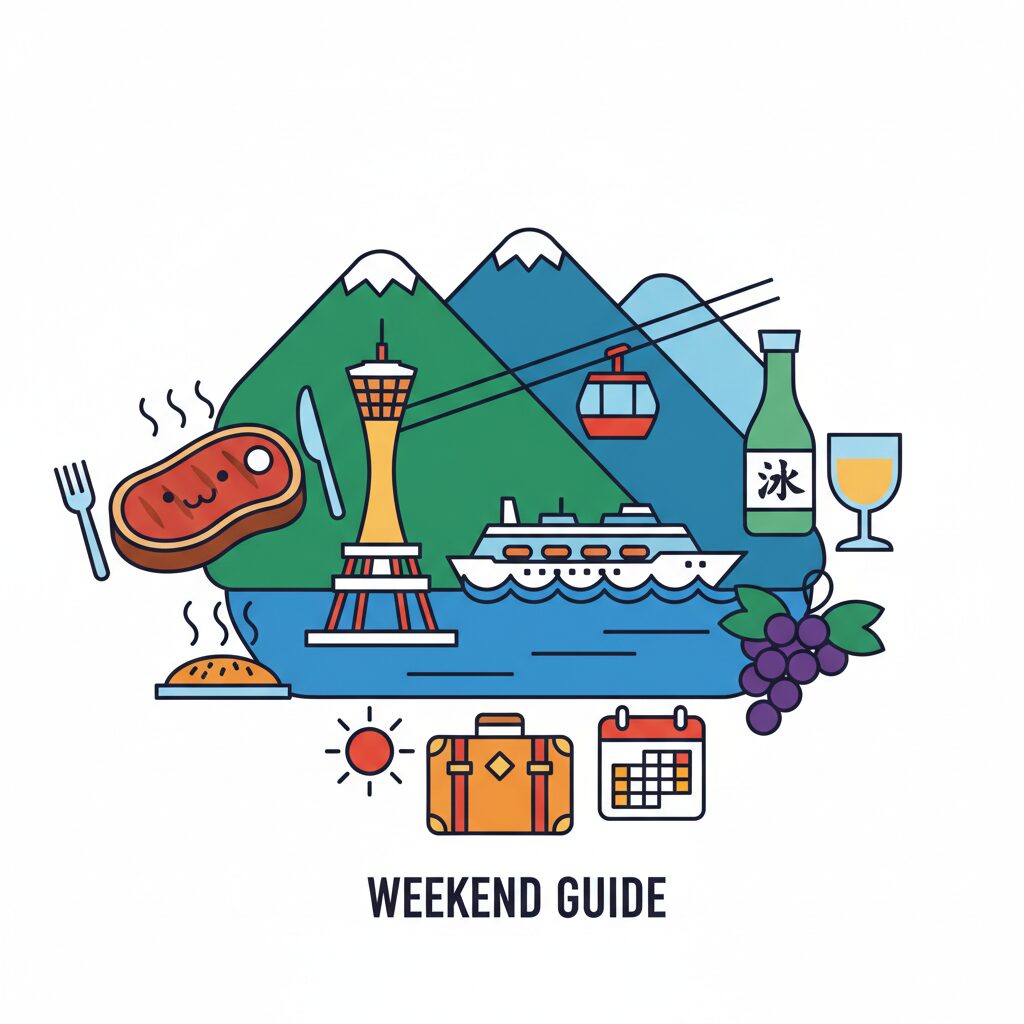
For those living in Osaka’s dense, tightly packed urban core, this space provides a physical and mental release. It’s a deep breath out. The constant pressure of city life seems to fade with the sea breeze. The iconic red Kobe Port Tower and the futuristic, white-lattice Maritime Museum mark the skyline, but they aren’t the focal point. The main attraction is the space itself—the vast, open sky, the sensation of standing at the edge of the land. Daily life in Osaka is often vertical—residing in high-rises, working in skyscrapers, shopping in multi-story department stores. Kobe’s harbor offers a reminder of the horizontal, of the expansive, flat ocean. It’s a profound shift in perspective that resonates deeply.
Practicality on the Pier
Yet, even in this tranquil, spacious environment, the quintessential Osakan spirit never fully vanishes—it simply adapts. They’re not there just to gaze wistfully at the sea for hours. Reflection quickly leads to action. Next to Meriken Park is Harborland, home to the sprawling Umie shopping mall. An Osakan might admire a stunning sunset over the water, then promptly head into the mall to browse sales at Uniqlo or Muji. The appreciation for beauty is genuine, but so is the pursuit of a good bargain.
Just a short walk from the pristine waterfront lies Nankinmachi, Kobe’s lively Chinatown. The contrast is striking and delightful. One moment you’re in a peaceful, modern park; the next, you’re amid a bustling street filled with the sizzle of hot plates and steam rising from bamboo steamers. This is the Osakan sweet spot: blending elevated aesthetic experiences (the beautiful harbor) with grounded, practical pleasures (delicious, affordable street food). It’s an efficient enjoyment. Why settle for one kind of fun when you can have two or three, all within walking distance? A day in Kobe for an Osakan is often a perfectly balanced mix of the scenic and the pragmatic.
The Real Kobe Meal: Thinking Beyond the Steakhouse

Chinatown’s Street Food Symphony
Ask any tourist what to eat in Kobe, and they’ll mention one thing: Kobe beef. They’ll patiently queue at a famous teppanyaki restaurant for a meal that costs more than a week’s groceries. Ask an Osakan where they eat in Kobe, and you’ll get a very different response. More often than not, they’re heading straight to Nankinmachi. Why? Because it captures the essence of the Osakan food philosophy: variety, energy, and incredible value.
Kobe’s Chinatown is a whirlwind of sensory delights. It’s loud, crowded, and unapologetically focused on feeding as many people as possible, as deliciously as possible. You can wander from stall to stall, grabbing a giant, fluffy butaman (pork bun), a few savory yaki shoronpo (pan-fried soup dumplings), or a sweet, crispy sesame ball. The whole experience is lively and social. You eat while standing, walking, and deciding what to try next. This is “kui-daore”—the Osakan principle of eating until you drop—in its purest form. It’s not about a single, expensive, sit-down meal. It’s about a dynamic, continuous feast that’s fun, communal, and, most importantly, easy on the wallet.
The Bakery and Cafe Culture
Beyond the vibrant chaos of Chinatown, there’s another culinary scene that draws Osakans to Kobe: its bakeries. Kobe has long been renowned for producing some of the best bread and pastries in Japan, a legacy rooted in its history as an international port. An Osakan might make a special trip just to visit a legendary bakery like Isuzu Bakery or S. Koyama and stock up on shokupan (fluffy white bread), curry pan, and delicate cakes.
This may seem like a small detail, but it speaks volumes. It demonstrates an appreciation for craftsmanship and quality—for “honmono,” the genuine article. While they might scoff at paying a premium for the “Kobe beef” brand, which they see as mainly for tourists, they’ll gladly spend on a perfectly crafted pastry. It’s a different kind of luxury. It’s not about ostentation; it’s about a small, personal, and genuinely delicious pleasure. Grabbing coffee and a pastry from a famous Kobe bakery is a common, affordable ritual that adds a touch of sophistication to a day out. It’s the Osakan way of savoring the finer things in life—smartly, and without unnecessary hype.
What Kobe Teaches You About Osaka
An Appreciation for Contrast
A weekend trip to Kobe offers a perfect perspective on what it truly means to live in Osaka. It reveals that the Osakan identity is not uniform. Rather, it’s a rich tapestry woven from a passion for vibrant urban energy alongside a deep appreciation for its calm counterpart. To live authentically as an Osakan is to embrace the noise, the crowds, and the beautiful, functional chaos of the city, while also knowing exactly which train to take to find the peace and quiet needed to recharge. Kobe doesn’t betray Osaka; it’s an essential part of its ecosystem— the tranquil garden beside the roaring factory.
The Kansai Ecosystem
This dynamic underscores the key advantage Kansai life holds over Tokyo living. Your day-to-day existence isn’t restricted to a single metropolitan area but spread across a connected network of cities, each with its own unique character and role. Your job and lively nights might be centered in Osaka. Your calm strolls and chic cafe visits happen in Kobe. Your moments of historical and spiritual reflection take place in Kyoto or Nara. This ease of moving between these worlds regularly enriches life, making it more diverse and balanced. You are not merely an Osaka resident; you are a Kansai citizen.
The True Meaning of “Practical”
Ultimately, Kobe shows that the famed Osakan pragmatism is more nuanced than simple frugality. It’s about extracting maximum value in every form. It’s about attaining the highest return on investments of time, money, and energy. A day trip to Kobe exemplifies a quintessential Osakan trade-off. For just a few hundred yen and half an hour of travel, you gain a complete change of scenery, a mental refresh, a walk by the sea, and access to excellent food that stays budget-friendly. It’s the pinnacle of life efficiency—not a rejection of sophistication or beauty, but a way to access them on your own terms: smartly, efficiently, and with a delicious pork bun in hand.