
Walk down any shotengai, any narrow alley tucked beside a train line in Osaka, and you’ll hear it. A rising tide of laughter, the clatter of plates, the sharp hiss of a draft beer tap. You’ll smell grilled skewers and savory stew. And if you peek through the fogged-up glass or the parted noren curtain, you’ll see it: a room packed shoulder-to-shoulder with people standing, drinking, and talking. This is the tachinomi, the standing bar, and it is the beating heart of Osaka’s social life. For a foreigner, it can look like an impenetrable fortress of local custom. It’s loud, it’s crowded, and there are no instructions. It feels a world away from the quiet, orderly Japan you might have read about. The question that hangs in the air, thick as the cigarette smoke, is not just what is this place, but how do I get in? How do I go from being an outsider peering through the window to an insider sharing a laugh at the counter? Forget what you think you know about Japanese reserve. Here, in the cramped, chaotic, and utterly brilliant world of the tachinomi, you’ll find the true spirit of Osaka. It’s not just a place to get a cheap drink; it’s a classroom for understanding how this city works, how its people connect, and why it feels so fundamentally different from anywhere else in Japan. This isn’t about a fleeting tourist experience; it’s about finding your footing in the real, everyday rhythm of the city.
For travelers seeking to dive deeper into Osaka’s unconventional social rituals, learning how Ame-chan functions as an icebreaker offers a refreshing perspective on local interactions.
Why Tachinomi? The Soul of Osaka’s Social Scene
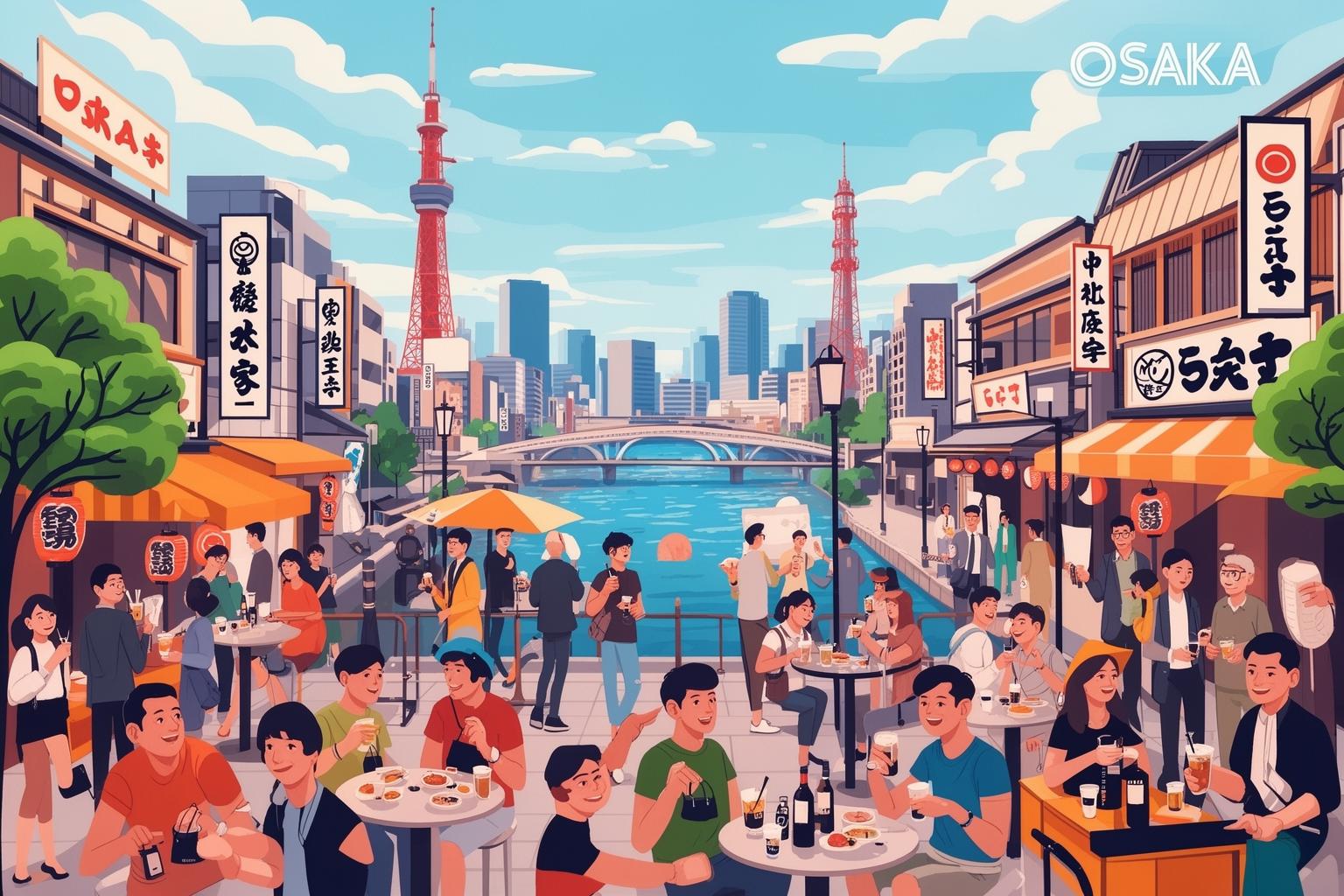
Before you can make friends in a tachinomi, you first need to understand why it exists. It’s more than just a bar without chairs. It’s a concept, a social innovation refined over decades to match the city’s character. It’s intentionally designed for quick, fluid, and effortless human interaction. The entire system rests on the principles of speed, value, and community—three pillars that shape much of life in this merchant city.
More Than Just a Bar: It’s a Social Hub
A tachinomi is what sociologists call a “third place,” a setting that’s neither work nor home, where community is formed. But in Osaka, it’s a third place on fast-forward. The absence of seating isn’t a flaw; it’s a feature. It promotes turnover. People drop in for a quick beer and a skewer on their way home. They linger for twenty minutes, maybe an hour. This transient flow is the key. It means the social dynamics of the room are always shifting. There’s no pressure to settle for the night, no obligation. This greatly lowers the social barrier to entry. You can slip into a spot at the counter, have a drink, and slip back out without any hassle.
This sharply contrasts with Tokyo. While Tokyo has many tachinomi, they often feel more utilitarian. They serve as efficient refueling stops for a city in constant motion. A salaryman might grab a solitary drink to decompress before the long train ride home. The atmosphere tends to be quieter, more focused on the individual experience. In Osaka, the purpose is explicitly social. The aim is not just to drink, but to converse, laugh, and engage. The noise level is a key sign. An Osaka tachinomi buzzes with conversation—the sound of a city connecting with itself. It’s the neighborhood’s shared living room, a place where the boundaries between strangers fade with every new order.
The Economics of Standing
At its heart, the tachinomi is a symbol of accessibility. By removing chairs and fancy service, owners save on space and labor, passing those savings directly to customers. A draft beer might cost just a few hundred yen. A plate of doteyaki—tender beef tendon stewed in sweet miso—is similarly affordable. This accessibility is essential. It democratizes the experience. You’ll find construction workers in their gear standing beside office clerks in suits, next to young couples enjoying a night out. Class and status seem to vanish at the counter.
The act of standing itself acts as a great equalizer. Without tables to create physical and social barriers, everyone shares the same polished wooden counter. You are, by nature, close to the person next to you. This physical closeness fosters a psychological connection. You can overhear your neighbor’s conversation, see what they ordered, and smell the delicious food they’re enjoying. The setting is designed to encourage interaction. You’re not isolated at a private table; you’re part of a temporary, standing community, all sharing the same small space for a brief moment in time.
The Unspoken Rules of the Standing Bar
For a newcomer, the biggest challenge is the sense that everyone else knows a secret code of rules. And in a way, they do. However, these rules are less about strict etiquette and more about a shared understanding of how to make the space work for everyone. Mastering this social choreography is your key to unlocking the tachinomi experience.
Entering the Arena: How to Walk In
The first step is the toughest. You’re outside, looking in at the warm, lively scene. It’s intimidating. The key is to project quiet confidence. Don’t linger outside staring—that marks you as a hesitant tourist. Take a quick glance inside. Is there a small gap at the counter? Even a tiny one will do. The crowd shifts, and gaps open and close regularly.
Once you spot an opening, step in. Your first point of contact should be the staff, the taisho (master) or okami-san (matron) behind the counter. Catch their eye. A simple nod and a questioning look, or a soft “Ii desu ka?” (Is it okay?), is all you need. They’ll either signal you to the spot or let you know if it’s full. The important thing is to act with intention. Slide into your spot smoothly. Don’t push or shove. People will naturally make a little room for you. This is the first test: showing that you understand the delicate dance of shared space.
Ordering and Etiquette
Tachinomi spots are designed for speed. Menus are often just strips of paper pasted on the wall, written in beautiful but often inscrutable Japanese. Don’t panic. Start simple. Make eye contact with the staff and say, “Nama, hitotsu.” (One draft beer.) It’s the universal starter. For food, notice what your neighbors are eating. If it looks tempting, you can simply point and say, “Are, kudasai.” (That one, please.)
Many traditional tachinomi run on a cash-on-delivery system. You’ll see a small tray or bowl in front of you. Place a thousand-yen bill in it. When you order, the staff takes the money for your drink from the tray and returns the change. It’s a wonderfully efficient system that avoids the hassle of splitting bills or waiting for a check. Just be sure to bring cash; many old-school places don’t accept credit cards.
Your spot at the counter is valuable. Be considerate. Keep your bag on a hook beneath the counter if there is one, or small and tucked between your feet. Don’t spread your arms or take up more space than necessary. Think of yourself as a single, vertical unit. Sharing this space with awareness shows respect that other patrons will notice and appreciate.
The Art of the Invisible Boundary
Even in a packed bar, people form invisible social pods. A group of three friends will angle slightly toward each other. A solo drinker will be squared to the counter, focused on their drink or the small TV that’s inevitably showing a Hanshin Tigers baseball game. Your job is to observe these invisible lines. You’re not trying to crash a party; you’re looking for an opening, a seam between groups.
The most approachable people are often other solo drinkers or pairs facing forward, toward the bar, rather than inward at each other. Their posture is open. They belong to the general ambiance of the room, not locked in a private world. These are your best chances to spark a spontaneous conversation.
From Stranger to Neighbor: How Conversations Actually Start
This is the part that intimidates many foreigners: initiating contact. You might assume fluent Japanese and a clever opening line are necessary. They’re not. In an Osaka tachinomi, conversation naturally arises from the setting. It springs up spontaneously, often from the simplest observations.
The Opener: Simpler Than You Imagine
Forget about diving into philosophy or politics. The essence of the tachinomi is small talk. The easiest way to start is by commenting on something immediate and shared. Food is the perfect icebreaker. Lean toward your neighbor and, with a curious smile, ask about their dish: “Sore, nan desu ka? Oishii?” (What is that? Is it good?). More often than not, they’ll gladly explain it, offer you a taste, or even help you order one for yourself.
The television is another dependable spark. If a baseball game is on, a groan when the home team makes a mistake or a cheer when they score creates an instant bond. You’re sharing the experience. You can turn to your neighbor and say, “Dame ya na…” (They’re no good, huh…), and a conversation begins.
Often, you don’t even need to start it. The staff act as conductors of this social orchestra. The taisho might notice you and ask, “Onii-san, doko kara?” (Brother, where are you from?). This question isn’t just for you; it signals the entire bar. It announces your presence and invites everyone to be curious about you. Suddenly, the man to your left might join in, sharing he once visited your country, or the woman to your right might inquire about your impression of Osaka.
The Osaka Mindset: Curiosity Over Reserve
This marks a key difference between Osaka and other parts of Japan. Whereas Tokyo politeness often translates to respectful distance, Osaka friendliness is an active, engaging curiosity. People are genuinely interested in who you are and your story. They aren’t being nosy; they’re being welcoming. In a Tokyo bar, starting a chat with a stranger can sometimes feel intrusive. In Osaka, it’s just a typical Tuesday night.
This is where understanding local humor becomes important. Osaka’s communication style is known for boke (the funny fool) and tsukkomi (the sharp retort). You’ll see this dynamic in miniature at the tachinomi. Someone might make a playful joke at your expense or tease your drink choice. This isn’t an insult; it’s a sign of affection and an invitation to join the conversation. A common mistake among foreigners is taking this banter too seriously. If someone teases you and you can laugh along, you’ve passed a crucial social test. Responding with a lighthearted “Nande ya nen!” (What the heck!) will earn you immediate respect.
The “Ame-chan” Principle in Practice
There’s a well-known stereotype of middle-aged Osaka women always carrying ame-chan (candy) in their purses to offer others. While somewhat cliché, it points to a deeper truth about the city’s culture: a readiness to share small things to create brief moments of connection. The tachinomi works on this same principle. People share space, conversations, and sometimes even food. It’s about building a temporary community through small gestures. You’re not expected to become lifelong friends, but for the hour you stand at that counter, you are neighbors.
Navigating the Social Landscape: Do’s and Don’ts
Once you’re inside and a conversation gets going, there’s a certain rhythm to uphold. It’s about adding to the vibe, not taking control of it. Follow these straightforward tips, and you’ll be welcomed as a friendly presence, not an awkward outsider.
What Works: The Osakan Playbook
Above all, be a good listener. Osakans enjoy chatting, especially about their city. Ask for their recommendation on the best takoyaki. Request an explanation of a baseball rule. Invite them to teach you a word in the Osaka dialect. Genuine curiosity is your best asset.
Bring your sense of humor. The atmosphere in a tachinomi is lighthearted and cheerful. Don’t hesitate to laugh at yourself. If you fumble a Japanese word, make a joke about it. Self-deprecation is highly appreciated, showing you’re humble and comfortable enough to be playful.
If you’re engaged in a good conversation that’s lasting a while, consider a small act of generosity. When your neighbor’s glass is nearly empty, you can tell the staff, “Onaji no, kare ni.” (The same for him.) Buying someone a 300-yen drink is a small gesture with a big social impact. It’s a sign of camaraderie that will be remembered and likely reciprocated, either with a drink or continued friendliness.
The ultimate step is to become a regular. If you find a spot you enjoy, return. On your second visit, the taisho will likely greet you with a nod. Other regulars may also recognize you. By your third time, you become part of the place’s fabric. Real connections grow not from one memorable night, but through quiet, consistent presence.
What to Avoid: Common Foreigner Faux Pas
The most frequent mistake is misreading the pace. A tachinomi isn’t a place to linger for five hours. The business model and social understanding rely on turnover. Have a few drinks, enjoy some small plates, join the chat, then leave politely. Staying an hour or two is perfectly appropriate. Know when to say, “Ja, osaki ni.” (Well, I’m heading out.)
Match the room’s energy, don’t try to dominate it. The bar may be noisy, but it’s a collective, harmonious buzz. Avoid being the loud voice that drowns out everyone else. Be part of the chorus, not the soloist.
Always start with Japanese, even if it’s imperfect. Opening confidently with “Hello!” in English can sometimes make people defensive or pressured. A simple “Konnichiwa” and a few basic phrases show respect for the setting. If your conversation partner wants to practice English, they will indicate it.
Finally, remember this is their local place, not a tourist attraction. Be discreet with your phone and camera. The goal is to connect with the people around you, not to document them for social media. Be present. Be a participant, not just an observer.
Where to Go: Finding Your Tachinomi Spot
Osaka is home to thousands of standing bars, each offering its own distinct character. Rather than searching for a specific name, it’s better to get a feel for the vibe of the city’s vibrant tachinomi neighborhoods.
Tenma: The Labyrinth of Libations
The area surrounding Tenma Station is a sprawling, chaotic maze of covered shopping arcades and narrow alleys brimming with bars. The energy here is electric and somewhat overwhelming. You’ll come across everything from traditional kushi-katsu spots to modern standing wine bars. Tenma is ideal for bar-hopping, known as hashigo-zake. With so many options, you’re sure to find a place that fits your mood, but be ready for crowds, especially on weekends.
Kyobashi: The Salaryman’s Sanctuary
Located east of Osaka Castle, Kyobashi is a key transport hub with a rawer, more old-school atmosphere. The tachinomi here are classic, no-frills joints that have been serving workers for decades. The crowd tends to be older, and the vibe is genuinely authentic and unpretentious. For those seeking the purest, most traditional tachinomi experience, Kyobashi is the ideal destination.
Namba/Ura-Namba: The Modern Twist
While Namba is famous for its flashy tourist spots, the area behind the main streets, called Ura-Namba (Back-Namba), is a hub for a newer generation of tachinomi. These bars are often trendier, featuring creative food menus alongside craft beer and sake options. The crowd is younger, and the atmosphere is lively and modern. It’s a great spot for those who might find the old-school bars a bit daunting but still want to enjoy the energetic, communal Osaka vibe.
Beyond the Beer: What You Really Gain
Mastering the tachinomi is about more than just finding an inexpensive place to drink. It serves as a gateway into the essence of Osaka culture. You don’t form friendships in the Western way of exchanging numbers and arranging to meet again. Instead, you make “tachinomi friends”—people you share a laugh and conversation with for an hour, and whom you might encounter again the next time you visit. These are transient yet genuine moments of human connection.
Standing at the counter, you’ll hear the Osaka dialect in its natural environment. You’ll pick up the rhythm of local humor. You’ll discover what truly matters to people in this city, whether it’s the fate of their baseball team or the correct way to dip a skewer into the communal sauce pot (never double-dip!). You come to realize that Osaka’s famous “friendliness” is not the passive, polite smiling typical elsewhere. It’s an active, sometimes boisterous, and deeply human form of interaction. It’s an invitation to engage, to share a space, to be part of the lively atmosphere.
The tight, close quarters of the tachinomi create an intimacy that a spacious, quiet café never could. They break down the barriers we usually hold between ourselves and strangers. It’s in that crowded, chaotic, and wonderfully human crush that you stop being a foreigner merely observing Osaka and, for a brief, brilliant moment, start to truly feel like a part of it.