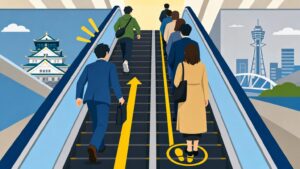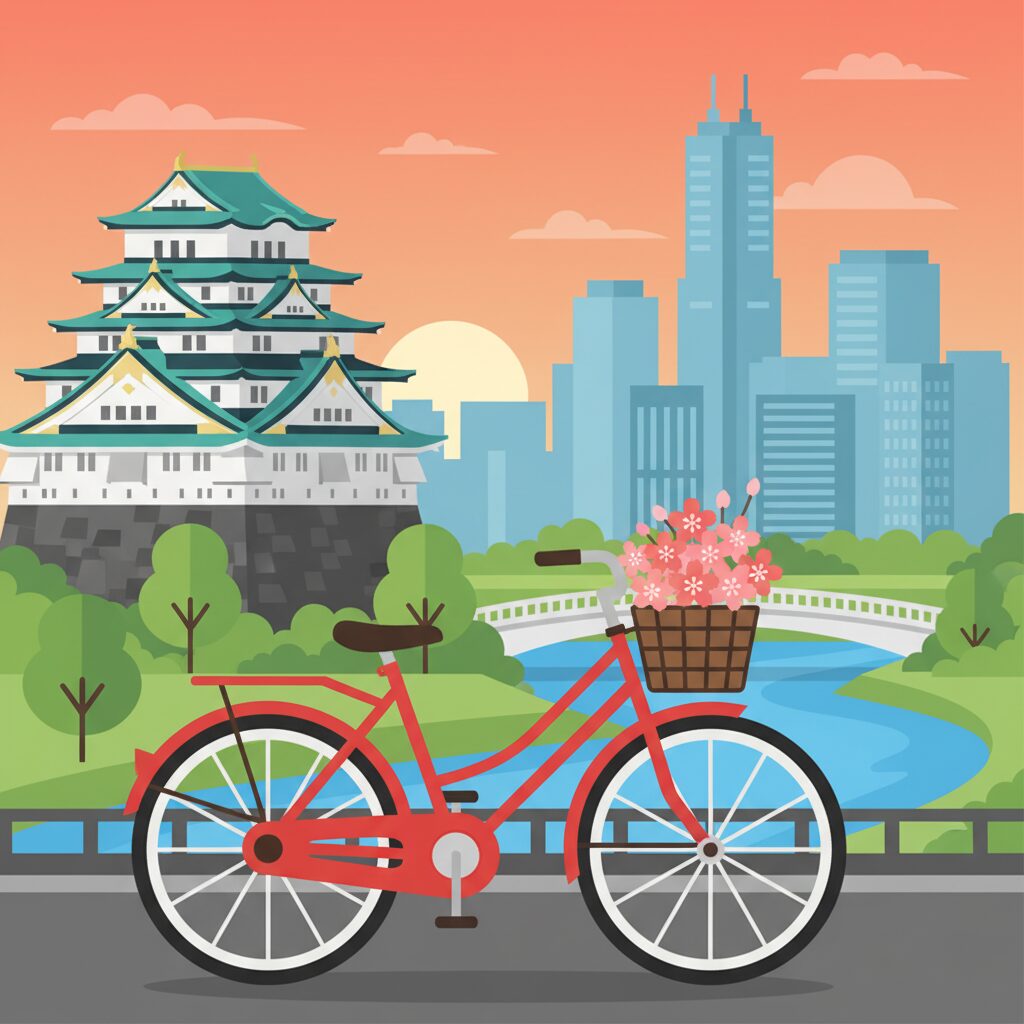
Walk out of any major train station in Osaka, from the dizzying labyrinth of Umeda to the electric pulse of Namba, and you’ll see them. Clustered in neat rows or sometimes scattered like metallic confetti, they stand waiting: fleets of identical bicycles, usually painted a bold, unmissable red. They are the city’s shared secret, the unsung heroes of the daily grind. For the newcomer, they might seem like a tourist novelty, a simple tool for a day of sightseeing. But for those of us who live here, who navigate the city’s arteries and veins every day, these rental bikes are something more. They are a key, a code, a rolling manifestation of the Osaka mindset itself. This isn’t just about getting from point A to point B; it’s about understanding the fundamental rhythm of a city that moves to a different beat. In Tokyo, your life is tethered to the train station. The Yamanote Line is your world, a steel loop that defines your neighborhood, your commute, your very identity. Osaka has a world-class subway system, to be sure, but its spirit isn’t confined to the underground tunnels. Its spirit lives on the surface, in the wide boulevards and the narrow shotengai, and the bicycle is your pass to access it all. It offers a different kind of freedom, one that is personal, immediate, and profoundly practical. To master the local bicycle rental system is to begin to think like an Osakan: to value efficiency over elegance, to find order in chaos, and to carve your own path through the magnificent, sprawling, human-scaled grid we call home.
Embracing Osaka’s dynamic rhythm on two wheels opens the door to other local adventures, such as delving into the city’s traditional market vibes in daily shotengai culture.
The Osaka Grid: Why Bicycles Just Make Sense
Flat City, Fast Life
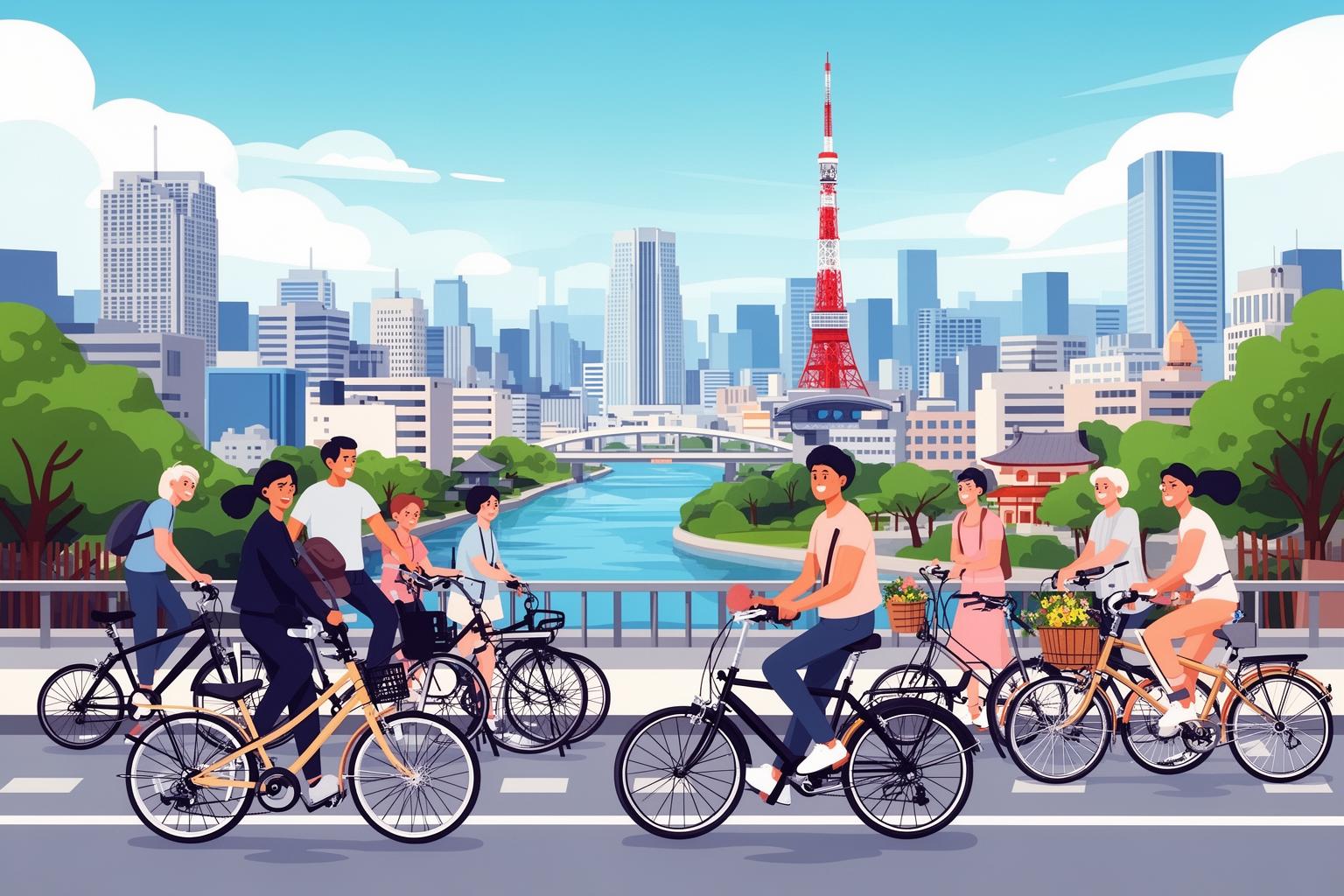
The first thing to grasp about Osaka is its topography. Except for a few gentle slopes on the city’s outskirts, central Osaka is beautifully, perfectly flat. This is no trivial detail; it forms the geographical basis for the city’s entire transportation mindset. Unlike the rolling hills in parts of Tokyo or the steep inclines of Kobe, Osaka offers no natural obstacles for two-wheeled travel. This simple reality elevates the bicycle from mere sports gear to the most practical option for short-distance transportation imaginable.
This geographical advantage addresses what urban planners call the “last mile” problem. Your apartment might be a twelve-minute walk from the nearest subway station. In the humid heat of August or the biting cold winds of January, that walk can feel endless. It’s the difference between deciding to go out and staying in. The rental bike removes this barrier. You step out of the station, unlock a bike with your phone, and smoothly coast to your front door in three minutes. This flawless shift from public to personal transport isn’t just convenient; it fundamentally changes how you relate to your neighborhood and the city. The city feels smaller, its various corners more reachable, and the friction of daily travel transforms into an effortless, breezy ride.
The Grid vs. The Sprawl
This ease of movement is enhanced by the city’s layout. While Tokyo can seem like an endless, organic sprawl linked by a complex network of train lines, central Osaka follows a relatively logical grid. The major north-south route of Midosuji Boulevard serves as the city’s spine, with other key streets running parallel and perpendicular. For a train rider, the city appears as a series of points on a map—Umeda, Shinsaibashi, Namba, Tennoji. But for a cyclist, the city is experienced as a unified whole. You’re not simply traveling between stations; you’re exploring the spaces in between.
This shapes an entirely different mental map. On a bike, you realize the trendy cafes of Nakazakicho are just a short ride from the bustling center of Umeda. You find you can cut through quiet residential streets in Fukushima to reach the vibrant riverbanks of Nakanoshima. This freedom to traverse the grid, instead of being limited to train lines, creates a sense of ownership over the entire city. It dissolves the station-based tribalism common in Tokyo. You don’t just identify with your station; you belong to Osaka—a fluid, interconnected landscape you can navigate at your own pace, on your own terms.
The Pragmatic Mindset: Choosing Your Wheels
It’s Not About the Brand, It’s About the Function
If you want to grasp the essence of Osaka, look no further than its bicycles. They aren’t sleek, carbon-fiber racing bikes, nor are they vintage-style cruisers made for Instagram. The typical shared bike—whether from HUBchari, PiPPA, or another service—stands as a symbol of pure, unfiltered function. These bikes are heavy, robust, and built to endure the demands of constant public use. The paint may be chipped and the basket slightly bent. Yet, no one minds. This is the principle of cospa (cost performance) in practice, a concept that is nearly a religion in Osaka.
In Tokyo, there is often more focus on appearance, branding, or having the newest model. In contrast, Osaka prioritizes value and practicality. Does it work well? Is it affordable? This pragmatic mindset is why the straightforward, no-frills bike-sharing model thrives here. Signing up via an app is simple, fast, and designed to get you on the road quickly. This approach also applies to privately owned bicycles. The most common sight on Osaka’s streets is the mamachari—the “mom’s bike”—a practical utility bike equipped with a basket, child seat, and frequently a powerful electric assist. You’ll see businesspeople in suits, students, and famously, the “Osaka Oba-chan” (middle-aged lady) expertly navigating crowded shopping arcades on her electric mamachari with fighter-pilot precision. Here, the bicycle is a tool, not a fashion statement. It solves a problem, and in Osaka, finding the smartest, most efficient solution is always in style.
The Unspoken Rules of the Road (and Sidewalk)
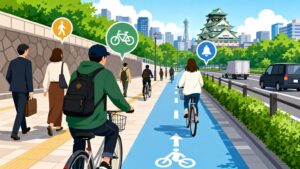
Now we come to perhaps the most important—and often puzzling—aspect of cycling in Osaka for newcomers: the rules. Or more precisely, the delicate balance between official regulations and how things actually unfold on the ground. Officially, bicycles should be ridden on the road. Yet, many people are seen cycling on sidewalks. This surprises foreigners accustomed to stricter rules, but it’s a deeply embedded custom born from necessity and mutual respect.
Why does this occur? Many of Osaka’s roads are busy and lack dedicated bike lanes, making them feel unsafe for less confident riders. Meanwhile, many sidewalks are wide and spacious. Over time, a social contract has been established. Cyclists riding on the sidewalk are expected to go slowly, give pedestrians plenty of space, and remain highly aware of their surroundings. It’s a system of controlled chaos reliant on continuous, non-verbal communication—a subtle weave, a nod, a shared glance.
For women cycling through the city, situational awareness is essential. The key to sidewalk cycling is to be predictable and courteous. The bell should be a last resort; ringing it loudly is deemed impolite. A gentle, single ring from afar is an acceptable “excuse me,” but it’s even better to simply slow down or change your course. Make eye contact with pedestrians, especially children and the elderly. Anticipate people stepping out of shops or alleyways. It’s not a race; it’s a fluid negotiation of shared space. Mastering this dance shows you’re no longer just a visitor—you’re engaging in the city’s vibrant, living social fabric.
Decoding the System: A Practical Guide for Residents
Finding Your Port in the Storm
The real charm of Osaka’s bike-sharing system lies in its infrastructure. The docking stations, or “ports,” are thoughtfully placed, not randomly scattered. They create a strategic network designed to blend seamlessly with the flow of daily life. Large clusters are found outside every major train and subway station, ready for commuters. Smaller ports are tucked away near sizable apartment complexes, perfectly positioned for that final leg of the trip home. You’ll also spot them outside supermarkets, city ward offices, public parks, and libraries. The app for your chosen service acts as your map to this network, a dynamic guide to the city’s heartbeat.
There’s a unique, small victory familiar to every local: the thrill of checking the app on a crowded Friday night and spotting one last empty dock right next to your favorite restaurant. Or the relief of finding a fully charged electric-assist bike waiting when you’re running late for an appointment. These moments, powered by a well-designed system, are the tiny gears that keep Osaka’s daily life running smoothly. The network is so dense in the city center that you’re rarely more than a few hundred meters from a port, making the entire system feel like a public utility as vital as water or electricity.
The Economics of the Ride
At the core of Osaka’s affection for shared bikes is their exceptional affordability. The pricing structures are almost an afterthought. A typical 30-minute ride often costs just over a hundred yen, far less than the shortest subway trip, which starts at 190 yen. A taxi fare for the same distance would be ten times higher. This low financial barrier completely changes how you make decisions.
Suddenly, that interesting bookstore you heard about three neighborhoods away isn’t a major expedition requiring a planned train journey; it’s a spontaneous 15-minute bike ride. Meeting a friend for coffee across town no longer means studying subway maps and transfer times; you just grab a bike and go. This fosters a degree of spontaneity and exploration that’s harder to achieve in a city ruled by train schedules. The system liberates you from the subway’s rigid routes, allowing you to see the city as an open field of opportunity. You’re more inclined to try new things, visit new neighborhoods, and spend money at local businesses simply because getting there is easy and affordable.
The Monthly Pass: The Ultimate Osaka Life Hack
For anyone living in Osaka, the subscription or monthly pass is the final key to cycling bliss. Paying a flat monthly fee—which is often surprisingly reasonable—gives you unlimited rides under a certain time limit (usually 30 or 60 minutes). At this point, the rental bike stops being a service you use and becomes an extension of yourself. You no longer calculate costs per trip. You stop weighing options. Need to pop to the convenience store for a bottle of milk? Grab a bike. Heading to the post office two blocks away? Grab a bike. Meeting friends for dinner and don’t want to walk from the station? Grab a bike.
This is the authentic local experience. It’s when the system fits so seamlessly into your life that you barely think about it. It becomes your go-to mode of transport for any trip that’s too long to walk but too short to warrant a train ride. With a monthly pass, you’ve unlocked the city’s cheat code. You’ve embraced Osaka’s philosophy of maximum efficiency at minimum cost, gaining a fresh and profound sense of freedom.
The Social Fabric: Bikes, Community, and Personal Space
The Great Parking Puzzle
Living with a bicycle in Osaka certainly comes with its challenges, the biggest being parking. This issue affects both rental and private bikes, creating a daily saga on every street corner. The city offers designated, multi-story bicycle parking facilities near stations that are orderly, secure, and often require a small fee. However, the overwhelming number of bicycles in Osaka far exceeds official capacity, resulting in a bustling, disorderly system of informal parking.
Stroll down any commercial street, and you’ll find a dense tangle of bikes against building walls, clustered around lampposts, and forming a silver barrier in front of convenience stores. There is a tacit etiquette amid this disorder—you avoid blocking entrances and strive to park neatly—but space is always at a premium. And there’s a risk involved. City trucks frequently tow away illegally parked bicycles. It’s a common experience for Osaka residents to return to their usual spot only to discover a polite notice on the ground informing them their bike has been taken to a distant impound lot. Retrieving your bike and paying the fine is a humbling ritual, a reminder that even in this vibrant city, there are boundaries. This ongoing balance between informal convenience and official enforcement perfectly captures Osaka’s spirit: a city that values order but embraces a touch of creative chaos.
A Different Kind of Freedom
Ultimately, cycling in Osaka offers a more intimate and sensory connection to the city. Riding a train is a passive experience—sealed inside a metal box, observing the world through a window as you travel between points. Riding a bike, however, is active and immersive; you become a participant in the streetscape rather than just an onlooker.
You sense the subtle change in the air crossing the Yodo River, the cool breeze providing welcome relief during summer. You catch the savory aroma of smoke drifting from a takoyaki stand in the Tenjinbashisuji shopping arcade, the longest shopping street in Japan. You hear the cheerful calls of shopkeepers, the rumble of the Hanshin Expressway overhead, and the laughter of children playing in a nearby park. You notice details often missed: the tiny hidden shrines nestled between apartment buildings, vibrant street art in Amerikamura, and the quiet beauty of a temple courtyard in Shitennoji. Your journey becomes more than just a way to get somewhere; it transforms into a rich experience. This direct and unfiltered engagement with the surroundings fosters a deeper understanding and affection for the city. You learn its shortcuts, rhythms, and textures. The city stops being just a map and starts feeling like home.
Common Misconceptions and Final Thoughts
It’s Not Just for Tourists
A common assumption foreigners might have is that these sleek, app-based rental systems are mainly intended for tourists. While they certainly serve as an excellent tool for visitors, a brief look during morning rush hour quickly disproves this idea. You’ll find a multitude of locals—office workers, students, parents, and retirees—using these bikes for everyday, essential activities. They’re commuting from home to the nearest train station, running errands, or simply traveling within their neighborhood. These bikes aren’t a gimmick; they are a vital part of local transportation. They provide a practical, daily solution for people who prioritize time, money, and convenience. They are a utility, deeply integrated into the rhythm of daily residential life.
Why Osaka, Not Tokyo?
People often wonder why bike-sharing culture is far more prevalent in Osaka than in Tokyo. The explanation lies in a combination of geography and culture. As mentioned, Osaka’s flat terrain and grid-like street layout make it especially suited for cycling. But it also comes down to scale. While Tokyo is a sprawling megacity with multiple interconnected urban centers, Osaka is more compact and centralized. This makes distances more manageable and cycling a feasible option for a wider variety of trips. Additionally, Tokyo’s train network is so dense and comprehensive that it has become the default mode of transportation for nearly every journey. In contrast, in Osaka, bicycles have carved out a niche by providing a flexibility and spontaneity that complements a very good but less overwhelmingly dominant subway system. This solution is uniquely adapted to Osaka’s particular urban character.
The True Meaning of the Red Bike
Ultimately, that simple red rental bike parked on the corner represents far more than just a means of public transport. It symbolizes the city’s core identity. It embodies a deep-rooted pragmatism and the belief that the simplest, most efficient solution is often the best. It reflects a spirit of independence—the desire to move on one’s own terms rather than be confined to a strict schedule. It signifies a preference for genuine value over empty status symbols. To embrace the bike is to embrace Osaka’s spirit: clever, resourceful, a little chaotic, and always on the move. It’s about viewing the city not as separate destinations but as a continuous, interconnected whole. So next time you see that fleet of red bikes, don’t just think of a rental service; see a key to understanding one of Japan’s most dynamic and grounded cities. Master the system, and you won’t simply be commuting—you’ll be thinking like a local.