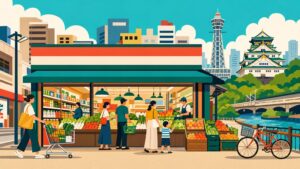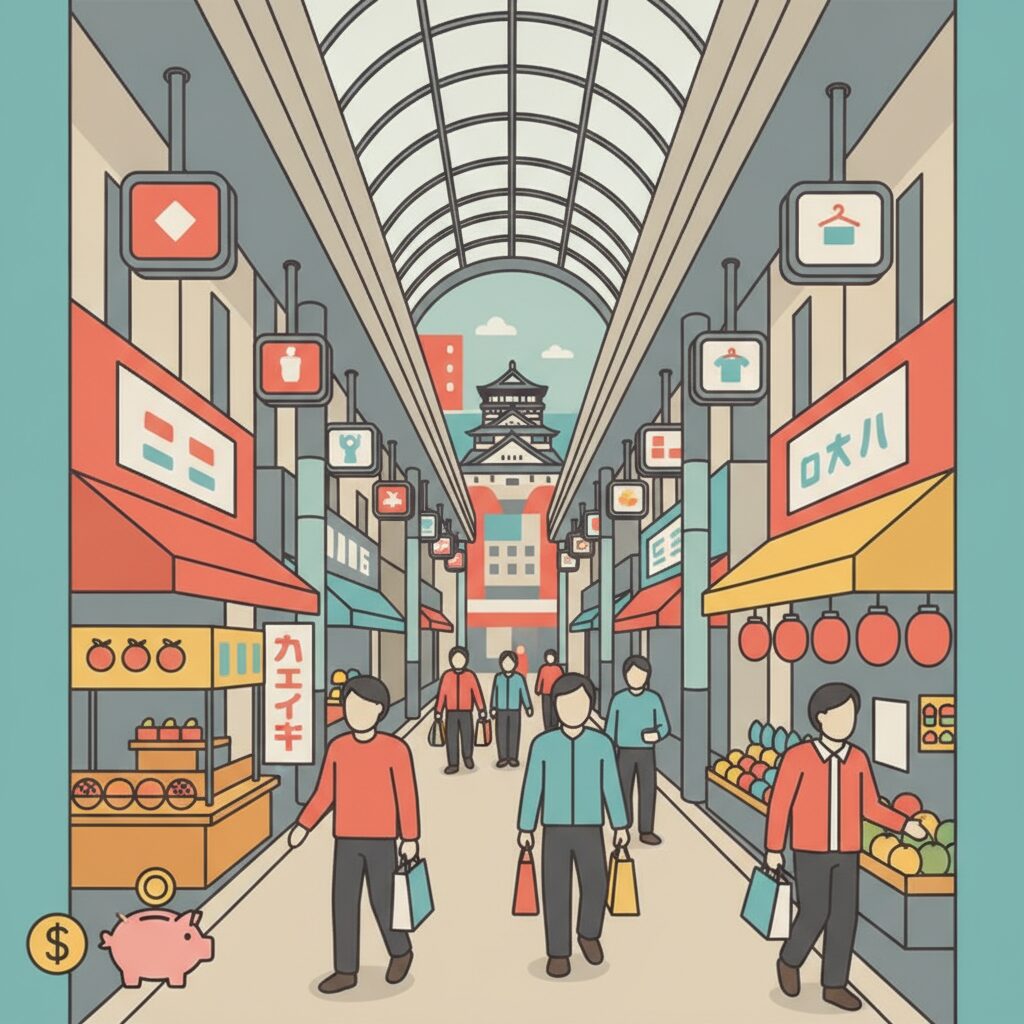
You know the scene. You’ve just moved to Osaka, and it’s time for your first grocery run. You walk into the local Life or Aeon supermarket, and a wave of sterile, refrigerated air hits you. The lights are relentlessly bright, the floors are polished to a mirror shine, and the silence is broken only by the gentle beep of scanners and a pre-recorded jingle playing on a loop. Everything is perfect. Too perfect. The vegetables are hermetically sealed in plastic, the fish are pre-cut into neat, anonymous fillets, and the cashiers offer a polite, yet distant, bow. It’s efficient, clean, and utterly interchangeable with any supermarket in Tokyo, or Nagoya, or Sapporo. You leave with your groceries, but you feel like you’ve just completed a transaction, not participated in life. You can’t help but wonder, is this it? Where is the chaotic, vibrant, famously human Osaka I’ve heard so much about?
The answer, my friend, is not under the fluorescent lights of the supermarket. It’s under the long, covered roofs of the shotengai, Osaka’s traditional shopping arcades. These are not mere tourist attractions or nostalgic relics. They are the roaring, beating, delicious heart of daily Osakan life. To understand the shotengai is to understand the city’s very soul—its pragmatism, its love of a good deal, its emphasis on human connection, and its unapologetic, boisterous energy. Forget what you think you know about grocery shopping. We’re going deep into the real pantry of the people, where the rules are different, the prices are better, and the experience is infinitely richer. This is where Osaka truly lives.
Discover a different slice of Osaka’s lively culinary scene by exploring the city’s innovative vegan and gluten-free soul food culture that beautifully complements the traditional shotengai experience.
The Supermarket vs. The Shotengai: A Tale of Two Philosophies
To truly understand the essence of the shotengai, you first need to recognize what it is responding to. The modern supermarket, which seems to be the default shopping style in Tokyo, embodies a retail philosophy that fundamentally contradicts the Osakan spirit. This cultural clash unfolds within the grocery aisles.
The Tokyo Model: Prioritizing Efficiency Above All
In Tokyo, life moves at an unrelenting pace, and convenience reigns supreme. The supermarket stands as a temple to this ideal. It provides one-stop shopping, predictable inventory, and a seamless experience. You can enter, grab what you need, and leave with minimal human interaction. Prices are fixed, clearly labeled. There is no room for negotiation, no opportunity for small talk. The experience is designed to be anonymous and standardized. It’s a system built for millions in a city where many prefer to keep to themselves. It’s polite, it’s orderly, and for someone from Tokyo like me, it feels entirely normal. But in Osaka, this quiet efficiency can feel oddly cold, like a conversation that never begins.
The Osaka Way: A Vibrant Mix of Chaos and Community
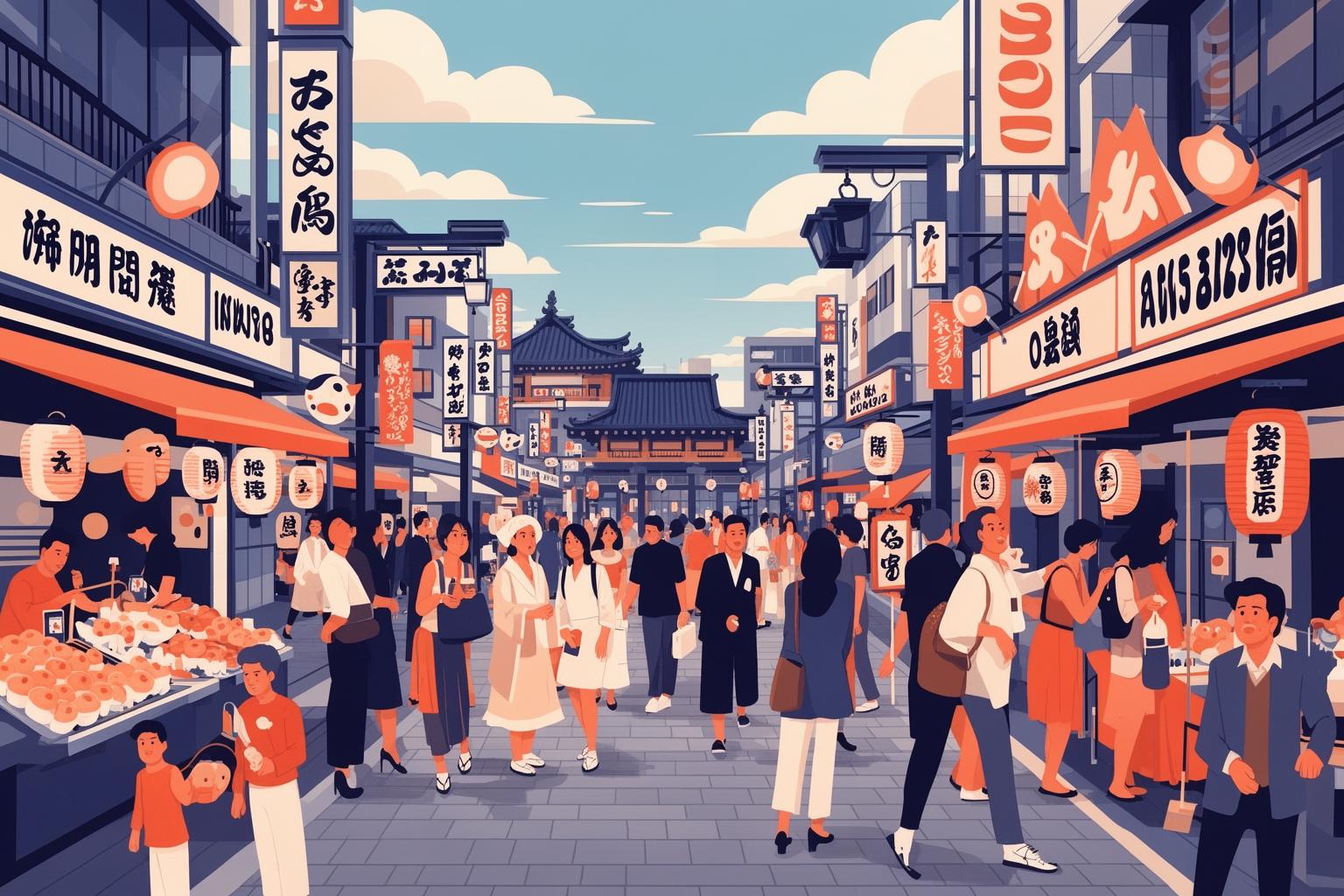
Step into an Osaka shotengai, such as the expansive Tenjinbashisuji or the more local Kuromon Ichiba, and your senses are instantly overwhelmed. It’s a magnificent, lively symphony of life. The air is thick with competing aromas: grilled eel, freshly fried tempura, pickled daikon, and sweet red bean paste. Shopkeepers loudly shout their daily specials: “Yasui de! Oishii de!” (It’s cheap! It’s delicious!). Bicycles wind through the crowd, their bells ringing out. Old friends pause to chat in the middle of the street, oblivious to the congestion they create. This is not merely a place to buy food; it serves as the city’s public square, dining room, and theater all at once. The philosophy here is not about sterile efficiency but about vibrant engagement. Shopping is a full-contact sport, a social event, and a form of entertainment. It’s a daily performance, with everyone playing their part.
Cracking the Code: How to Shop Like an Osakan
For someone new, the shotengai can feel intimidating. It seems to operate according to a set of unspoken rules. But once you grasp the language and rhythm, you’ll discover a more affordable and deeply rewarding lifestyle. This isn’t just about saving money; it’s about becoming part of the community.
“Maido!” and “Okini!”: The Language of the Arcade
Pay close attention to the interactions. When a regular customer approaches a stall, the owner doesn’t use the usual “Irasshaimase” (Welcome). Instead, they call out “Maido!”, which literally means “every time” but implies “Thanks, as always, for your business.” It’s a greeting that acknowledges history and relationship. When you pay, you’ll hear a warm “Okini!” rather than the standard “Arigatou gozaimasu.” It’s a softer, more intimate way of expressing gratitude, characteristic of the Kansai dialect.
This language reflects a deeper reality: commerce here is personal. The butcher might ask what you’re cooking for dinner and suggest a different cut of meat. The fishmonger will remember you prefer your sea bream prepared for sashimi. They’ll offer you a slice of a new orange variety to taste. This isn’t a rehearsed customer service routine; it’s genuine human interaction. They aren’t just vendors; they are curators of your daily meals, and they take pride in that role. Trying to rush a transaction without this exchange misses the point entirely.
The Art of the `Negiro`: More Than Just Haggling
Foreigners often hear that bargaining is possible in Osaka, but they either avoid it, fearing rudeness, or they haggle aggressively as if in a tourist market. Both approaches are mistaken. The Osakan art of negiro (bargaining) is a subtle, playful dance. It’s not about cheating the vendor; it shows you’re a savvy, engaged shopper. It’s a sign of respect.
You don’t haggle over a single 100-yen item. Instead, you do it when buying several things. You might gesture to your pile of vegetables and ask with a smile, “Chotto makete kureru?” (Can you give me a little discount?). Or better yet, request omake, a little extra something thrown in for free. “Kore, omake shite!” (Add this as a bonus!). Usually, the shopkeeper will laugh, perhaps pretend to be offended, then toss an extra onion or a handful of greens into your bag. This small ritual isn’t about the monetary value of the onion; it’s a shared moment of connection, a game both parties enjoy. It strengthens your relationship and marks you as a local, not a passive consumer.
Timing is Everything: The Evening `Uridashi`
One of the most exciting daily events in the shotengai is the evening sale, or uridashi. Around 5 or 6 PM, as shops prepare to close, a fresh wave of energy sweeps through the arcade. Shopkeepers wanting to clear their fresh produce, fish, and prepared foods begin drastically cutting prices. The calls grow louder, more urgent. A tray of sashimi that was 1,000 yen might drop to 700 yen, then 500 yen. A pack of tempura suddenly becomes two-for-one. This is where the Osakan spirit of pragmatism really shines. It’s a strong rejection of waste (mottainai) and an embrace of getting maximum value.
This isn’t viewed as buying old or inferior goods; it’s celebrated as smart shopping. Housewives, students, and salarymen on their way home cluster around the stalls, eyes searching for the best deals. It becomes a flurry of activity turning the day’s end into a treasure hunt. Planning your shopping around the evening uridashi is a key skill for living affordably and deliciously in Osaka.
The Anatomy of a Shotengai: A Specialist for Everything
Unlike supermarkets that generalize, the shotengai thrives as a vibrant ecosystem of specialists. You don’t merely buy “groceries”; you create a meal by visiting a series of masters, each devoted to their craft. This approach fundamentally transforms your relationship with food.
The Yaoya (Greengrocer): Seasonal and Hyper-Local
The yaoya exemplifies seasonality. Here, strawberries won’t appear in December. Instead, you’ll find what’s currently at its peak. The displays burst with color, vegetables heaped high, often still with a bit of soil on them—a sign of freshness. The owner, likely with earth-stained hands, can tell you that these particular eggplants from a farm in Nara are perfect for grilling tonight, or that the mandarin oranges from Wakayama just arrived and are at their sweetest. You buy by the piece, not by plastic-wrapped trays, letting you get exactly what you need.
The Sakana-ya (Fishmonger): The Ocean’s Daily Catch
Forget the sad, pre-cut salmon fillets at the supermarket. The sakana-ya offers a direct connection to the sea. The fish are often whole, displayed on beds of ice, their eyes bright and clear. The air carries the scent of salt and ocean. Here, the vendor’s expertise is invaluable. You don’t need to know how to clean a fish; you just point to a glistening horse mackerel (aji) and say you want it for frying, and with a flash of skilled knife work, they’ll scale, gut, and prepare it for you. They’ll advise what’s freshest today, what just arrived from the docks this morning, and what to avoid. You’re not just buying fish; you’re receiving a daily report from the ocean.
The Niku-ya (Butcher): From Korokke to Kobe Beef
The local butcher is another staple. Behind the counter, you’ll find a wide range of cuts, from thinly sliced pork for shabu-shabu to top-quality wagyu. But the real daily star often appears at the front of the shop, in a heated glass case. These are the fried treats—korokke (potato croquettes), menchi katsu (minced meat cutlets), and chicken karaage. Made fresh throughout the day, they serve as affordable, tasty snacks or easy side dishes for dinner. This embodies Osaka’s kuidaore (eat till you drop) culture, where delicious food is both accessible and often enjoyed on the go.
The Supporting Cast: Tofu, Tsukemono, and Tea
Beyond the main three, the shotengai is home to a constellation of smaller, highly specialized shops. There’s the tofu maker offering silky, fresh tofu often still warm. There’s the tsukemono shop with dozens of varieties of Japanese pickles, from sharp pickled ginger to crunchy fermented radish. There are traditional sweet shops (wagashi-ya), tea merchants (ocha-ya), and seaweed specialists (konbu-ya). Each is a family-run business, often passed down through generations, preserving a piece of the city’s culinary heritage. Putting together your dinner from these specialists feels more like curating a meal than checking items off a list.
Why This Matters: The Shotengai as a Cultural Barometer
So why does all of this matter? Because the shotengai is more than just a charming, budget-friendly shopping option. It’s a living, breathing institution that reflects the core values of Osaka itself and explains why Osaka feels so distinct from Tokyo.
Pragmatism and Value (`Kenjitsu`)
Osakans are known for being kenjitsu—grounded, practical, and highly value-conscious. They are merchants at heart. The shotengai is the ultimate expression of this mindset. It’s a system designed to offer the best possible quality at the most reasonable price. The fixation on a good deal, the evening discounts, the practice of omake—all stem from a deep-rooted belief that money and resources should be used wisely. It’s not about being cheap; it’s about being smart. This practical mentality permeates every part of life in Osaka.
The Power of Human Connection
In Tokyo, efficiency often results in anonymity. In Osaka, commerce acts as the lubricant for social bonds. The daily exchanges in the shotengai weave a network of relationships that forms the foundation of the neighborhood. You’re not just customer number 47; you’re Nakamura-san’s son, the student from the upstairs apartment, the woman who always buys tofu on Tuesdays. This network fosters a sense of belonging that is increasingly rare in modern urban life. People in Osaka don’t just endure this constant interaction; they thrive on it. It’s the city’s lifeblood.
A Living, Breathing Organism
Ultimately, to truly understand Osaka, you must spend time in its shotengai. It’s where the city’s authentic character shines—loud, unpretentious, generous, and deeply human. It’s where you’ll pick up the local dialect, discover seasonal foods you never knew existed, and witness the daily rituals that tie the community together. Living in Osaka and only shopping at the supermarket is like visiting Paris and only eating at McDonald’s. You might get fed, but you’ll miss the entire feast. So next time you need to buy dinner, skip the silent, air-conditioned aisles. Take a deep breath, dive into the chaotic, wonderful flow of the shotengai, and let the real Osaka carry you along.