The first time it happened, I was genuinely baffled. I was at a local supermarket in the sprawling, energetic heart of Osaka, my basket overflowing with groceries for the week. As the cashier, a woman with a perfectly coiffed perm and a glint in her eye, scanned my items, she paused, held up a single daikon radish, and looked at me with mock seriousness. “Just one?” she asked, her voice loud enough for the next person in line to hear. “Are you sure you’ll survive the week on this? It’s not a magic wand, you know.” I froze. Was I being judged for my vegetable purchasing habits? Was this a criticism? In the polite, reserved Japan I had read about, this felt like a system error. I mumbled a quiet apology, paid, and fled, my cheeks burning with confusion. It took me months of living here to realize she wasn’t being rude. She was handing me a gift. It was an invitation to a city-wide conversation, a conversational dance, and I had left her stranded on the dance floor. This is Osaka, a city that doesn’t just communicate; it performs. And learning the steps to its unique comedic rhythm is your ticket to truly belonging.
Embracing Osaka’s playful twists—like the supermarket daikon exchange—can lead you to new insights about local customs, so exploring allergy-safe supermarket shopping might just be your next step to feeling at home.
Deconstructing the Duet: What is Nori-tsukkomi?
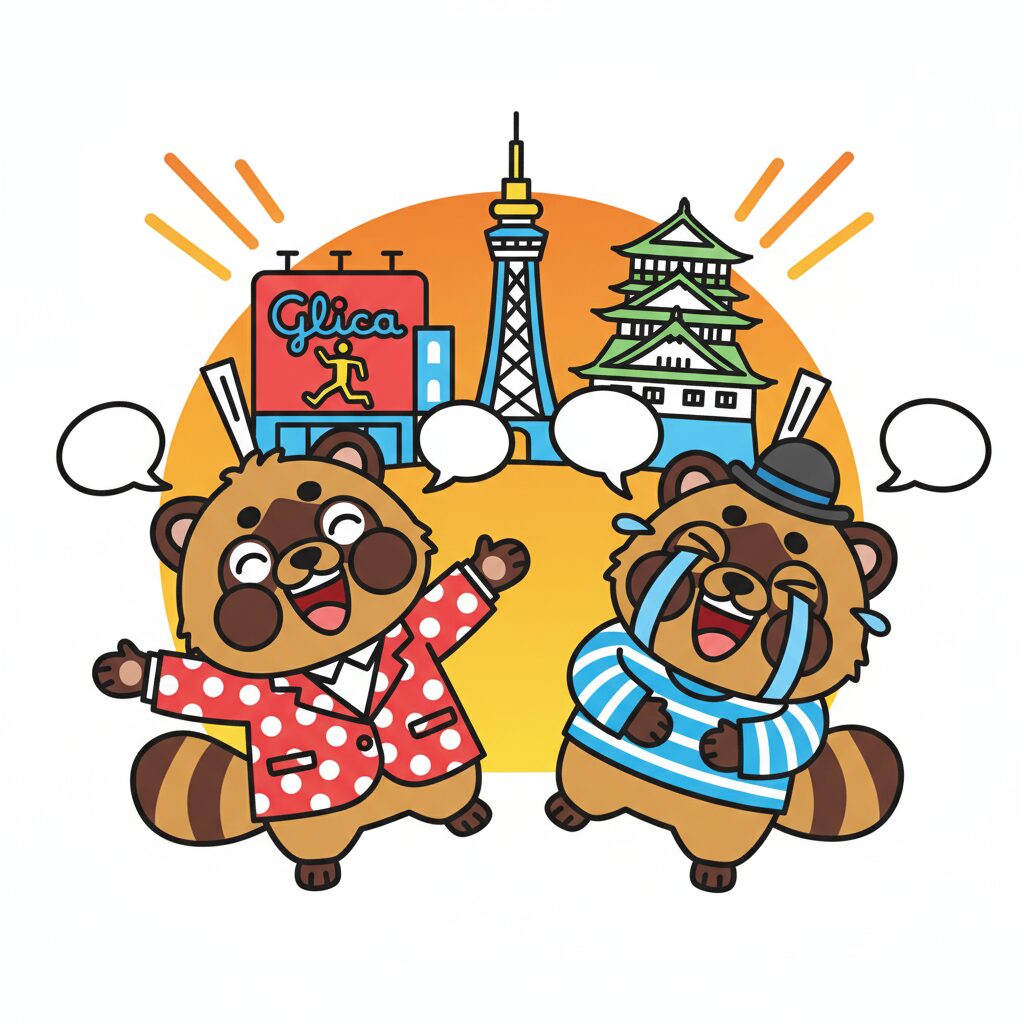
To grasp daily life in Osaka, you first need to understand the fundamental unit of its social interactions: the comedy duo. This isn’t limited to performances at the Namba Grand Kagetsu theater; it unfolds millions of times each day between shopkeepers and customers, neighbors, and even strangers on the train. This dynamic is known as manzai, centered on two roles: the boke and the tsukkomi. Mastering this rhythm is essential for understanding the character of Osaka people.
The Setup: Meet the ‘Boke’
The boke is the fool, the jester, the one who says something absurd, silly, or blatantly wrong. That cashier’s magic wand comment? A classic boke. It’s a joke setup. The boke is like a verbal ball tossed your way—an invitation. When a friend sees you arrive soaking from a sudden downpour and says, “Nice weather for a swim, eh?” that’s a boke. When the butcher weighs your meat and exclaims, “Perfect! Enough to feed a sumo wrestler for a month!” that’s a boke. It’s a playful exaggeration intended to break the everyday monotony. The important thing is to remember it’s an invitation. The silence afterward isn’t awkward—it’s your cue.
The Punchline: Your Turn as the ‘Tsukkomi’
The tsukkomi is the straight man, the one who sharply brings things back to reality with a witty comeback. Your role is to highlight the boke’s absurdity. You are the punchline. When the cashier questioned my single radish, the proper tsukkomi response wasn’t a flustered apology but to play along. I could have said, “It’s for a potion; the secret ingredient is a mystery!” or the classic Osaka phrase, “Nande ya nen!” (roughly “Why?!” or “You’ve got to be kidding!”). To the friend commenting on the rain, you reply, “Yeah, I just forgot my flippers at home.” To the butcher, “Good, because I have three sumo wrestlers coming for dinner.” The tsukkomi completes the exchange. It shows you caught the joke, understood it, and are ready to join in. A successful exchange sparks a moment of shared joy—a connection beyond a simple transaction.
The ‘Nori’: Riding the Wave
Now for the advanced move that sets pros apart from amateurs: nori-tsukkomi. Nori means to get into the groove or ride the joke’s wave. Instead of shutting down the boke immediately, you briefly agree and even escalate the absurdity before delivering the tsukkomi. Let’s return to the butcher. He says you have enough meat for a sumo wrestler. A simple tsukkomi denies it. A nori-tsukkomi first rides the wave (nori): “I know, right? I told them to have a light breakfast!” followed by the reality check (tsukkomi): “…just kidding, this is for my cat. He’s a big eater.” This layered response is the pinnacle of Osaka banter. It showcases social finesse and a willingness to co-create humor. It signals not just residency but active participation.
The Osaka Mindset: Why Banter is the Local Language
This might all sound tiring, especially if you come from a culture that values quiet politeness. But in Osaka, this constant exchange isn’t just for amusement; it’s the main way to build community. It’s a key reason why Osaka feels so different from Tokyo and a major factor in the “is Osaka a good place to live?” discussion.
Comedy as a Social Lubricant
In Tokyo, social interactions tend to prioritize smooth efficiency. Conversations are polite, predictable, and follow set patterns. The aim is to be pleasant and unobtrusive. In Osaka, the aim is connection, and comedy is the most effective means to achieve it. A shared laugh breaks down barriers faster than a formal introduction. It transforms a routine encounter into a memorable human experience. Your daily trip for groceries isn’t just a chore; it’s a chance for a micro-performance, an opportunity to affirm your shared humanity with a stranger. This is why the stereotype “Osaka people are friendly” is both accurate and misleading. Their friendliness isn’t passive; it’s an active, participatory, and often loud invitation to engage.
A Test of Compatibility
This culture of banter also acts as a subtle social test. Can you take a joke? Can you throw one back? Your ability to participate in nori-tsukkomi shows you’re on the same wavelength. It indicates you don’t take yourself too seriously and that you understand the city’s unspoken rules. Someone who responds to a boke with a blank stare or confusion isn’t seen as rude per se, but as a bit stiff (katai) or hard to read. They remain an unknown factor. In contrast, someone who can return a playful tease, even with imperfect Japanese, is instantly welcomed. They’ve demonstrated that they “get it.”
The Misunderstanding: Is It Aggressive?
A common worry for foreigners is that this banter comes across as teasing or mockery. The directness and volume can be mistaken for aggression. Is that old man at the takoyaki stand making fun of my hat? Is the woman sitting next to me on the train laughing at my shoes? Most likely, the answer is no. The humor is rarely directed at you personally; it targets a situation, an object, or an absurd idea. The takoyaki vendor isn’t insulting your fashion sense; he’s creating a shared moment by highlighting the absurdity of wearing a wool hat in summer. The intent isn’t to make you feel bad; it’s to make you a co-conspirator in a joke. It’s an act of inclusion, not exclusion.
Your Field Guide to Nori-tsukkomi in the Wild
Theory and practice are two different things. This comedic culture infuses every facet of life in Osaka. You’ll see it everywhere, from the shiny department stores in Umeda to the small shotengai shopping streets in residential areas.
The Supermarket Checkout Line
The supermarket is a prime spot for practice. The cashiers, especially the middle-aged women affectionately called “Osaka no obachan,” are often experts at this. They’ll make comments about anything. Buying a lot of instant noodles? “Preparing for the apocalypse, huh?” Just picking up a single bottle of beer? “Rough day at work?” The trick is to have a lighthearted and playful reply ready. Don’t just nod awkwardly. Flash a smile and say, “The zombies are coming tomorrow!” or “This is my survival reward!” It turns a chore into a delightful exchange.
At the Local Izakaya or Bar
Bars and eateries are another lively spot. The vibe is naturally more casual, and the playful banter flows as freely as the drinks. If you become a regular, the staff will notice your quirks and cook up running jokes with you. Always ordering the same thing? Expect a line like, “Trying something new today, huh.” The right reply is a grin and, “If it ain’t broke, don’t fix it!” You’ll also find that patrons here are more likely to strike up conversations with strangers than in other cities. A shared laugh over a spilled drink or a misread menu can easily turn into a new friendship.
Conversations with Neighbors
Even brief conversations with neighbors carry this spirit. If a neighbor sees you watering a struggling plant on your balcony, they won’t just politely ignore it. They might call out, “You trying to toughen it up by torturing it?” This isn’t a criticism of your gardening skills. It’s an invitation. The perfect tsukkomi response would be, “It’s a new training method I invented. I’m writing a book about it.” This kind of playful teasing signals familiarity and affection. It means they feel comfortable enough to drop the formalities.
The Ultimate Weapon: ‘Nande Ya Nen!’
When you’re new and your mind blanks, searching for just the right witty comeback, there’s one phrase that will always rescue you: “Nande ya nen!” It’s the Swiss Army knife of Osaka dialect. It can mean “No way,” “What the heck,” “You’re kidding,” or “Don’t be ridiculous.” It’s said with a light, amused tone—not real anger. An old man tells you your baby is big enough to play for the Hanshin Tigers? “Nande ya nen!” A shopkeeper tries to sell you a fourth leopard-print shirt? “Nande ya nen!” It’s the perfect all-purpose tsukkomi that shows you get the game, even if you’re not yet a star player.
How to Learn and Participate Without Fear
The idea of engaging in rapid-fire comedic banter in a foreign language can be intimidating. However, the barrier to entry is much lower than you might expect. Osakans are forgiving and value any effort to join in.
Start by Being a Good Audience
You don’t need to be a master comedian. The first and most essential step is simply recognizing when a boke is directed at you. When the cashier makes a joke, don’t ignore it. Laugh. Smile. Make eye contact. A warm, appreciative response is a form of participation. You validate their effort and show that you’re an engaged partner. This alone will make your interactions much warmer.
The Power of the Simple Rejection
Before mastering complex nori-tsukkomi, you can rely on simple, playful denials. Phrases like “Chigau, chigau!” (No, no!), “Muri muri!” (Impossible!), or the distinctly Osakan “Akan!” (Nope!/Can’t do it!) work well as tsukkomi. They are short, easy to remember, and clearly signal your pushback against the absurd boke. Accompanied by a laugh, these simple phrases are enough to complete the comedic exchange.
Don’t Be Afraid to ‘Suberu’ (Bomb the Joke)
In Japanese comedy, suberu literally means “to slip,” referring to when a joke falls flat. There’s an awkward silence. But that’s okay. Sometimes a failed joke can be just as funny as a successful one. In Osaka, the attempt is often valued more than the execution. Trying to comeback and failing spectacularly reveals vulnerability and a willingness to engage that is incredibly endearing. People will laugh with you, not at you, because you were brave enough to try. Don’t let the fear of suberu keep you on the sidelines.
Osaka vs. Tokyo: A Tale of Two Conversations
Nowhere is Osaka’s unique character more evident than when compared to its eastern counterpart, Tokyo. This contrast lies at the core of the “Osaka vs Tokyo” question for anyone deciding where to live.
The Tokyo Transaction: Efficient and Polite
Picture buying a coffee in Tokyo. The barista greets you with a flawless, standardized welcome. They take your order efficiently, repeat it for confirmation, and handle your payment with minimal fuss. The interaction is impeccably polite, smooth, and entirely impersonal. The main objective is completing the transaction successfully, with a clear and respected boundary between customer and staff.
The Osaka Exchange: A Human Connection
Now, order that same coffee in Osaka. The barista might notice your band t-shirt and say, “Oh, you like them? I saw them live last year, they were terrible!” This is a boke. They are inviting you to defend your band or join in the joke. They might also comment on your choice: “Black coffee? You must be a real adult.” Here, the transaction takes a backseat to the interaction. The line between customer and staff blurs into a more equal space where two people share a quick, unscripted moment. It might be a bit chaotic and less efficient, but it’s undeniably more human.
Why Your Japanese Level Doesn’t Matter as Much as You Think
Many foreigners assume they must be fluent in Japanese to engage in this culture. This is a misconception. The spirit of nori-tsukkomi goes beyond language. It’s about attitude, energy, and timing. A well-timed eye roll, a dramatic gasp, a big laugh, and a simple, mangled “Nande ya nen!” communicate far more than a grammatically perfect but soulless sentence. Osakans are masters of non-verbal communication and will value the energy you bring to the exchange more than your verb conjugation.
Embracing the Banter: Your Key to a Deeper Osaka Life
Understanding this comedic culture is more than merely a fun party trick; it’s essential to grasping the soul of Osaka. This constant, subtle hum of banter is the lifeblood of the city. It acts as the social glue that binds neighborhoods together, serves as a defense against life’s seriousness, and expresses a shared sentiment: “I see you, you see me, let’s laugh together at this absurd world.”
Learning to identify the boke and respond with a tsukkomi is like acquiring a secret language. It opens up a deeper, more authentic, and infinitely more enjoyable way to experience life in this city. It’s the difference between watching Osaka from behind a glass wall and stepping inside to join the celebration.
So, next time you’re in a shotengai and a friendly shopkeeper tells you your child is so cute they should be in showbiz, don’t just blush and say thank you. Look them in the eye and grin, saying, “I would, but we’re waiting for the Hollywood offers to come in.” You’ll be met with a hearty laugh and the satisfying feeling that you’re not just living in Osaka—you’re part of it.