Walk down a quiet Osaka backstreet, away from the roaring neon of Dotonbori. You see it. A single, polished wooden door. A small, elegant `noren` curtain fluttering over the entrance, bearing a single calligraphed character. There’s no menu outside, no pictures of food. Just a soft lantern glow hinting at the world within. You peek through a crack in the curtain and see it: a smooth wooden counter, maybe eight or nine seats, and a chef in crisp whites moving with the grace of a dancer. This isn’t your corner ramen joint or your bustling izakaya. This is a `Kappo` (割烹) restaurant, and for many non-Japanese residents, it’s one of the most intimidating and misunderstood frontiers of Osaka’s culinary landscape. But it’s also where the city’s soul truly reveals itself. Forget the idea that this is some untouchable, ultra-exclusive world reserved for millionaires. In Osaka, Kappo is different. It’s personal. It’s a conversation. It’s the ultimate expression of the city’s `kuidaore` (食い倒れ) spirit—the love of eating so deep, you’d risk ruin for it. It’s here, sitting elbow-to-elbow with regulars, that you’ll start to understand the real rhythm of this city. It’s time to pull back the `noren` curtain, take a seat, and learn the language of Osaka’s counter culture.
Beyond the intimate world of Osaka’s Kappo culture lies an equally compelling blend of work and dining customs, as revealed in our halal nomikai guide, which offers deeper insights into the city’s unique social fabric.
What ‘Kappo’ Really Means in Osaka
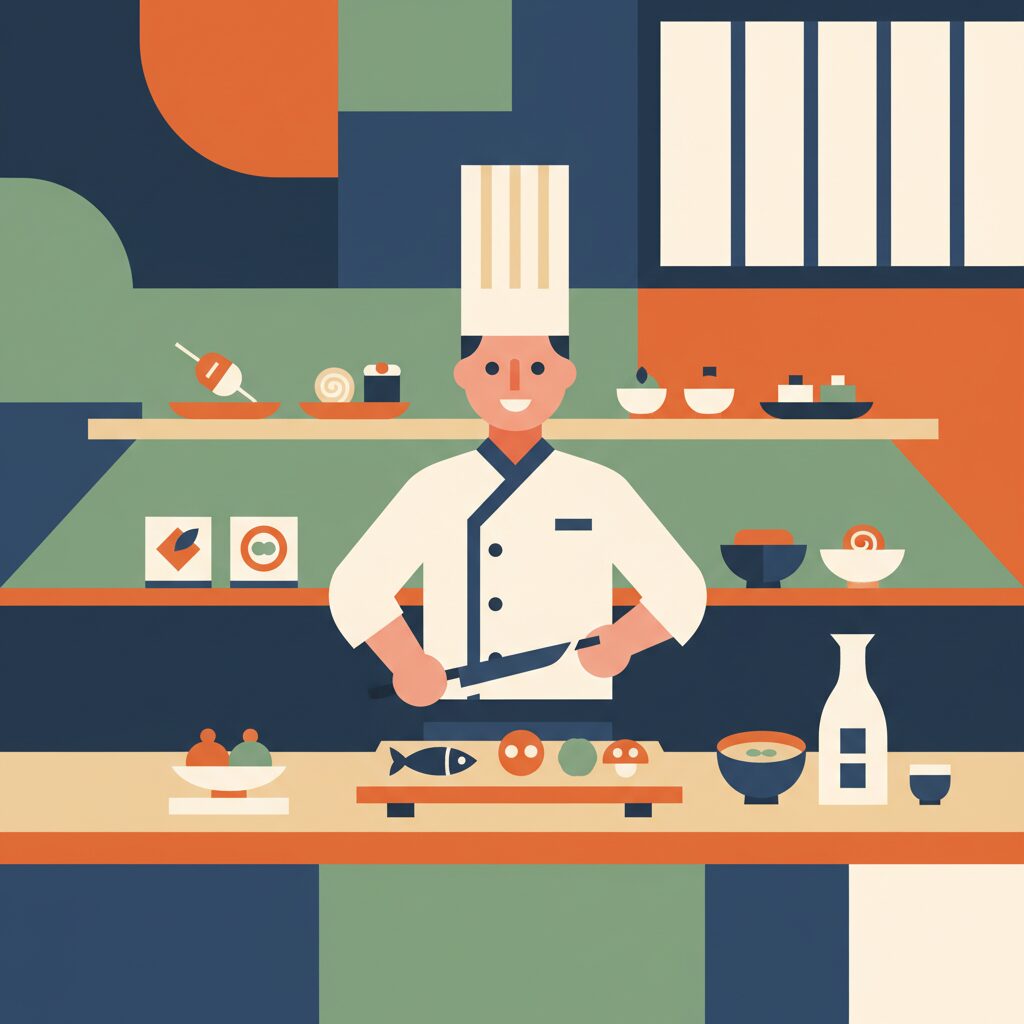
The word itself offers a hint. `Kappo` (割烹) consists of two characters: `katsu` (割), meaning “to cut,” and `pou` (烹), meaning “to simmer” or “to cook.” It’s as straightforward as that. Cut and cook. This isn’t about complex, abstract culinary theories. It’s about the direct, immediate connection between the finest ingredients, a master chef’s hands, and you. The counter that separates you from the kitchen isn’t a barrier—it’s a stage. And in Osaka, the performance is everything.
The Philosophy: Direct, Honest, and Fresh
To grasp Osaka Kappo, you must understand the Osaka mindset. People here value straightforwardness. They say what they mean. They respect honesty, especially in matters of business and quality. There’s no room for fluff or pretense. This philosophy is embedded in the Kappo experience. The chef stands right before you, their knives shining. You watch them slice fish, grill bamboo shoots, and plate dishes. There’s nowhere to hide. If the ingredients aren’t perfect, you’ll notice. If the technique falters, you’ll see it. This radical transparency is the ultimate assurance of quality.
This isn’t a place with a heavy, leather-bound menu that remains unchanged. The menu reflects the market of that morning. It’s the fisherman the chef trusts. It’s the single farmer growing the most flavorful `nasu` eggplant. The `taisho` (chef-owner) will proudly say, “This `tai` (sea bream) came from Akashi this morning; the current was strong, so the flesh is firm.” Or, “These `matsutake` mushrooms just arrived from Nagano; the aroma is incredible today.” You’re not simply eating food; you’re tasting a specific day, season, and place. This obsessive focus on the moment lies at the core of Osaka’s pragmatic approach to luxury. It’s not about brand names; it’s about undeniable quality right in front of you.
The Atmosphere: A Performance Stage, Not a Silent Temple
Many foreigners imagine upscale Japanese dining as a quiet, almost religious experience—whispers, reverence, and a fear of making mistakes. That might be true for some temple-like `ryotei` in Kyoto, but Osaka Kappo follows different rules. The atmosphere is vibrant. It’s a symphony of sounds: the rhythmic tap-tap-tap of knives on cutting boards, the hiss of fresh seafood on a hot grill, the pop of a sake bottle opening. And above it all, conversations.
The `taisho` acts as the conductor of this orchestra. They aren’t a silent, hidden craftsman. They are the host, the guide, the entertainer. They’ll chat with the salaryman on his way home, joke with a couple on a date, and explain the details of a dish to you, the curious newcomer. The counter becomes a shared space. A bond forms not only between you and the chef but also among the few guests experiencing this moment together. You might hear the `taisho` teasing a regular about the Hanshin Tigers losing a game, all while skillfully de-boning a tiny `ayu` river fish with tweezers. This mix of world-class skill and down-to-earth personality is pure Osaka.
The Osaka vs. Tokyo Kappo Divide: More Than Just Miles
On the surface, both Tokyo and Osaka boast Kappo restaurants, but the atmosphere, philosophy, and price range can be worlds apart. It’s a classic tale of two cities, unfolding across a polished wooden counter. Saying you’re going to a Kappo restaurant in Ginza conjures a very different image than heading to a spot in Osaka’s Fukushima district.
Formality and Accessibility
Tokyo’s Kappo scene, especially in prestigious areas like Ginza or Akasaka, often exudes immense formality and high costs. These are places where major corporate deals may be finalized and political power brokers convene. The environment can be subdued, prices steep, and gaining entry may feel nearly impossible without an introduction.
While Osaka also has its share of exclusive, upscale establishments in districts like Kitashinchi, it typically offers a more approachable version of Kappo. The city’s mercantile history fosters a strong appreciation for value. People in Osaka are discerning and willing to pay for quality, but they have little tolerance for paying solely for prestige. You’ll find legendary Kappo restaurants tucked away in modest side streets, often run by husband-and-wife teams, serving food just as exquisite as Tokyo’s at a fraction of the price. The emphasis is firmly on the food itself. An Osakan will proudly share a story about a fantastic Kappo meal they enjoyed for 15,000 yen, highlighting the quality as a smart discovery, whereas in Tokyo, conversation might focus more on the restaurant’s name and exclusivity.
The Chef’s Role: Master Craftsman vs. Engaging Host
This is perhaps the most notable distinction. The image of the Tokyo `shokunin` (artisan) is one of stoic, single-minded dedication. The chef is a revered figure, often working in focused silence. Conversation may seem intrusive to their craft. Diners are expected to appreciate the perfection of the work in respectful quiet.
In Osaka, the `taisho` is equally a master craftsman but presents their expertise with a lighter touch. Interaction is encouraged, not avoided. They want to engage with you, to see your reaction when you take that first bite of perfectly grilled `nodoguro` (blackthroat seaperch). They inquire about your sake preferences not merely to take an order but to start a conversation, guiding you toward an ideal pairing that will elevate the next dish. This approachability transforms the dining experience. You feel less like a customer being served and more like a guest in the chef’s home. This warmth and desire to connect is fundamental to Osaka hospitality. It’s not just about being “friendly”; it’s about breaking down barriers and sharing a passion directly, person to person.
Navigating the Unspoken Rules: Your Guide to a Smooth Kappo Night
The biggest obstacle to enjoying Kappo isn’t the cost; it’s the fear of the unfamiliar. The unwritten rules, the absence of a familiar menu, the intimate atmosphere. But once you grasp the basic etiquette, you’ll discover it’s a surprisingly straightforward and intuitive experience. Here’s how to approach your first visit like a local.
The Reservation: Your Entry Point
First and foremost: you absolutely must have a reservation. These spots are tiny, often seating fewer than a dozen guests, and they fill up weeks or even months ahead. Dropping in spontaneously is almost never an option. Traditionally, reservations are made by phone. For non-Japanese speakers, this can be challenging. Your best options include:
- A Japanese-Speaking Friend: The easiest method—ask them to make the call for you.
- Hotel Concierge: If you’re staying at a hotel, the concierge service is built for this.
- Credit Card Concierge: Many high-end credit cards offer concierge services that can handle bookings.
- Online Booking Services: An increasing number of modern Kappo establishments use platforms like Omakase, TableCheck, or Ikyu, which provide English interfaces.
When making your reservation, be ready to provide your name, phone number, party size, and date/time. Crucially, this is the time to mention any significant allergies or dietary restrictions (e.g., no shellfish, vegetarian). The entire menu for the evening is crafted based on the guests attending, so last-minute changes can be tough to accommodate.
Ordering: The Charm of ‘Omakase’
You take your seat. There is no menu. Or perhaps there’s a beautifully handwritten scroll on the wall, written in a script you can’t possibly read. Panic creeps in. What do you do? You utter the magic word: `Omakase` (おまかせ). It means “I’ll leave it up to you.”
This is not a surrender. It’s not admitting defeat. In the world of Kappo, `omakase` is the highest form of respect and trust. You’re telling the chef, “I trust your skill, your knowledge of today’s best ingredients, and your creativity. Please give me the best experience you can.” The chef will then craft a series of dishes for you—a seasonal flavor journey. They might begin with a light `sakizuke` (appetizer), proceed to a clear `suimono` (soup), present a beautiful `sashimi` platter, followed by a grilled dish (`yakimono`), a simmered dish (`nimono`), and so forth, concluding with rice, pickles, and dessert.
If you have preferences, it’s fine to express them gently. You can say, “I’d like to try some fish,” or “Are there any interesting vegetables in season?” If you have a budget, it’s not rude to mention it discreetly at the start. Something like, “`Yosan wa, ni-man en gurai de onegaishimasu`” (Please keep the budget around 20,000 yen per person). This helps the chef and avoids any surprises when the bill arrives.
Counter Etiquette: Honor the Stage
- Be Punctual: The meal is timed so all guests start together. Arriving late disrupts the pace for everyone.
- Travel Light: Space is limited. Leave bulky bags and coats in the designated area near the entrance. Don’t place your purse or phone on the elegant wooden counter.
- Photos: This can be delicate. Some chefs forbid photography outright. The best approach is to quietly ask: “`Shashin, tottemo ii desu ka?`” (May I take a picture?). If permitted, be quick and discreet—no flash, no loud shutter sounds, no rearranging the dishes. Each plate is plated thoughtfully and meant to be eaten immediately.
- Pacing: The chef pays attention. They won’t serve the next course until you’ve finished the current one. Eat at a comfortable but steady pace. Leaving a perfectly hot or chilled dish uneaten for ten minutes is a major faux pas.
- Conversation: Gauge the atmosphere. If the `taisho` (chef) engages you, respond warmly! If your neighbor starts a chat, feel free to join in. It’s a communal environment. However, avoid loud or disruptive conversations that overpower the space.
- Paying: The bill will be brought to you at your seat. Tipping is neither necessary nor expected in Japan.
What You’re Actually Paying For: Deconstructing the Bill
When you receive a bill of 20,000 or 30,000 yen per person, it’s easy to experience sticker shock. You might think, “I only had eight small dishes and some sake!” But you’re not just paying for the raw ingredients. You’re paying for an entire ecosystem of skill, sourcing, and thoughtfully curated experience.
The Skill (`Waza`)
That slice of sashimi isn’t merely a piece of fish. It represents decades of training. The chef knows exactly how to angle the blade to enhance texture, how thick to cut it depending on the fat content, and how to age it for a few days to bring out its umami. In summer, you might be served `hamo` (pike conger), a fish known for its tiny bones. The chef performs `honekiri`, a technique involving hundreds of subtle cuts to sever the bones without breaking the skin, making it edible. You’re paying for that lifetime of dedication and mastery of countless tiny details.
The Sourcing (`Shire`)
The chef doesn’t shop at the local supermarket. They arrive at the Osaka Central Wholesale Market before dawn, relying on personal relationships with vendors built over many years. They bid on the best tuna, handpick the single box of perfect shrimp, and consult with farmers about which mountain vegetables are at their absolute peak. This tireless commitment to sourcing only the very best, day after day, is a major part of the cost. You’re tasting ingredients unavailable to the average consumer.
The Curation (`Omotenashi`)
You are one of just a few guests. For two to three hours, the chef’s focus is entirely on crafting your meal. They’re not merely cooking; they’re watching your reactions, timing the courses to your pace, and selecting sake that perfectly complements the food. They serve as host, entertainer, and artist. The price reflects this deeply personal and labor-intensive style of service. You’re not purchasing a meal—you’re commissioning a performance.
Finding Your Kappo Spot: From Kitashinchi Glamour to Neighborhood Gems
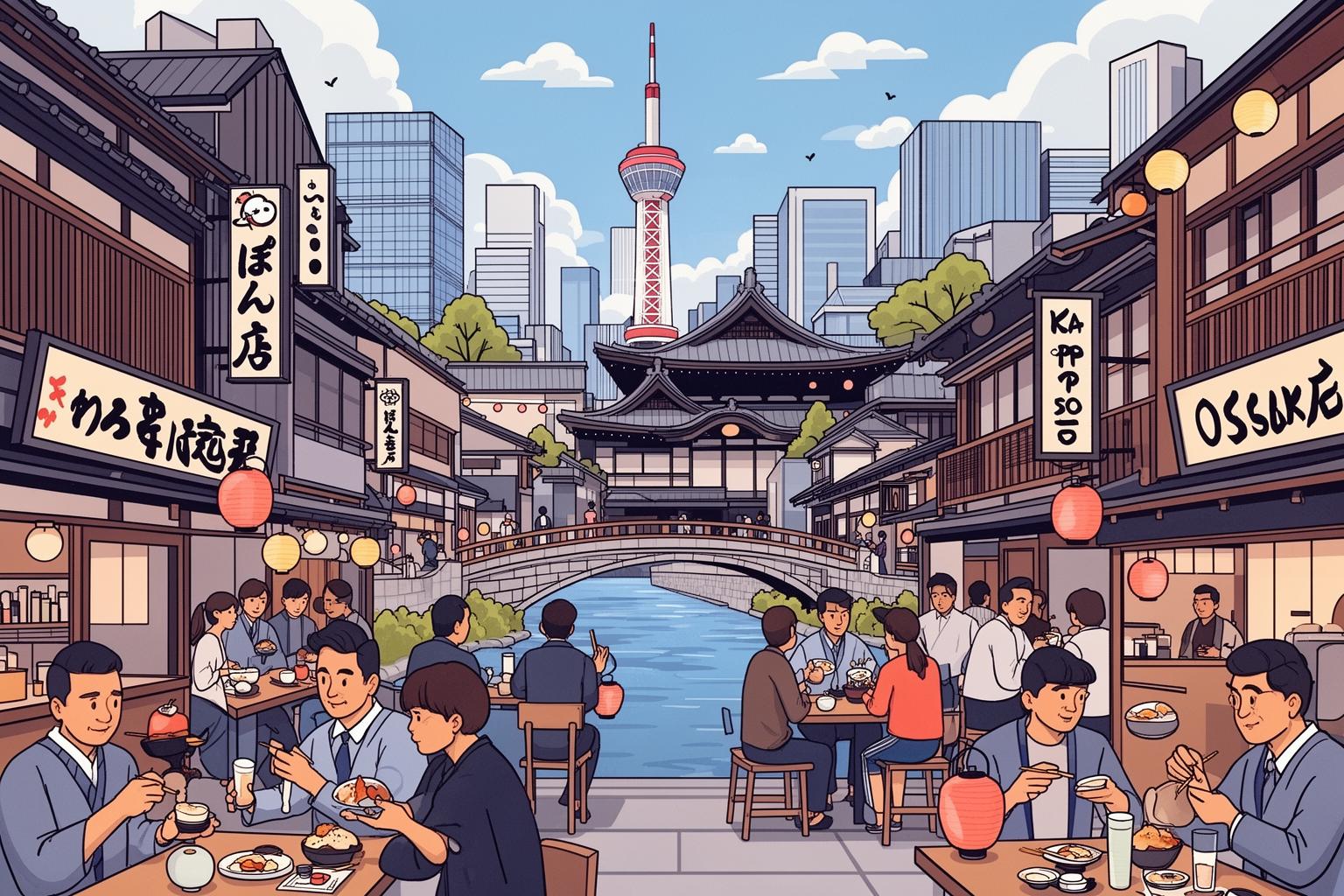
So, where should you go? Osaka’s Kappo scene is extensive and diverse. Once you know where to look, you can find a style and price range that suits what you want.
Kitashinchi: The Heart of It All
Kitashinchi is Osaka’s top entertainment and dining district, often compared to Tokyo’s Ginza. Here, you’ll discover many Michelin-starred, renowned Kappo restaurants. The quality is exceptional, but the prices are steep, and the atmosphere tends to be more formal, catering to executives and connoisseurs. Dining here is a special occasion—an investment in an elite culinary experience. It’s perfect for celebrations, but not the typical everyday Kappo experience for most locals.
Beyond the Core: The True Hidden Gems
For a more casual and often more intimate experience, you need to explore the neighborhoods. Places like Fukushima, Tenma, the backstreets of Shinsaibashi, and even farther residential areas are filled with amazing Kappo spots. These are the venues Osaka locals treasure. They might be run by a young chef adding a modern touch to tradition or a seasoned `taisho` who opened a smaller spot after years at a famous hotel.
Discovering these places is part of the charm of living here. You’ll pass by an intriguing spot, get a recommendation from a Japanese colleague, or read a local blog. This is how you find “your” Kappo-ya—the place where the `taisho` remembers you after your second visit and says, “Ah, Tanaka-san! I got that dry sake from Niigata you liked last time.” I found my own favorite spot this way, a tiny eight-seat place near my Tenma apartment. The first time I went, I was nervous. By the third visit, the `taisho` was saving me the last piece of grilled `anago` (conger eel) because he knew it was my favorite. That sense of connection, of being a regular, is priceless.
More Than a Meal, It’s a Relationship
Ultimately, a Kappo meal is a dialogue—a conversation between you, the chef, the season, and the very essence of Japanese cuisine. It removes distractions and centers on what truly matters: exceptional ingredients handled with deep respect and skill. It offers a glimpse into the soul of Osaka—a soul that is straightforward, unpretentious, passionate about quality, and profoundly appreciative of the human connection food can foster.
It might seem like a daunting challenge, shrouded in mystery and unspoken rules. But taking that leap of faith, sliding open that door, and uttering that magical word, `omakase`, is one of the most meaningful and rewarding cultural experiences you can have while living in this city. You become more than just an anonymous customer in a bustling metropolis. You become a guest, a participant, a member of a small, temporary community gathered around a counter. You are forging a relationship. And in Osaka, a city built on relationships, nothing is more precious than that.