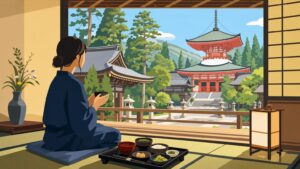
Walk away from the neon glow of Dotonbori. Duck into a covered shotengai, one of those long shopping arcades that act as the arteries of any Osaka neighborhood. Past the fishmonger hosing down the pavement and the frantic energy of the pachinko parlor, you’ll see it. A small storefront, often with a faded plastic sign, dark wood trim, and a window displaying unnervingly realistic wax models of spaghetti Napolitan and melon-colored cream soda. This is the kissaten, Osaka’s traditional coffee shop. It doesn’t scream for your attention. It doesn’t have Wi-Fi logos plastered on the door or promise the latest single-origin pour-over. To a newcomer, it might look dated, intimidatingly quiet, or even closed. And that’s where the misunderstanding begins. People see a coffee shop, but they’re looking at something else entirely. These aren’t just places to get a caffeine fix. They are the unofficial living rooms of their communities, the slow-beating heart of Osaka’s daily rhythm, and understanding them is key to understanding the city itself. They operate on a different logic than the sleek, efficient cafes of Tokyo or the global chains you find on every corner. A kissaten isn’t a place you pass through; it’s a place you belong to.
The unassuming warmth of these neighborhood hubs echoes the nurturing influence of legendary obachan, whose presence continues to deepen Osaka’s unique community spirit.
The “Master” and the Regulars: A Different Kind of Service

Step inside a kissaten, and the first thing you’ll notice is the calm, purposeful presence behind the counter. This isn’t a changing group of part-time students. This is the “Master” (マスター). Often someone in their 60s or 70s, the Master serves as the foundation of this small world. They’ve probably been running the shop for thirty, forty, or even fifty years. Their movements are efficient and precise, refined by decades of brewing coffee from a syphon, buttering thick-cut toast, and wiping the same wooden counter. The relationship here is not the transactional one found in a modern cafe. The Master acts as a curator of the space, a confidant, a neighborhood watch captain, and a living archive of local history all at once.
Then there are the customers. They aren’t just customers; they are jouren-san, the regulars. Being a regular at a kissaten is a mark of status. It means you are recognized. It means you belong. You’ll see them every day. The elderly gentleman who sits in the same booth by the window each morning at 9 AM, reading the newspaper cover to cover. The group of ladies who gather every Tuesday afternoon for coffee and cake, their conversation a soft, continuous murmur. The local shop owner who stops in for a quick lunch of curry rice, sharing a few words of neighborhood gossip with the Master.
This dynamic is vastly different from Tokyo’s cafe culture, which often values efficiency, anonymity, and trendiness. At a Tokyo Starbucks, the service is impeccably polite but essentially impersonal. The goal is to get your customized drink into your hands as quickly as possible. At an Osaka kissaten, the service is about recognition. The Master knows you don’t take sugar in your coffee. They know you prefer the corner seat. They might save your favorite section of the newspaper for you. They’ll ask about your daughter who just started university or comment on the Hanshin Tigers’ latest game. This isn’t rehearsed friendliness; it’s the outcome of a long-standing, established relationship. This is the truth behind the cliché that “Osaka people are friendly.” It’s not indiscriminate, bubbly chatter. It’s a deeply valued sense of community and mutual recognition, built gradually, day by day, over countless cups of coffee.
Not Just Coffee: The Anatomy of a Kissaten Menu and Atmosphere
To truly grasp the essence of a kissaten, you need to appreciate its offerings, which focus less on culinary innovation and more on comforting familiarity. The menu reflects a bygone era, featuring a carefully selected range of Japanese-Western comfort foods, or yoshoku, that have remained mostly unchanged for fifty years.
The Ritual of “Morning Service”
At the heart of the kissaten experience lies the “Morning Service,” or simply “Morning” (モーニング). From opening until around 11 AM, ordering a single cup of coffee comes with a small meal for a minimal extra charge, sometimes even free. The classic set includes a thick slice of fluffy white shokupan toast, often about half an inch thick, served with butter and jam, a perfectly hard-boiled egg, and a small side salad of shredded cabbage. It’s not a large meal, but a cherished ritual. For hundreds of thousands of Osakans, this is how their day begins. It’s an economic marvel, a loss leader designed not just to boost coffee sales but to encourage a daily gathering habit. It’s the neighborhood’s shared breakfast table.
A Menu Frozen in Time
Outside of the morning hours, the menu is a showcase of nostalgic dishes. You won’t find avocado toast or quinoa bowls here. Instead, there’s Spaghetti Napolitan, a comforting plate of soft spaghetti pan-fried in ketchup with onions and peppers. There’s omurice, a fluffy omelet covering fried rice, and the classic mikkusu sando (mixed sandwich), with its carefully layered egg salad, ham, and cucumber on crustless white bread. The coffee is typically a dark, robust house blend, often brewed in an eye-catching syphon that bubbles on the counter. It’s not about delicate floral notes; it’s about a rich, consistent, and familiar coffee taste. These dishes endure because they are dependable. They taste just as they did in 1985, providing a comforting anchor in a rapidly changing world.
An Atmosphere for Lingering
The physical environment is as essential as the menu. A typical kissaten is a study in textures and hues meant to calm rather than excite. The lighting is dim and warm, often coming from amber lamps or ornate chandeliers. Seating is plush, frequently vinyl or velvet booths that have molded to countless patrons over time. The walls are paneled with dark, polished wood that has absorbed decades of sights, sounds, and aromas. The air itself is thick with the rich scent of brewing coffee, often mingling with the sweet, hazy smell of tobacco, since many kissaten still allow smoking. This is a key element distinguishing them from modern cafes and may deter some, but for regulars, it’s part of the genuine, unfiltered ambiance. It’s a space designed not for a quick visit, but for a leisurely stay. It invites you to sink into a booth, open a book, and let the city’s hectic pace fade away.
The Unspoken Rules of the Kissaten Community
Like any established community, the kissaten follows a set of unspoken rules. Breaking them marks you as an outsider. Knowing these rules is your key to belonging. The most important rule is this: a kissaten is not a co-working space. While a modern cafe often glows with laptop screens, opening a computer in a traditional kissaten can feel like a social faux pas. The clatter of keys disrupts the quiet buzz of conversation and rustling newspapers. These spaces are meant for analog activities: reading a book, chatting with a friend, or simply sitting with your own thoughts. It’s a place to disconnect, not to plug in.
There’s a delicate balance between community and privacy. While the Master might be aware of everyone’s affairs, and regulars may exchange greetings, there is a strong respect for solitude. You’ll find patrons sitting alone for hours, nursing a single cup of coffee, lost in thought. There is no pressure to engage. The community is available if you want it, but your personal space remains sacred. This sharply contrasts with the often-performative social atmosphere of trendy cafes, where being seen is part of the experience. In a kissaten, the point is simply to be.
This is where the neighborhood’s real business takes place. It serves as an information hub operating on analog signals. It’s where you learn about the road construction scheduled for next month, which local politician is gaining favor, or that the old bookstore down the street is finally closing. For local business owners, it’s neutral ground to hold quiet meetings away from prying office eyes. It functions as a third space in the truest sense—neither home nor work, but an essential place for social connection and information exchange that supports the entire community.
A Living Time Capsule: Why Kissaten Persist in Modern Osaka
In a nation famed for its relentless modernization, the survival of the kissaten feels almost like an anomaly. Why haven’t these small, family-run shops been overtaken by corporate giants? The answer lies in the distinct cultural and economic landscape of Osaka. Firstly, these establishments act as vital social infrastructure, especially for Japan’s aging population. For many retirees, the daily visit to the kissaten is their key social interaction. The Master is more than just a coffee-maker; they are a familiar face who checks in on customers, noticing if someone hasn’t come by for their morning coffee for a few days straight. In a society struggling with elderly social isolation, the kissaten offers an organic, community-based remedy.
There is also the well-known independent and pragmatic spirit of Osaka. The city boasts a long history as a merchant town, with a strong pride in local, independent businesses. There is a cultural resistance to the corporate homogenization often felt more acutely in Tokyo. Osakans frequently prefer to spend their money with Yamada-san, who they’ve known for three decades, rather than with a faceless international chain. This loyalty, coupled with relatively more affordable commercial rents compared to Tokyo, has enabled these small shops to endure.
However, the future is uncertain. The Masters are aging, and their children, who often relocate to larger cities or pursue different careers, are not always keen to inherit the demanding, low-margin business. The customer base is aging, too. The kissaten serves as a living time capsule, but inevitably, time moves on. Yet for now, they remain a cherished and stubborn fixture, providing a strong sense of stability and authenticity. They offer a tangible connection to the past and a quiet resistance to the fast pace of modern life.
Finding Your Own Kissaten: A Practical Guide for Residents
For a non-Japanese resident wishing to truly connect with Osaka, discovering your own local kissaten is one of the most fulfilling experiences you can have. This isn’t about looking up the “Top 10 Kissaten in Osaka” online. The best ones are often unlisted and have no reviews. The aim is not to visit a popular tourist spot, but to become a regular at a humble, everyday place.
Begin by walking around. Wander through the side streets and shopping arcades of your neighborhood. Watch for the signs: a weathered signboard, wax food displays, or a simple noren curtain over the entrance. Notice signs of life—a bicycle parked outside, the gentle glow of a lamp within. Be bold and step inside. The initial silence might feel daunting, and all eyes might briefly turn toward you. Don’t worry—just a nod and a quiet “Konnichiwa” is enough.
At your first visit, keep things simple. Order a “Hotto Kohi” (hot coffee). Find a seat and simply observe. Take in the atmosphere. Don’t expect a warm, chatty greeting immediately. Trust is earned through familiarity, not grand gestures. The key is to keep coming back. Return the following week around the same time, and then again the week after. Order the Morning Service. Let the Master begin to recognize your face. After several visits, you’ll receive a nod of recognition. After a few more, perhaps a brief comment about the weather. This marks the start.
Gradually, you’ll move from being a stranger to a customer, and eventually become a jouren-san. The other regulars will start nodding at you, and you may strike up conversations. This is how you weave yourself into the community. This is how you stop being a temporary resident and start building a home. The local kissaten is more than just a coffee shop. It’s a gateway to the real Osaka, where the city’s heart beats not in frantic haste, but in the slow, steady rhythm of a shared, familiar routine.