The laptop screen glows, a final email sent. You close the lid, but the office doesn’t disappear. It’s still there, in the corner of your living room, on the dining table that doubles as your desk. This is the silent struggle of the remote worker in Osaka: the complete erosion of boundaries. Your commute is a ten-step shuffle from the bedroom to the workspace, and the line between ‘on’ and ‘off’ blurs into a constant, low-grade hum of professional obligation. How do you truly clock out when your home and your office are one and the same? In Tokyo, the answer might be a stiff drink at a slick, anonymous bar or a solo session at a high-tech gym. But here in Osaka, the solution is older, warmer, and infinitely more profound. It involves steam, shared water, and the simple magic of a neighborhood sento, the Japanese public bathhouse. This isn’t a nostalgic indulgence or a tourist activity; it’s a living, breathing part of the city’s cultural hardware, a powerful tool for reclaiming your time, your space, and your sanity. The sento offers a hard, physical reset, a ritual that draws a definitive line in the sand between the workday’s end and the evening’s beginning. It’s where modern anxieties dissolve in ancient waters, and it’s the most effective shutdown sequence you’ll ever find.
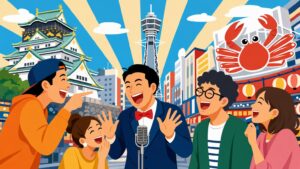
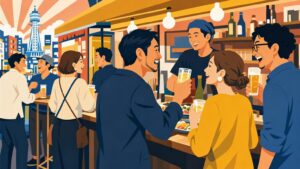
For those looking to extend their clock-out ritual beyond the soothing ambiance of the sento, some remote workers relish the chance to shift gears at Osaka neighborhood snack bars, where community vibes intertwine with the spirited allure of karaoke.
The Blurred Lines of the Home Office and the Hard Stop of the Noren Curtain
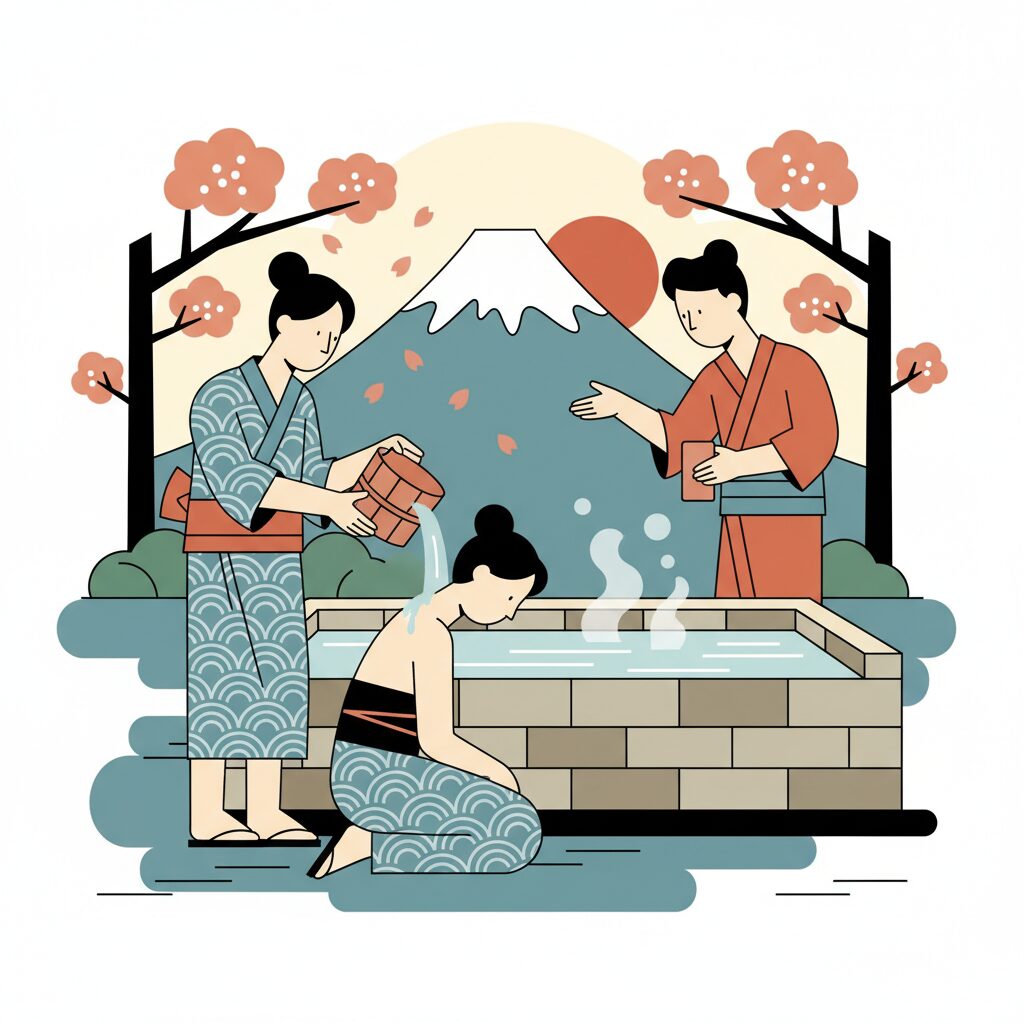
Working from home offers the promise of freedom but often results in a cage of your own creation. Your couch turns into a spot for conference calls, and your kitchen serves as the background for video meetings. The mental clutter of deadlines and deliverables infiltrates the very fabric of your personal sanctuary. You’re never truly off the clock because the clock hangs on the wall of the same room where you also live. This is where the Japanese concept of a noren becomes more than just a piece of fabric. That short, split curtain hanging at the entrance of every sento is a powerful symbol. Sliding it aside and stepping through is a conscious, physical act of transition. You literally leave one world—the world of work, screens, and stress—and enter another. The air changes instantly. It thickens with steam, carrying the scent of cedar and soap. The sounds of the street give way to the gentle echo of splashing water and quiet chatter. You can’t bring your laptop in here. You can’t check your phone in the bath. You are compelled to disconnect.
This concept of a definitive “hard stop” feels deeply embedded in the Osaka mindset. While Tokyo’s work culture is often seen as an endless marathon of overtime and professional duties spilling into personal time, Osaka follows a more pragmatic rhythm. There’s a clear sense of “work hard, play hard, rest well.” The city’s merchants and artisans have understood the value of sharp boundaries for centuries. When the shop’s shutters come down, business is over. The sento serves as the modern equivalent of lowering those shutters on your mind. It’s a ritual that pulls you out of the abstract world of digital tasks and into the tangible reality of your own body. The heat of the water, the coolness of the tiles beneath your feet, the invigorating shock of the cold plunge pool—it’s a sensory experience that anchors you in the present moment. Your focus shifts from a looming report to the simple, profound pleasure of being warm and clean. It’s a full-body logout.
More Than Just a Bath: The Unspoken Social Code of the Sento
A common misconception among foreigners is that a sento is a place for silent, solemn reflection, akin to a water-filled library. While you can indeed find quiet moments, the reality—especially in Osaka—is much livelier. Many neighborhood sento serve as a community living room, a “third space” that is neither home nor work. It acts as a social equalizer, where the usual unwritten rules of Japanese hierarchy become wonderfully irrelevant. Here, stripped of suits, uniforms, and brand-name clothes, everyone is essentially on equal footing. The CEO of a small company might be asking a construction worker to scrub his back. It’s a uniquely democratic space, and Osakans, known for their characteristic lack of pretension, fully embrace it.
The Art of “Hadaka no Tsukiai” (Naked Communication)
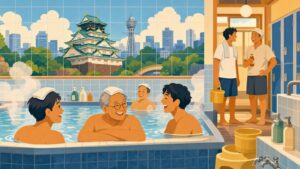
This brings us to the essential concept of hadaka no tsukiai, which means “naked communion” or “naked friendship.” It’s the idea that when you shed external markers of status, communication becomes more open and genuine. In an Osaka sento, you witness this every day. You might overhear lively discussions about the Hanshin Tigers’ latest game, unfiltered neighborhood gossip, or an elderly man offering unsolicited (but surprisingly insightful) advice on pickling vegetables to a younger person. This is where the true texture of city life emerges—raw, humorous, and deeply human.
This sharply contrasts with the often-reserved atmosphere of public spaces in Tokyo. On a Tokyo train or in a cafe, striking up a conversation with a stranger is uncommon, with a strong sense of personal space and polite anonymity. In Osaka, social barriers are much more permeable, and the sento is the ultimate expression of this. Don’t be surprised if an older woman starts chatting with you about the weather or asks where you’re from. This isn’t an intrusion—it’s an invitation. It’s the city’s social fabric being woven in real time, thread by friendly, curious thread.
Reading the Room: Sento Etiquette for Beginners
Visiting a sento for the first time can feel daunting, but the rules are rooted in simple common sense and communal respect. It’s less about strict protocol and more about being a considerate neighbor.
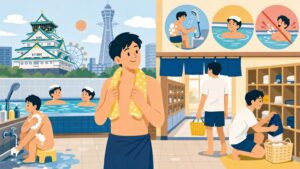
The cardinal rule is to wash thoroughly before soaking. You’ll find rows of small stools and washing stations equipped with showers, faucets, and buckets. Take a seat and scrub yourself down completely. This is not only about personal hygiene; it’s a fundamental act of respect for the shared water. When joining a communal bath, you are expected to enter clean, leaving behind the grime and stress of the day at the washing station. It marks the first step in the ritual of purification.
The infamous small towel often causes confusion. What’s it for? It serves multiple purposes. Use it to scrub your body at the washing station. When walking around the bathhouse, it can provide a bit of modesty. However, once you’re in the bath, the towel should never touch the water. Proper etiquette is to place it on the edge of the tub or fold it neatly and rest it on your head, as many regulars do. This may seem odd at first but soon becomes a natural part of the experience.
Then there’s the tattoo issue. Traditionally, tattoos have been linked to the yakuza, leading many onsen (hot springs) and sento to impose strict bans. However, Osaka, ever pragmatic, is often more lenient. Many neighborhood sento and larger “super sento” have relaxed their rules. The usual stance is, “as long as you’re not causing trouble, we don’t care.” Small, non-intimidating tattoos are often overlooked. Discretion and respect are key. If you have extensive body art, it’s wise to check the sento’s policy in advance, but you’ll find Osaka generally more accommodating than other parts of Japan. It’s a city that judges you more by your actions than your appearance.
Finding Your Sento: A Guide to Osaka’s Bathing Landscape
Just as Osaka’s neighborhoods each possess their own distinct character, so do its sento. They reflect the communities they serve. Exploring the different types is part of the joy of uncovering the city’s soul.
The Classic Neighborhood Joint
This is the machi-no-sento (town sento), the heart and soul of the tradition. It has likely been operated by the same family for generations, and it shows. The exterior may be modest, nestled between apartment buildings. Inside, you’ll find the classic features: a magnificent, often-fading mural of Mount Fuji painted above the main bath, old-fashioned massage chairs that rumble for 100 yen, and a vintage scale for weighing yourself. The lockers might have vintage keys on elastic wristbands. This is not a spa; it’s a practical facility. It’s where the elderly come for their daily soak and chat, and where families bring their children. The patrons are regulars, creating a close-knit, if informal, community. This offers the most authentic experience, a direct connection to the everyday rhythms of Osaka life.
The “Super Sento” Experience
At the other end of the spectrum is the super sento. These larger, modern complexes have transformed the basic bath into a full-scale wellness theme park. For a slightly higher entrance fee, you gain access to a dazzling range of facilities. There are multiple indoor and outdoor baths (rotenburo), each featuring different mineral properties or temperatures. You may find jet baths, carbonated baths that cover your skin in tiny bubbles, and the infamous denki-buro, or electric bath, which passes a low-level current through the water (approach with caution!). These facilities often include several types of saunas, restaurants, relaxation lounges with manga libraries, and massage services. The super sento reflects Osaka’s love of value for money—offering a full evening of entertainment and relaxation at a reasonable price. It’s the traditional sento concept, modernized and scaled up for maximum enjoyment.
The Design-Forward Sento
A newer trend is the rise of renovated, design-focused sento. Young entrepreneurs are taking over older bathhouses and giving them a contemporary twist. They might restore the beautiful original tilework while adding minimalist design elements, a craft beer bar in the lobby, or a curated selection of high-end soaps and shampoos. These places are designed to attract a younger demographic, including artists, students, and remote workers seeking a stylish third space. They demonstrate that the sento is not a relic of the past but a living tradition that continues to adapt and evolve, remaining relevant to the needs of a new generation.
The Post-Sento Glow: The Ritual Doesn’t End at the Exit
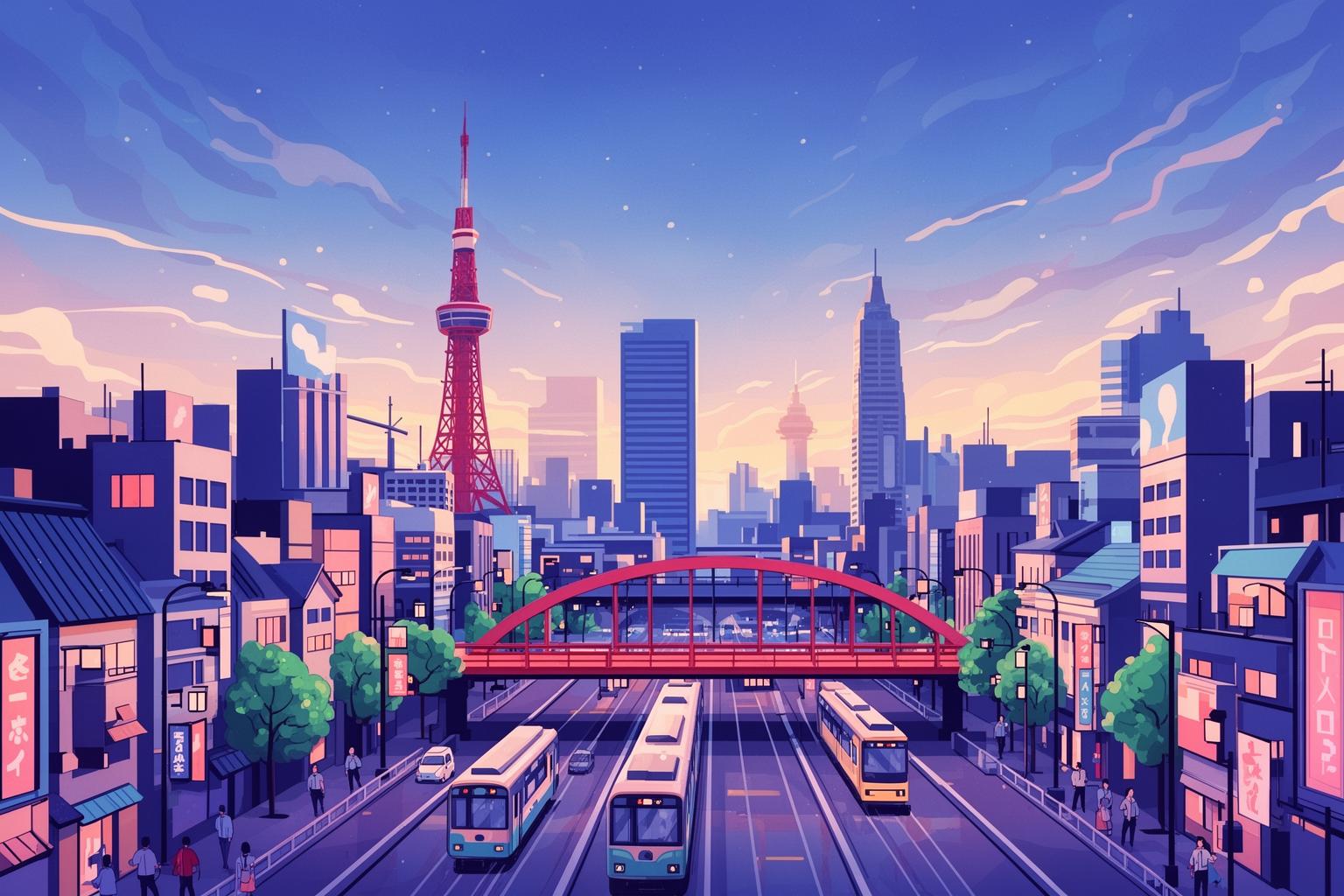
The magic of the sento experience goes beyond the bath itself. The moments immediately after you emerge are a vital part of the ritual. Stepping out of the humid bathhouse into the cool Osaka night air is pure bliss. Your skin tingles, your muscles relax, and your mind becomes remarkably clear. The city, which seemed so hectic just an hour ago, now feels calm and peaceful. You observe it from a place of serene detachment.
The Sacred Glass Bottle of Milk
Before you leave, there is one final, essential step. In the lobby of nearly every sento, you’ll find a cooler filled with small glass bottles of milk. The classic options are plain milk, coffee-flavored milk, or fruit-flavored milk. Drinking one of these ice-cold beverages while your body is still warm from the bath creates a peak sensory experience. It’s hydrating, mildly nostalgic, and deeply satisfying. This isn’t about refined taste; it’s about a simple, perfect pleasure. It’s a ritual shared by Osakans of all ages—a sweet, creamy punctuation mark at the end of the bathing experience. It embodies the city’s affection for life’s uncomplicated joys.
Carrying the Calm Home
The walk or bike ride home after the sento is a meditative journey. You feel like you’re floating rather than walking. You notice the glow of streetlights, the distant sound of a train, and the aroma of dinner cooking in a nearby apartment. You are fully present. When you enter your home, the transformation is complete. The space that was an office a short while ago is now unmistakably a home. The lingering stress of the workday has been washed away—not only from your body but from the room itself. The sento has created a powerful psychological buffer, enabling you to reclaim your personal space. You didn’t just close your laptop; you cleansed your entire state of being. The hard reset is finished.
Why This is Quintessentially Osaka
This entire ritual, from passing through the noren to the final sip of fruit milk, perfectly encapsulates Osaka culture. It emphasizes community over anonymity. The sento serves as a social hub, reflecting a city that values connection and conversation—a sharp contrast to the often-isolating nature of modern life, especially in a megacity. It’s about practicality. For just a few hundred yen, you receive a bath, a social gathering place, a health treatment, and a meditative escape all in one. Osaka residents appreciate a good bargain, and the sento offers exceptional value for both money and time spent. It’s also about the city’s ability to preserve its traditions while effortlessly blending them into modern life. A digital nomad using a century-old bathing practice to relieve the stresses of a 21st-century career perfectly symbolizes how Osaka functions. It’s a city that doesn’t abandon its past but finds smart, practical ways to make it relevant today. So next time you struggle to mentally clock out, forget the apps and productivity tricks. The best way to unwind in Osaka is just a short walk away, waiting behind a simple cloth curtain.