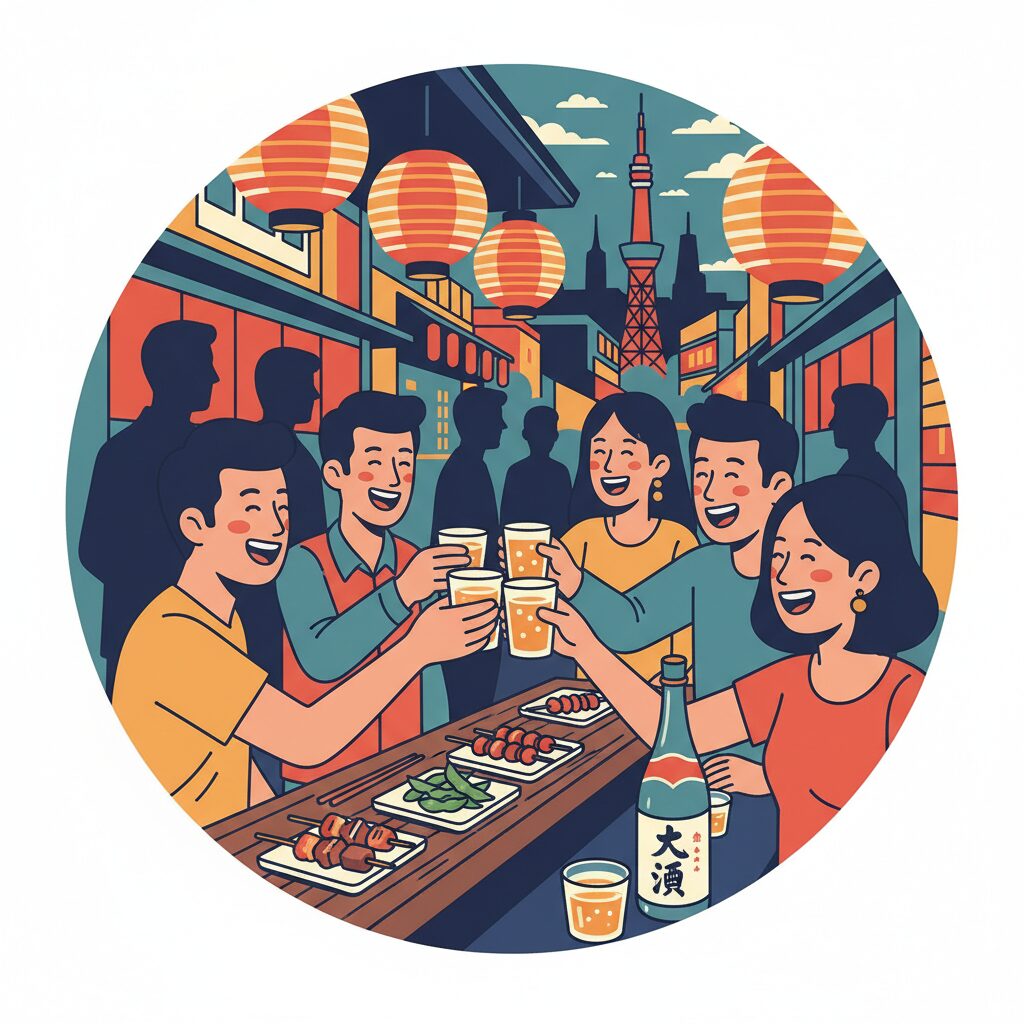
Living in Japan, you can get used to a certain kind of polite distance. People are kind, service is impeccable, but the wall between you and a stranger can feel a mile high. You learn to respect the bubble, to keep your voice down on the train, to navigate the city in a neat, orderly, and fundamentally separate way. Then you come to Osaka, and you hear the legends. “Oh, Osaka people are so friendly!” they say. “So open!” And they are, but that friendliness isn’t a magic spell that vaporizes the social walls. It’s a tool, and like any tool, you have to know where and how to use it. You can’t just walk up to someone on the Midosuji Line and expect a life story. So where is it? Where is that mythical place where the barriers drop and the real, unfiltered conversations happen? It’s not in a fancy cafe or a quiet, formal restaurant. It’s in a place with no chairs, fluorescent lighting, and a beer that costs less than your train ride. Welcome to the Tachinomi, Osaka’s standing bars, the city’s true social heart.
These aren’t just bars. They are social laboratories, designed with an almost accidental genius to dismantle the barriers that typically separate people in urban Japan. A Tachinomi is an invitation, a low-stakes bet on human connection. It’s where you go for a quick drink after work, a cheap bite before heading home, and maybe, just maybe, a conversation with a complete stranger that makes you feel, for the first time, like you’re not just living in the city, but you’re a part of it. Forget what you think you know about Japanese bars. We’re going to peel back the curtain on the subtle brilliance of the standing bar, and show you why it’s the perfect arena for understanding the pragmatic, direct, and deeply communal soul of Osaka.
For those captivated by the vibrant energy of tachinomi, exploring Osaka snack bars can offer an equally authentic glimpse into the city’s spontaneous social scene.
The Architecture of Interaction: Why Standing Breaks Down Walls
Step into a typical Japanese izakaya, and you’re promptly shown to your seat. It becomes your personal island for the evening. You have a table, a booth, or maybe even a private room with a sliding door—a fortress of solitude for you and your chosen companions. This setup is comfortable and private, but it also acts as a social dead end. Interaction with the adjacent table is not expected; in fact, doing so would slightly breach social protocol. The entire environment is designed to encourage separation. A Tachinomi, however, discards that rulebook entirely. The first thing you notice is the absence of chairs. This isn’t merely a cost-saving tactic; it’s the core principle shaping the social dynamic. By removing seats, the idea of personal territory vanishes. There are no tables to claim, no booths to hide away in. There is only the counter—a long, shared plank of wood or stainless steel that everyone leans against, shoulder to shoulder.
The Power of Proximity
The space is tight, often cramped. You’ll be standing elbow-to-elbow with a salaryman on one side and a construction worker on the other. This close proximity cracks the wall of social inhibition. It’s impossible to maintain a personal bubble when sharing the same square meter of floor space with three others. In other Japanese settings, this would feel uncomfortable. On a crowded train, people fixate on their phones to create a mental barrier compensating for the lack of a physical one. But in a Tachinomi, the situation differs. The shared purpose—eating, drinking, relaxing—turns physical closeness from an irritation into an opportunity. It grants you implicit, unspoken permission to acknowledge those around you. You’re all in it together, leaning on the same counter, reading the same menu scribbled on the wall.
Low Stakes, High Reward
Standing also shifts the nature of commitment. Sitting at a table suggests you’ll stay a while—it’s a time investment. Starting a conversation with a neighboring table can feel like a significant social move because the other party is a captive audience. In a Tachinomi, commitment is flexible. You might stay for ten minutes or two hours. This fleeting quality is freeing. You can start a conversation, and if it fizzles, no one feels awkward—they might leave in five minutes anyway, or you might be the one to go. The temporary nature of these encounters lowers social stakes almost to zero. It relieves the pressure of having a perfect, successful interaction. You can say anything—a comment about the food, the baseball game on the tiny TV, or the weather—and see what happens. If nothing happens, you just take another sip of your drink, and nothing is lost. This low-risk setting is the ideal incubator for spontaneous chats that are so rare in other areas of Japanese daily life. The entire setup is a clever piece of social engineering, bringing strangers together in a temporary, low-pressure space where connection becomes not just possible, but likely.
The Osaka Mindset on Display: Economic and Social Logic
To grasp the essence of Tachinomi, you need to understand the fundamental principles of the Osaka mindset, which often starts with money—not greed, but value. Osakans have a deep, almost religious commitment to the idea of kosupa, or “cost performance.” It’s a phrase you’ll hear everywhere. It’s not about being cheap; it’s about being clever. It’s the excitement of obtaining something of high quality at an unexpectedly low price. A Tachinomi is the shrine of kosupa. A large beer for 300 yen. A plate of perfectly fried tempura for 200 yen. A generous portion of sashimi for 400 yen. The prices are astonishingly low, yet the quality is frequently exceptional. This isn’t a dive bar serving mediocre food. It’s a place where the owner has harnessed their skill, market connections, and straightforward business model to deliver maximum satisfaction for minimal yen.
Pragmatism Over Polish
This emphasis on value shapes the entire experience and reflects the local communication style. A Tachinomi is unapologetically unpretentious. The décor is simple, the lighting stark, and the menus handwritten and taped to the wall. No effort is spent on appearances because all focus is on what counts: the quality of food and drink, and the speed of service. This is Osaka in a nutshell. It’s a culture that prioritizes substance over style, function over form. People here are known for being direct. They say what they mean and appreciate the same in return. There’s no need for the flowery, indirect language found in Tokyo or the delicate, layered etiquette of Kyoto. You just have to be clear. “Beer, please.” “This is delicious.” “How about those Tigers?” The Tachinomi atmosphere reflects this mentality. It’s straightforward. Prices are displayed on the wall, the kitchen is in full view, and the owner is right in front of you. There are no hidden fees, no performative politeness. It’s a transaction, sure, but a human one grounded in a shared appreciation of good value and honest communication.
The “Kamahen” Attitude
At the heart of this is the wonderfully pragmatic Osaka spirit of kamahen, which loosely means “it doesn’t matter” or “don’t worry about it.” It’s a philosophy of not sweating the small stuff. In a crowded Tachinomi, you’re bound to bump into someone. You might accidentally jostle a person’s arm. In a more formal social setting, that could cause tension. In Osaka, it’s no big deal. A quick nod, a muttered “suman” (a casual sorry), and it’s forgotten. This forgiving vibe is essential. It creates a space where people aren’t constantly anxious about breaking some complex, unspoken social rule. It gives you the freedom to be a bit louder, more expressive, more human. This kamahen spirit is what lets a foreigner, uncertain of all the unwritten rules, walk into a packed bar and feel not like an outsider, but just another person seeking a drink. It’s the social oil that keeps the Tachinomi running smoothly, enabling the easy, frictionless interactions that define the experience.
How Conversations Start: A Practical Guide to Tachinomi Socializing
Alright, so you find yourself in a crowded bar, surrounded by strangers. The theory sounds great, but how does it actually unfold? How do you move from being a silent observer to an active participant? The good news is that the Tachinomi itself equips you with everything you need. The atmosphere is filled with natural conversation starters, making entry points feel effortless rather than awkward. You don’t need a clever opening line; you simply need to pay attention.
The Holy Trinity of Icebreakers
There are three universal topics that are always safe bets in a Tachinomi. First, the food. Osakans are passionate about food and love discussing it. If the person next to you orders something that looks delicious, the easiest phrase is, “Sumimasen, sore nan desu ka? Oishisou.” (Excuse me, what is that? It looks delicious.) This isn’t a strange question—it shows genuine interest, and most of the time, you’ll receive a happy, detailed response. Sometimes, you might even be offered a taste. Second, the drink. Many standing bars feature a unique range of local sake or shochu. Pointing to the bottles and asking the taisho (the owner or master) for a recommendation is a smart move. Other customers often join in with their own tips, and just like that, a conversation begins. Third, and perhaps the most powerful, is the television. Almost every Tachinomi has a small TV in the corner, usually tuned to a Hanshin Tigers baseball game. The Tigers are Osaka’s forever beloved, albeit tragic, baseball team. The shared groans, cheers, and expert commentary from your fellow drinkers create a continuous flow of collective emotion. A simple “Ah, another strikeout,” or “Nice hit!” is all it takes to join in. You don’t even have to know the rules of baseball—just reflect the room’s emotion, and you’ll be accepted as one of their own.
The Role of the Gatekeeper: The Taisho
If you’re still hesitant, direct your attention to the taisho. The owner is the central sun around which the Tachinomi universe revolves. They’re not just a cook and bartender; they act as the social coordinator, the conductor of the ensemble. Start by engaging with them. Ask what’s recommended today. Compliment the food. Inquire how long they’ve run the place. The taisho is your gateway to the rest of the room. They know the regulars by name, who is friendly, and often take the initiative to introduce you. They might say, “This guy here is from America!” to the person beside you, and just like that, the conversation starts. Building a rapport with the taisho is essential. They’ll begin to recognize you, remember your order, and make you feel like part of the establishment. This is when you shift from being a faceless customer to a regular—a crucial step in feeling at home in the city.
Tachinomi vs. Tokyo’s Social Scene: A Tale of Two Cities
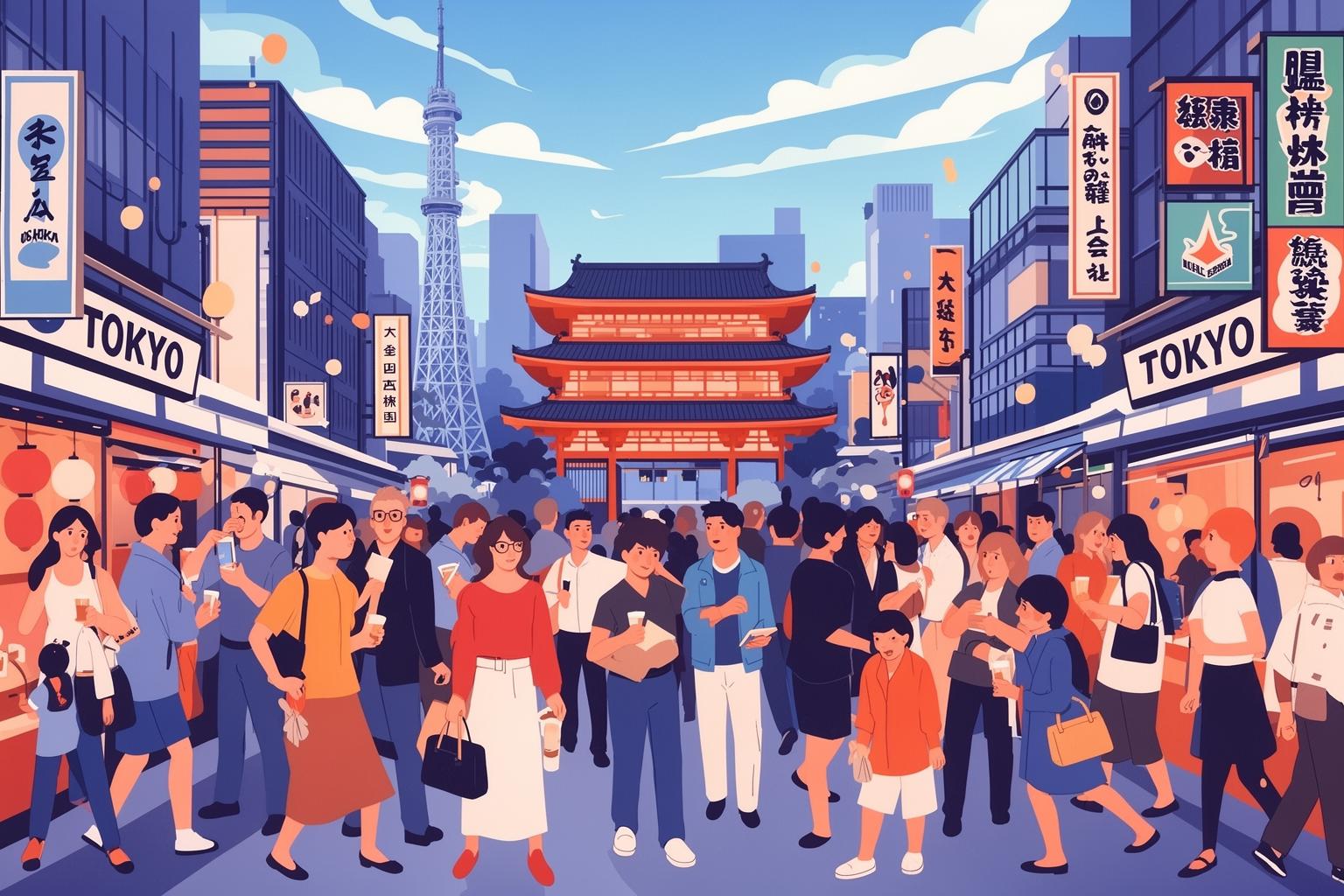
Comparing the social fabric of Osaka and Tokyo is a well-worn exercise, with the Tachinomi embodying the core of their differences. Tokyo is an incredibly dense city, yet that density often fosters a protective anonymity. During rush hour on the Yamanote Line, you’re packed among hundreds of people, but you may have never felt more isolated. The city’s social life often mirrors this; it is more structured and curated. People connect through work, established hobby groups, or apps. Interactions tend to be planned and scheduled events. You go to a bar with your friends; you don’t necessarily go to a bar to make friends. The default is to keep to yourself and respect invisible boundaries that enable millions to coexist peacefully in such a confined space.
Porous Social Membranes
Osaka, on the other hand, follows a different principle. Its social boundaries feel more porous and permeable. The line between public and private spaces continually blurs. You’ll notice shop doors left wide open to the street, with neighbors chatting from their doorways. The Tachinomi perfectly expresses this porousness. It’s a public place that operates like a private, communal living room. It breaks the big city’s anonymity into manageable, human-sized parts. While Tokyo can seem like one vast, endless metropolis, Osaka feels like a collection of distinct villages, each with its own character and favorite local spots. The Tachinomi is like the village pub. It’s where you catch up on neighborhood gossip and see the same familiar faces day after day. This creates a sense of casual accountability and familiarity often missing in Tokyo’s larger, more anonymous social scene. In a Tokyo bar, you’re a customer. In an Osaka Tachinomi, after a few visits, you start to feel like a neighbor.
Spontaneity vs. Scheduling
This fundamental difference in social structure shapes the rhythm of daily life. In Tokyo, a night out is often an event that calls for planning and coordination. In Osaka, stopping by a Tachinomi is more of an impulse—a casual punctuation to the workday. It’s that low-commitment aspect we discussed. This encourages a culture of spontaneity. You don’t need a reason or a plan to pop in for a single beer and a plate of pickled radish. Because the barrier to entry is low, both financially and socially, it becomes a regular, easy part of life. This is a significant difference. It means that chances for random, positive social interaction are woven into a normal Tuesday evening rather than being limited to a planned Saturday night out. For a foreigner trying to find their footing, this is a game-changer. It offers access to the local social world without the need for a formal invitation.
Beyond the Beer: What You Really Learn at a Standing Bar
Your initial visits to a Tachinomi might seem like just a cheap way to get a meal and a drink. However, if you keep returning, if you listen and watch carefully, you’ll realize you’re gaining something far more valuable. You’re receiving an education in the authentic Osaka. This is a front-row seat to the city’s living culture, far removed from the polished tourist areas and sanitized guidebooks. Here, you hear raw, unfiltered Osaka-ben, the city’s famously fast and expressive dialect. You won’t merely learn words; you’ll absorb the rhythm, the intonation, the humor. You’ll catch the punchlines of jokes, complaints about a bad boss, and passionate debates about baseball strategy. It’s both a language lesson and a cultural immersion combined.
The City’s Living Room
The Tachinomi is the heartbeat of the neighborhood. The conversations swirling around you are a live feed of what matters to the people. You learn about the new supermarket opening nearby, the local festival coming next month, and the fortunes of the nearby shopping arcade. It’s a hyper-local news source, a living bulletin board that links you to the small dramas and triumphs of the community where you live. You begin to see the city not just as a map of train stations but as a web of human relationships and shared histories. You recognize the same old man every day at 5 PM, nursing a single cup of sake. You learn the name of the taisho’s daughter. You notice when a regular hasn’t shown up for a few days. These small threads of connection start weaving you into the local fabric.
For a non-Japanese resident, this experience can be profoundly meaningful. It’s easy to live in Japan for years and still feel like an outsider, interacting with the country through a transactional lens of convenience stores and train stations. The Tachinomi offers a way beyond that. It’s a space where your foreignness can be a curiosity, an icebreaker, rather than a barrier. When the gruff-looking man next to you turns and asks, “Where are you from?” and then shares his one trip to Hawaii thirty years ago, you’re no longer just a ghost in the machine. You become a person, sharing a moment in a small, lively room. The first time the taisho sees you walk in and starts pouring your usual drink without your asking, that’s the moment. It’s a simple act of recognition, but it feels like a graduation. You haven’t just found a good spot for a cheap beer; you’ve found a small piece of home.