What does a neighborhood do after the shops close, the children come home, and the commuter trains have carried most people away?
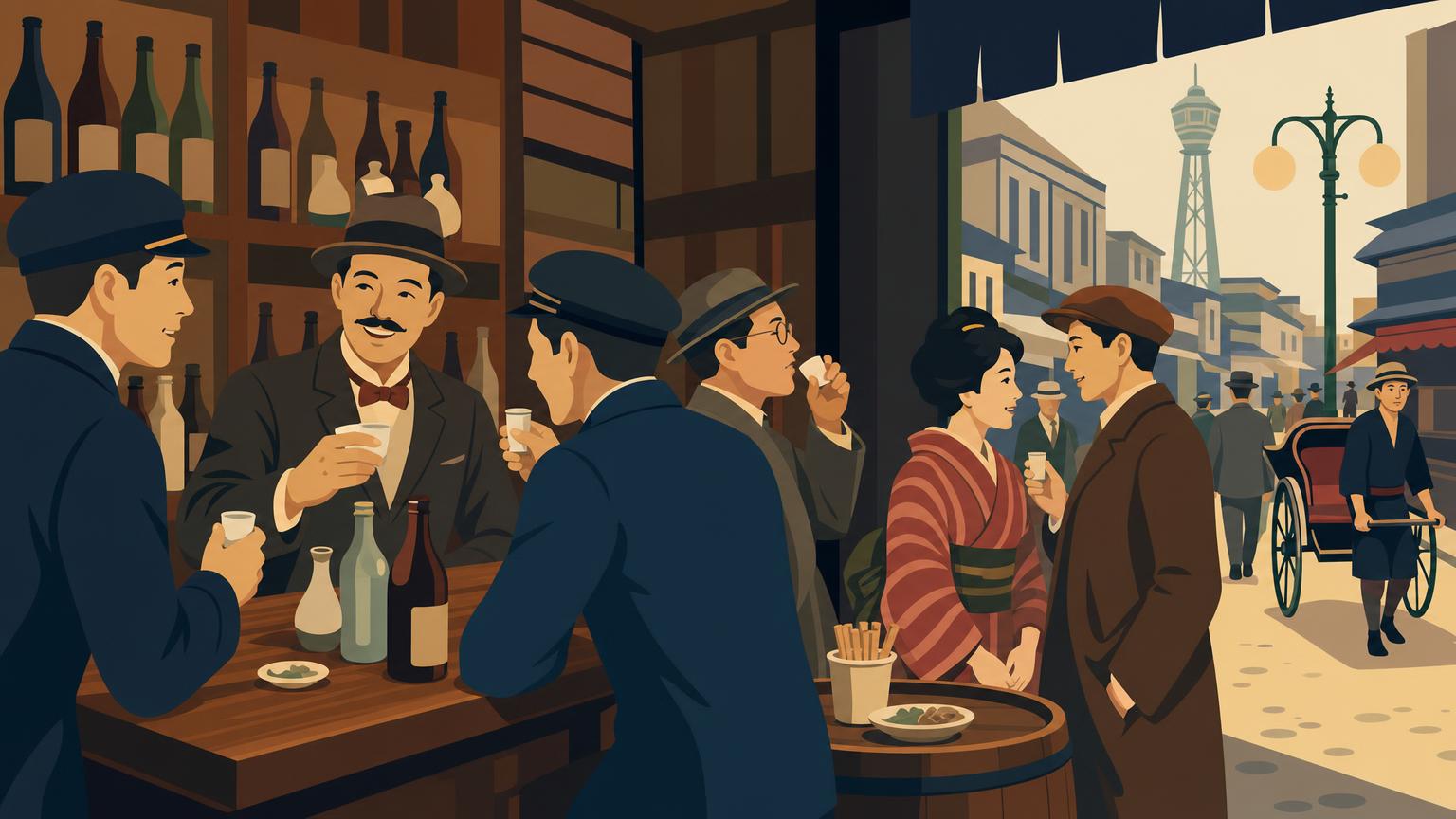
In Taisho, one answer is: people gather inside a liquor store, stand beside a counter, pour another glass, and talk about whatever happened that day.
For a foreign resident, this can be confusing at first. The building may look like an ordinary bottle shop. There may be no bright sign saying “bar.” There may be no menu in English, no reservation system, and sometimes not even chairs. Yet after dusk, the shop can quietly change character. A few customers arrive from nearby homes or factories. Someone buys a beer, opens it at the counter, and stays. Another person brings in a small dish. A regular greets the owner without ceremony. The place begins to feel less like a business and more like a shared neighborhood room.
This is the world of kakuuchi: drinking inside a retail liquor store. It is related to, but not exactly the same as, an izakaya or an ordinary tachinomi standing bar. In a kakuuchi, the store’s original identity remains visible. Bottles are still sold. Prices are often close to retail prices. The owner may be serving drinks, but they are also operating a local shop where people buy alcohol to take home.
Taisho is especially interesting because its drinking culture is tied to industrial work, river transport, small factories, working-class neighborhoods, and the long presence of Okinawan families in the ward. The result is not a polished nightlife district. It is something more ordinary and, for that reason, more revealing: a place where Osaka’s ideas about conversation, personal space, humor, and neighborhood belonging become visible after work.
The point is not to treat Taisho as a hidden attraction. It is to understand what a small local drinking place tells you about living in Osaka. If you are deciding where to live, trying to make local connections, or wondering why Osaka often feels less formal than Tokyo, a kakuuchi can offer a useful lesson. The lesson is not simply that Osaka people like drinking. It is that everyday sociability here often happens without a formal invitation.
What a Kakuuchi Really Is in Everyday Osaka
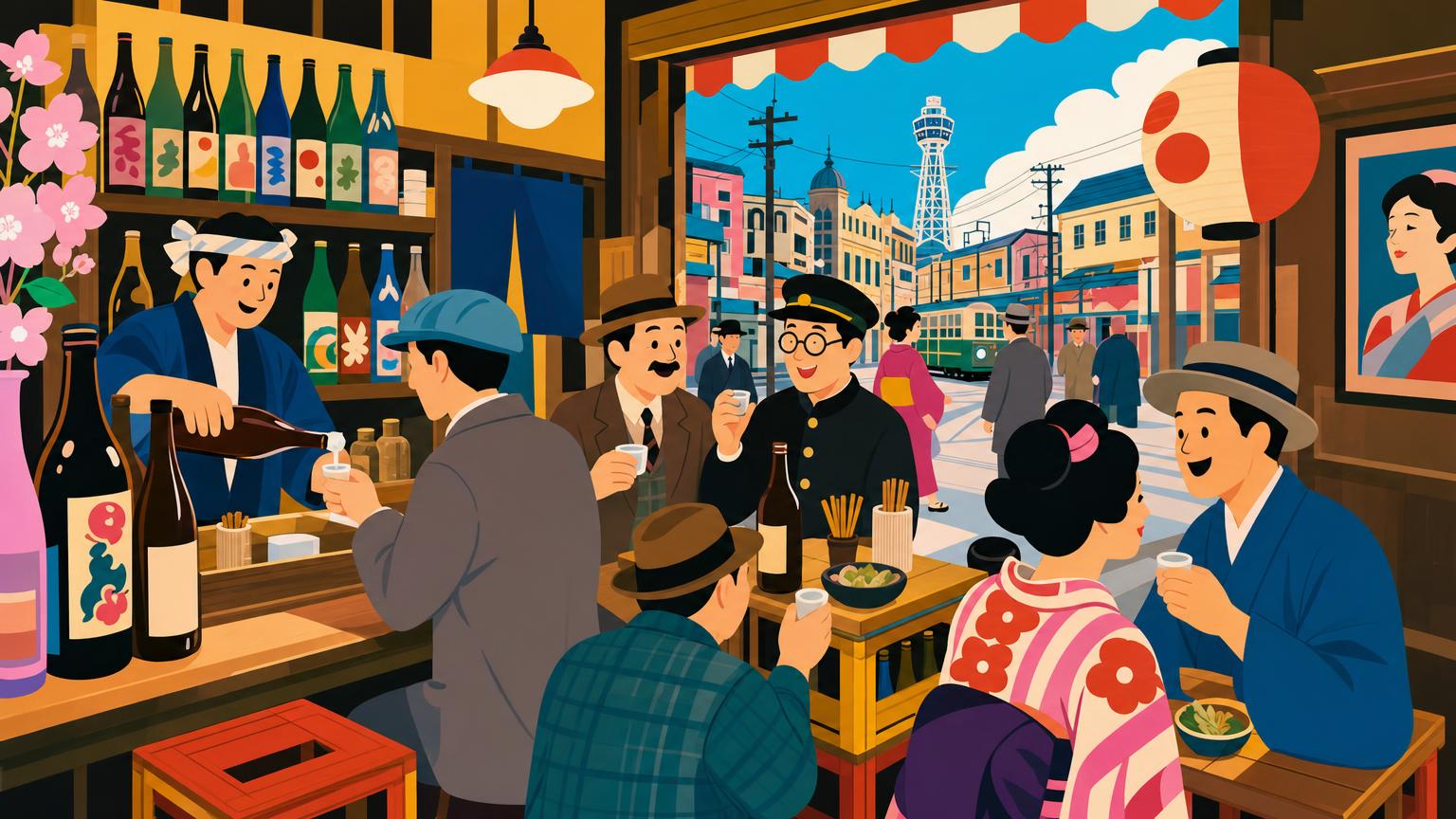
The simplest definition is practical: a kakuuchi is a place where you can drink at a liquor store.
The term is commonly associated with drinking at the corner of a sake shop, although its history and regional use are more complicated. One explanation links the term to drinking sake from a square wooden cup, or masu. Another connects it to drinking at the corner of a liquor counter. In modern usage, especially outside Osaka, kakuuchi usually refers to a liquor retailer that allows customers to drink on the premises. The official tourism guide for Fukuoka describes it as a standing bar set up in a corner of a liquor store.
The physical arrangement is often modest. There may be a refrigerator filled with cans and bottles, shelves of sake, a narrow counter, a few stools, and several small dishes. Customers may take the drinks from the refrigerator themselves, or the shopkeeper may hand them over. Payment may take place immediately, one item at a time. Food may be available in packets, from a small prepared tray, or not at all.
This lack of separation matters. In a regular bar, you enter a place designed for drinking. In a kakuuchi, you enter a shop that has made room for drinking. The shop has not completely turned into a bar; its original function remains part of the atmosphere.
That is why a kakuuchi can feel more casual than an izakaya. You are not necessarily stopping in for a full meal or a long evening. You might stop for one beer before going home. You might buy a bottle for your apartment and drink one can while deciding which snack to take with you. You might see the same customer who was there yesterday, sitting in the same spot and discussing the weather as if the conversation had never really ended.
For a foreign resident, the difference can be easy to overlook. Many drinking places in Japan have similar counters, similar beer, similar small dishes, and similar low lighting. The important distinction is the relationship between retail and hospitality.
Kakuuchi, izakaya, and tachinomi are not the same
An izakaya is a Japanese drinking-and-eating establishment. It may be a tiny family business, a stylish restaurant, or a large chain. Customers generally sit at tables or at a counter, order food and drinks from a menu, and receive a bill at the end. Many izakaya add an otoshi, a small appetizer that also functions as a seating or service charge.
A tachinomi is a standing bar. The word literally means drinking while standing. Some tachinomi are connected to liquor stores, but many are independent bars or restaurants designed from the outset for standing customers. Their menus may be more extensive than those of a traditional kakuuchi, and their prices may be higher or lower depending on the area.
A kakuuchi is therefore best understood as an overlap. It may have standing customers like a tachinomi, drinks and snacks like an izakaya, and shelves of bottles like a liquor store. In Taisho, that overlap is often more important than the label.
You do not need to use the perfect term when speaking with a local person. If you say, “Can I drink this here?” or ask, “Is this a standing bar?” the owner will usually understand what you mean. The real skill is noticing how the place operates before behaving as if it were a conventional restaurant.
Why Taisho Makes the Kakuuchi Feel Like a Community Room
Taisho is not a single, uniform neighborhood. The area around Taisho Station has a different rhythm from Hirao, Minamiokajima, Sangenya, and the streets near the major rivers and industrial facilities. The ward contains apartment buildings, older detached homes, workshops, warehouses, shopping streets, schools, welfare facilities, and busy roads. Someone living near the station may experience Taisho very differently from someone who takes a bus to a more distant residential area.
Still, several features help explain why kakuuchi culture feels especially meaningful here.
A neighborhood shaped by work and movement
Taisho developed through fishing, river transport, industry, textile production, and manufacturing. Osaka City’s official tourism information describes the ward as a delta between the Shirinashi and Kizu Rivers, with industrial growth accelerating during the Meiji period. The Osaka Spinning Company’s introduction of steam-powered machinery in 1883 helped earn Osaka its old nickname, “the Manchester of the East.”
This history is more than a background story for museums. It helps explain the ward’s physical and social character. Taisho has long been home to people whose working lives revolved around factories, transport, shops, construction, and practical trades. A drinking place in such a neighborhood does not need to present itself as an experience. It can simply be somewhere to pause after work.
In cities where nightlife is concentrated in fashionable central districts, drinking may be treated as a special occasion. In Taisho, a small shop can remain connected to the ordinary day. A customer may still be wearing work clothes. A bicycle may be parked outside. Someone might be discussing a delivery, a repair, a football result, or a family matter rather than planning a night out.
That is what gives the kakuuchi the feeling of a living room. It does not recreate a domestic living room exactly; the customer is not relaxing in private. But the social function is similar: people come to a familiar place, let go of the day’s formality, and share time without needing a major reason.
“Little Okinawa” and the meaning of local familiarity
Taisho is widely associated with Okinawan heritage. Osaka’s official information sources describe roughly one-quarter of Taisho’s population as having roots in Okinawa and identify Hirao as a center of Okinawan food and culture.
This does not mean that everyone in Taisho is Okinawan, or that the ward can be reduced to a single cultural identity. It means that migration, family history, food, music, language, and neighborhood relationships have shaped the area for more than a century. The presence of Okinawan restaurants, shopping streets, and community traditions forms part of the ward’s everyday landscape.
For a foreign resident, this offers a useful reminder about Japanese cities. A neighborhood’s identity is often built from overlapping histories rather than a single official slogan. People may identify with Osaka, Taisho, Okinawa, a family trade, a school district, or an apartment complex at the same time.
Kakuuchi spaces suit this kind of layered identity because they are not formal cultural institutions. They are ordinary businesses. A shopkeeper may sell sake, awamori, beer, snacks, and cigarettes while also knowing which customers live nearby. A conversation may shift from local gossip to Okinawan food, baseball, or the cost of utilities without anyone announcing the change of subject.
The feeling of belonging does not come from everyone being the same. It comes from repeated recognition. People know who usually comes in, who is new, who works nearby, who has moved away, and who has not appeared for several days.
Osaka’s version of informality
People often say that Osaka is friendlier than Tokyo. This statement is too vague to be very useful. Osaka people are not automatically warmer, more generous, or more interested in foreigners. What may feel different is the way informality is used in everyday interactions.
In Osaka, humor may be used to reduce distance quickly. A shopkeeper might tease a customer for ordering too little food. A regular may comment on your accent. Someone may ask where you are from before learning your name. This can sound direct, but directness does not always indicate intimacy. Sometimes it is simply a way of testing whether you are comfortable taking part.
A kakuuchi makes this especially visible because there is very little formal structure to hide behind. There may be no host explaining the menu or introducing guests. You enter, observe, order, and gradually become part of the room’s rhythm. A small joke, a nod, or a brief comment about the weather may be enough to begin.
The same informality can also feel uncomfortable. Osaka humor is not always easy for outsiders to interpret. A comment may be playful, practical, nosy, or all three at once. If you expect a polished service interaction, you may think the owner is being rude. If you expect instant friendship, you may mistake a joke for a personal invitation.
The more accurate interpretation is usually simpler: the room is less formal than a conventional restaurant, and people are free to speak with less distance. You still need to respect boundaries. You do not need to perform Osaka humor, and you do not have to drink more than you want.
After Dusk: How the Kakuuchi Changes the Street
During the day, a liquor store forms part of the neighborhood’s retail system. Customers purchase beer, shochu, sake, wine, or soft drinks and take them home. The shop may be quiet, and the counter may be used for payments, deliveries, or conversation.
After dusk, that same counter can become a social center.
The change is gradual rather than theatrical. There may be no clear moment when the lights change or the music begins. One customer finishes work. Another stops on the way home. Someone opens a can. Someone else asks whether the owner has received a particular sake. A third person enters only to buy a bottle but ends up staying for ten minutes.
This is why the phrase “community living room” is useful. The kakuuchi provides a shared indoor space between the workplace and the home. It is not a private room, but it is familiar. It is not free, yet the cost of staying is often low. It requires no reservation, membership, or elaborate social plan.
The importance of staying for a short time
Foreign residents sometimes assume that social drinking in Japan must be a long commitment. They may imagine an evening that begins with dinner, continues through several bars, and ends late at night. That can happen, but it is not the only pattern.
A Taisho kakuuchi may also be used for a much shorter visit. Twenty minutes can be enough. One drink can be enough. The purpose may simply be to see familiar faces rather than to become intoxicated.
This short-stop culture is particularly useful for people who live alone. A resident may have spent the day speaking only with colleagues or communicating by message. A quick drink at the local shop provides a small amount of human contact without the obligation of organizing a social event.
For older residents, the shop may be one of the few places where someone notices when they have not appeared. For a self-employed worker, it may offer a break between jobs. For a young office worker, it may be a less expensive alternative to a fashionable bar in Umeda or Namba. For a foreign resident, it can become a place where recognition develops gradually.
The first visit may be anonymous. By the fifth visit, it may include a greeting. After several months, the owner may remember your usual drink. This is not a dramatic friendship story, but rather the quieter process through which a neighborhood becomes familiar.
Conversation is often optional
A common misunderstanding is that entering a local kakuuchi means you must immediately talk to everyone. That is not the case.
Some customers come specifically to converse. Others drink quietly, look at their phones, watch television, or listen to the room without speaking. The shared space works because participation can take different forms.
You can be present without becoming the center of attention. A greeting when you enter, a polite order, and a brief acknowledgment when someone speaks to you are usually enough. If the owner or a regular asks you a question, answer briefly and see whether the conversation continues naturally.
This is one of the more important lessons about Japanese social life. Belonging does not always mean constant verbal participation. Sometimes it means being allowed to share a space without having to explain yourself.
What a Foreign Resident May Misunderstand
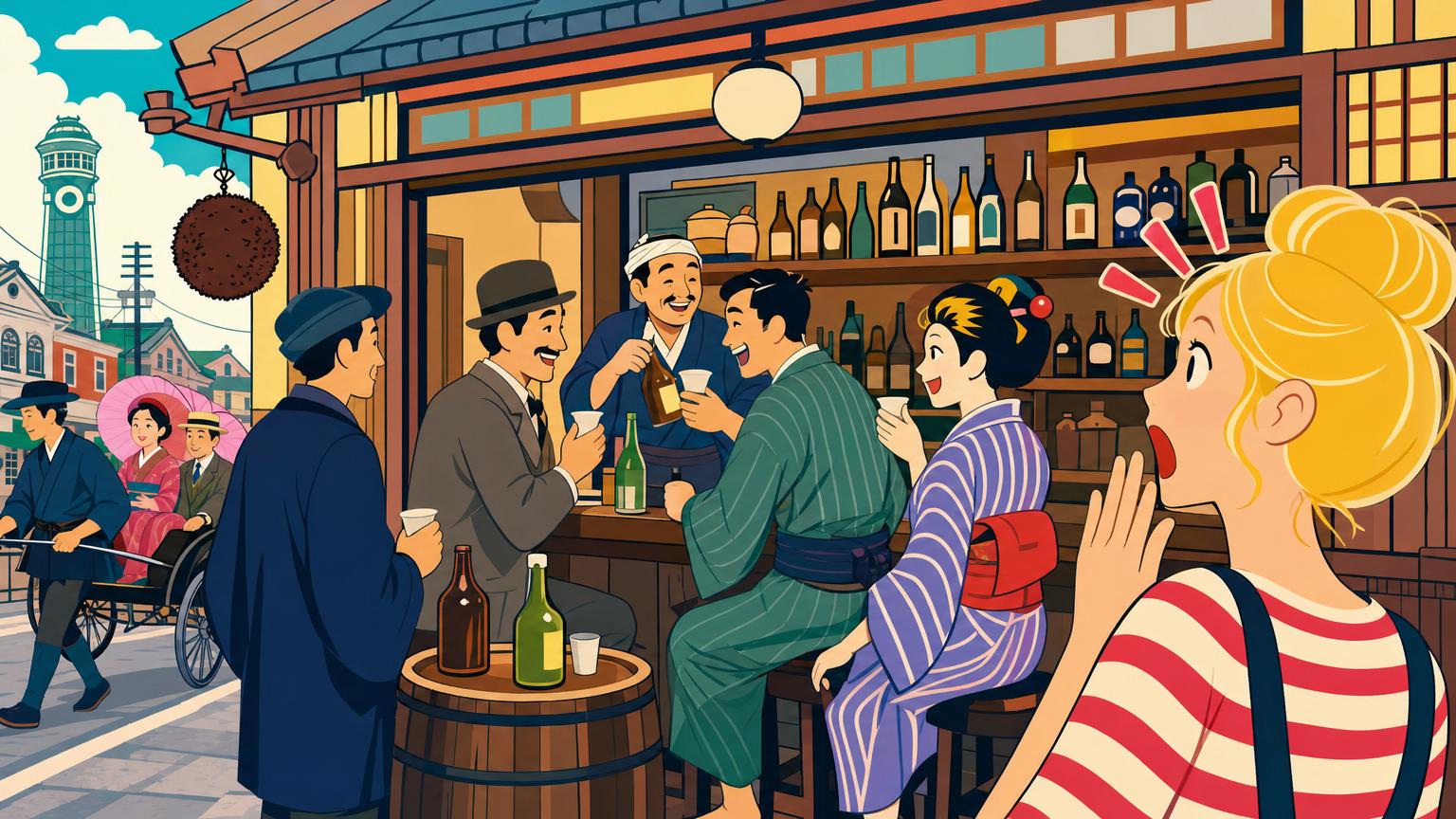
A local drinking spot may look simple, but its social signals are not always obvious. Foreign residents often make understandable mistakes because they apply expectations from pubs, cafés, or bars in their own countries.
Mistaking informality for unlimited openness
A relaxed atmosphere does not mean that everything is allowed. A small shop may welcome conversation while still expecting customers to keep their voices low, avoid blocking the entrance, and leave enough room for others. The owner may joke with regulars but dislike customers who treat the shop like a party venue.
The atmosphere is casual because people understand the boundaries. Those boundaries are often not written down.
Assuming the cheapest price means unlimited time
Kakuuchi drinks are often budget-friendly, but the shop is not a public lounge. You are paying for a drink and a place to consume it. If the space is small and customers are waiting, staying for hours over a single item may be considered inconsiderate.
There is no universal time limit, so read the room. If people are standing, drinking, and leaving after one or two items, follow that rhythm. If the owner encourages you to stay, you can remain longer. If the shop becomes crowded, finish your drink and make room.
Believing that “friendly” means English service
Taisho has international residents, but many neighborhood shops operate mainly in Japanese. The owner may be kind and still lack the vocabulary to explain every drink in English. Do not interpret a language barrier as rejection.
A few practical Japanese phrases can help:
- “Koko de nonde mo ii desu ka?” means “May I drink here?”
- “Nama hitotsu” means “One draft beer.”
- “Kore wa nan desu ka?” means “What is this?”
- “Osusume wa nan desu ka?” means “What do you recommend?”
- “Okaikei onegaishimasu” means “The bill, please.”
- “Arigatou gozaimasu” is a polite way to say thank you.
You do not need perfect pronunciation. A calm voice, a pointing gesture, and a willingness to observe what other customers do will often carry the interaction.
Assuming the loudest person represents everyone
Osaka is famous for humor, conversation, and energetic talk. However, everyday Osaka is not one continuous comedy performance. Many people are quiet, tired, shy, or simply focused on their drinks.
A kakuuchi can contain loud conversation and long silences in the same room. The owner may speak rapidly with a regular and then serve another customer with only a nod. Do not assume that you must match the loudest voice. The local skill is often knowing when to speak and when to leave space.
How to Enter a Taisho Kakuuchi Without Feeling Lost
The best approach is to observe first and act second.
Look through the entrance if possible. Is there a visible drinking counter? Are customers standing with open cans or glasses? Are small dishes or a refrigerator accessible to customers? Does the shop appear to operate only as a liquor store, or are people clearly drinking inside?
If you are unsure, ask directly: “Koko de nonde mo ii desu ka?” This is better than opening a bottle without permission. Some liquor stores sell alcohol only for takeaway, while others have a dedicated standing area. Some operate differently depending on the time of day.
Once inside, stand somewhere that does not block the counter or entrance. Observe how other customers order. If they choose a can from a refrigerator and bring it to the counter, follow that system. If the owner serves the drinks, wait to be served. If people pay immediately, be prepared to pay immediately.
Your first visit should be modest. Order one familiar drink, such as a beer or canned chuhai, and perhaps one snack. This allows you to learn the system without creating pressure.
Cash-on-delivery is common
Many traditional neighborhood kakuuchi operate with immediate payment. You may pay for each drink or snack as you receive it. In English explanations of Japanese bar service, this is often called cash-on.
Bring Japanese yen, including coins and small bills. Not every older shop accepts credit cards, transit cards, or mobile payments. Even as digital payments become more common in Japan, a small independent liquor store may still prefer cash because its system is simple and familiar.
The practical reason is not just technology. Immediate cash keeps the transaction clear. The owner does not need to keep track of a running tab for every customer, and you do not have to wonder whether the final bill includes a service charge, seating fee, or automatic appetizer.
Keep your wallet ready, but do not place money directly on top of food or drinks. If a small tray is provided, use it. If the owner tells you the price, pay it without making the transaction unnecessarily complicated.
Self-service has a rhythm
In some shops, you select your own drink from a refrigerator. You may open the can yourself, take a glass, or choose a small dish from a counter. In other shops, the owner handles everything. There is no single national kakuuchi procedure.
Watch first. If another customer takes a bottle, opens it, and places the empty container in a particular area, you can do the same. If people return their glasses to the counter, return yours as well. If customers leave their empty containers in front of them until the owner collects them, follow that pattern.
These details may seem minor, but they demonstrate respect for the shop’s labor. A kakuuchi often has very little staff, so customers help keep the room running smoothly by clearing their own spaces, returning dishes, and avoiding unnecessary work.
Do not create a private table
Standing counters are shared spaces. Avoid spreading bags, coats, phones, and food across a large area. If you have a backpack, keep it at your feet or in the place designated by the shop. Do not put it on a neighboring stool or lean it against another customer’s belongings without asking.
If you are with friends, remember that the room is not reserved for your group. Keep the conversation at a volume that allows other customers to continue their own conversations. A small shop can become loud very quickly, particularly when several people are speaking different languages.
Smoking may still be part of the atmosphere
Some older drinking establishments historically permitted smoking, although rules and local practices continue to change. Never assume that smoking is allowed simply because you see an ashtray. Ask or follow clearly posted signs. If smoking is permitted, avoid blowing smoke toward food, the entrance, or another customer.
For nonsmokers, this is one practical reality to consider. A traditional kakuuchi may provide social warmth without offering the clean-air environment of a modern café or newer bar. If smoke bothers you, it is perfectly acceptable to leave politely.
The Drinks and Food Are Part of the Social Language
A kakuuchi menu may seem ordinary: beer, sake, shochu, whisky highballs, canned drinks, tea, and small snacks. However, the way people choose them can reveal something about local habits.
Beer is an easy first order because it is familiar and served quickly. Bottled beer may be shared or poured into small glasses. Canned chuhai is common and affordable. Shochu may be served with water, soda, or tea. Sake may be served cold or warm, depending on the shop and the customer’s preference.
You do not need to order an expensive or unusual drink to show respect. In fact, choosing something simple and taking time to observe is often better than ordering a drink you do not understand simply because you want to appear adventurous.
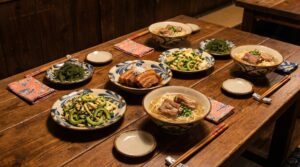
Food may include dried seafood, pickled vegetables, boiled dishes, tofu, sausages, eggs, grilled items, or packaged snacks. In a kakuuchi, food often complements the drink rather than becoming the main event. You may see someone eating a small dish slowly while continuing a conversation for half an hour.
The snacks also offer an easy way to interact. If you do not know what something is, ask the owner. Pointing and saying “Kore wa?” is enough to start a conversation. Even if the explanation is too fast, you may learn the name and search for it later.
Do not photograph people or their food without permission. A local drinking place is someone’s everyday space, not a stage. The fact that it looks interesting to you does not make it public content.
Taisho Compared With Umeda, Namba, and Tokyo
If you have lived in or visited Tokyo, you may notice that Taisho’s drinking culture feels less concentrated and less commercially structured.
Tokyo has countless neighborhood bars, standing bars, and liquor-store drinking spaces. The difference is not that Tokyo lacks intimacy. Rather, Tokyo often makes you work harder to recognize the neighborhood connections. Many areas have high rents, heavy commuter traffic, and a large flow of people who do not live nearby. A small bar may be deeply local, but it may also be surrounded by a much larger commercial system.
Umeda is a major transportation and business center. Namba is more visibly associated with entertainment, restaurants, shopping, and late-night activity. Both areas contain ordinary local drinking places, but the central-city atmosphere can make drinking feel like part of an outing.
Taisho has a different balance. Around the station, you still find commuter traffic and businesses. Away from the station, the rhythm becomes more residential and dispersed. A kakuuchi may serve people who live within walking or cycling distance rather than those who have come from across the city for a night out.
This changes the meaning of recognition. In a central district, a bar can rely on a steady stream of new customers. In a neighborhood shop, repeat business matters more. The owner has an incentive to remember regulars, maintain relationships, and keep the atmosphere comfortable for people who will return the next day.
That is one reason Osaka can feel more conversational than Tokyo in certain everyday settings. The issue is not that Osaka residents have a different personality. Rather, the built environment and commercial scale create more situations in which people repeatedly encounter the same neighbors.
For someone deciding whether Osaka is a good place to live, this distinction matters. If you want anonymity, efficiency, and a wide range of international services, central Tokyo may feel easier. If you want a city where a small local shop can gradually become part of your routine, Osaka may offer more opportunities for that kind of low-pressure familiarity.
The Community Function Beyond Drinking
It is important not to romanticize the kakuuchi. These places may be smoky, cramped, old-fashioned, or difficult to enter if you do not understand the local rhythm. Not every shop welcomes every customer. Some are essentially private circles, even if they are technically open to the public.
Still, their community function is genuine.
A neighborhood kakuuchi can provide information. Customers discuss local construction, school events, bus changes, weather damage, food prices, and people who need help. The shopkeeper may know which nearby restaurant has closed, which apartment has new tenants, or which customer has been unwell.
This kind of information rarely appears in formal city guides. Instead, it spreads through repeated contact. People learn who can repair a bicycle, where to buy a particular ingredient, which clinic is convenient, or when a neighborhood event will take place.
The kakuuchi also offers a form of social monitoring. This does not necessarily mean surveillance in a negative sense; it means that people notice one another. They notice when a regular is absent, when someone is drinking too heavily, or when a stranger seems confused. In a society where many people live alone, being noticed can provide a quiet form of security.
For foreign residents, this is one of the most valuable aspects of neighborhood life. Local integration is not always developed through formal international exchange events. It may instead happen through repeated, ordinary contact: buying a drink, saying hello, remembering a name, asking about a dish, and returning the following week.
You should not expect the kakuuchi to solve loneliness immediately. Japanese residents also need time to build trust. However, the setting makes repeated contact possible without requiring a formal friendship.
How to Build Trust Without Performing “Japaneseness”
Foreign residents sometimes feel pressured to behave perfectly in local places. They study etiquette, memorize phrases, and worry that every mistake will reinforce a stereotype about foreigners.
This pressure can make social interactions more difficult. People may sense that you are performing rather than participating.
A better approach is modest consistency. Arrive politely. Pay promptly. Keep your space tidy. Avoid interrupting conversations. Ask when you do not understand. Apologize briefly if you make a mistake. Return another day.
You do not need to imitate an Osaka accent or pretend to understand jokes you missed. You do not have to drink sake if you prefer beer. You do not need to stay late to prove that you belong.
Trust often develops when people see that your behavior is consistent. The owner learns that you do not cause trouble. Regulars learn that you are curious but not intrusive. You learn the shop’s pace and the difference between a question that invites conversation and one that should be answered briefly.
This is also where Osaka’s directness can help. If you are unsure, ask. If you cannot eat something, explain. If you want to leave, say thank you and go. A clear, polite action is often easier for people to respond to than silent anxiety.
When a Kakuuchi Is Not the Right Place for You
A neighborhood kakuuchi is not necessarily comfortable for every foreign resident.
It may not be the right fit if you want a quiet meal with detailed explanations of every ingredient. It may also not suit you if you dislike standing, smoke, close physical proximity, or cash-only transactions. Likewise, it may not be ideal if you want a private conversation with a large group of friends.
You may prefer an izakaya or modern tachinomi if you want a printed menu, predictable opening hours, electronic payment, or more space. There is no cultural prize for choosing the most traditional option.
Understanding Osaka means recognizing its variation rather than declaring one experience authentic. The city includes old liquor stores, international cafés, chain restaurants, stylish cocktail bars, family diners, and home drinking. A neighborhood kakuuchi is one part of daily life, not a test of whether you have become local.
The useful question is not, “Can I handle this place?” but, “What kind of social environment helps me live well here?”
Practical Questions About Taisho Kakuuchi Life
Is Taisho a good place to live for foreign residents?
It can be, depending on your needs. Taisho provides train access to central Osaka, while the ward also contains quieter residential areas, shopping streets, industrial zones, and neighborhoods with strong local identities. The area around the station and the deeper residential districts can feel quite different.
Potential advantages include a more local atmosphere, reasonably practical daily shopping, access to Osaka’s bay-side areas, and the opportunity to become familiar with the neighborhood. Challenges may include fewer English-language services, less convenient access to some international amenities, dependence on buses in certain areas, and a social environment that rewards patience.
If you are thinking about moving there, visit at different times of day. See the area in the morning, after work, and on a quiet weekend afternoon. Check the route from a potential home to the station, supermarket, clinic, and late-night convenience store. Listen to the neighborhood rather than judging it solely from a visit to a restaurant.
Are Taisho kakuuchi bars expensive?
They are often less expensive than full-service bars or many izakaya, since the setting is simple and prices may remain close to retail levels. However, costs differ depending on the shop, drinks, food, and location. Do not assume that every liquor store follows the same system.
Their budget-friendly nature is part of their social role. Someone can stop in for one drink without committing to an expensive evening. This low barrier allows the shop to function as a neighborhood gathering place rather than a special-occasion venue.
Do I need to speak Japanese?
No, but knowing some basic Japanese and paying attention to your surroundings will make the experience easier. In a small local shop, the owner may not be able to explain every item in English. Pointing, using simple phrases, and confirming the price before ordering can help avoid confusion.
A translation app can be useful for a menu or label, but try not to spend the entire visit looking at your phone. Much of the social information is conveyed through the gestures, timing, and behavior of the people around you.
Can I go alone?
Yes. Many customers visit alone for a quick drink. Going by yourself may actually be easier, since you can adjust to the shop’s pace without having to manage a group.
Sit or stand where you are directed, order a small amount, and observe. If a conversation starts, respond naturally. If it does not, enjoy your drink and leave politely.
Can I bring my own food?
Do not assume that outside food is permitted. Some shops may tolerate or even encourage certain snacks, while others may not. Ask first. The same applies to bringing a bottle purchased elsewhere.
Can I pay by card or mobile app?
Do not rely on it. Traditional neighborhood shops often prefer cash in yen, particularly for small purchases and cash-on transactions. Carry coins and small bills. If digital payment is accepted, the shop will generally display the appropriate sign or let you know.
Can I smoke?
Only if the shop permits it. Look for signs and ask if necessary. Smoking practices vary, and rules can change. Be especially considerate in a small interior, where smoke affects everyone.
Can I take photographs?
Ask before photographing the interior, the owner, or other customers. A quick photo of your own drink may be fine, but a neighborhood kakuuchi is a public space with a private feel. People may not want their ordinary evening to appear online.
Can I walk around Osaka while drinking?
Japan has no single national rule that generally prohibits drinking alcohol in public places, although local ordinances and rules for specific areas may restrict it. Public drinking should never lead to public disturbance, littering, harassment, or dangerous behavior.
In practical terms, do not interpret the legal situation as permission to walk loudly through residential streets with an open bottle. In Taisho, the respectful choice is to drink inside the shop, dispose of containers properly, and make your way home without disturbing the neighbors.
What is the legal drinking age?
The legal drinking age in Japan is 20. Do not purchase or consume alcohol if you are under 20.
What should I do if I become too drunk?
Stop drinking, have some water, and arrange a safe way to get home. Do not cycle, drive, or operate a scooter after drinking. Avoid sleeping in the street or causing trouble near homes and stations. If a shopkeeper or regular customer tells you to slow down, take the advice seriously; it may reflect practical concern rather than criticism.
The Deeper Osaka Lesson
A Taisho kakuuchi may look like a small liquor shop with a few people drinking at the edge of the room. But its deeper meaning is much larger.
It shows how Osaka’s neighborhoods are built through repeated contact. It demonstrates how a business can serve both economic and social functions. It explains why informality in Osaka is not simply friendliness, but a way of reducing distance while maintaining practical boundaries.
It also reveals what foreign residents often misunderstand about living in Japan. Integration is not always a dramatic invitation into a close friendship group. More often, it is the gradual accumulation of small recognitions. Someone remembers your usual drink. You learn when the shop is busy. You return an empty glass. You ask about a snack. You greet a customer you have seen before.
The relationship grows because you keep coming back.
That is why the neighborhood kakuuchi becomes a community living room after dusk. It does not replace the home, nor does it erase loneliness. Instead, it creates a shared middle space where people can be alone together, exchange a few words, and remain connected to the place where they live.
If you are trying to understand what Osaka people are like, do not look only at big personalities, loud jokes, or famous food. Look at the small agreements that allow a cramped shop to function: pay promptly, keep your space tidy, notice the people around you, speak when there is room, and leave before your presence becomes a burden.
Those rules are quiet, but they explain a great deal about daily life in Osaka.
And in Taisho, when evening settles over the rivers, workshops, houses, and shopping streets, a liquor store may become one of the clearest places to see them.