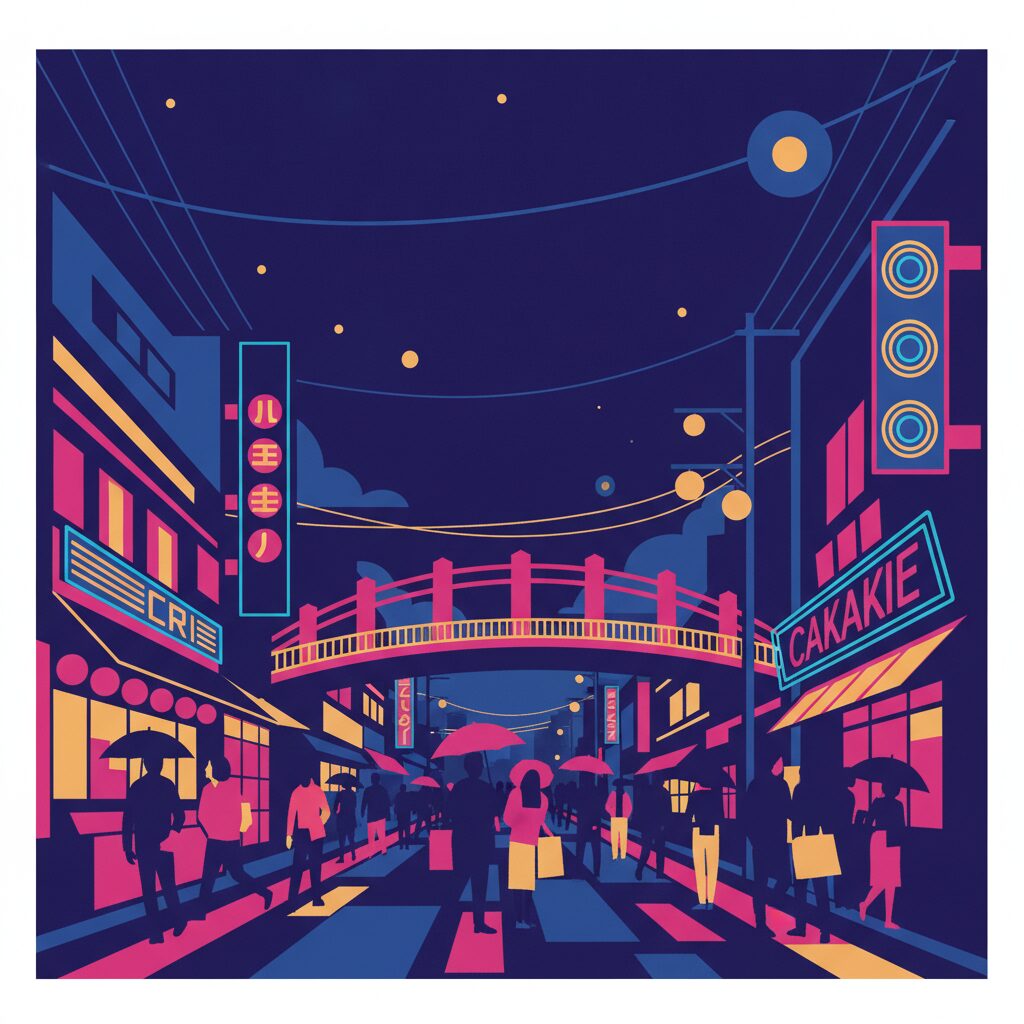
Step off the Hankyu train at Juso, and the city hits you like a shot of cheap, strong shochu. It’s not a gentle introduction. The air, thick with the smell of grilled offal and stale beer, swirls around you. The clatter of the trains overhead provides a constant, percussive soundtrack to a scene of raw, unfiltered life. Neon signs, buzzing and flickering in a dozen different colors, bleed into the narrow, crowded streets. This isn’t the polished, orderly Japan you see in travel brochures. This isn’t Tokyo. As someone who cut their teeth on the meticulously curated chaos of Shinjuku’s Golden Gai, Juso felt like a different world entirely. In Tokyo, the rules of engagement are clear, even if unspoken. You keep to yourself, you respect the invisible bubbles of personal space, and you wait to be invited in. Juso, I quickly learned, operates on a completely different social software. It’s a place where the welcome feels more like a friendly shove into the party, and the unspoken rules are the key to understanding the very soul of Osaka. For any foreigner trying to move beyond the surface-level image of Japan and understand the true mechanics of life in this city, Juso is the ultimate classroom. But the lessons aren’t written on any blackboard; you have to learn them by ear, in the loud, laughing, beautifully messy heart of the action.
For those curious about how Osaka’s unspoken social dynamics extend even to housing, exploring guarantor-free apartments can offer an insightful peek into another layer of the city’s unconventional charm.
The Juso Welcome: More of a Shove Than a Handshake
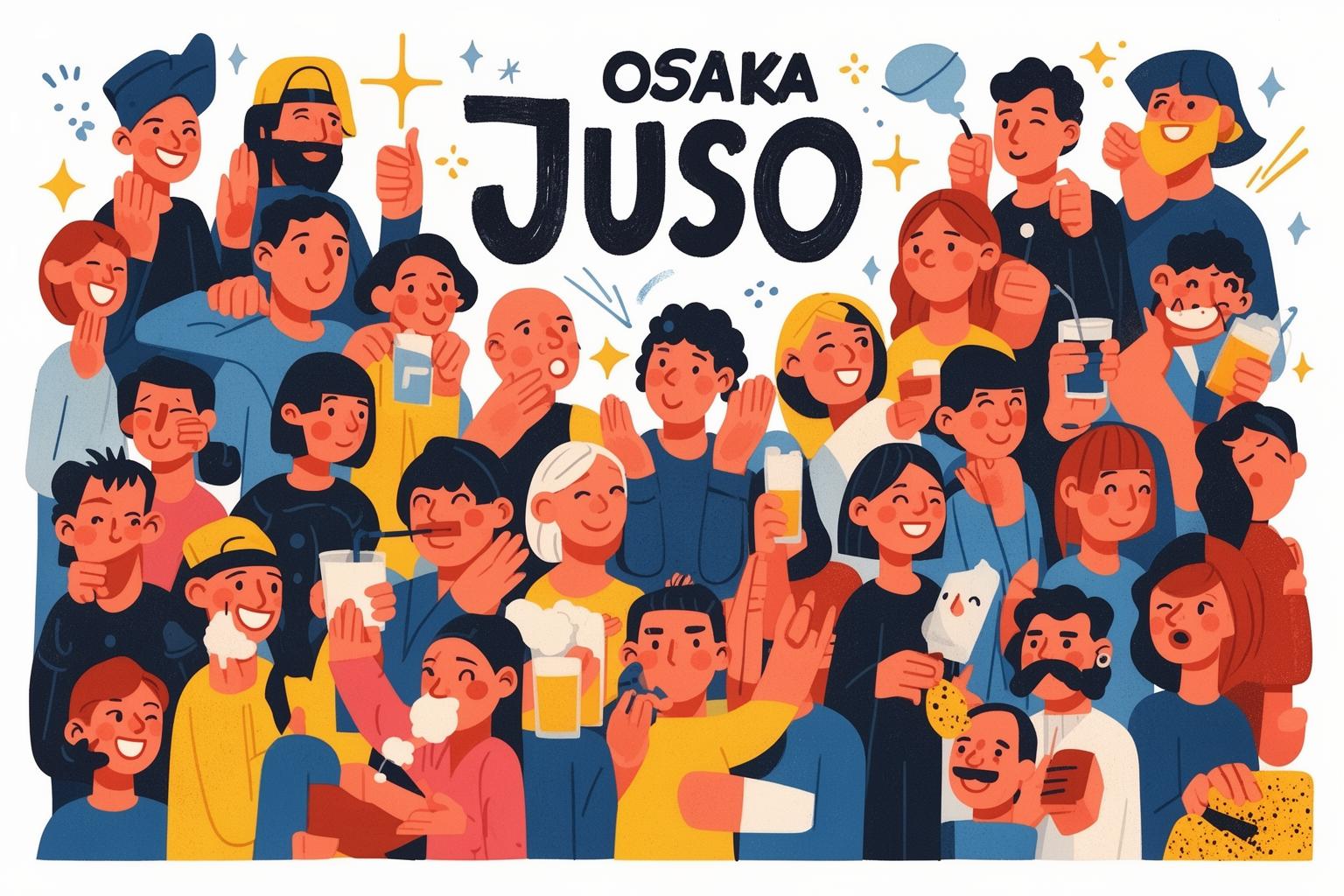
Your first stroll through the maze of shotengai arcades and narrow back alleys branching out from Juso station is a full sensory immersion. Forget the calm, minimalist style you might typically connect with Japan. Here, function takes precedence over form, and substance outweighs style. The floors of the tachinomi standing bars are often slick with an unidentifiable substance. The walls are covered with yellowing, hand-written menus, faded posters of local wrestlers, and brewery calendars that are at least ten years old. In Tokyo, a bar’s atmosphere is usually a carefully crafted concept meant to draw a particular crowd. In Juso, the atmosphere is an authentic result of decades of drinking, eating, and chatting. It’s not promoting a brand; it simply exists, unapologetically.
The greeting you receive mirrors this approach. You won’t hear a chorus of “Irasshaimase!” delivered with practiced, perfect smiles. Instead, you might get a brief nod from the taisho, the owner, as he skillfully flips something on the griddle, or a grunt that means “find yourself a spot.” This can be surprising for newcomers, especially those used to Japan’s renowned customer service. It may come off as cold or even rude. But that’s a fundamental misunderstanding of the local etiquette. The Juso welcome isn’t about performative politeness. It’s about the immediate acceptance of your presence. You’re not treated as a special guest to be fawned over; you’re simply another person in the room, which in its own way is a more sincere form of inclusion. They assume you’re there for the same reason they are: a cold drink, some good food, and no pretenses. By not fussing over you, they’re treating you like a regular from the moment you step inside.
Rule #1: Your Personal Space is Now Public Domain
In Tokyo, preserving a buffer of personal space is a sacred, unspoken agreement. Whether on the train, in a cafe, or even in a crowded bar, people naturally maintain invisible boundaries. You avoid eye contact, keep your voice low, and act as if the person just six inches away doesn’t exist. Juso, however, joyfully shatters that agreement. The very design of nightlife here aims to erase personal space and encourage interaction.
The Art of the Squeeze
Many of Juso’s most popular spots are tachinomi, or standing bars. These tiny venues typically hold no more than ten or fifteen people packed shoulder-to-shoulder along a single counter. There’s no such thing as a private table. Your personal space shrinks to the size of your beer glass and yakitori plate. Your elbows will brush against your neighbors’, and you’ll pass money and dishes over or under other people’s arms. For a foreigner, or even a Tokyo native like myself, the first instinct is to recoil and apologize profusely for every slight contact. But you soon realize no one else minds. The physical closeness isn’t an unfortunate side effect of limited space; it’s the entire point. It acts as a social lubricant, a physical icebreaker that makes conversation not just possible but nearly unavoidable. This close proximity forms the basis of Juso’s social scene, a system that says, “We’re all packed in here together, so let’s behave accordingly.”
Conversations are Open-Source
Once the physical boundaries disappear, the conversational ones fall away too. In Tokyo, joining a stranger’s conversation is a serious social no-no. In Juso, it’s practically a civic duty. If you can hear a chat, you’re implicitly invited to join in. I once watched a man loudly venting to the bartender about the Hanshin Tigers’ recent loss. Within a minute, three strangers he had never met were adding their own commentary, shouting mock outrage, and buying each other consolation drinks. The conversation became the collective property of the entire bar. As a foreigner, you become an even bigger magnet. Someone will overhear you speaking English and immediately lean in. “Hey! Where are you from? America? Ah, New York! You like baseball?” The questions come fast and direct—not as an interrogation, but as Osakans seeking a connection, a common thread to pull you into the group. They’re trying to connect, using the simplest tools they have. The key is to embrace it. Don’t give one-word answers. Ask questions back. Laugh. This isn’t a performance—it’s participation. The moment you start bantering with the salaryman to your left, you’ve passed Juso nightlife’s first and most important test.
Rule #2: Directness is a Virtue, Not a Vice
Japanese culture is well-known for its indirectness. The concepts of tatemae (one’s public face) and honne (one’s true feelings) guide social interactions, particularly in formal or unfamiliar situations. It’s a language rich in nuance, suggestion, and reading the atmosphere. Osaka, however, is famous as an exception to this norm, and Juso is where that reputation shines most brightly. The communication style here is straightforward, honest, and refreshingly free of any ambiguity.
Ditching the Tatemae
In a Tokyo bar, if you order something that’s out of stock, the staff will likely apologize profusely, bow politely, and explain the situation with gentle indirectness. In Juso, you’re more apt to hear a quick, loud “Nai!” (“Don’t have it!”) from the taisho before he’s already moved on to another customer. This isn’t rudeness; it’s radical efficiency. There’s no time for pleasantries when there are ten other people waiting for a drink. This directness also applies to the customers. The man next to you might point at your plate and say, “You ordered that? Ah, you should have had the doteyaki. It’s better.” In Tokyo, this would be seen as a serious breach of etiquette. In Juso, it’s simply a friendly tip from a fellow enthusiast. He’s not judging your choice; he’s sharing local wisdom. People say what they mean because they expect everyone to be there for a genuine, straightforward experience without the tiring dance of social formalities.
The Currency of Comedy
This bluntness is often softened by humor. Osaka’s culture is closely linked with manzai, a style of stand-up comedy based on the dynamic between a boke (the silly, somewhat clueless character) and a tsukkomi (the sharp, straight man who corrects him). This pattern carries over into everyday conversation. People will tease you, joke at your expense, and expect playful comebacks. It’s a form of verbal sparring that builds connection. A bartender might notice you staring at the menu and say, “You can’t read it, can you? Just point, anything is good!” He’s not mocking your intelligence; he’s inviting you to join in the fun. A good comeback might be, “Only if you recommend something that won’t kill me!” with a smile. Foreigners unprepared for this can easily mistake it for ridicule. But in truth, it’s the opposite. Once they start joking with you, it means you’re accepted. They’re relaxed enough to drop the formalities and treat you like one of their own. Playing the boke or tsukkomi is your entry into the inner circle.
Rule #3: The Rhythm of the Night is Fast and Fluid
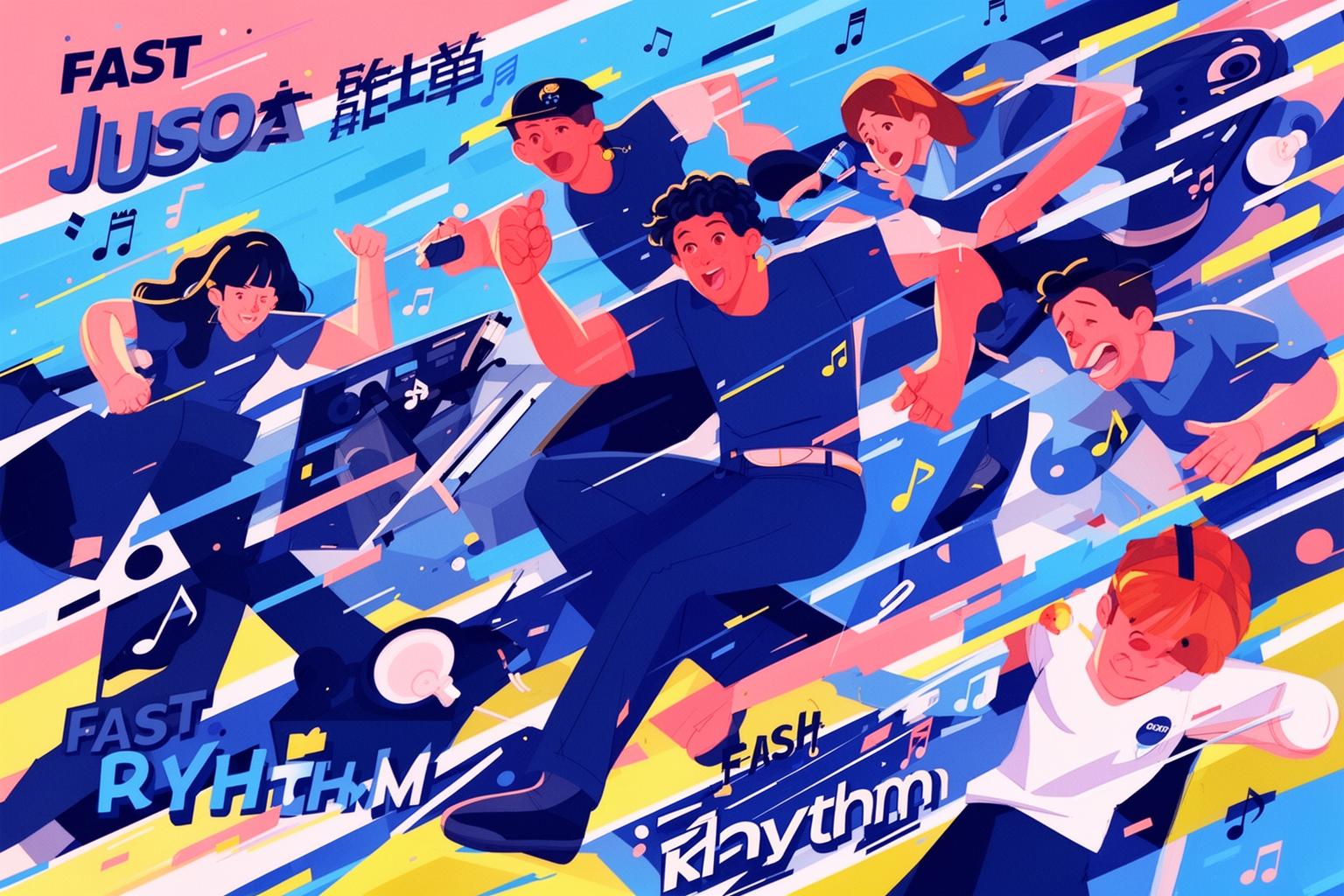
Unlike the Tokyo custom of settling into a single spot for the evening, a night out in Juso is lively and mobile. The aim isn’t to stay put but to keep moving. The entire network of bars is designed to support this transient, high-energy drinking style, which comes with its own practical rules and customs that shape the experience.
The Culture of the Quick Drink
Juso is the home of hashigo-zake, the art of bar-hopping. You start at one place for a draft beer and some grilled skewers, then move on for a highball and oden, then another for sake. The idea of senbero—getting tipsy for a thousand yen (about ten dollars)—is central here. Bars are inexpensive, servings are small, and turnover is quick. This isn’t a place for long, reflective conversations but for brief, energetic social bursts. This constant movement generates a distinctive energy throughout the neighborhood. Streets are bustling with people hopping from one red lantern to the next, and the atmosphere inside each bar shifts as groups come and go. To fully enjoy Juso, you must adopt this nomadic vibe. Don’t get too comfortable; finish your drink, settle your bill, and move on to the next spot down the alley. It’s a marathon made up of many short, intense sprints.
Cash is King, and Settle Up as You Go
This fluid drinking style is matched by an equally fluid payment system. Many classic Juso bars accept cash only, as credit cards would slow things down. Additionally, many operate on a cash-on-delivery basis. When your drink arrives, the bartender places a small tray or bowl in front of you, where you put the exact amount. Once taken, the transaction is complete. There are no tabs or waiting for checks at the end. This system exemplifies Osakan pragmatism, maximizing efficiency by allowing patrons to leave immediately after their last sip without having to catch an owner’s attention. It may be confusing for newcomers but is essential to the experience. It highlights the transient, no-strings-attached nature of the social interaction: you pay precisely for what you get when you get it, then move on. It’s a system founded on trust and a shared understanding of the need to keep things flowing.
Decoding Juso: What This Says About Osaka
Navigating and enjoying Juso’s nightlife involves more than just finding a cheap drink; it requires an understanding of the fundamental values of Osaka itself. Juso acts as a living museum of the city’s merchant spirit, where the cultural essence is openly showcased. The entire experience offers insight into Osakan philosophy, which sharply contrasts with Tokyo’s more reserved and hierarchical culture.
First and foremost is a steadfast pragmatism. Osakans, traditionally a city of merchants and artisans, prioritize practicality and getting good value for money. That’s why Juso’s bars are unpretentious. Why invest in fancy interior design when you can keep beer affordable and food quality high? The cash-on-delivery system, direct communication, and functional—not fashionable—decor all reflect a mindset focused on results over appearances. It’s a city that functions efficiently, and it expects its leisure time to be just as effective.
Second is the strong communal spirit deeply embedded in the culture. Tokyo is a city of individuals where people might live for years without speaking to their neighbors. Osaka, particularly Juso, is a city of communities. The close quarters of the tachinomi bars, open conversations, and constant friendly teasing are all ways to quickly build social ties. In a merchant city, your network is your net worth. Juso’s bars serve as the modern equivalents of old market squares, venues where information is shared, relationships formed, and the neighborhood’s collective identity reinforced every night. They do more than sell drinks; they foster connection.
This results in a different approach to politeness. In Tokyo, politeness centers on non-interference and respecting personal boundaries. In Osaka, politeness is about engagement and inclusion. It’s considered ruder to ignore someone standing nearby than to ask them a direct, personal question. Osakans will engage because, from their perspective, silence would be cold and unfriendly. What outsiders might see as intrusive, Osakans view as being sociable. It’s a loud, messy, and sometimes overwhelming kind of kindness, but kindness nonetheless.
A Final Word for the Juso Newcomer
So how do you navigate this thrilling, chaotic world? The first step is to leave your Tokyo-tuned social instincts behind. Don’t wait for an invitation—you’ve already received one simply by showing up. Be ready to be jostled, spoken to, and have your personal space bubble burst. Carry cash and be prepared to pay as you go. Learn a few basic phrases in Osaka-ben; even a simple “Meccha umai!” (“This is delicious!”) will earn you instant respect.
Most importantly, approach it with an open mind and a willingness to participate. Smile in return, answer questions, ask your own, and don’t hesitate to laugh at yourself. Juso is a challenge. It tests your preconceptions about Japan and invites you to engage with the culture on its own terms. It’s not always comfortable, and certainly not quiet. But if you can learn to read the room and understand the unspoken rules of this classic Osaka neighborhood, you’ll gain more than just a fun night out. You’ll gain genuine insight into the pragmatic, humorous, and deeply human heart of Osaka. Passing the Juso test means you’re one step closer to truly understanding what it means to live in this remarkable city.