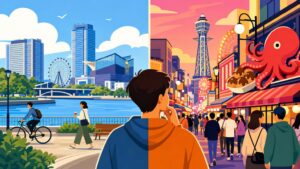
So you’ve landed in Osaka. You’ve heard the stories. It’s Japan’s rebellious second city, the nation’s kitchen, a place where people are louder, friendlier, and funnier than their famously reserved cousins in Tokyo. And a lot of that is true. But after a few weeks of riding the subway and exploring the neighborhoods, a question starts to bubble up. You visit Umeda, with its gleaming skyscrapers and labyrinthine underground malls, and it feels like a slick, international business hub. It’s fast, polished, and impeccably organized. Then you head down to Namba, and you’re thrown into a chaotic vortex of neon lights, street food vendors, and fashion that seems to operate on its own set of rules. It’s gritty, vibrant, and relentlessly human. You start to wonder: are these even the same city? The answer is yes, and no. You’ve just discovered the fundamental social and cultural fault line that defines life in Osaka: the great divide between Kita (North) and Minami (South).
For anyone familiar with Tokyo, the immediate comparison is the Yamanote Line. You think of that green loop as a string connecting different pearls: Shibuya for youth, Shinjuku for business, Ginza for luxury, Akihabara for electronics and otaku culture. Each station has a distinct personality, a specific function. But the Kita-Minami divide in Osaka is different. It’s not a loop of specialized destinations; it’s a magnetic polarity. It’s a north-south axis, primarily along the Midosuji subway line, that represents two fundamentally different philosophies on how to live, work, and be. People here don’t just visit Kita or Minami; they often identify as a “Kita person” or a “Minami person.” It’s a choice of tribe, an alignment of spirit. Understanding this duality is the key to unlocking the complex, contradictory soul of Osaka. It’s the difference between being a tourist and truly starting to grasp what makes this city tick.
Complementing the north-south cultural divide in Osaka, exploring the city’s distinctive bargain-hunting mindset further illuminates the blend of practicality and warmth that defines local life.
The Yamanote Line Analogy: A Flawed Comparison
Let’s explore that Tokyo comparison more thoroughly, because understanding why it doesn’t quite fit is essential. The Yamanote Line is an urban planning masterpiece. It forms a circular system where each major station functions as its own distinct world. You head to Shinjuku to work in a skyscraper or get lost in Kabukicho’s neon haze. You go to Harajuku for youth fashion parades fueled by crepes. You visit Ueno for museums and the park. The trip between them is simply that—a journey. The train ride serves as practical transit connecting one specialized zone to another. The neighborhoods’ identities are strong, yet they feel like separate planets orbiting the same sun.
Osaka’s layout is fundamentally linear. The city’s main artery isn’t a loop; it’s a spine. The Midosuji subway line runs straight from north to south, linking the two great poles: Umeda in the north (Kita) and Namba in the south (Minami). This shapes a completely different mental map. It’s not a cluster of distinct points; it’s a continuum. As you travel south from Umeda, you sense the city’s atmosphere gradually changing. The air becomes a bit thicker, the sounds grow louder, and the energy shifts from corporate efficiency to commercial chaos. It’s a flow, not a collection.
This geographical arrangement fosters a psychological divide far deeper than Tokyo’s neighborhood distinctions. In Tokyo, your identity is layered. You might be a Tokyoite working in Marunouchi, shopping in Shibuya, and living in Kichijoji. In Osaka, the question is more fundamental: are you with the North or the South? It influences where you shop, where you socialize, and even how you present yourself to the world. It’s a friendly rivalry, but a genuine one. It revolves around two competing visions of what Osaka is and should be. One outlook is outward-looking, connecting with the rest of Japan and the world; the other is inward-focused, celebrating the city’s unique, homegrown culture. This inner tug-of-war is what makes Osaka so vibrant.
Kita (北): The Face of Modern Osaka
If Osaka were to showcase an official portrait to the world, it would be an image of Kita. This is the city at its most polished, professional, and ambitious. Centered around the vast transportation hub of Umeda, Kita is a realm of towering glass skyscrapers, immaculate department stores, and broad, spotless boulevards. The prevailing impression is one of order, efficiency, and verticality. Everything seems to stretch skyward, from the Umeda Sky Building to the gleaming office towers housing the headquarters of major corporations.
The People and The Atmosphere
The human landscape of Kita is marked by purpose. During the day, it flows like a river of dark suits and sensible heels. Salarymen and office ladies navigate the sprawling underground passages of Umeda Station with practiced, determined speed. Their movements are sharp, their expressions focused. This is where business gets done, and the atmosphere reflects that. It’s polite, clean, and distinctly less chatty than the stereotypical image of Osaka might suggest.
The shoppers here are also different. Kita is home to the grand dames of Japanese department stores: Hankyu, Hanshin, and Daimaru. These are not merely stores—they are institutions, temples of consumerism where service is considered an art form. The clientele is sophisticated, often older, and dressed with chic, understated elegance. Fashion here emphasizes quality and taste over bold self-expression. Think less animal print and more tailored coats and luxury handbags. The vibe here is closer to Tokyo’s Ginza or Marunouchi than to the rest of Osaka.
Daily Life in the North
Living or working in Kita means mastering its unique environment. First and foremost, you must conquer Umeda Station. It is not a single station but a colossal, multi-layered complex of six different stations—JR Osaka, Hankyu Umeda, Hanshin Umeda, and three subway lines—all interconnected by a bewildering network of underground tunnels, shopping arcades, and dead ends. Getting lost here isn’t just possible; it’s inevitable, a rite of passage for any newcomer. The unspoken navigation rules are strict: walk briskly, keep to one side of the corridor, and never, ever stop suddenly to check your phone. To do so disrupts the human current and invites a chorus of quiet but intense sighs.
But Kita is more than its commercial core. Just a short walk from the station’s managed chaos, you’ll find intriguing pockets of life. To the east lies Nakazakicho, a charming neighborhood of preserved pre-war wooden houses now filled with quirky vintage shops, independent art galleries, and quiet, stylish cafés. It’s a bohemian retreat for those seeking respite from corporate polish. To the west is Fukushima, which has blossomed into one of Osaka’s most exciting gourmet districts. Its narrow streets are crowded with high-quality izakayas, Michelin-starred restaurants, and trendy wine bars, catering to the discerning palates of office workers who flood the area after 6 PM.
Then there’s Kitashinchi. This is Kita’s exclusive, upscale nightlife district—a world of discreetly marked doors, exclusive clubs, and hostess bars where important business deals are often lubricated with astronomically priced whiskey and champagne. It serves as the polished, sophisticated counterpart to Minami’s raucous nightlife, a place where status and connections are the primary currency.
Foreigners who spend most of their time in Kita often leave with a particular impression of Osaka. They observe the efficiency, modernity, and global-facing businesses and think, “This isn’t so different from Tokyo.” But they miss the crucial point: this is only half the story. Kita is Osaka’s carefully curated public face, the one it presents to the world. To discover its unfiltered soul, you have to head south.
Minami (南): The Unfiltered Soul of Osaka
If Kita is a symphony orchestra performing a precise, elegant composition, Minami is a wild, free-for-all jazz festival. It’s a chaotic, electrifying, and deeply human experience. As you step out of Namba Station, the city’s energy instantly shifts. The air is thick with the aroma of grilled meat from yakiniku restaurants and the sweet scent of batter from takoyaki stalls. The soundscape is a cacophony of competing J-pop blaring from storefronts, the clatter of pachinko parlors, and the distinctive, guttural roar of the Osaka dialect, Osaka-ben, spoken at full volume. Minami is a sensory onslaught, and for those who love it, it’s the most intoxicating place on earth.
The People and The Atmosphere
Minami is the great equalizer. It’s a melting pot where you’ll encounter everyone: teenagers in wildly expressive street fashion rivaling anything in Harajuku, elderly shopkeepers who have managed the same tiny stall for fifty years, wide-eyed tourists, aspiring comedians, and boisterous groups of friends out for a night of eating and drinking. The vibe is horizontal and sprawling, a sharp contrast to Kita’s verticality. It’s a city experienced at street level, in narrow alleys and beneath endless arcades.
Personal style in Minami is a spectacle unto itself. It’s less about money and brand names and more about attitude and personality. Bold colors, clashing patterns, and the stereotypical yet very real love of animal prints abound. There’s a theatricality to it all, a sense that dressing up is both entertainment and self-expression. There’s less pressure to conform and a greater appreciation for eccentricity. You can be whoever you want in Minami, as long as you’re not boring.
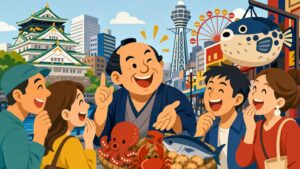
This is where you’ll hear the true, unfiltered Osaka-ben. It’s faster, more direct, and more musical than standard Japanese. Laughter is frequent and loud. Casual interactions with strangers are common. The elderly lady running the tobacco stand might ask where you’re from, or the chef at the ramen counter might offer a gruff but friendly remark on your chopstick skills. This is the “friendliness” Osaka is famous for, but it’s more than just being nice. It’s a culture of engagement, a belief that life is richer when the walls between people come down.
Daily Life in the South
To grasp daily life in Minami, you have to understand it’s not a single place but a cluster of lively, interconnected districts. Dotonbori, with its giant mechanical crabs and the iconic Glico Running Man sign, is the dazzling, tourist-heavy core. But for locals, it’s more than a photo opportunity. It’s the city’s de facto public square, a place for celebration. When the local Hanshin Tigers baseball team wins a championship, this is where jubilant fans leap from the bridges into the canal. It’s the city’s chaotic living room.
Right next door is Amerikamura, or “Amemura,” the epicenter of youth culture for decades. It’s a maze of narrow streets packed with vintage clothing shops, record stores, and cheap, delicious street food like the famous “ice dog.” It’s Osaka’s answer to Harajuku, but with more grit and less corporate polish. It feels more organic, a place where trends emerge from the streets rather than being dictated by big brands.
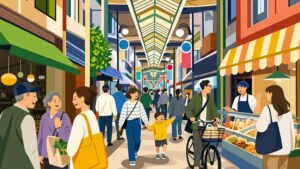
The true heartbeat of Minami, however, lies in its shotengai—covered shopping arcades that weave through the area like arteries. The Shinsaibashi-suji Shopping Arcade is a 600-meter-long river of humanity, a blend of international brands and tiny, family-run shops. Further in, you’ll find Sennichimae Doguyasuji, or “Kitchenware Street,” where restaurant owners from all over the region come to buy everything from hyper-realistic plastic food models to professional-grade knives. These arcades are the community’s lifeblood, where daily errands are carried out and the fabric of local life is woven through casual chats with vendors and neighbors.
A common misconception about Minami is to dismiss it as merely a loud, gaudy tourist trap. Foreigners see Dotonbori’s flashing lights and cheap food and think it’s all just a performance. But this aesthetic of kote-kote (flashy, even over-the-top) isn’t a show for tourists; it’s the genuine expression of Minami’s spirit. It stems from a long history as a hub for popular entertainment (kabuki, bunraku puppet theater, and manzai comedy were all born here) and a merchant culture that prized directness, pragmatism, and drawing a crowd. The chaos is real. It’s the city’s heart, beating out in the open for all to witness.
The Invisible Line: Where Kita Meets Minami
So, where exactly does the polished North end and the chaotic South begin? There’s no wall or official boundary, but a clear transition zone exists—a cultural and architectural buffer between the two extremes. This area centers around the Yodoyabashi and Hommachi stations, a district historically known as Semba, the heart of Osaka’s merchant class.
Today, this central district feels like neutral territory. It is defined by the broad, grand Midosuji Boulevard, lined with gingko trees and flagship stores of global luxury brands. Architecturally, it combines austere mid-century office buildings with impressive historical landmarks. Here you’ll find Osaka City Hall, the stately Bank of Japan building, and the Nakanoshima island park, a green cultural oasis on the river, home to art museums and an elegant concert hall. The atmosphere is calmer and more dignified, lacking the corporate hustle of Umeda and the lively chaos of Namba. This area stands as the city’s administrative and historical core, connected to both Kita and Minami, yet belonging fully to neither.
The way Osakans navigate this urban map reveals much about their mindset. Where people choose to meet serves as a social code. If a colleague suggests dinner in Kitashinchi, it signals a formal, upscale, and possibly business-related gathering. If a friend invites you to “go drinking in Ura Namba,” it promises a casual, rowdy night of bar-hopping. A first date might be arranged at a chic cafe in Kita’s Grand Front mall to convey sophistication, while a reunion of old friends will almost always end with sharing a huge okonomiyaki deep in Minami. The city’s geography is a language of its own, and Osakans are expert speakers.
Lifestyle and Identity: Are You a Kita or Minami Person?
This division extends beyond mere preferences for shopping or dining. It often embodies a person’s entire lifestyle, career, and personal identity. Although it’s a generalization, the archetypes of the “Kita person” and the “Minami person” are well recognized locally.
The typical Kita person might work in finance, tech, or international trade in one of Umeda’s skyscrapers. They may live in a modern high-rise apartment within a convenient, clean neighborhood like Fukushima or Tenma. Their weekends are spent exploring the curated offerings at the Lucua shopping center, attending art exhibitions, or enjoying a leisurely brunch at an Instagram-worthy cafe in Nakazakicho. They value efficiency, global trends, and a certain level of refined polish. In professional contexts, they might tone down their Osaka-ben or switch to standard Japanese to fit business customs. They see Kita as the progressive, cosmopolitan face of Osaka—the engine driving its future.
Conversely, the classic Minami person might be an entrepreneur running a small, independent shop in Amemura, a chef at a family-run udon restaurant, or a musician performing in a live house in Shinsaibashi. They are likely to live in a neighborhood with a strong, traditional community spirit, prioritizing human connection over sterile convenience. Their leisure time is spent hunting for vintage finds, catching a manzai comedy show at the Namba Grand Kagetsu theater, or simply hanging out, drinking, and eating with friends in a bustling izakaya. They speak a proud, unapologetic Osaka-ben, rich with local slang. They cherish authenticity, humor, and the vibrant chaos of human interaction. For them, Minami is the guardian of the city’s true, unchanging soul.
For a foreigner deciding where to live, this choice is deeply meaningful. Do you prefer the order, convenience, and international vibe of Kita, which may offer an easier transition into Japanese urban life? Or are you drawn to the lively, immersive, and sometimes overwhelming cultural atmosphere of Minami, where you can fully dive into the local scene? There is no right answer, but understanding this fundamental choice is the first step toward finding your own place within Osaka’s complex identity.
Beyond the Divide: The Rest of Osaka
Certainly, reducing a sprawling metropolis of millions to merely two poles is an oversimplification. While the Kita-Minami axis serves as the city’s primary cultural and commercial backbone, Osaka is an expansive and diverse city with several other significant centers of influence.
Foremost among these is the Tennoji-Abeno area, which has established itself as the city’s “third hub.” This district offers a compelling snapshot of Osaka’s contrasting nature. Japan’s tallest skyscraper, Abeno Harukas, stands here, offering stunning views and a luxury department store, reflecting the sleek, Kita-like modernity. Yet at its base lies the ancient Shitennoji Temple, one of Japan’s oldest Buddhist temples, alongside the charmingly retro and slightly gritty Shinsekai district. Shinsekai, with its iconic Tsutenkaku Tower and affordable kushikatsu eateries, feels like a mid-20th-century time capsule, embodying the raw, straightforward spirit of Minami. In Tennoji, the ultramodern merges with the firmly traditional, creating a distinctive energy all its own.
Other neighborhoods provide entirely different vibes. The Osaka Castle area functions as a hub for business and government but is also noticeably greener and quieter, offering a slower, more relaxed lifestyle. The Bay Area, home to Universal Studios Japan and the Osaka Aquarium Kaiyukan, resembles a standalone entertainment resort, largely detached from the city’s everyday pulse. These districts, along with the numerous residential neighborhoods spreading outward in every direction, enrich the city’s character. They demonstrate that while Osaka’s core pulse beats mainly to a dual rhythm, its soul is expansive and multifaceted.
Ultimately, understanding Osaka means grasping the Kita versus Minami narrative. It goes beyond two locations on a map; it embodies two distinct interpretations of what it means to be Osakan. Kita symbolizes the city’s ambitious intellect, always forward-looking and outward-facing. Minami represents its resilient, jubilant heart, fiercely protective of its distinctive history and culture. The interplay and tension between these two forces generate the city’s remarkable energy.
Next time you travel the Midosuji Line from Umeda to Namba, observe closely. Notice the subtle changes in passengers’ attire, the volume of their chatter, the advertisements lining the walls. You’re not merely moving a few kilometers through a city; you’re crossing a cultural divide, shifting from one mindset to another. The true Osaka is neither one nor the other—it’s the lively, dynamic, and ongoing dialogue between the two. Discovering where you belong in that conversation is the true adventure of living here.