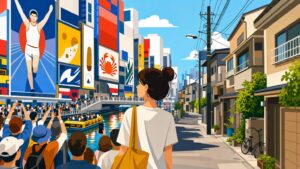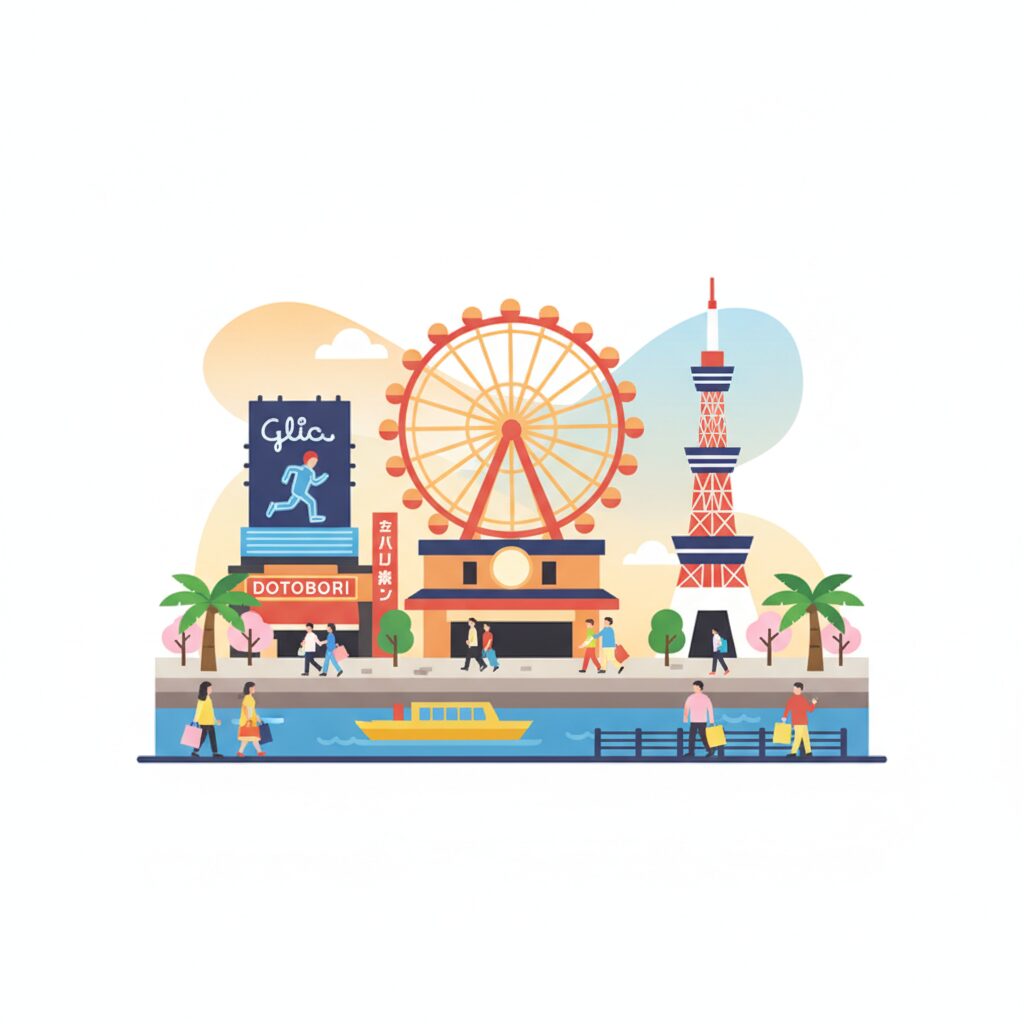
Hola, everyone! Sofia here. When you first move to Osaka, or even just visit, all roads seem to lead to one place: Dotonbori. You see the massive, flashing Glico Man, his arms raised in perpetual victory. You see the giant crab, its mechanical legs waving a slow, steady hello. You smell the takoyaki, a scent that basically becomes Osaka’s official perfume. For tourists, this is the destination. It’s the money shot, the postcard, the “I was here” proof. But if you’re living here, you quickly learn a fundamental truth: for Osakans, this glittering, chaotic canal isn’t the party. It’s just the lobby.
The real question that unlocks the city is, “Where does everyone go after they walk past the Glico Man?” The tourist path is a straight line over a bridge. The local’s path is a spiderweb of hidden alleys, vertical explorations up rickety staircases, and dives into crowded basements. It’s a world away from the glossy, curated experience of Tokyo. Here in Minami, the southern heart of the city, the weekend isn’t about seeing the sights; it’s about participating in a vibrant, loud, and unapologetically real urban theater. It’s less about finding the perfect photo and more about finding the perfect atmosphere, the best deal, and the most ridiculous laugh. Forget what the travel guides told you. Let’s peel back the neon layers and see how the people of Osaka truly own their weekend in Namba and Dotonbori.
Immerse yourself further in Osaka’s local fabric by exploring Naniwa’s subtle rental dynamics that reveal yet another layer of the city’s vibrant social contract.
The Magnetic Pull of Minami: More Than Just a Landmark
First, let’s get the geography of the soul right. Osaka is famously divided between Kita (North) and Minami (South). Kita, centered around Umeda Station, is the domain of gleaming skyscrapers, high-end department stores, and a polished, almost Tokyo-esque professionalism. It’s where you go for major business meetings or to shop luxury brands in a calm, controlled atmosphere. Minami is… quite different. Minami is the city’s lively, pulsing heart. It’s messier, louder, and infinitely more spontaneous. An Osaka native once told me, “We work in Kita, but we live in Minami.” This isn’t just a matter of location; it’s a mindset. Choosing to spend your weekend in Minami means embracing a bit of chaos, prioritizing energy over elegance.
For a local, the weekend might start with a meet-up “under the Glico sign,” but no one is actually focused on it. It’s a landmark in the truest sense—a point of reference used for orientation. It’s like saying “meet me by the big clock” in a train station. From there, the group splits up. It’s not a single unified plan; it’s a series of strategic choices based on mood, budget, and a concept deeply rooted in the Osaka mindset: cospa, or cost performance.
This isn’t just about being frugal. Tokyoites might spend a lot for a unique experience or a famous brand name. Osakans are merchants at heart; they seek value. They want the absolute best quality, the most fun, the biggest portion, all for the most reasonable price. This principle guides nearly every weekend decision in Minami, from where you shop to where you have your fifth beer of the night.
Saturday Afternoon: The Art of Specialized Shopping
While a tourist might meander aimlessly through the Shinsaibashi-suji Shopping Arcade, marveling at the sheer concentration of shops, an Osakan moves through it with intent, often using it as a covered thoroughfare to reach other destinations. The true shopping experience occurs in the specialized districts branching off from the main streets.
Amerikamura: Where Trends Are Created, Not Followed
Head west of the main arcade, and you’ll enter Amerikamura, or “Amemura.” On the surface, it appears to be a youth fashion district, Osaka’s counterpart to Tokyo’s Harajuku. But the atmosphere is fundamentally different. Harajuku often feels like a stage, a place to see and be seen in carefully curated outfits. Amemura, on the other hand, resembles more of a workshop. It’s grittier, more inventive, and less tied to established brand names. Here, you’ll find young people mixing vintage finds with local designer pieces, crafting looks that are uniquely their own. There’s pride here in not just following Tokyo trends, but actively ignoring or creating alternative ones.
An Osaka friend who studies fashion captured it perfectly: “In Tokyo, you buy the brand to fit into a style. In Amemura, you buy pieces to create your own style.” Locals are drawn to the curated vintage stores where owners are walking fashion encyclopedias, to tiny independent labels you’ve never heard of, and to record shops featuring obscure vinyl. It’s a treasure hunt, not a shopping spree. You’re not just purchasing a jacket; you’re buying a story and supporting local artists. It reflects Osaka’s independent, slightly rebellious spirit.
Doguyasuji: The Pragmatist’s Paradise
Now, shift from the trendy to the intensely practical. A short walk from the bustle of Namba station lies Doguyasuji, the kitchenware street. Tourists visit to buy fancy Japanese knives as souvenirs. Locals come here to equip their entire lives. This street embodies Osaka’s merchant soul. It’s not polished. The shops are packed floor-to-ceiling with pots, pans, obscure cooking gadgets, restaurant-grade equipment, and those fascinatingly realistic plastic food samples (sampuru).
The shoppers here are a mix of professional chefs, aspiring home cooks, and couples furnishing their first home. Conversations are straightforward and practical: “How long will this pan last?” “Is this knife easy to sharpen?” “Which of these takoyaki makers gets the hottest?” There’s no flowery sales talk. It’s all about durability, efficiency, and, of course, cospa (cost performance). You might find a beautiful, artisanal ceramic bowl right next to a stack of fifty plain, durable bowls priced the same. Osakans appreciate both, but deeply respect the value of the latter. This street reveals more about Osaka’s preference for substance over style than any museum ever could.
Den Den Town: Passion on Display
Just southeast lies Den Den Town, Osaka’s electronics and otaku culture district, similar to Tokyo’s Akihabara. But again, the vibe differs. While Akihabara has grown into a massive, internationally recognized brand, Den Den Town feels more like a haven for dedicated hobbyists. The shops are smaller, more specialized, and the atmosphere emphasizes community over spectacle. You’ll overhear passionate debates about the specs of a vintage amplifier or the plot twists in an obscure manga. People aren’t just here to consume; they come to connect with fellow enthusiasts. It’s a reminder that beneath Osaka’s loud, money-driven exterior lies a deep passion for niche interests.
The Evening Ritual: Fueling the Osaka Engine
As dusk settles, Minami truly awakens. Tourist crowds line up outside the most famous ramen and okonomiyaki restaurants, the ones boasting the longest queues and biggest signs. Meanwhile, Osakans quietly vanish, slipping down unmarked side streets into a parallel world to the main Dotonbori strip: Ura Namba.
Ura Namba: The Labyrinth of Local Tastes
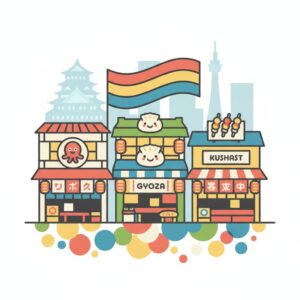
“Ura” means “back” or “behind,” and Ura Namba is the sprawling, chaotic maze of alleys behind the Takashimaya department store and Namba Grand Kagetsu theater. This is where the authentic eating and drinking take place. The venues are small, often just a counter with space for eight to ten people. Many are tachinomi, or standing bars—a concept that intimidates many foreigners but is cherished by locals.
Why stand? It’s simple. It’s quick, affordable, and social. There’s no ceremony involved. You squeeze in, order a drink and a few small plates, chat with the person next to you, then move on. The aim isn’t a long, leisurely meal. The goal is hashigo-zake: bar and restaurant hopping. You enjoy incredible sashimi at one spot, then head down the alley for grilled skewers at another, followed by gyoza at a third. It’s a culinary adventure fueled by spontaneity. This style of going out reflects the Osaka spirit: adaptable, eager for fun, and always chasing the next great experience. No need for reservations or elaborate plans—you just show up and jump in.
The Sound and Fury of an Osaka Izakaya
The atmosphere inside these establishments is a cultural shock for those accustomed to Tokyo’s restrained politeness. It’s loud. People don’t just speak; they project. They laugh heartily. They heckle the staff in a friendly manner. The interaction between customer and owner is direct, familiar, and often flavored with Osaka’s distinctive humor. In Tokyo, customers are treated with reverent, nearly silent respect. In Osaka, they become part of the show. The chef might ask about your day, or the person next to you might offer a piece of his chicken karaage. The invisible barriers between strangers common elsewhere in Japan feel remarkably thin here.
Outsiders may misread this as rudeness or aggression. A Tokyo native might be startled by the bluntness. But it’s not aggression—it’s intimacy. It’s a shortcut to connection and a way of saying, “We’re all here to have a good time, so let’s skip the formalities.” This is the famous Osaka friendliness people describe, but it’s not gentle or passive. It’s lively, engaging, and sometimes loud, inviting you to join in.
The Soul of the City: Comedy and Connection
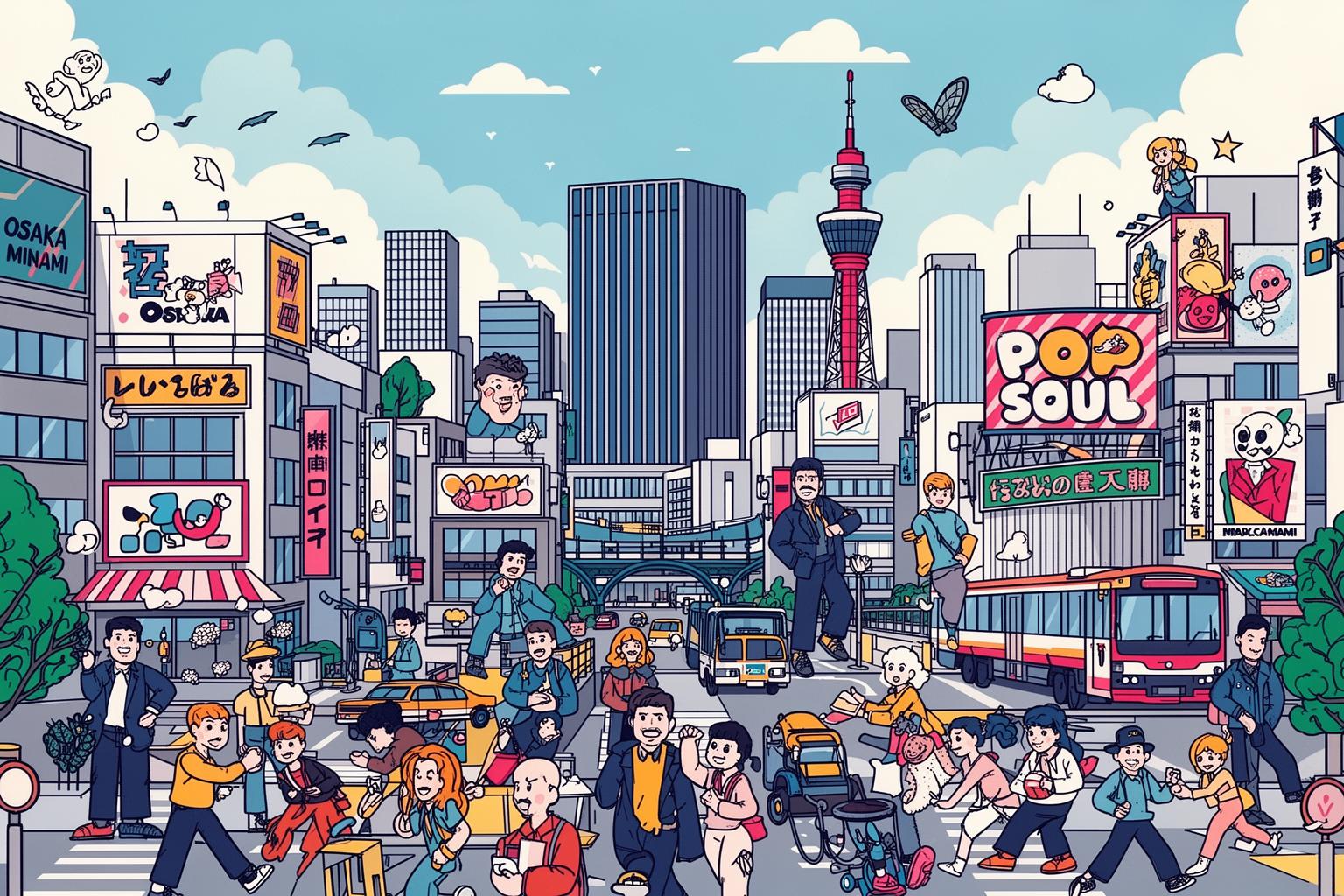
No discussion of Minami would be complete without mentioning comedy. At the heart of the area stands the Namba Grand Kagetsu, the flagship theater for Yoshimoto Kogyo, the giant of Japanese comedy. For many Japanese, Osaka is comedy.
This goes beyond just watching stand-up. The culture of owarai (laughing) infuses everything. Daily conversations abound with banter, puns, and self-deprecating humor. The classic Osaka interaction features a boke (the funny, airheaded one) and a tsukkomi (the sharp, straight man who points out the absurdity). This dynamic unfolds between shopkeepers and customers, among friends, even on trains. People are always looking for a chance to crack a joke, lighten the mood, and spark laughter.
This marks perhaps the biggest contrast with Tokyo. In Tokyo, social interactions often aim to be smooth, polite, and trouble-free. In Osaka, interactions strive to be engaging. Being called omoshiroi (interesting/funny) is one of the highest compliments. That’s why people are so direct and curious—they want to break the ice, find a connection, and maybe share a laugh. Spending a weekend in Minami means joining this endless, city-wide improv show. It means being ready to laugh at yourself and with others.
As the night winds down, people don’t just disappear. The final stop is often a tiny, highly specialized bar tucked away on the third floor of an ordinary building. A bar that only plays 80s rock. A bar run by a former magician. A bar with a dozen types of Japanese whiskey and an owner who can share the story of each one. These are the places where conversations deepen, where the boisterous energy of the izakaya softens into genuine camaraderie. It’s here, in these hidden sanctuaries, that you realize Minami isn’t just a place to party. It’s a collection of communities, a vertical village where people find their tribe.
Living in Osaka teaches you to read the city differently. You learn to overlook the biggest, brightest signs and instead seek out the small, handwritten ones. You learn that a long queue doesn’t always mean the best food, just the most famous. You learn that the city’s real life isn’t on the main streets, but in the crowded, noisy, and wonderfully human spaces in between. The Glico Man may welcome the world to Osaka, but it’s in Minami’s back alleys where Osakans welcome each other home.