
Walk down any of Osaka’s bustling shotengai, the covered shopping arcades that pulse with the city’s commercial lifeblood, and you’ll see them. Tucked between a greengrocer and a tiny pharmacy, you’ll find an entrance that seems like a portal to another decade. Dark wood paneling, a swirling script sign spelling out a name like “Coffee House Pure” or “Salon de thé Fubuki,” and maybe a window display of plastic food models—parfaits, sandwiches, and a mysterious neon-green melon soda—faded by years of sunlight. This is the kissaten, the classic Japanese coffee house. From the outside, it might look quiet, perhaps a little dated, maybe even intimidatingly local. But step inside, and you’re entering one of the most vital social organs of the city. This isn’t just a place to get coffee. This is a “third place,” that essential social anchor between the worlds of home and work, and in Osaka, the kissaten fulfills this role with a unique, unfiltered personality you won’t find anywhere else in Japan.
Sociologist Ray Oldenburg coined the term “third place” to describe informal public spaces where people gather, connect, and build community. It’s the neighborhood pub, the town square, the local barbershop. While Tokyo has its share of impeccably designed, minimalist cafes where conversation happens in hushed tones over expensive single-origin brews, Osaka’s kissaten are something else entirely. They are louder, warmer, and profoundly more intertwined with the fabric of daily life. They are living rooms for the neighborhood, ad-hoc offices for local business owners, and confessionals for the lonely. Forget the sleek, transient nature of a global coffee chain; the Osaka kissaten is a stubborn testament to the power of place, personality, and human connection over a simple cup of coffee and a thick slice of toast. To understand the kissaten is to understand a fundamental piece of the Osakan mindset: a deep appreciation for community, value, and the unfiltered joy of conversation.
Osaka’s dynamic communal spirit is also reflected in the city’s distinctive tsukkomi humor, which reveals another playful facet of its everyday social tapestry.
Not Just Coffee: The Anatomy of an Osaka Kissaten
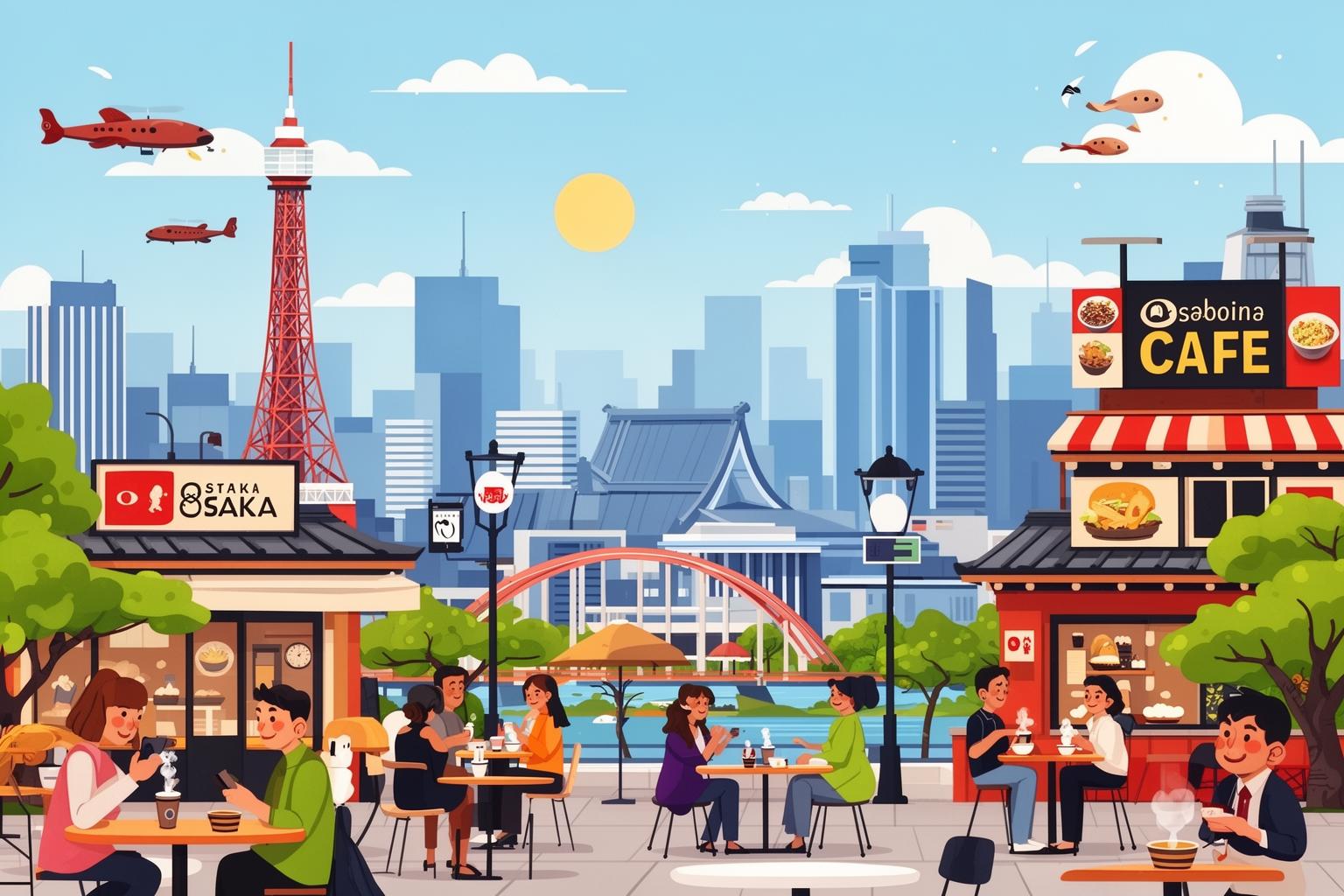
At first glance, a kissaten might appear straightforward. It’s a place serving coffee, tea, and light snacks. Yet its true role is much more intricate, rooted in unspoken rules, cherished rituals, and a community of characters who keep this delicate ecosystem alive. It’s a communal performance where every detail—from the person behind the counter to the furniture—holds significant meaning.
The “Master” as the Heartbeat of the Place
The most vital figure in any kissaten is not the customer, but the “Master.” This owner and proprietor is always present, standing behind the polished wooden counter. The Master is the center around which the whole community revolves. They are more than a barista fulfilling orders; they are gatekeeper, confidant, and the neighborhood’s living memory. A good Master remembers your usual order by the second visit. By your fifth, they know your name, a bit about your work, and might ask how that project you mentioned last week turned out.
This relationship is the direct opposite of the anonymous, efficient service typical of modern chains. In Tokyo, interactions tend to be clean, polite, but distant transactions. In Osaka, the Master’s role is deeply personal. I once observed the Master of a small kissaten near Tenma gently chide a regular for working too late, while sliding him a complimentary biscuit with his coffee. Then he asked another customer, an elderly woman, if her grandson had passed his university entrance exams. It was a form of social care, weaving connections among customers and strengthening the neighborhood’s fabric. This is often missed by foreigners, who see just an elderly person making coffee but overlook the complex social network being nurtured. The Master is the reason people return day after day. They come for the coffee, but stay for the personal recognition.
The Unspoken Contract of “Morning Service”
One of the most treasured kissaten customs is the “Morning Service,” or mōningu. The premise is simple: during morning hours, ordering a drink comes with a selection of food items either free or for a small extra charge. Typically, this includes a thick, fluffy slice of buttered toast and a hard-boiled egg. Some places add a small pot of yogurt, a tiny salad, or a piece of fruit. For the price of a single coffee, you get a complete breakfast.
From a business standpoint, this seems unsustainable. But it isn’t about profit margins on toast. The Morning Service is a social contract. It’s a gesture of hospitality, saying, “Thank you for starting your day with us.” It embodies the core Osakan values of service and appreciation for a good deal. People in Osaka are keenly attuned to value, and the morning set exemplifies this perfectly. It invites customers to linger, read the newspapers (always stocked in racks), and ease into the day in a communal atmosphere. It transforms coffee from a quick solo task into a shared, unhurried morning ritual. While cafes in Tokyo may offer breakfast sets, theirs often feel like calculated combo meals. In Osaka, Morning Service feels like a gift, a fundamental expression of the kissaten’s generous spirit.
An Interior Stuck in Time, and Why That Matters
Step inside a classic Osaka kissaten, and you’re immediately immersed in a world of dark wood, worn velvet or burgundy vinyl seating, ornate lamps casting a warm amber glow, and the subtle lingering scent of coffee and often tobacco smoke. This contrasts sharply with the bright, airy, Scandinavian-inspired interiors of modern cafes. The décor isn’t merely “old” or “retro”; it’s a deliberate statement. It signifies stability.
In a country where buildings are frequently torn down and rebuilt, and in a world obsessed with the latest trend, the unchanging interior of a kissaten offers deep comfort. The chairs remain in their usual places. The quirky collection of ceramic owls on the shelf stays put. The coffee continues to be brewed using the slow, methodical siphon brewers popular in the 1970s. This dedication to consistency creates a space that feels dependable and safe. It’s a refuge from the relentless pace of contemporary life. For regulars, this unchanged environment is a touchstone, a physical assurance that some things will be the same tomorrow as they are today. This reflects a practical, grounded side of the Osakan character, one that warily views fleeting fads and favors things built to endure.
The Sound of Osaka: Conversations and Connections
The first thing that distinguishes an Osaka kissaten from its Tokyo counterpart is the sound. It’s not the quiet clinking of spoons or the soft hum of laptops. Instead, it’s the lively, energetic buzz of conversation, spoken in the distinctive, melodic cadence of the Osaka-ben dialect. Here, privacy is secondary; shared space is what matters.
Eavesdropping as a Social Sport
In many cultures, eavesdropping on a stranger’s conversation is considered rude. In an Osaka kissaten, however, it’s almost expected. The small, often cramped layouts place tables close together, causing conversations to naturally overlap. It’s common for someone at one table to laugh at a joke from the next, or for an elderly regular to lean over and offer unsolicited advice to a younger patron discussing a problem. I’ve witnessed this countless times.
This isn’t so much an invasion of privacy as it is an expression of communal living. It reflects an Osakan tendency to break down the formal barriers that usually exist between strangers in Japan. While Tokyo values public anonymity and polite distance, Osaka assumes we’re all in this together. The kissaten is where this dynamic unfolds. The constant chatter generates a warm, human-centered atmosphere, making you feel connected to the city’s pulse rather than isolated within it. For foreigners struggling with loneliness, this can be a surprising and welcome remedy.
Business, Gossip, and Everything in Between
The kissaten serves as a true multi-purpose hub. In one corner, two men in suits might be poring over documents, using the table as a makeshift office, fueled by endless cups of coffee. They’re not disruptive; they’re just conducting business the old-fashioned way. Nearby, a group of impeccably dressed older women—the neighborhood matriarchs—exchange the latest gossip in rapid-fire Osaka-ben. By the window, a student might be highlighting a textbook, somehow managing to concentrate amid the noise.
This mix of activities is what makes the kissaten so vibrant. It’s a microcosm of the neighborhood itself, where different lives and purposes intersect. Unlike the highly specialized spaces common in other big cities—co-working spots for work, chic cafes for socializing, silent libraries for studying—the Osaka kissaten seamlessly accommodates all these functions simultaneously. It speaks to the city’s pragmatic and efficient spirit. Why have three separate places when one good one can do it all? The kissaten is the ultimate flexible workspace and social club combined.
Kissaten vs. The Modern Café: A Battle for the City’s Soul
Certainly, Osaka is a major metropolis where global coffee chains have a strong presence. You are rarely far from a Starbucks, a Doutor, or a Tully’s Coffee. However, their function and atmosphere differ fundamentally, and their presence only emphasizes what makes the traditional kissaten so unique.
Why Chain Cafes Feel Different in Osaka
Chain cafes prioritize efficiency and anonymity. You order, pay, receive a standardized product, and find a seat. Interaction is minimal, the environment is predictable, and the purpose is often transitional. It’s a spot to grab coffee on the way to work, kill thirty minutes before an appointment, or work on your laptop with headphones on, creating a private bubble in a public space. They serve a function, but they don’t cultivate community.
The kissaten, by contrast, is a destination in its own right. You go to the kissaten, not just stop at it. The aim is to engage with the atmosphere, slow down, and be present. The product—the coffee—is important but secondary to the experience of being there. It’s a relationship-based model, not a transactional one. While young people and office workers do frequent chain cafes, the heart of neighborhood life, especially for long-term residents, remains firmly with the classic kissaten.
A Woman’s Perspective: Safety and Comfort
As a woman who often explores the city alone, I’ve found that the kissaten provides a unique sense of security that a large, anonymous cafe cannot. In a chain store, you are just another customer. No one is truly watching out for you. But in a kissaten, once you become a familiar face, you’re part of the ecosystem. The Master knows who comes and goes. The regulars act as a sort of passive neighborhood watch.
There is a profound comfort in this. Sitting alone in a kissaten, you feel protected, not exposed. If someone were to trouble you, the Master or another regular would likely step in. This creates a safe haven, a place to relax, read, or simply watch the world go by without feeling vulnerable. For any foreign resident, particularly women, finding a local kissaten and becoming a regular is one of the quickest ways to establish a safety net and feel genuinely integrated into the community. It’s a practical way to make a vast, overwhelming city feel like a network of familiar, welcoming neighborhoods.
How to Find Your Own “Third Place” in Osaka
Finding your own kissaten can seem like an intimidating challenge. They don’t promote themselves on social media, and their façades can sometimes appear uninviting. Yet, overcoming that initial hurdle is simpler than you might expect and incredibly rewarding.
Look Beyond the Main Streets
The best kissaten are seldom found along the main, flashy streets of Umeda or Shinsaibashi. Instead, venture into the city’s hidden arteries. Explore long, covered shotengai like Tenjinbashisuji, Japan’s longest. Stroll through quiet residential lanes behind the major train stations. Visit neighborhoods with a more bohemian, preserved vibe such as Nakazakicho. These are the areas where kissaten have flourished for decades, serving the same local communities. The more it seems like it’s meant only for locals, the more authentic the experience is likely to be.
Reading the Signs: How to Choose a Good Kissaten
Look for the clues. A hand-painted wooden sign speaks more than a plastic backlit one. A well-worn noren curtain draped at the entrance indicates a place with history. Spot the revolving lamp, often red or orange, signaling the kissaten is open. Peer inside. Do you see the Master behind a long counter? Are newspapers kept in a wooden rack? Do you hear the soft murmur of conversation? Most importantly, trust your senses. The aroma of siphon-brewed coffee and toasted bread unmistakably marks the right spot. And don’t shy away from the lingering scent of smoke; while many locations now have non-smoking areas, the classic kissaten often remains smoker-friendly, a reminder of a bygone era.
The First Visit: Breaking the Ice
Your initial visit is a chance to observe. Enter with a simple, warm greeting like “Konnichiwa.” The Master will probably guide you to a seat. Order something straightforward—a “hotto cohee” (hot coffee) or an “ice cohee.” Resist pulling out your laptop right away. Instead, take time to soak in the atmosphere. Listen to the flow of conversations around you. Notice how the Master engages with regular customers.
Becoming a regular is a gradual process. It’s about showing up consistently. Visit around the same time a few times each week. After a couple of visits, the Master might ask where you’re from. This is your opening. Keep your answers simple and friendly. The key is not to rush things. The relationship, and your status as a regular, will grow naturally. Before long, stepping into your kissaten will feel less like a transaction and more like coming home. You’ll have discovered your place.
In an era of digital nomads and fleeting online ties, the Osaka kissaten represents a powerful, tangible symbol of true community. It’s a living, breathing space, sustained by conversation and loyalty. It reveals the genuine character of Osaka—a city that might sometimes appear brash or chaotic on the surface but is built upon a deep, enduring foundation of human connection. Finding your kissaten is not just about finding a reliable caffeine fix; it’s about discovering your own small anchor in the magnificent, sprawling, and profoundly human city of Osaka.