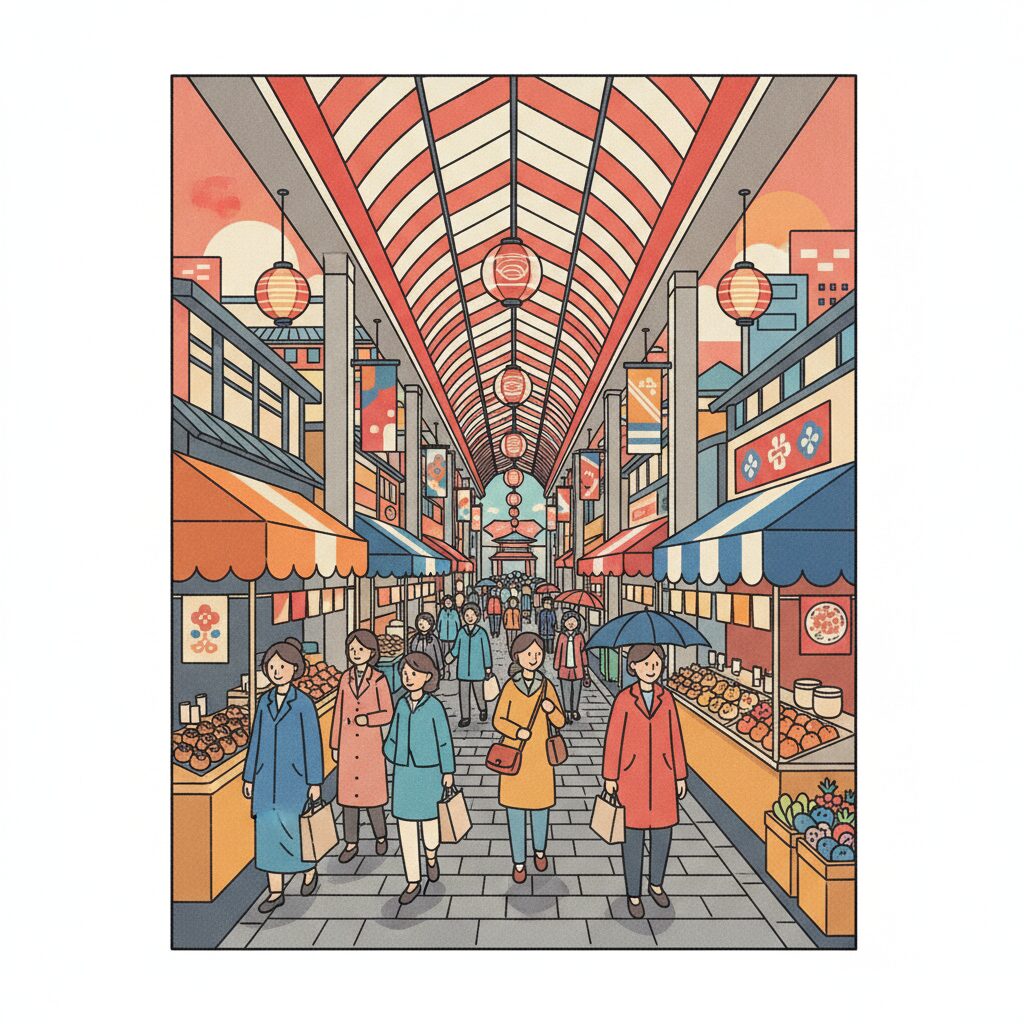
Walk away from the train station, past the gleaming department stores and the familiar logos of global chains, and you’ll find it. The entrance might be a grand archway or a simple, weathered sign. Step inside, and the city’s noise shifts. The roar of traffic becomes a muffled hum, replaced by the clatter of a shopkeeper’s shutter, the cheerful, repetitive jingle of a supermarket, and a chorus of voices calling out greetings. You’re in a shotengai, a covered shopping arcade, and you’ve just walked into the living room of an Osaka neighborhood. To an outsider, these arcades can seem like a chaotic jumble, a relic from a bygone era. You might wonder, in a country obsessed with convenience and modernity, why do these old-fashioned market streets persist? The answer is simple, yet profound. A shotengai is not just a place to buy groceries. It’s the city’s circulatory system, the social infrastructure that pumps life, connection, and a unique sense of identity into the concrete arteries of Osaka. It’s where the city’s famous personality—loud, pragmatic, and deeply human—is forged and reinforced, one conversation at a time. This is where you’ll learn the real difference between living in Osaka and just visiting. It’s a world away from the polished, impersonal efficiency you might find in Tokyo, offering a glimpse into a community structure that holds everything together.
Experience another facet of Osaka’s lively character by exploring how Umeda and Namba embody distinct neighborhood identities that mirror the vibrant community spirit pulsing through its shotengai.
The Unspoken Language of the Arcade
In a Tokyo department store, a transaction unfolds as a quiet, elegant dance of precision. Items are scanned, money is exchanged with a bow, and you leave carrying a crisp bag. Meanwhile, in an Osaka shotengai, a transaction marks the final scene of a three-part play, with dialogue taking center stage. Here, the true currency extends beyond yen; it includes recognition, rapport, and a shared understanding of everyday life. This social grammar is sensed before it’s consciously grasped—a rhythm of interaction that shapes the whole experience and distinguishes Osaka.
A Greeting is More Than Just “Hello”
The first word you’ll absorb is “Maido!” which literally means “every time,” serving as a shorthand for “thank you for your continued patronage.” Yet, it means much more. It’s a verbal nod, an acknowledgment of your presence. A butcher wiping his hands on his apron will call it out as you pass by, even if you don’t stop. The lady at the fruit stand will say it with a smile—a recognition of your existence within her community. This is the foundation of shotengai communication. Responding with a nod or a simple “Konnichiwa” shifts you from a faceless passerby to a member of the community. This isn’t mere politeness; it’s a fundamental element of local life. In a city of millions, these small greetings weave a fabric of familiarity. Shopkeepers collectively act as neighborhood watch. They know the kids rushing through the arcade after school and the elderly residents on their slow, daily grocery trips. They create a safe, visible space where people are seen and acknowledged. This constant, low-level social interaction stands as a powerful antidote to the anonymity typical of modern urban life. It’s a world apart from the silent efficiency of a convenience store, where the sole acknowledgment might be the electronic chime of the door.
The Art of the Chat: Where Banter Becomes Business
After the greeting, the real conversation begins. Shopping in a shotengai is rarely a silent, point-and-grab activity. It’s an exchange. You don’t just ask for three hundred grams of minced pork; you might start by mentioning you’re making gyoza tonight. The butcher might then recommend a particular blend of pork, perhaps one with a higher fat content for juiciness. He may ask if you have enough cabbage, and might even joke about the price of leeks this week. This spirit of akindo shoubai embodies the Osaka merchant ethos. It isn’t about upselling; it’s about engagement. The aim is to build a relationship, becoming a trusted part of your daily routine. The fishmonger won’t simply sell you a piece of mackerel; he’ll explain it was brought in from Wakayama that morning and is ideal for simmering with miso. The elderly woman at the pickle shop will offer you a taste of a new batch of nukazuke and solicit your honest opinion. This banter forms the heart of the transaction. It feels deeply personal because it truly is. Foreigners often misinterpret this as mere friendliness or an Osaka cliché. In reality, it’s a pragmatic business strategy rooted in community. A happy, loyal customer who feels seen and understood is a customer for life. This relational approach sharply contrasts with Tokyo, where professionalism often means maintaining respectful distance. In Osaka, professionalism is about bridging that distance, turning a customer into a jouren-san, a regular.
Shotengai vs. Supermarket: A Battle for the Soul of the Neighborhood
The modern supermarket, with its bright lighting, climate control, and endless aisles, embodies a powerful concept: efficiency. You can find everything from toilet paper to tuna belly under one roof. So why do so many Osakans still choose to navigate the drafty, crowded, and sometimes chaotic corridors of the shotengai, buying their tofu from one store, their fish from another, and their vegetables from yet another? It’s not just nostalgia. It’s a deliberate choice based on quality, expertise, and the type of community they want to be part of.
The Allure of Efficiency and the Price of Anonymity
Let’s be honest: the shotengai isn’t always convenient. It can be crowded, and you have to visit multiple shops. Some still accept only cash. A supermarket provides a seamless experience. It’s predictable and anonymous. You can be in and out in fifteen minutes without speaking to anyone. But for many, that anonymity is a flaw, not a benefit. The time spent at the shotengai is an investment. Those extra five minutes chatting with the vegetable vendor aren’t wasted; they’re social glue. It’s the difference between merely living in a place and truly belonging to it. The choice between these two shopping experiences often reflects a deeper philosophy. Do you value speed and convenience above all else? Or do you appreciate expertise, human connection, and supporting a local ecosystem of small family businesses? While younger generations certainly shop at supermarkets, many are also drawn back to the shotengai, seeking an authenticity and connection that a corporate chain simply cannot provide. They might buy their staples at the supermarket but make special trips to the arcade for what really matters: the perfect cut of fish for a special meal, the handmade tofu that tastes completely different from the mass-produced variety.
Specialization as a Superpower
The true power of the shotengai lies in its specialization. Each shop is a small realm of expertise. The yaoya (vegetable shop) is run by someone who can tell you which spinach is sweetest today and which daikon radish is best for simmering. The tofu-ya sells tofu made that very morning, still warm and swimming in water, with a creamy texture that forever spoils you for packaged alternatives. Passing by the o-cha-ya (tea shop), you’ll catch the rich, grassy aroma of roasting hojicha. The owner can passionately discuss the nuances of sencha from various regions with the enthusiasm of a wine sommelier. This is the opposite of the one-size-fits-all approach. You’re not buying a generic product; you’re buying from a master craftsperson. This builds a strong sense of trust. You rely on the butcher because butchery is his sole focus, every day, all day. His reputation rests on the quality of his goods and the precision of his recommendations. This commitment to a single craft, passed down through generations, serves as cultural preservation. Every purchase is a vote to keep that expertise alive in the neighborhood. It’s a tangible link to a heritage of craftsmanship that gets lost in the homogenized aisles of a megamart.
The Shotengai as a Social Safety Net
Beyond commerce, the shotengai plays a vital role as the neighborhood’s public square and informal support network. Its covered roof forms a semi-public space, sheltered from rain and summer sun, where daily life can naturally unfold. It is a pedestrian-first area where the pace slows down, allowing people to simply be with one another. This ongoing, casual interaction creates a strong, though informal, social safety net.
Eyes on the Street, All Day Long
The concept of “eyes on the street,” popularized by urbanist Jane Jacobs, suggests that a constant presence of people in public spaces enhances safety. The shotengai perfectly exemplifies this. From early morning when fishmongers set up shop to late evening when the last izakaya closes, people are always around. Shopkeepers spend their days watching over the arcade. They see everything. They know which kids should be in school, which elderly person seems a bit unsteady today, and which face is new to the area. This creates a remarkable sense of security. Children can walk home through the arcade, stopping to say hello, while parents feel assured they are in a safe, familiar space. For the elderly, daily shopping is more than a chore; it is their main social outlet. Brief chats with vendors can become their most meaningful human interactions of the day. If a regular doesn’t show up for several days, someone notices and asks. In an aging society where social isolation is a significant issue, the shotengai offers a vital, low-cost, and organic solution. It keeps people connected and cared for in ways no formal government program ever could.
Festivals, Events, and the Rhythm of the Year
A neighborhood’s identity often reveals itself through shared rituals, and the shotengai serves as the stage for these events. In summer, vibrant Tanabata streamers hang from the ceilings. During local matsuri (festivals), the arcade might host parades or special stalls. At year’s end, it hums with the energy of people shopping for New Year’s delicacies. These events are not tourist attractions; they belong to the community. They are organized by the shotengai promotion association, a cooperative of the shop owners themselves. They manage seasonal sales, lottery events (fukubiki), and decorations that mark the changing seasons. This gives the neighborhood a shared rhythm and collective memory. Living near a shotengai means your year is marked by these moments. It nurtures a sense of place and shared identity that is hard to find in newer, more transient residential areas. The arcade becomes a landmark in your personal history within the city.
Debunking Myths and Navigating the Culture
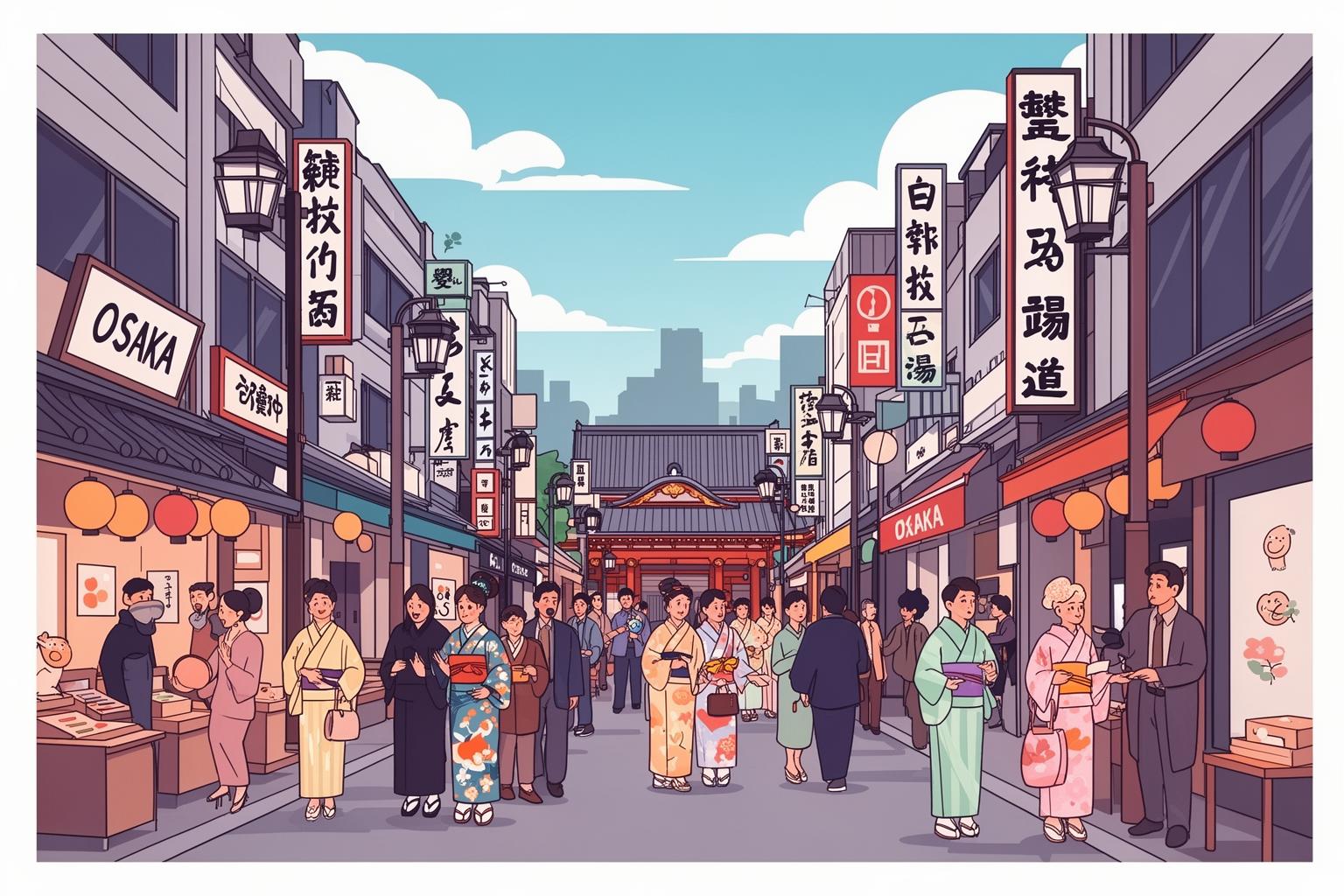
For someone new, the shotengai can feel overwhelming. It’s noisy, busy, and governed by a set of unspoken social rules. It’s easy to feel like an outsider looking in. However, understanding a few key points can open the door to this vital part of Osaka life and help you transition from a mere observer to an engaged participant.
Misconception: “It’s Just for Old People”
A common stereotype is that shotengai are disappearing, inhabited only by elderly shoppers and aging shopkeepers. While it’s true they face challenges, many are far from obsolete. In fact, a quiet revival is underway in Osaka’s arcades. With low rent and heavy foot traffic, they attract young entrepreneurs launching new businesses. You might find a third-generation fish market beside a trendy third-wave coffee shop. A traditional kimono fabric store could be just a few doors away from a modern craft beer bar or an artisanal bakery. This blend of old and new creates a vibrant energy. The established businesses provide a loyal, traditional clientele, while the newer ones draw younger customers, keeping the arcade lively and relevant. Rather than being a relic, a thriving shotengai is an evolving ecosystem that mirrors the neighborhood’s changing character.
A Foreigner’s Guide to Fitting In
So, how do you get involved? The secret is consistency and curiosity. Start small. Choose one shop—perhaps the vegetable stand—and make it your go-to place. Visit every few days. Make eye contact and offer a clear “Konnichiwa.” After several visits, the owner will begin to recognize you. This is the first step to becoming a jouren-san. The next step is to show interest. Don’t hesitate to ask for advice. Point to an unfamiliar vegetable and inquire about it or how to prepare it. Use the key phrase: “Osusume wa nan desu ka?” (What do you recommend?). This signals respect for their knowledge and invites conversation. Osaka locals, especially merchants, value directness and sincere curiosity. Unlike Tokyo, where formality is often maintained, here it’s okay to be a bit more upfront and build a friendly connection. Try out your best Kansai-ben, even if it’s just a simple “Maido!” or “Oki ni!” (Thank you!). They’ll appreciate the effort, and it will immediately show that you’re trying to engage with the local culture rather than just observe it from afar.
The Future of the Arcade: Preservation and Evolution
No institution is exempt from the pressures of time. Shotengai face significant challenges, from the constant competition of online retail and massive Aeon malls to the demographic reality of an aging population of shop owners whose children have pursued different careers. Some smaller arcades have vanished, their rusty shutters closed for good. Yet, to declare the shotengai dead would be a serious misunderstanding of their resilience and their importance to the city’s identity. They are fighting back not by pretending to be something they are not, but by embracing their core strengths: community, specialization, and the human touch. Many are evolving, with shops beginning to accept cashless payments, creating Instagram accounts to showcase daily specials, and collaborating on events to attract new visitors. Community groups and local governments are also recognizing their value, offering subsidies for arcade maintenance and promoting them as unique cultural assets. The shotengai that survive and flourish will be those that successfully blend tradition with innovation, welcoming new businesses while honoring the legacy of the old. They will remain places where you can purchase the freshest fish, but also where social bonds are formed, children are cared for, and the elderly find a daily dose of companionship. They are not relics. They are a living, breathing testament to a version of city life that values people over profit and connection over convenience. They are, and will continue to be, the true, beating heart of Osaka.