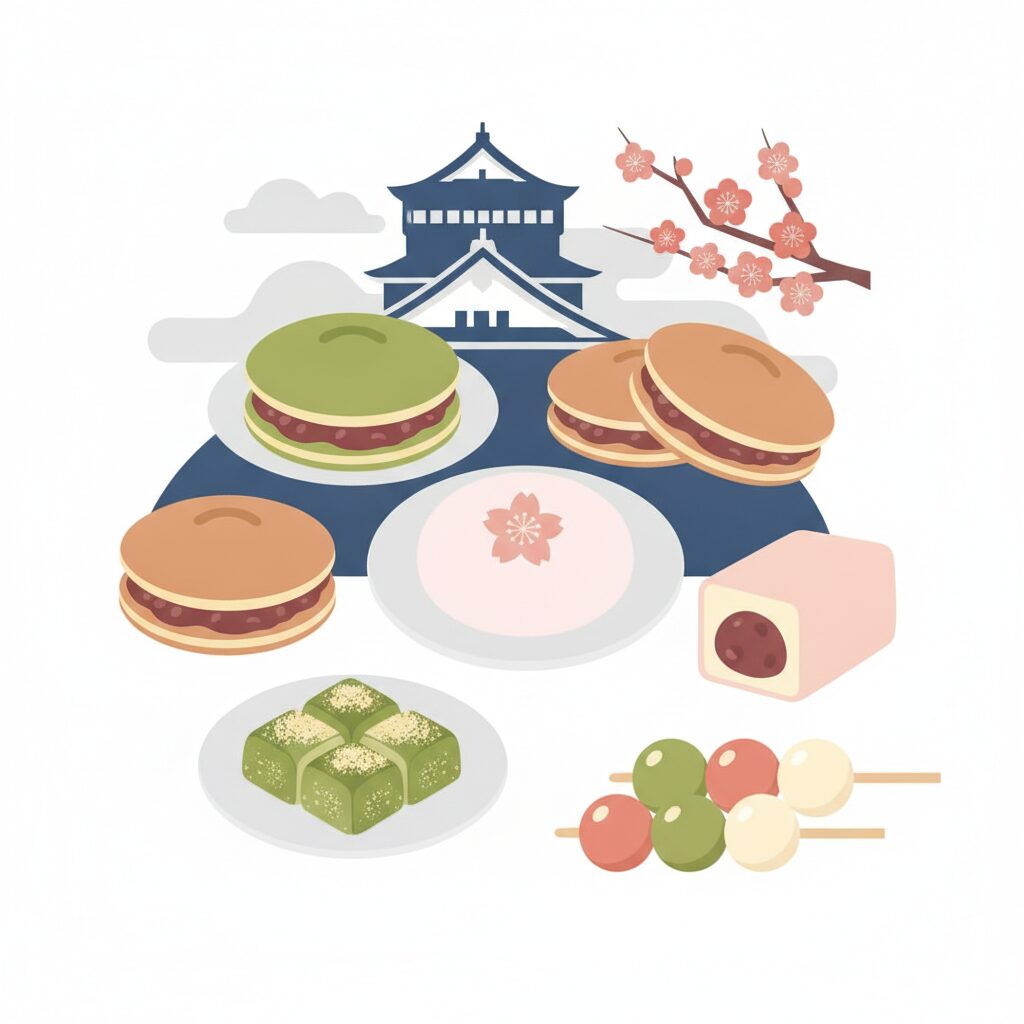
Step off the bustling, electric-bright streets of Osaka, away from the clatter of pachinko parlors and the savory smoke of takoyaki stands, and you’ll find a different kind of quiet. It’s the hush of a small neighborhood shop, the kind with a sliding wooden door and a simple blue curtain, a noren, whispering in the breeze. Inside, there’s no frantic energy, only the scent of steamed rice and sweet, earthy adzuki beans. This is the world of wagashi, traditional Japanese sweets, and for anyone trying to decipher the complex soul of Osaka, it’s a far more revealing text than any travel guide. Foreigners often see wagashi as something for tourists, elaborate confections served in the hushed, intimidating halls of a formal tea ceremony, especially in nearby Kyoto. They see them as art pieces, too beautiful to eat, a relic of an older, more rigid Japan. But here in Osaka, that’s only a sliver of the story. In this city, wagashi isn’t a museum piece. It’s a living, breathing part of the daily rhythm, a practical and deeply personal expression of the city’s character. It’s a world that, surprisingly to many, is an accidental paradise for vegans and those avoiding gluten, not because of a modern trend, but because of a centuries-old dedication to simple, honest ingredients. To understand Osaka is to understand its relationship with these sweets—a relationship built on neighborhood loyalty, seasonal wisdom, and a no-nonsense appreciation for what is real, what is delicious, and what truly matters.
The layered flavors of Osaka extend beyond its sweet traditions, inviting you to delve into the city’s contrasting neighborhoods where modern vibrancy meets historical roots.
More Than a Sweet Treat: Wagashi as Osaka’s Daily Rhythm

In Tokyo, wagashi are purchased at shiny department store counters called depachika, where packaging is as significant as the product and the brand name carries considerable social prestige. It’s simply a transaction. In Osaka, however, you form a relationship with your wagashi-ya-san, the local sweet shop. It serves as a cornerstone of the neighborhood, a quiet anchor in the ever-changing urban landscape. Grasping this difference is essential to understanding the social fabric of Osaka.
The Neighborhood Wagashi-ya: An Unspoken Social Hub
Imagine a small shop nestled in a shotengai, a covered shopping arcade, somewhere in Tennoji or Fukushima ward. The owner, possibly a third-generation craftsman, works in the back, visible through a small window, while their partner tends the front. The glass display isn’t overflowing with countless varieties but features a carefully chosen selection of about a dozen sweets, each reflecting the current season. An elderly woman shuffles in, not to make a large purchase but to buy a single daifuku, a soft rice cake filled with sweet bean paste. She and the shopkeeper exchange gentle pleasantries—not the boisterous, performative banter Osaka is known for, but a softer, more familiar rapport. They discuss the weather, a mutual acquaintance’s health, or the price of daikon at the grocer’s. This modest shop serves as a node in the community’s information network, a place of quiet continuity.
This is where Osaka’s famed friendliness reveals its essence. It’s not about strangers stopping you on the street to chat. It lies in these webs of weak ties, these low-stakes, frequent exchanges within one’s own neighborhood. Your wagashi maker, tofu seller, butcher—they know you. They may not know your whole life story, but they recognize your face, know you live nearby, and know your preferences. This fosters a subtle sense of belonging, a feeling of being seen that can be elusive in Tokyo’s vast anonymity. The wagashi shop is more than a mere point of sale; it’s a social institution where the practical act of buying a treat intertwines with the fundamental human need for connection.
Reading the Seasons on a Plate
In today’s hyper-globalized world, strawberries can be found in December and apples in May. Yet the wagashi shop stands as a gentle, steadfast resistor to this trend. The sweets on display serve as a far more accurate calendar than any app on your phone. This tradition is not just charming; it represents a mindset, a way of anchoring oneself in the tangible world. For Osakans, the changing seasons are marked by these edible milestones.
Spring truly arrives only when pale pink sakura mochi appears—a delicate rice cake infused with cherry blossom essence and wrapped in a salted cherry leaf. The blend of sweet and salty jolts the senses, perfectly capturing the fleeting, beautiful melancholy of the blossoms themselves. Then comes summer, accompanied by Osaka’s infamous, soul-crushing humidity. Relief arrives in the form of mizu yokan, a chilled, jellied dessert made from adzuki bean paste and agar-agar. Its smooth, cool texture offers a moment of pure bliss, a small rebellion against the oppressive heat. As the air cools in autumn, the display shifts to earthy tones. Kuri kinton, a golden sweet made from mashed chestnuts, embodies the season’s essence—nutty, warm, and deeply comforting. Winter brings New Year festivities and special treats like hanabira mochi, a flat, round rice cake folded around burdock root and white bean paste, its pinkish hue visible through the translucent mochi, meant to evoke a plum blossom in snow. Eating these sweets means participating in a cycle, acknowledging the passage of time in a delicious, mindful way. It’s a deeply ingrained mindfulness requiring no app or guru, just a walk to the corner shop.
The Osaka Palette: Bold Flavors and Honest Ingredients
In Japan, there’s a saying that people in Kyoto will spoil themselves with fine clothing (kyo no kidaore), while those in Osaka will spoil themselves with fine food (osaka no kuidaore). This passion for food is not just about quantity but reflects a profound appreciation for quality and flavor. Osakan cuisine is renowned for its focus on dashi, a savory broth that brings out the natural flavors of ingredients. This philosophy even extends to its sweets, which emphasize authentic flavor rather than mere sweetness.
Sweet, But Not Just Sweet: The Anko Philosophy
At the center of most wagashi is anko, the sweet paste made from adzuki beans. To the untrained eye, they might all seem alike, but to an Osakan, the quality of anko is paramount. There are two main varieties: tsubuan, with partially whole beans providing a rustic texture, and koshian, where the paste is finely sieved to achieve a silky smoothness. Crafting high-quality anko is a meticulous process involving soaking the beans, boiling them, removing skins (for koshian), and slowly simmering with sugar while stirring continuously until the ideal texture and sweetness are reached. Mastering this craft takes years.
An expert wagashi maker in Osaka will tell you the aim isn’t to make the anko taste overly sugary, but to highlight the flavor of the beans. Sugar is used to enhance, not conceal. This reflects the Osaka palate: straightforward, sincere, and respectful of the ingredient itself. They seek the honma mon, the genuine article. This is why many wagashi are naturally vegan. The key ingredients are plant-based: beans, rice, and sugar cane. Butter, cream, or eggs are unnecessary to achieve richness; it comes from the carefully prepared adzuki bean alone. This simplicity is often mistaken for a lack of sophistication, but it actually reflects confidence in the fundamental ingredients and a belief that they suffice.
Gluten-Free by Default: The Culture of Rice
While Western food culture is largely built on wheat, Japan’s foundation lies in rice. This key difference means that much of traditional Japanese sweets are naturally gluten-free. This isn’t a modern response to dietary trends but rather the very essence of the craft. The chewy, elastic texture of mochi and dango comes from mochigome, a glutinous rice steamed and pounded into a paste. Other sweets use various rice flours such as joshinko or shiratamako to produce a range of textures, from dense and chewy to delicate and light.
For foreigners with celiac disease or gluten intolerance living in Osaka, this is transformative. There’s no need to search for specialty bakeries offering sad, crumbly imitations of wheat-based treats. You can simply walk into nearly any local wagashi shop and find a variety of delicious, satisfying options. Discovering daifuku (mochi filled with anko), kashiwa mochi (mochi wrapped in oak leaf), or a skewer of mitarashi dango (grilled rice dumplings glazed with sweet soy sauce) feels like unlocking a secret level of culinary freedom. This reliance on rice illustrates the practical Osaka mindset. For centuries, rice was the most dependable, versatile, and nourishing ingredient available. Why complicate things? This pragmatic approach results in sweets that are pure, straightforward, and deliciously simple. There’s no pretense—just a profound, historical respect for a single, powerful ingredient.
Navigating the Wagashi World: An Osaka Etiquette Guide
Stepping into a wagashi shop and engaging with its customs offers a small yet meaningful way to connect with local culture. It’s not about strict rules but about understanding the unspoken language of appreciation, respect, and community that surrounds these sweets. In Osaka, the approach is less formal than in Kyoto but more thoughtful than simply grabbing a candy bar at a convenience store.
The Unspoken Rules of Buying and Giving
When you enter a wagashi shop, take a moment to observe what’s available. The items often carry poetic, seasonal names. If you’re unsure, it’s perfectly fine to ask, “O-susume wa nan desu ka?” (What do you recommend?). The shopkeeper will likely highlight the most seasonal item, the one that best represents that particular week or month. This interaction is part of the experience—a chance to slow down and connect.
If you’re purchasing a gift, or temiyage, for a visit to someone’s home, context matters. Unlike Tokyo, where a well-known, expensive brand might be the safest choice, in Osaka, selecting something from a respected local shop shows more personal thought. It conveys, “I know this neighborhood, and I know this shop makes the best warabi mochi.” The wrapping is important too. The shopkeeper will carefully place your selection in a box and wrap it in beautiful paper. This presentation isn’t just decorative; it demonstrates respect for both the product and the recipient. Presenting a thoughtfully chosen, beautifully wrapped box of seasonal sweets is a gesture that communicates care and social grace far more effectively than words.
How to Eat Wagashi Like a Local
While some wagashi are designed specifically for the tea ceremony, most are intended for everyday enjoyment. An Osakan might pick up a couple of pieces on the way home from work to enjoy with a cup of green tea after dinner. It’s a moment of pause, a small, affordable luxury. The experience is richly textural. Notice the softness of the mochi, the slight graininess of the tsubuan anko, the cool slipperiness of a kanten jelly. Wagashi are generally not overly sweet, making them the perfect complement to the slightly bitter notes of Japanese green tea. Each element balances the other.
This quiet, domestic ritual of enjoying wagashi offers a powerful counterbalance to the boisterous, neon-lit image of Osaka. The city of kuidaore also possesses a deep capacity for subtle, refined appreciation. This appreciation is often practiced in the private sphere of home rather than on public display. For foreigners living here, embracing this simple ritual—a cup of tea and a piece of seasonal wagashi in the evening—is a way to connect with the city’s quieter, more contemplative side.
Where Tradition Meets Modern Palates
Osaka is a city that honors its history yet embraces innovation without hesitation. At its heart, it’s a merchant city always seeking fresh perspectives and better ways to conduct business. This spirit thrives in the world of wagashi, where a new generation of artisans reimagines tradition to suit modern tastes, crafting sweets that feel both familiar and excitingly new.
The Neo-Wagashi Movement in Osaka
In creative neighborhoods like Nakazakicho and the trendy streets of Kitahorie, wagashi shops stand out for their unique vibe. The design tends to be more minimalist, the packaging modern, and the flavors bolder. Here, you might find a classic strawberry daifuku alongside one filled with muscat grapes and a touch of cream cheese, or a decadent chocolate yokan meant to be enjoyed not with green tea, but with dark roast coffee or even whiskey. These young makers don’t reject tradition; they have perfected the basics of anko and mochi before daring to innovate. They know the rules so well that they skillfully break them. This encapsulates Osaka’s business spirit: respect the quality of the past but boldly adapt for the future. If it tastes great and people want to buy it (moukarimakka?—the classic Osaka phrase, “Are you making money?”), then it’s a success. This experimental attitude sharply contrasts with the more conservative, tradition-bound approach seen in Kyoto, making Osaka’s wagashi scene vibrant and exciting.
Finding Your Vegan and Gluten-Free Haven
For health-conscious or diet-restricted visitors, wagashi offers delightful surprises. The key isn’t to hunt for explicit “vegan” or “gluten-free” labels, which remain uncommon, but to learn the ingredient language. Familiarize yourself with a few essentials. Basics like anko (bean paste), mochi (rice cake), and kanten (agar-agar) are usually safe bets. Most simple sweets made from these ingredients are suitable.
It’s also important to be aware of exceptions. Although less frequent, some wagashi contain animal products. Watch for tamago (egg), a common ingredient in sponge-like sweets such as dorayaki (pancake sandwiches with anko) and castella. More contemporary, fusion-style treats may also include nyuseihin (dairy products) like cream or butter. Don’t hesitate to ask. A polite question—“Sumimasen, kore ni tamago ya nyuseihin wa haittemasu ka?” (Excuse me, does this contain eggs or dairy products?)—will almost always receive a straightforward and helpful response. Osaka shopkeepers are practical above all else. They want you to enjoy their products, and clear questions help ensure you can. This directness is one of the city’s most refreshing traits.
Living in Osaka means continuously uncovering layers of complexity beneath a seemingly simple surface. The city’s identity isn’t only in its landmarks or distinctive dialect; it’s found in the quiet dedication of a third-generation wagashi maker, the warm community of a neighborhood shopping arcade, and the shared, unspoken understanding that a piece of sakura mochi signals that spring has truly arrived. Wagashi is a key to this deeper understanding. It reflects Osaka’s pragmatic approach to ingredients, its profound connection to the seasons, its community-centered social life, and its clever, innovative spirit. When you step into a local sweet shop and pick a treat, you’re not just buying a snack. You’re tasting a piece of the city’s soul—a soul that is gentle, naturally sweet, and deeply satisfying. Find a small wagashi-ya on a quiet street, let the seasons guide your selection, and take a bite. You’ll come to understand Osaka a little better.