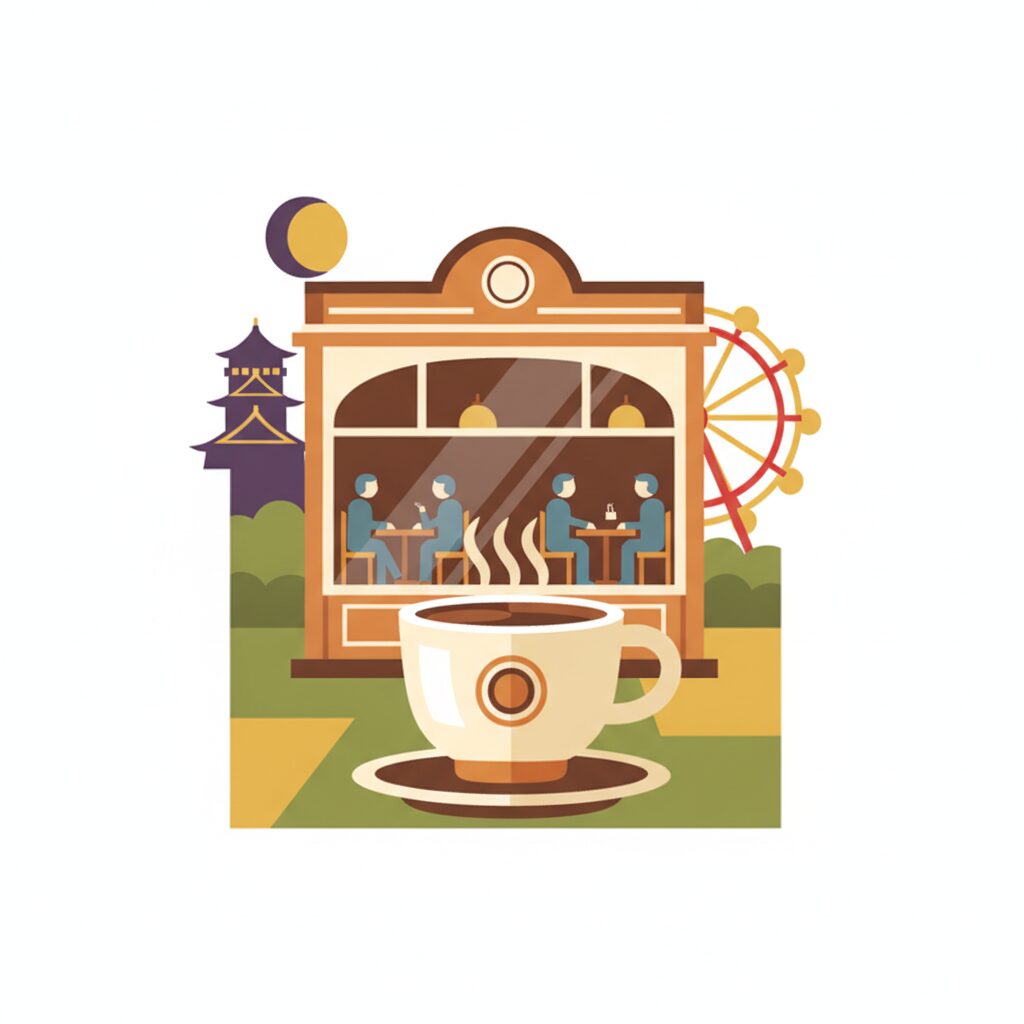
When I first moved to Osaka, I kept seeing the signs outside old-school coffee shops: a simple, hand-drawn picture of a coffee cup, a slice of thick toast, and a boiled egg. Below it, a price that seemed impossible, something like 450 yen. My London brain, conditioned by years of paying a fiver for a flat white alone, couldn’t process it. This was “Morning Service,” or mōningu sābisu as it’s known here. My initial thought was simple: it’s just a cheap breakfast. A loss leader to get people in the door. I completely missed the point. It took me months of living here, of peering through the steamy windows of these neighborhood institutions, to understand that I wasn’t looking at a meal deal. I was looking at the very heart of Osaka’s neighborhood culture, a daily ritual that explains more about this city’s mindset than any guidebook ever could. This isn’t about grabbing a quick bite. It’s a social contract, a community hub, and a declaration of Osakan identity, all disguised as toast and coffee.
This glimpse into local ritual only scratches the surface, and delving into Osaka’s morning service tradition reveals a rich tapestry of community life and cultural heritage.
The Unspoken Contract: More Than Just a Meal Deal

In Tokyo, the morning rush is a hectic, solitary routine. People grab coffee from a chain, pick up an onigiri from a convenience store, and consume it while speed-walking or squeezed onto a quiet train. It’s pure fuel—a transaction focused on maximum efficiency. Osaka’s morning service, however, is the exact opposite. Entering a neighborhood kissaten between 7 AM and 11 AM feels like stepping into another world. The air is thick with the aroma of dark-roast coffee and toasted bread. A soft murmur of conversation, the rustling of newspapers, and the gentle clinking of ceramic cups fill the space. This is not a place for rushing; it’s a place to be.
The unspoken agreement of the morning service is this: for the price of one cup of coffee, you gain temporary membership to this communal space. The toast, egg, maybe a small pot of yogurt or a tiny salad—that’s simply a welcoming gesture. The true offering is a sense of belonging. It’s the city’s “third place,” a social environment distinct from the two usual settings of home and work. For many older residents, this serves as their living room. For local business owners, it’s the unofficial morning meeting spot. For the salarymen, it’s a moment of quiet reflection before the day’s chaos begins. You aren’t merely a customer buying products; you become a temporary occupant of a shared space, taking part in a collective ritual. This essential distinction is often misunderstood by foreigners. We see the price and think “bargain,” but locals see the space and feel “community.”
The Kissaten as a Neighborhood Anchor
The heart of any authentic kissaten lies in its “Master.” This is not a young barista freshly trained in latte art. The Master is often the owner, someone who has stood behind the same counter for thirty, forty, or even fifty years. They are the silent conductors of this morning symphony. With a subtle nod, they acknowledge regulars, knowing who takes sugar, who reads the sports page first, and who is having a difficult day simply by the way they sit down. The Master embodies the neighborhood— a confidant, a keeper of local gossip, and a steady presence in a constantly changing world.
The Master’s Domain: An Unchanging Stage
This sense of stability is mirrored in the physical space itself. Classic Osaka kissaten serve as time capsules. They often feature dark, polished wood, plush velvet chairs in hues of burgundy or forest green, and Tiffany-style lamps that emit a warm, amber light. The music is never trendy; it typically consists of soft jazz, classical pieces, or Showa-era pop ballads. The air feels dense with stories accumulated over decades. This contrasts sharply with Tokyo, where cafes frequently chase the latest minimalist or industrial-chic trends, renovating every few years to stay relevant. In Osaka, especially in these neighborhood spots, relevance is found in consistency. People don’t come here seeking novelty. They come for the comfort of familiarity. They come because they know the coffee will taste the same as it did last week and ten years ago, and their favorite seat by the window will be waiting. This dedication to permanence is a key part of the charm. It stands as a tangible rejection of the disposable, fast-paced culture of modern life.
A Cast of Regulars: The Daily Drama
Spend an hour in a kissaten and you’ll observe the familiar cast of characters. There’s the elderly gentleman at the counter, carefully reading his newspaper from front to back, a halo of tobacco smoke floating above him. There’s a group of middle-aged women, the “Osaka obachan,” who gather each morning to share stories and laugh loudly enough to be heard over the kitchen’s sizzle. There’s the young salesman in a slightly rumpled suit, using the table as his impromptu office to plan his client visits for the day. They may not all interact, but there is a shared understanding. They are part of the same quiet, daily ritual. Their presence breathes life into the space. The friendliness of Osaka isn’t found in loud, boisterous greetings from strangers on the street. It’s this—the quiet, consistent, shared act of showing up in the same place together, day after day.
The Economics of Generosity: An Osaka Mindset
So, how do these establishments manage to stay open? Serving a meal at the cost of a drink seems like financial madness. The explanation lies deeply rooted in Osaka’s merchant culture—the spirit of the akindo. Osaka has been Japan’s commercial hub for centuries, with a business philosophy grounded in practicality, value, and enduring relationships. The morning service exemplifies this perfectly. It’s not about maximizing profit from a single sale but about cultivating a loyal clientele. It acts as a loss leader, but a deliberate one. Someone who comes for the 450-yen morning set is likely to return for a 900-yen lunch, or bring a friend for coffee and cake later in the day. This ensures a consistent flow of customers and fosters strong loyalty. Customers feel they’re receiving a good deal, a little extra, which encourages them to come back and support the business. The concept of omake, or offering a small bonus, is embedded in Osaka’s commercial tradition. The morning service is the ultimate omake. It’s a gesture that says, “We value your presence here, and we’ll show it by giving you more than what you paid for.” This is a stark contrast to the Tokyo approach, where you typically get exactly what you pay for—no more, no less.
The Value Proposition of “Mōningu”
Now, let’s look at what you actually get. This isn’t a flimsy piece of pre-packaged toast. Usually, it’s a thick, fluffy slice of Japanese milk bread called shokupan, toasted to a perfect golden brown and served with a pat of butter and a small pot of jam. The egg is almost always a warm hard-boiled egg, presented in its own little cup, ready to peel. The coffee isn’t a weak, watery brew; it’s siphon or pour-over coffee, carefully prepared, often from a house blend perfected over decades. The meal is simple but prepared with pride and attention to quality. It feels both humble and deeply satisfying, reflecting Osaka’s appreciation for unpretentious, high-quality offerings that deliver exceptional value for money.
Navigating the Kissaten: A Foreigner’s Field Guide
For a newcomer, entering one of these establishments can feel intimidating. They resemble private clubs where everyone seems to know each other. However, the barrier to entry is much lower than you might expect. The key is to adopt the right mindset: you are stepping into someone’s space, so be a respectful guest.
Finding Your Spot
First, you need to learn how to recognize a genuine, old-school kissaten. Forget the shiny chains with English menus. Seek out places with faded awnings, nostalgic neon signs from a bygone era, and plastic food models in the window sun-bleached over time. Look for names, often beautifully simple like “Coffee House Peacock” or “Cafe Dahlia.” Notice the bicycles of regulars parked carelessly out front. These spots hold the history and spirit of the morning service culture. Don’t hesitate to simply walk in. The Master has seen it all and will likely greet you with a straightforward “Irasshaimase” (Welcome).
The Silent Etiquette
Once inside, take a moment to take in the ambiance. This isn’t the place to take a loud business call or have a raucous video chat with family back home. The mood here is one of relaxed, quiet sociability. Find a seat, and the Master or staff will bring you water and a menu. Ordering is easy. You can just point to the morning set or say “Mōningu, onegai shimasu” (Morning service, please). The beauty of this ritual lies in its simplicity. There are no complicated decisions to make. You allow the establishment to cater to you. Lingering is completely acceptable. Reading a book, writing in a journal, or simply gazing out the window are all encouraged activities. The aim is to blend into the calm, not to interrupt it. You’ll notice that while people are friendly, there’s no expectation to start conversations with strangers. The community is built on a shared presence, not forced interaction. A polite nod to the Master as you leave is all the gratitude that’s necessary.
The Fading Ritual? The Future of the Morning Service
It’s easy to romanticize the kissaten and assume this tradition will endure forever. However, these establishments face genuine challenges. The Masters are aging, and their children often pursue different careers. The economic pressures are mounting, with rising costs and fierce competition from convenience stores offering 100-yen coffee and inexpensive pastries. The younger generation, used to the efficiency of global coffee chains, doesn’t always have the time or desire to engage in this slower-paced ritual. In some neighborhoods, the gradual decline is evident as beloved old shops close their doors permanently.
Still, there is cause for optimism. A new generation of younger Osakans, perhaps weary of the sterile and impersonal feel of modern life, is beginning to rediscover the appeal of the kissaten. Retro is fashionable once again. New coffee shops are opening that carefully recreate the Showa-era ambiance, featuring velvet chairs and siphon coffee makers. They know that what they offer isn’t just coffee, but an atmosphere, a feeling, a connection to the past. In some form, the morning service lives on.
Ultimately, the Osaka kissaten morning service acts as a living museum of the city’s culture. It stands as a tribute to a lifestyle that prioritizes community over convenience, loyalty over profit, and calm routine over chaotic efficiency. It reveals the mindset of Osaka’s people: pragmatic, value-conscious, and deeply connected to their local communities. For anyone wanting to truly understand daily life in Osaka, my advice is straightforward. Avoid tourist cafes. Find a small, family-run kissaten in a quiet residential area, order the morning set, and simply sit. Observe, listen, and absorb the atmosphere. In the steam rising from your coffee cup, you’ll discover a more authentic picture of this remarkable city than anywhere else.