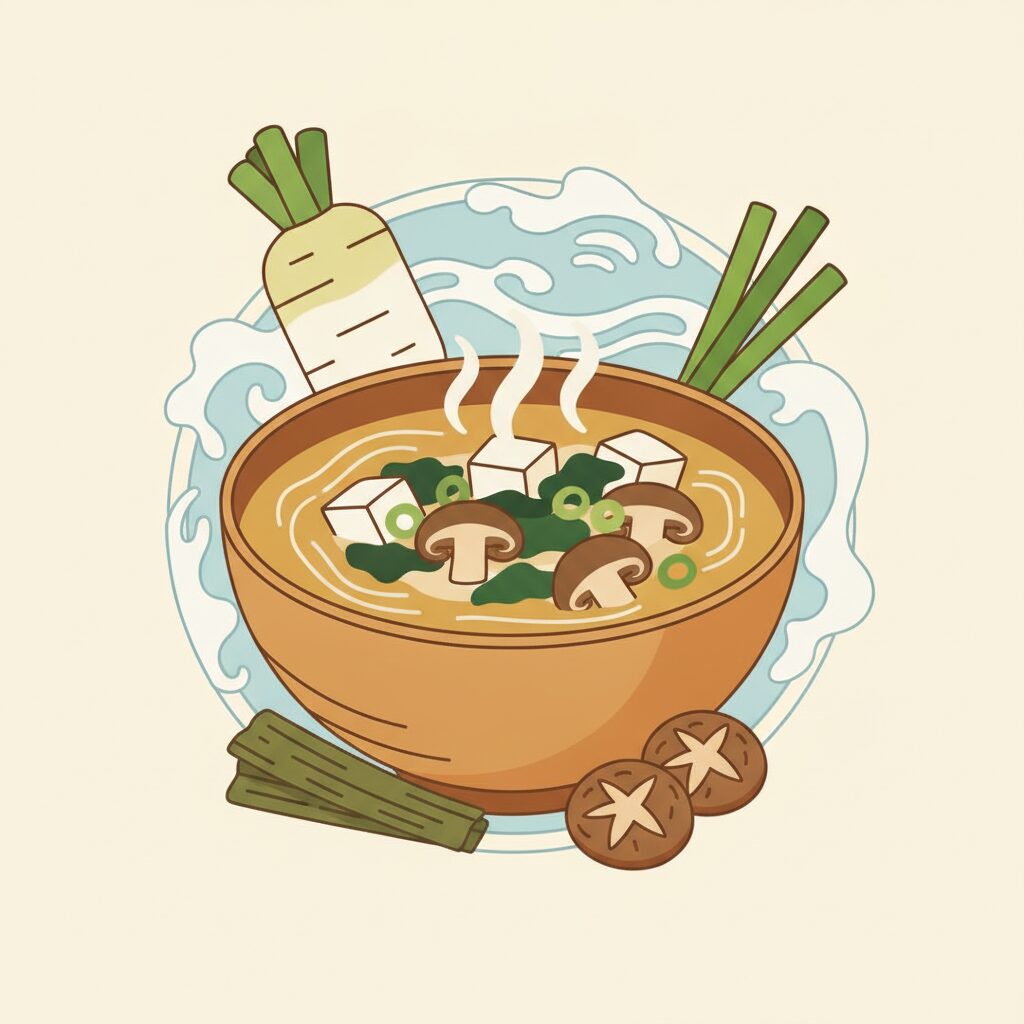
I remember my first real moment of culinary confusion in Osaka. It wasn’t with a plate of wriggling octopus or a notoriously pungent fermented dish. It was with a simple, elegant bowl of boiled spinach, called ohitashi. It looked innocent, a vibrant green mound glistening under a sprinkle of sesame seeds. It was, by all visual accounts, a perfect vegan dish. Then I took a bite. Beneath the clean, earthy taste of the spinach was a deep, savory, and unmistakably fishy hum. A ghost of the ocean clinging to every leaf. I asked the friendly woman behind the counter what was in it. “Just spinach, soy sauce, and a little dashi,” she said with a warm, matter-of-fact smile. And there it was. Dashi. The invisible ingredient, the culinary foundation, the lifeblood of Osaka cuisine, and the single biggest puzzle for any plant-based eater trying to navigate daily life here. This city doesn’t just use dashi; it runs on it. It’s the secret whisper in the soup, the phantom flavor in the sauce, the very soul of the Kansai kitchen. Understanding dashi is understanding the rhythm of Osaka itself—a rhythm that’s subtle, deeply traditional, and can catch the unwary off guard.
Living here means untangling this savory web, learning to see the unseen and taste the unlisted. It’s a challenge, for sure, but it’s also your entry point into the city’s heart. Forget the tourist maps for a moment; the real geography of Osaka is a map of flavors, and the ocean of dashi is where it all begins.
Navigating the hidden world of dashi is just one part of embracing Osaka, as delving into the social impact of Osaka’s sento culture further unveils the city’s authentic rhythm.
The Dashi Divide: Why Kansai’s ‘Soul Food’ is a Vegan’s Puzzle

To truly grasp Osaka, you need to understand dashi. It’s more than just broth; it’s a philosophy. It represents umami, the fifth taste—the savory, mouth-watering quality that makes food deeply satisfying. While dashi is used throughout Japan, the way Osaka and the surrounding Kansai region approach it is a source of fierce local pride, distinguishing them from their longtime rivals in Tokyo.
What Exactly Is Dashi?
At its simplest, dashi is a deceptively straightforward stock made from two primary ingredients: kombu (dried kelp) and katsuobushi (thin shavings of dried, fermented, and smoked bonito tuna). Kombu offers a gentle, oceanic base rich in glutamates, while katsuobushi delivers a smoky, intensely savory hit of inosinates. Together, they create a synergistic burst of umami that exceeds the sum of their parts. Unlike the rich, heavy bone-and-vegetable stocks typical of Western cuisine, dashi is light, clear, and meant to enhance rather than overpower the main components of a dish. It’s the ultimate supporting player, making every ingredient taste more like itself.
Kansai Dashi vs. Kanto Dashi: A Tale of Two Tastes
Here’s where the regional rivalry really ignites. In a Tokyo udon shop, you’ll most likely encounter a dark, opaque broth—that’s Kanto-style dashi. It’s rich in katsuobushi and seasoned with a dark, robust soy sauce (koikuchi shoyu). The flavor is bold, straightforward, and commanding—it makes a statement.
Osaka’s dashi, by contrast, is a completely different creature. It’s valued for its clarity and pale golden color. The kombu—often premium quality from Hokkaido’s cold waters—is the star, while katsuobushi is used sparingly, lending a delicate, refined smokiness. It’s seasoned with a light-colored soy sauce (usukuchi shoyu), which, although saltier than its darker counterpart, doesn’t discolor the broth. Osakans proudly claim their dashi is superior because it highlights the true essence of the ingredients. It doesn’t dominate the palate; instead, it teases out the best in tofu, vegetables, and fish. This subtlety captures the heart of Kansai cooking. However, this delicate, celebrated flavor almost always relies on fish as its base.
The ‘It’s Just Broth’ Misunderstanding
This is the biggest cultural challenge for vegans and vegetarians. When asked if a dish contains meat, the answer might honestly be “no.” But that question usually doesn’t extend to dashi. Locally, dashi isn’t classified as “fish” in the same way a grilled salmon fillet is. It’s a foundational element, a universal seasoning that belongs to its own category. It’s akin to asking a Western chef if a dish contains salt—the question itself seems strange.
This results in many conversations like this: “Is this vegetarian?” “Yes, yes, it’s just simmered daikon radish.” “And what is it simmered in?” “Ah… dashi.”
This isn’t an attempt to mislead; it’s a genuine blind spot rooted in a different way of thinking about food. Dashi is the water the vegetables swim in; to many locals, it’s as neutral as the pot used to cook it. For someone new, understanding this distinction is lesson number one. You need to ask specifically about the broth, the sauce, or the simmering liquid because the word “vegetarian” alone simply doesn’t provide the clarity you need.
Where the Fish Hides: Unmasking Dashi in Everyday Osaka Dishes
Dashi’s pervasive presence means it appears in places you might never expect. Once you begin to notice it, it’s everywhere. It’s like the ghost in the machine of Osaka’s cuisine. Navigating your daily meals turns you into a detective, learning to identify the usual suspects where this fishy foundation hides in plain sight.
Udon and Soba: The Clear Culprits
This is the most straightforward case. That beautiful, steaming bowl of kitsune udon—a dish famously created in Osaka, with its sweet fried tofu resting on thick, chewy noodles—baths in a sea of pure dashi. The same holds true for nearly all hot soba and udon noodle soups. The broth is the dish. While you can order zaru soba (cold noodles with a dipping sauce), the dipping sauce, or tsuyu, is a concentrated mix of dashi, soy sauce, and mirin. There’s almost no avoiding it in a traditional noodle shop.
The Sneaky Simmer: Nimono and Oden
Step into any izakaya or family restaurant, and you’ll encounter nimono, or simmered dishes. These often feature beautifully carved carrots, tender daikon radish, shiitake mushrooms, and taro root. They may look like a vegan dream, but they’re almost always simmered for hours in a dashi-based broth, which seeps into every bite. The same goes for oden, the beloved winter comfort food. The vats you see at convenience stores, with skewers of tofu, konjac, and vegetables floating in steaming broth, are simmering in a potent dashi mixture. The longer they sit, the more savory, fishy flavor they absorb.
Sauces and Dips: The Hidden Layers
Dashi isn’t just for soups. It plays a key role in sauces and condiments as well. The dipping sauce for tempura, tentsuyu, is dashi-based. The dressing on your silken tofu or the sauce poured over a savory egg custard (chawanmushi) is rich with it. Even Osaka’s most iconic street foods, takoyaki (octopus balls) and okonomiyaki (savory pancake), are tricky. Many batters for these dishes include dashi powder to deepen the flavor. And even if the batter is plain, the sweet, savory brown sauce spread on top often contains dashi as a base ingredient. The dancing bonito flakes on top are just the most visible sign of the dashi hiding beneath.
Even Tofu Isn’t Safe: Agedashi Tofu and Miso Soup
This can feel like a surprise. You order agedashi tofu—crispy fried tofu in a delicate broth—thinking you’re free from it. But that broth is, as you might expect, dashi. It gives the dish its signature savory warmth. Miso soup, a staple in nearly every set meal in Japan, is another prime example. The base isn’t just water and miso paste; it’s dashi combined with miso paste. That’s why the simple soup delivers such a profound, satisfying flavor. Without the katsuobushi, it wouldn’t be traditional miso soup at all.
The Vegan’s Survival Kit: How to Eat Well in a Dashi World
Confronting this umami-rich reality might seem intimidating, but it doesn’t mean you’re stuck with a diet of plain rice and raw cucumbers. Living as a vegan in Osaka is entirely feasible; it just calls for a different approach. It’s less about hunting for clearly labeled vegan options and more about understanding the system and learning how to communicate effectively within it. It’s about being prepared, being precise, and knowing where to search.
Mastering the Language: Key Phrases That Actually Work
Simply saying “I’m a vegetarian” (watashi wa bejitarian desu) or “I don’t eat meat” (niku wo tabemasen) often falls short. These phrases don’t cover the cultural blind spot surrounding dashi. You need to be more specific. Equip yourself with these essential questions:
- “Kono ryori ni dashi wa haitte imasu ka?” (この料理に出汁は入っていますか?) – Does this dish contain dashi? This is your straightforward, all-purpose inquiry.
- “Gyokai no dashi o tsukatte imasu ka?” (魚介の出汁を使っていますか?) – Do you use seafood-based dashi? This clarifies the type, as some places might use a mushroom-based one.
- “Katsuobushi ya niboshi nuki de dekimasu ka?” (鰹節や煮干し抜きでできますか?) – Can you make it without bonito flakes or dried sardines? This pinpoints the most common ingredients and shows you know what you’re talking about.
Using specific terms like katsuobushi (bonito), niboshi (sardines), and gyokai (seafood) cuts through ambiguity. It signals that you have a deeper understanding of Japanese cuisine, which is often met with respect and a more helpful response—especially in a food-loving city like Osaka.
Seeking Sanctuary: The Rise of Vegan-Friendly Osaka
The good news is that the scene is gradually evolving. An increasing number of dedicated vegan, vegetarian, and macrobiotic restaurants are emerging, particularly in central areas like Shinsaibashi, Namba, and Honmachi. These are safe spaces where you don’t need to scrutinize the menu. Additionally, you can embrace Japan’s own plant-based tradition: shojin ryori, Buddhist vegetarian cuisine. This style of cooking has existed for centuries and traditionally uses a dashi made from kombu and dried shiitake mushrooms—a naturally vegan, richly flavorful alternative. While often served in tranquil temple restaurants in places like Kyoto, you can also find specialty restaurants in Osaka. It’s not an everyday meal, but it’s a wonderful way to experience the pinnacle of Japanese cuisine, completely plant-based.
The Supermarket Solution: Cooking for Yourself
For those living here long-term, the kitchen becomes your ultimate refuge. Japanese supermarkets are treasure troves if you know what to seek. You can easily purchase your own high-quality kombu and dried shiitake mushrooms to make authentic, delicious, and entirely vegan dashi from scratch. It’s surprisingly straightforward. For convenience, look for powders and packets labeled “Kombu Dashi” (昆布だし) or “Shiitake Dashi” (しいたけ出汁). Just be sure to check the ingredients carefully, as some “kombu dashi” powders are still mixed with bonito extract for an extra umami boost. Seek out products that explicitly state they are 100% plant-based. Mastering your own dashi allows you to recreate almost any Japanese dish, from miso soup to nimono, on your own terms.
Beyond the Broth: Embracing the Osaka Mindset

Navigating Osaka’s dashi-focused culinary world is more than just a dietary challenge; it’s an insightful crash course into the local mindset. The city’s food culture is deeply intertwined with its identity as a historic merchant hub, and grasping this connection is essential to truly feeling at home here.
“Kuidaore” with a Conscience
Osaka is famously associated with the concept of kuidaore, meaning “eat until you drop” or “eat yourself into ruin.” This isn’t about gluttony; it reflects a passionate, discerning, and all-encompassing love for quality food. Osakans take great pride in their culinary heritage and are famously selective about quality and value. They are active, knowledgeable participants in their food culture, not passive consumers. As a vegan, you can embrace this mindset. When you ask detailed questions about ingredients, you’re not being difficult; you’re being discerning. You’re showing genuine care about what you eat, a distinctly Osakan trait. Framing your dietary needs as a quest for quality and understanding, rather than a limitation, aligns you perfectly with the spirit of kuidaore.
Pragmatism over Purity: The Osaka Way
Unlike the refined elegance of Kyoto or the formalities of Tokyo, Osaka is founded on pragmatism, straightforwardness, and a get-it-done attitude. It was a city of merchants, not aristocrats or samurai. Business revolved around clear communication, negotiation, and practical problem-solving. This approach remains today. An Osaka shop owner is more likely to give you a direct, honest answer. If they can’t prepare a dish for you, they’ll say plainly, “Akan, muri ya” (“Nope, can’t be done”). But if they can accommodate you, they may even improvise something, appreciating your straightforwardness. In Tokyo, you might encounter polite, apologetic but ultimately unhelpful gestures. In Osaka, you’re more likely to engage in a genuine conversation. This directness might seem abrupt at first, but it’s incredibly efficient—an invitation to solve a problem together, making daily life refreshingly straightforward.
Finding Your Flavor in the Culinary Capital
Ultimately, living as a vegan in Osaka is an exercise in cultural translation. It requires looking beyond the surface, learning the kitchen’s language, and connecting with people on a level most tourists never reach. You come to understand that the subtle presence of dashi in a simple spinach dish is a taste of the city’s history, regional pride, and steadfast belief that good food is the foundation of a good life. By learning to navigate this umami undercurrent, you’re not merely avoiding an ingredient; you’re actively engaging with the culture, discovering your own way to ‘eat until you drop’ in Japan’s magnificent, chaotic, and utterly delicious culinary world.