So you’ve landed in Osaka. You’ve got your apartment, you’ve mastered the Midosuji Line, and you’ve eaten enough takoyaki to know your favorite stand. But a nagging feeling persists. You feel like you’re still on the outside looking in, a polite customer in a city famed for its warmth. You hear people talk about Osaka’s legendary friendliness, a stark contrast to the polite but palpable distance of Tokyo, yet your daily interactions feel… transactional. A quick “arigatou gozaimasu,” a bow, and you’re back on the street, anonymous. You’re buying groceries, not building connections. You’re a consumer, not a community member. This is the quiet frustration of many newcomers. The question echoes in the back of your mind: How do you break through? How do you move past being just another face in the crowd and become part of the neighborhood fabric? The answer doesn’t lie in a sleek shopping mall or a sterile supermarket. It lives and breathes in the covered alleyways of the shotengai, Osaka’s beating heart. These shopping arcades are more than just places to buy your daily bread and fish; they are living ecosystems of commerce, communication, and community. They are the stage where the daily drama of Osaka life unfolds, and learning the unspoken rules of this stage is your ticket to becoming not just a resident, but a regular, a ‘jōren,’ a true neighbor.
By exploring Osaka’s morning coffee ritual, you can uncover yet another vibrant facet of local life that invites deeper, more genuine connections with the community.
The Shotengai: Not a Market, But a Living Room
First, you need to fundamentally change your perspective. A shotengai is not the Japanese counterpart to a Western high street or an open-air market. It serves as the semi-public living room of a neighborhood. Consider a supermarket as a place of quiet, efficient extraction—you enter, grab what you need, self-checkout, and leave. Human interaction is minimized to prioritize speed. A shotengai, however, is the complete opposite. It’s a place of loud, chaotic, and wonderfully inefficient connection. The goal isn’t merely to sell you a mackerel; it’s to nurture a relationship that ensures you’ll return for another mackerel tomorrow, and the day after.
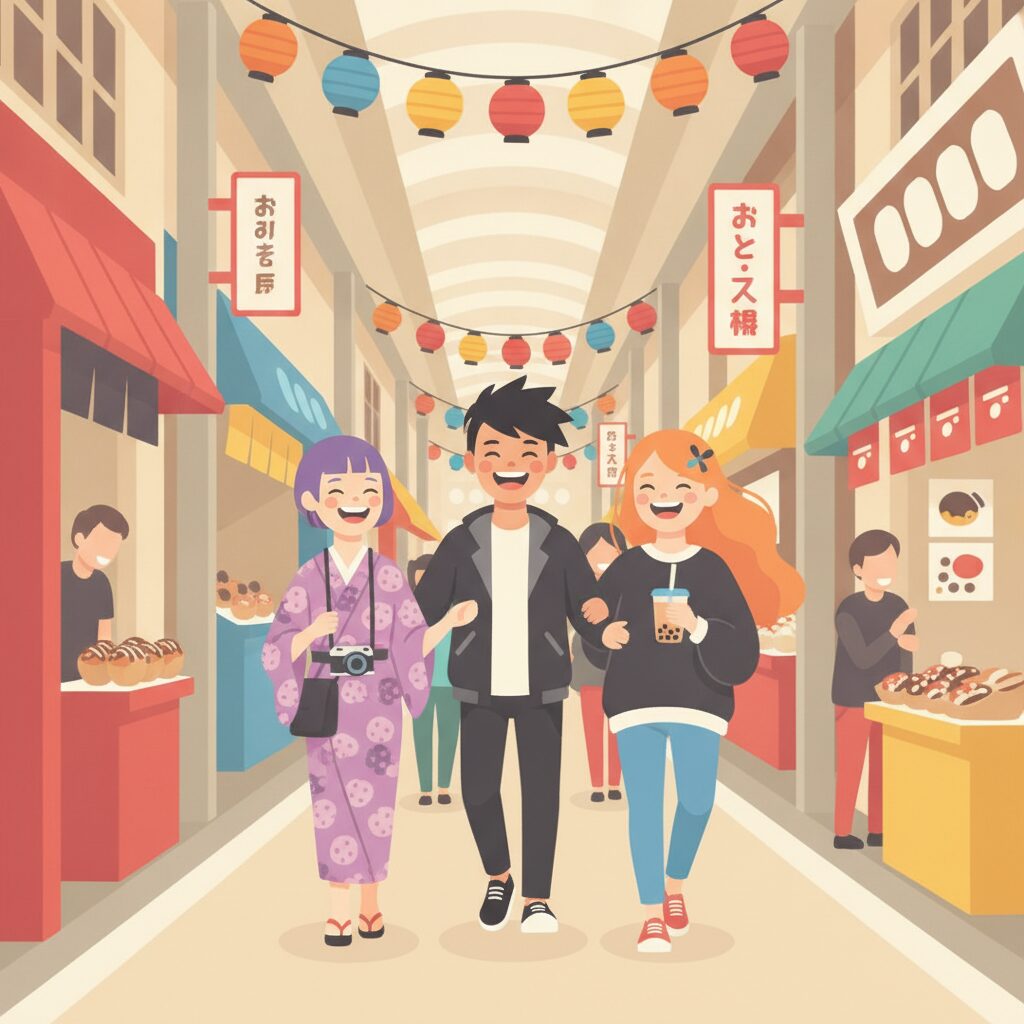
Step into any shotengai, whether it’s the expansive Tenjinbashisuji or a small, one-block arcade in a residential ward. Close your eyes briefly. The air is dense with a symphony of aromas: the savory smoke from a yakitori stall, the briny sharpness of fresh fish on ice, the sweet scent of simmering dashi from the oden shop, and the earthy fragrance of daikon radishes heaped high. Now listen. It’s not a quiet murmur. It’s a chorus of voices shouting, “Irasshai!” (Welcome!), “Yasui yo!” (It’s cheap!), and the constant, rolling “Maido!” (Thanks for your business!). This sensory immersion isn’t just background noise; it’s the fabric of community. Each vendor—the gruff-looking butcher with surprisingly gentle hands, the smiling elderly woman at the tofu shop, the fast-talking fishmonger—is more than just a clerk. They are the guardians of the neighborhood. They are the ‘taisho’ (master) and the ‘okami-san’ (madam) of their small realms. They’ve watched kids grow up, know who’s ill, who’s celebrating, and who just got a new puppy. In Tokyo, people tend to keep a respectful distance. In an Osaka shotengai, the norm is involvement. Resisting this and trying to maintain a Tokyo-style bubble of personal space is the first and most common mistake foreigners make. You have to lean in.
The Unspoken Language of Becoming a Regular
Becoming a ‘jōren’ is a gradual journey, a slow dance of recognition and mutual exchange. It relies on a currency unrelated to yen. It’s about being present, participating, and showing a willingness to engage beyond the minimum. Perfect Japanese isn’t necessary, but a familiar face is.
From ‘Kore Kudasai’ to Conversation
The quickest way to remain an outsider forever is to approach a shotengai stall as if you’re running a quick supermarket errand. Pointing and saying “Kore kudasai” (This, please) serves a purpose, but it ends the conversation before it begins. It signals a purely transactional mindset. To break through, you need to open the door to interaction. It’s easier than it sounds. You’re not expected to dive into deep philosophical dialogue. Start small, with questions that show you respect the vendor’s knowledge.
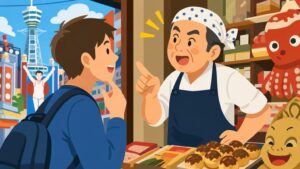
Instead of just pointing at a line of fish, try asking, “Kyou no osusume wa?” (What’s today’s recommendation?). This simple question changes everything. You stop being a buyer issuing an order; you become a learner seeking insight. The fishmonger’s eyes will light up. He’s not just selling fish; he’s sharing his craft. He might point to a shimmering sea bream and say it just arrived from Awaji Island this morning. He might then ask what you’re planning to cook. This is your opening. Be honest. “I’m not sure, actually.” Now the conversation deepens. “Ah, well this one is best just salted and grilled. The flavor is so good, you don’t need anything else.” Just like that, you’ve moved from a simple transaction to a real interaction. You get a product, a recipe, and a human connection.
Other simple conversation starters work great:
- To the vegetable vendor: “Kono kabocha, amain?” (Is this pumpkin sweet?) shows you care about quality.
- To the butcher: “Gyudon ni shitainやけど, dore ga ee?” (I want to make beef bowls, which cut is good?) shows you have a plan and need their advice.
- To anyone, about anything: A simple comment on the weather. “Meccha atsui desu ne!” (It’s crazy hot, huh!). It’s a cliché for a reason. It’s a shared experience, a universal icebreaker.
The Power of Repetition and Recognition
Consistency is your superpower. Pick your favorite stalls. Don’t buy vegetables from a different vendor every week. Choose one. Let them get to know your face. At first, you’re just a stranger. After a month of coming every Tuesday and Friday, you become a familiar face. After three months, you’re a regular. That’s when the magic begins.
This is where the word “Maido!” transforms. The first time you hear it, it’s a general welcome and thanks combined. But as you become a regular, it becomes more personal. The shop owner may catch your eye as you approach and greet you with a warm “Maido!” before you even speak. This isn’t just a greeting; it’s recognition. It means, “I see you. I remember you. You belong here.” In a city of millions, this small moment of personal acknowledgment is powerful. Your face becomes your loyalty card. The ‘taisho’ might anticipate what you want. The tofu maker knows you prefer soft ‘kinu’ tofu and might gesture that he set aside the last block for you. The man at the ‘tsukemono’ (pickles) stall remembers you liked the spicy cucumber last time and asks if you’d like some again. This isn’t an algorithm pushing sales; it’s one human remembering another.
The Rites of Passage: Signs You’re In
As your status shifts from customer to ‘jōren,’ you’ll begin to notice subtle changes in how you’re treated. These unspoken rites of passage mark your acceptance into the neighborhood’s inner circle.
Embracing the ‘Osekkai’ Spirit
One of the biggest culture shocks for those coming from Tokyo or Western countries is the Osaka concept of ‘osekkai.’ On the surface, it means being meddlesome or nosy. In reality, it’s a form of proactive, sometimes intrusive, community care. In Tokyo, politeness often means keeping a respectful distance and not invading someone’s privacy. In Osaka, caring means getting involved in your affairs. When the fruit stand lady starts showing you ‘osekkai,’ it means you’ve been accepted.
It might sound like criticism, but it’s really a subtle expression of concern. You’ll hear things like:
- “Anata, kyou kao-iro warui de.ちゃんと寝てるんか?” (Hey, you look pale today. Are you sleeping properly?)
- “Son’na usugi de samunai no? Kaze hiku de!” (Aren’t you cold in such thin clothes? You’ll catch a cold!)
- Seeing you buy instant ramen: “Akan! Sonna mon bakkari tabetara. Kono horenso mo tabenasai!” (No good! You can’t just eat that stuff. Eat this spinach too!)
Your first reaction might be to feel judged or embarrassed. Don’t. The right response is to smile and engage. Say something like, “I was up late working,” or “I thought it would be warmer today!” This ‘osekkai’ means they no longer see you as a fragile outsider to be treated with polite caution. They see you as one of their own, someone they have the right to care about. In their own way, they’re looking out for you.
The Sacred Gift of the ‘Omake’
Perhaps the most tangible and heartwarming sign of your ‘jōren’ status is the ‘omake.’ An ‘omake’ is a little extra something given for free. It’s important to understand that this is not a discount or a BOGO deal. An ‘omake’ is a gift, a physical symbol of the relationship you have built. It should never be requested. Asking for an ‘omake’ is a cultural offense of the highest order. It must be offered freely.
It will happen when you least expect it. The butcher, after weighing your pork, might slip in a couple of extra slices with a wink and a “Kore, omake.” The lady at the vegetable stand, noticing you buy tomatoes, might add a slightly imperfect but delicious one to your bag, saying, “This one’s a bit ugly, so it’s a present.” The baker might give you the heel of the bread loaf he knows you like for toast. These aren’t grand gestures but small, tangible tokens of affection. They say, “I appreciate your loyalty. Our relationship is more than just business.” Receiving your first ‘omake’ is a milestone—it’s the shotengai’s way of embracing you.
Navigating the Social Maze: Friendliness vs. Friendship
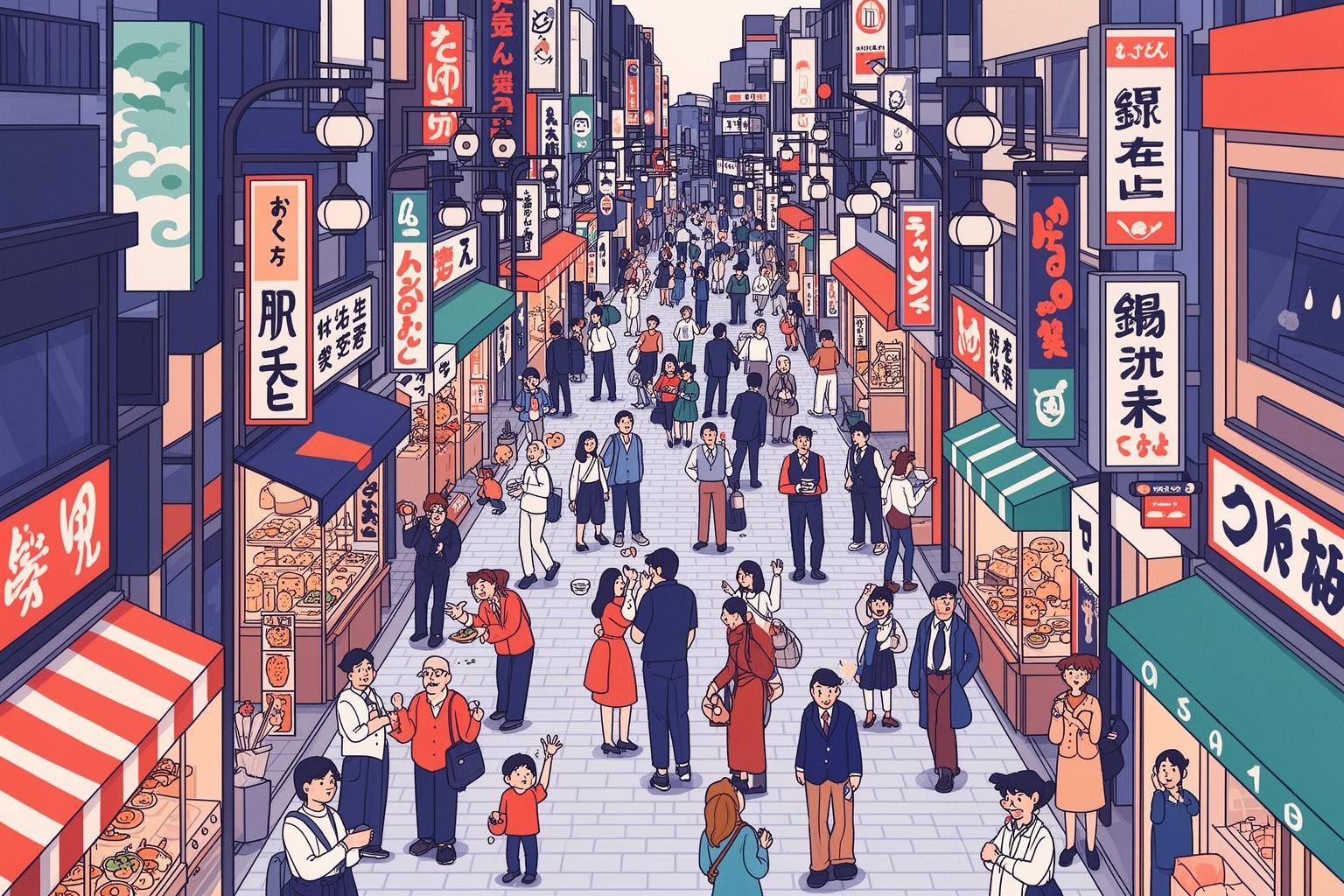
Managing expectations is crucial. The initial warmth shown by an Osaka shopkeeper is a form of professional friendliness. It’s an open invitation, but not an instant friendship. This is a common misconception. A foreigner might enjoy a wonderfully warm and humorous exchange, thinking they’ve made a new best friend, only to encounter the same professional warmth the next day. This friendliness lubricates community and commerce; turning it into a genuine, personal friendship requires effort on your part as well.
Don’t be discouraged. Shopkeepers serve as your gateway to the broader community. That first interaction is just the beginning. The key is to engage. When the butcher teases you about your Kansai-ben pronunciation, he’s not mocking you. He’s testing the waters and inviting you to join in the playful exchange. The wrong reaction is to feel shy or offended. The right response is to laugh at yourself, perhaps even throw a playful jab back. This shows you get the joke and understand that the local communication style is rooted in humor and teasing—it’s a sign of affection.
Once you become a trusted regular, you join the neighborhood’s information network. The shotengai is a gossip hub, but usually a benevolent one. Shop owners talk among themselves. They’ll know you’re searching for a new bicycle or struggling to find an ingredient for a dish from your home country—and they will help. The fruit lady might tell the fishmonger, who’ll mention it to another regular who happens to have an unused old bike. This is how community works. It’s an organic, analog social network where privacy is exchanged for support. For many Westerners used to anonymity, this can feel unusual, but it’s precisely what prevents people from slipping through the cracks. It’s how a neighborhood takes care of its own.
These small daily touchpoints—a chat with the tofu maker, a joke with the butcher, a recipe from the fishmonger—are the seeds from which real friendships grow. The local ‘kissaten’ (coffee shop) owner where you get your morning coffee might eventually introduce you to another regular who shares your interest in photography. The couple running the ‘okonomiyaki’ spot might invite you to the local summer ‘matsuri’ (festival) because they need an extra hand at their food stall. These are genuine pathways to integration. It’s a slower, more patient process than swiping on an app, but the roots go much deeper. This is how you stop merely living in Osaka and start belonging to it. You go from being a tourist in your own life to becoming part of the scenery—a familiar face with a story, a neighbor greeted with a heartfelt, personal “Maido!”