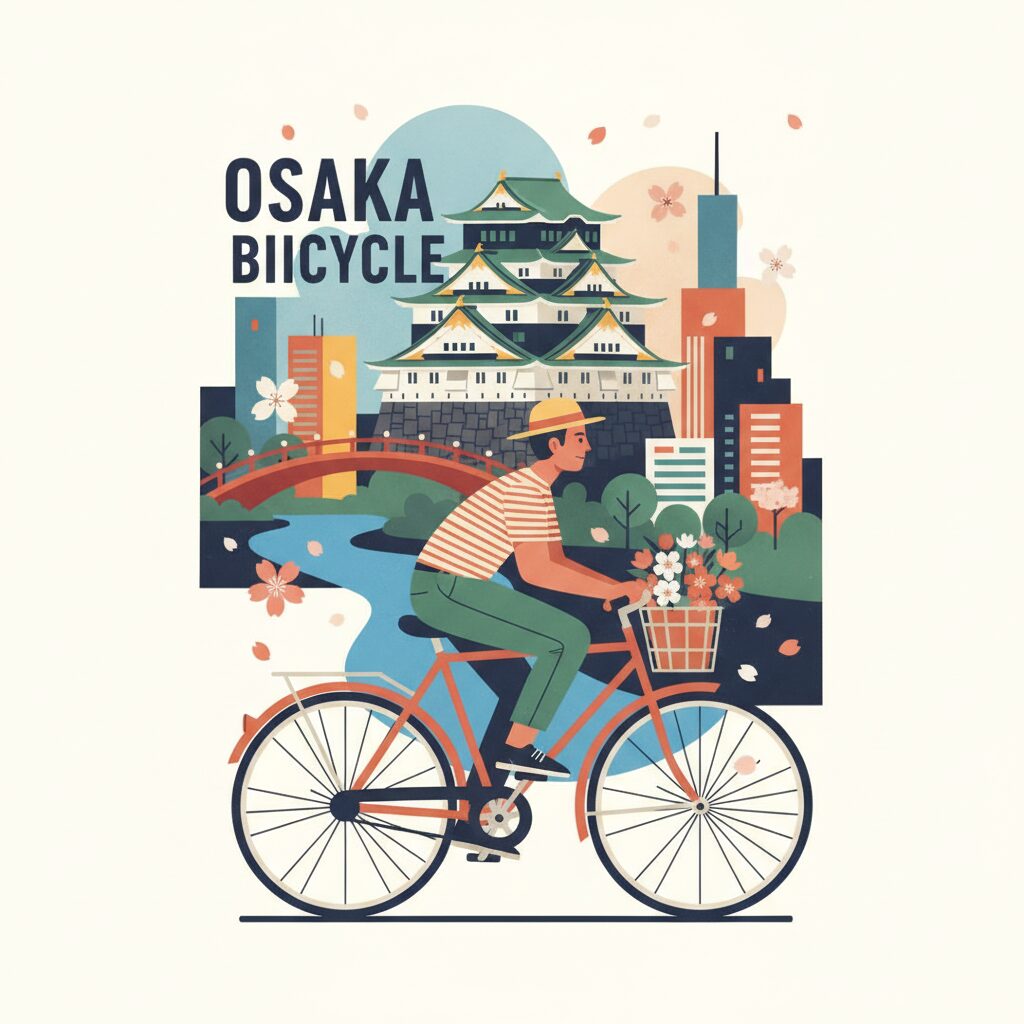
When I first moved to Osaka from Tokyo for an event planning gig, I thought I had Japan figured out. I knew the trains, the politeness, the unspoken rules of navigating a crowd. Then I saw the bicycles. In Tokyo, a bicycle is often a choice—a weekend accessory, a way to explore a quiet neighborhood. In Osaka, the bicycle, the charinko, is not a choice. It’s a vital organ. It’s a chaotic, clanging, endlessly practical extension of the human body, and the city’s streets are its circulatory system. At first, it looks like pure anarchy. A silver tsunami of mamacharis—mom’s chariots—flowing down sidewalks, weaving through shoppers, challenging the very notion of a red light. But it’s not anarchy. It’s a different kind of order, a rhythm you have to learn to feel. This isn’t a guide to the prettiest cycling routes. This is a guide to survival and understanding. It’s about decoding the logic behind the beautiful, maddening, and uniquely Osakan bicycle culture. Before we dive in, let’s get our bearings on the city itself.
As you navigate the intricate flow of Osaka’s bicycle culture, you might also want to discover how to become a regular in Osaka’s shotengai and connect with the vibrant local community.
The Mamachari Kingdom: Why the Bike Reigns Supreme
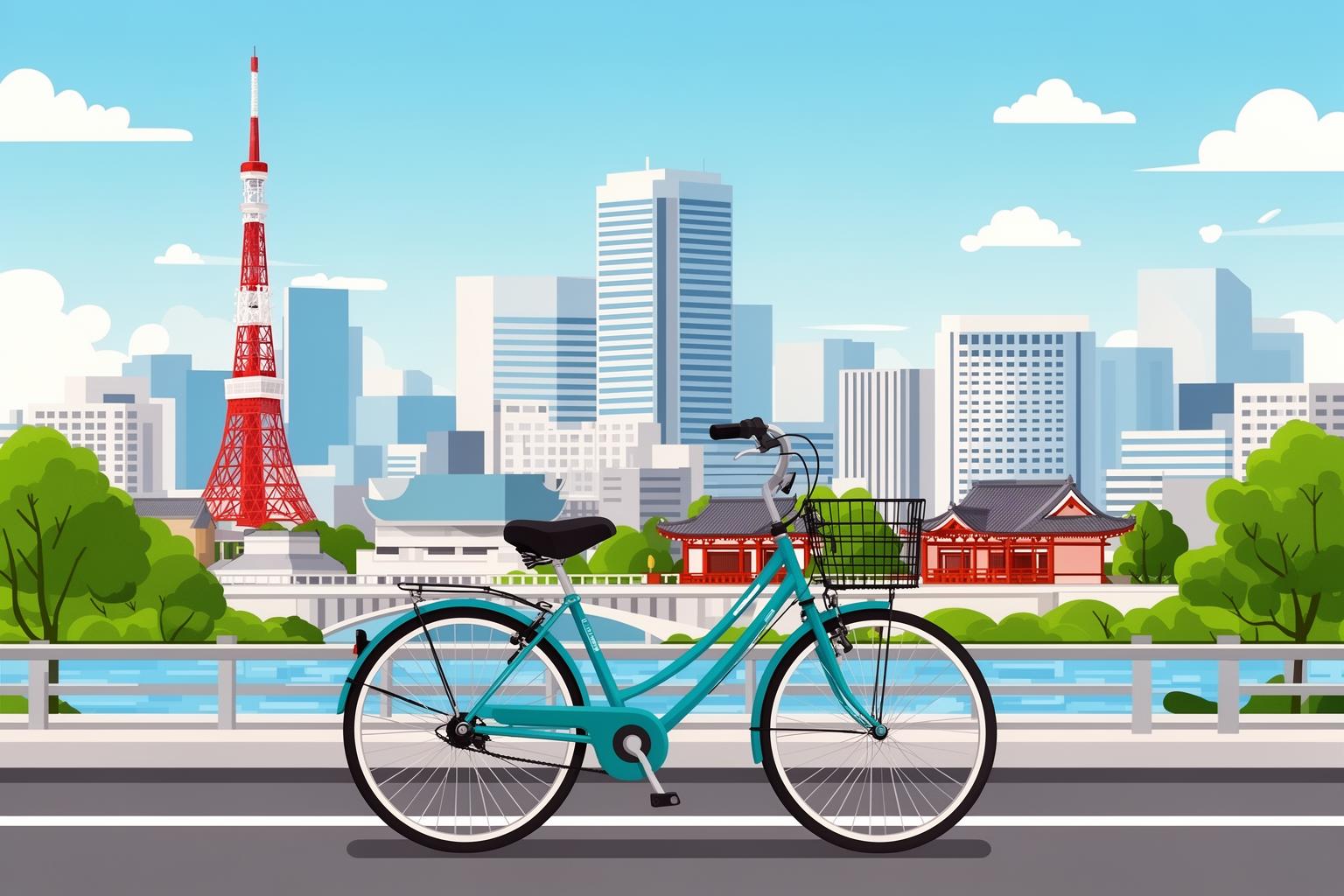
Your first lesson in cycling around Osaka is that not all bikes are made equal. Forget the sleek, lightweight road bikes or the trendy, foldable urban commuters you might spot zipping through Tokyo’s fancier neighborhoods. Here, the undisputed king is the mamachari. These are the heavy, steel-framed, single-speed workhorses of the city, typically equipped with a front basket, a rear luggage rack, a built-in wheel lock, and a bell that rings with a cheerful, unpretentious chirin-chirin.
The All-Purpose Urban Tank
In Osaka, the mamachari is less a bike and more a family workhorse. I’ve witnessed feats that defy logic: a mother pedaling with one toddler in a front child seat, another on the back, and grocery bags hanging from each handlebar, a daikon radish sticking out like a periscope. An elderly man balancing a week’s worth of shopping precariously in his front basket, spilling onto the handlebars. Businessmen in full suits, briefcases tucked into the basket, gliding smoothly through traffic. Appearance doesn’t matter here; utility does. The bike must be rugged enough to endure cracked pavement, affordable enough that a scratch or rust isn’t heartbreaking, and capable of carrying an almost unimaginable load. This perfectly reflects the Osaka mindset: pragmatism prevails. Why own a beautiful, expensive bike you’re too anxious to use when you can have a cheap, slightly rusty tank that reliably gets the job done every day? It’s function over form—a philosophy deeply embedded in the city’s commercial spirit.
Flat City, Fast Life
Osaka’s geography is the secret to its bike-friendly culture. The city is mostly pancake-flat. Unlike hilly places like Kobe or parts of Tokyo, you can traverse wide areas of Osaka without ever needing to change gears or break a sweat. This topographical edge makes cycling the most efficient way to get around for short to medium distances. The people of Osaka are famously described as sekkachi, meaning impatient or always in a rush. They prize speed and directness. Why walk ten minutes to the subway, wait for a train, ride five minutes, then walk another ten to your destination? By bike, that entire 25-minute journey becomes a ten-minute, door-to-door sprint. The bicycle offers freedom from train schedules, crowded platforms, and the rigid structure of public transport. It’s the ultimate life hack for a city that’s always on the move, constantly seeking the fastest, most straightforward route forward.
Navigating the Asphalt Jungle: The Unspoken Rules of the Road
Now we arrive at the core issue: the rules. There are the official, legally mandated cycling regulations in Japan, and then there are the Osaka rules. For newcomers, the gap between these two can seem vast. Grasping this difference is essential to maintaining your sanity and avoiding accidents.
Sidewalks are Mostly Fair Game
The biggest culture shock, without question, is seeing nearly everyone riding their bikes on the sidewalk. Officially, Japanese law classifies bicycles as vehicles that belong on the road, except in designated zones. In Tokyo, this rule is much more strictly observed. In Osaka, however, the sidewalk often serves as the default lane. On major roads with heavy and fast-moving traffic, cycling on the street can feel like tempting fate. So people take to the pavement. This isn’t a hostile takeover, though—it’s a fluid, continuously renegotiated dance between cyclists and pedestrians. When a cyclist approaches a pedestrian, a silent ballet unfolds. The cyclist might ring their bell once—a gentle, polite ding signaling “excuse me, coming through”—and the pedestrian instinctively shifts a few inches aside. There’s a shared spatial awareness that’s difficult to describe. Foreigners often interpret this as rude, but locally, it’s a pragmatic cooperation. The unwritten rule is simple: everyone must pay attention. As long as no collisions occur, it works.
The Art of the “Gomen-ya” Weave
This dance reaches its pinnacle inside shotengai, or covered shopping arcades. Places like Shinsaibashi-suji or Tenjinbashi-suji bustle with crowds, yet cyclists weave through like salmon swimming upstream. This demands a high level of skill. It requires anticipating shoppers’ unpredictable moves, spotting tiny gaps before they appear, and maintaining steady, confident momentum. It’s not aggressive. A truly skilled Osaka cyclist parts a crowd with little more than their focused presence. They might softly say “suimasen” (excuse me) or “gomen-ya” (a local, informal sorry), but often they rely solely on pure, kinetic intuition. Attempting this as a beginner is a recipe for disaster. It showcases Osaka’s ability to process vast sensory input and navigate chaos with an ingrained, almost unconscious grace. It’s a world apart from Tokyo’s orderly, single-file pedestrian flow, such as in Ginza.
Red Lights are More of a Strong Suggestion
Let’s be blunt: you’ll often see Osaka cyclists roll through red lights. This is perhaps the most striking and hazardous local habit. It’s not that they ignore the lights—they see them, assess the situation in a split second, and if no cars or pedestrians are crossing, they move ahead. The logic seems to be, “Why wait for a rule when no immediate danger exists?” It embodies Osaka’s disdain for inefficient, bureaucratic regulations that seem pointless. That said, this behavior is not one to imitate. Police have increased enforcement in recent years, setting up stings at busy intersections to catch violators. More crucially, as a foreigner, you probably lack the decades of ingrained traffic intuition that enables locals to make split-second, mostly safe decisions. For your safety and legal protection, stop at red lights. Treat this behavior as a cultural quirk, not practical advice.
The Parking Puzzle: Where to Leave Your Chari
So you’ve made your way through the city and reached your destination. What’s next? Figuring out where to park your bicycle is a daily tactical challenge. The urban environment itself offers the most obvious—and most troublesome—answer: everywhere.
The Sidewalk Sea of Silver
Head toward any train station, supermarket, or apartment complex, and you’ll be met with a veritable sea of bicycles. They line the sidewalks, are packed against railings, and occupy every available nook and cranny. For newcomers, it’s confusing. Is this allowed? The short answer is no, not really. Much of it is technically illegal parking. Yet it’s so widespread and normalized that it’s become an accepted part of city life. The city simply lacks enough official parking spots to meet the overwhelming number of bicycles in use. This results in an unspoken, collective understanding to bend the rules. You park where you can, as neatly as possible, and hope for the best.
The Dreaded Removal Notice
Sometimes, though, the city pushes back. The “hope for the best” approach fails when you return to find not your bike, but an empty spot and a sticker on the ground. This is the dreaded removal notice. Your bike has been impounded. What follows is a journey through bureaucratic hurdles. You must find out which impound lot your bike was taken to—often located in inconvenient, industrial parts of town. Then you have to make the trip during limited hours, show your ID and bike key, fill out paperwork, and pay a fine, usually between 2,500 and 5,000 yen. It’s a frustrating, time-consuming ordeal, a sharp reminder that the city’s tolerance for parking chaos has its limits. This ongoing cat-and-mouse game between those seeking convenience and the city enforcing order is a constant, low-key urban drama.
Finding Sanctuary: The Rise of Paid Parking
The least stressful option is to use official, paid bicycle parking, or churinjo. These are increasingly common, especially around major hubs like Umeda, Namba, and Tennoji. They range from simple outdoor lots where you slide your bike into a rack that locks the wheel for about 100–150 yen for several hours, to futuristic, multi-story automated garages that store your bike underground. Using these facilities is the smart choice. Still, many locals prefer the risk of illegal parking right outside the station entrance over paying for a lot a block away. Why? It’s that familiar Osaka cost-benefit calculation. “I’ll only be here five minutes. The risk of towing is low. Why pay 100 yen?” To outsiders, risking a 3,000 yen fine to save 100 yen seems illogical, but to some locals, it’s a risk worth taking for maximum convenience. My advice: always pay for parking. Your peace of mind is worth far more than a few coins.
Essential Gear and Local Etiquette
To fully immerse yourself in Osaka’s cycling culture, you need the right equipment and a grasp of some essential procedures. These details distinguish a seasoned local from an inexperienced newcomer.
The Holy Trinity: Bell, Light, and Lock
Every bicycle requires three basic accessories. The bell isn’t a horn for aggressive honking but a communication device. A soft chirin when approaching from behind on a sidewalk serves as a polite warning. Rapid ringing signals a more urgent alert of potential danger. The light is legally required after dark. Police often stop cyclists at night for spot-checks, and failing to have a working light can result in a warning or even a fine. Most mamacharis come equipped with a dynamo light that turns on automatically as you pedal. The lock is your main protection against theft. The built-in ring lock that immobilizes the back wheel is standard, but in busy areas or if you own a slightly nicer bike, a secondary chain or U-lock securing the frame to an immovable object is strongly advised. Unfortunately, bike theft is quite common.
The Umbrella Conundrum: Riding in the Rain
One of the most unusual yet clever devices you’ll encounter is the umbrella holder—a clamp on the handlebars that holds a full-sized umbrella over the rider. It looks unstable, and it is. It’s also technically illegal, as it may obstruct vision and affect balance. However, Osaka has a rainy season, and people still need to get their kids to school and shop for groceries. This inventive solution, born out of necessity, is a frequent sight. It perfectly captures the local mindset: if a rule hinders a practical need, a clever, if somewhat dubious, workaround will be found. In Tokyo, people tend to wear full rain gear or opt for the train on wet days, but in Osaka, the commitment to cycling and the resourcefulness to keep it going are unstoppable.
Registration and You: The Bōhan Tōroku
This is vital practical information. In Japan, every bicycle must be registered with crime prevention registration, or bōhan tōroku. When you buy a new bike, the shop will register it for a small fee (around 600 yen). You’ll receive a small orange sticker with a registration number that is placed on the bike’s frame, linking the bike to you. Police often stop cyclists at random to check this registration as an anti-theft measure. Foreigners are especially likely to be stopped, not out of hostility but often due to curiosity or because they stand out. If you buy a used bike, you must visit a police station or a certified bike shop together to transfer the registration. Riding an unregistered bike, or one registered to someone else, can lead to a lengthy and awkward conversation with the police as they try to establish if the bike is stolen. Getting this sorted from day one is essential.
The Osaka Cyclist Mindset: Efficiency Above All
After living here for some time, you begin to realize that the way people ride their bikes perfectly symbolizes the city’s broader character. It’s not merely about traveling from point A to point B; it represents a fundamental approach to life.
More Than Transport, It’s a Tool
In Tokyo, a bicycle can serve as a statement, an element of a carefully curated lifestyle. In Osaka, however, a bicycle is a tool. It’s a hammer. It doesn’t need to be polished or from a renowned brand. It simply needs to drive the nail home. This practical perspective mirrors the city’s merchant heritage. Osaka was founded on commerce, on getting things accomplished, on closing deals. There’s a straightforwardness and absence of pretension evident in daily interactions, embodied in the dented, rusty, yet utterly dependable fleet of mamacharis that keep the city moving. People value functionality over appearance. It’s the victory of substance over style, of honne (one’s true feelings) over tatemae (the public facade).
A Symphony of Controlled Chaos
What initially seems like a terrifying free-for-all is actually a highly intricate, self-regulating system. It functions on shared assumptions, heightened awareness, and a strong tolerance for close-quarters navigation. It requires constant attention to everything around you. This is Osaka in a nutshell. It might appear loud, chaotic, and overwhelming compared to the serene order of other Japanese cities. Yet beneath the surface lies a powerful, efficient rhythm. People here have a natural sense of how to move together, share limited space, and accomplish tasks with minimal fuss, even if it means bending a few formal rules. To understand the bicycle culture is to glimpse the city’s soul. When you can finally navigate a crowded sidewalk on a rainy evening with groceries in your basket, ringing your bell with a gentle flick of the thumb, you haven’t just learned to ride a bike in Osaka—you’ve begun to understand it.