The five o’clock chime echoes through the office buildings of Umeda, a signal not of closure, but of transition. In Tokyo, this might mean a brisk, orderly walk to a packed train. In Osaka, the city’s rhythm shifts to a different beat. The sidewalks hum with a directed, yet unhurried energy, a collective pivot towards the warm glow of red lanterns hanging in narrow alleyways. This isn’t a rush home. It’s a pilgrimage to the city’s unofficial decompression chamber: the tachinomi, or standing bar. To the uninitiated observer, it’s a chaotic scene—bodies packed shoulder-to-shoulder, a cacophony of clinking glasses and boisterous laughter spilling onto the street. But look closer. This is not chaos. It’s a highly refined, deeply ingrained social ritual, a window into the very soul of Osaka. It’s a place that strips away the formalities of the day, where the core values of this merchant city—pragmatism, value, and a raw, unfiltered human connection—are served up nightly alongside cheap beer and grilled skewers. Forget what you think you know about Japanese bars. The tachinomi isn’t about hushed reverence or exquisite mixology. It’s the city’s living room, its confession booth, and its stage, all crammed into a few square meters of worn floorboards. And understanding it is the first real step to understanding daily life in Osaka.
For a deeper perspective on Osaka’s pulsating nightlife, explore the vibrant tachinomi culture that reshapes the city’s after-work traditions.
Tachinomi 101: More Than Just a Bar Without Chairs

At first glance, a tachinomi is defined by what it lacks: chairs. However, this absence is intentional; it serves as the core design principle that shapes the flow, social dynamics, and overall purpose of the establishment. Removing seating fundamentally alters the experience. It promotes a sense of transience. You’re not settling in for the night; you’re stopping by for a brief refresh. This crafted impermanence encourages a higher turnover of customers, which keeps prices impressively low. It also fosters a fluid social atmosphere where boundaries blur, and interactions become as integral to the menu as the food and drink.
The Unspoken Rules of the Standing Counter
Entering a classic Osaka tachinomi is like hopping onto a moving train. There’s a rhythm you need to catch. The first rule is to recognize that personal space is a shared concept, a continuous, polite negotiation. You don’t claim a spot at the counter so much as locate an opening and gently merge into it. A slight shuffle to the left, a small turn to the right—this is the tachinomi dance. It’s an unspoken understanding that we’re all sharing this tight space together. This close physical proximity breaks down social barriers far quicker than any formal introduction. It reflects an Osaka mindset that is generally more at ease with closeness and casual familiarity than the more reserved culture found in Tokyo.
Ordering follows a similar principle of efficiency. This is not the place to leisurely browse a multi-page menu. The staff, often just one or two people managing the entire venue, are multitasking experts. You assist them by being decisive. A quick glance at the handwritten strips of paper on the wall is all you need. The classics are always there. Point and say, “Nama hitotsu” (One draft beer) or “Hai booru” (A highball). Your order will be on the counter within seconds. Hesitation interrupts the flow. The expectation is that you know the basics, and this swift, no-nonsense exchange shows respect for the establishment’s rhythm.
While there’s seldom a stated minimum charge, there’s an unspoken agreement: you don’t just occupy space with a single drink for an extended time. The expectation is to engage. This usually means ordering at least one small dish per person. It’s part of the experience and a courtesy to the owner. Finally, be ready for the payment system. Cash remains king in these time-honored institutions. Some operate on a cash-on-delivery basis, where you place money in a small tray on the counter and the staff deducts the cost of each item as it’s brought to you. Others keep a tab that you settle at the end. Watching how the locals handle it is the best way to learn. It’s a system built on efficiency and an unexpected level of trust—a handshake deal reenacted hundreds of times each night.
Decoding the Menu: It’s All About Speed and Value
The tachinomi menu exemplifies Osaka’s culinary philosophy. It’s not about elaborate techniques or rare ingredients. It’s about delivering maximum flavor, quickly and affordably. The drink menu is simple and functional. The holy trinity consists of draft beer (nama biiru), highballs (whisky and soda), and chuhai (shochu mixed with flavored soda). These are the workhorses of the after-work scene—quick to pour, easy to drink, and perfectly designed to wash away the day’s stresses.
The food, or ate as it’s commonly called, is crafted to complement these drinks perfectly. It’s hearty, savory, and easy to eat in just a few bites while standing. You’ll find staples like doteyaki, a rich stew of beef sinew slow-cooked in miso and mirin until tender. There’s kushikatsu, deep-fried skewers of meat, vegetables, and even cheese—the quintessential Osaka soul food. And naturally, you’ll find simple, fresh sashimi sliced to order or small plates of pickled vegetables. The brilliance of tachinomi cuisine lies in its simplicity and intent. Each dish is a flavor bomb designed to make you crave another drink, keeping the cycle of commerce and conviviality alive and well.
Osaka vs. Tokyo: The Tachinomi Divide
While Tokyo certainly has its share of standing bars, they often fulfill a different social role. The very atmosphere and purpose of a tachinomi highlight the profound cultural and psychological contrasts between Japan’s two largest cities. It is in these unassuming watering holes that the unique characters of Osaka and Tokyo become most clearly defined.
The Social Contract: A Study in Contrasts
In Tokyo, especially in business areas like Shimbashi or Marunouchi, a standing bar often feels like an extension of the workplace. It serves as a spot for a quick drink with colleagues before catching the last train. Conversations tend to revolve around work, offering a recap of the day’s events or opportunities for corporate networking. The atmosphere can be relaxed yet professional, with well-defined social boundaries intact. You are there with your group, others are with theirs, and invisible walls remain firmly in place.
Osaka’s tachinomi culture operates on a completely different social frequency. It acts as a genuine community hub, a social equalizer where the city’s hierarchy is left at the door. The salaryman in a crisp suit might stand next to a construction worker in work clothes, who is beside a young creative, who is next to a retired shopkeeper. Here, your job or status holds no significance. The only requirement is a willingness to share the space. Spontaneous conversations with complete strangers are the norm rather than the exception. This is the root of the “friendly Osaka” stereotype. It’s not that everyone aims to become lifelong friends; rather, Osakans excel at forming temporary communities, comfortable engaging in light, performative, and thoroughly enjoyable social interactions with those around them. The bar counter becomes a shared stage where, for a brief half-hour, everyone performs as part of the same ensemble.
The Economic Philosophy: “Yasui, Umai, Hayai”
To grasp the driving force behind Osaka, you need to understand this mantra: Yasui, Umai, Hayai (Cheap, Delicious, Fast). This goes beyond food; it’s a life philosophy rooted in centuries of being Japan’s merchant capital. An Osaka consumer is a discerning customer who values cost above all else. The tachinomi perfectly embodies this principle.
In Tokyo, you’ll find trendy, concept-driven standing bars boasting sleek designs, craft cocktails, and matching prices. Sometimes style can outweigh substance. In Osaka, however, the chief measure of a tachinomi’s success is its cost performance. Many patrons aim for senbero—a blend of sen-en (1,000 yen) and berobero (drunk). Being able to enjoy drinks and a snack for about the price of a movie ticket is a matter of civic pride. A draft beer might go for 300 yen, a highball 250 yen, and a plate of doteyaki another 250 yen. This isn’t a special offer; it’s the norm. This unwavering emphasis on value reflects the city’s mercantile spirit. Securing a great deal is not just a preference; it’s a cultural necessity.
Reading the Room: A Foreigner’s Guide to Fitting In
For someone who is not a Japanese resident, the tachinomi experience can appear intimidating. However, with some understanding of the environment and social cues, it can become one of the most genuine and rewarding parts of daily life in Osaka. It’s a place where you can practice your Japanese, closely observe the local culture, and sense the true heartbeat of the city.
Finding Your Spot: The Geography of an Osaka Tachinomi
Osaka is sprinkled with clusters of tachinomi, each possessing its own unique character. The Tenma neighborhood, with its expansive covered shopping arcade and maze-like back streets, is a haven for drinkers. It offers a sensory overload of sights, sounds, and aromas, with dozens of bars packed within a few city blocks. Kyobashi is another iconic area, a rough-around-the-edges, unpretentious salaryman district where drinking starts early and continues late. It carries a more Showa-era, old-fashioned atmosphere. Around Namba, in the district known as Ura-Namba, you’ll find a somewhat more modern, trendier array of standing bars that draw a younger, more diverse crowd.
These bars come in various styles. There’s the traditional dive bar, with greasy walls marked by decades of smoke and frying oil, run by a gruff but kind taisho (master) who knows every regular by name. Then there are the newer, brighter, and cleaner venues, sometimes specializing in sake, wine, or craft beer, which often feel more welcoming to newcomers and women. Starting at one of these more modern places can be a great way to ease into the culture before venturing further.
Breaking the Ice (or Just Enjoying the Show)
The simplest way to connect with strangers and become temporary acquaintances is through a shared enjoyment of food and drink. A casual question to the person next to you, such as “Sore, oishii desu ka?” (Is that delicious?) or “Osusume wa nan desu ka?” (What do you recommend?), can open the door to conversation. Osakans generally love discussing food and take pride in their local knowledge. Don’t be surprised if your question leads to enthusiastic recommendations, shared laughter, and perhaps even them ordering a dish for you to try.
The bar master is the central figure—the conductor of the nightly orchestra. Greet them with a nod and a quiet “Konnichiwa” upon entering, and a “Gochisousama deshita” (Thank you for the meal) when leaving. They command the respect of regulars and set the tone for the entire establishment. Earning a nod of recognition from the taisho signals that you’re no longer just a visitor, but part of the scene.
It’s also important to understand that going solo is not only accepted but celebrated in this culture. The tachinomi serves as a perfect third space—a place for quiet reflection amid the crowd. You can stand at the counter, nursing a drink, and simply watch the human theater unfold around you. There’s no pressure to engage. It’s a moment to unwind, to be alone together, before heading home.
A Woman’s Perspective on Tachinomi Culture
For women, navigating the traditionally male-dominated tachinomi scene requires some awareness. The good news is that it has become much more inclusive over the years. Many newer spots are designed with a mixed clientele in mind, featuring brighter lighting, cleaner facilities, and a less intimidating atmosphere. These are excellent places to start and are generally very safe and welcoming.
The old-school, Showa-era bars can still feel like a boys’ club. While physical safety is rarely an issue in Japan, the atmosphere can be intense, and you might find yourself the only woman in a room full of older men. It’s not inherently unwelcoming, but it can be uncomfortable if you’re not prepared. My advice is to visit these more traditional places with a friend initially, until you get a sense of the particular bar’s vibe. Once you discover a spot where you feel at ease, you’ll be welcomed into the fold just like anyone else.
The Tachinomi as a Microcosm of Osaka Life
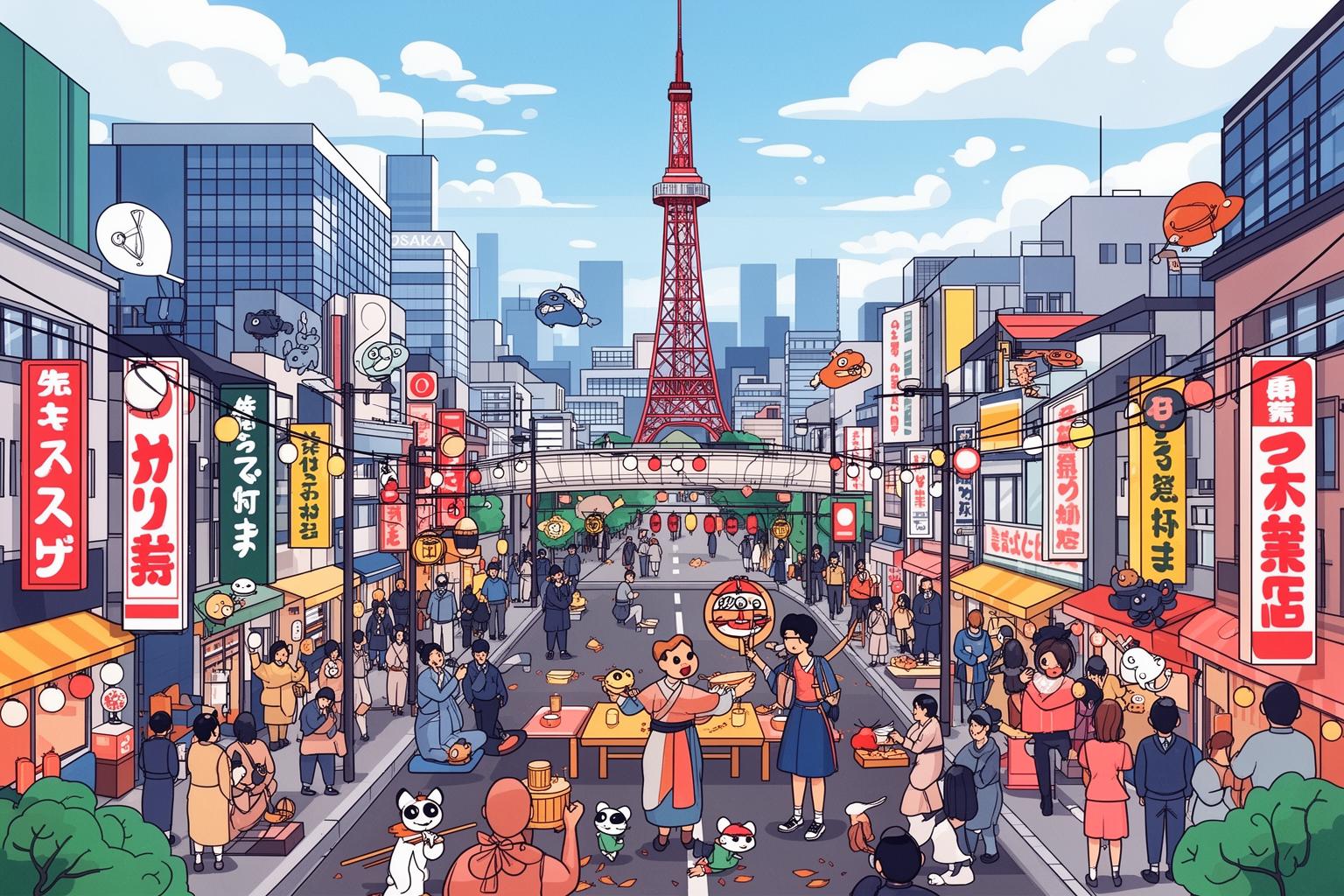
Ultimately, the modest standing bar is much more than just a spot for an inexpensive drink. It serves as a living museum of Osaka culture, showcasing the city’s core philosophies every night. It’s a place where you can witness the city’s spirit in motion.
Efficiency, Pragmatism, and Human Connection
The entire tachinomi concept exemplifies Osakan pragmatism. The absence of chairs keeps overhead low and customer turnover high, enabling remarkably affordable prices. The straightforward, hearty food is crafted for speed and satisfaction. This business model is finely tuned by the merchant’s keen sense of efficiency and value. Yet, this pragmatism is tempered by a profound need for human connection. The standing setup brings people together, fostering a temporary, low-pressure community. It acts as a social release valve, offering a space where the strict norms of Japanese society can temporarily relax. The connections made here are fleeting—a shared laugh, a chat about the Hanshin Tigers, a toast with a stranger—but they are sincere. This combination of practical efficiency and warm, transient community defines the Osakan character.
What It Tells You About Being an “Osaka-jin”
Spending time in Osaka’s tachinomi reveals what it means to be an Osaka-jin. You discover their preference for substance over superficial style. A perfectly simmered piece of beef tendon in a dingy bar is cherished more than a styled but mediocre dish in a trendy bistro. You see that they excel at non-verbal communication, skillfully navigating crowded spaces with an instinctive social grace. You observe how the boundary between public and private spaces blurs, creating a communal environment that feels both intimate and open. This represents the authentic, everyday Osaka. It’s not found in shiny shopping malls or popular tourist spots. It’s found in the aroma of grilled meat drifting from a tiny bar beneath the train tracks in Kyobashi, in the laughter reverberating through the Tenma market, and in the simple, profound joy of sharing a drink and a moment with a stranger. Here, the city’s heart pulses, one quick drink at a time.