You’ve been in Osaka for a week. You’re starting to get the hang of the train lines, you’ve found your local supermarket, and you can order a highball without pointing. You feel like you’re winning. Then you walk into a tiny shop in the Namba backstreets to buy a pair of socks. The shopkeeper, a woman with a perm that defies gravity, looks at the perfectly normal, grey socks in your hand. She squints. She tilts her head. And then she says, loud enough for the whole store to hear, “Eh? Are you really buying those? So plain! You have the personality of a rock.” You freeze. Did you just get insulted by a sock merchant? Is this a confrontation? In Tokyo, this would be a five-alarm social fire. But here? Welcome to Osaka. You haven’t been insulted. You’ve been invited to dance.
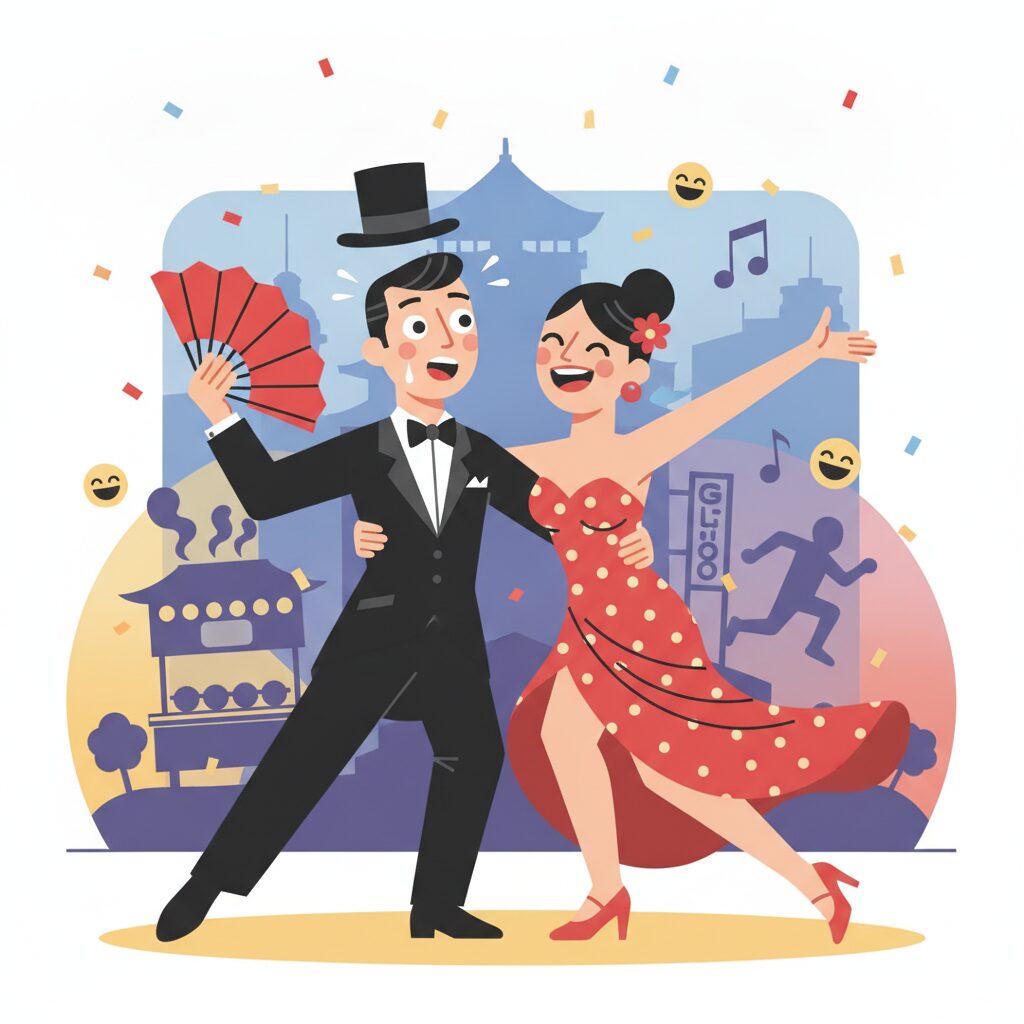
This is the city’s rhythm, the conversational heartbeat that separates Osaka from every other place in Japan. It’s a relentless, playful, and sometimes bewildering game of conversational catch. The game is built on a foundation of Japanese comedy known as manzai, specifically its core components: the boke and the tsukkomi. The boke is the fool, the one who says something absurd, silly, or just plain wrong. The tsukkomi is the straight man, the one who sharply, wittily corrects the boke, often with a light smack or a pointed exclamation. On television, it’s a performance. In Osaka, it’s how you talk to your neighbor, how you order your takoyaki, and how you get through a Tuesday. This isn’t just about being “friendly”; it’s an entire social operating system built on the shared joy of a well-timed punchline. Understanding this system is the key to unlocking the soul of the city, but be warned: it’s a language of its own, with pros, cons, and a very steep learning curve.
Immerse yourself in the city’s vibrant culture, and consider sampling a special-diet bento experience that captures Osaka’s imaginative culinary flair.
The Unwritten Rules of the Osaka Banter Club
To someone unfamiliar, conversations in Osaka might seem chaotic. They twist and turn, a statement rarely stands alone, and silence is often viewed as a missed chance. Yet, there’s a method behind the madness. It’s a carefully choreographed, albeit unwritten, set of rules that everyone intuitively understands. Learning these rules is like learning grammar; you need more than just words—you must grasp the structure of a joke.
Rule #1: Every Statement is an Invitation
In most places, when you say something, you’re mainly conveying information. In Tokyo, if you say, “It looks like it might rain,” you’re giving a weather update. Someone might reply, “Yes, I should have brought an umbrella.” The exchange is efficient, polite, and focused on facts. In Osaka, saying “It looks like it might rain” is just the opening move. You’re not simply stating a fact; you’re tossing a conversational ball into the air, expecting someone to catch it and hit it back. A typical Osaka reply might be, “Of course it is! You wore your new shoes, didn’t you? The rain gods are targeting you specifically.” The goal isn’t merely to agree about the weather; it’s to create a small, shared moment of humor. A simple interaction turns into a mini-performance. This holds true for everything. Asking a shopkeeper where the sugar is might get the response, “Trying to get even sweeter? You don’t need it!” before they direct you to the right aisle. It’s a fundamental shift in communication. The aim isn’t efficiency but connection through shared amusement.
Rule #2: The Boke’s Role — Embracing the Absurd
The boke drives the conversation forward. This role is often mistaken for simply being foolish, but it’s far more subtle. Playing the boke means embracing deliberate absurdity. It’s about purposely steering the conversation into the ridiculous to see who follows. This requires confidence and a lack of taking oneself too seriously. For example, upon seeing an advertisement for a trip to Hawaii, a classic boke move is to sigh dramatically and say, “Ah, Hawaii. It reminds me of my hometown, Tennoji.” The statement is obviously false and nonsensical. Tennoji, a busy district in Osaka, bears no resemblance to Hawaii. You’ve just taken on the boke role. You’ve tossed out an easy pitch, waiting for someone to swing. This is an act of social trust. By making yourself vulnerable to correction, you invite others to engage with your silliness. It’s an offer—a way of saying, “I’m ready to play, are you?”
Rule #3: The Tsukkomi’s Duty — The Pointed Comeback
If the boke is the engine, the tsukkomi is the steering wheel. This role brings the joke to completion. When someone plays the boke, like the Hawaii-Tennoji comparison, a tsukkomi response isn’t just expected; it’s socially mandatory. Ignoring a boke is like leaving someone hanging after a high-five—awkward and disappointing. The tsukkomi reply must be fast, sharp, and highlight the absurdity. The classic comeback is the heartfelt “Nande ya nen!” roughly translating to “Why the heck?!” or “What are you talking about?!” A more skilled tsukkomi might say, “The only palm trees in Tennoji are the ones on your shirt!” This completes the comedic loop. It acknowledges the boke’s humorous attempt, rewards it with laughter, and strengthens the social bond. A good tsukkomi isn’t mean-spirited; it shows deep listening and affection. It says, “I heard your nonsense, and I care enough to call you out.” This dynamic forms the core of everyday interaction.
The Pros: Why Osaka’s Comedy Culture Makes Life Better
Living in a city fueled by punchlines can be remarkably fulfilling. Humor acts as a social lubricant that smooths out the rough patches of daily life and forges connections in ways that polite, reserved conversation simply cannot. When it clicks, it feels like the entire city is sharing the same inside joke.
Instant Connection and Breaking the Ice
This is the most obvious and significant benefit. In many cultures, initiating a conversation with a stranger requires a slow, careful buildup of small talk. In Osaka, you can bypass that and dive straight into banter. Sharing a laugh with the elderly man grilling squid at a street festival creates a stronger, more immediate bond than a dozen polite nods. Humor serves as a social shortcut, breaking down formal barriers between strangers, acquaintances, and colleagues, and fostering a sense of shared humanity. This is why Osakans are seen as “friendly.” It’s not a passive, polite friendliness—it’s an active, engaging friendliness that invites you to participate. If you’re willing, you can make friends while waiting in line for the train. The ongoing exchange transforms the city from a collection of anonymous individuals into one large, slightly chaotic, but very humorous family.
Resilience Through Laughter
Osaka has a deep-rooted history as a merchant city—pragmatic, resilient, and somewhat rough around the edges. Humor has always been a survival tool, a way to handle the daily grind. This mindset remains strong today. When problems arise, the typical reaction isn’t anger or frustration; it’s often a joke. Is the subway delayed during rush hour? Someone will deadpan, “Great, I love spending quality time with 500 of my closest friends.” Is it raining heavily on the day of a neighborhood festival? The response won’t be disappointment but something like, “Well, at least the takoyaki won’t dry out.” This comedic reframing is powerful: it diffuses tension, makes shared difficulties easier to bear, and nurtures a collective sense of “we’re all in this together.” It’s a culture that chooses laughter over letting life’s minor annoyances weigh them down.
A More Direct and Honest Communication Style
It may seem paradoxical, but the culture of joking actually enables a surprising degree of candor. In traditional Japanese culture, with its focus on harmony (wa) and preserving face, expressing direct criticism or disagreement is often challenging. People tend to speak indirectly, using suggestion and nuance. However, in Osaka, you can be blunt through the tsukkomi style, provided it’s humorous. If a friend shows up wearing a truly questionable outfit, in Tokyo, you might say, “That’s a very… unique shirt.” In Osaka, it would be more like, “Did you lose a bet? Your shirt’s so loud it’s hurting my ears!” The message remains the same, but the comedic delivery makes it acceptable. It’s honesty wrapped in humor. This can be refreshing for foreigners who find typical Japanese communication ambiguous. In Osaka, you usually know exactly where you stand, because someone has probably already joked about it.
The Cons: When the Laughter Stops Being Funny
For all its appeal, living inside a 24/7 comedy club has its drawbacks. The constant pressure to be witty can be exhausting, and the boundary between a lighthearted tease and a genuine insult is often dangerously thin, especially for outsiders. It’s a delicate balancing act, and sometimes you stumble.
The Pressure to Perform
What do you do when you’re simply not feeling it? When you’ve had a long, stressful day and the last thing you want is to come up with a clever comeback for the cashier at 7-Eleven? This is the unseen burden of Osaka’s banter culture. There’s an unspoken expectation to always be “on.” Someone throws you a boke, handing you the conversational ball, and all you can do is stare blankly. The resulting silence weighs heavier here than anywhere else in Japan. It can feel like a social failure, as though you’ve violated an essential rule of engagement. For introverts, or anyone who isn’t naturally quick-witted, this relentless pressure can be genuinely draining. You can’t just exist quietly; you’re expected to be a part of the ongoing city-wide improv show.
The Foreigner’s Dilemma: Is This a Joke or an Insult?
This is the greatest challenge for non-Japanese residents. That sock vendor calling your taste “plain” is a perfect example. Your mind, trained by a different social framework, shouts “insult!” But in Osaka, it’s an opening move. She’s not attacking you; she’s inviting you to play. The “correct” response would be a playful comeback, like, “Hey! This is the peak of sophisticated, minimalist fashion! You wouldn’t get it!” That would earn a laugh and her respect. But recognizing this in the moment is incredibly tough. You’ll hear remarks on your Japanese skills (“Wow, you can use chopsticks and speak? Amazing!”—this is a boke), your looks, or your choices. The ambiguity creates stress. You’re constantly deciphering the subtext: Are they teasing me kindly, or are they actually being rude? Nine times out of ten, it’s the former, but that one time can leave you feeling confused and hurt.
When “Banter” Crosses the Line
Let’s be honest. Sometimes, it really is an insult. The cultural tolerance for teasing and bluntness can sometimes shield genuinely hurtful or tactless remarks. The line is subjective and depends heavily on context, your relationship with the person, and their tone. The stereotype of the “Osaka Oba-chan” (middle-aged woman) exists for a reason. They’re known for a brand of humor so blunt it can peel paint. An oba-chan you’ve known for years might jokingly ask if you’ve gained weight. Coming from her, it might be a sign of familiar affection. Coming from a stranger, it can feel invasive and rude. The issue is that local culture can be less attuned to this distinction. What an Osakan sees as a harmless, funny remark, a foreigner might take as a deeply personal, inappropriate comment. Navigating this gray zone remains an ongoing challenge.
How to Survive and Thrive in Osaka’s Comedy Scene
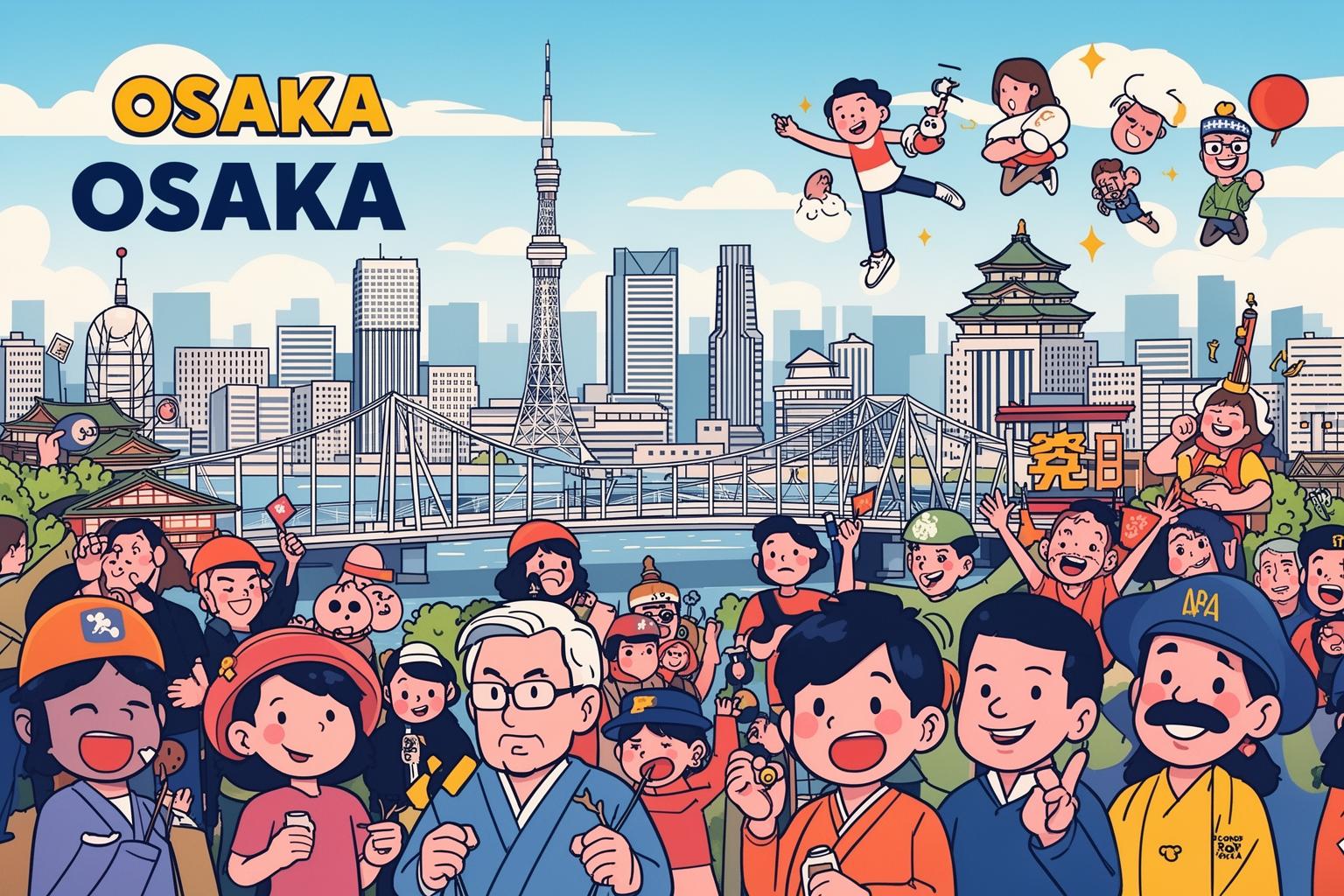
So, how do you navigate this comedic landscape? You don’t need to become a stand-up comedian overnight. It’s about mastering a few simple moves, understanding the context, and most importantly, not taking yourself too seriously. Osakans appreciate effort and a good attitude far more than a perfect punchline.
Your Starter Kit for Participation
Feeling the pressure? Don’t worry. There are options that don’t require a degree in comedy.
The Smile and Laugh: This is your get-out-of-jail-free card. If someone delivers a boke and your mind goes blank, just smile and maybe chuckle a little. This shows you understood it was a joke, even if you don’t have a comeback. You’re acknowledging the effort and proving you’re a good sport. It’s a universally accepted and appreciated response.
The Basic Tsukkomi: You only need to learn one phrase: “Nande ya nen!” (Why/What the heck?!). It’s the Swiss Army knife of Osaka comebacks. Someone says something absurd? “Nande ya nen!” Shopkeeper teases you? “Nande ya nen!” A friend tells a ridiculous story? “Nande ya nen!” Using this phrase with a bit of theatrical frustration immediately shows you get it.
The Self-Deprecating Boke: The safest and easiest way to play the game is by making yourself the target of the joke. This is an advanced technique but very effective. Saying something like, “I tried to make okonomiyaki at home, but it ended up looking like modern art,” is a perfect self-boke. It’s humble, funny, and invites a friendly, encouraging tsukkomi from your friends, like “Don’t worry, that’s how you learn!” It shows you don’t have a big ego and are willing to play along.
Reading the Room: Context is Everything
This is key. The freewheeling, banter-heavy style of communication isn’t suited for every situation. You’ll find it most common in informal, relaxed settings: local shopping arcades (shotengai), standing-only bars (tachinomi), izakayas, and among friends and neighbors. In these settings, feel free to join in. However, in formal situations—a business meeting, a bank, a government office—standard Japanese politeness and formality take precedence. Do not attempt a tsukkomi on your boss during a performance review. Don’t try to banter with the official processing your visa application. A big part of mastering life in Osaka is developing the instinct to know when it’s time to play and when it’s time to be serious.
Embrace the Imperfection
Ultimately, the goal of the boke and tsukkomi exchange isn’t to win a comedy award. It’s to connect with people. A flawed, clumsy joke attempt is almost always better than a wall of polite silence. Osakans aren’t seeking perfection; they value participation. They appreciate seeing you try to engage with their culture on its own terms. They know it’s not easy. When you try, you send a clear message: “I see you. I hear you. And I want to be part of your world.” In a city that values a good laugh above almost everything else, there’s no greater compliment.