When I first moved to Osaka, I couldn’t wrap my head around the neighborhood sentō. I had a perfectly good bathroom in my apartment—a tiny, plastic-encased unit, sure, but it had hot water and a door that locked. Why would anyone, in this day and age, pay 500 yen to go sit in a giant tub of hot water with a bunch of strangers? In my mind, it was a relic, a throwback to a time before private plumbing was standard. I saw the old buildings with their towering chimneys tucked away in residential streets and thought of them as living museums, charming but probably empty.
Then one chilly November evening, my water heater broke. Faced with a cold shower or an adventure, I grabbed a small towel, some soap, and walked down the street to the local bathhouse, the one with the faded blue noren curtain flapping in the wind. What I found inside wasn’t a museum. It was the absolute, thumping heart of my neighborhood. It was loud, steamy, and unapologetically alive. It was the moment I realized that to understand Osaka, you have to understand the sentō. It’s not about getting clean. It’s about getting connected. This isn’t a spa retreat; it’s the city’s shared living room, a place where the unvarnished, everyday life of Osaka unfolds, one splash at a time.
Exploring a sentō revealed Osaka’s communal spirit, and experiencing its vibrant tachinomi scene has deepened my appreciation for the city’s authentic social connections.
The Sentō as Osaka’s Backstage Dressing Room
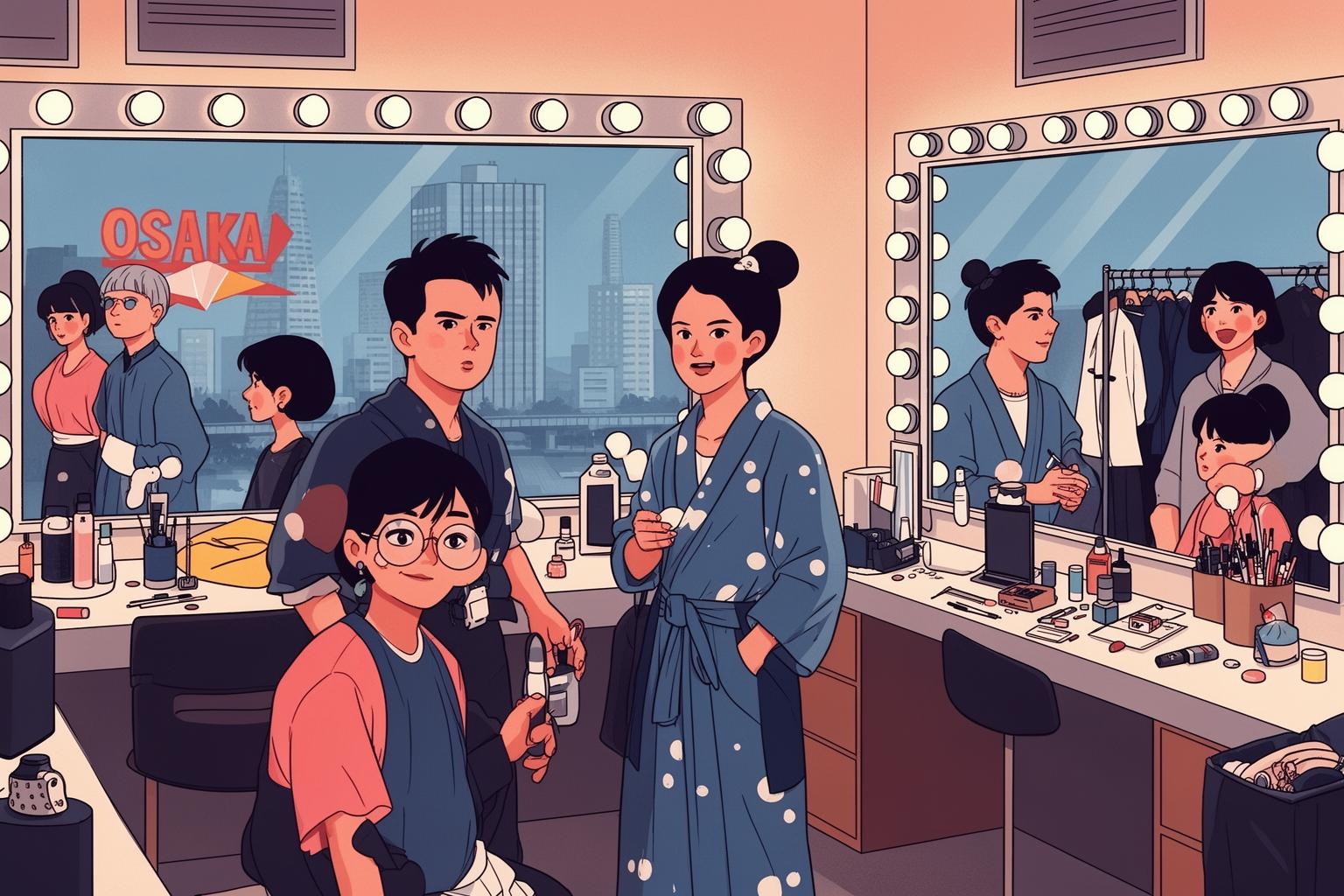
Step into an Osaka sentō, and the first thing that strikes you isn’t the heat, but the noise. It’s a lively chorus. The resonant splash of water from the showers, the clang of yellow plastic stools against the tiled floor, and above it all, the thunderous buzz of conversations. This isn’t the quiet, respectful silence you might encounter in a Kyoto temple or even a more restrained Tokyo bathhouse. Here, the atmosphere is rich with the Kansai dialect, filled with laughter and the day’s stories told at full volume. The concept of hadaka no tsukiai, or “naked communication,” is a Japanese ideal, but in Osaka, it’s embraced with particular enthusiasm. It’s the belief that once your clothes come off, so do your social masks, your job titles, and your daily concerns. Everyone becomes neighbors soaking together in the same hot water.
This marks a key contrast between Osaka and Tokyo. In Tokyo, anonymity acts like a form of currency. You can ride the train, eat a meal, and visit a sentō within a comfortable bubble of personal space, even when surrounded by others. In Osaka, that bubble is meant to be burst. A stranger might ask where you’re from, an old man might remark on the weather, or a group of women might loudly analyze the latest Hanshin Tigers baseball game. There’s an expectation to engage. Silence can almost seem rude. The sentō isn’t a place to escape the world; it’s a place to immerse yourself in it, to connect, to be seen and acknowledged as part of the local community. The high, temple-like ceilings aren’t intended for quiet reflection, but to amplify the voices of the community.
More Than a Hot Bath: The Unspoken Social Contract
The sentō follows a complex, unwritten social code centered on shared experience. It acts as a microcosm of Osaka society, where community well-being often takes precedence over individual privacy. The interactions you observe offer a masterclass in how the city’s social dynamics function.
The Neighborhood News Network
Long before social media existed, the sentō was the original information superhighway, where news spread faster than anywhere else. Who’s getting married? Whose child just passed their high school entrance exams? Which local tofu shop is offering a discount this week? All of this is discussed and shared in the steam. The obachan, the older women of the neighborhood, are the undisputed leaders of this network. They serve as keepers of local history, arbiters of neighborhood gossip, and the cohesive force that binds the community. They know who needs extra support, who’s been feeling unwell, and who simply needs someone to talk to. For them, the daily trip to the sentō is a check-in, a wellness visit, and a social duty all combined. It’s how the neighborhood looks after its own in a practical, unsentimental way.
A Place for Every Generation
Although many elderly people frequent the sentō, it’s a mistake to assume it’s only for them. It’s truly an intergenerational space. You’ll see young fathers carefully washing their toddlers, teaching them to rinse off soap before entering the large tub. University students unwind after exams, and local shop owners wash away the dirt of a long day. For children, the sentō acts as a classroom for social etiquette. They learn to mind their splashing, keep towels out of the bathwater, and greet their elders. These lessons aren’t formal; they’re absorbed through observation and gentle correction. The post-bath ritual is just as important. Kids and adults alike gather in the changing room, cool towels on their foreheads, contemplating the offerings of the glowing vending machine. Will it be a classic fruit milk, a rich coffee milk, or a bottle of Ramune? This simple choice, this shared moment of refreshment, is part of the deep comfort the sentō provides.
Why Osaka’s Sentō Culture Feels Different
The persistence of the sentō in Osaka goes beyond mere nostalgia. It is deeply intertwined with the city’s essential character: a distinctive mix of pragmatism, egalitarianism, and a love for human connection that distinguishes it from the rest of Japan.
Practicality Over Pretense
Osaka is a city founded by merchants. It values what works, what’s efficient, and what makes sense. For many residents living in older houses or densely packed urban neighborhoods, the local sentō offers a superior bathing experience. The water is hotter, the tub is larger, and you can stretch out in a way that’s impossible in a cramped apartment bathroom. It warms you to the core in winter and provides a shared space that many homes lack. The social aspect, while important, naturally arises from this common, practical purpose. It’s not forced camaraderie; it’s the natural outcome of people pursuing a shared goal—enjoying a truly relaxing, satisfying bath. This practical foundation is quintessentially Osaka.
Breaking Down the Walls
In a city where business deals are often sealed with a handshake and straightforward conversation, the sentō serves as the great equalizer. Your wealth, status, or profession—all of that becomes irrelevant when you’re standing there with just a small towel. The president of a small manufacturing firm might be complaining about back pain to a taxi driver, while a city hall employee listens and offers advice. Here, the hierarchies that subtly shape life in more formal cities like Tokyo vanish entirely. The conversations are rooted in shared humanity: the weather, sports, and the rising cost of vegetables. This fosters a raw, unfiltered kind of communication that underpins Osaka’s famously friendly and approachable reputation.
What Foreigners Often Miss
For many non-Japanese, nudity is the biggest obstacle. Feeling self-conscious is natural. But the common misconception is to assume that a public bath is a place of scrutiny. It’s quite the opposite. No one is watching you. Attention is either turned inward to the warmth of the water or outward to the conversations happening around you. Your presence is simply accepted. The etiquette is straightforward and based on mutual respect: wash yourself thoroughly before entering the tubs, keep your towel out of the water, and avoid splashing. Following these simple rules signals that you respect the shared space and are a participant, not just a bystander. It’s your entryway into the community, even if only for an hour.
The Sentō in Modern Osaka: Evolving, Not Disappearing
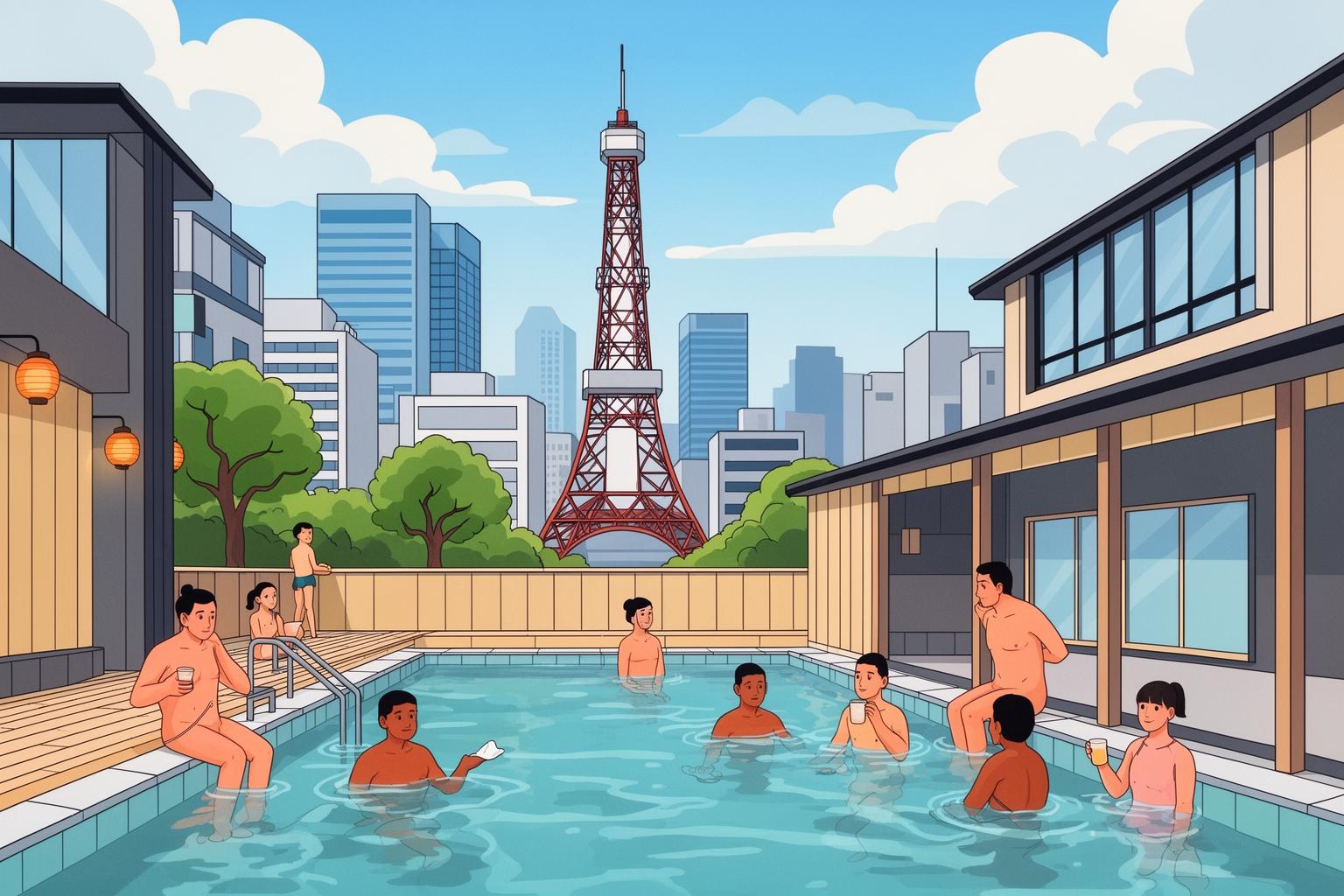
While sentō are closing across Japan due to an aging population and increasingly modern homes, the situation in Osaka is more complex. The culture is not merely surviving; in many respects, it is evolving. A new trend of “designer sentō” has arisen, transforming old bathhouses with contemporary design, craft beer on tap, and upscale saunas that draw a younger, trendier crowd. Some have reinvented themselves as “running stations,” where joggers can store their belongings, run around the neighborhood, and then return for a relaxing soak. These modern adaptations demonstrate that the fundamental need for a “third place”—somewhere that is neither home nor work, where people can socialize—remains strong. Although the appearance may shift, with concrete walls replacing traditional wooden beams, the role as a community hub endures.
Your First Trip to a Neighborhood Sentō
If you truly want to experience the heartbeat of daily life in Osaka, you have to go. Don’t overthink it—just go. The experience is more welcoming than you might expect and offers a glimpse into the city’s soul that no tourist attraction ever could.
What to Expect and How to Blend In
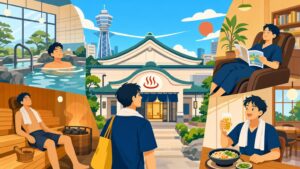
Approach the front desk, known as a bandai. You’ll pay the fee and be guided to either the men’s or women’s section. Inside the changing room, find an empty locker for your clothes. The key is usually attached to an elastic band you can wear on your wrist. Take only your small towel and soap with you into the bathing area. Find a vacant washing station, sit on the small plastic stool, and thoroughly scrub yourself. Once you’re rinsed off, you’re ready for the tubs. Ease yourself in—the water will be hot, likely over 42 degrees Celsius (108 F). Your first dip is a moment of pure bliss. Watch what others do. You’ll see people moving between different baths—some with jets, others infused with herbs, and almost always a cold plunge pool for the brave. A simple nod or a quiet “konbanwa” (good evening) to someone nearby is enough to show friendly intent. Act like you belong, and you will.
The Post-Bath Ritual
The experience doesn’t end when you dry off. The real magic often happens in the changing room or small lobby afterwards. This is where the community lingers. You’ll see neighbors fanning themselves in front of a TV playing a variety show, reading a dog-eared manga, or weighing themselves on a large, old-fashioned scale. This is the cool-down period when people are at their most relaxed and open. It’s where you might strike up a conversation with someone you just shared a bath with. An old woman might offer you a piece of candy, or a group of guys might share a tip on the best place for okonomiyaki nearby. This is the heart of it all—the bath is the excuse, but the connection is the purpose. Stepping out of the sentō and into the cool night air, feeling warm, clean, and oddly connected to the strangers around you, you’ll finally understand. You didn’t just have a bath. You took part in the life of Osaka.