Coming from Tokyo, the first thing that hits you isn’t the accent, the food, or the neon glow of Dotonbori. It’s the bikes. They are everywhere, a silent, swarming, and shockingly efficient army that owns the streets, the sidewalks, and every space in between. In Tokyo, life is dictated by the precise, color-coded timetables of the JR and Metro lines. You live and die by the minute, a cog in a massive, orderly machine. But in Osaka, life moves to a different rhythm. It’s the steady, rhythmic whir of a bicycle chain, the occasional, sharp chirin-chirin of a bell, and the soft thud of a kickstand hitting the pavement. This isn’t just about transportation; it’s a fundamental window into the city’s soul. This is the world of the mamachari, the humble ‘mom’s chariot’ that is, without a doubt, the true king of Osaka. To understand this bike is to understand the city’s deeply ingrained pragmatism, its flexible approach to rules, and the relentless forward momentum of its people.
The city’s vibrant street life is mirrored in its intimate community spaces, where exploring the way Osaka sentō foster community connections reveals yet another facet of its dynamic charm.
What Exactly is a ‘Mamachari’?
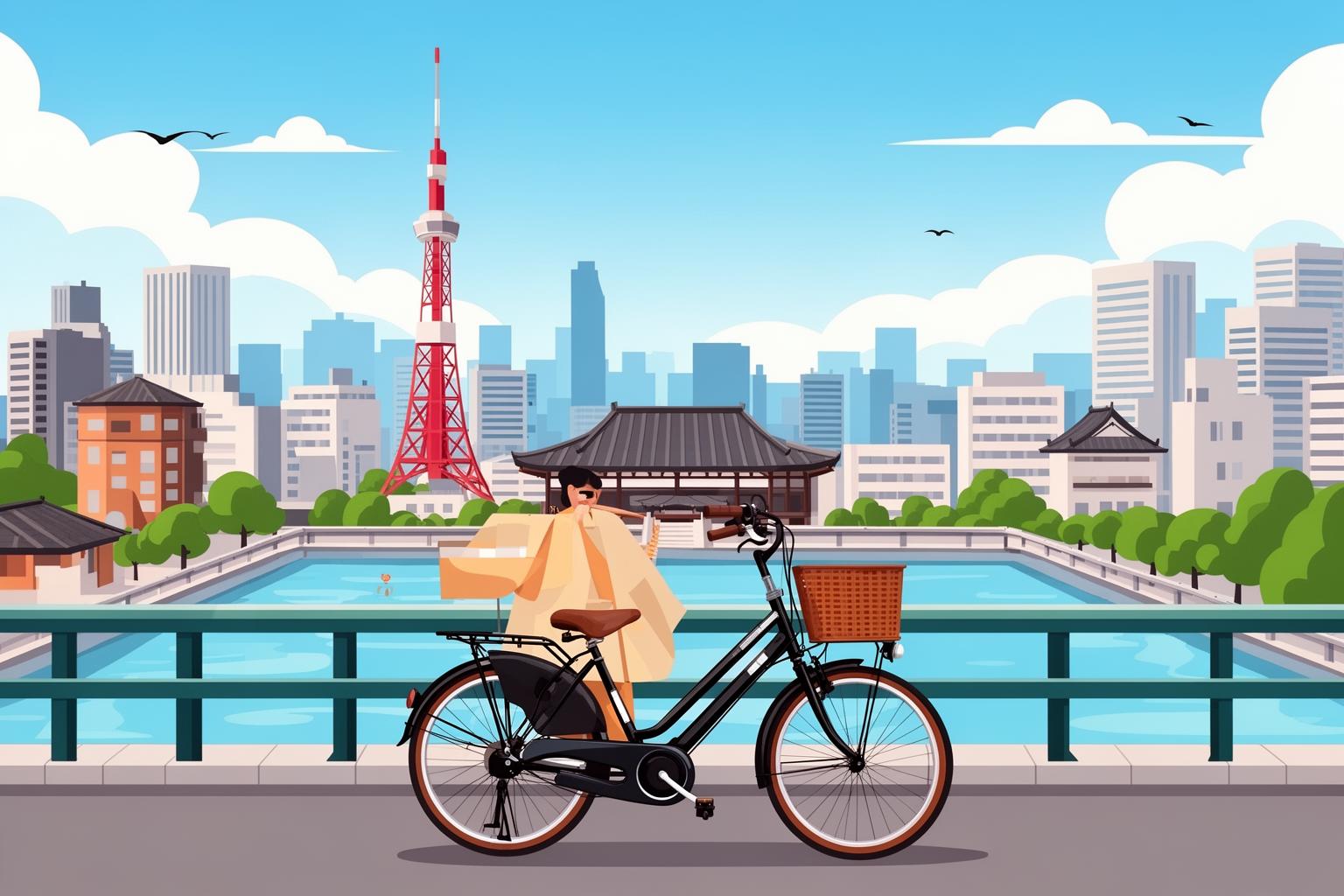
Forget the sleek, lightweight road bikes seen in lycra-clad pelotons or the trendy fixed-gear bikes popular in Tokyo’s hip neighborhoods. The mamachari is their complete opposite. It is the minivan of bicycles: sturdy, heavy, and built for practicality rather than speed or style. Its name, a blend of mama (mom) and chariot, perfectly sums up its primary role as the hardworking bike of the Japanese household.
Anatomy of a Workhorse
A classic mamachari is characterized by several key features. First, the step-through frame, which allows for easy mounting and dismounting, even when wearing a skirt or carrying a child. Second, the basket. This is no delicate wicker accessory; it’s a deep, sturdy metal or plastic crate mounted on the front, ready to carry a week’s worth of groceries, school bags, or a small dog. Then there are the fenders, essential for keeping street grime off you, and a chain guard to protect your pants. Most importantly, it has a solid kickstand and a built-in lock on the rear wheel. The seating position is upright and comfortable, designed for visibility and stability rather than aerodynamics.
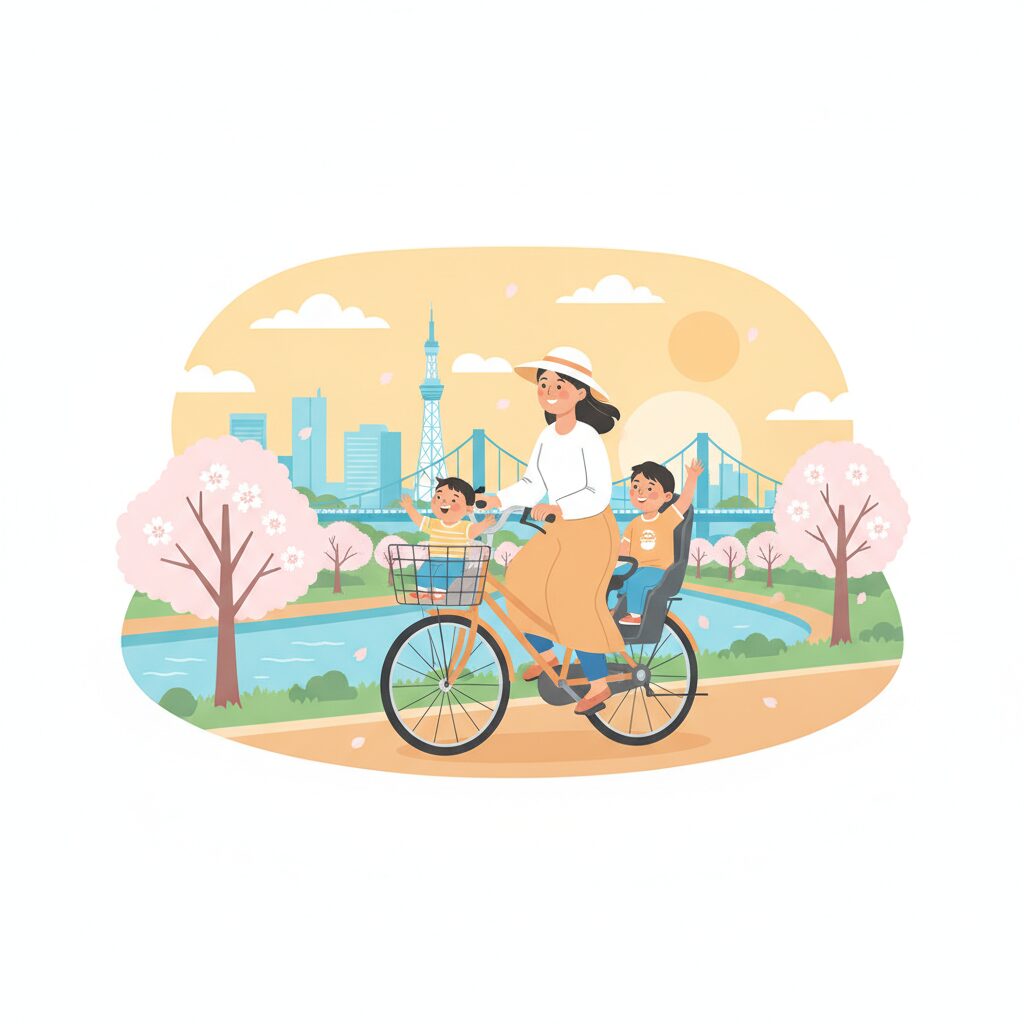
The true evolution of the mamachari is its electric-assist version. These bikes are beasts, featuring powerful batteries and often two, sometimes even three, child seats—one in front and one or two in the back. Watching an Osaka mother navigate a narrow, crowded shotengai (shopping arcade) with three kids and a basket full of daikon radishes and toilet paper is a masterclass in balance, spatial awareness, and sheer determination.
The Unspoken Rules of the Road
Now, if you check the official traffic laws in Japan, you’ll find a clear set of rules for cyclists. But stand on a street corner in Osaka for five minutes, and you’ll realize you’re in a completely different world. Osaka operates on a fluid, intuitive system of social negotiation that can seem like pure chaos to outsiders.
The Sidewalk is the Main Street
Legally, bicycles are vehicles and should typically use the road. In Osaka, this is more of a suggestion. The sidewalk serves as the main thoroughfare for the mamachari. It becomes a shared space, a flowing river of movement where pedestrians and cyclists coexist. An unwritten hierarchy exists, of course. Pedestrians technically have the right of way, but they are also expected to stay alert. You learn to walk with your ears open, listening for the telltale whir of tires approaching from behind. It’s not aggressive; it’s simply efficient. Why ride on the street with cars when there’s a perfectly good, wide path right here? This is Osaka logic: the shortest, most practical route between two points is the rule.
The Bell is a Demand, Not a Request
In many cultures, a bicycle bell is a gentle, almost cheerful signal of one’s presence. In Osaka, the sharp chirin-chirin is a tool of intent. It’s not a polite, “Pardon me, may I pass?” but a clear, direct, and unmistakable, “I am coming through. Move.” You’ll hear it used to part a crowd of pedestrians, warn a distracted smartphone user, or signal an approach around a blind corner. It perfectly captures the direct, no-nonsense communication style of Osakans. There’s no room for ambiguity when you’re trying to get home before the frozen gyoza thaws. It may feel startling at first, even rude, but you quickly understand it’s not personal. It’s simply the sound of a city in motion.
Parking is a State of Mind
Visit any train station, supermarket, or public building in Osaka, and you’ll be met with a staggering sight: a sea of bicycles. Hundreds, sometimes thousands, of mamachari packed into a dense, metallic forest. There are designated, paid parking lots, of course, and many use them. Yet there’s also a vast, unwritten system of acceptable ‘gray zone’ parking. Any available railing, pole, or stretch of unclaimed wall becomes fair game. The bikes are packed in with incredible density, a complex jigsaw puzzle where retrieving your own mamachari can become a ten-minute test of strength and diplomacy. This seemingly chaotic system reflects Osaka’s ‘if it works, it works’ attitude. As long as you’re not blocking a main entrance or emergency exit, tolerance for creative parking is much higher than in the strictly organized Tokyo.
The All-Weather Warriors
Rain doesn’t stop the mamachari rider. A typhoon might, but a simple downpour is merely an excuse to deploy an impressive array of specialized gear. The star is the poncho, a massive, all-encompassing waterproof cape covering the rider, handlebars, and front basket, creating a kind of mobile tent. Clear plastic visors clipped to the handlebars shield hands from wind and rain. For kids, seats are enclosed in elaborate plastic bubbles with zippered windows, keeping them dry and cozy. Riding through a rainy Osaka is like watching a fleet of strange, two-wheeled amphibious vehicles navigating the city with unwavering determination. It reveals the resilience and pragmatism of the people. Life doesn’t stop for a little weather.
The Mamachari as a Social Symbol
Beyond serving a practical purpose, the mamachari carries a deeper significance within Osaka’s social fabric. It is more than merely a bike; it represents values, community, and identity.
An Extension of the Home
The mamachari acts as the connective tissue of neighborhood life. It is the vehicle for the morning school run, the afternoon grocery trip, and the evening visit to the local bathhouse. Its basket holds ingredients for dinner, books from the library, and packages from the post office. It serves as a mobile command center for the person—often the mother—who manages the complex logistics of a household. It symbolizes a sphere of influence that is hyper-local and intimately tied to the community. The mamachari’s range defines the boundaries of one’s daily world—a world of familiar faces, local shops, and neighborhood parks.
The Great Equalizer
In a status-conscious city like Tokyo, your mode of transport can send a message—be it a luxury car or a membership at an exclusive golf club. In Osaka, however, the mamachari transcends social classes. Students, housewives, company presidents, and grandfathers alike all ride the same simple, functional machine. It is the ultimate democratic vehicle. Its value lies not in its brand or price tag, but in its usefulness. This reflects Osaka’s history as a city of merchants, where what counts in business is not your family name or fancy title, but your ability to close the deal. The mamachari embodies this ethos: it’s not about appearances, but about getting things done efficiently.
Osaka vs. Tokyo: A Tale of Two Wheels
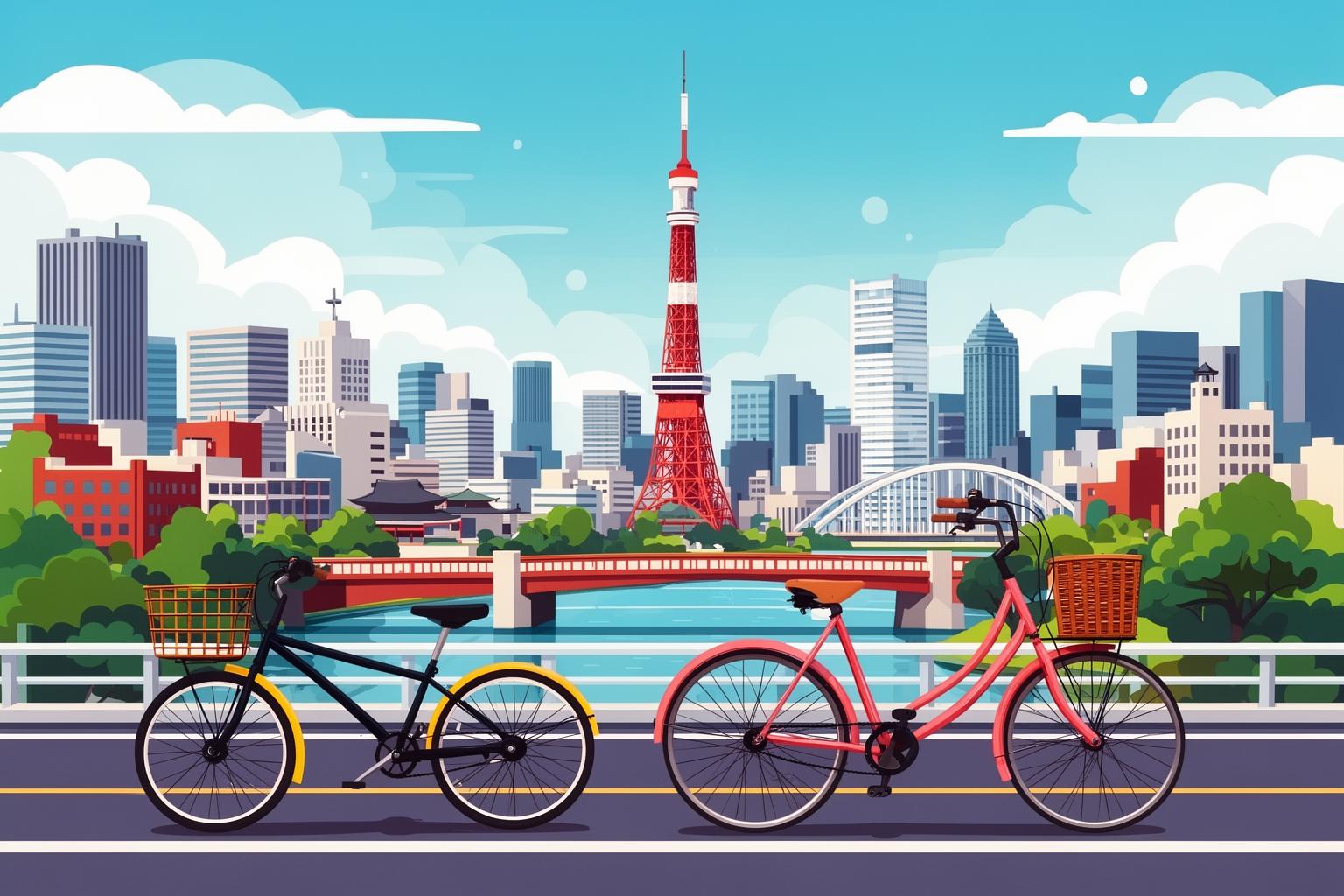
Nowhere are the cultural differences between Japan’s two largest cities more evident than in their relationship with bicycles. It serves as an ideal metaphor for their contrasting approaches to life.
Tokyo is a city defined by lines—subway lines, train lines, lines for ramen, and lines at crosswalks. Life here is structured, scheduled, and orderly. People rely on the world’s most efficient public transportation system. While bicycles are present, they often play a secondary role, used mainly for the ‘last mile’ from the station to home or for weekend rides along the river. Rules are more strictly observed; cycling on busy Tokyo sidewalks invites stern looks, and illegal parking often results in bike impoundment. The city’s verticality and density make large-scale cycling less practical.
In contrast, Osaka is a city of flows. It is flatter and more sprawling in its residential areas, making it ideal for cycling. The mamachari bike isn’t just a train supplement; for many, it serves as the primary mode of transportation. The culture emphasizes a bottom-up, negotiated order over rigid, top-down rules. This distinction captures the essence of the Osaka-Tokyo divide. Tokyo values wa (harmony), often meaning adherence to established procedures to avoid disrupting the group. Osaka prioritizes practicality and directness. The unwritten rule of the mamachari—don’t hit anyone and don’t get in the way—is a perfect example. As long as the flow continues smoothly, the exact methods matter less.
Common Misunderstandings and How to Adapt
For a newcomer, especially someone from a more rule-oriented culture, Osaka’s bicycle scene can feel intimidating and even frustrating. The key is to change your perspective.
It’s a Dance, Not a Fight
What appears to be recklessness is actually a highly skilled form of urban navigation. Osakans possess a sixth sense for it—an innate ability to predict others’ movements and adjust their own path in an instant. It’s a constant, subtle negotiation for space. Instead of viewing it as a confrontation, try to see it as a dance. Learn the rhythm. Anticipate the flow. Avoid sudden, unpredictable moves, and you’ll find your place in the choreography.
Getting Your Own Wheels
If you plan to live in Osaka, getting a mamachari isn’t just a good idea; it’s practically a rite of passage. You can buy new ones at big-box stores like Don Quijote or Aeon, but the best option is to find a used bike. Local bicycle shops often have a selection of reconditioned bikes at a fraction of the cost. The most crucial step is the bouhan touroku, or crime prevention registration. This mandatory registration links the bike to you, which is essential if it’s ever stolen or towed. Also, invest in a sturdy lock. A second, heavy-duty chain lock in addition to the built-in wheel lock is highly recommended.
When you first start riding, take it slow. Observe how the locals do it. Notice the routes they choose, how they navigate intersections, and how they signal (or don’t signal) their intentions. You’ll soon realize that a slight head tilt or a shift in body weight often suffices for communication. You’ll learn the art of the ‘slow roll’ at red lights, inching forward in anticipation of green. You’ll master the subtle skill of weaving through crowded arcades without causing anyone to alter their pace.
Living in Osaka means embracing its kinetic energy, and there’s no better way to do that than from the saddle of a mamachari. It’s more than just a piece of metal and rubber; it’s your ticket to experiencing the real, everyday Osaka. It’s the rhythm of the pedals, the weight of groceries in your basket, the wind on your face as you glide along the Yodo River. It’s the silent hum of thousands of neighbors moving together—not by strict rules, but by a shared, unspoken understanding. It embodies the rolling, unstoppable, and utterly practical spirit of the city itself.