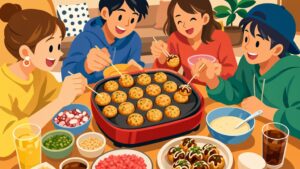
You’ve seen the pictures, right? The giant crab with its legs waving mechanically. The Glico Running Man, frozen mid-stride for a century of selfies. You’ve walked through Shinsaibashi, a river of people flowing past glowing storefronts, or navigated the steam and sizzle of Dotonbori’s food stalls. It’s loud, it’s bright, it’s undeniably Osaka. And after a few hours, a question might start to form in your mind, a quiet little whisper beneath the roar of the city: Is this it? Is this the famous warmth and friendliness everyone talks about? It’s fun, for sure. It’s a world-class spectacle. But it feels… transactional. Like a theme park dedicated to the idea of Osaka, where you’re a visitor, a customer, an audience member. But where do the actual people live?
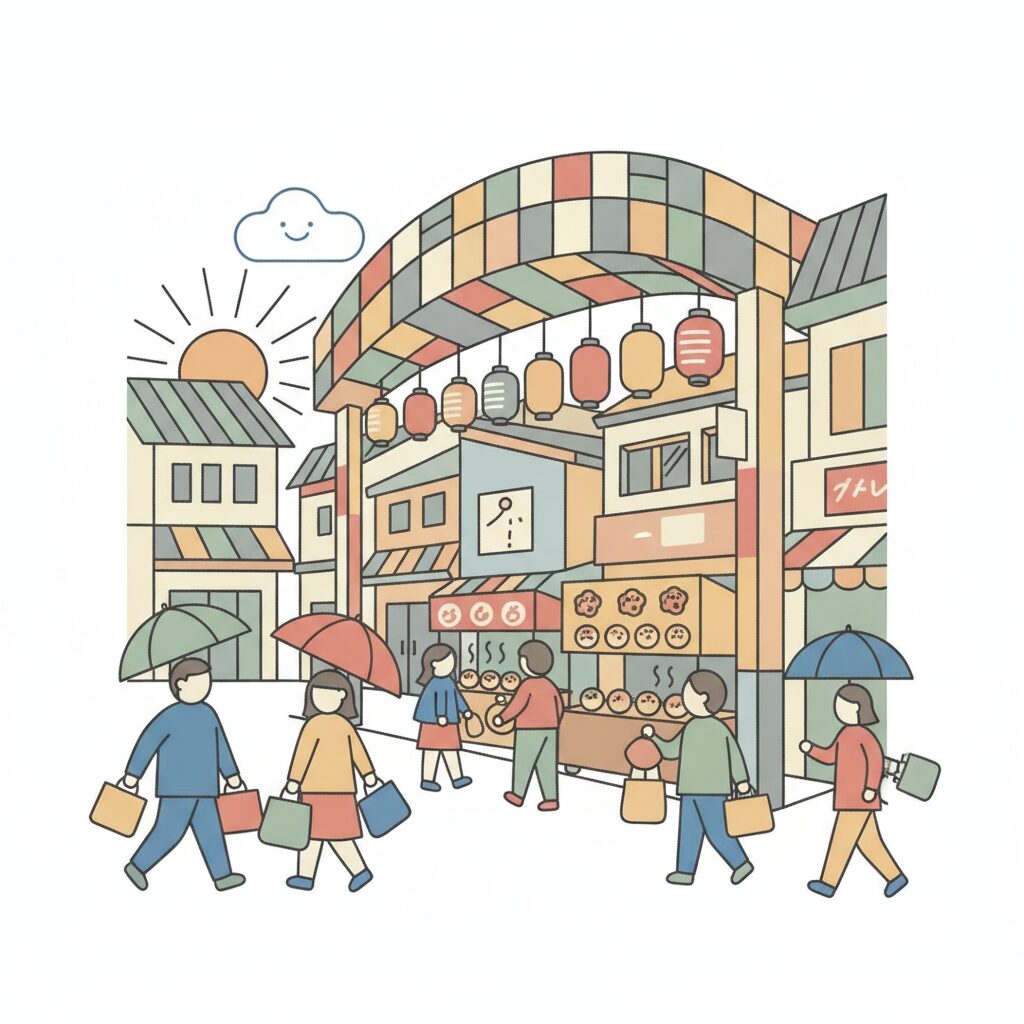
That’s the question that separates the tourist from the resident, the observer from the participant. And the answer isn’t hiding in a guidebook. It’s out in the open, stretching for blocks under a weathered arcade roof, smelling of fried croquettes and freshly ground coffee. It’s in the neighborhood shotengai—the local shopping street. This isn’t a tourist attraction; it’s the city’s circulatory system, the messy, vibrant, and deeply human network that pumps life into every corner of Osaka. Forget the sterile efficiency of a modern mall. The shotengai is the city’s front porch, its communal living room, and its open-air kitchen all rolled into one. This is your guide to not just finding it, but plugging into it. It’s how you stop watching Osaka and start living it.
For a deeper taste of Osaka’s vibrant community life, explore our Osaka tachinomi guide where locals truly connect over a quick, genuine drink.
The Shotengai Isn’t a Mall, It’s a Main Street
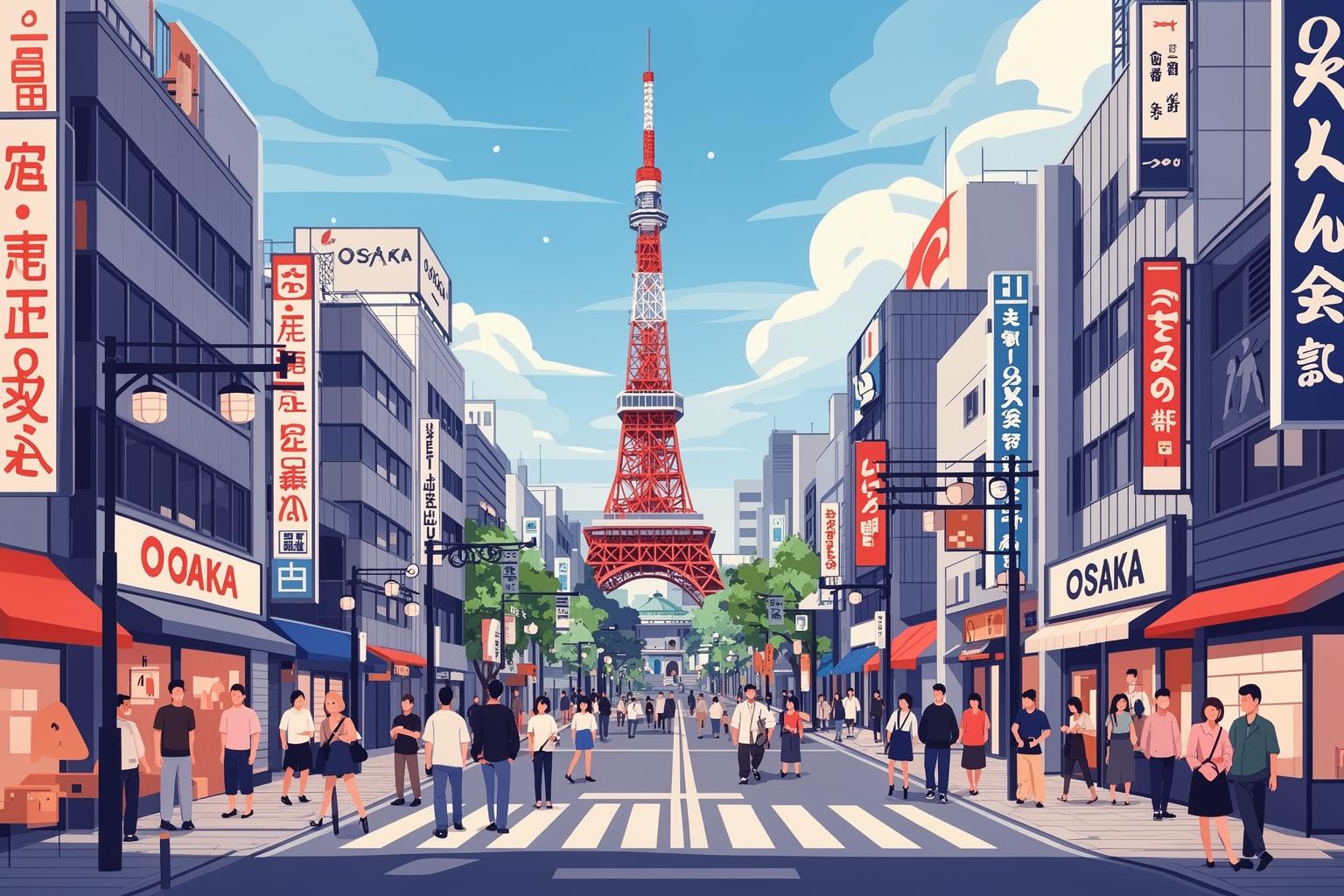
To truly understand what a shotengai is, you need to unlearn the shopping habits you have from big cities—especially if Tokyo is your reference point. In Tokyo, life often centers around the train station, a shining hub of hyper-efficiency. You step off the train and navigate a maze of underground corridors, a depachika food hall, or ascend into a multi-story mall like Lumine or Marui. The environment is clean, convenient, and completely anonymous. The experience is designed to be seamless: you choose your items, pay a courteous and expertly trained cashier, and leave. The transaction is flawless; the human connection, nonexistent.
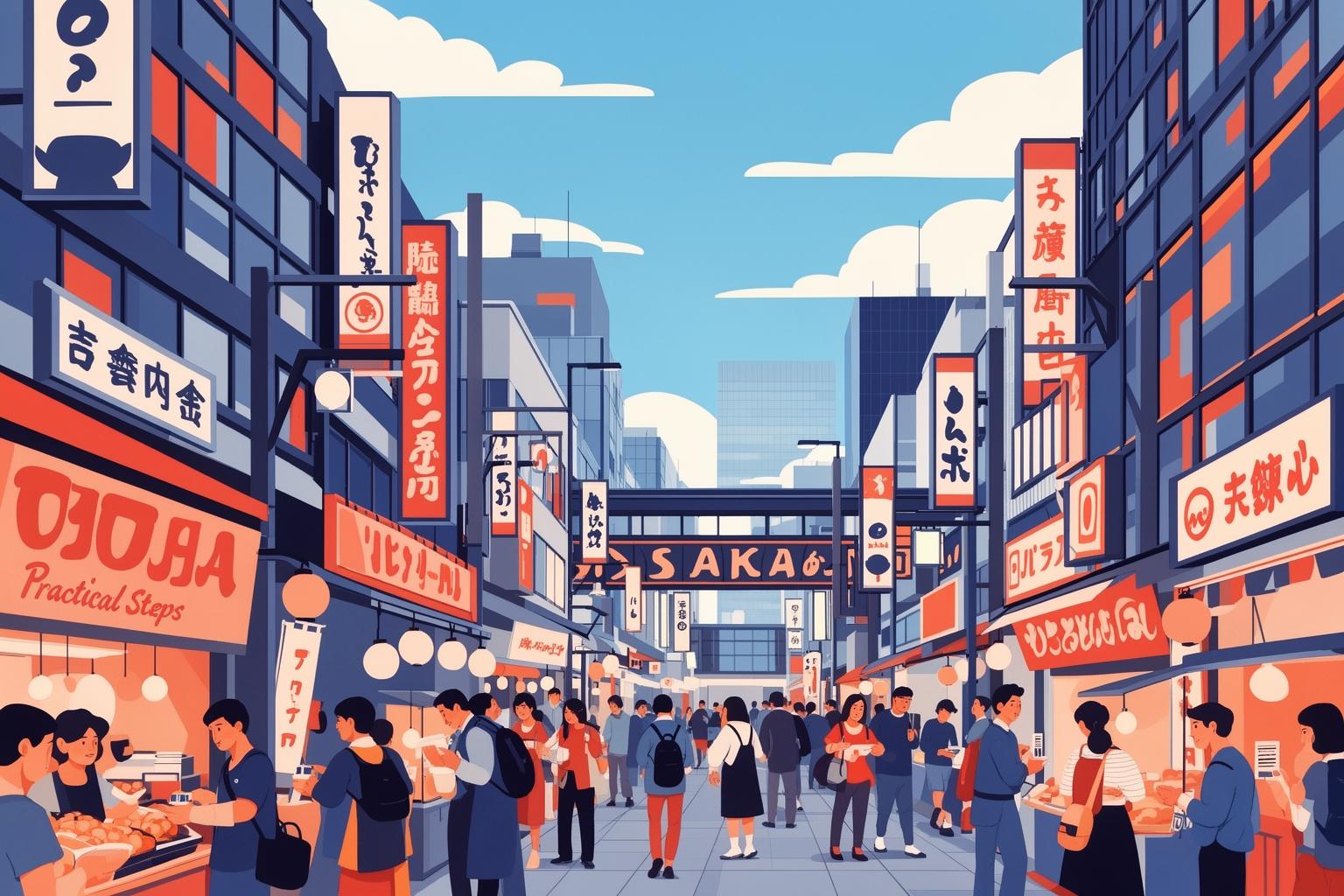
An Osaka shotengai stands in stark contrast. It’s messy, chaotic, alive. It’s a physical street, open on both ends to the elements, where bicycles weave around baby strollers and grandmothers carrying groceries shuffle by. It’s not a polished corporate space but an ecosystem of small, often family-run shops that have occupied the same spot for half a century. The butcher, the tofu maker, the fishmonger, the futon store, the hardware shop—they are more than businesses. They are neighborhood landmarks.
A Tokyo vs. Osaka Mindset Shift
The essential difference is this: Tokyo malls focus on consumption, whereas Osaka shotengai prioritize interaction. The aim in Tokyo is to quickly get what you need and leave. In Osaka, running errands means engaging with your community’s daily life. It’s a subtle yet profound shift in mindset. Consider buying vegetables: in a Tokyo supermarket, you pick up a plastic-wrapped cucumber from a carefully refrigerated shelf. In an Osaka shotengai, you approach a stall piled high with fresh produce where the owner—a woman with a gravelly voice and a radiant smile—calls out, “Hey, these daikon are great today! Perfect for oden!” She doesn’t just see a customer; she sees a neighbor. She might ask what you’re making for dinner, not out of nosiness, but to ensure you get the right ingredients. This directness can feel startling at first. It feels personal because it is personal. That’s the whole point.
This stems from Osaka’s history as a merchant city, the akindo culture. Business wasn’t just about selling goods but cultivating trust, relationships, and a reputation that could endure for generations. Customers were neighbors. Cheating was unimaginable since you had to face them every day. That spirit remains alive. Transactions come after relationships. They want you to return tomorrow, and the day after. The only way to guarantee that is by treating you like a person, not a walking wallet.
The Unspoken Rules of Engagement
Adapting to this requires a new set of social skills. The polite, reserved distance common elsewhere in Japan can be mistaken here for coldness or indifference. The key to the shotengai is engagement. The first rule: be noticed. You have to become a regular. This isn’t about how much you spend. It’s about how often you come. Buying a single onion daily from the same vegetable stand is more valuable to the community than a once-a-month supermarket spree.
When you enter a shop, make eye contact. Offer a simple greeting. A nod and “Konnichiwa” suffice. Saying “Otsukaresama desu” shows greater local familiarity. If you hear the shopkeeper say “Maido!” (a classic Osaka merchant’s greeting roughly meaning “thanks for your continued business”), try responding in kind. It signals you’re paying attention. Don’t just point—ask questions. “Kore, oishii?” (Is this delicious?). “Kyou no osusume wa?” (What do you recommend today?). These questions do something important: they shift a little power to the shopkeeper. You show trust in their expertise. In a culture proud of its crafts, this is a profound sign of respect. That respect will be returned many times over through advice, freebies, or just a genuine, engaged conversation.
Cracking the Code: How to Actually Connect
Grasping the theory is one thing; applying it in practice can be daunting, especially when facing a language barrier. Yet, the charm of the shotengai lies in its forgiving nature. Effort is appreciated far more than perfection. Your goal isn’t to become fluent instantly; it’s to become a familiar presence.
Your First Mission: Discover Your Shotengai
Set aside the famous shotengai for now. The initial step is simply stepping outside and finding the nearest shotengai. It might be small, with just a few shops, or it could be a sprawling giant like Tenjinbashisuji, the longest in Japan. It could be a retro, Showa-era treasure like Karahori Shotengai, or a gritty, working-class spot near Juso station. The exact one doesn’t matter. What matters is that it becomes yours. This is where your everyday life will unfold.
Take a stroll through it without any intention of shopping. Just watch and observe. Get to know the regulars. Notice the butcher in his white apron skillfully cutting meat. See the tofu maker working amidst a steam cloud in his small, tiled workshop. Watch the fishmonger, hands chapped from ice, arranging the day’s catch. These individuals are the community’s backbone. They’ll be your future allies. Pay attention to the pace of the place: quiet in the late morning, lively in the afternoon as kids leave school, and bustling in the early evening when everyone shops for dinner. Your aim is to find your spot within that rhythm.
The Art of Small Talk
You don’t need to give a long speech. The currency of the shotengai is the micro-interaction—a series of brief, positive encounters that gradually build a relationship. Begin with low-pressure opportunities. The fruit and vegetable stand is ideal. Chances are you’ll buy produce anyway, so why not here?
Approach with a smile and pick up an apple. Ask, “Kore, amai?” (Is this sweet?). The vendor will give you an honest answer. If it’s not the best, they’ll point you to another variety. They want you to have a good experience and return. Next time, they might recognize you. After a week, you’ll be “the foreigner who likes sweet apples.” After a month, they might set aside the best apples for you before you arrive.
This is how the process works: a slow, natural weaving into the fabric of the community. Talk about the weather—it’s cliché for a reason. It’s a shared experience. “Atsui desu ne?” (It’s hot, isn’t it?). This simple phrase isn’t about exchanging information; it’s about acknowledging a common reality. It’s saying, “You and I are standing on the same street, under the same hot sun. We’re in this together.”
Why “Friendliness” Misses the Mark
Here we need to unpack the stereotype of the “friendly Osakan.” While not incorrect, it can be misleading. Friendliness often suggests a default, service-driven politeness. That’s not what Osaka is about. A better term might be approachable or interactive. Tokyo’s service culture tends to create a protective bubble around the customer, ensuring their experience remains undisturbed and flawless. Osaka’s culture aims to burst that bubble with genuine human connection.
An Osaka shopkeeper might tease you, crack a joke at your expense, or offer an unsolicited, brutally honest opinion. To outsiders, this can seem rude. But it actually signals acceptance. They treat you not as a fragile customer who needs pampering, but as an equal peer—a fellow human. They invite you into a real, unscripted conversation. A Tokyo clerk bows politely, saying “Arigatou gozaimashita.” An Osaka fishmonger, seeing you buy an expensive tuna, might yell, “Wow, big spender! Did you win the lottery?” The first reflects respectful politeness; the second shows warm inclusion. This highlights a fundamental difference in communication style.
The Shotengai as a Social Safety Net
After living in a place for some time, you begin to realize that the shotengai offers something far more valuable than just fresh fish or cheap vegetables. It provides a sense of belonging and security that is increasingly rare in modern urban life.
More Than Just Shopping
Take another look around your shotengai. Notice the things that aren’t for sale: the worn wooden benches where a group of elderly men gather every afternoon to discuss the world’s problems; the community bulletin board plastered with notices about a missing local cat, a flea market, and shamisen lessons; the small Inari shrine nestled between the pharmacy and the dry cleaner, adorned with fresh offerings of rice and sake. You’ll see children on their way home from school, using the covered arcade as their own playground, safe under the watchful eyes of numerous shopkeepers.
These shopkeepers act as the neighborhood’s unofficial guardians—a human security network. They recognize who should be around and who shouldn’t. If an elderly resident misses picking up their daily tofu for a few days, someone might be sent to check on them. This creates a strong, unseen web of mutual support. In a city of millions, it’s easy to feel anonymous, as though if something happened to you, no one would notice. In a neighborhood with a thriving shotengai, that feeling simply doesn’t exist. People are paying attention.
This becomes especially evident during local festivals, or matsuri. The shotengai often serves as the center of the celebrations. The local shrine’s mikoshi (portable shrine) is carried through the arcade, lanterns are hung, and shops set up special stalls. Participating, even just by showing up and soaking in the atmosphere, sends a strong message: you are not merely a resident of the corner apartment building—you are a member of the community.
The Value of “Uchi” and “Soto”
To grasp this dynamic, it helps to understand the Japanese concepts of uchi (inside) and soto (outside), which refer to the in-groups and out-groups that shape social relationships. As a foreigner, you naturally begin in the “soto” category—you are an outsider.
In many social situations in Japan, crossing that barrier can be challenging. But the shotengai offers a clear, well-trodden path from “soto” to “uchi.” Every small conversation, every time you become a regular at a shop, every occasion you are recognized and greeted by name brings you a step closer to the inside. The shopkeepers become your bridge. Once the butcher refers to you as “that American guy from the third floor of the Tanaka building,” you are in. You have been placed on the neighborhood’s social map.
This is perhaps the most striking difference in the experience of daily life here. In an anonymous city, you might live for years and remain “soto.” But in an Osaka neighborhood with a shotengai at its core, the community actively welcomes you. All you need to do is show up and engage.
Practical Steps for the Hesitant Explorer
Alright, let’s get specific. You’re convinced, but still feeling a bit nervous. Your Japanese is a bit shaky, and you’re an introvert. Here’s your starter kit.
Your Shotengai Starter Kit
Don’t try to take on the entire street at once. Choose two, maybe three, key spots. These will be your entry points.
The Kissaten (Old-School Coffee Shop): This is your observation post. Find one with a counter and sit there, not at a table. Order a coffee. The “master” behind the counter is often the unofficial mayor of the shotengai. They know everyone and everything. You don’t need to talk. Just listen. You’ll pick up the rhythm of the neighborhood, the local gossip, the flow of Osaka-ben. After a few visits, the master will start chatting with you. It’s almost inevitable.
The Produce Stand: As mentioned, this is the perfect low-pressure daily interaction. It’s a quick, simple exchange you can do every day or two. The repetition is what builds the relationship.
The Sento (Public Bath): This is the advanced move but the ultimate way to accelerate community bonds. If there’s a sento near your shotengai, it’s the neighborhood’s soul. Here, all social barriers and hierarchies are literally stripped away. Sharing a hot bath with neighbors creates a bond that’s hard to replicate elsewhere. You’ll go from stranger to familiar face in a single evening.
What to Do When Your Japanese Isn’t Perfect
This is the biggest worry for most people—and the most unnecessary one. In a neighborhood shotengai, you’re not dealing with service professionals trained for international tourists. You’re dealing with everyday people. And everyday people are generally understanding.
Your broken Japanese isn’t a problem; it’s actually a conversation starter. It shows you’re making an effort. That effort is appreciated far more than you realize. People will be patient. They’ll use gestures. They’ll find ways to communicate. The direct, no-nonsense Osaka personality actually makes this easier. They’re less likely to get flustered or shy over a communication gap. They’ll just push through it with a bit of humor and hand-waving.
Start with basics: “Kore, kudasai” (This, please), “Ikura desu ka?” (How much is it?), and a big “Arigatou” or “Ookini” (the Osaka version of thank you). That’s enough to get going. The rest will come with time and practice. The shotengai is the best language school you could ask for, and your tuition is the price of a few carrots.
So next time you’re wandering the dazzling neon canyons of Namba or Umeda, remember this is just the flashy cover of the story. The real Osaka is being written daily in hundreds of neighborhood shotengai across the city. It’s a story of connection, community, and a city that wears its heart on its sleeve. The bright lights of Dotonbori are for visitors. The warm, flickering fluorescent lights of your local shotengai? That’s for family. Go ahead and introduce yourself.