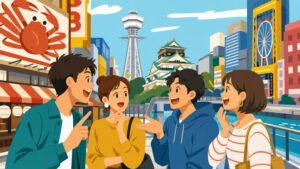
Step out of the subway at Namba, and you’re hit by a wall of sound, a symphony of organized chaos. Pachinko parlors clang, barkers yell for their ramen shops, and a river of people flows endlessly under the neon glow of the Dotonbori signs. This is Osaka. It’s loud, it’s in your face, and it’s relentlessly, wonderfully alive. But look closer, amidst the visual noise, and you’ll see signs for a different world. Blue and white logos pointing the way to the Kintetsu Line, promising quick escapes to the ancient capitals of Nara and the sacred shrines of Ise. For a visitor, these are tourist destinations. For a Tokyo transplant like myself, they seem like pages from a history textbook. But for an Osakan, the Kintetsu Line is something else entirely. It’s not a portal to a foreign land; it’s the backdoor to their own backyard. It’s the weekend pressure-release valve, the family-reunion shuttle, the most practical tool for a necessary change of pace. To understand why and how Osaka people ride these rails is to understand the city’s very soul—a soul that values practicality over polish, good food over grand gestures, and a deep, comfortable connection to a history they refuse to treat like a museum piece. Forget the Shinkansen, the sleek bullet train that screams business and efficiency between Tokyo and the rest of Japan. The Kintetsu line is a different beast. It’s a private railway, woven deep into the fabric of the Kansai region, and its rhythms tell the real story of life here. It’s the key to decoding the weekend rituals that keep this city humming.
Discover more about Osaka’s grassroots community with a deep dive into its chounaikai culture that reveals the city’s authentic local spirit.
The Kintetsu Hub: Why Namba, Not Umeda, is the Soul’s Departure Point
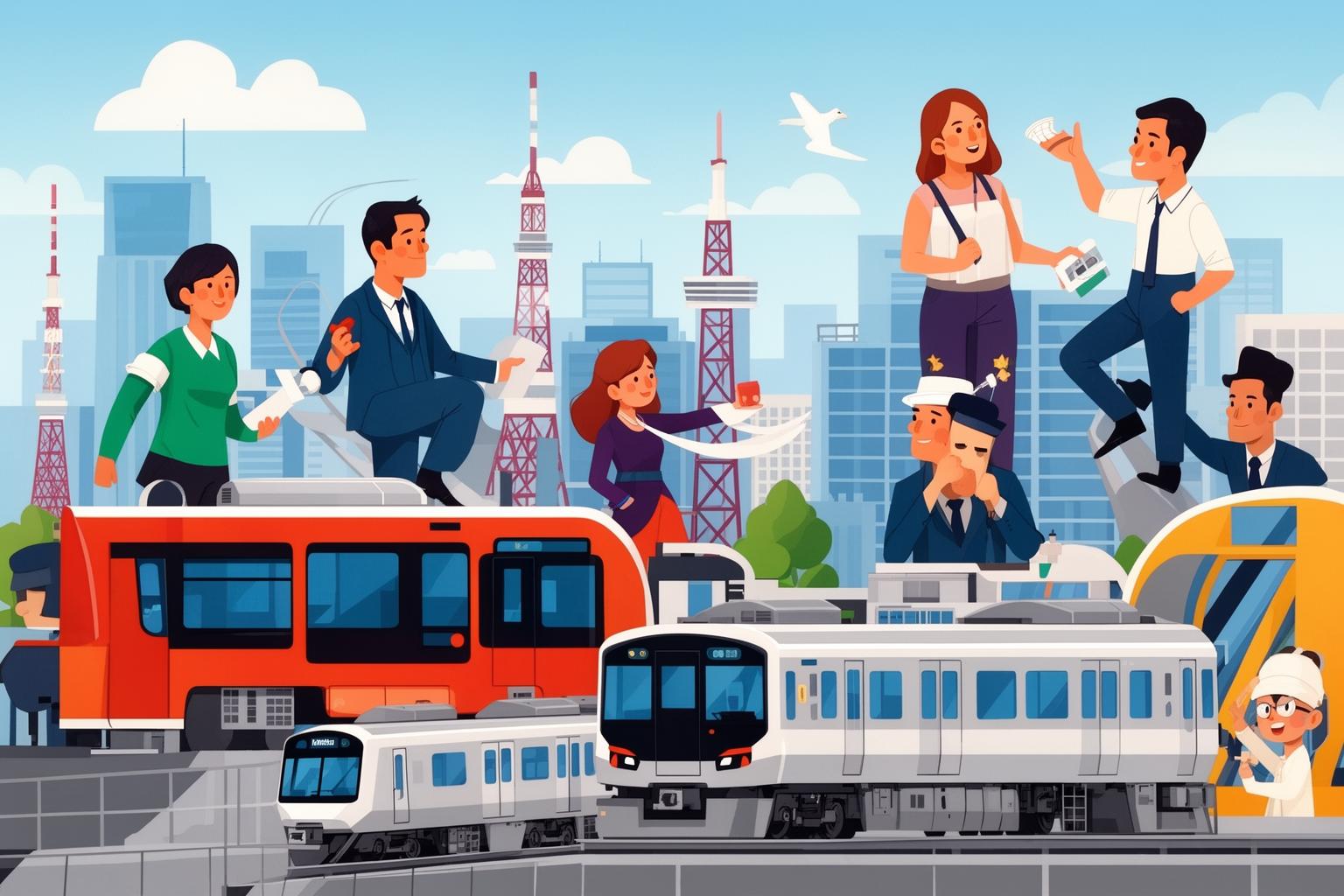
In Osaka, your train station defines your identity. The city is split into two main hubs: Kita, the North, centered around the vast JR Osaka and Umeda stations; and Minami, the South, anchored by Namba. Kita is the city’s refined face. It’s home to grand department stores, corporate headquarters, and the Shinkansen connection to Tokyo. It feels sleek, modern, and somewhat impersonal—a place of business suits and meticulously planned journeys. Minami, on the other hand, is the city’s vibrant heart. It’s a lively, chaotic maze of covered shopping arcades, tiny bars, theaters, and food stalls. It’s where Osaka’s reputation for being friendly, unpretentious, and a little wild originated.
That the Kintetsu Railway’s main terminal lies deep underground beneath Namba is no coincidence. While JR lines serve as the national standard, the government’s arteries connecting the country, private railways like Kintetsu act as local capillaries, shaped by regional needs and local culture. Leaving from Umeda feels like departing for somewhere far away. Leaving from Namba feels like heading to another part of home.
On any typical Saturday morning, the Kintetsu Namba station offers a masterclass in Osaka pragmatism. The platform isn’t crowded with tourists nervously clutching guidebooks. Instead, you see three generations of a family, with grandma directing the distribution of snacks from a giant bag. You see groups of middle-aged friends already cracking open cans of beer and Asahi Chu-Hi, their journey serving as the party’s first act. The air buzzes not with the quiet tension of a Tokyo commute but with the lively chatter of people genuinely excited for their day off. Before even reaching the gates, many make a pilgrimage to the depachika, the basement food hall of the adjoining Takashimaya or Kintetsu department store. Here, they aren’t buying fancy souvenirs but stocking up on essentials: perfectly packed bento boxes, freshly fried croquettes, and maybe a box of sweets to share on the train. It’s a ritual that says, “Why wait to enjoy ourselves? The fun begins now.” This is the first hint: for an Osakan, a getaway isn’t a formal occasion. It’s a seamless extension of daily life, and above all, it must be delicious.
The Nara Run: History as Your Backyard
More Than Just Deer and Temples
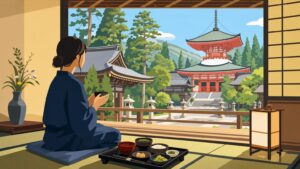
The most popular destination from the Kintetsu Namba terminal is Nara. At around 40 minutes by express train, it feels less like a trip and more like an extension of the Osaka metropolitan area. For foreigners, Nara is a bucket-list must: the Great Buddha at Todai-ji Temple, the tranquil Kasuga Taisha Shrine, and of course, the thousands of free-roaming, famously polite (or aggressively hungry) deer. It’s a place of great historical importance, Japan’s first permanent capital. You might expect a certain reverence, a sense of occasion.
But that’s not how Osakans see Nara. They treat it like their own quirky local park. A conversation overheard on the train isn’t about the nuances of 8th-century Buddhist sculpture; it’s a dad telling his child, “If you finish your homework on the train, we’ll buy extra crackers for the deer.” A group of university students aren’t planning a detailed temple tour; they’re debating which spot in Nara Park offers the best shade for a nap. This casualness can be mistaken for indifference or even disrespect. A Tokyoite might approach a similar historic site like Kamakura with cultural seriousness, equipped with a carefully curated walking route. But the Osaka attitude isn’t disrespectful; it’s a sign of deep, intimate familiarity. Nara isn’t a museum for them. It’s a place they’ve visited since childhood. It’s where they went on school trips, had their first dates, and now bring their own kids. The history seeps in naturally, a constant and comforting backdrop, rather than something to be actively studied over a weekend. It’s the ultimate proof that in Kansai, history isn’t a distant idea. It’s right there, a 500-yen train ticket away, waiting for you to drop by.
The Osaka Practicality in Action
This connection to Nara is built on pure Osaka logic: kosupa, or cost performance. Why spend a fortune on an extravagant vacation when an ideal change of scenery is so close, affordable, and convenient? There’s no need to book tickets ahead of time. You simply show up, tap your IC card, and hop on the next express train. It’s the perfect example of a low-stakes, high-reward outing. This mentality permeates every part of life in Osaka. It shows in the way people hunt for bargains in the Shinsaibashi arcades, wait an hour for a 700-yen bowl of ramen rumored to be the best in town, and plan their free time.
It’s about maximizing enjoyment while minimizing hassle and unnecessary costs. The aim of a trip to Nara isn’t to accumulate cultural credentials or impressive photos. The goal is to breathe slightly cleaner air, laugh at a deer trying to snack on your map, and be home in time for dinner without feeling drained or overspending. It’s more of a refresh than a spectacle. This straightforward, practical approach to leisure is one of the most notable—and often misunderstood—differences between life in Osaka and the more performative, trend-focused culture of Tokyo. Here, fun doesn’t have to be elaborate.
The Ise Pilgrimage: Piety, Pearls, and a Full Stomach
A Different Kind of Reverence
If Nara feels like a casual backyard, a trip to Ise-Shima in nearby Mie Prefecture is a more momentous event. The journey takes around two hours aboard the Kintetsu Limited Express, leading to the Ise Grand Shrine (Ise Jingu), the most sacred site in Japan’s indigenous Shinto religion. This is the nation’s spiritual heart, a place of immense power and deep tranquility. You might anticipate the visit to be a solemn, deeply spiritual experience.
And it is, but with a distinctly Osaka flair. People dress nicely, but not rigidly. They approach the main sanctuaries, bow, and offer their prayers with heartfelt sincerity. Yet, as soon as the prayer concludes, the mood changes. The quiet reverence gives way to lively family conversations—not about theology, but about what to eat for lunch. There’s no prolonged, performative solemnity. In Tokyo, one might feel a social expectation to maintain quiet dignity for a time after visiting a major shrine like Meiji Jingu. In the Osaka-style pilgrimage to Ise, the spiritual obligation is sincerely fulfilled, and then life, in all its noisy, delicious splendor, immediately resumes. This isn’t contradictory; it’s a philosophy. Spirituality isn’t a separate, walled-off realm demanding a special persona. It’s interwoven into the everyday, existing harmoniously alongside a craving for grilled oysters.
The Sacred-to-Snacks Pipeline
The layout of Ise itself appears designed to embrace this Osaka mentality. Upon exiting the sacred grounds of the Naiku (Inner Shrine), you are instantly brought into Oharai-machi and the renowned Okage Yokocho, a perfectly recreated old-town street bustling with restaurants, snack stalls, and souvenir shops. It’s a seamless transition from the divine to the delicious, navigated by Osakans with expert ease.
Here the true pilgrimage begins for many. The focus shifts from nourishing the soul to satisfying the appetite. Families dispatch members to different lines: one for the iconic Akafuku mochi, a soft rice cake filled with sweet red bean paste that’s an Ise classic; another for freshly grilled oysters basted with butter and soy sauce; another for a cone of rich, creamy soy sauce-flavored ice cream. They reconvene on a bench, sharing their spoils and animatedly debating which was best. It’s a feast, a celebration. To outsiders, the swift transition from quiet prayer to boisterous eating might seem startling. But to understand Osaka is to realize these acts are not at odds. They are both expressions of gratitude. Thanks are given to the gods for life, nature, and peace, and then for the bounty of the sea and the cook’s skill. Both are vital. Both are savored with enthusiasm. This earthy, holistic approach—where the sacred and the profane are not adversaries but companions—is perhaps the most charming and defining trait of the Osaka spirit.
Deeper into the Green: Yoshino and the Call of the Wild
Nature Without the Frills
Beyond the historical and spiritual centers lies another kind of Kintetsu escape: the journey south to the rugged Kii Peninsula, specifically to Mount Yoshino. Renowned for its stunning mountain landscape blanketed by over 30,000 cherry blossom trees, Yoshino offers a different form of retreat—one into pure, unspoiled nature. Unlike the carefully tended gardens of Kyoto or the trendy, boutique-filled nature resorts favored by Tokyoites, such as Karuizawa, Yoshino is wild. It’s an entire mountain. The main “attraction” is simply the overwhelming beauty of the season, whether it’s the burst of pink in spring or the fiery palette of autumn.
The Osaka approach to Yoshino is, once again, straightforward and unvarnished. The journey is made with a single aim: to witness the spectacle. Conversations on the train revolve around whether the lower, middle, or upper groves of trees will be at their peak bloom. Visitors come prepared not with fancy hiking gear, but with comfortable shoes, a plastic picnic sheet, and a bento box. The goal isn’t to enjoy a multi-layered “experience” featuring artisanal coffee shops or contemporary art exhibits. It’s to reach a good viewpoint, sit down, eat, drink, and simply absorb the scenery. It’s a deep yet entirely unpretentious appreciation of nature. It serves as a reminder that while Osakans are quintessential city dwellers, they retain a strong, straightforward connection to the mountains and seasons that surround them. They don’t require nature to be curated or packaged. They want it raw, and they bring their own snacks.
The “Limited Express” Mindset
To reach Ise or Yoshino efficiently, most people choose the Kintetsu Limited Express. These trains, such as the sleek red “Hinotori” or the luxurious “Shimakaze,” require an additional fee on top of the base fare. Here, too, the Osaka logic of kosupa comes into effect, but in a more refined manner. While a foreigner might see the choice as “cheap local train versus expensive express,” an Osakan views it as a calculated investment in value. Paying an extra 1,500 yen isn’t a luxury; it’s a practical decision. It guarantees a comfortable, reserved seat. It significantly reduces travel time. It means arriving less stressed with more time to enjoy your destination. It maximizes the return on your most valuable asset: your free time.
This isn’t about indulgence. It’s about smart spending. The same principle applies to buying a slightly pricier but far more flavorful cut of meat for dinner. You’re not just paying for a product; you’re paying for a better experience. This pragmatic, value-driven mindset is a constant in Osaka life. It explains why people invest in top-quality kitchen knives yet hunt for deals on clothes. It’s about knowing what matters and putting your time and money there. The comfortable seat on the Limited Express isn’t a status symbol; it’s simply the smart way to kick off your trip sooner.
What the Rails Reveal About Osaka
The steady stream of people traveling on the Kintetsu line, spreading out from Namba every weekend, offers the most genuine portrait of Osaka. It’s a city that works hard and lives loudly, and it requires its outlets. But its idea of escape isn’t about disappearing or becoming someone else for a weekend. You won’t find Osakans adopting a quiet, reflective demeanor in Nara or a trendy, fashionable one on a nature trip. They remain themselves—boisterous, friendly, practical, and perpetually hungry—just in a different environment.
The getaways provided by the Kintetsu line aren’t about following trends or crafting an image. They’re about reconnecting with life’s core pillars: family, history, nature, and good food. The convenience and affordability of these trips, rooted in the city’s southern, more traditional area, make these reconnections frequent and part of the everyday rhythm of life, not rare special occasions.
Anyone seeking to truly understand what life in Osaka is like should look beyond the neon lights of Dotonbori and listen to the rumble of the Kintetsu trains below. They carry people deeply connected to their region, who approach both history and spirituality with casual familiarity, and who believe a day off is only as good as the food you eat. They show that living in a large, vibrant city doesn’t mean being disconnected from the quieter, deeper currents of culture and nature. In Osaka, the soul of the country is never more than a train ride away, and a good time is always just around the corner.