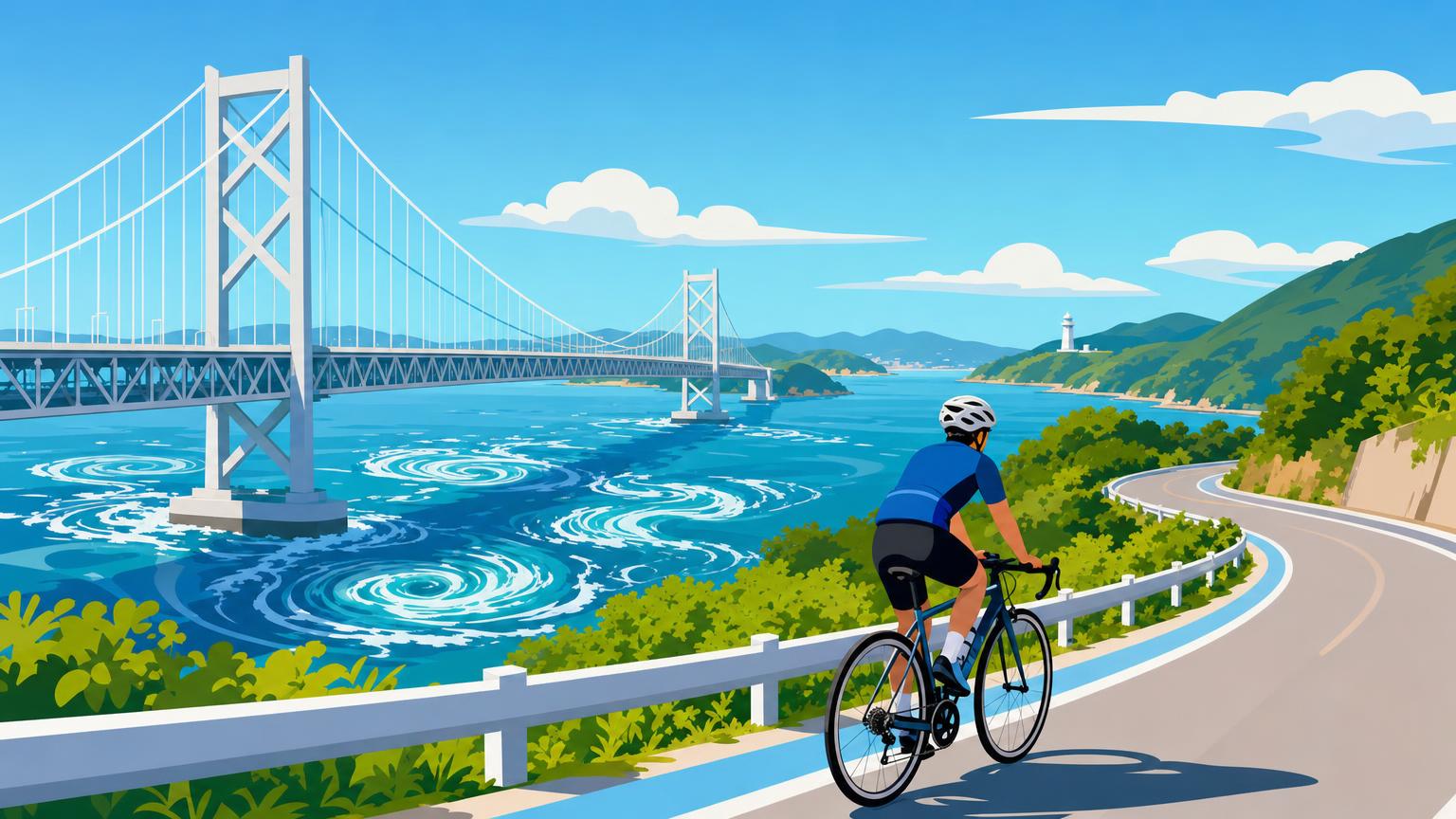
Osaka is loud. It does not whisper. It shouts across the street to ask how much you paid for your shoes. It barges into your personal space and offers you a piece of candy on the subway. It is a city of merchants, of endless hustlers, of people who wear their hearts on their incredibly vibrant, often leopard-print sleeves. If you are living here, or thinking about moving here from overseas, you have probably already noticed that Osaka operates on a completely different frequency than Tokyo. Tokyo hums with a quiet, orderly precision. Tokyo is a well-oiled machine where everyone knows their place and stays in their lane. Osaka, on the other hand, is a glorious, chaotic kitchen during the dinner rush. People walk fast. They talk fast. They cross the street before the light turns green because waiting feels like bad business.
My name is Ayaka Mori. I grew up outside the city limits, out where the rice paddies still outnumber the convenience stores, but my daily life is deeply entangled with the relentless rhythm of Osaka. I spend my days navigating the intricate, unwritten rules of this city. Foreigners often come to Osaka and are immediately charmed by the stereotype that ‘Osaka people are friendly.’ And they are. But that friendliness is not just a blind, cheerful disposition. It is highly practical. It is a social lubricant designed to make transactions smoother, to make the dense, shoulder-to-shoulder reality of urban living bearable. In Osaka, closing the distance between two strangers quickly is a survival skill. We drop formalities faster than anywhere else in Japan. We ask blunt questions. We crack jokes at our own expense because taking yourself too seriously in Kansai is considered a social crime.
But here is the honest truth about living in Osaka: the relentless energy can grind you down. The concrete holds the summer heat like a massive oven. The neon lights of Dotonbori, the endless labyrinth of underground malls in Umeda, the sheer volume of humanity pressing against you on the Midosuji subway line every single morning. It takes a toll. Even the most hardened Osaka merchant eventually hits a wall. They need space. They need sky. They need a horizon that is not blocked by another high-rise apartment building.
When the noise becomes too much, we look across the water. We look to the Seto Inland Sea. Specifically, we look to Awaji Island.
Awaji is not just a tourist destination for us. It is the lungs of the Kansai region. It is the massive, green reset button sitting just across the Akashi Kaikyo Bridge. To understand daily life in Osaka, you have to understand how we escape it. Awaji Island represents the absolute antithesis of Osaka’s concrete sprawl. It is rural, it is quiet, it is governed by the rhythm of the tides and the harvest rather than the train schedule and the stock market. And for the active, outdoorsy residents of our city, Awaji Island represents something else entirely: the ultimate cycling sanctuary. We trade the frantic, pedestrian-dodging rides on our heavy city bicycles for sleek frames, open roads, and the smell of salt in the air. This guide is about how to experience that transition. It is about leaving the noise behind, crossing the bridge, and finding out what happens when the people of Japan’s most chaotic city go to find some peace.
Why Awaji Island is a Premier Cycling Destination in Japan
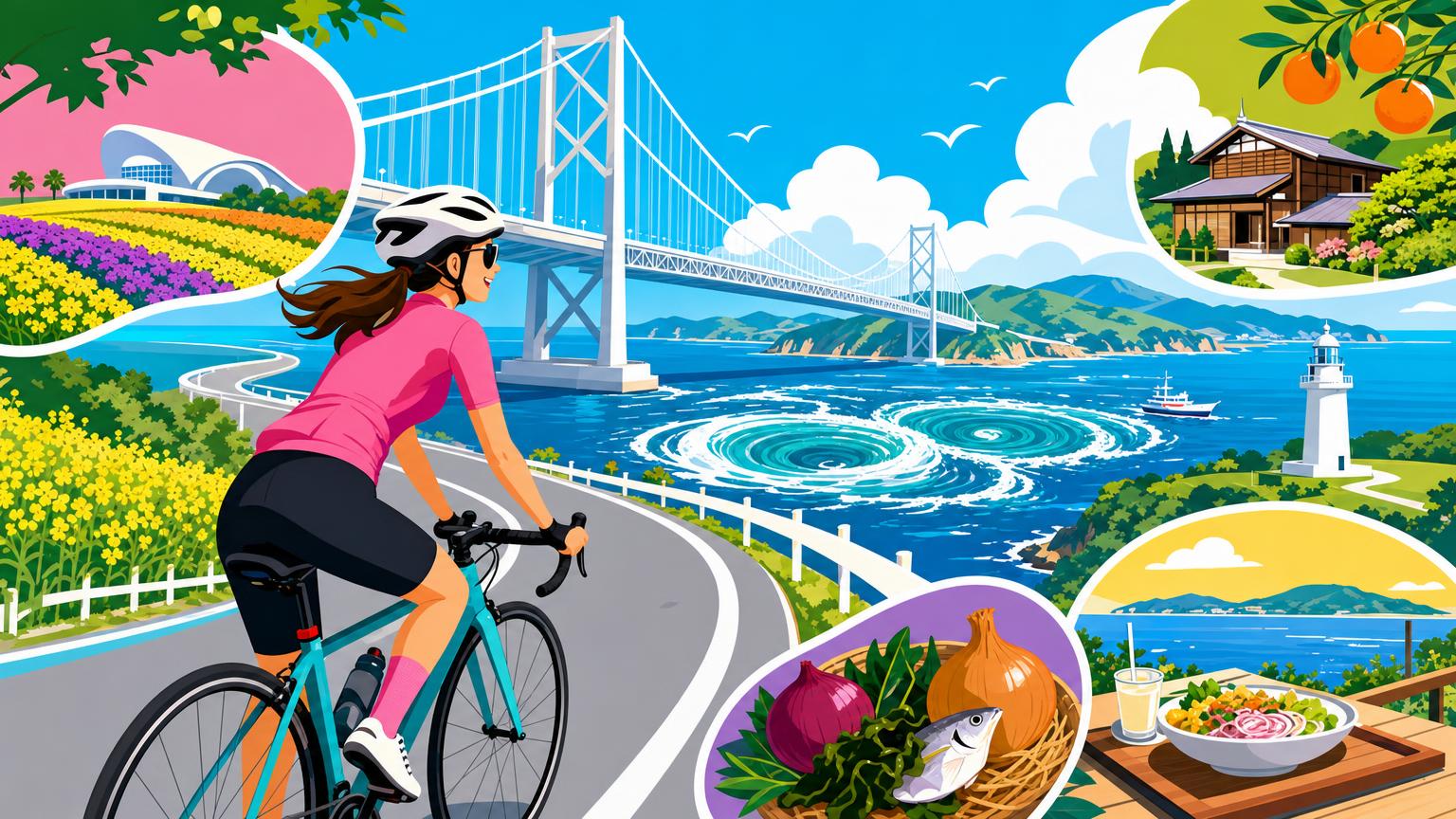
To truly appreciate the cycling culture on Awaji Island, you first need to understand the reality of cycling in Osaka. In the city, the bicycle is a tool—an essential workhorse. We ride ‘mamacharis,’ heavy steel machines with massive front baskets, child seats on the back, and gears that often click and grind. We weave them through sidewalks crowded with salarymen, dodge street signs, and slam on the brakes when a taxi suddenly pulls over. City cycling here is defensive, aggressive, and entirely practical. It’s about getting from your apartment to the supermarket or train station as efficiently as possible. There is no pleasure in the ride itself; it’s a daily struggle.
When an Osaka resident decides to take up cycling as a hobby, they can’t do it within the city. There are simply too many traffic lights, too many people, and too many distractions. They have to leave. Many immediately think of the Shimanami Kaido, the famous route linking Honshu to Shikoku across multiple islands. It’s beautiful, yes, but it’s far. It requires taking the bullet train, booking distant hotels, and planning a major trip. Awaji Island, however, is right in our backyard. It’s easily accessible, clearly visible across the water on a clear day from the beaches of Kobe or southern Osaka.
Awaji Island offers a concept known locally as ‘Awaichi,’ a portmanteau of ‘Awaji’ and ‘Ichishu,’ meaning one lap or circuit. Doing the Awaichi means cycling all the way around the island. It’s the holy grail for local amateur cyclists. The island boasts something incredibly rare in the densely populated Kansai region: miles of uninterrupted, beautifully paved coastal roads. There are stretches where you can pedal for an hour without encountering a single traffic light. To one side, the sparkling blue waters of the Seto Inland Sea, and to the other, lush green mountains.
But beyond the landscape, there is a clear shift in mindset. In Osaka, you keep your head down and push through the crowd. On Awaji, the locals wave to you. Farmers tending their terraced fields look up and nod as you pass. It’s a vivid reminder of Japan’s rural warmth, a sharp contrast to the transactional pace of city life. As a foreigner living in Kansai, cycling on Awaji Island bridges the gap between hyper-modern, stressful urban Japan and the country’s timeless, agricultural soul. It provides context, showing you where the food on your plate in Dotonbori actually comes from.
Getting to Awaji Island: Access from Osaka and Kobe
The physical act of leaving Osaka and arriving on Awaji Island serves as a ritual of decompression. You have two main options: bring your own bicycle or rent one there. Both choices require a basic understanding of how transportation operates in this region.
If you own a sleek road bike and plan to bring it with you, you’ll become well acquainted with the concept of the ‘rinko’ bag. In Japan, you cannot simply roll a fully assembled bicycle onto a train—it is strictly prohibited, a rule designed to keep the notoriously crowded train cars manageable. You must remove the wheels and pack the frame into a specialized carrying bag. Doing this on a busy platform at Osaka Station or Sannomiya Station in Kobe is a sort of rite of passage. You will feel the gaze of fellow commuters. In Tokyo, you might receive cold stares for taking up too much space. In Osaka, someone might even ask you the cost of your bike or your destination. The unspoken rule is to pack your bike quickly, quietly apologize to anyone whose way you block, and carry your bulky package to either the very first or last carriage of the train, where there’s a bit more room.
You will take the JR Kobe line westward, watching the dense skyscrapers of Umeda gradually give way to the sprawling port facilities of Kobe, and ultimately to the coastal towns of Akashi. The air outside the train window noticeably clears. Akashi is your gateway. From Akashi Port, you board the Jenova Line high-speed ferry. This is where the magic begins. You roll your bike bag onto the deck. The engines hum to life. The ferry crosses the Akashi Strait, passing directly beneath the monumental Akashi Kaikyo Bridge, the world’s longest suspension bridge. Standing on deck, feeling the immense scale of the bridge above and the churning sea below, the stress of the Osaka workweek literally blows away. Thirteen minutes later, you arrive at Iwaya Port on the northern tip of Awaji Island. You unzip the bag, reassemble your wheels, and suddenly, you are free.
For those who prefer not to struggle with a bicycle bag on a crowded train, arriving empty-handed is just as practical and infinitely less stressful.
Awaji Island Bike Rental Guide
If you arrive at Iwaya Port without a bicycle, you’re in luck. The cycling infrastructure here is designed specifically for people escaping the city for the weekend. The rental shops located at or near the port are run by locals who fully understand what you hope to achieve.
Here’s an important insight into the Kansai mindset: Osakans appreciate a good bargain, but they value practical functionality even more. We don’t tolerate things that look nice but don’t work well. We are a city of engineers and merchants. When you rent a bike here, the shop owners won’t try to upsell you on an expensive carbon frame if you just want to ride to a cafe. Instead, they’ll check your shoes, ask about your route, and provide the right bike for the job.
Currently, the biggest change on the island is the rise of the E-bike. Ten years ago, riding an electric-assist bicycle on a large cycling route might have been looked down on by serious riders. Today, practicality rules. Awaji Island, especially the southern half, is unexpectedly mountainous. If you’re a casual rider whose typical cycling involves a flat five-minute trip to the local Osaka supermarket, the southern hills of Awaji will thoroughly humble you. The rental shops at Iwaya Port offer a fleet of high-end, sports-style E-bikes. These aren’t the bulky mamacharis of the city; they are sleek, aggressive road and cross bikes with powerful motors discreetly built into the frames.
Renting an E-bike is arguably the smartest choice for a casual tourist. It levels out the hills and counters the strong coastal headwinds that can suddenly arise from the Seto Inland Sea. It lets you truly enjoy the scenery and the ocean breeze, rather than focusing painfully on your front tire as you struggle up a ten-percent incline. If you want the full, intense workout, you can certainly rent a traditional, lightweight aluminum or carbon road bike. Just be honest with the rental staff about your fitness level. In Osaka, pretending to be better than you are is seen as unwise. Authenticity is valued. Tell them you haven’t ridden more than ten kilometers in a year, and they’ll smile, nod, and set you up with an E-bike that will make you feel like a superhero.
Best Awaji Island Cycling Routes
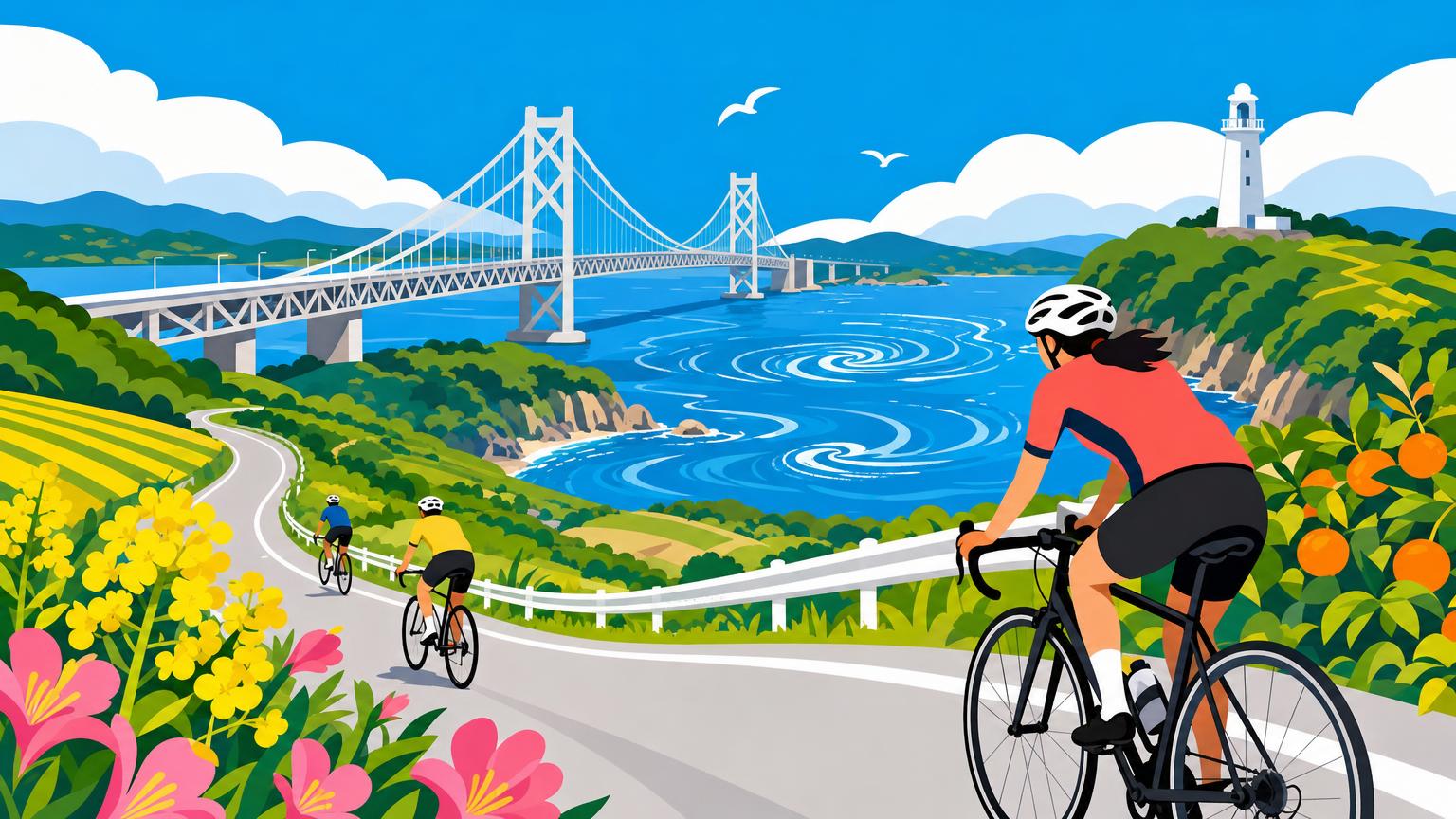
Awaji Island is roughly shaped like a teardrop, pointing south. Its geography varies considerably, so you need to choose your route carefully depending on what you want to get out of your weekend.
The Ultimate Challenge: Awaichi (150km Full Loop)
This is the main event—the route for bragging rights. Circling the entire island covers roughly one hundred and fifty kilometers. For an experienced cyclist, it’s a long and tough day in the saddle. For an intermediate rider, it becomes a demanding two-day adventure. The route takes you along the flat, speedy eastern coast, then throws you into the grueling climbs of the southern mountains, and finally delivers you onto the rolling, sunset-lit hills of the western shore.
Tackling the Awaichi is as much a mental challenge as it is physical. It strips away the defenses you wear in the city. By kilometer eighty, when you’re drenched in sweat and navigating a steep mountain pass with the Pacific Ocean roaring beneath, thoughts of your inbox, rent, or crowded subways vanish. You become fully present—a body just moving forward. This is why the Awaichi is so revered among Kansai locals: it’s a genuine physical test, accessible just a short ferry ride from the urban center.
The Northern Coast Route (Beginner Friendly)
If riding one hundred and fifty kilometers sounds more like punishment than a holiday, the northern loop is your refuge. Covering about twenty to forty kilometers, this route sticks to the flat, beautifully paved coastal roads near Iwaya Port and the eastern shoreline.
This route is perfect for those wanting to enjoy Awaji’s charm without the strain. You glide past ancient shrines, modern art installations, and sweeping ocean views. The gentle terrain means you can comfortably ride a standard rental bike. You can stop every thirty minutes for coffee, ice cream, or to snap photos of the Akashi Kaikyo Bridge from multiple viewpoints. This is rural Japan at a leisurely, breezy pace—totally forgiving and easygoing.
The West Coast Sunset Ride
Awaji Island’s western coast faces the Harima Nada sea and is famed regionally for one standout feature: its sunsets. As the sun sinks toward the horizon, the water turns a dazzling molten gold. The cycling route along this shore, known as the Awaji Sunset Line, is arguably one of the most romantic and visually breathtaking roads in the country.
Riding here in the late afternoon is a transformative experience. In Osaka, sunsets are often blocked by buildings, reduced to a soft pink glow reflecting off office windows. On Awaji’s west coast, the sunset is a spectacle that fills the entire sky. You ride a gently rolling road with the wind at your back, watching the sky shift from blue to orange to deep purple. Numerous trendy cafes and terraced restaurants line this stretch, all designed to showcase this view. It’s the perfect reward after a long day of cycling.
A Suggested 2-Day Awaji Island Cycling Trip Itinerary
To truly grasp the essence of the island and use it as a genuine reset from life in Osaka, you need more than just a few hours. A weekend trip, spending one night on the island, offers the perfect experience. Here’s how a local might plan a highly practical and thoroughly rewarding two-day adventure.
Day 1: Iwaya Port to Sumoto Onsen
You arrive at Iwaya Port early on a Saturday morning. The air is crisp, and the scent of diesel from the ferry blends with the salty sea breeze. You secure your rental bike, strap on your helmet, and head south along the eastern coast.
The morning ride is easygoing. The road is mostly flat, tracing the edge of Osaka Bay. Your first significant encounter with Awaji’s distinctive character is the Awaji Yumebutai. This massive architectural complex was designed by Tadao Ando, Japan’s most renowned living architect, who is originally from Osaka. The complex is a masterpiece of concrete, water, and light, built into a hillside once excavated for soil to create the artificial islands in Osaka Bay. It stands as a powerful symbol of environmental restoration. You park your bike and stroll through the Hundred Stepped Garden, marveling at how Ando’s brutalist concrete integrates with the surrounding nature. It’s a very Kansai-style approach to art: grand, ambitious, and slightly imposing.
Continuing south, you pass through small fishing villages. Octopuses hang on lines to dry in the sun, resembling alien kites. You ride past fields of onions, with a mix of sulfur and sweet earth scents rising to greet you. This eastern road is well-equipped with convenience stores, small local diners, and vending machines exactly when you need them, making the ride feel comfortable.
By mid-afternoon, you arrive in Sumoto, the island’s largest city. Sumoto is known for its hot springs, the Sumoto Onsen. Checking into a ryokan, a traditional Japanese inn, is the pivotal moment of the weekend. You park the bike, shed your sweaty cycling gear, wash thoroughly, and then ease yourself into a steaming outdoor bath overlooking the ocean.
Here’s an unspoken truth about Japanese bath culture: in the city, public baths or super sentos are often crowded and noisy, filled with gossip and children’s splashing. But in a proper onsen town like Sumoto, gazing out over the dark water of the bay, a profound silence settles in. The hot mineral water draws the lactic acid from your legs and the lingering stress of city life from your shoulders. You emerge relaxed, wrap yourself in a cotton yukata, and prepare for dinner.
Day 2: Southern Hills, Naruto Whirlpools, and Return
You wake early. The ryokan breakfast is bountiful: grilled fish, rice, miso soup, pickled vegetables, and raw egg. You eat it all because you know what lies ahead.
Day two is when the island truly challenges you. Leaving Sumoto and heading further south, the flat coastal roads disappear. You turn inland and the elevation rises quickly. The southern part of Awaji Island, known as Nandan, is marked by steep, punishing hills. Roads wind tightly up mountainsides blanketed in dense bamboo forests and citrus groves. If you rented a standard road bike, this is where you shift to your lowest gear and endure in silence. If you rented an E-bike, this is where you hit the turbo button and feel immense gratitude.
The highlight of the southern route is the Naruto Strait, a narrow water channel separating Awaji Island from Shikoku. The tidal forces here are so powerful, pushing massive volumes of water through the narrow gap, that they create the famous Naruto Whirlpools. You can park your bike and walk along the Uzu-no-Michi, an enclosed walkway suspended directly beneath the massive bridge spanning the strait. Looking down through glass floor panels at the violent, swirling whirlpools below is a visceral reminder of nature’s raw power. It’s violent, chaotic, and mesmerizing.
After witnessing the whirlpools, you head north along the western coast, following the sunset line. Your legs are weary, and the wind often pushes against you. Yet the scenery remains a constant comfort. You pass rural shrines, quiet beaches, and slow-moving tractors. As the sun sets, casting a golden glow across the water, you finally spot the Akashi Kaikyo Bridge in the distance. The bridge signals you’ve made it. You return to Iwaya Port, return your rental bike, and board the ferry after dark.
Standing on deck as the ferry sails back to the mainland, you see the massive glow of Kobe and Osaka on the horizon. The neon lights and crowds await, but you feel transformed. Your legs ache, your face is windburned, but your mind is remarkably calm. You are ready to return to the city.
Essential Things to Do and Eat Along the Route
You can’t write a guide about anywhere in Kansai without discussing food in detail. In Osaka, the cuisine is fast, affordable, and richly seasoned. We are the city of ‘kuidaore,’ which roughly means ‘eat until you drop.’ We created takoyaki and okonomiyaki, dishes meant to be enjoyed quickly while standing at a counter or strolling down a lively street.
Awaji Island’s cuisine, however, is the exact opposite. It forms the backbone of Kansai’s culinary reputation by providing the high-quality raw ingredients that Osaka chefs prize.
The undisputed star of Awaji agriculture is the onion. It may sound ordinary, but an Awaji onion is quite unique. Thanks to the island’s specific mineral-rich soil and mild climate, Awaji onions are exceptionally sweet and completely lack the harsh, pungent bite typical of regular white onions. You can eat them raw, like an apple. Along your cycling route, you’ll see endless fields of onions and farm stands selling them by the bag. Stop at a local diner and order a burger; the thick slice of roasted Awaji onion on it will outshine the meat. This is a source of great local pride.
Then there is Awaji beef. If you’re familiar with Japanese cuisine, you know Kobe beef. What you might not know is that many calves destined to become the world-famous Kobe beef are actually born and raised on Awaji Island before being transferred. Awaji beef is the original source. It is heavily marbled, incredibly rich, and melts completely on your tongue. After a tough day cycling over the southern hills, savoring a small, perfectly seared steak of Awaji beef at your ryokan in Sumoto is almost a spiritual experience. It replenishes the calories you burned with pure, undeniable indulgence.
Finally, the seafood. The currents of the Seto Inland Sea, especially the turbulent waters near the Naruto Strait, produce fish that are exceptionally firm and muscular. The sea bream, or tai, caught here is considered some of the finest in Japan. Tasting fresh sea bream sashimi or sea bream baked in salt is a must-do ritual, connecting you directly to the waters you cycled alongside all day.
Practical Tips for a Safe and Enjoyable Ride
If you plan to leave the safety of Osaka’s city grid and explore the island, you need to be aware of the practical realities of rural cycling in Japan. The environment here is beautiful, but it demands preparation.
The most surprising adjustment for a city resident is the scarcity of convenience stores. In Osaka, you are never more than three minutes away from a FamilyMart, 7-Eleven, or Lawson. These stores are the glowing beacons of urban survival, offering cheap water, clean restrooms, and instant calories around the clock. On Awaji Island, especially along the southern coast and western hills, convenience stores simply don’t exist. You might ride twenty or thirty kilometers without encountering a single shop. Running out of water while climbing a mountain pass in August can be dangerous. The rule is straightforward: whenever you see a vending machine or store, stop and buy water even if you’re not thirsty yet. Carry calorie-dense snacks with you. Adopt a mindset of self-reliance that city life often takes away.
Wind is another significant factor to consider. While the Seto Inland Sea is generally calm, coastal winds can be strong and unpredictable. A gentle morning breeze can turn into a harsh headwind by afternoon. Always check the wind forecast when planning your route. The usual advice is to aim for a tailwind during the later, more difficult parts of your ride. Battling a twenty-kilometer-per-hour headwind on the western coast after already covering a hundred kilometers can crush even the strongest cyclist’s spirit.
Elevation is the last reality check. I cannot stress enough how tough the southern hills are. Some back roads have gradients exceeding twelve percent. With digital maps, it’s easy to draw a straight line from point A to point B and assume a steady pace. You cannot. The southern route demands stamina, patience, and reliable brakes. Inspect your brake pads before descending. The winding roads are narrow, and local farmers zip around blind corners in their light kei-trucks faster than expected.
Living in Osaka is an amazing experience. It’s vibrant, authentic, and deeply human. But the key to truly appreciating Osaka long-term is knowing when to step away. Awaji Island is our designated sanctuary. It’s where we go to sweat, eat food that’s deeply connected to the land, and watch sunsets unobstructed by high-rises. Whether you take on the grueling one hundred and fifty-kilometer Awaichi or simply coast along the northern shore on an E-bike to enjoy a sweet onion, crossing that bridge changes your perspective. When you return to the city the next day, dragging your bike bag through Umeda station, the familiar chaos washes over you. Yet the noise doesn’t bother you quite as much anymore because you know the island is quietly waiting for your next weekend escape.