There is a distinct, vibrating energy to an Osaka morning. It hits you the absolute moment you step out of your apartment and into the humid street. Bicycles weave through narrow alleyways with startling precision. Shop owners aggressively sweep the pavement outside their shuttered storefronts, preparing for the day’s commerce. The air hums with a mercantile urgency that feels entirely different from the quiet, highly structured, almost militaristic marches of commuters you might witness up north in Tokyo. When I first relocated to this city, armed with my camera and a head full of romanticized, highly photogenic Japanese travel itineraries, I honestly thought the only logical way to start the day was to grab a quick, convenient rice ball from a brightly glowing convenience store and rush headlong to the nearest famous landmark. I was utterly and completely wrong. To truly understand how the people of Osaka tick, to feel the real heartbeat of this magnificent, chaotic, and relentlessly practical city, you have to dramatically slow your pace. You have to step out of the blinding morning daylight, push open a heavy, creaking wooden door, and wholeheartedly embrace the deeply ingrained, culturally cherished ritual of the Morning Service at a local kissaten.
For foreign residents attempting to build a long-term life here, Osaka can sometimes feel wonderfully overwhelming. The local Kansai dialect is fast, melodic, and aggressively punchy. The unspoken rules of daily social engagement are entirely different from the polite, sanitized distance actively maintained in the capital. Yet, the classic kissaten provides an essential anchor in this storm of stimuli. These traditional Japanese coffee shops are not merely functional places to get a quick caffeine fix before logging onto a corporate server. They are living, breathing time capsules, functioning as communal living rooms for tight-knit neighborhoods scattered across the sprawling concrete cityscape. The Morning Service, a widespread phenomenon where your ordered cup of coffee magically arrives accompanied by a free or heavily discounted breakfast, is the ultimate expression of Osaka hospitality. It is highly practical, it is uncommonly generous, and it is steeped in a heavy nostalgia that stubbornly refuses to be swept away by waves of modern gentrification. Forget the sleek, minimalist espresso bars with their bare concrete walls and expensive oat milk flat whites. We are diving headfirst into a shadowy world of amber lighting, crushed velvet seating, bubbling siphon coffee brewers, and the kind of authentic local interactions that make living in Osaka profoundly special. Let us explore the magic of the morning routine that fuels the legendary merchant city.
The Magic of Morning Service at an Osaka Kissaten
What Exactly is a Kissaten?
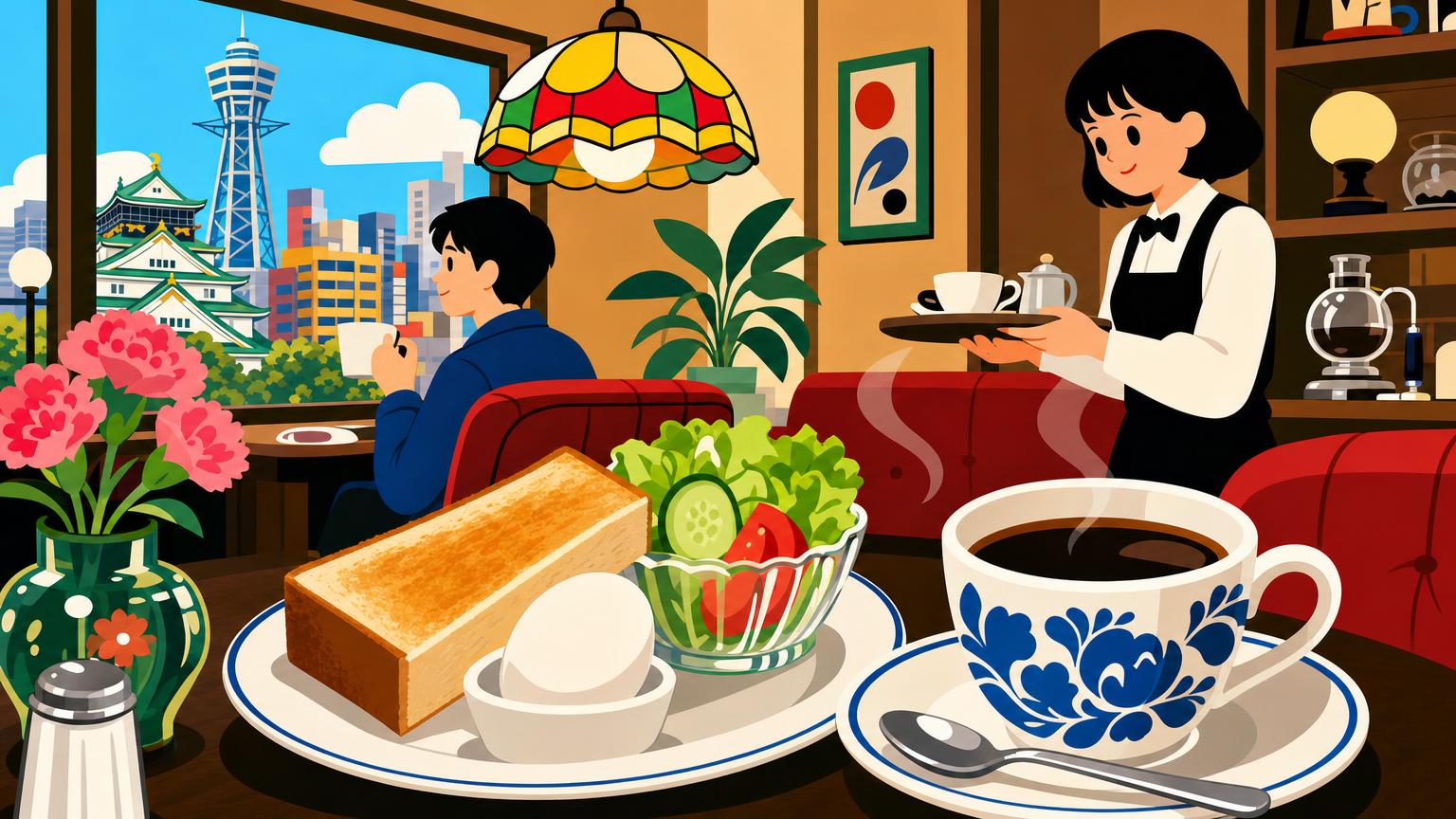
Calling a kissaten merely a coffee shop does it a great, almost unforgivable injustice. The term technically means a place where tea or coffee is consumed, but its cultural significance runs profoundly deeper. Emerging from the rapid Westernization and modernization of the early twentieth century and solidifying its iconic, moody ambiance during the post-war Showa era, the kissaten serves as a true urban refuge. Upon entering an authentic, unrefined Osaka kissaten, your senses become immediately immersed in layers of history. The lighting remains perpetually dim, casting a warm, sepia-toned glow over carefully preserved antique furniture. You will invariably encounter deeply worn leather booths, ornate stained glass lampshades, and walls lined with dark, aging mahogany paneling. A faint, lingering scent of decades-old indoor cigarette smoke blends harmoniously with the sharp, acidic aroma of freshly ground coffee beans.
Behind a heavy wooden counter stands the master—not a barista in the modern sense. This master is a stoic custodian of tradition, often dressed in a pristine, perfectly pressed white shirt paired with a tailored vest or bowtie, performing the intricate craft of coffee brewing with the silent, practiced precision of a seasoned artisan. In these hallowed spaces, time simply does not rush. There are no glowing laptops dominating the small tables, nor frenetic gig workers conducting loud video calls. Instead, you find older local gentlemen reading creased broadsheet sports newspapers, neighborhood matriarchs sharing quiet, hushed gossip over their cups, and solitary thinkers watching the white steam rise from their delicate porcelain dishes. For a foreigner navigating the fast-paced, high-pressure urban life of Japan, discovering a local kissaten feels like finding a hidden pause button for the entire city. It is a rare and treasured place where you are permitted to just exist, entirely undisturbed and comfortably anonymous, enveloped in a beautifully crafted analog atmosphere.
The Classic Morning Set: Thick Toast, Egg, and Coffee
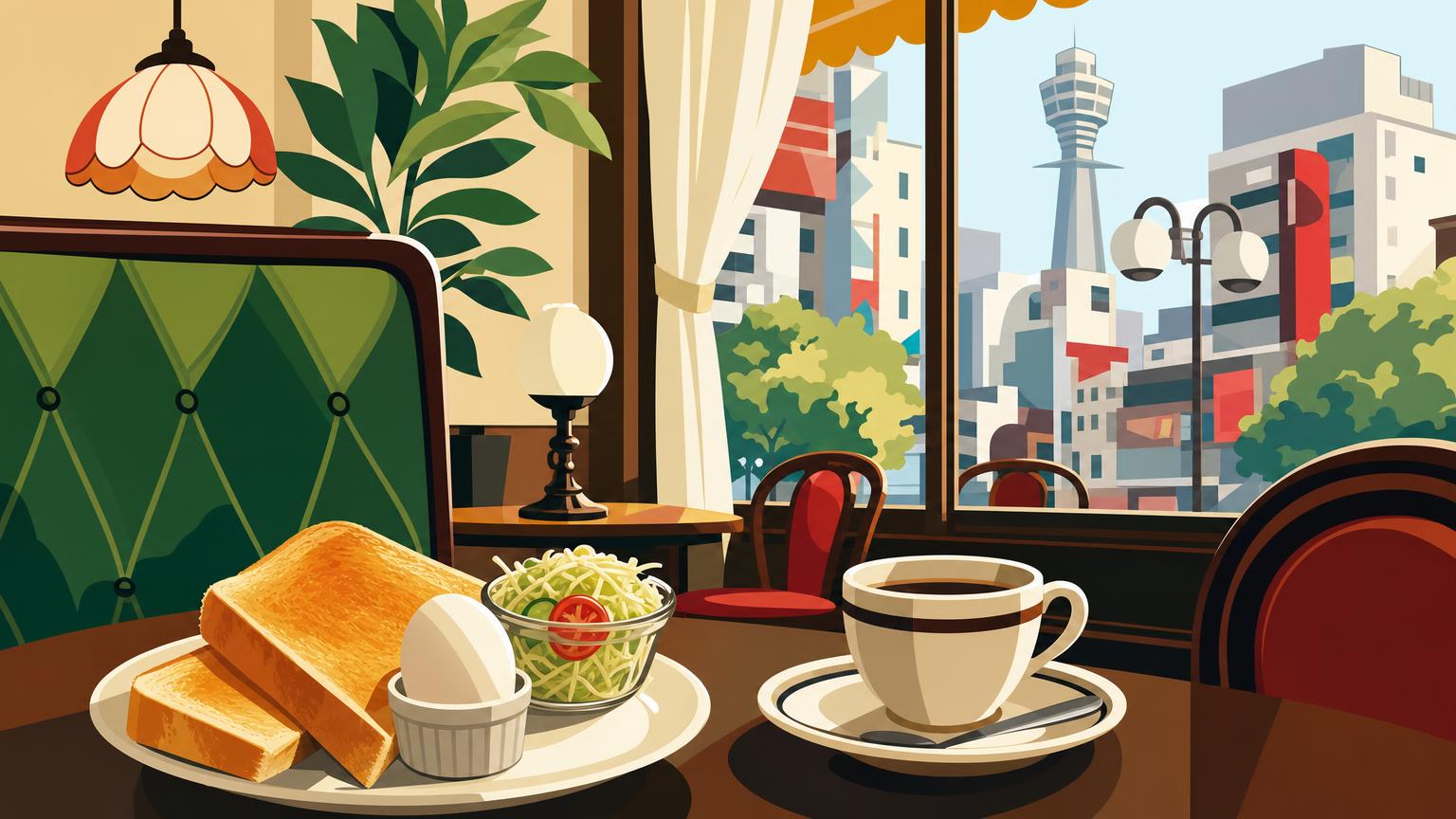
The Morning Service itself is a brilliant demonstration of culinary simplicity. It embodies the holy trinity of Japanese breakfast café culture: incredibly thick toast, a perfectly boiled egg, and a steaming cup of dark, rich coffee. Yet simplicity here does not mean a lack of sophistication. The toast is made from shokupan, a particular type of Japanese milk bread celebrated worldwide for its impossibly fluffy, cloud-like interior and delightfully delicate crust. In a proper Osaka kissaten, this bread is sliced aggressively thick—often two, sometimes three full inches of glorious carbohydrate perfection. The master carefully scores the top surface of the bread with a sharp knife before it meets the roaring toaster, creating a grid that allows a generous, thick slab of salted yellow butter to melt deep into the porous crumb. When it finally arrives at your small table, it is a textural marvel. The outer crust shatters audibly upon biting, instantly giving way to a warm, savory, melt-in-your-mouth center that feels like pure comfort.
Resting quietly beside the monumental toast is the humble boiled egg. Almost always served warm to the touch, it sits elegantly in a small ceramic cup or gently rolls on a polished silver tray. Slowly peeling this egg, tapping the shell against the table while taking deliberate, thoughtful sips of hot coffee, becomes the true rhythmic meditation of an Osaka morning. And then there is, crucially, the coffee itself. Kissaten coffee is fiercely, unapologetically traditional. It leans heavily into deep, dark, intensely roasted profiles, using beans roasted until they gleam with their own natural oils. Extracted agonizingly slowly through a delicate glass vacuum siphon or a meticulously poured Nel drip cloth filter, the resulting dark brew is bold, intensely bitter, and completely free of the bright, fruity acidity favored by modern specialty coffee cafes. It is a heavy coffee specifically designed to wake you up. An assertive coffee crafted to precisely cut through the rich butteriness of the milk bread. Quite simply, it is the exact taste of a Showa-era morning, flawlessly preserved for today’s palate.
Why Osaka’s Retro Cafe Culture is Unique
The Merchant City Mindset versus Tokyo Hustle
To truly grasp why this particular cafe culture thrives so passionately and persistently in Osaka, you must first appreciate the deeply ingrained psychology of the city itself. Tokyo, historically shaped by samurai and modern bureaucrats, places high value on strict order, absolute efficiency, and maintaining a polite, frictionless, and invisible distance from strangers. Tokyo mornings are all about moving swiftly and smoothly from point A to point B with minimal social interaction. In contrast, Osaka is the eternal, unapologetic merchant city. Rooted in centuries of river trade, fierce commerce, and relentless, cheerful hustle, the people of Osaka cherish human connection, hearty, boisterous laughter, and above all, a spectacular financial deal. This is the legendary city of kuidaore, a well-known local phrase that essentially means eating and drinking oneself into complete financial ruin. Here, food is never mere sustenance; it represents the highest expression of daily joy and social bonding.
The Morning Service directly and perfectly appeals to the pragmatic, value-driven spirit of the everyday Osaka resident. The notion that ordering a simple cup of coffee automatically comes with a complimentary, hot breakfast is a major psychological win. It feels like a brilliant deal, and residents of this merchant town absolutely love a good bargain. Yet, the appeal goes far beyond just economics. The morning exchange with the kissaten master is a vital daily ritual of community affirmation. In Tokyo, you might grab a paper cup of coffee and leave without making eye contact with the cashier. In Osaka, the master looks at you. The master remembers your face. The veteran waitress might tease you gently about looking sleepy or comment on the weather outside. There is a tangible warmth, a gruff but heartfelt affection, that characterizes local neighborhood interactions here. For a newly arrived foreigner, breaking through this exterior can sometimes feel socially challenging, but becoming a familiar regular at a neighborhood kissaten is the fastest, most genuine way to be seamlessly woven into the local fabric of the city.
The Economics of the Morning Service
You might naturally wonder how these small, independent, seemingly old-fashioned shops survive by literally giving away food. The historical roots of the Morning Service actually trace back to the booming textile industry in the surrounding Kansai and Chubu regions, especially in places like Ichinomiya and Nagoya, before deeply and permanently embedding itself in the heart of Osaka. Busy factory owners and textile businessmen needed convenient spots for early morning meetings, and fiercely competitive cafe owners began offering free peanuts, then boiled eggs, and eventually thick toast, purely to entice these wealthy patrons to choose their establishment over the competitors down the street. It was a fiercely contested, local hospitality battle that ultimately created a permanent, beloved cultural tradition.
Today, the economics continue to function beautifully thanks to fierce, unwavering customer loyalty. The profit margins on a single cup of hot coffee may be slightly squeezed by the rising cost of thick toast and eggs, but that particular customer will unquestionably return every day, year after year, decade after decade. They will buy prepaid coffee tickets in bulk to save even more. They will bring their business associates for afternoon meetings. They will purchase iced coffees during the sweltering summer. It is a long-term, calculated investment in human relationships—a highly social business philosophy that feels distinctly and proudly unique to the Osaka mindset.
Must-Visit Kissaten for Morning Service in Osaka
Pure Kissa American: A Dotonbori Classic
If you want to immerse yourself fully in the most visually stunning and cinematically rich portrayal of this culture, you absolutely must visit Pure Kissa American. Nestled within the chaotic, neon-lit, tourist-packed maze of the famous Dotonbori district, this remarkable establishment has been serving devoted locals since just after the war. The exterior boasts sweeping, dramatic mid-century modern curves and a brilliant, glowing neon sign that feels delightfully and perfectly out of place among the modern, noisy takoyaki stands. Stepping inside is like walking onto an elaborate period film set. The vast interior space is awe-inspiring, featuring grand spiraling staircases, massive glittering crystal chandeliers, and endless rows of plush, floral-patterned velvet chairs.
The historical term pure kissa originally referred to a café that strictly did not serve alcohol, clearly distinguishing it from other venues that operated more like shady hostess bars in the late evening. Today, it simply signifies an unwavering dedication to traditional, pure café culture. Their morning service is legendary. While you can opt for the classic, delicious thick toast, many experienced patrons prefer to upgrade to their signature, visually perfect hotcakes. These are not flimsy, flat modern pancakes; they are thick, incredibly dense, golden-brown discs of culinary perfection, hand-stamped with the café’s custom logo and served with a generous, overflowing pour of dark syrup. Sitting quietly by the massive window, watching the frenetic, chaotic energy of the Dotonbori morning slowly awaken outside while you relax surrounded by impeccable Showa-era luxury, is an experience no standard guidebook can truly capture. It epitomizes the pure essence of Osaka’s glamorous, affluent past.
Marufuku Coffee: A Legacy of Dark Roast
For residents who take their morning caffeine ritual with absolute seriousness, Marufuku Coffee in the bustling Sennichimae area is a must-visit daily pilgrimage. Founded back in 1934, Marufuku is a genuine Osaka institution. The interior is beautifully moody, characterized by dark wooden beams, smooth leather seating, and an atmosphere of hushed, respectful quiet. The defining feature of Marufuku is their fiercely guarded proprietary roasting and extraction method. The original founder designed a unique dripper specifically for their exceptionally dark-roasted beans, a meticulous process that produces a cup of coffee so rich, thick, and profoundly dark it almost resembles a heavy stout beer.
Their popular morning service pairs this intense brew with elegantly simple, perfectly buttered toast, but the real highlight is the interaction between the dark coffee and its accompaniments. The coffee is served proudly in delicate, beautifully painted Okura Art China cups, accompanied by raw, jagged sugar cubes and a small, gleaming pitcher of incredibly rich, heavy cream. For foreigners used to lighter, acidic third-wave roasts, the initial sip of Marufuku coffee can be a genuine shock. It is bold and aggressively, almost violently, bitter. But add just a touch of the heavy cream, watching it swirl and bloom in the dark liquid, and the flavor transforms into a velvety, chocolate-like masterpiece. It’s a bold, uncompromising approach to coffee that perfectly reflects Osaka’s bold, relentless spirit.
Mazura Kissaten: A Journey Back to the Showa Era
To truly grasp the daily life of a hardworking Osaka salaryman, you must enter the sprawling, confusing, underground labyrinths of the Osaka Ekimae Buildings. These massive, aging concrete complexes near the gleaming modern Umeda station form a gritty maze of cheap izakayas, discount ticket shops, and forgotten businesses. Hidden deep within this concrete warren is the legendary Mazura Kissaten. Entering Mazura feels like boarding a retro-futuristic spaceship enthusiastically designed in the early 1970s. The space is enormous, covering roughly three hundred square meters, dominated by endless mirrored ceilings, circular pod-like seating, and a large glowing globe centerpiece that looks like a forgotten prop from a vintage sci-fi film.
Mazura is famous throughout the city not only for its astonishing, trippy décor but also for its fiercely defiant pricing policy. The legendary original owner, who famously ran the shop well past his hundredth birthday, insisted on keeping prices frozen in time to support Osaka’s working class financially. Coffee here is unbelievably cheap, morning service is delightfully unpretentious and satisfying, and the atmosphere is wholly authentic. It’s a crucial refuge for tired office workers seeking a brief, desperate moment of quiet before plunging back into the harsh corporate grind. For foreign visitors, sitting quietly in a pod at Mazura offers a raw, unvarnished glimpse into the everyday reality of the Japanese workforce. It’s gritty, wonderfully strange, and an essential, living piece of the city’s history.
Hiraoka Coffee: Traditional Roasts Since 1921
If you seek a space of quiet dignity and a direct link to the origins of Kansai’s coffee culture, Hiraoka Coffee, located in the traditional Hommachi business district, is unparalleled. Operating continuously since 1921, this revered kissaten is a masterclass in understated elegance. Unlike the flashy, massive chandeliers of American or the wild retro-futurism of Mazura, Hiraoka feels like a carefully preserved personal secret. The old wooden floors creak gently underfoot, and the dark walls are decorated with antique mechanical coffee grinders and sepia-toned photographs documenting a century of continuous operation.
What truly sets Hiraoka apart during the morning rush is their steadfast, stubborn commitment to the traditional boiling method of coffee preparation, a rarity in modern times. The result is a remarkably clean, intensely aromatic, and surprisingly delicate cup. Their morning offering often features their famous, handmade donuts. These are not sugary, heavily glazed modern sweets; they are dense, slightly crispy on the outside, and only subtly sweet, providing the perfect textural counterpoint to the bitter black coffee. Located in the heart of Osaka’s historical merchant district, Hiraoka is a true oasis of calm. Watching the current master pour coffee with the practiced, fluid grace inherited through a century-old lineage is a deeply moving experience, constantly reminding you that beneath Osaka’s famously loud, brash exterior lies a profound respect for quiet craftsmanship.
Practical Tips and Unspoken Kissaten Rules
Cash is Essential
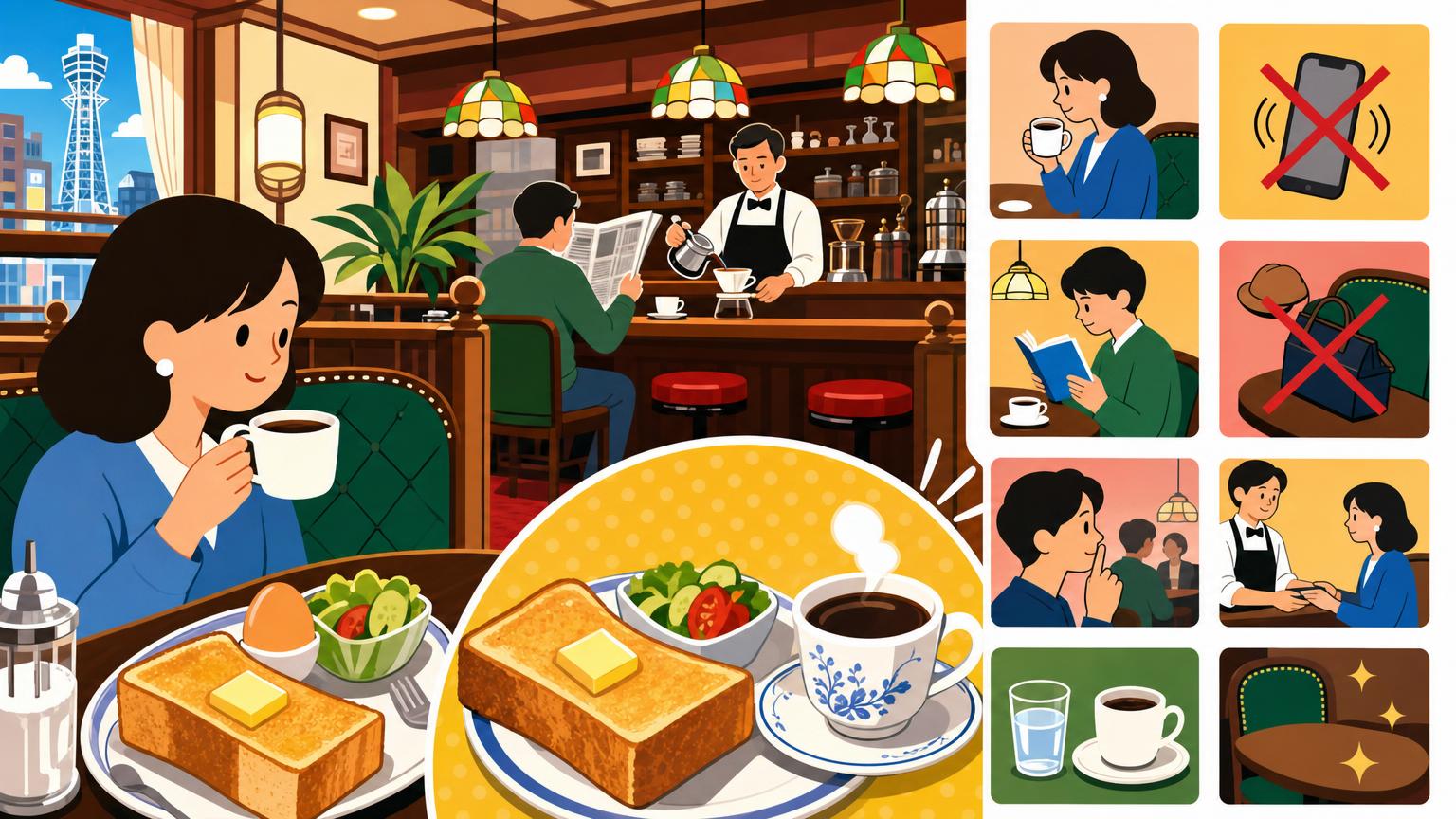
Thriving in Osaka means learning to navigate a rapidly digitizing society that still fiercely clings to analog traditions. When you visit a traditional neighborhood kissaten, leave your shiny credit cards and smartphone payment apps firmly tucked away. Cash is absolutely, unquestionably essential. These are independent, often family-run businesses operating on razor-thin margins, and the fees associated with modern digital payments simply don’t fit their economic reality. Additionally, the physical act of paying with actual currency is part of the morning ritual. After finishing your morning service, you take the small, hand-written paper slip left at your table directly to the register. You place your crisp bills or heavy coins carefully onto the designated small plastic tray. The master or veteran waitress will count your change with practiced, rhythmic vocalizations, bowing slightly as they hand back your tiny receipt. Clumsily trying to tap a plastic card against a non-existent terminal disrupts the entire magical atmosphere. Always carry thousand-yen bills and a pocketful of coins; they are the true currency of local respect.
Navigating Smoking Policies
This is perhaps the most striking cultural adjustment for newly arrived Western residents experiencing traditional kissaten culture. While modern chain cafes and corporate family restaurants across Japan have largely banned indoor smoking, many older, traditional kissaten are legally grandfathered in or operate as designated smoking venues. For Osaka’s older generation, smoking a cigarette while slowly sipping dark roast coffee and reading the sports newspaper is an inseparable, sacred morning ritual. Expect the air in these vintage, enclosed spaces to be noticeably tinged with tobacco smoke.
If you are highly sensitive to smoke, this culture might be a real challenge. But grasping this dynamic is crucial to truly understanding the city. These spaces cater unapologetically to loyal, elderly local regulars—not international visitors demanding pristine air. Upon entering, you may be asked if you prefer a smoking or non-smoking section, though in many smaller, cozier shops, the whole space is open. You can choose a seat near an entrance or ventilation fan to lessen exposure, but avoid waving your hands in disgust or coughing theatrically. Accepting the smoke as part of the historical atmosphere—like the velvet chairs and scratchy jazz music—is part of the unspoken, iron-clad pact of entering a Showa-era sanctuary.
How to Order Your Breakfast
Ordering from a purely Japanese menu can be intimidating, but ordering the Morning Service is delightfully simple. The morning rush demands efficiency. When you sit down, a waitress will likely approach quickly with a small glass of iced water and an oshibori, a damp rolled towel to clean your hands. This is your moment. There’s no need to construct complex or perfectly grammatical Japanese sentences. The only phrase you truly need is, “Morning, onegai shimasu,” politely meaning “The morning service, please.”
The waitress will almost certainly follow up by asking about your beverage choice: “Hotto desu ka, aisu desu ka?” asking if you want hot or iced coffee. Simply reply confidently with “Hotto” or “Aisu.” If the shop offers variations of the morning set, they might show you a laminated menu with options A, B, or C, usually differing between thick toast, small sandwiches, or mini hotdogs. Just point clearly and smile. In a traditional kissaten, the default hot coffee is always a “blend” (burendo), the master’s unique signature roasted bean mix. Do not ask for a cappuccino, flat white, or extra espresso shot. Surrender your complex modern coffee preferences entirely to the master’s deep expertise. You are not there to dictate your drink’s specifics; you are there to gratefully receive their perfect morning cup.
Start Your Day Like a Local in Osaka
Deeply integrating into daily life in a foreign country rarely involves mastering thick language textbooks or rushing to visit every famous, crowded shrine on the map. Instead, it is about quietly grasping the small, everyday routines that shape the lives of the local people around you. In Osaka, a city globally recognized for its loud laughter, vigorous commerce, and relentless, exhausting pace, the kissaten morning service serves as a crucial, much-needed cultural counterbalance. It is a designated, carefully preserved moment of stillness. It offers a brief pause in the frantic, overwhelming energy of the merchant city, allowing ordinary people to collect their scattered thoughts over thick, warm buttered bread and intensely dark, bitter coffee.
As a foreign resident, entering one of these old, retro sanctuaries may initially feel like intruding on a highly private, exclusive community club. The velvet is deeply worn, the masters quietly intimidating, and the unspoken rules palpable in the air. But you must overcome that initial, uneasy hesitation. Step inside. Sit quietly in the corner. Listen attentively to the clinking porcelain cups and the soft rustling of physical newspapers. Let the rich, bitter aroma of the dark roast completely clear your mind. By embracing this uniquely Osaka morning ritual, you are not just enjoying a cheap, satisfying breakfast. You are partaking in a treasured, fading cultural heritage. You are clearly signaling to the city that you don’t simply want to pass through its neon-lit streets like a ghost, but that you wish to sit down, slow down, and truly, profoundly belong.