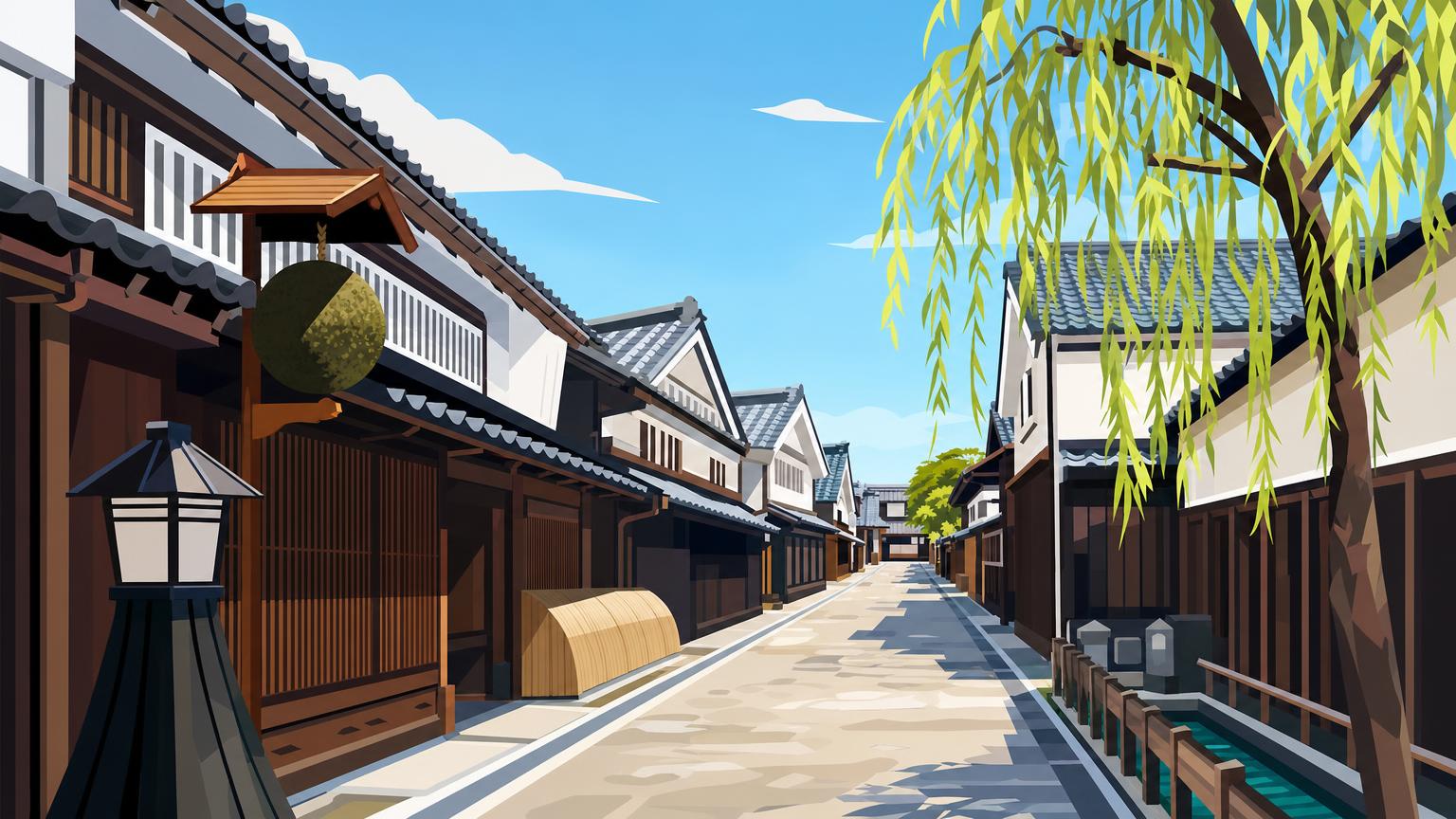
When people living in Osaka ask where they can experience “old Japan,” they often imagine that they must travel to Kyoto, Nara, or a remote mountain village. That assumption says something about modern Osaka: the city is so associated with trains, shopping arcades, concrete towers, neon signs, and fast-moving commerce that many residents forget how much older Osaka still exists just beyond the busiest routes.
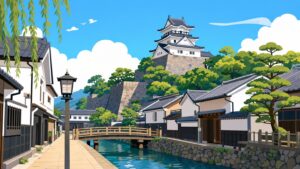
Tondabayashi Jinaimachi, in the southeastern part of Osaka Prefecture, offers a useful correction. It is not a theme park, a museum village, or a stage set designed only for visitors. It is a preserved neighborhood where streets, houses, temples, small businesses, and ordinary residential life still share the same space. The area developed around Koshoji Betsuin in the sixteenth century and later became a commercial town during the Edo period. Merchants dealing in sake, cotton, timber, oil, and agricultural products helped make it an economic center for the surrounding countryside.
For a foreign resident, the value of a weekend in Jinaimachi is not simply that the buildings look old. The deeper experience is noticing how Osaka’s commercial culture once worked at walking speed: how a house could be a shop, workplace, storage area, and family home at the same time; how roads were shaped around security and trade; how local identity depended on repeated face-to-face contact; and how “friendly” behavior in Osaka often means practical involvement rather than abstract politeness.
This is why Jinaimachi is worth understanding as part of Osaka life. You are not just looking at Edo-period architecture. You are seeing an older version of the same city mindset that still appears in today’s shopping streets, neighborhood associations, family-run restaurants, and casual conversations with shopkeepers.
Why an Edo-period merchant town matters for understanding Osaka
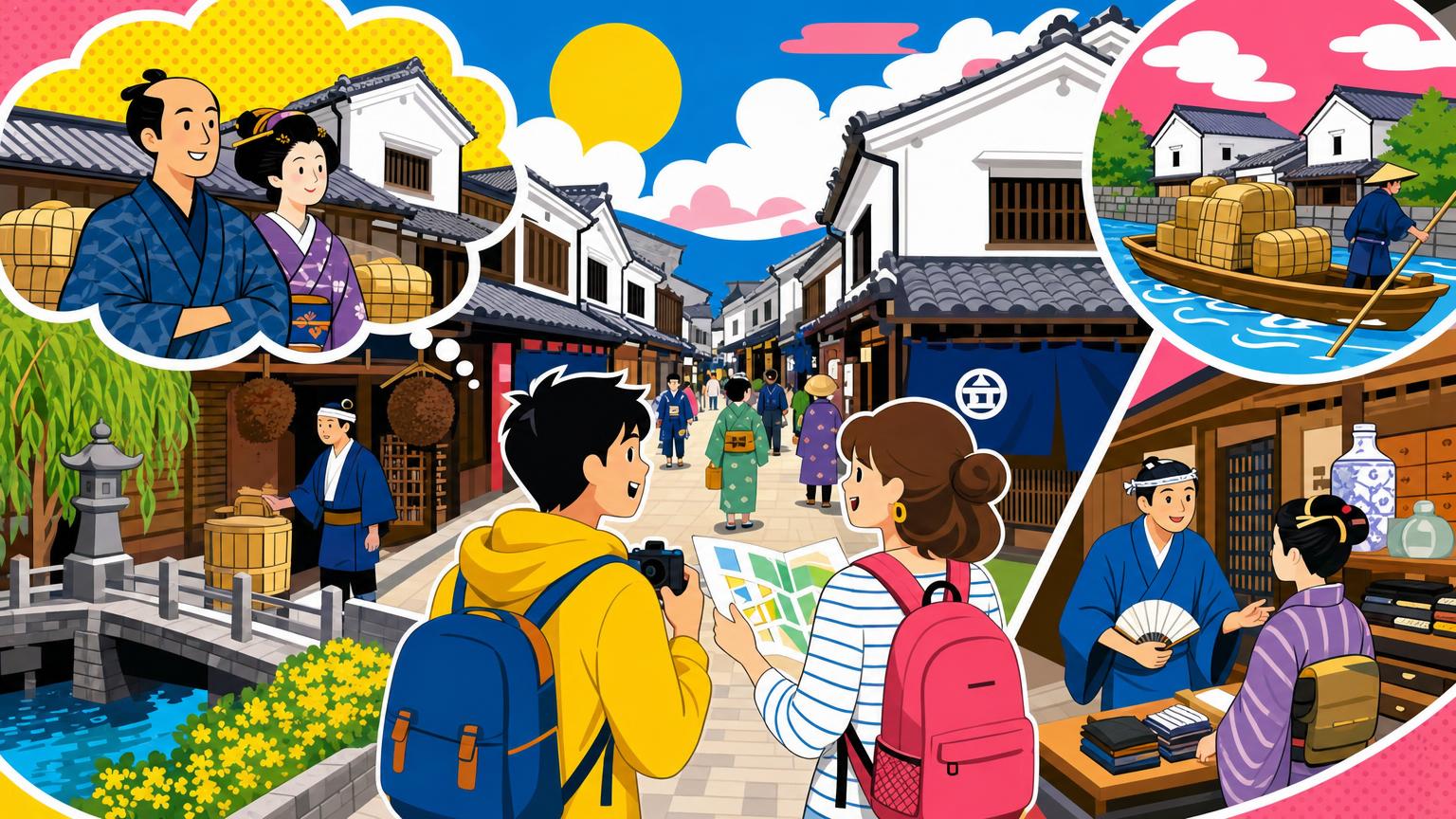
Osaka’s historical identity is often summed up by the phrase “the nation’s kitchen.” The phrase is useful, but it can make Osaka seem as though its culture developed solely around food. More accurately, Osaka became powerful because it was a place where goods, money, information, and people were constantly in motion. Rice arrived from various parts of Japan. Merchants organized its distribution. Boat routes connected the city with inland areas. Wholesale markets, warehouses, lenders, craftspeople, and transport workers supported one another.
This commercial environment encouraged a distinctive social style. Osaka people have long been associated with direct speech, quick judgment, humor, and a strong sense of value. This does not mean that everyone in Osaka is outgoing or that every conversation turns into a joke. Rather, it means that social interactions often feel more practical and negotiable than ceremonial. People may ask how much something costs, whether it is useful, how long it will take, or which option is better. A conversation can become warmer precisely because it is less formal.
Tondabayashi Jinaimachi reflects the physical background of that mindset. The town was not designed primarily as a beautiful residential district. It was shaped by religion, security, transportation, commerce, and local cooperation. During the Edo period, it became a zaigōmachi, or commercial town serving the surrounding villages. The Ishikawa River supported water transport, while the Higashi-Koya Kaido and Chihaya Kaido connected the area by land. This combination enabled local merchants to serve both nearby agricultural communities and travelers passing through the region.
The result differs from the image many foreigners have of an Edo town. You might expect a neat row of identical wooden buildings along a picturesque main road. In reality, the town feels more layered. Some houses are grand merchant residences, while others are smaller. Some buildings have been repaired or adapted. Some remain private homes, while others now contain cafés, galleries, studios, or local services. The historical townscape survives not because daily life stopped, but because daily life changed without completely erasing the older structure.
That distinction is important when comparing Osaka with Tokyo. Tokyo also has many old neighborhoods, but the capital’s scale and pressure often make historical areas feel like islands surrounded by redevelopment. In Osaka, older commercial districts frequently remain woven into everyday urban life. A narrow street, a small shrine, a family-run shop, and a modern apartment building may all exist within the same neighborhood. The contrast is not always polished, but it is often more revealing.
Reading Tondabayashi Jinaimachi as a living neighborhood
The name Jinaimachi refers to a settlement that grew around a Buddhist temple and functioned with a degree of religious and communal autonomy. Tondabayashi developed around Koshoji Betsuin in the mid-sixteenth century, before the Edo period officially began. Its defensive features included earthworks, moats, and street layouts designed to make it difficult for outsiders to see directly through the town. One example is atemage, in which connecting streets are slightly offset instead of aligned in a straight line.
To visitors from outside Japan, these details may appear to be architectural curiosities. To understand Osaka, however, it is better to view them as evidence of local problem-solving. The town was responding to real concerns involving conflict, transport, property, privacy, and the need to control movement. Traditional Japan was not solely about harmony and beauty; it also involved negotiating danger, protecting goods, and determining who could pass through particular spaces.
The preservation district encompasses a compact area, measuring roughly 400 meters from east to west and 300 meters from north to south. Within it are temples, townhouses, warehouses, gates, and other structures dating from the Edo period through the early Showa period. Tondabayashi Jinaimachi is the only district in Osaka Prefecture designated as an Important Preservation District for Groups of Traditional Buildings.
That official designation is significant, but it should not dictate how you behave there. The area is not simply an open-air exhibition. Residents still live behind many of the doors you see. A beautifully maintained wooden façade may belong to a private home, while a quiet lane may be used every day by children, older residents, delivery workers, and people returning home from the station.
This is one of the first things that foreigners sometimes misunderstand about preserved Japanese neighborhoods. A historic appearance does not mean that the area is available for unrestricted observation. Japanese visitors often grasp this intuitively because they recognize the difference between a temple, a public street, a shop, and someone’s home. Foreign residents may need to make this distinction more consciously.
A simple rule is to look carefully without behaving as though the entire neighborhood has been arranged for your camera. Avoid photographing people without permission. Do not point your camera into open entrances or windows. Keep your voice low on narrow residential streets, and do not block the road while taking pictures. Local tourism information also asks visitors to respect personal privacy and refrain from entering restricted areas without permission.
These are not merely tourist manners. They are part of learning how Osaka’s neighborhoods function. Public space in Japan is often shared among many purposes at once. A road can serve as a route to school, a delivery path, a festival venue, and a historic streetscape. Its beauty does not erase its everyday function.
The merchant house explains Osaka better than a castle does
The most useful way to explore Jinaimachi is to focus on the machiya, the traditional townhouse associated with urban commerce. A machiya typically combines a narrow frontage with considerable depth. The front may function as a shop or reception area, while the interior extends toward workspaces, storage areas, a courtyard, kitchens, and living quarters. This arrangement reflects the value of land, the need to conduct business, and the importance of separating public and private activities without placing them in entirely different buildings.
This structure helps explain an Osaka habit that continues today: the distinction between official distance and practical closeness. A shop owner may speak casually with a regular customer while still remaining careful about private matters. A restaurant may feel informal while following precise rules about seating, payment, and service. A neighborhood association may seem relaxed during conversation but still expect everyone to contribute when a festival, cleanup, or emergency drill requires cooperation.
The traditional merchant house also makes work visible. In a modern shopping mall, customers see a finished product displayed under bright lighting. In a machiya, the building itself may reveal where goods were stored, accounts were managed, visitors waited, and a family lived behind the business. Commerce was not hidden from domestic life; it was embedded within it.
That is close to the experience of many Osaka shopping streets today. A family may live above a store. A restaurant owner may know which customers have moved away, which children have started school, or which elderly neighbor needs help carrying something. The relationship is not necessarily sentimental. It is maintained through repetition. People become familiar because they encounter one another over many years.
The Former Sugiyama Family Residence is especially useful for understanding this scale. It is one of the oldest surviving buildings in Jinaimachi and is designated as an Important Cultural Property. The Sugiyama family was involved in commerce, and the residence gives visitors a sense of how a prosperous merchant household could combine a substantial street-facing presence with deeper interior spaces.
Look at the details rather than searching for a single spectacular view. Notice the tiled roofs, plastered walls, wooden latticework, heavy doors, raised thresholds, and the way the façade controls visibility. Some buildings appear open and welcoming from the street, but their interiors are not fully exposed. This balance is significant. Traditional Japanese urban life often values controlled access more than complete openness.
Foreigners sometimes interpret a closed entrance as a sign of unfriendliness. In Osaka, that can be a mistake. A shop may be open only during certain hours. A house may have a curtain, sliding door, or noren indicating that people are present without inviting passersby to enter freely. The appropriate response is usually not to move forward, but to observe the signs, wait for an invitation, or ask politely.
What Osaka people are like when the conversation becomes real
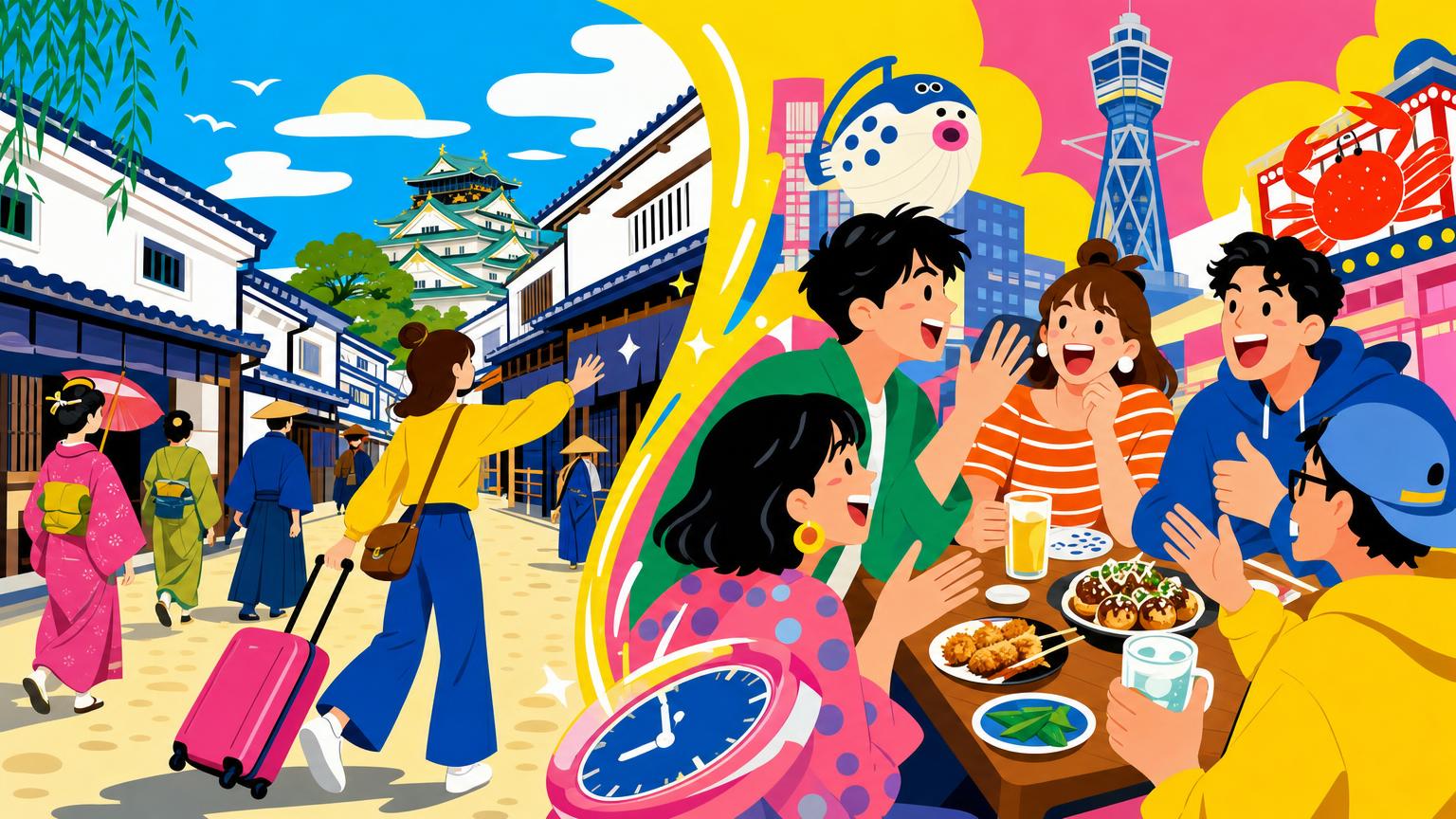
The phrase “Osaka people are friendly” is too vague to be particularly useful. A more practical explanation is that Osaka often rewards participation in conversation. People may offer advice without being asked. They may comment on your food choice, Japanese pronunciation, train route, or the weather. They may tease you lightly, or ask where you are from and then immediately connect that information to food, business, football, family, or a place they once visited.
This can feel more intimate than expected, especially for foreigners who are accustomed to having a larger personal boundary in public. It can also be misunderstood. A direct question is not automatically an invitation to share everything, and a joke is not always a sign of deep friendship. A shopkeeper’s warmth does not necessarily mean that bargaining is expected. Osaka communication often shifts quickly between distance and familiarity, but the relationship still depends on context.
Jinaimachi is a good place to observe this because its atmosphere is slower than that of central Osaka without becoming completely quiet. A café owner may explain how an old building was renovated. Someone working at an information center may point out a local business or explain a building’s history. A resident may simply nod as you pass. These moments are small, but they reveal the difference between tourist service and contact with a neighborhood.
Osaka’s directness also appears in how people evaluate experiences. A restaurant may be judged by its portion size, speed, price, atmosphere, and whether the owner treats regular customers fairly. A renovated historic building may be admired, but people may also ask whether it is comfortable, useful, and well maintained. Historical value alone does not always secure public approval.
For that reason, a preserved town should not be treated as a museum of manners. Its residents are not performing Edo-period behavior; they are making modern decisions within inherited spaces. They may use smartphones, order supplies online, commute to another city, and still live behind a centuries-old street façade.
The tension between old buildings and modern routines is part of Osaka’s character. Osaka does not always separate tradition from everyday life as sharply as visitors might expect. A traditional neighborhood may contain a modern coffee machine, a bicycle with a child seat, a convenience-store bag, and a delivery notice. These details do not diminish the historical atmosphere. Instead, they show how continuity actually works.
A weekend in Jinaimachi is about changing your speed
A weekend visit works best when you do not treat the town like a checklist. From Osaka Abenobashi, Tondabayashi Station is about thirty minutes away by Kintetsu Railway, followed by a walk to the historic district. From Shin-Osaka, the journey takes longer because you must cross the city toward the Tennoji and Osaka-Abenobashi area before continuing south; even so, the total trip remains realistic for a day or weekend outing. JNTO describes the district as approximately ten minutes on foot from Tondabayashi Station and about one hour and ten minutes by train from Shin-Osaka.
The practical lesson is that Jinaimachi is close enough for Osaka residents to visit without turning it into a major travel project. You can leave after breakfast, arrive before midday, walk at an unhurried pace, eat, and return in the afternoon. Yet psychologically, the distance feels greater than the timetable indicates. The city’s visual noise gradually fades. Roads grow narrower. There are fewer signs. You begin to notice surfaces, sounds, and pauses that central Osaka usually pushes into the background.
This change of pace is important for foreigners living in Osaka. Everyday life in the city can feel highly efficient, but it is not always peaceful. Trains run frequently, shops stay open late, and services are convenient. At the same time, urban life demands constant decisions: which station exit, which supermarket, which payment method, which recycling category, which neighborhood rule, and which degree of politeness.
In Jinaimachi, appropriate behavior is less about maximizing efficiency. You walk around a vehicle instead of assuming the road belongs to pedestrians. You wait when a doorway is crowded. You read a sign before entering. You let an older person pass. You recognize that a building is private before approaching it. These small actions make the town feel slower because they require consideration for other people.
That is one reason Osaka can feel different from Tokyo. Tokyo often teaches newcomers to become invisible: move with the crowd, avoid unnecessary interaction, and protect your personal time. Osaka also values personal boundaries, but daily life may involve more verbal exchange and informal negotiation. In Osaka, efficiency does not always mean saying less. It may mean asking a direct question, accepting a practical answer, and moving on without ceremony.
Jinaimachi gives you room to observe this difference without turning it into a competition between the cities. Tokyo is not cold, and Osaka is not automatically warm. The two cities organize public interaction in different ways. Osaka’s merchant heritage leaves more space for conversational improvisation, humor, and visible evaluation. Tokyo’s larger scale often places greater emphasis on smooth coordination and social restraint. Individuals vary greatly, but the urban atmosphere influences what feels normal.
Eating in a historic building: what the restaurant experience really tells you
Searches for Osaka’s Edo-period towns often lead quickly to restaurants housed in old buildings. That interest is understandable, but eating in a traditional structure is more meaningful when you pay attention to the relationship between the food and the space.
A renovated kominka, or traditional old house, may feature exposed beams, wooden floors, a courtyard, low lighting, sliding doors, and rooms that once served entirely different purposes. The restaurant is modern in terms of hygiene, equipment, menu design, and payment systems, but the building still shapes the experience. You may sit in a room where a merchant family once welcomed customers. You may enter through a space that once separated the public shop from the private household. You may notice that the kitchen, toilets, stairs, and seating have been adapted rather than rebuilt from scratch.
This offers a useful way to understand Japanese renovation. Preservation does not necessarily mean keeping every room frozen in its original use. A building survives because someone finds a new reason to maintain it. A café, gallery, restaurant, guesthouse, or studio can provide that reason. The question is not whether the building remains untouched, but whether the new use respects the structure, the neighbors, and the memory of the place.
In Jinaimachi, former merchant houses have been converted into cafés and small shops, while the town’s streets remain part of a lived-in neighborhood. The city’s own information describes cafés and miscellaneous-goods shops operating from machiya, and local businesses present the area as a quieter alternative to the major tourist districts.
When eating in such a restaurant, follow the same behavior you would use at a small local establishment anywhere in Osaka. Check whether reservations are required. Do not assume that a large group can walk in without placing extra pressure on the kitchen. Speak quietly if the room is small. Ask before photographing food, interiors, or other customers. If shoes must be removed, place them neatly and follow the room’s arrangement. If the menu is limited, understand that this may reflect the building’s capacity rather than poor service.
You may also encounter seating styles that are unfamiliar. A low table, tatami room, or narrow staircase can be uncomfortable for some people. It is reasonable to ask whether a chair seat is available, especially if you have mobility concerns. Japanese staff may not always volunteer every option in English, so making a simple request is often better than silently struggling.
The price may be higher than at a casual chain restaurant because you are paying for more than the ingredients. A small historic restaurant may have limited seating, a slower preparation process, repair costs, and a menu designed around seasonal availability. That does not automatically make every expensive meal worthwhile. Osaka residents are often happy to criticize poor value when the experience does not match the price. The practical approach is to judge the entire arrangement: the food, service, comfort, building, and care shown toward the neighborhood.
A café such as Kakyofugetsu, located in a machiya-style building in Jinaimachi, demonstrates this kind of contemporary use. Its offerings include coffee, homemade sweets, Japanese-style drinks, and a casual matcha experience rather than a formal tea ceremony.
The distinction between formal and casual culture is important. Foreigners sometimes assume that any matcha, tea, or traditional meal experience must follow strict ceremonial rules. In Osaka, many cultural practices are adapted into everyday hospitality. You can encounter tradition through a relaxed conversation, a seasonal dessert, or the way a building is used—not only through a formal performance.
Small shops reveal the difference between looking and belonging
A preserved merchant town cannot be understood simply by looking at its façades. Shops reveal how the neighborhood continues to function. Jinaimachi’s current businesses include cafés, galleries, craft-related stores, and small local services, while historical records show earlier commercial activity involving sake brewing, cotton, timber, oil, and related trades. The contrast between past and present is not a failure of authenticity; it is the central story.
If you enter a small shop, do not feel pressured to purchase immediately. In Japan, browsing quietly is normal. At the same time, do not treat the shop as a free exhibition space. If the owner begins explaining a product, listen or respond rather than turning away abruptly. If you are interested but cannot buy anything, a polite “thank you” is enough.
Osaka’s retail culture often depends on repeated contact. A local customer may ask about an item, compare it with something sold elsewhere, joke about the price, and return another day. The relationship may appear casual while involving years of familiarity. Foreign residents sometimes try to reproduce this style too quickly, using jokes or informal Japanese before understanding the relationship. A safer approach is to begin politely, return if you genuinely like the place, and let familiarity develop naturally.
This is also where Osaka differs from a purely tourist-oriented historic district. In a famous sightseeing area, a shop may expect visitors to arrive, take photographs, buy souvenirs, and leave. In a neighborhood like Jinaimachi, however, the shop may depend on local residents as much as on visitors. The owner may be balancing preservation, business, family obligations, and the practical limitations of a small building.
The phrase “authentic” can therefore be misleading. A business is not more authentic simply because it rejects modern life. A renovated house serving good coffee may be more honest about the present than a building staged to imitate the past. What matters is whether the place has a genuine relationship with the town rather than using history merely as decoration.
How to behave in a preserved residential area
The easiest way to avoid mistakes is to remember that Jinaimachi is a neighborhood first and a cultural destination second. The streets may be narrow, but vehicles still need to use them. Walk along one side instead of spreading across the road, move aside when a car approaches, and avoid standing in front of gates or entrances while talking.
Photography requires particular care. The lack of a visible “no photography” sign does not mean that every angle is welcome. Avoid photographing people, schoolchildren, deliveries, license plates, open windows, and private gardens. If a building is clearly a public facility or shop, check its posted rules. If you would like a portrait of a local person, ask first and accept a refusal without trying to persuade them.
Do not enter a building simply because its door is open. In Japan, an open entrance can mean several things: the business is operating, the house is being aired, staff are moving goods, or someone is temporarily away. Look for a noren, menu, sign, reception area, or staff greeting before stepping inside.
Noise matters because historic houses often have thin walls, wooden floors, and close connections between public and private spaces. A group speaking loudly can disturb residents even when the street appears empty. If you are visiting with children, explain that the town is not a playground, particularly around temples, houses, and narrow lanes.
Waste is another practical concern. Small historic areas may not have many public bins, so carry a small bag for your rubbish and keep it with you until you find an appropriate disposal point. Do not leave drink bottles on walls or beside plants. This is basic courtesy, but it also reflects a broader Osaka reality: public cleanliness depends heavily on people managing their own behavior rather than waiting for a service to solve every problem.
If you are staying overnight nearby, remember that late-night movement can be more noticeable in a quiet neighborhood than in Namba. Train stations, convenience stores, and restaurants may be less frequent than in central Osaka. Check the last train, but also consider the area’s social rhythm. A town that becomes quiet after evening is not necessarily inconvenient; it may simply operate according to a different definition of normal.
What living in Osaka teaches you through places like Jinaimachi
Foreigners deciding whether Osaka is a good place to live often wonder whether the city is friendly, affordable, convenient, or easy to enter socially. These are reasonable questions, but the answers are rarely straightforward. Osaka can be welcoming in conversation while still requiring patience with Japanese procedures. It may feel less intimidating than Tokyo while offering fewer international services in some neighborhoods. It can seem relaxed on the surface while depending on strong expectations regarding participation, timing, and consideration.
Jinaimachi makes these contradictions visible. The town appears quiet, yet it holds a deep history of trade, religion, defense, and community management. The buildings look private, but many once relied on public commerce. The atmosphere feels relaxed, but the neighborhood continues to function because people maintain boundaries and shared rules.
This is also true of daily life elsewhere in Osaka. A local shopping street may appear casual, yet shopkeepers know which cleaning tasks need to be completed, when signs should be put out, how deliveries should be managed, and who may need assistance. A neighborhood festival may seem spontaneous, but someone has arranged the permits, money, equipment, food, and cleanup. Osaka’s informality often depends on invisible organization.
That is why foreigners may misunderstand Osaka if they focus only on its humor and warmth. The city’s friendliness is not a permanent mood floating above everyday life. It often develops through practical contact. Someone tells you which train to take because they have solved similar problems many times. A restaurant owner remembers your order because you came back. A neighbor warns you about garbage collection because they expect everyone to follow the same system. A shopkeeper jokes with you because you have become a familiar customer.
The same practical intimacy can sometimes feel intrusive. People may ask about your marriage, age, nationality, work, or family. You do not have to answer in detail. A light response, a change of subject, or a polite boundary is acceptable. Osaka’s conversational directness does not remove your right to privacy. The challenge is distinguishing between a social opening, a business-related question, and genuine overstepping.
Living in Osaka also means recognizing that the city does not have one uniform personality. The atmosphere in Umeda differs from that in Tennoji. Tennoji differs from Nishinari, Nakazakicho, Sakai, and the southern suburbs. Students, older residents, office workers, foreign families, small-business owners, and commuters may share a train line without having the same social expectations.
Tondabayashi Jinaimachi fits into this broader Osaka pattern. It lies within the prefecture but outside the mental map that many newcomers form around the central city. Visiting it can challenge the assumption that Osaka ends where the high-rise skyline becomes less visible. The prefecture includes agricultural areas, historic towns, industrial districts, commuter suburbs, temple communities, and older commercial centers. Osaka is a network, not just a downtown.
A thoughtful weekend rhythm
Begin without trying to conquer the entire district. Arrive from the station, orient yourself, and let the first few minutes feel ordinary. Notice who is walking, what kinds of shops are open, whether residents are carrying groceries, and how vehicles move through the streets. The point is not to imagine that you have entered the Edo period, but to notice how the present is using the Edo-period framework.
Spend some time on Jonomon-suji, the main street associated with the historic townscape. It is known for its preserved merchant houses and for having no overhead utility wires along the street, contributing to its strong historical appearance.
Then move away from the main route. The side streets may tell you more about ordinary life than the most photographed areas. Look for differences in building scale, rooflines, entrances, repair materials, and the relationship between houses and roads. A large merchant residence expresses wealth, while a smaller building may reveal adaptation more clearly.
Visit a public historical facility or an open cultural property if one is operating, but check the current opening information rather than assuming that every building is accessible every day. Historic properties may close for maintenance, renovation, private events, or seasonal reasons. Koshoji Betsuin and other important sites may also have restrictions that change over time. Official city and local tourism sources should be considered more reliable than an old social-media post or a travel article written several years ago.
Have lunch or coffee in a traditional building if the atmosphere appeals to you, but choose a place based on your actual needs. A narrow historic restaurant may be memorable but unsuitable if you need a large table, fast service, wheelchair access, or a fully English-language menu. There is no cultural virtue in pretending that an uncomfortable arrangement is enjoyable.
Before leaving, buy something only if you genuinely want it. A small purchase from a local shop can support the neighborhood, but forced consumption is not the same as cultural respect. The better habit is to become a repeat customer when possible. Return in another season, bring a friend who will behave carefully, and tell the business what you enjoyed. This kind of relationship is more meaningful than collecting a large number of photographs.
The deeper contrast between Edo Osaka and modern Osaka
The most important thing about Jinaimachi is not that it lets you escape modern Osaka, but that it shows how modern Osaka grew from older systems that have not completely disappeared.
The town’s merchants relied on transport routes, local trust, storage, credit, and repeat customers. Modern Osaka businesses still depend on networks, although those networks now include railways, delivery apps, online reviews, convenience stores, and digital payments. The tools have changed, but the importance of connection remains.
The old town also shows that Osaka’s famous practicality is not opposed to tradition. A merchant could preserve a family building because it was useful, valuable, and tied to identity. A modern owner can renovate the same kind of structure into a café because the building still has social and economic potential. Tradition survives when it can continue to participate in daily life.
This offers a useful answer to the question, “What are Osaka people like?” Osaka people are not defined by constant friendliness or nonstop jokes. Many are shaped by a culture that values direct communication, practical judgment, repeated contact, and the ability to make old systems work under new conditions. They may respect history, but they also ask what history can do in the present.
For foreigners living in Osaka, that approach can be reassuring. You do not need to perform a perfect version of Japanese culture in order to belong. You do need to observe, participate, and adapt. Learn how your neighborhood handles rubbish, noise, deliveries, greetings, shared spaces, and seasonal events. Notice which forms of casual speech are appropriate and which are too familiar. Ask questions directly but respectfully. Return to the same places rather than constantly searching for something new.
A weekend in Tondabayashi Jinaimachi can therefore become more than an excursion. It can be a lesson in how Osaka creates and maintains closeness. The town shows you that a street is not merely scenery, a house is not simply architecture, and a shop is not only a place to buy something. Each is part of an ongoing arrangement involving work, family, privacy, memory, and community.
When you return to central Osaka, the city may look different. The shopping arcades may seem more connected to the old merchant world. A family-run restaurant may feel less like a quaint exception and more like part of a long commercial tradition. A casual conversation with a neighbor may make more sense. Even a direct question, a practical suggestion, or a teasing comment may become easier to understand.
That is the real time travel: not pretending to live in the Edo period, but recognizing the older habits that continue to move through modern Osaka.