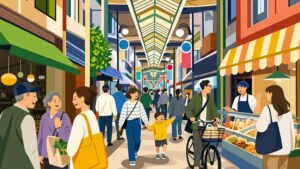
A foreign resident can live in Osaka for months without understanding one of the city’s most revealing habits: people here do not simply ask whether something is cheap. They ask whether it is worth it.
That difference matters. “Cheap” can sound negative in English, as if a product is poor, embarrassing, or bought only because there is no alternative. In Osaka, getting a good deal can be a small achievement. It can become a story, a joke, a point of pride, and sometimes even a plan for the evening meal.
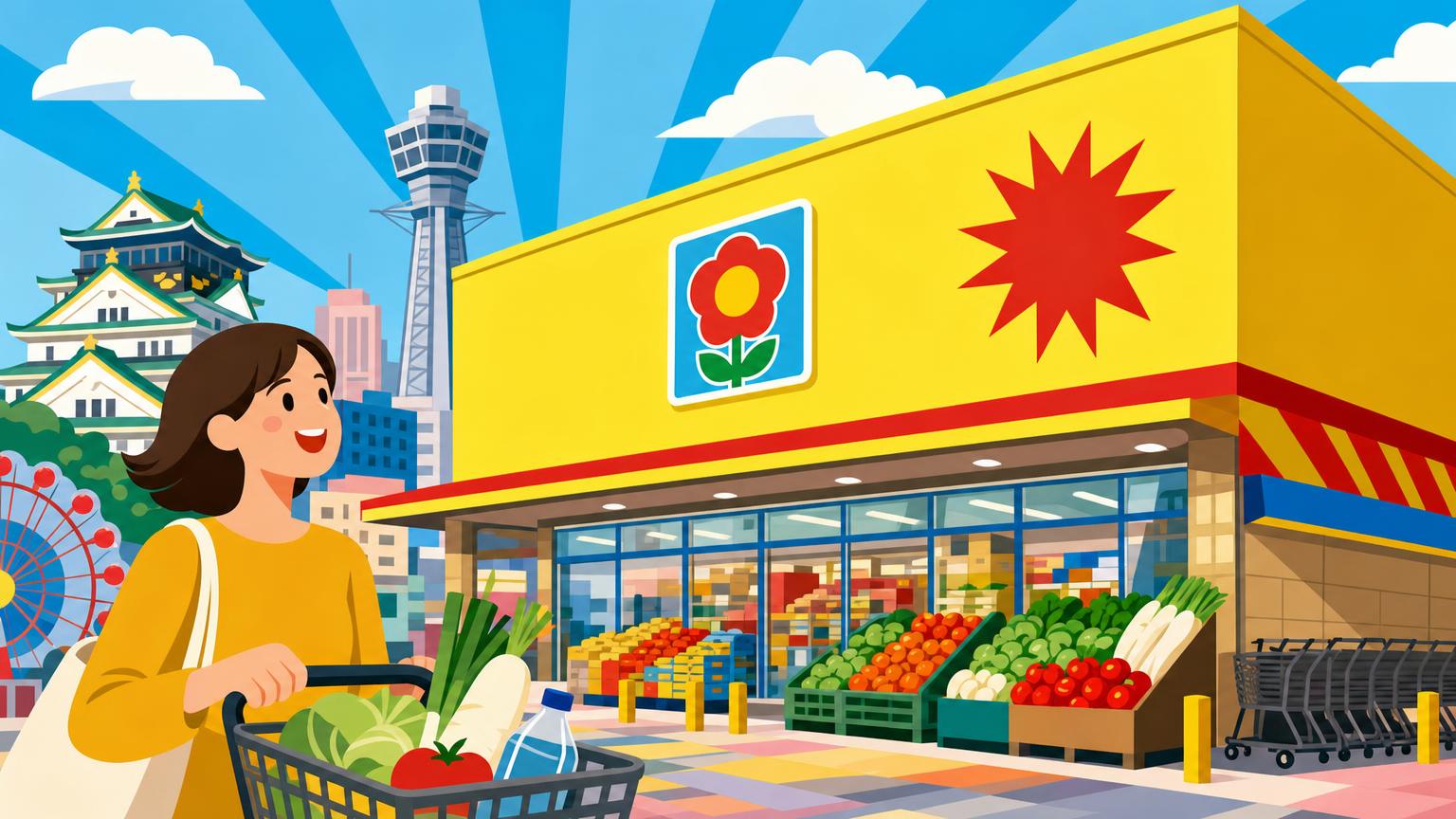
Super Tamade sits at the center of that mindset. Its yellow-and-red signs, relentless lights, loud announcements, crowded aisles, and famously low prices make it easy to treat the chain as an amusing Osaka curiosity. Foreign visitors often photograph the exterior and move on. Foreign residents eventually understand something more practical: Super Tamade is not only a strange-looking supermarket. It is a working part of Osaka’s everyday economy.
For people in their late twenties and thirties, especially renters, international students, young families, freelancers, service workers, and employees managing high housing or commuting costs, the store represents a useful question: how can daily life remain enjoyable when every expense is rising? A ¥300 lunch, a discounted bento after work, a ¥100 drink, or a bag of vegetables bought at the right time can change the shape of a monthly budget.
This does not mean every Osaka resident shops at Super Tamade, or that the chain is always the cheapest choice for every product. The point is cultural. Super Tamade makes visible an attitude that is often quieter elsewhere: money should be used carefully, but saving money does not have to be solemn. It can be competitive, entertaining, social, and even a little theatrical.
The official store information currently lists branches across Osaka City and Osaka Prefecture, with many Osaka locations operating twenty-four hours, including the Suomachi, Tenjinbashi, Ebisucho, Hanazono, Kishinosato, Tengachaya, Shin-Imamiya, and Tsurumibashi branches. Hours still vary by location, so checking the individual branch before visiting remains sensible.
What Is Super Tamade Really Telling You About Osaka?
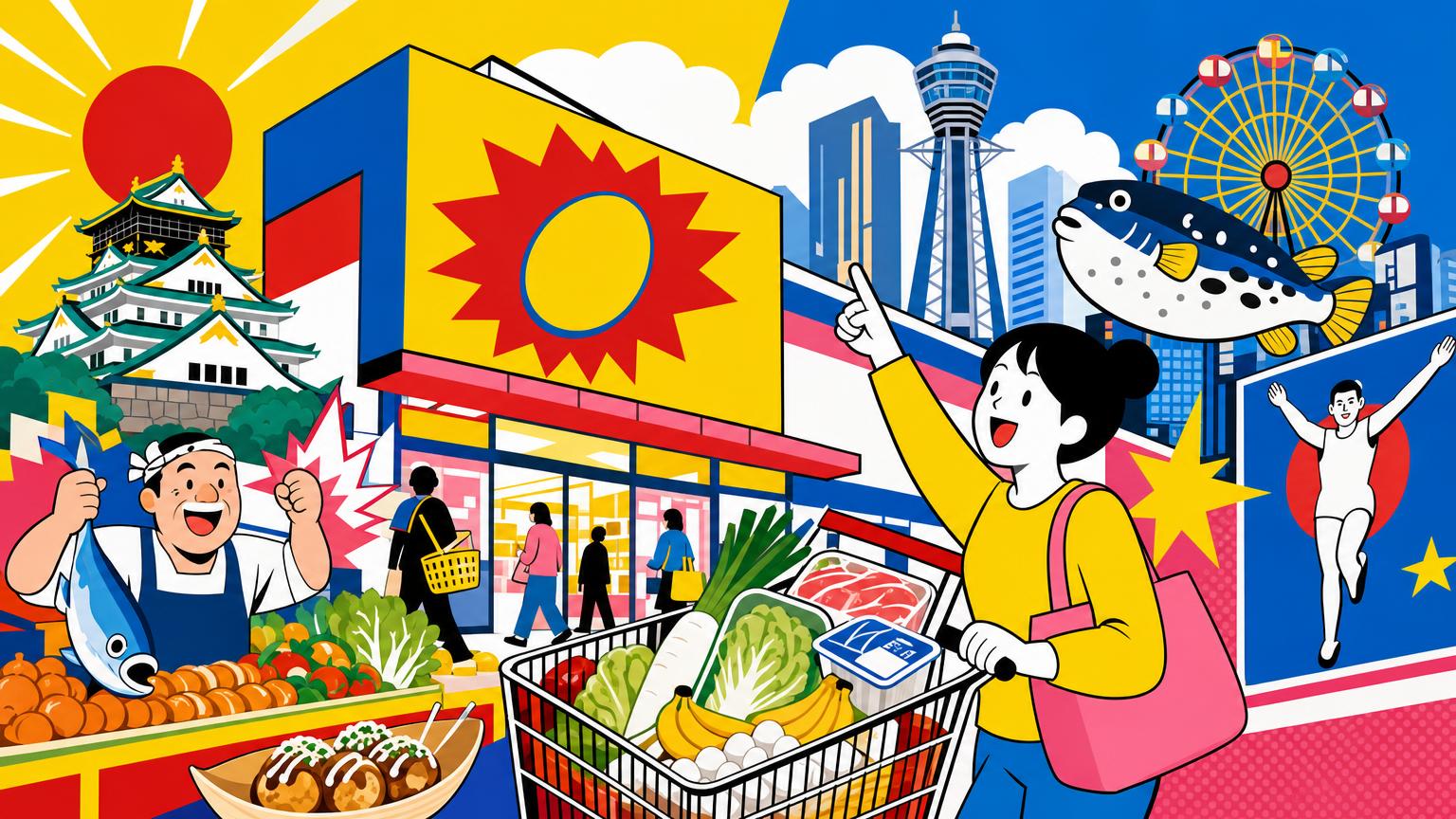
Super Tamade is a discount supermarket chain closely associated with Osaka’s southern and working-class neighborhoods. It sells the everyday items needed to run a household: rice, bread, eggs, tofu, vegetables, meat, fish, frozen foods, cleaning supplies, drinks, snacks, prepared meals, and alcohol.
The merchandise is not the only message. The store’s entire design makes it clear that customers should notice the prices immediately. Yellow signs compete with red lettering, while promotional posters cover the walls. Products may be stacked high, placed in temporary bins, or surrounded by handwritten notices. The building can look more like a pachinko hall, an old-fashioned discount store, or a small commercial theater than a quiet, modern supermarket.
That visual intensity reflects a distinct Osaka commercial tradition. The store is not trying to whisper, “We offer carefully curated quality.” It is shouting, “You are not going to pay more than necessary here.”
For a foreign resident, the first mistake is assuming that the noise is accidental. It is not. The bright colors and crowded signs create a sense of urgency. They turn shopping into a search. You are not simply collecting groceries; you are looking for the deal that makes the trip feel worthwhile.
Why the Neon Looks Like a Pachinko Parlor
The neon exterior often prompts the same reaction from newcomers: “Is this really a supermarket?” That response is understandable. Many supermarkets in Japan use calm signage, clean architectural lines, soft lighting, and carefully arranged displays. Super Tamade uses a different visual vocabulary.
Its lights are loud because the price is loud. The store wants to be visible from the street, especially in neighborhoods where people walk, cycle, or pass by on their way home. The building becomes a landmark. Someone may not say, “Let’s go to the discount supermarket near the station.” Instead, they may say, in effect, “Let’s go to the bright Tamade.”
The comparison with pachinko is also culturally useful. Pachinko parlors use lights, sound, repetition, and visual stimulation to create a sense of possibility. Super Tamade borrows some of that atmosphere and redirects it toward household spending. Rather than hoping for a lucky machine, shoppers hope to find discounted vegetables, a cheap bento, a special drink deal, or a one-yen promotion.
The experience is not elegant. It is intentionally direct. In a city where many services are designed to be quiet, polite, and visually restrained, Super Tamade makes an aggressively obvious promise: the store is here to help customers spend less.
Osaka’s Commercial Personality: Direct, Playful, and Price-Aware
Osaka’s reputation for humor and direct speech is often reduced to the vague phrase “Osaka people are friendly.” That phrase does not explain much. A more useful description is that many Osaka interactions leave room for practical negotiation, teasing, emotional reactions, and open evaluation.
People may discuss whether a restaurant was worth the price. They may compare supermarket flyers, complain about a train fare, praise a cheap lunch, or laugh at a shop that charges too much for something available elsewhere. Asking “How much?” is not always considered rude. It can simply be part of understanding the situation.
Super Tamade fits this style because its value proposition is impossible to overlook. It does not conceal the discount behind a sophisticated brand story. Instead, it turns price into a public performance.
This is one reason the chain feels more culturally Osaka than merely “a cheap supermarket.” It transforms frugality into a personality. A customer who finds a good deal can announce it. A coworker can ask where the cheap eggs came from. A housemate can return with a bag full of discounted side dishes and explain the entire strategy.
Saving money becomes less like private self-denial and more like public competence.
Osaka Frugality Is Not the Same as Poverty
Foreign residents sometimes misunderstand the relationship between Super Tamade and lower-income neighborhoods. They see the extremely low prices, older buildings, inexpensive prepared food, and loud atmosphere, and then assume the store is a symbol of deprivation.
That interpretation is incomplete. Super Tamade is certainly important for people who need to manage their spending. Osaka, like every large Japanese city, includes households dealing with low wages, unstable employment, rising food costs, childcare expenses, elderly care, and expensive housing. A discount supermarket can provide genuine economic support.
However, bargain shopping is not limited to people in crisis. Students shop there. Office workers shop there. Families shop there. Foreign residents shop there because they are learning how to live on a Japanese salary, scholarship, or contract. Someone with a comfortable income may still prefer a cheap bento if they are saving for a move, paying school fees, or sending money abroad.
Osaka’s cost-consciousness often includes an element of pride. A person who spends less without feeling deprived may be seen as clever. The achievement is not simply owning more; it is avoiding unnecessary waste.
The Osaka Idea of “Good Value”
A useful Japanese word in this context is kosupa, short for cost performance. It is often used to describe food, accommodation, electronics, services, and everyday purchases. A product with good kosupa provides enough pleasure, usefulness, quantity, or convenience for the money paid.
Super Tamade takes this concept to an extreme. The store encourages a practical calculation:
- How much food can I get for ¥1,000?
- Can this prepared meal replace cooking tonight?
- Is this drink cheaper than buying one at a convenience store?
- Can I purchase enough ingredients for several meals?
- Is the discount worth changing my shopping time?
- Does the lower price make up for a less comfortable shopping environment?
The answer is not always yes, and that is important. Cost-conscious life in Osaka is not a blind worship of the lowest price. It involves weighing trade-offs.
A young resident may buy vegetables and rice at Super Tamade but purchase specialty cheese at another supermarket. They may choose a cheap bento on a work night, then spend more on ramen or yakiniku with friends over the weekend. They may dislike the crowded aisles but continue returning because it makes the monthly budget work better.
The culture is not “always buy the cheapest.” It is “know when paying more is unnecessary.”
Why This Feels Different from Tokyo
Tokyo has plenty of discount supermarkets, affordable restaurants, and bargain-minded residents. The difference is not that people in Tokyo do not care about money. Rather, it is how openly and playfully the conversation about value appears in Osaka.
In Tokyo, price-consciousness often feels like a private optimization problem. People compare rent, commute time, neighborhood convenience, and salary. The city’s scale can make consumption feel segmented: luxury department stores, high-end convenience, stylish neighborhood shops, discount chains, and online delivery all exist side by side.
Osaka has these contrasts as well, but the language of value is often more visible in everyday interactions. A cheap meal can be praised enthusiastically. A good bargain can become a joke. A shop’s bold pricing can become part of its identity. The boundary between commerce and entertainment is thinner.
This does not mean Osaka is less sophisticated. It means the city is often more willing to display the mechanics of buying and selling. A deal is not embarrassing. A flashy sign is not automatically considered vulgar. A low price can be the main attraction rather than a detail concealed behind design.
For foreign residents comparing Osaka with Tokyo, this is one of the everyday differences they may notice before they can explain it. Osaka can seem less concerned with appearing expensive and more focused on delivering something tangible for the money.
What People Actually Buy at Super Tamade
The most useful way to understand Super Tamade is not by staring at the neon. It is by noticing what ends up in people’s baskets.
A first-time foreign resident may expect unusual products or novelty items, but the reality is more ordinary. People come for practical food and household supplies. The cultural meaning appears through repetition: the same basic items purchased by people trying to make daily life affordable.
Prices vary by branch, promotion, season, brand, and stock. Treat the following figures as realistic budget ranges rather than permanent promises.
Bento Boxes and Ready-Made Meals
Prepared food is one of Super Tamade’s strongest attractions for busy residents. Depending on the branch and promotion, basic bento boxes may start at around ¥200 to ¥300, while larger or more substantial meals cost more. Side dishes such as croquettes, fried chicken, tempura, salads, noodles, rice dishes, and grilled items can also be inexpensive compared with restaurant meals or convenience-store purchases.
For a foreign resident working long hours, the appeal is clear. You can finish work, stop by the store, and buy dinner without cooking, washing dishes, or paying restaurant prices. A bento and drink may cost less than a single café sandwich. A discounted bento later in the day can lower the total even further.
The selection varies considerably. One branch may have an extensive prepared-food section, while another may feel more limited. The store’s low-price reputation does not mean every item will be equally appealing. Some meals are designed for quantity and convenience rather than delicate presentation.
That is part of the honest calculation. If you want a carefully balanced meal with premium ingredients, Super Tamade may not be your first choice. If you want something filling after a late shift, however, it can be extremely useful.
Drinks, Snacks, and Breakfast Food
Drinks are another reason young residents return. Bottled tea, soft drinks, coffee, energy drinks, alcohol, and water may be priced below convenience-store levels, although the exact price depends on the brand and promotion. A budget-conscious resident can stock the refrigerator for the week without treating every drink as a special expense.
Breakfast can be put together quickly from bread, bananas, yogurt, eggs, milk, instant noodles, rice balls, cereal, or prepared items. Some branches are open around the clock, making Super Tamade practical for people whose schedules do not match the traditional shopping day. Night-shift workers, restaurant staff, hospital employees, students, and people arriving home after the last comfortable dinner hour can still find food.
The twenty-four-hour model also changes the rhythm of a neighborhood. The supermarket is not only a daytime destination for families; it becomes part of the city’s late-night infrastructure. Osaka does not fully sleep, but not every resident is looking for nightlife. Sometimes people simply need eggs at midnight.
Basic Ingredients for a Small Apartment
Foreign residents setting up their first apartment often discover that the cost of small purchases adds up quickly. Rice, cooking oil, soy sauce, tofu, vegetables, frozen food, meat, eggs, and seasonings can quietly consume a significant part of a monthly budget.
Super Tamade is useful because it allows residents to buy practical quantities without always paying premium prices. The store can support several types of cooking:
- Simple rice bowls with eggs, vegetables, and meat
- Quick stir-fries made with discounted produce
- Hot pot meals shared with housemates
- Noodles with tofu, vegetables, and prepared toppings
- Breakfasts based on bread, fruit, yogurt, and coffee
- Packed lunches assembled from leftovers and inexpensive side dishes
The key is not to assume that every product is cheaper than every competitor. Compare unit prices when possible. A larger package may be cheaper per gram but wasteful if you live alone. A cheap vegetable is not a bargain if it spoils before you can cook it. Super Tamade rewards residents who shop with a plan rather than simply filling a basket because the prices look exciting.
The One-Yen Sale and the Osaka Love of the Deal
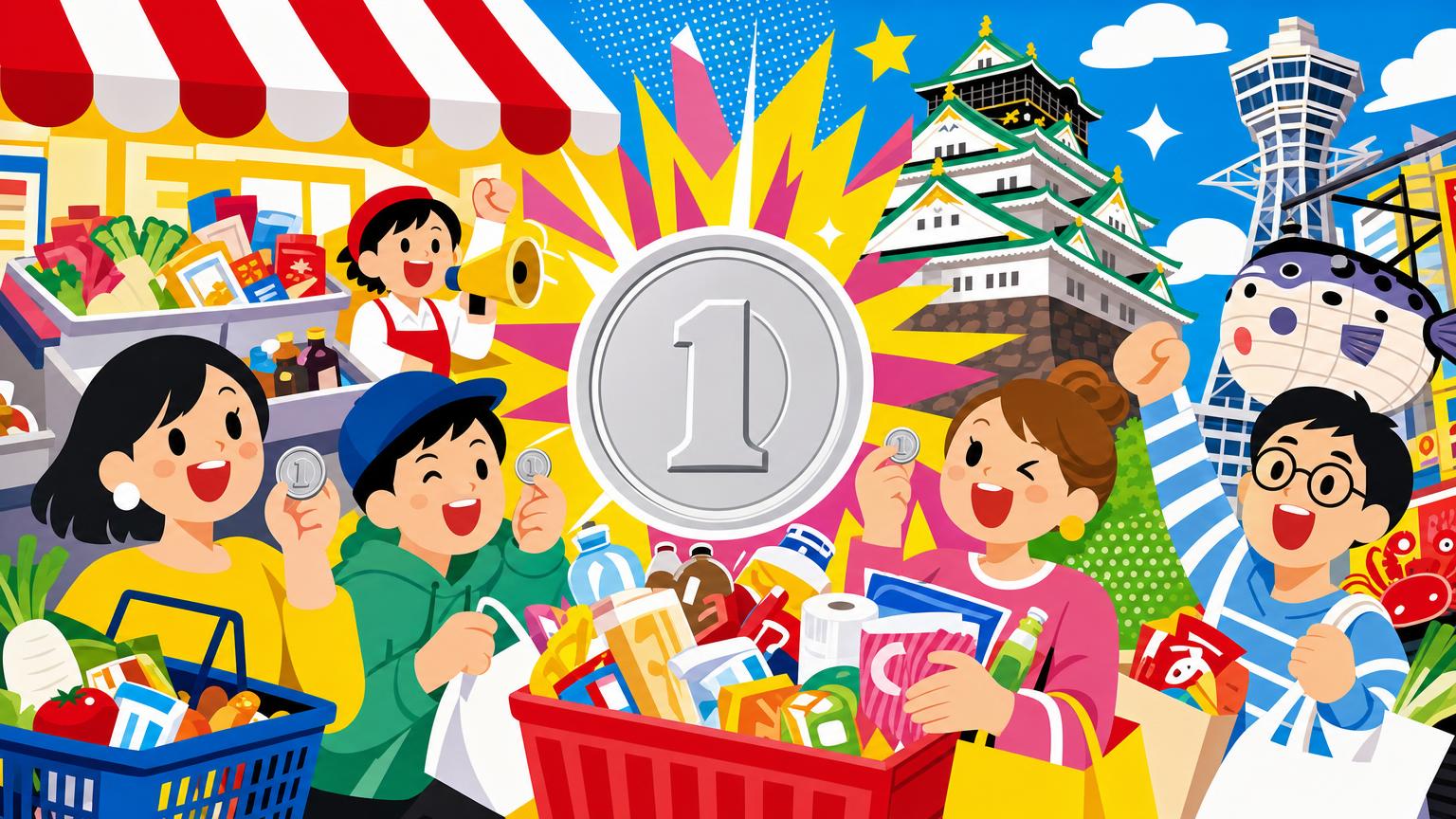
The famous one-yen sale is one of the clearest examples of Super Tamade turning shopping into a game. Promotional conditions may change, so residents should carefully read the current sign. Historically, the promotion has involved offering a designated item for ¥1 when the customer meets a minimum purchase requirement, commonly around ¥1,000. The exact eligible product, dates, purchase limits, and conditions should never be assumed based on an old online post.
The financial saving may be small, but the psychological effect is greater.
A customer does not simply buy a product. The customer qualifies for a reward. The purchase becomes a small challenge: reach the threshold, select the correct item, understand the conditions, and complete the transaction. The one-yen product becomes a trophy.
Why a One-Yen Item Matters
From a purely financial standpoint, saving ¥99 or ¥199 on a single item may not transform a household budget. However, everyday life is shaped by small decisions. If someone shops several times a week, the repeated pleasure of finding value can influence where they live, how they eat, and which store becomes part of their routine.
The one-yen sale also creates a shared cultural reference. Even people who have never met can understand the joke. Someone says they bought eggs, noodles, a drink, or another promoted item for one yen, and the conversation immediately gains energy.
This is very Osaka: the deal is practical, but the reaction is emotional. The saving becomes part of the entertainment.
Read the Conditions Before You Build Your Basket
Foreign residents often see the large “¥1” sign and assume they can purchase the item for one yen without making any other purchase. Usually, that is not how the promotion works. Conditions may include a minimum total, a specific date, a per-customer limit, or a requirement to buy other products.
Look for phrases such as:
- 「お一人様一点限り」 meaning one item per person
- 「税込」 meaning tax included
- 「税抜」 meaning tax excluded
- 「○○円以上お買い上げの方」 meaning customers who spend at least a specified amount
- 「数量限定」 meaning limited quantity
- 「なくなり次第終了」 meaning available only while supplies last
If you are unsure, ask a staff member before putting the product in your basket. A simple “Is this one yen if I spend one thousand yen?” along with the sign is usually enough. You do not need advanced Japanese; clear numbers and gestures can resolve much of the confusion.
The Store as a Local Communication Style
Super Tamade teaches foreign residents something about how Osaka communicates. The store does not assume customers will be drawn in by subtlety. It presents information in large letters, repeats the message, and makes the price impossible to miss.
This can feel chaotic to someone accustomed to Western supermarkets with wide aisles, restrained branding, and standardized signs. It can also feel chaotic to someone who has experienced Japanese retail only through polished department stores or convenience stores.
Yet there is an internal logic. Promotions are designed to attract attention. Popular items may sell quickly. Displays may change throughout the day. Customers are expected to look, compare, listen, and respond.
Loudness Does Not Necessarily Mean Disorder
The bright lights and crowded signs can make the store seem poorly managed. That is not always a fair conclusion. A low-price supermarket may prioritize turnover, stock movement, and promotional visibility over spacious design.
The store is communicating a different set of priorities:
- Keep prices visible
- Move products quickly
- Use available space efficiently
- Make promotions feel urgent
- Serve customers at practical hours
- Avoid spending too much on atmosphere
In a premium supermarket, empty space can suggest quality. At Super Tamade, empty space may represent missed selling opportunities. A stack of products can signal that the store is prepared to serve many people at a low margin.
A Place Where Price Becomes Conversation
In some parts of Japan, discussing money openly can feel uncomfortable. Osaka is not free from that discomfort, but everyday commercial conversations often feel more relaxed. People may comment on the price of vegetables, compare supermarkets, or tell you that a meal was a good deal.
Foreign residents sometimes mistake this for stinginess. It is more accurate to view it as practical attentiveness. Osaka people may be generous with food, humor, advice, and hospitality while still keeping a close eye on the bill.
The combination matters. Cost-consciousness does not automatically mean coldness. Someone may insist that you take extra food home and then complain loudly about how expensive the ingredients have become. Someone may buy the cheapest tofu and spend freely on a family gathering. The budget is managed according to meaning, not price alone.
Where Super Tamade Fits into Osaka’s Neighborhood Geography
Super Tamade is especially associated with southern Osaka and neighborhoods where everyday shopping remains closely tied to local residents. Some branches are located near central districts, but the chain’s cultural role becomes more apparent away from the polished commercial centers.
The official store list currently includes branches in areas such as Nishinari, Naniwa, Chuo, Kita, Ikuno, Higashiyodogawa, Hirano, Higashisumiyoshi, and other parts of Osaka. Branch conditions vary. The official list provides current addresses and opening hours, including many twenty-four-hour locations.
Suomachi and the Shimanouchi Area
The Suomachi branch is located at 1-12-10 Shimanouchi in Chuo Ward and is listed on the official store page as being open twenty-four hours. It is convenient for residents living around Shinsaibashi, Nagahoribashi, Shimanouchi, and nearby central neighborhoods. According to its official listing, the branch accepts several cashless services and major credit cards.
For foreign residents, this branch illustrates how Osaka’s low-cost culture exists close to areas associated with nightlife, restaurants, offices, and international residents. You do not have to travel to a distant suburb to experience the discount-supermarket mindset. It can be found just a short walk from expensive apartments, fashionable cafés, and busy entertainment streets.
That contrast is significant. Osaka is not divided into a simple cheap south and expensive central city. Different economic worlds overlap. A worker might dine at a high-priced restaurant one night and shop at Super Tamade the next morning. A foreign resident may pay central-city rent while relying on a discount supermarket to keep food costs manageable.
Nippombashi: Check the Current Situation Carefully
Many older articles and listings refer to a Super Tamade Nippombashi branch near the Kuromon and Den Den Town area. However, current official store information does not list Nippombashi among the active Osaka City branches, while some third-party listings describe a former Nippombashi location as being on hold or uncertain. Foreign residents should not depend on an outdated blog post when planning a regular shopping route.
This is a small but useful lesson about living in Osaka. Online information can remain available long after a store changes, closes, relocates, or adjusts its hours. Japanese addresses and neighborhood names may also be romanized in several different ways. Search for the official branch page, check its date, and confirm the current store list before making a special trip.
The point is not whether one particular branch is convenient. Rather, local life depends on accurate, everyday information: which supermarket is open, which station exit is closest, whether cards are accepted, and whether the cheap promotion is running that day.
Practical Shopping Habits for Foreign Residents
Super Tamade becomes much easier once you stop expecting it to function like a quiet convenience store. The store rewards preparation, flexibility, and a willingness to ask straightforward questions.
Carry Cash Even When Cards Are Accepted
The official store information lists cashless options such as PayPay, Merpay, Rakuten Pay, au PAY, Alipay, and d払い, along with major credit-card brands for the Suomachi branch. Since the exact payment setup may vary by location or register, carrying some Japanese cash is still a sensible choice.
Cash is especially useful when buying promotional items, shopping at a small branch, dealing with a crowded register, or still learning how Japanese payment systems work. A few hundred-yen coins can also help when using the one-yen promotion and other small-value deals.
Do not assume that every foreign-issued card will work without problems. A card may be accepted in principle but declined because of network issues, authentication requirements, or a temporary register malfunction. Carrying cash does not mean the store is old-fashioned; it is simply a practical part of everyday life in Japan.
Bring Your Own Bag
Japanese supermarkets commonly charge for shopping bags, and Super Tamade is no exception when it comes to the practical value of bringing your own reusable bag. Keep one folded in your backpack, work bag, bicycle basket, or near your apartment entrance.
A sturdy reusable bag is preferable to a thin convenience-store bag because discounted shopping can become heavier than expected. Rice, drinks, bottles, vegetables, and household products can quickly add weight.
During summer, you may also want separate bags for chilled or frozen products. Osaka’s heat and humidity can be intense, and the trip home matters. Buying food cheaply is less helpful if your ice cream melts before you get back to your apartment.
Learn a Few Words on the Price Signs
You do not need to read every sign to shop successfully, but knowing a few words can make the experience less stressful:
- 激安 means extremely cheap
- 特売 means special sale
- 半額 means half price
- 値引 means price reduction
- 惣菜 means prepared side dishes
- 弁当 means boxed meal
- 生鮮 means fresh food such as produce, meat, and fish
- 冷凍 means frozen
- 本日限り means today only
- お買い得 means good value or a bargain
The numbers are often the most important information. Japanese supermarket prices usually show tax-inclusive and tax-exclusive amounts in different ways, so check whether the larger price includes consumption tax. If the sign is unclear, compare the final register total with what you expected rather than assuming that every large number is the amount you will pay.
Keep Your Basket Flexible
The most efficient Super Tamade shopper does not always stick to a fixed list. Promotions change, vegetables may be cheaper than expected, prepared meals may be marked down, and products you planned to buy may be sold out.
Plan your shopping by category rather than by exact brand:
- One main carbohydrate such as rice, bread, or noodles
- One protein such as eggs, tofu, meat, fish, or beans
- Two vegetables or fruits
- One easy meal for a busy day
- One snack or drink if the price is genuinely good
This approach prevents the bargain from controlling your entire basket. The one-yen item should not convince you to buy ¥1,500 worth of food you did not need.
Visit at Times That Match Your Routine
Many branches operate twenty-four hours, but the best shopping time depends on what you are looking for. Morning can be useful for fresh stock and a quieter atmosphere. Late afternoon may bring new prepared foods for the evening rush. Later at night, ready-made meals may receive markdown stickers, although the selection becomes less predictable.
There is no universal “best time” for every branch. Staff schedules, delivery times, customer demand, and promotional events vary. Observe the pattern at your local store for two or three weeks. Daily life in Osaka often rewards observation more than general advice.
Food Quality, Hygiene, and the Rumors Around Cheap Supermarkets
Foreign residents may hear jokes or rumors about the quality of Super Tamade food. The honest answer is neither “everything is perfect” nor “cheap means unsafe.” The store sells commercially prepared and packaged food under Japan’s food-safety system, but its low prices require realistic expectations.
Check the packaging, dates, temperature, seals, and appearance as you would at any supermarket. Buy chilled and frozen products toward the end of your shopping trip, take them home promptly, and store them properly. If an item appears damaged or has an unclear label, choose another one or ask a staff member.
Prepared food can be perfectly useful and safe while still being basic. A low-cost bento may contain more rice and fewer premium ingredients. Fried food may be best when it is fresh and hot. A discounted sushi tray late in the evening may not meet the quality you would expect from a specialty restaurant. None of this means the entire store is unsanitary. It simply means the price reflects the product, presentation, ingredients, and sales strategy.
How Osaka Residents Judge Cheap Food
The local question is usually not “Is this luxury quality?” but “Is this good enough for the price?”
That is a different standard. A ¥250 bento can be excellent value if it fills you up after work. A ¥100 snack can be perfect with beer at home. A cheap bag of vegetables can become dinner with a little cooking. The product does not need to compete with a department-store food hall to be successful.
Foreign residents sometimes expect one absolute answer: good or bad, safe or unsafe, authentic or inauthentic. Everyday shopping in Osaka is more situational. The same bento can be a smart purchase on a Tuesday night and a poor choice for a special celebration.
What Super Tamade Says About Housing and Work in Osaka
Super Tamade also reflects the realities of urban life. The people who shop there do not represent an abstract “local culture”; they are residents managing rent, commuting, irregular schedules, family responsibilities, and the costs of living independently.
For foreign residents between twenty-five and thirty-five, several patterns are common. You may be living alone for the first time, sharing an apartment, working on a fixed-term contract, or studying while working part-time. You may be earning in yen while paying expenses in another currency, or trying to save for a move, a visa process, a wedding, a business, or a trip home.
A supermarket that offers an inexpensive dinner at midnight is not a cultural decoration. It is infrastructure.
The Difference Between Restaurant Culture and Home Budgeting
Osaka has a strong food culture, but daily life is not one long restaurant visit. Residents may enjoy takoyaki, okonomiyaki, udon, ramen, izakaya food, and family restaurants while still cooking cheaply or buying prepared food for home.
Super Tamade occupies a space between cooking and eating out. A prepared bento offers convenience without the full cost of restaurant service. Ingredients make simple home cooking possible without the time commitment of elaborate recipes. Side dishes can be combined with rice and miso soup, while an inexpensive drink can turn an ordinary apartment dinner into a small personal break.
This middle ground is especially valuable for foreign residents who have not yet developed a Japanese kitchen routine. You can use the store as a learning space: start with prepared food, take note of the ingredients, and gradually purchase the items needed to recreate simple meals.
Irregular Work Creates Irregular Shopping
The image of a household shopping every morning is not realistic for many modern residents. Osaka’s service economy includes restaurants, hotels, retail, delivery work, entertainment, health care, factories, logistics, and night work, with people finishing at different times.
Twenty-four-hour supermarkets recognize this rhythm. A late-night shopping trip may be practical rather than dramatic. The customer could be buying breakfast before a morning shift, a meal after closing a restaurant, or groceries after caring for a family member.
The brightly lit store at midnight can therefore feel less like an attraction and more like a reliable neighbor.
What Foreign Residents Often Misunderstand About Osaka People
Super Tamade helps correct several common misconceptions about Osaka.
“Osaka People Are Cheap”
This is an oversimplification. Many Osaka residents are careful with low-value spending so they can spend more freely on food, family, entertainment, hobbies, or social activities. They may turn down an expensive coffee but happily pay for a good meal with friends.
The priority is not to minimize spending everywhere, but to maximize satisfaction where it matters.
“Cheap Means Embarrassing”
In some cultures, shopping at a discount supermarket can suggest financial difficulty. In Osaka, the social meaning is more flexible. Someone may mention a bargain because it demonstrates competence. The story is not always “I could not afford anything else.” It can also be “I found a way to achieve the same practical result for less.”
There is still stigma around poverty, as there is everywhere. Do not romanticize hardship, but do not assume that all bargain shopping is shameful either.
“Friendly Means Everyone Wants a Long Conversation”
Osaka’s everyday warmth is often practical. Someone may help you find an item, warn you about a confusing promotion, joke about the price, or tell you which product is better. That does not mean they want to become your close friend or speak slowly in English for twenty minutes.
The interaction may be brief, energetic, and useful. That is still a form of friendliness.
“The Chaos Means Nobody Cares”
A crowded display or loud announcement can seem careless to foreign residents accustomed to orderly retail design. In Osaka, a busier commercial environment may reflect a focus on turnover and affordability rather than visual calm.
You can dislike the style while still understanding its function. The store is built around a different idea of comfort: low prices and accessibility may matter more than a quiet space.
“Osaka Is Just a Cheaper Tokyo”
Osaka is often more affordable than central Tokyo in terms of rent and daily expenses, but the difference is not purely financial. The cities have different relationships with commerce, conversation, neighborhoods, and public personality.
Super Tamade is a good example. Its business model combines affordability, humor, spectacle, and neighborhood familiarity. It is not simply a smaller version of a Tokyo discount chain.
How to Use Super Tamade Without Letting It Control Your Budget
The best approach is to treat the store as just one option among several. Compare prices with other supermarkets, drugstores, farmers’ markets, convenience stores, and online grocery services. The lowest visible price is not always the lowest overall cost once waste, travel, or impulse purchases are considered.
Build a Small Personal Price Memory
After a few shopping trips, try to remember the approximate prices of products you buy regularly:
- Rice per kilogram
- Eggs per pack
- Milk per liter
- Bananas per bunch
- Tofu per pack
- Chicken per 100 grams
- Bottled water per liter
- Bread per loaf
- A basic bento
- Coffee or tea per bottle
You do not need a spreadsheet unless you find one helpful. The goal is to recognize a genuine bargain instead of reacting to every red sign.
Separate Necessities from Entertainment
One-yen sales, bright displays, and unexpected prices can encourage impulse buying. Set aside a small “fun” budget. Once you have used it, return your focus to necessities.
This is especially important for people living alone. A single person can accumulate snacks, drinks, sauces, frozen foods, and discounted prepared meals faster than they can consume them. Even inexpensive food becomes costly if it is thrown away.
Use Discount Food Quickly
Markdown stickers are useful, but they are not a reason to ignore proper storage. Check the date and plan when you will eat the item. If you buy a discounted bento on the way home, eat it that night. If you buy meat, freeze it promptly if necessary. If you purchase vegetables at a very low price, decide which meal they will be used for.
The strongest bargain shopper is not the person with the fullest basket, but the person who turns their purchases into meals.
Is Super Tamade a Good Fit for Foreign Residents?
That depends on your priorities.
Super Tamade may be a good fit if you:
- Need to keep food costs under control
- Work irregular hours
- Live near a branch that is open twenty-four hours
- Enjoy cooking simple meals
- Like comparing prices
- Do not mind crowded or visually intense stores
- Want to experience a more ordinary side of Osaka
- Prefer practical value over polished presentation
It may frustrate you if you:
- Want a calm, spacious shopping environment
- Need a highly predictable selection
- Prefer premium or specialty ingredients
- Find Japanese price signs difficult to read
- Expect every branch to accept the same payment methods
- Dislike shopping without a fixed layout
Neither response is wrong. Osaka does not require you to love every local habit. Understanding the store matters more than performing enthusiasm for it.
Why Super Tamade Matters to the Meaning of “Living in Osaka”
Living in Osaka is not only about finding an apartment near a station, learning the train system, or visiting famous neighborhoods. It is also about discovering how the city makes ordinary life possible.
You learn this through rent comparisons, bicycle routes, neighborhood clinics, local shopping streets, apartment rules, work schedules, and the question of where to buy dinner when you are tired. You learn it when a small price difference changes your weekly plans, or when a neighbor recommends a store not because it is fashionable, but because the vegetables are cheap on a certain day.
Super Tamade makes these practical calculations visible. It reveals a city that can be exuberant without being luxurious, social without being formal, and cost-conscious without treating pleasure as unnecessary.
The chain’s neon lights are memorable, but its deeper lesson is quieter. Osaka residents often want life to offer something real for the money: food that fills you, a service that works, a neighborhood that feels usable, and a laugh along the way.
That is why the store can look chaotic while still feeling dependable. It is not selling an idealized lifestyle; it is serving the imperfect one that people actually have.
For a foreign resident trying to understand what Osaka people are like, start with the basket rather than the stereotype. Notice what shoppers choose, what they reject, what they compare, and what they proudly call a bargain. Notice how a one-yen promotion can become a conversation. Notice how a cheap bento can be both a financial decision and a small comfort after work.
Osaka’s cost-conscious daily life is not simply about spending less. It is about refusing to let price remove all pleasure from ordinary life.
Super Tamade gives that attitude a bright sign, a loud jingle, and a basket full of evidence.