
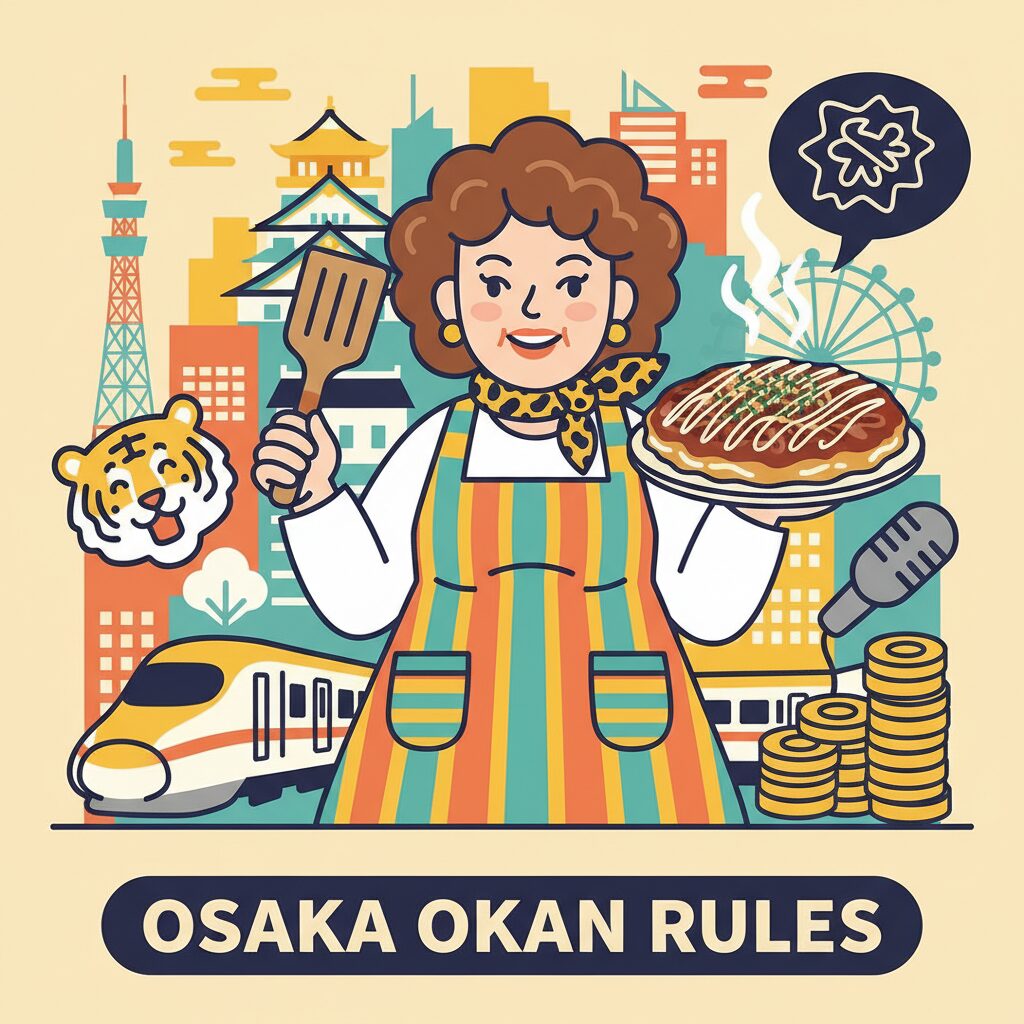
Step off the train in Osaka, and the first thing you’ll notice isn’t a landmark. It’s the sound. A thick, vibrant, melodic hum of human energy. It’s faster than Tokyo, warmer than Kyoto. It’s the sound of a city that wears its heart on its sleeve, a place where the social fabric is woven not in quiet, formal tearooms, but in the bustling aisles of a supermarket and the crowded counters of a takoyaki stand. At the very center of this energetic tapestry, you’ll find its most powerful, most misunderstood, and most essential figure: the Osaka Okan. Forget everything you think you know about the reserved, demure stereotype of Japanese womanhood. The Okan is a force of nature, a neighborhood matriarch who is equal parts confidante, drill sergeant, benefactor, and comedian. For anyone trying to build a life here, understanding her isn’t just a cultural curiosity; it’s the key to unlocking the city itself. She is the gatekeeper of the local community, the living embodiment of Osaka’s famous ninjo—that hard-to-translate concept of human warmth, empathy, and a deep-seated sense of communal obligation. To live in Osaka is to live in the orbit of the Okan. Learning to navigate her world, her language, and her unwritten rules is your true initiation into the soul of this incredible city.
To truly understand the region’s evolving dynamics, it’s also insightful to see how global investment is transforming Kyoto’s luxury travel scene.
Who, Exactly, is the ‘Okan’?
Before we delve deeper, let’s address a common misconception. The word ‘Okan’ (おかん) is a casual, familiar term for ‘mother’ in the Kansai dialect. However, when people mention the Osaka Okan, they aren’t simply referring to any mother. They mean an archetype—a particular kind of middle-aged or older woman who stands as a pillar of her local community. She’s the woman running the family-owned vegetable stall, the one who knows everyone’s name at the public bathhouse, the one who will stop you on the street to tell you your shoelace is undone with the same urgency as if she’d spotted a fire. She is defined by a set of traits as quintessentially Osaka as takoyaki and the Tsutenkaku Tower.
She is unapologetically direct, fiercely pragmatic, and endlessly generous—often to a fault. Usually, though not always, she sports brightly colored clothing, sometimes featuring animal prints. To those unaccustomed, especially people from the more reserved culture of Tokyo, the Okan can seem brash, loud, or even intrusive. This is a fundamental misunderstanding. Her directness isn’t rudeness; it’s efficiency. Her volume isn’t aggression; it’s a desire to be clearly understood. And her nosiness isn’t an invasion of privacy; it’s an expression of communal care. She operates on a social logic that predates the cold anonymity of modern urban life, shaped by the dense, interconnected neighborhoods and merchant culture of old Osaka.
Imagine the city as a collection of villages, each with a shotengai (shopping arcade) as its central vein. The Okan are the lifeblood flowing through these veins. They are keepers of local knowledge, enforcers of unwritten social codes, and primary weavers of the safety net that catches people when they stumble. They remember whose child just got into which high school, who’s been feeling unwell, and which shop has the best daikon radish today. This isn’t mere gossip; it’s a real-time, analog social network that keeps the community alive. To dismiss her as a simple stereotype is to overlook the intricate and vital role she plays in making Osaka, despite its metropolitan scale, feel remarkably like a small town.
The Aesthetics of Confidence: Okan Fashion
As someone working in fashion, I find the Okan’s personal style a fascinating subject. It’s often caricatured, boiled down to a single cliché: leopard print. And while, yes, you will see a good deal of leopard print—or hyo-gara (ヒョウ柄) as it’s called here—it represents just one facet of a far more complex aesthetic. Okan fashion is not about following fleeting trends from Paris or Tokyo. It is a powerful, declarative statement of presence, pragmatism, and personality. In short, it is fearless.
Functionality is the core principle. The quintessential Okan is a woman in constant motion. She rides her mamachari bicycle, skillfully weaving through crowded streets with a basket full of groceries. She hauls laundry, runs a shop, or chases after a grandchild. Her clothing must support this lifestyle—with comfortable shoes, stretchy fabrics, and practical bags. But practical doesn’t mean dull. Far from it.
Color is paramount. While a Tokyoite might prefer a muted palette of beige, navy, and grey to blend in, the Osaka Okan uses vibrant colors to stand out. Bright purples, electric blues, vivid pinks, and sunny yellows are the norm. These aren’t just clothes; they’re beacons. In a bustling market, an Okan’s bright orange sweater makes her easy to spot by friends. It’s a visual form of communication—a way of saying, “I am here. I am part of this community.” The patterns are equally bold. Florals, geometrics, and, naturally, animal prints are worn with a confident flair uniquely Osakan.
Now, about that leopard print—why is it so common? There are many explanations, but the most convincing links it to Osaka’s history as a merchant city. In a culture dominated by haggling and deal-making, a bit of flash and bravado was part of business. The bold, slightly intimidating pattern of a big cat symbolized strength and confidence. It projected an image of a woman not to be trifled with—one who knew her own worth and the value of her goods. Over time, this symbol of mercantile power evolved into a beloved fashion statement, a badge of honor for the assertive, no-nonsense women of the city. Wearing hyo-gara connects one to a lineage of strong Osaka women. It’s not just a pattern; it’s an identity.
Beyond the clothes, the accessories have their own story. The ubiquitous sun visor, often tinted dark purple or blue, is a purely practical item to shield against sun and rain while cycling, yet it has become an iconic part of the Okan uniform. Her perm, sometimes tinted with hints of purple or red, is another signature. It’s a low-maintenance hairstyle that holds its shape, a nod to a life that prioritizes efficiency over vanity, while still allowing a personal touch of style. In essence, the Okan’s look is a masterclass in self-expression tailored to meet the demands of her life. It’s a visual language that conveys her role, personality, and deep connection to the city’s vibrant, pragmatic culture.
The Language of Engagement: Speaking Okan
To truly grasp the essence of the Okan, you first need to understand her language. This involves much more than simply learning a few phrases of Osaka-ben, the local dialect. It means appreciating the rhythm, intonation, directness, and the sheer volume that define her style of communication. It’s a language crafted for connection rather than maintaining polite distance.
Initially, the directness can feel surprising. In Tokyo, conversations are often softened with “cushion words” and indirect expressions to gently convey requests or opinions. A Tokyoite might say, “Ano, sumimasen, chotto ukagaitain desu kedo…” (“Um, excuse me, I’d like to ask a little something, but…”) before addressing the main point. An Osaka Okan, however, will come straight up and say, “Kore, doko de katan?” (“Where’d you buy this?”). There’s no introduction; the question itself starts the conversation. This isn’t rude; it signals genuine interest and assumes immediate familiarity. When she notices something she likes or finds puzzling, she wants to engage directly. Her curiosity about your life is her way of paying a compliment.
Next, there’s the humor. Osaka boasts a rich comedic tradition, heavily influenced by manzai (a style of stand-up comedy). This playful, teasing humor permeates everyday interactions. For example, an Okan might say as you hesitate between two apples, “Anata, sonna ni mayottara, ringo ga shiwashiwa ni naru de!” (“If you take that long to decide, the apples will get wrinkly!”). This isn’t a criticism of your indecision but an icebreaker—an invitation to share a laugh and a small, human moment. The anticipated reaction isn’t offense but a chuckle and perhaps a witty comeback. Mastering these light-hearted exchanges is a key step toward cultural fluency in Osaka.
Key Phrases and Their Hidden Meanings
Let’s explore some classic Okan expressions, where understanding the underlying meanings is essential.
“Shiran kedo” (知らんけど) – “…but I don’t really know, though.” This is arguably the most iconic Osaka phrase. It is added to the end of a sentence, often following a strong opinion or advice. For instance, “That new ramen shop is the best in the neighborhood, shiran kedo.” While it appears to undercut the statement, its true purpose is subtler. It softens the assertion by implying humility and humor, signaling, “This is just my opinion; take it or leave it—we’re simply chatting.” It serves as a conversational get-out-of-jail card.
“Ame-chanいる?” (Ame-chan iru?) – “Want a piece of candy?” This question carries more than its literal meaning. The “ame-chan” (a cute, familiar term for candy) acts as the Okan’s olive branch, her signature gesture for social connection. It might be offered to a crying child on the train, a neighbor passing by, or even to you, the foreigner waiting in line at the post office. Declining the ame-chan is considered a social faux pas—akin to refusing a handshake. The proper response is to accept it with a smile and gratitude. The candy itself is secondary; what matters is the act of giving and receiving, a small gesture that strengthens community bonds. Every Okan keeps a stash of these candies in her purse, ready for any occasion.
“Mōkarimakka?” (儲かりまっか?) – “Makin’ a profit?” and its typical reply, “Bochi bochi denna” (ぼちぼちでんな) – “So-so.” This traditional greeting among Osaka merchants has become more widely used. It’s the Osakan equivalent of “How are you?” but isn’t meant to literally ask about one’s financial status. Rather, it acknowledges the city’s mercantile heritage and serves as a cultural connection. The customary, modest response maintains camaraderie. Even if business is thriving, the appropriate answer is a reserved “bochi bochi.”
“Nande ya nen!” (なんでやねん!) – “What the heck! / Why?!” This is the quintessential tsukkomi (straight man) line from manzai comedy. It expresses playful frustration. An Okan might yell it at the TV after a bad baseball play or at a friend telling a silly joke. It’s rarely used in genuine anger; rather, it’s a theatrical, cathartic exclamation that adds humor to everyday life.
Understanding these linguistic nuances goes beyond mere translation. In Osaka, conversation is a lively, engaging contact sport meant to bring people closer, not to maintain polite distance.
The Okan’s Domain: Navigating Social Spaces
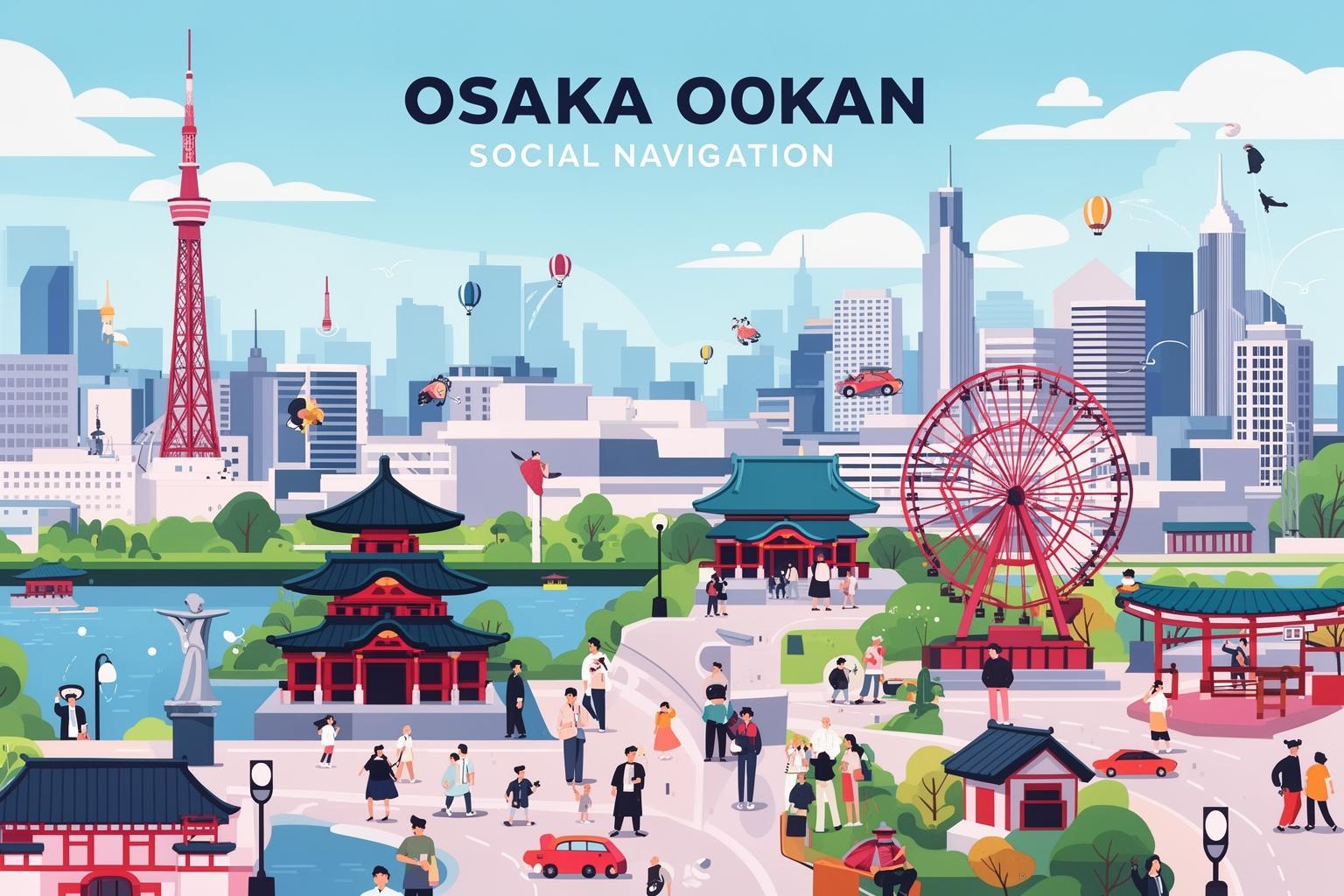
To observe the Okan in her natural environment is to witness a true master of her domain. Her influence extends outward from her home, but it is most palpable in the public and semi-public spaces where the community convenes: the shotengai, the supermarket, and public transportation.
The Shotengai: The Okan’s Royal Domain
The covered shopping arcade, or shotengai, forms the heart of neighborhood life in Osaka and is undeniably the Okan’s realm. Locations like Tenjinbashisuji (the longest in Japan) or the more local arcades in areas such as Tennoji or Kyobashi serve as her familiar territory. Here, shopping transcends mere anonymous transactions; it becomes a social performance.
Watch an Okan traverse the shotengai. She moves with intent and an intimate familiarity that is captivating. She doesn’t simply purchase fish from the fishmonger; she engages in a detailed conversation about the best grilling methods, inquires about his daughter’s piano recital, and playfully haggles over the price of fatty tuna. The bargaining isn’t truly about saving a few yen; it’s a form of interaction, a playful exchange both parties enjoy. It reinforces their longstanding relationship. The phrase “Chotto makete!” (“Give me a little discount!”) is a classic opening line, often accompanied by a wink and a smile.
She is a discerning connoisseur of value. She knows which butcher offers the leanest pork on Tuesdays and which fruit stand has melons at peak ripeness. This knowledge is her currency, and she shares it openly. If she notices you, a foreigner, standing perplexed before a wall of various soy sauces, don’t be surprised if an Okan appears at your side. She will point out the one you should choose, explain why it’s superior to the rest, and might even offer a recipe to try it in, all delivered in rapid-fire Osaka-ben. This isn’t an intrusion; it’s her fulfilling her role as a community guide. Seeing a member of her territory (even if only temporarily) in need, she steps in. Your previously quiet, solitary shopping has just transformed into an interactive, educational experience.
The Supermarket and the Public Bath: Spaces of Connection
The local supermarket is another essential territory. It’s a daily gathering place, less formal than a café but equally social. You’ll witness entire conversations unfolding across aisles, shouted over stacks of instant noodles. The checkout line becomes a forum for commentary on current news, weather, and the rising price of eggs. Here, the Okan’s pragmatism truly shines. She is the queen of the mi-kiri-hin (discounted items near expiration), spotting a 50% off sticker from twenty paces. Proudly announcing her bargain-hunting success to anyone within earshot, she does so not to brag but to share the delight of a good deal. It’s a small victory against the daily grind, a shared value in a city built on commerce.
The public bath, or sento, offers an even more intimate setting. Here, stripped of all social status, the community connects on a deeply personal level. The Okan serve as the sento’s unofficial hosts. They maintain order, scold youngsters for splashing, and exchange gossip and life advice amid the steam. It is a space of remarkable openness, and for a foreigner, being welcomed into sento conversations is a true sign of acceptance into the neighborhood’s inner circle.
The Unwritten Code: Okan Rules of Engagement
Living in Osaka means adapting to the Okan’s unwritten social code—a code grounded in reciprocity, mutual responsibility, and what might be described as ‘constructive meddling.’
Generosity as the Default Mode
The Okan’s generosity is renowned. It’s proactive rather than reactive. If she has extra oranges from a box her cousin sent, she won’t wait for you to ask; she’ll arrive at your door with a bagful. If she sees you struggling with a heavy box, she won’t simply offer help; she’ll manage the flow of pedestrians to ensure you can safely cross the street. This generosity extends beyond material items—it’s a generosity of spirit, time, and information.
This stands in sharp contrast to the Tokyo mindset, where the primary social rule is meiwaku o kakenai (don’t cause trouble for others). In Tokyo, refraining from interfering is often perceived as the politest approach. In Osaka, however, not offering assistance to someone clearly in need would be viewed as cold and antisocial. The Okan operates on the principle of otasuke-ai (mutual help), expecting you to help others in turn when possible. It’s a pay-it-forward system that keeps the community strong.
This dynamic can cause misunderstandings. A foreigner who values independence might feel overwhelmed or patronized by unsolicited help. But it’s important to reframe this—Okan is not suggesting incompetence; she is simply activating a communal support system for which she is the main driving force. The best response is gratitude and, when the chance arises, extending help to others, thereby demonstrating your respect for the local code.
The Fine Line Between Caring and Meddling
There’s no denying it: the Okan can be inquisitive. She’ll ask questions that may seem deeply personal from a Western or even Tokyo perspective: “Are you married?” “Why not?” “How much is your rent?” “You look tired, are you eating well?”
Context is everything here. These questions rarely stem from judgment; rather, they come from a genuine desire to understand you and locate you within the community fabric. In a culture where people are closely interconnected, knowing these details helps her know how to interact with you. If you’re single, she might know someone to introduce you to. If your rent is high, she may be aware of a cheaper place available. If you look tired, she might bring a home-cooked meal the next day.
Her questions act as diagnostic tools for community care; she’s seeking ways to be helpful. The best approach is not to be defensive or offended but to answer with a smile and keep things relatively simple. You don’t have to reveal your deepest secrets, but showing a willingness to share a little signals openness to being part of the community. In return, you gain a powerful ally, a neighborhood watch, and a wealth of local knowledge all in one.
Honesty, Not Hierarchy
One of the most refreshing aspects of interacting with an Okan is the relative absence of rigid hierarchy. While Japan is generally known for strict rules of politeness tied to age and status (keigo), the Okan often breaks through these conventions with a candid directness. She might address both a young person and a company CEO with a similar tone of familiar authority.
This is not a lack of respect but a different kind of respect—one based on shared humanity rather than social rank. She has seen it all and isn’t easily impressed by titles or wealth. She judges people on character, willingness to contribute to the neighborhood, and sense of humor. This can make Osaka feel more socially flat and accessible than Tokyo. When an Okan scolds a well-dressed salaryman for trying to cut in line, she reinforces a community value: everyone waits their turn, no matter who they are. She is the great equalizer, with authority that springs not from formal position but from the respect earned through a lifetime of community service.
Surviving and Thriving: Your Guide to Okan Interaction
So, you’ve met an Okan. She’s speaking to you, offering you candy, or commenting on your outfit. How should you respond? Here are some practical tips for a successful interaction.
Accept the Candy. I cannot emphasize this enough. The ame-chan is a sacred gift. Smile, say “Arigatou gozaimasu!” and accept it. You don’t need to eat it right away, but the gesture of acceptance is crucial.
Embrace the Small Talk. Don’t hesitate to engage. If she asks where you’re from, share it. If she remarks on the weather, agree it’s hot. Your Japanese doesn’t have to be perfect. The effort to communicate is what counts. A smile and a nod go a long way.
Learn to Laugh at Yourself. If an Okan teases you, it’s a sign of affection. She feels comfortable enough to joke with you. The worst response is to become defensive or upset. The best response is to laugh along. This shows you understand the playful spirit of the exchange.
Don’t Be Afraid to Ask for Help. If you are genuinely lost or confused, an Okan is your best resource. She may not only give you directions but might also walk you to your destination, sharing stories about the neighborhood along the way. Unlike some big cities where people avoid strangers who look lost, in Osaka, it’s seen as a chance to fulfill a community duty.
Compliment Her. Despite their tough exterior, Okan appreciate being acknowledged. A simple compliment can work wonders. Saying “Sono fuku, kirei desu ne” (“That’s a beautiful outfit”) or praising her well-kept plants or cute dog can instantly create a connection. It shows you are observant and see her as an individual, not just a stereotype.
Remember, It Comes from a Good Place. When your personal space feels invaded or you’re asked something too personal, take a breath. Recall the motivation behind it: community, connection, and care. Try viewing her behavior through the lens of Osaka ninjo rather than your own cultural expectations. This mindset shift is key to not just tolerating but genuinely appreciating the city’s unique social dynamics.
In the end, the Osaka Okan is a cultural icon. She embodies the city’s personality—its warmth, humor, pragmatism, and strong sense of community. She can be loud, direct, and will definitely offer you candy. For those of us who have made this city our home, she is not a caricature to be mocked from afar. She is our neighbor, our guide, and often, our friend. Learning her language and understanding her world is the most rewarding journey you can take in Osaka. It leads you beyond the tourist maps and straight into the vibrant, living heart of a city that is, above all else, unapologetically and wonderfully human.








