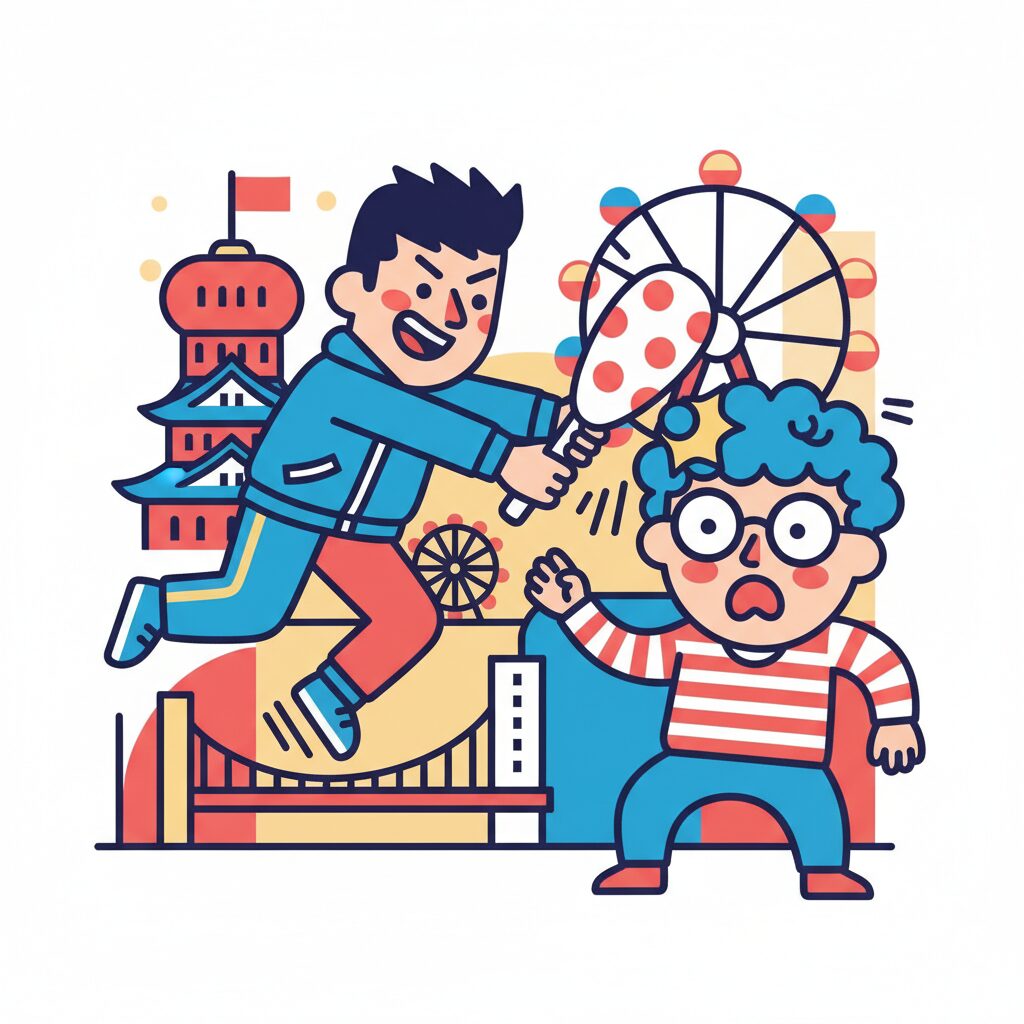
Picture this: You’re wedged into a lively izakaya in the neon-soaked backstreets of Namba. The air is thick with the scent of grilled yakitori and the golden haze of cheap, delicious beer. You’re with a new group of Osaka friends, people you’ve met through work or a language exchange, and the conversation is flowing faster than the highballs. Someone tells a story about a clumsy mistake they made at the office, exaggerating the details for dramatic effect. You nod along, offering a sympathetic smile. But then, their friend across the table leans in, and with a grin, shouts, “Aho ka!”—Are you an idiot?! Another friend chimes in with a sharp, “Nande ya nen!”—What the heck are you talking about?! A light, open-palmed smack lands on the storyteller’s shoulder. The whole table erupts in laughter. You, the foreigner, sit there, frozen with a half-smile. Your internal monologue is screaming. Did they just call him an idiot? Are they fighting? Why is everyone laughing? Was that a real slap? This isn’t the polite, deferential Japan you read about in guidebooks. This is something else entirely. This is Osaka. And you’ve just had your first encounter with the city’s most vital, most misunderstood, and most important social lubricant: the art of tsukkomi.
For anyone trying to build a life here, to move beyond being a tourist and actually connect with people, this moment is a crucial crossroads. You can either shrink back, confused and slightly offended by what seems like casual cruelty, or you can lean in and realize you’re witnessing the very heartbeat of Osaka friendship. This isn’t an argument; it’s a conversation. In fact, it’s a conversation reaching its highest form. That sharp retort, that playful jab, isn’t a sign of conflict. It’s a sign of affection, of closeness, of a bond so strong it doesn’t need the delicate packaging of hyper-polite language. Forget everything you thought you knew about Japanese communication. Here in Osaka, the rules are different, the rhythm is faster, and the quickest way to someone’s heart is often a perfectly timed, well-intentioned insult. Let’s dive into why this comedic sparring is the ultimate language of love in Japan’s kitchen.
If you’re looking for a more relaxed way to connect with locals after mastering the art of tsukkomi, consider experiencing the communal vibe of a traditional sentō and shokudō.
Deconstructing the Duo: Boke and Tsukkomi 101
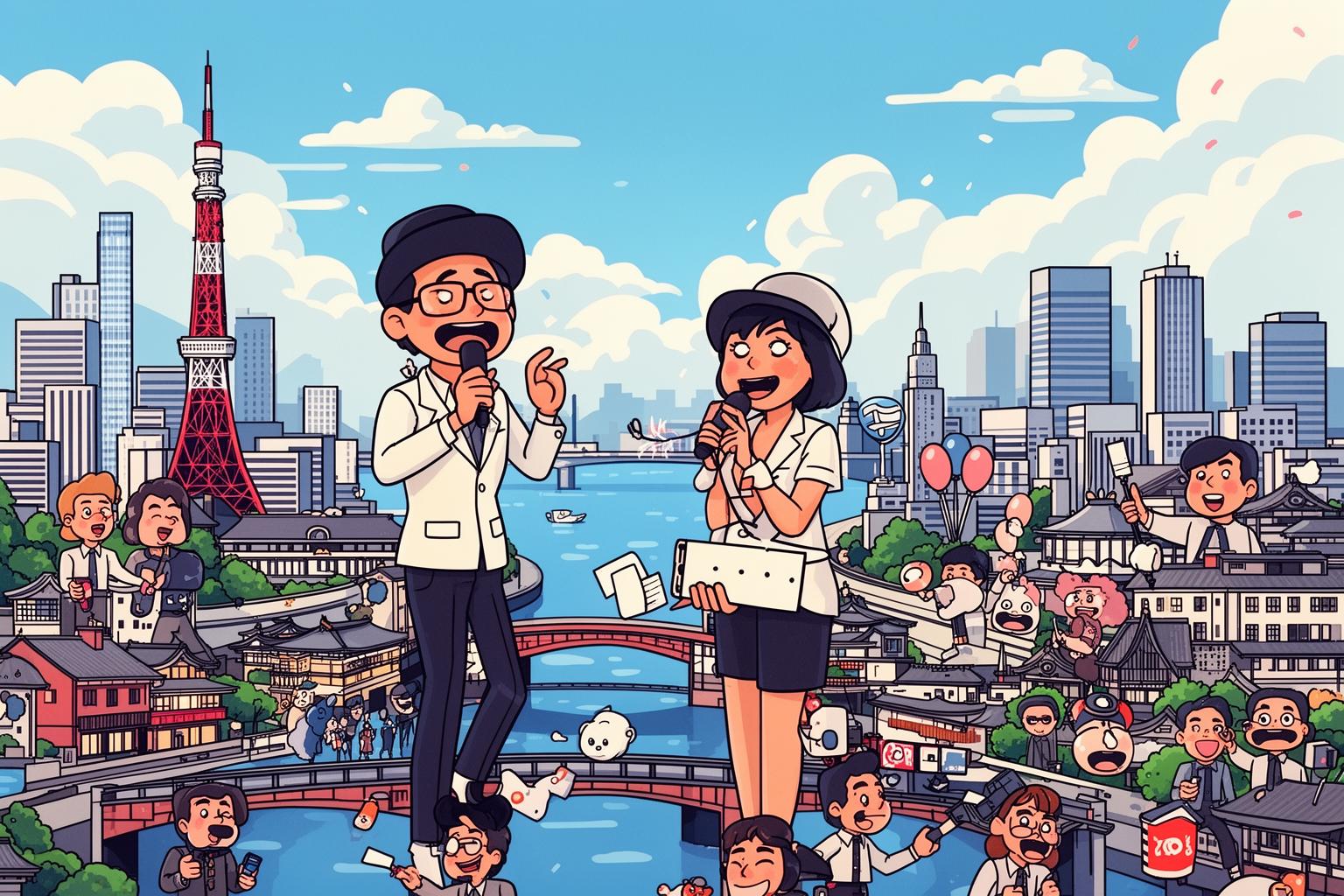
To grasp what’s happening at that izakaya table, you first need to understand the essential elements of Osaka humor. This framework is so deeply woven into the culture that people enact it instinctively, like breathing. This framework is the comedic duo of the boke and the tsukkomi. It’s a double act that underpins almost every casual conversation in the city.
More Than Just a Punchline: The Foundation of Manzai Comedy
This pair originates from manzai, a traditional form of Japanese stand-up comedy that is almost a religion in Osaka. A typical manzai performance features two comedians. The boke (ボケ) is the fool, the funny one who says or does something absurd, nonsensical, or simply wrong. Their role is to create an opening, tossing out a conversational softball. The term itself comes from bokeru, meaning to become senile or to play dumb. They set up the joke. Then there’s the tsukkomi (ツッコミ), the straight man. Their role is to respond to the boke’s nonsense with a sharp, witty, and often loud comeback, highlighting the absurdity. The word tsukkomi comes from the verb tsukkomu, meaning to thrust or poke into something. They deliver the punchline. This back-and-forth produces a rhythm that is deeply satisfying and, above all, hilarious.
You might wonder, “That’s great for a comedy stage, but how does it relate to daily life?” It relates to everything. In Osaka, this isn’t just a performance; it’s a participatory sport. The manzai stage is merely a concentrated snapshot of the conversational style you’ll hear on the subway, at the supermarket, and especially over drinks. People naturally slip into these roles with friends, family, and even favored local shopkeepers. It’s a shared language that goes beyond words. It’s a dynamic, interactive game everyone knows how to play.
The Unspoken Contract of Conversation
Think of it as an unspoken social contract. When someone at your table plays the boke, they’re implicitly trusting you to play the tsukkomi. It’s a beautiful, cooperative act disguised as a gentle conflict. The boke isn’t really foolish; they’re intentionally setting up a joke for the group’s amusement. They create a chance for laughter. For instance, your friend might look at a perfectly ordinary plate of edamame and say with a deadpan face, “Wow, this is the most incredible gourmet dish I’ve ever tasted. The chef must be a genius.” This is the boke—a deliberate, obvious exaggeration, a pass. A more literal-minded person, perhaps from Tokyo, might respond, confused, “It’s just boiled soybeans.” While factually correct, that reply misses the point and kills the mood; the conversational ball has been dropped.
An Osakan, however, instinctively knows what to do. They catch that pass and slam it back with a tsukkomi. “Yakamashii wa! You’d think a blade of grass was gourmet!” (Shut up! You’re way too easy to please!). Or the classic, “Nande ya nen! They just boiled it!” This completes the conversational loop. The setup (boke) is affirmed by the punchline (tsukkomi), resulting in shared laughter that bonds the group. It’s a small, collaborative performance repeated hundreds of times nightly in izakayas all over the city. The boke offers a gift of absurdity, and the tsukkomi honors it by pointing it out. It’s a dance, and once you learn the steps, you can never unsee them.
Tsukkomi in the Wild: An Izakaya Field Guide
Understanding the theory is one thing, but identifying and engaging in this dynamic takes a trained eye and ear. The izakaya serves as the ideal setting to observe this social phenomenon. Let’s analyze the practical aspects so you can become an experienced observer and, eventually, an active participant.
Identifying the ‘Boke’: How to Recognize the Setup
The boke is the spark that ignites the interaction. It can appear in various forms, but it’s usually delivered with a certain twinkle in the eye. You need to listen not only to what is said but also to the humorous intention behind it. Here are some classic types of boke you’ll encounter.
First, there’s the Grand Exaggeration. This is the most common and easiest to spot. Someone will take a simple situation and inflate it to comical extremes. For example, after finishing just one glass of beer, a friend might slump over the table and groan, “I’m so drunk, I can’t feel my legs.” This is a huge, flashing neon sign that screams, “Please make fun of me!” It’s a clear invitation for a tsukkomi like, “You’ve had one sip! Don’t be so dramatic!”
Next is the Obvious Mistake or Misstatement. This involves someone making such a blatant false statement that it can only be a joke. Imagine pointing to the Tsutenkaku Tower on the horizon and saying, “Look! Tokyo Tower looks beautiful tonight.” This is a deliberate error, a test to see who’s paying attention. The right response isn’t a polite correction but a quick, “Aho ka! We’re in Osaka! Have you been drinking since this morning?”
Lastly, there’s the Artful Self-Deprecation. This subtler form of boke involves someone poking fun at themselves in a slightly exaggerated way. Someone might show up wearing a new shirt and say, “I thought this looked cool, but now I feel like a traffic cone.” They aren’t genuinely seeking reassurance—they want a laugh. A simple, “No, no, you look great!” ends the conversation. The tsukkomi reply would be, “You’re right! We can use you to direct traffic later!” It might sound harsh on paper, but delivered with laughter, it perfectly validates the joke.
Perfecting the Retort: The Structure of a Good Tsukkomi
Once you’ve identified the boke, it’s up to the tsukkomi to respond. The retort should be quick, sharp, and delivered with the right tone. It’s less about the literal meaning and more about the energy behind the words. Let’s explore the holy trinity of Osaka tsukkomi phrases.
“なんでやねん!” (Nande ya nen!): This is the Swiss Army knife of tsukkomi. It roughly translates to “Why the heck?!” or “What are you talking about?!” but its uses are endless. It’s the perfect reply to any exaggeration, logical fallacy, or nonsense. If a friend says, “I think I’ll order one of everything on the menu,” the instant, almost reflexive response from everyone else is, “Nande ya nen!” It’s not a genuine question but a verbal exclamation that means, “I recognize the absurdity of your statement.” It’s rarely harsh and almost always said with a smile.
“アホか!” (Aho ka!): This phrase is a bit more advanced and depends on the closeness of the relationship. Literally, it means “Are you an idiot?” or “You’re an idiot!” In most of Japan, this would be deeply offensive. In Osaka, among friends, it’s a term of endearment. It’s like a playful head-rub in words. Importantly, the Tokyo word for “idiot” is baka. While a playful baka exists, it often has a sharper, more seriously insulting tone. Aho in Osaka feels rounder, warmer, and more familiar. When you lovingly call a friend aho after an obvious mistake, you’re reinforcing your bond. You’re saying, “I know you well enough to call you an idiot, and I don’t mean it in a bad way.”
“やかましいわ!” (Yakamashii wa!): Meaning “You’re noisy!” or more bluntly, “Shut up!” This is used when someone is being overly dramatic or excessively drawn out with their boke. When a friend launches into a long monologue about how a tiny papercut is the worst injury in history, “Yakamashii wa!” is the perfect phrase to lovingly bring them back to reality. It cuts through the performance and gets a laugh, showing that their drama has been appreciated and acknowledged.
The Physical Side of Tsukkomi
Sometimes words alone don’t suffice. Osaka tsukkomi often includes a physical element, which can be surprising for an unprepared foreigner. This usually involves a quick, light, open-handed tap on the top of the head or the shoulder accompanying the verbal retort. On manzai shows, it’s often exaggerated with a loud slapping sound effect; in real life, it’s a gentle gesture. Think of it as a physical exclamation point—definitely not an act of violence. It’s a stylized, theatrical motion that punctuates the joke and adds a rhythmic beat to the conversation. When you see this, don’t worry. No one is being hurt. In fact, the person tapped is usually laughing the hardest. It signals that the boke was so successful it demanded a physical response to fully appreciate its absurdity.
The Osaka Mindset vs. The Rest of Japan
This conversational style is not merely a peculiar trait; it offers insight into the fundamental differences in mindset between Osaka and other regions of Japan, especially Tokyo. Grasping this contrast is essential to understanding why Osaka feels so distinct, not only in its dialect but in its overall social atmosphere.
Tokyo’s Tatemae vs. Osaka’s Honne
Throughout much of Japan, social interactions are shaped by the concepts of tatemae and honne. Tatemae (建前) is the public persona, the opinions and behaviors displayed openly to preserve harmony and avoid conflict. Honne (本音) reflects one’s true, private feelings. In Tokyo, a city defined by precision, formality, and high population density, tatemae predominates. Conversations tend to be indirect, polite, and designed to ensure that no one feels uncomfortable. Openly contradicting someone or pointing out flaws in their reasoning—even jokingly—can disrupt group harmony, or wa (和).
Osaka, conversely, maintains a much thinner boundary between tatemae and honne. Historically driven by merchants rather than samurai bureaucrats, its culture values practicality, directness, and efficiency. The boke-tsukkomi dynamic exemplifies this perfectly. It allows for direct expression of honne—such as saying, “What you just said is ridiculous”—but in a socially acceptable and even welcomed way because it comes across as humor. Rather than politely smiling and changing the subject, an Osaka native confronts absurdity head-on with a tsukkomi. This is not seen as disrupting harmony but rather as engaging with others on a more honest level. It represents a different, more robust interpretation of social harmony, one based on frankness and shared laughter instead of polite avoidance.
Why Closeness is Measured in Jabs, Not Nods
This creates a key difference in how friendship is expressed. In a more tatemae-oriented setting, friendship may be shown through agreement, validation, and constant gentle support—caring by making the other person feel comfortable and unchallenged. In Osaka, such behavior can sometimes seem distant or insincere. Here, true friendship and trust are demonstrated by the freedom to engage in tsukkomi. If your Osaka friends frequently make playful jabs at you, tease you about your quirks, and throw out a “Nande ya nen!” every few minutes, congratulations—that’s a huge compliment. It means they are comfortable with you, view you as an insider, part of the family, someone who knows the unwritten rules and won’t take offense.
The real warning sign is if they don’t do this. If your Osaka colleagues or friends are always overly polite, always agreeing, and never teasing, it might indicate they still see you as a guest, an outsider (yosomono). They keep you at a polite distance because they’re uncertain if you can handle the more intimate, direct communication style. Receiving your first genuine tsukkomi is a rite of passage—the moment you graduate from being a foreign acquaintance to becoming a true friend. It’s a verbal handshake that says, “Welcome to the club.”
A Foreigner’s Guide to Navigating the Banter
So, you’re in Osaka, you grasp the theory, yet you still find yourself on the receiving end of rapid-fire retorts, feeling somewhat like a deer caught in headlights. How do you navigate this intricate conversational dance without offending anyone or getting hurt?
The Common Misunderstanding: “Are They Mocking Me?”
Let’s tackle the biggest challenge first: feeling personally targeted. When someone you barely know calls you an “idiot” with a smile, your cultural instincts may immediately register it as an insult. This is a natural reaction. The key is to consciously override this impulse and reframe the situation. They are not mocking you; they are engaging in playful banter. They are inviting you into a shared world of humor. The tsukkomi is almost never aimed at your core identity or intelligence. It targets a specific, absurd thing you just said or did. It’s a comment on the moment, not a reflection of your character.
Think of it as the verbal equivalent of a friendly nudge among friends. It’s a test of your sense of humor and your ability to not take yourself too seriously—a trait highly valued in Osaka. When you learn to laugh along, you signal that you understand the unspoken rule: the words may be sharp, but the intention is warm. The goal is connection through laughter, not separation through criticism.
To Tsukkomi or Not to Tsukkomi? Your Role in the Dance
The next step is participation, and it’s best to ease into it. Jumping in with a clumsy tsukkomi can be as awkward as taking a comment too literally. Here’s a gradual approach to joining the game.
First, be an observer. Spend a few nights out just listening. Watch the rhythm. Identify who naturally takes on the boke role and who delivers the sharpest tsukkomi. Notice the timing, tone, and body language. Absorb the flow before trying to join in. This phase is crucial for developing intuition about what’s appropriate.
Next, try being the boke. This is the safest and most effective way to start participating. The boke has the advantage of initiating the joke while carrying less risk. You don’t need perfect comedic timing or a store of witty retorts. Just be a little silly. Try a simple exaggeration. When the food arrives, say something like, “This is so much food! I’ll be eating this for a week!” This gentle nudge invites a tsukkomi from your friends and shows your willingness to play. They’ll be happy to respond, and you’ll have entered the game without mastering complex retorts.
Finally, once you feel comfortable and have a better grasp of the group’s dynamic, you can try an apprentice tsukkomi. Don’t aim to be too clever or harsh at first. Stick to the basics. When a friend says something obviously ridiculous, try a soft, smiling “Nande ya nen?” Your delivery might be a bit off, and your accent noticeable, but the effort itself will be appreciated. It shows you’re not just observing the culture; you’re actively trying to join it. This effort matters more than perfect execution.
What Happens When You Don’t Join In?
Refusing to engage won’t make people dislike you, but it will create subtle distance. If someone offers a boke and you respond with literal analysis or, even worse, get visibly offended, the playful energy will come to a halt. The group will likely revert to a more standard, polite style of conversation with you. They’ll switch into “foreigner-handling mode,” which is kind and inclusive but lacks the depth and intimacy of authentic Osaka communication. Essentially, they’re putting conversational bubble wrap around you to protect you. Though well-intentioned, it prevents genuine integration. Learning to at least accept, if not join in, the boke-tsukkomi dynamic is your key to unlocking true, lasting friendships in this city.
Beyond the Izakaya: Tsukkomi in Daily Osaka Life
This isn’t a communication style reserved solely for after-work drinks. The spirit of boke and tsukkomi infuses every aspect of daily life in Osaka, making everyday interactions more vibrant and personable than you might find elsewhere.
At the Supermarket, On the Street
This playful exchange is ubiquitous. Visit a local shotengai (shopping arcade), and you’ll witness it between shopkeepers and their customers. The woman running the fruit stand might notice you eyeing the pricey melons and say, “You’ve got expensive taste! Are you a company president?” That’s a boke. A good-natured tsukkomi reply might be, “If I were, I’d buy your entire store!” This creates a small, warm connection that goes beyond a simple transaction.
I once saw an elderly woman (obachan) stumble slightly on an uneven patch of pavement. Her friend immediately joked, “Trying to fly home already?” Without missing a beat, the woman fired back, “Yakamashii wa! I was just practicing my new dance move!” They both burst out laughing and continued on their way. This kind of interaction is the norm—a constant, gentle flow of playful teasing and sharp comebacks. It’s a way to handle life’s minor bumps, both literal and figurative, with a shared sense of humor.
A Language of Laughter and Efficiency
On a deeper level, this dynamic also exemplifies emotional and communicative efficiency. It often lets people be direct without causing confrontation. Imagine you’re in a planning meeting with friends for a weekend trip. Someone suggests an idea that’s clearly unworkable. Instead of a long, polite, indirect discussion about the potential issues (“Well, that’s an interesting idea, but we might want to consider logistical challenges and perhaps look at alternative options that could be more time-effective…”), an Osakan cuts straight to the point with a quick tsukkomi: “Aho ka! That’s on the other side of the country! We’d spend the entire weekend on the train!” The humor in the delivery softens the rejection. The message is clear, everyone laughs, and the group quickly moves on. It’s honest, fast, and surprisingly effective at fostering a collaborative, ego-free environment.
The Deeper Meaning: Tsukkomi as a Social Glue
When you remove the layers of slang, timing, and theatricality, you discover that the art of tsukkomi is about something far deeper than simply being funny. It’s a refined social tool for building trust, expressing affection, and strengthening community bonds.
Building Trust Through Vulnerability
Each time this exchange occurs, a small act of trust is established. The person playing the boke deliberately makes themselves vulnerable by saying something foolish on purpose, trusting their friends to understand the intention and join in rather than judge or take it literally. The one delivering the tsukkomi honors that trust by responding playfully, sending a clear message: “I get you. I’m on your wavelength. I feel close enough to break the usual rules of conversation, and I trust you know my sharp remarks come from a place of affection.” This ongoing back-and-forth, this rhythm of setup and punchline, creates a close-knit fabric of mutual understanding and shared intimacy. It’s a way of continuously checking in and reaffirming the strength of the relationship without uttering a single sentimental word.
The Sound of a Healthy Friendship
Now, let’s return to that noisy izakaya. The initial confusion you experienced, the sense of chaos and potential conflict—it’s time to adjust your ears. That loud, overlapping chatter, highlighted by sharp retorts and bursts of laughter, isn’t the sound of discord. It’s the sound of healthy, thriving relationships. It’s the sound of people feeling so comfortable with one another that they can drop formality and communicate through the pure, joyful, and chaotic language of humor.
In Osaka, silence or excessive politeness among friends can be a cause for concern. It may indicate distance, discomfort, or an issue being avoided. The loud, energetic, and seemingly argumentative banter of boke and tsukkomi is the true sign that all is well. It is the sound of social harmony, Osaka-style. So next time you’re at the table and a friend lovingly calls you an idiot, don’t be alarmed. Smile, laugh, and if you feel brave, respond with a “Nande ya nen!” You haven’t just learned a new phrase; you’ve taken your first genuine step toward speaking the language of the Osaka heart.