
Walk into a shotengai, one of Osaka’s covered shopping arcades, and the first thing that hits you isn’t a product or a price tag. It’s the noise. Not the generic, piped-in music of a modern mall, but a layered, chaotic, and intensely human symphony. It’s the gravelly call of a fishmonger hawking the day’s freshest catch, his voice a proud bellow: “Saba! Ee no haitteru de!” (Mackerel! Got some great ones in!). It’s the high-pitched, sing-song chant from the fruit and vegetable stand, a rhythmic promise of sweetness and value: “Amai, amai, amai de! Hyaku-en, hyaku-en, hyaku-en!” (Sweet, sweet, sweet! 100 yen, 100 yen, 100 yen!). It’s the clatter of a butcher’s knife on a wooden block, the sizzle of takoyaki batter hitting a hot griddle, and woven through it all, the most important sound of all: laughter. Sharp, sudden bursts of it. The deep, rumbling chuckle of a shop owner and the delighted peal of a customer who’s just been teased about buying yet another scarf.
For someone accustomed to the quiet, almost reverential hush of a Tokyo department store, where transactions are conducted with polite murmurs and deferential bows, an Osaka shotengai can feel like stepping onto a different planet. Here, commerce isn’t a silent, efficient exchange of goods for money. It’s a full-contact sport, a lively stage play, a conversation that just happens to involve a purchase. My first few forays into places like the sprawling Tenjinbashisuji Shotengai felt like trying to solve a puzzle. I’d see an elderly woman—an obachan—locked in what appeared to be a heated negotiation with a pickle vendor, their voices rising and falling, hands gesturing wildly. I’d brace for a confrontation, only to see them both dissolve into laughter as the obachan walked away with her pickles and a free handful of ginger, both parties looking utterly satisfied. This wasn’t just shopping. This was a social ritual, a performance with its own unwritten rules, rhythms, and vocabulary. It’s a communication style built on banter, bargaining, and a fundamental belief that a transaction without a human connection is a transaction that’s missed the point entirely. To understand the shotengai is to understand the heart of Osaka itself.
If you’re looking to experience another facet of Osaka’s local culture beyond its bustling shotengai, consider taking a weekend trip to Nose to explore its serene satoyama countryside.
The Sound of Commerce is the Sound of Conversation
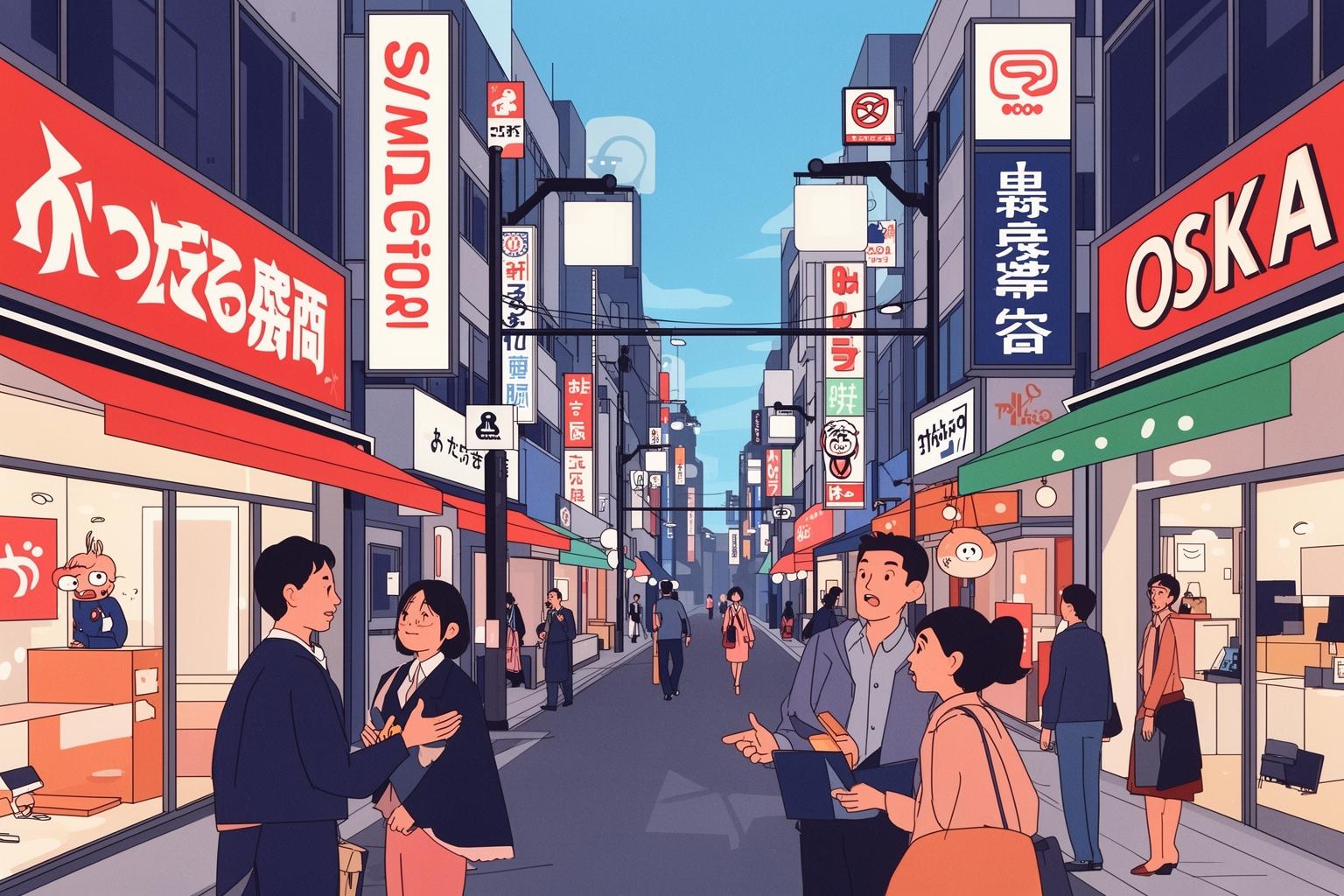
Throughout much of Japan, particularly in the more formal commercial settings of Tokyo, the ideal customer experience is characterized by seamless, frictionless efficiency. Products are displayed flawlessly, prices clearly labeled, and staff are trained to be attentive without being intrusive. Their purpose is to assist your purchase with minimal hassle and maximum politeness. A quiet store is viewed as calm and sophisticated. In Osaka, however, a quiet store is seen as lifeless. It’s considered to lack genki (energy, spirit), and without energy, the assumption is that it probably lacks good products and reasonable prices as well.
The soundscape of an Osaka shotengai vividly reflects this philosophy. The constant calls from vendors go beyond mere advertising; they serve as a vital sign, proof that the shop is lively and thriving. It’s a confident declaration of the quality of their goods. The fishmonger shouting about his mackerel isn’t just trying to sell fish; he’s proudly sharing his knowledge of sourcing and quality, inviting you to partake in that expertise. Ignoring his call and silently inspecting the fish almost feels disrespectful. The expected response is to engage, to call back, “Honma ni shinsen ka?” (Is it really fresh?), which opens the door for him to enthusiastically describe when and where it was caught.
Consider the simple act of buying an apple. In a typical Tokyo supermarket, you would pick a flawless, perfectly polished apple from a neatly arranged pyramid. You would place it in your basket, head to the checkout where a cashier scans it, states the price, and takes your payment, all with polite, standardized phrases. The entire experience is designed to be predictable and impersonal.
Now, imagine buying that same apple at Osaka’s Kuromon Ichiba Market. You approach a stall where apples are heaped in a vibrant, somewhat chaotic pile. The owner, a man with a weathered face and a booming voice, will likely greet you with, “O, ne-chan, kirei na Ringo irankai?” (Hey, miss, don’t you want some beautiful apples?). As you select one, he won’t just stand silently; he’ll say, “Sore ga ichiban oishii de! Ee no eranda na!” (That’s the tastiest one! You picked a good one!). He’ll ask what you’re using it for. If you mention making a pie, he might theatrically shake his head and point to another variety, “Akan, akan! Pai yattara kotchi no hou ga zettai umai!” (No, no! If it’s for pie, this one here is definitely better!). By the time you pay, he’ll know what you’re cooking for dinner, you’ll have heard that his grandson just started elementary school, and he might slip an extra, slightly bruised apple into your bag with a wink and a “Kore wa saabisu ya” (This one’s on the house).
This is the fundamental difference: in Tokyo, the transaction is the main purpose of the visit. In Osaka, the transaction is often just an excuse for interaction. The conversation itself is a key part of the value exchanged. Osakans want to buy from a person, not merely a place. They want to feel connected, to know the story behind the product, and to leave with more than a plastic bag—they want to leave with a good feeling, a laugh, a memory. The noise of the shotengai isn’t just background chaos; it’s the sound of hundreds of these small, meaningful relationships being built and maintained, one apple at a time.
“Nambo?” – The Opening Line of the Osaka Dance
In standard Japanese, if you want to ask the price of something, you would politely say, “O-ikura desu ka?” This formal, respectful phrase maintains a certain distance between you and the seller. In Osaka, while that phrase is understood, the genuine native way to ask is with a simple, direct, and wonderfully versatile word: “Nambo?”
To an untrained ear, “Nambo?” might sound like a casual, perhaps even blunt, way of asking “How much?” But in the setting of an Osaka shotengai, it means much more. It serves as a password, an opening move in a friendly exchange. Saying “O-ikura desu ka?” marks you as a visitor, an outsider adhering to the standard rules of Japanese commerce, and you’re likely to receive a standard, polite response. However, when you look a shopkeeper in the eye and ask, “Kore, nambo?”, you’re sending a different message: you’re saying, “I’m here to play. I’m ready to engage. I’m not just a customer; I’m a participant.”
The reply to “Nambo?” rarely comes as just a number. It’s the next step in this dance. The vendor might pause, glance at the item, then at you, as if gauging a price based on your character. They may open with a joke: “Anata ni wa takai de!” (For you, it’s expensive!). Or they might launch into a performance, justifying the price before even stating it. “Kono daikon, mite-mi! Kyou no asa, Kishiwada kara toritate ya. Mizumizushikute, amoute, sugoi de!” (Look at this daikon! Picked fresh this morning in Kishiwada. It’s juicy, sweet, and amazing!). Only after this enthusiastic pitch does the price, the nedan, come out.
This leads us to an important Osaka concept: the difference between nedan (price) and neuchi (value). Osakans are famously shrewd with money, often stereotyped as stingy, but this is a misconception. An Osakan isn’t necessarily searching for the cheapest item; they seek the best possible neuchi. Value is a complex equation involving not only the product’s quality and price but also the buying experience. A slightly higher price is easily justified if the quality is excellent, the seller is entertaining, and you leave feeling you’ve scored a special deal or insider tip.
Asking “Nambo?” opens a negotiation not just about the nedan, but about the whole concept of neuchi. You invite the seller to demonstrate the value of their product, while they, in turn, assess whether you appreciate it. It’s a deeply human interaction disguised as a simple price inquiry. Choosing to point at an item and ask “Nambo?” rather than quietly searching for a tiny printed price tag is an active decision. It’s the choice to step away from the impersonal, sterile world of fixed prices and enter the dynamic, personal, and endlessly entertaining world of Osaka commerce.
The Art of the “Make” – Bargaining Without Offense
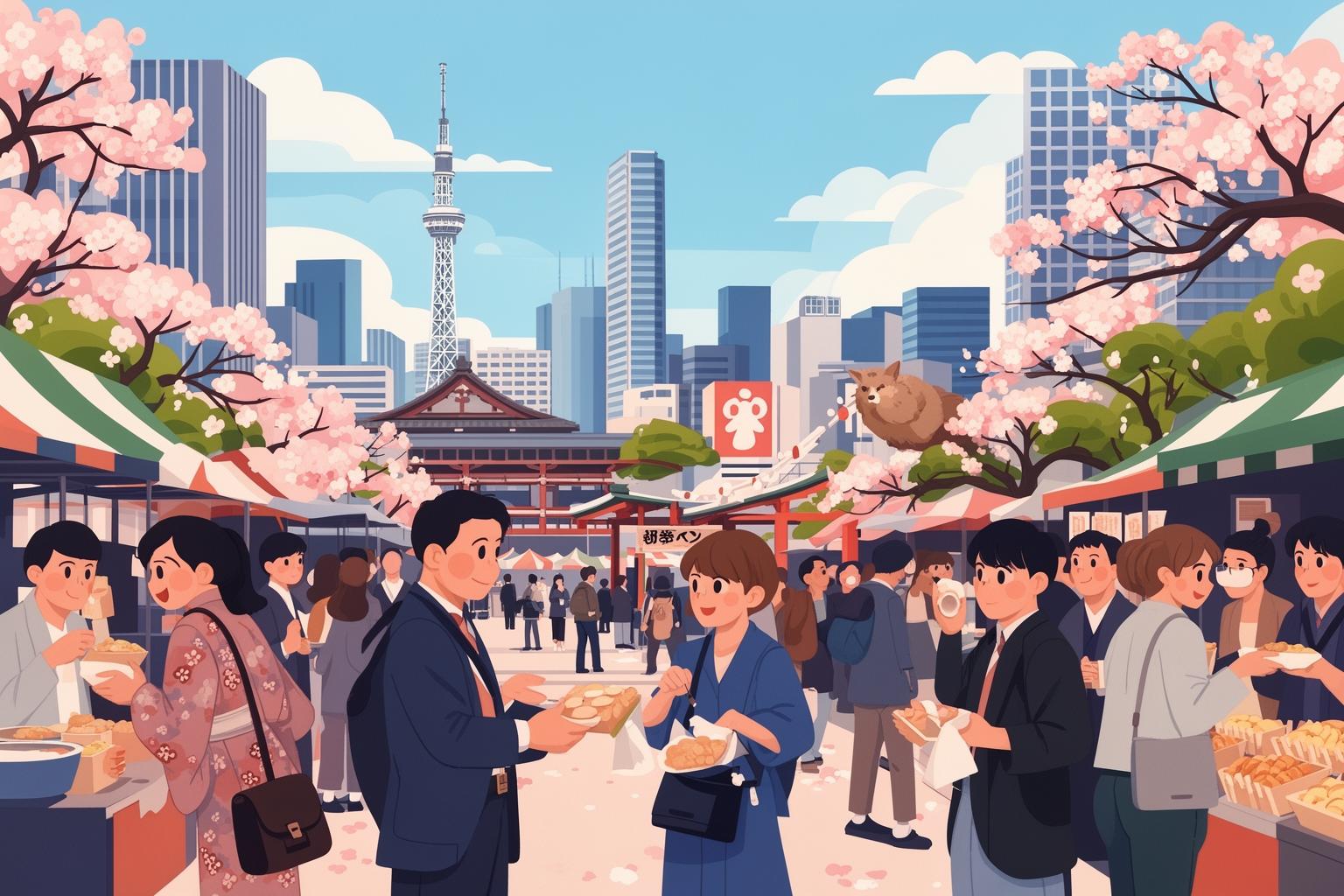
This is where many foreigners, and even numerous Japanese from other regions, start to feel uneasy. The concept of bargaining in Japan seems inappropriate, almost taboo. Throughout most of the country, it is—prices are fixed, period. Trying to haggle in a Tokyo department store would be met with confusion and polite refusal. However, in the shotengai of Osaka, a playful style of bargaining called “makete morau” (to receive a discount) is not only possible but often expected. Yet it’s an art with a strict set of unspoken rules. Misunderstanding these rules risks causing offense, but mastering them opens a new level of interaction with the city.
First and foremost, this is not the intense, high-stakes haggling you might see in souks or bazaars elsewhere in the world. The aim isn’t to drive the seller down to their lowest possible price to “win” the deal. In Osaka, the objective is to build rapport, engage in a moment of playful resistance, and settle on a price that leaves both sides satisfied. The discount itself often takes a backseat to the enjoyment of the exchange.
Rule one is understanding your playing field. This dance is reserved for independent, privately owned shops and stalls. The vegetable stand, the family-run clothing store, flea market booths, and electronics shops in Den Den Town—these are the arenas. Never try bargaining in chain stores, supermarkets, or department stores. You wouldn’t negotiate with a cashier at 7-Eleven, and the same principle applies here. Discounts can only happen where the person you’re talking to has the authority to grant them.
Rule two concerns your approach. It must be delivered with a smile and a lighthearted tone, not entitlement. A demanding attitude will get you nowhere. You’re not insisting on a lower price; you’re gently asking if there’s any flexibility. The classic opening line, paired with a slightly pleading but playful expression, is “Chotto dake, makete kureru?” (Could you discount it, just a little?). The key phrase is “chotto dake” (just a little), which signals you’re not trying to take advantage. Another common, more self-deprecating approach is, “Kore, hoshii nen kedo, o-kozukai tarin wa…” (I want this, but my pocket money isn’t enough…). This usually draws a sympathetic laugh from the shopkeeper.
Rule three highlights the power of bundling. Asking for a discount on a single, inexpensive item is generally frowned upon. The easiest and most accepted way to get a discount is by buying multiple items. You choose two or three shirts, show them to the owner, and ask, “Mitsu kau kara, chotto saabisu shite-kureru?” (Since I’m buying three, can you give me a little “service”?). The word “saabisu” (service) is often used instead of “discount” and can mean a price reduction or, more commonly, adding a small freebie.
This brings us to rule four: be open to the omake (the extra). Often, rather than lowering the price, shops keep the price steady but include a free bonus. This is a quintessentially Osakan way to show goodwill. It lets the seller maintain the official value of their product while giving you the satisfying feeling of receiving something extra. You buy five croquettes, and they toss in a sixth. You purchase a bag of oranges, and they add a couple of persimmons. The omake is a gift and a symbol of the relationship you’ve just built. Refusing the omake would be rude. It’s the final bow in your negotiation dance.
Imagine a scene at a small clothing stall. You spot a jacket priced at 5,000 yen. After trying it on and expressing admiration, you ask the obachan running the stall with a hopeful smile, “Kore, go-sen en ka… Mou chotto yasuku naran?” (This is 5,000 yen, huh… Could it be a little cheaper?). She might sigh dramatically and respond, “Ehhh, kore wa genka giri-giri ya nen!” (Ehhh, this is already almost at cost price!). This is all part of the act. You reply, “Soko o nantoka! Onegai!” (Please, do something!). She studies you, maybe pats your arm, and says, “Shouganai na… wakaikute kawaii kara, yon-sen gohyaku en ni shitaru wa!” (It can’t be helped… since you’re young and cute, I’ll make it 4,500 yen for you!). Saving 500 yen is nice, but the real reward is the interaction—the compliment, the drama, the shared moment of connection. You didn’t just buy a jacket; you earned it with charm and good humor.
Banter as the Social Currency
While bargaining is a visible and thrilling aspect of the shotengai experience, it is merely one expression of a much wider communication style that defines Osaka: banter. This quick-witted, often teasing exchange is the city’s real social currency. It’s how relationships are formed, social hierarchies subtly challenged, and the community’s fabric intertwined daily.
To grasp why this is so central to Osaka, one must consider its history. Tokyo (formerly Edo) was the city of samurai and shogunate—a society rooted in strict hierarchy, formality, and rigid codes of conduct. In contrast, Osaka was Tenka no Daidokoro, the “Nation’s Kitchen.” As Japan’s commercial center, it was a city of merchants, traders, and artisans. In this merchant culture, success relied not on birthright or rank but on the ability to build trust, read character, and negotiate favorable deals. The quickest way to achieve all this was through conversation.
Banter served as the tool for this task. A witty exchange was a way to quickly gauge someone: Are they sharp? Do they have a good sense of humor? Can they think quickly? It helped break down the natural barriers between strangers, fostering an atmosphere of familiarity and trust essential for good business. This historical DNA runs deeply through modern Osakans. The merchant spirit endures in the shotengai, and banter remains its native language.
This communication style often hinges on two key elements: humor and directness. The humor is typically self-deprecating or gently teasing, much like the well-known manzai comedy duos originating here. A shopkeeper might notice you eyeing a particularly loud, leopard-print shirt (a classic Osaka favorite) and grin as they say, “Anata ni wa chotto hadesugi chau ka?” (Isn’t that a bit too flashy for you?). This isn’t meant as an insult but as an invitation to join the playful exchange. The “correct” response isn’t offense but a quick-witted reply such as, “Kore kurai ja nai to Osaka de wa medatanai desho!” (If I don’t wear something like this, I won’t stand out in Osaka!). This kind of banter instantly builds a bond and shared understanding of local culture.
This ties into Osaka’s famed directness, which may surprise those used to the more indirect communication styles common elsewhere in Japan. In Tokyo, asking personal questions of strangers is generally considered rude. In Osaka, it often shows genuine interest and an effort to find common ground. A vendor might ask, “Doko kara kitan?” (Where are you from?), followed immediately by, “Kekkon shiteru n?” (Are you married?), and “Kodomo wa?” (Do you have kids?). They aren’t being nosy out of malice; they are trying to build a fuller picture of you, seeking a connection point. They see you not as a generic customer but as an individual.
This banter is the oil that smooths all social interactions. It transforms a routine errand into a moment of entertainment and connection. It reinforces a sense of community where shopkeepers aren’t anonymous sellers but neighborhood characters. They remember you, ask about your family, and tease you about your favorite baseball team (especially if it’s not the local Hanshin Tigers). This constant, gentle hum of playful conversation is what gives the city its vibrant energy. It’s a culture that values a good laugh over stoic dignity and a clever comeback over polite silence. To live in Osaka is to learn how to engage in this ongoing dialogue and to view every interaction as a potential setup for a punchline.
Why This Doesn’t Happen in Tokyo
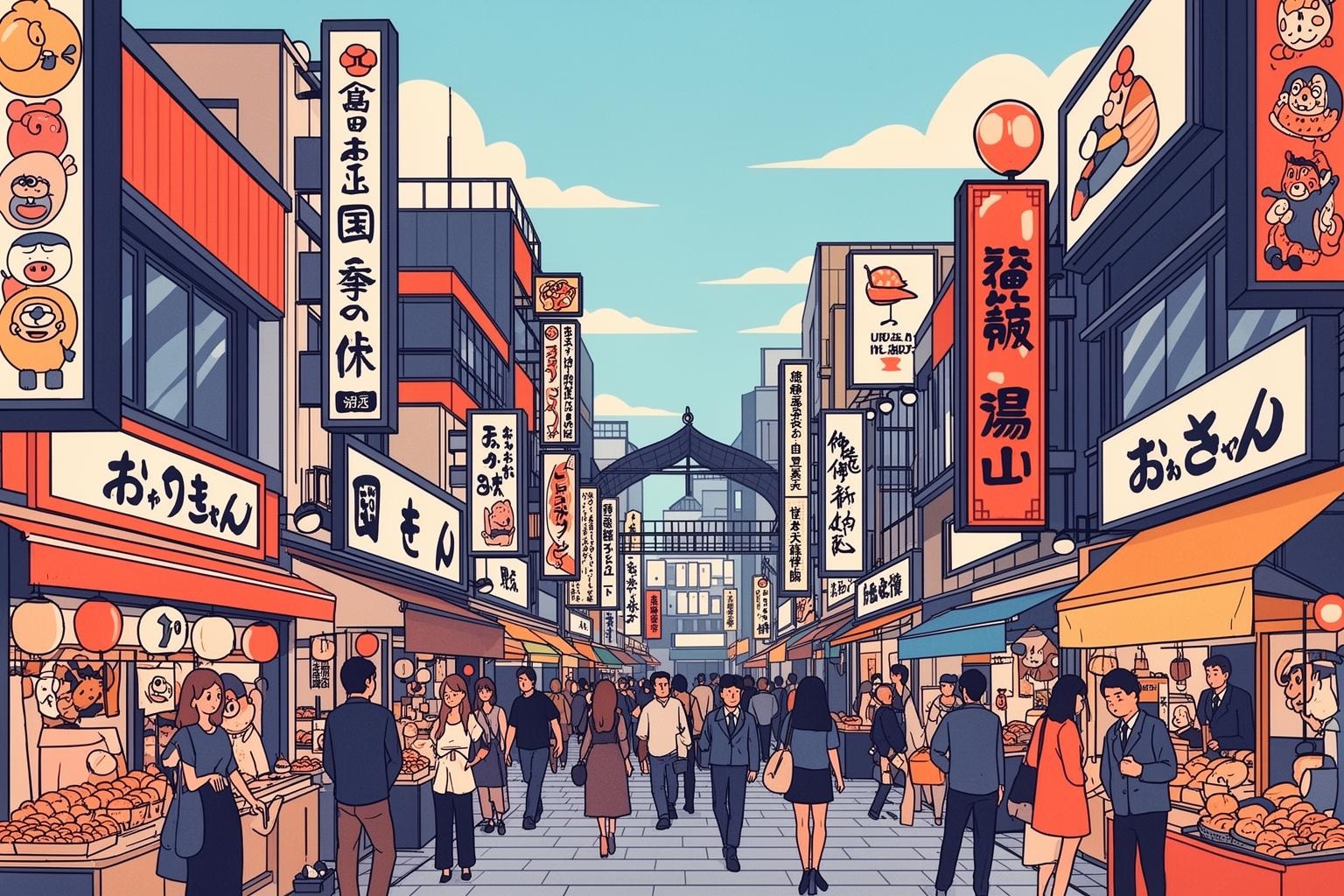
The contrast between Osaka’s and Tokyo’s commercial cultures stands as one of Japan’s most striking and defining dualities. This difference stems from centuries of separate development, reflecting the fundamental roles each city has played in the country’s history. To grasp why friendly bargaining over fish prices is normal in Osaka but unimaginable in Tokyo, one must understand the deep-rooted cultural frameworks underlying each metropolis.
Tokyo’s culture is essentially that of the capital and seat of power. As Edo, it was the home of the shogun and the influential samurai class. Society revolved around a strict, Confucian-inspired hierarchy where order, protocol, and clear distinctions between superiors and subordinates were paramount. This samurai ethos—emphasizing discipline, formality, and restraint of overt emotion—has profoundly influenced modern Tokyo. In business, this manifests as an obsession with precision, flawless service, and what the Japanese call omotenashi—a form of selfless, anticipatory hospitality. The ideal is a perfect, impeccable transaction where the customer is treated with utmost respect and deference. The interaction is professionalized rather than personal. A chatty or overly familiar clerk would be viewed as unprofessional, and a customer trying to haggle would be seen as disrupting the established order.
Conversely, Osaka was never the political center but rather the economic powerhouse. Its heroes were not stoic warriors, but astute merchants like the legendary Yodoya Keian, who built great fortunes through trade and finance. In Osaka’s merchant society, social status was more fluid, often determined by wealth and business savvy rather than birthright. The key virtues were shrewdness, pragmatism, and the ability to cultivate strong personal networks—not loyalty and discipline. The buyer-seller relationship was one of equals seeking a mutually beneficial deal, not one between superior and subordinate. The language used was not the formal and stiff tongue of the court, but the direct, practical, and often humorous dialect of the marketplace. This history explains why an Osaka shopkeeper sees you not as a lord to serve, but as a potential partner in business. They want to talk, argue, laugh, and build a relationship—because for centuries, that’s how business was conducted.
To illustrate, shopping in a high-end Tokyo store is like attending a traditional tea ceremony. Every gesture is prescribed, every word polite and measured, with the goal of appreciating the quiet beauty and perfection of the ritual. It is elegant, serene, and deeply respectful. Shopping in an Osaka shotengai is like going to a lively neighborhood festival, or matsuri. It’s loud, somewhat disorderly, and bursting with unrestrained energy. People shout, laugh, and eat while on the move. The aim isn’t quiet reflection, but active, joyous participation. Both experiences can be delightful, yet they arise from entirely different philosophies.
This difference extends into everyday life. In Tokyo, entering a shop, you’re often greeted with a high-pitched, almost melodic “Irasshaimase!” (Welcome!). In Osaka, you’re more likely to hear a warm, familiar “Maido!” (literally, “Every time!”), which implies “Thank you for your continued patronage!” even if you’re a first-time visitor. It’s a subtle yet profound distinction. The Tokyo greeting offers a formal welcome to a defined space. The Osaka greeting expresses a familiar recognition of an ongoing relationship, real or potential. This is just one of countless small ways the city’s merchant spirit continues to influence its modern interactions.
Navigating the Shotengai as a Foreigner: A Practical Guide
For someone new, stepping into the lively chaos of an Osaka shotengai can be both thrilling and daunting. The barrage of noise, the direct questions, and the expectation of a clever response can feel like a test you didn’t prepare for. Yet, embracing this culture is one of the most fulfilling parts of living in Osaka. It involves shifting your perspective from being a passive consumer to becoming an active participant. Here’s some practical advice to help you dive in.
First of all, don’t be intimidated. The loud voices and seemingly abrupt manner usually signal openness and a desire to connect, not hostility. In a culture that values interaction, being loud is a way to be seen and welcomed. The vendor who is quiet and withdrawn is the one to watch out for. Regard the energy as an invitation.
Start small. You don’t need to master haggling immediately. The first step is simply to break the silence. Instead of just grabbing a tomato and putting it in your basket, make eye contact with the vendor. Smile. Ask a simple question like, “Kore, oishii?” (Is this tasty?) or “Osusume wa dore?” (Which one do you recommend?). This small gesture changes the whole dynamic. It opens the door for the vendor to share their knowledge and pride, turning you from an anonymous shopper into someone seeking connection.
Learning a few key phrases in Osaka-ben, the local dialect, is like having a secret key. You don’t need fluency, but slipping in a local phrase shows you’re trying to connect with the city on its own terms. Instead of the usual “Arigato gozaimasu” for “thank you,” try the warm “Ookini.” When something tastes good, instead of “Oishii,” say “Meccha umai!” If you see something appealing, a simple “Ee yan!” (That’s great!) will usually bring a big, delighted smile. These small linguistic cues mark you as an insider, someone who understands Osaka, and you’ll find people become even friendlier and more open.
Be ready to receive the famous “ame-chan.” This refers to the common candy that Osaka obachan famously carry to hand out to friends, acquaintances, and even strangers. It’s a small, unsolicited gesture of kindness, a way to sweeten social interaction. If a shopkeeper or a woman you’re talking to offers you an ame-chan, accept it graciously. It’s more than candy; it’s a social token, a symbol of acceptance into the warm, informal community.
When you feel ready to try a bit of playful bargaining, remember the rules. Approach with a smile, not a demand. Focus on building rapport first. Compliment the owner or their shop. Ask about the product’s origin. Once you’ve built a friendly connection, you can give bargaining a shot. And be ready to accept “no” graciously. If a vendor can’t lower the price, they’ll often say it with a joke, like, “Kore ijyou maketara, uchi no ban-gohan naku naru wa!” (If I discount it any further, my family won’t have dinner tonight!). The point was never just the discount; it’s the attempt, the game, the shared laugh. By simply joining in, you’ve already won.
The Heartbeat of the City
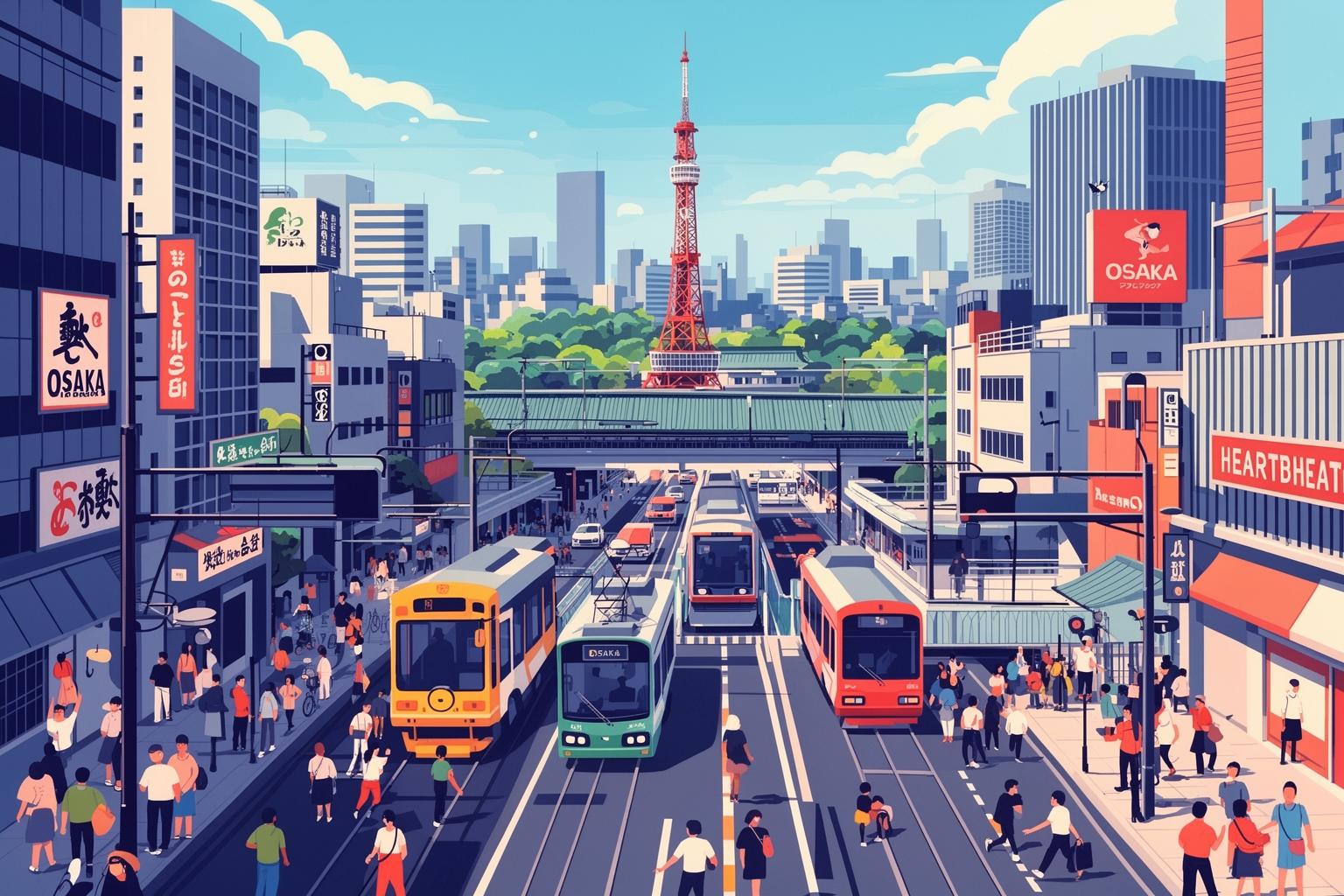
Strolling through an Osaka shotengai, hearing the rhythm of its conversations and taking part in its everyday dramas, reveals something essential about this city that no guidebook can fully convey. The banter, bargaining, and loud laughter are not merely regional quirks; they embody the living, breathing spirit of Osaka’s merchant heart. This way of life places human connection at the core of every exchange.
In an increasingly automated and impersonal world, the shotengai stands as a strong reminder of the importance of face-to-face interaction. It’s a place where the value of a product is linked to the story of the person selling it, where a shared joke can be as precious as a discount, and where conversations aim not only to trade but to connect. This style of communication, shaped by commerce over centuries, continues to define the city’s character: practical, resilient, unpretentious, and deeply, wonderfully human.
So next time you find yourself in an Osaka shotengai, don’t just pass through. Pause. Listen. Engage. Ask the fruit seller which orange is the sweetest. Let the butcher share the best way to cook that pork cut. Share a laugh with the obachan selling pickles. Try asking, “Nambo?” and see what unfolds. You may not always get a discount, but you will almost certainly leave with something far more precious: a good story, a warm feeling, and a genuine connection to the lively, talkative, and generous heart of Osaka.